 Add to Chrome
 Add to Firefox
 Add to Edge
MobileUtr: Revisiting the relationship between light-weight CNN and Transformer for efficient medical image segmentation
Dec 04, 2023


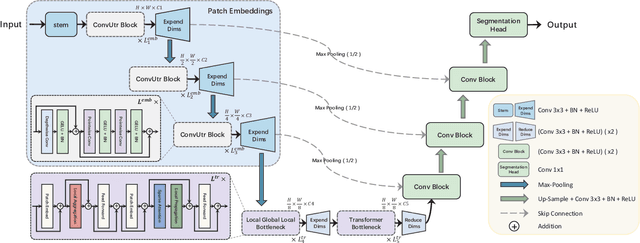
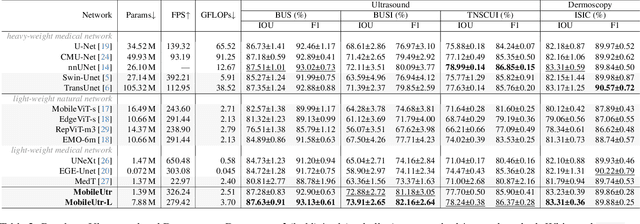
Due to the scarcity and specific imaging characteristics in medical images, light-weighting Vision Transformers (ViTs) for efficient medical image segmentation is a significant challenge, and current studies have not yet paid attention to this issue. This work revisits the relationship between CNNs and Transformers in lightweight universal networks for medical image segmentation, aiming to integrate the advantages of both worlds at the infrastructure design level. In order to leverage the inductive bias inherent in CNNs, we abstract a Transformer-like lightweight CNNs block (ConvUtr) as the patch embeddings of ViTs, feeding Transformer with denoised, non-redundant and highly condensed semantic information. Moreover, an adaptive Local-Global-Local (LGL) block is introduced to facilitate efficient local-to-global information flow exchange, maximizing Transformer's global context information extraction capabilities. Finally, we build an efficient medical image segmentation model (MobileUtr) based on CNN and Transformer. Extensive experiments on five public medical image datasets with three different modalities demonstrate the superiority of MobileUtr over the state-of-the-art methods, while boasting lighter weights and lower computational cost. Code is available at https://github.com/FengheTan9/MobileUtr.

SRSNetwork: Siamese Reconstruction-Segmentation Networks based on Dynamic-Parameter Convolution
Dec 04, 2023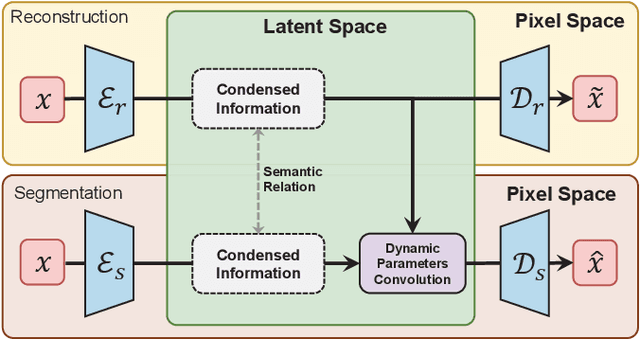
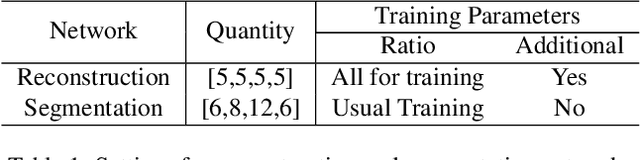
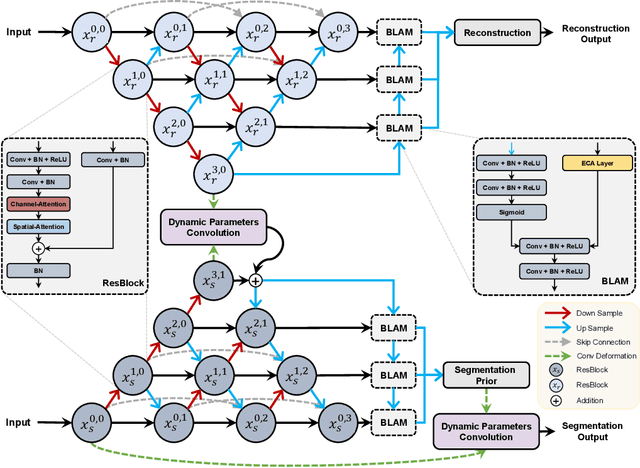
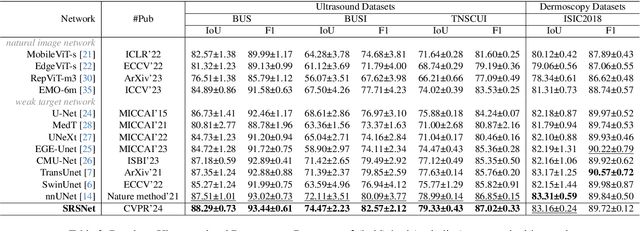
In this paper, we present a high-performance deep neural network for weak target image segmentation, including medical image segmentation and infrared image segmentation. To this end, this work analyzes the existing dynamic convolutions and proposes dynamic parameter convolution (DPConv). Furthermore, it reevaluates the relationship between reconstruction tasks and segmentation tasks from the perspective of DPConv, leading to the proposal of a dual-network model called the Siamese Reconstruction-Segmentation Network (SRSNet). The proposed model is not only a universal network but also enhances the segmentation performance without altering its structure, leveraging the reconstruction task. Additionally, as the amount of training data for the reconstruction network increases, the performance of the segmentation network also improves synchronously. On seven datasets including five medical datasets and two infrared image datasets, our SRSNet consistently achieves the best segmentation results. The code is released at https://github.com/fidshu/SRSNet.
Noisy probing dose facilitated dose prediction for pencil beam scanning proton therapy: physics enhances generalizability
Dec 02, 2023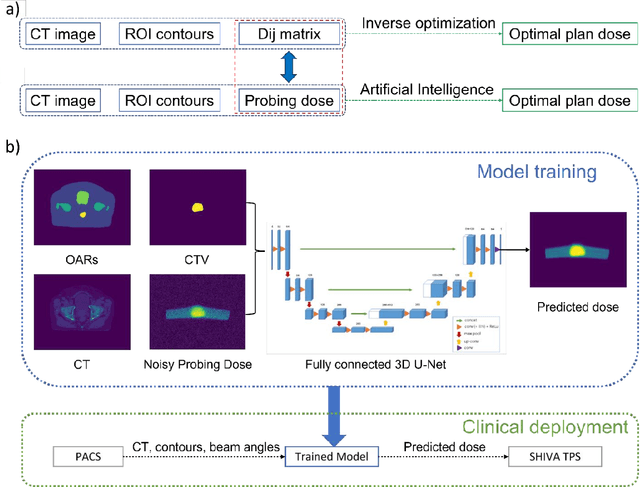
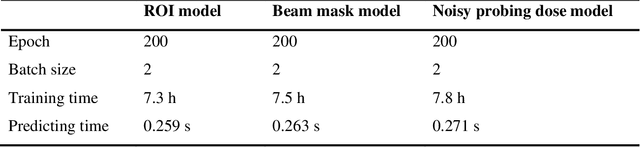
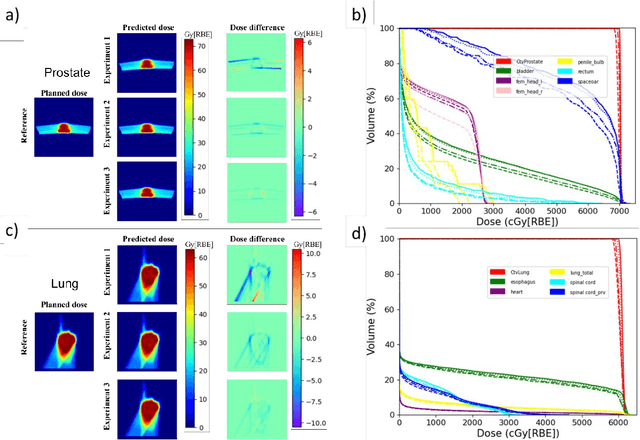
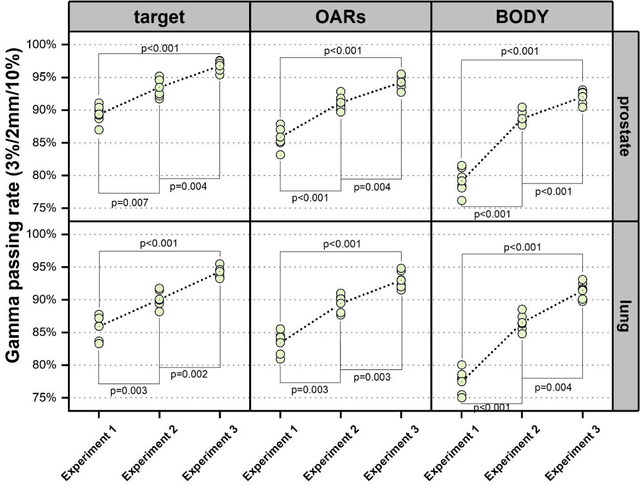
Purpose: Prior AI-based dose prediction studies in photon and proton therapy often neglect underlying physics, limiting their generalizability to handle outlier clinical cases, especially for pencil beam scanning proton therapy (PBSPT). Our aim is to design a physics-aware and generalizable AI-based PBSPT dose prediction method that has the underlying physics considered to achieve high generalizability to properly handle the outlier clinical cases. Methods and Materials: This study analyzed PBSPT plans of 103 prostate and 78 lung cancer patients from our institution,with each case comprising CT images, structure sets, and plan doses from our Monte-Carlo dose engine (serving as the ground truth). Three methods were evaluated in the ablation study: the ROI-based method, the beam mask and sliding window method, and the noisy probing dose method. Twelve cases with uncommon beam angles or prescription doses tested the methods' generalizability to rare treatment planning scenarios. Performance evaluation used DVH indices, 3D Gamma passing rates (3%/2mm/10%), and dice coefficients for dose agreement. Results: The noisy probing dose method showed improved agreement of DVH indices, 3D Gamma passing rates, and dice coefficients compared to the conventional methods for the testing cases. The noisy probing dose method showed better generalizability in the 6 outlier cases than the ROI-based and beam mask-based methods with 3D Gamma passing rates (for prostate cancer, targets: 89.32%$\pm$1.45% vs. 93.48%$\pm$1.51% vs. 96.79%$\pm$0.83%, OARs: 85.87%$\pm$1.73% vs. 91.15%$\pm$1.13% vs. 94.29%$\pm$1.01%). The dose predictions were completed within 0.3 seconds. Conclusions: We've devised a novel noisy probing dose method for PBSPT dose prediction in prostate and lung cancer patients. With more physics included, it enhances the generalizability of dose prediction in handling outlier clinical cases.
Smooth Video Synthesis with Noise Constraints on Diffusion Models for One-shot Video Tuning
Nov 29, 2023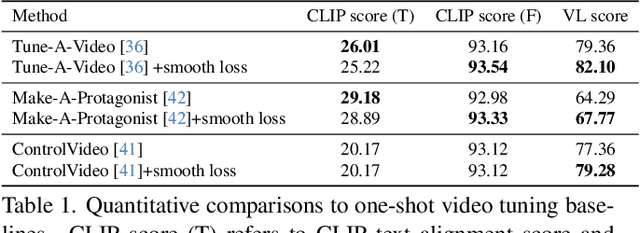
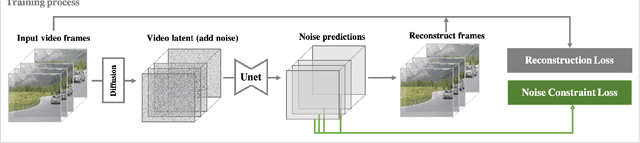
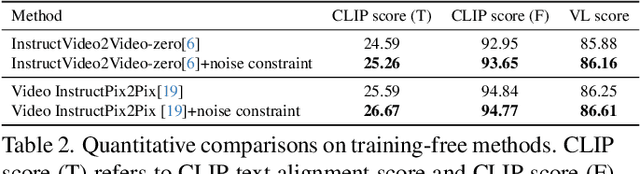
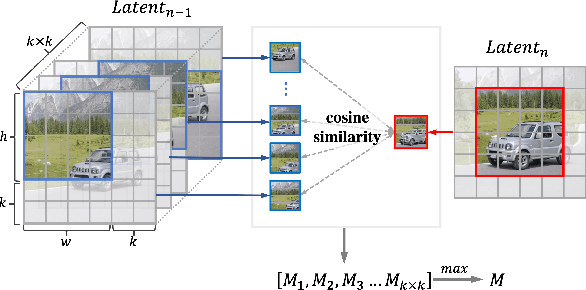
Recent one-shot video tuning methods, which fine-tune the network on a specific video based on pre-trained text-to-image models (e.g., Stable Diffusion), are popular in the community because of the flexibility. However, these methods often produce videos marred by incoherence and inconsistency. To address these limitations, this paper introduces a simple yet effective noise constraint across video frames. This constraint aims to regulate noise predictions across their temporal neighbors, resulting in smooth latents. It can be simply included as a loss term during the training phase. By applying the loss to existing one-shot video tuning methods, we significantly improve the overall consistency and smoothness of the generated videos. Furthermore, we argue that current video evaluation metrics inadequately capture smoothness. To address this, we introduce a novel metric that considers detailed features and their temporal dynamics. Experimental results validate the effectiveness of our approach in producing smoother videos on various one-shot video tuning baselines. The source codes and video demos are available at \href{https://github.com/SPengLiang/SmoothVideo}{https://github.com/SPengLiang/SmoothVideo}.
BadCLIP: Trigger-Aware Prompt Learning for Backdoor Attacks on CLIP
Nov 26, 2023Contrastive Vision-Language Pre-training, known as CLIP, has shown promising effectiveness in addressing downstream image recognition tasks. However, recent works revealed that the CLIP model can be implanted with a downstream-oriented backdoor. On downstream tasks, one victim model performs well on clean samples but predicts a specific target class whenever a specific trigger is present. For injecting a backdoor, existing attacks depend on a large amount of additional data to maliciously fine-tune the entire pre-trained CLIP model, which makes them inapplicable to data-limited scenarios. In this work, motivated by the recent success of learnable prompts, we address this problem by injecting a backdoor into the CLIP model in the prompt learning stage. Our method named BadCLIP is built on a novel and effective mechanism in backdoor attacks on CLIP, i.e., influencing both the image and text encoders with the trigger. It consists of a learnable trigger applied to images and a trigger-aware context generator, such that the trigger can change text features via trigger-aware prompts, resulting in a powerful and generalizable attack. Extensive experiments conducted on 11 datasets verify that the clean accuracy of BadCLIP is similar to those of advanced prompt learning methods and the attack success rate is higher than 99% in most cases. BadCLIP is also generalizable to unseen classes, and shows a strong generalization capability under cross-dataset and cross-domain settings.
FBChain: A Blockchain-based Federated Learning Model with Efficiency and Secure Communication
Nov 21, 2023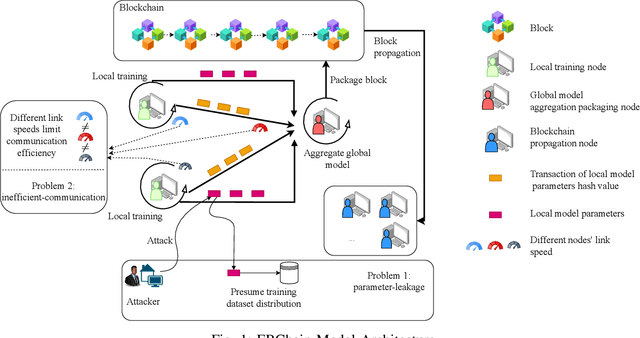
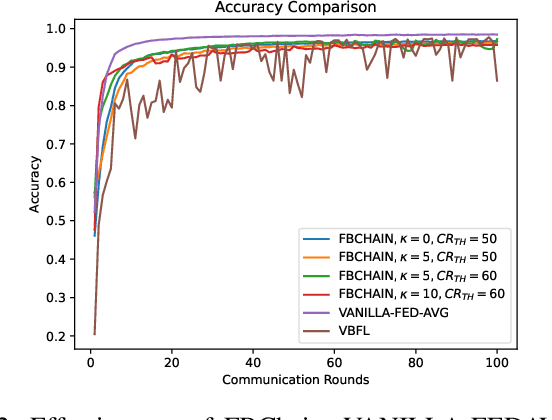
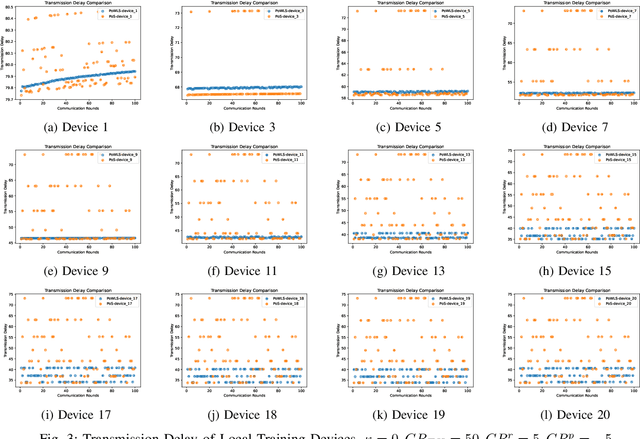
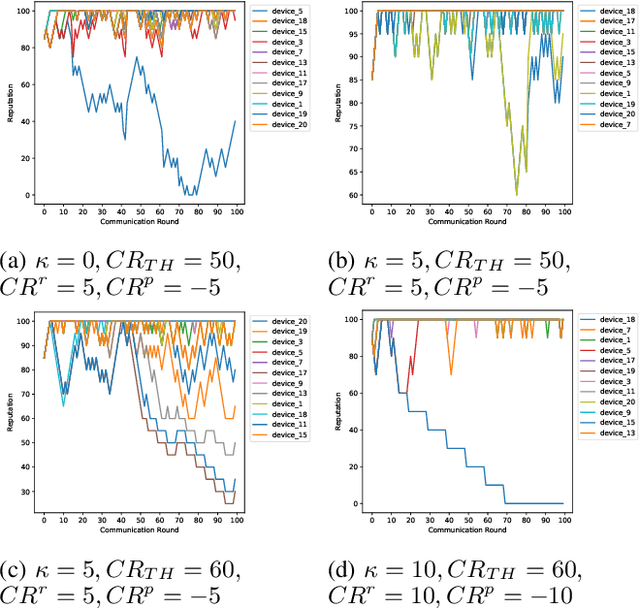
Privacy and security in the parameter transmission process of federated learning are currently among the most prominent concerns. However, there are two thorny problems caused by unprotected communication methods: "parameter-leakage" and "inefficient-communication". This article proposes Blockchain-based Federated Learning (FBChain) model for federated learning parameter communication to overcome the above two problems. First, we utilize the immutability of blockchain to store the global model and hash value of local model parameters in case of tampering during the communication process, protect data privacy by encrypting parameters, and verify data consistency by comparing the hash values of local parameters, thus addressing the "parameter-leakage" problem. Second, the Proof of Weighted Link Speed (PoWLS) consensus algorithm comprehensively selects nodes with the higher weighted link speed to aggregate global model and package blocks, thereby solving the "inefficient-communication" problem. Experimental results demonstrate the effectiveness of our proposed FBChain model and its ability to improve model communication efficiency in federated learning.
Damped Proximal Augmented Lagrangian Method for weakly-Convex Problems with Convex Constraints
Nov 15, 2023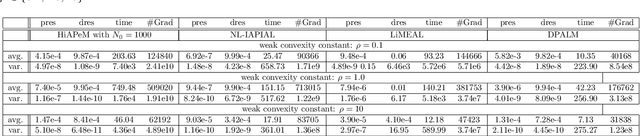
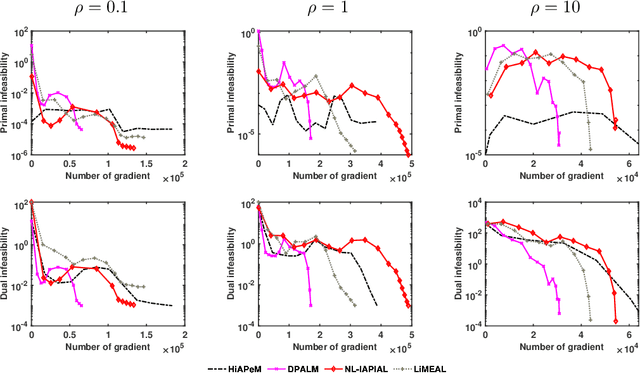

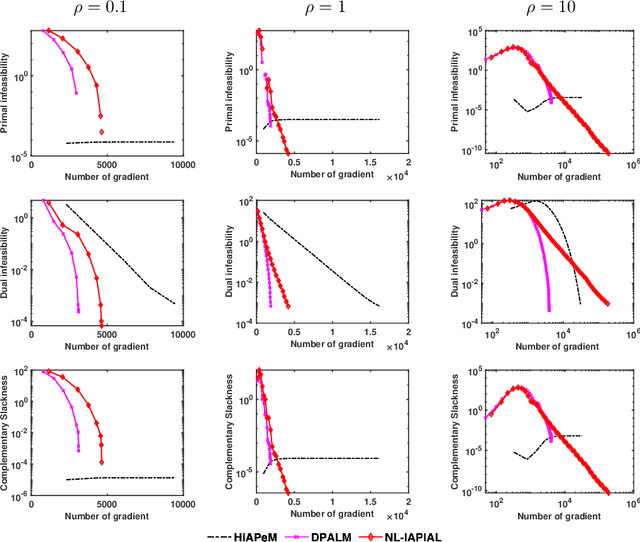
We give a damped proximal augmented Lagrangian method (DPALM) for solving problems with a weakly-convex objective and convex linear/nonlinear constraints. Instead of taking a full stepsize, DPALM adopts a damped dual stepsize to ensure the boundedness of dual iterates. We show that DPALM can produce a (near) $\vareps$-KKT point within $O(\vareps^{-2})$ outer iterations if each DPALM subproblem is solved to a proper accuracy. In addition, we establish overall iteration complexity of DPALM when the objective is either a regularized smooth function or in a regularized compositional form. For the former case, DPALM achieves the complexity of $\widetilde{\mathcal{O}}\left(\varepsilon^{-2.5} \right)$ to produce an $\varepsilon$-KKT point by applying an accelerated proximal gradient (APG) method to each DPALM subproblem. For the latter case, the complexity of DPALM is $\widetilde{\mathcal{O}}\left(\varepsilon^{-3} \right)$ to produce a near $\varepsilon$-KKT point by using an APG to solve a Moreau-envelope smoothed version of each subproblem. Our outer iteration complexity and the overall complexity either generalize existing best ones from unconstrained or linear-constrained problems to convex-constrained ones, or improve over the best-known results on solving the same-structured problems. Furthermore, numerical experiments on linearly/quadratically constrained non-convex quadratic programs and linear-constrained robust nonlinear least squares are conducted to demonstrate the empirical efficiency of the proposed DPALM over several state-of-the art methods.
Evaluating Large Language Models in Ophthalmology
Nov 07, 2023Purpose: The performance of three different large language models (LLMS) (GPT-3.5, GPT-4, and PaLM2) in answering ophthalmology professional questions was evaluated and compared with that of three different professional populations (medical undergraduates, medical masters, and attending physicians). Methods: A 100-item ophthalmology single-choice test was administered to three different LLMs (GPT-3.5, GPT-4, and PaLM2) and three different professional levels (medical undergraduates, medical masters, and attending physicians), respectively. The performance of LLM was comprehensively evaluated and compared with the human group in terms of average score, stability, and confidence. Results: Each LLM outperformed undergraduates in general, with GPT-3.5 and PaLM2 being slightly below the master's level, while GPT-4 showed a level comparable to that of attending physicians. In addition, GPT-4 showed significantly higher answer stability and confidence than GPT-3.5 and PaLM2. Conclusion: Our study shows that LLM represented by GPT-4 performs better in the field of ophthalmology. With further improvements, LLM will bring unexpected benefits in medical education and clinical decision making in the near future.
Evaluating multiple large language models in pediatric ophthalmology
Nov 07, 2023
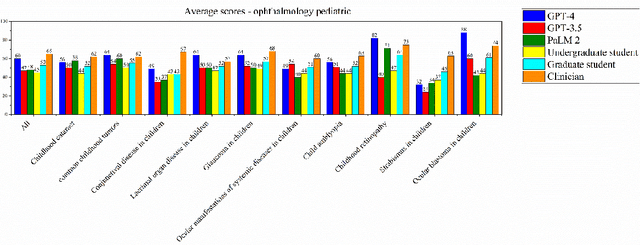
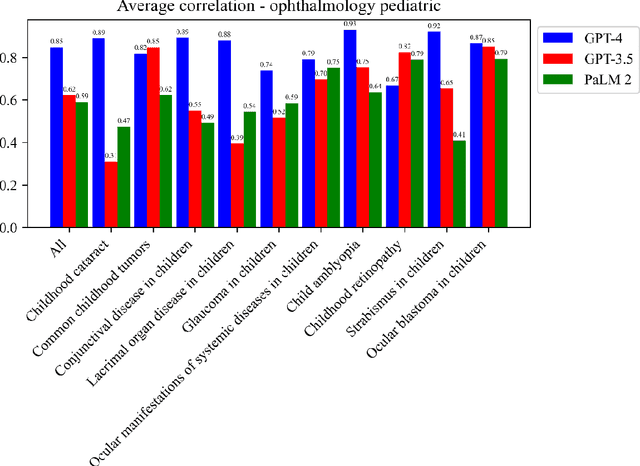
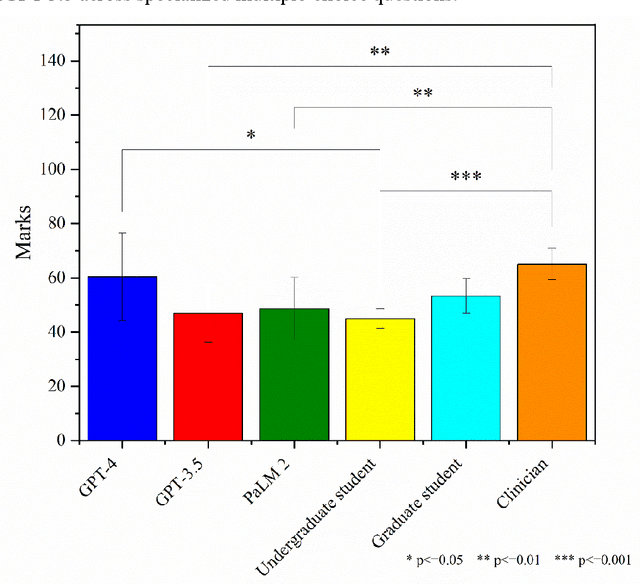
IMPORTANCE The response effectiveness of different large language models (LLMs) and various individuals, including medical students, graduate students, and practicing physicians, in pediatric ophthalmology consultations, has not been clearly established yet. OBJECTIVE Design a 100-question exam based on pediatric ophthalmology to evaluate the performance of LLMs in highly specialized scenarios and compare them with the performance of medical students and physicians at different levels. DESIGN, SETTING, AND PARTICIPANTS This survey study assessed three LLMs, namely ChatGPT (GPT-3.5), GPT-4, and PaLM2, were assessed alongside three human cohorts: medical students, postgraduate students, and attending physicians, in their ability to answer questions related to pediatric ophthalmology. It was conducted by administering questionnaires in the form of test papers through the LLM network interface, with the valuable participation of volunteers. MAIN OUTCOMES AND MEASURES Mean scores of LLM and humans on 100 multiple-choice questions, as well as the answer stability, correlation, and response confidence of each LLM. RESULTS GPT-4 performed comparably to attending physicians, while ChatGPT (GPT-3.5) and PaLM2 outperformed medical students but slightly trailed behind postgraduate students. Furthermore, GPT-4 exhibited greater stability and confidence when responding to inquiries compared to ChatGPT (GPT-3.5) and PaLM2. CONCLUSIONS AND RELEVANCE Our results underscore the potential for LLMs to provide medical assistance in pediatric ophthalmology and suggest significant capacity to guide the education of medical students.
Evaluating the Potential of Leading Large Language Models in Reasoning Biology Questions
Nov 05, 2023Recent advances in Large Language Models (LLMs) have presented new opportunities for integrating Artificial General Intelligence (AGI) into biological research and education. This study evaluated the capabilities of leading LLMs, including GPT-4, GPT-3.5, PaLM2, Claude2, and SenseNova, in answering conceptual biology questions. The models were tested on a 108-question multiple-choice exam covering biology topics in molecular biology, biological techniques, metabolic engineering, and synthetic biology. Among the models, GPT-4 achieved the highest average score of 90 and demonstrated the greatest consistency across trials with different prompts. The results indicated GPT-4's proficiency in logical reasoning and its potential to aid biology research through capabilities like data analysis, hypothesis generation, and knowledge integration. However, further development and validation are still required before the promise of LLMs in accelerating biological discovery can be realized.