 Add to Chrome
 Add to Firefox
 Add to Edge
PMSS: Pretrained Matrices Skeleton Selection for LLM Fine-tuning
Sep 25, 2024


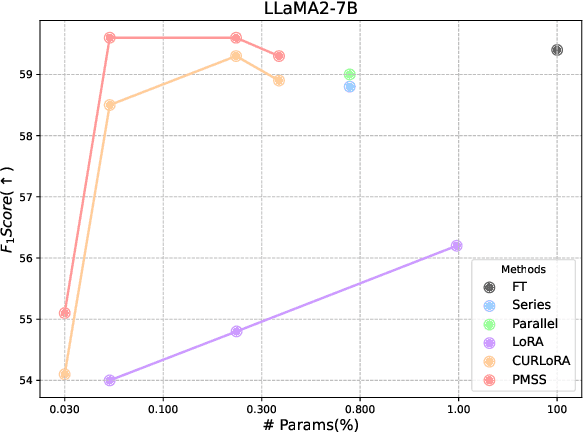
Low-rank adaptation (LoRA) and its variants have recently gained much interest due to their ability to avoid excessive inference costs. However, LoRA still encounters the following challenges: (1) Limitation of low-rank assumption; and (2) Its initialization method may be suboptimal. To this end, we propose PMSS(Pre-trained Matrices Skeleton Selection), which enables high-rank updates with low costs while leveraging semantic and linguistic information inherent in pre-trained weight. It achieves this by selecting skeletons from the pre-trained weight matrix and only learning a small matrix instead. Experiments demonstrate that PMSS outperforms LoRA and other fine-tuning methods across tasks with much less trainable parameters. We demonstrate its effectiveness, especially in handling complex tasks such as DROP benchmark(+3.4%/+5.9% on LLaMA2-7B/13B) and math reasoning(+12.89%/+5.61%/+3.11% on LLaMA2-7B, Mistral-7B and Gemma-7B of GSM8K). The code and model will be released soon.

Investigation of Hierarchical Spectral Vision Transformer Architecture for Classification of Hyperspectral Imagery
Sep 14, 2024In the past three years, there has been significant interest in hyperspectral imagery (HSI) classification using vision Transformers for analysis of remotely sensed data. Previous research predominantly focused on the empirical integration of convolutional neural networks (CNNs) to augment the network's capability to extract local feature information. Yet, the theoretical justification for vision Transformers out-performing CNN architectures in HSI classification remains a question. To address this issue, a unified hierarchical spectral vision Transformer architecture, specifically tailored for HSI classification, is investigated. In this streamlined yet effective vision Transformer architecture, multiple mixer modules are strategically integrated separately. These include the CNN-mixer, which executes convolution operations; the spatial self-attention (SSA)-mixer and channel self-attention (CSA)-mixer, both of which are adaptations of classical self-attention blocks; and hybrid models such as the SSA+CNN-mixer and CSA+CNN-mixer, which merge convolution with self-attention operations. This integration facilitates the development of a broad spectrum of vision Transformer-based models tailored for HSI classification. In terms of the training process, a comprehensive analysis is performed, contrasting classical CNN models and vision Transformer-based counterparts, with particular attention to disturbance robustness and the distribution of the largest eigenvalue of the Hessian. From the evaluations conducted on various mixer models rooted in the unified architecture, it is concluded that the unique strength of vision Transformers can be attributed to their overarching architecture, rather than being exclusively reliant on individual multi-head self-attention (MSA) components.
OPUS: Occupancy Prediction Using a Sparse Set
Sep 14, 2024


Occupancy prediction, aiming at predicting the occupancy status within voxelized 3D environment, is quickly gaining momentum within the autonomous driving community. Mainstream occupancy prediction works first discretize the 3D environment into voxels, then perform classification on such dense grids. However, inspection on sample data reveals that the vast majority of voxels is unoccupied. Performing classification on these empty voxels demands suboptimal computation resource allocation, and reducing such empty voxels necessitates complex algorithm designs. To this end, we present a novel perspective on the occupancy prediction task: formulating it as a streamlined set prediction paradigm without the need for explicit space modeling or complex sparsification procedures. Our proposed framework, called OPUS, utilizes a transformer encoder-decoder architecture to simultaneously predict occupied locations and classes using a set of learnable queries. Firstly, we employ the Chamfer distance loss to scale the set-to-set comparison problem to unprecedented magnitudes, making training such model end-to-end a reality. Subsequently, semantic classes are adaptively assigned using nearest neighbor search based on the learned locations. In addition, OPUS incorporates a suite of non-trivial strategies to enhance model performance, including coarse-to-fine learning, consistent point sampling, and adaptive re-weighting, etc. Finally, compared with current state-of-the-art methods, our lightest model achieves superior RayIoU on the Occ3D-nuScenes dataset at near 2x FPS, while our heaviest model surpasses previous best results by 6.1 RayIoU.
Length Desensitization in Directed Preference Optimization
Sep 10, 2024
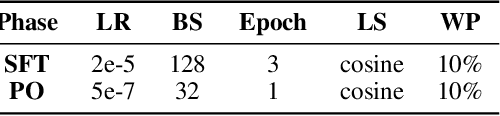

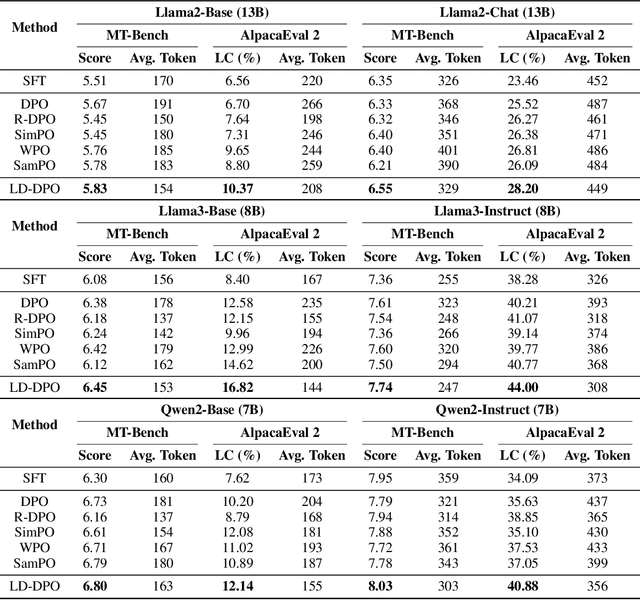
Direct Preference Optimization (DPO) is widely utilized in the Reinforcement Learning from Human Feedback (RLHF) phase to align Large Language Models (LLMs) with human preferences, thereby enhancing both their harmlessness and efficacy. However, it has been observed that DPO tends to over-optimize for verbosity, which can detrimentally affect both performance and user experience. In this paper, we conduct an in-depth theoretical analysis of DPO's optimization objective and reveal a strong correlation between its implicit reward and data length. This correlation misguides the optimization direction, resulting in length sensitivity during the DPO training and leading to verbosity. To address this issue, we propose a length-desensitization improvement method for DPO, termed LD-DPO. The proposed method aims to desensitize DPO to data length by decoupling explicit length preference, which is relatively insignificant, from the other implicit preferences, thereby enabling more effective learning of the intrinsic preferences. We utilized two settings (Base and Instruct) of Llama2-13B, Llama3-8B, and Qwen2-7B for experimental validation on various benchmarks including MT-Bench and AlpacaEval 2. The experimental results indicate that LD-DPO consistently outperforms DPO and other baseline methods, achieving more concise responses with a 10-40\% reduction in length compared to DPO. We conducted in-depth experimental analyses to demonstrate that LD-DPO can indeed achieve length desensitization and align the model more closely with human-real preferences.
SX-Stitch: An Efficient VMS-UNet Based Framework for Intraoperative Scoliosis X-Ray Image Stitching
Sep 09, 2024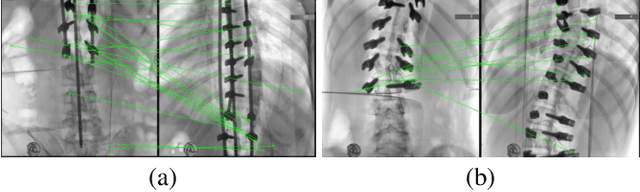
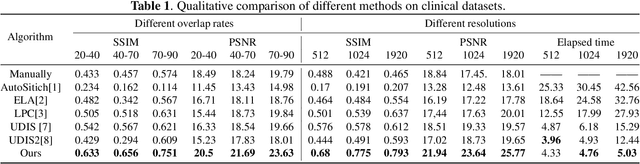
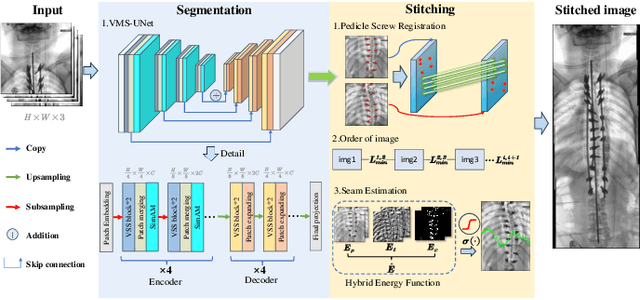
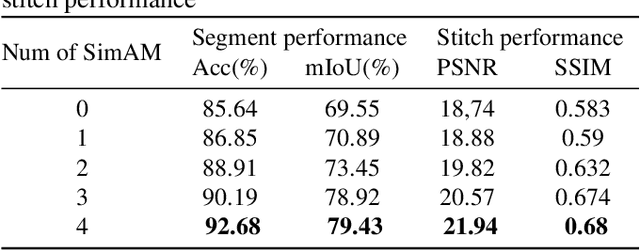
In scoliosis surgery, the limited field of view of the C-arm X-ray machine restricts the surgeons' holistic analysis of spinal structures .This paper presents an end-to-end efficient and robust intraoperative X-ray image stitching method for scoliosis surgery,named SX-Stitch. The method is divided into two stages:segmentation and stitching. In the segmentation stage, We propose a medical image segmentation model named Vision Mamba of Spine-UNet (VMS-UNet), which utilizes the state space Mamba to capture long-distance contextual information while maintaining linear computational complexity, and incorporates the SimAM attention mechanism, significantly improving the segmentation performance.In the stitching stage, we simplify the alignment process between images to the minimization of a registration energy function. The total energy function is then optimized to order unordered images, and a hybrid energy function is introduced to optimize the best seam, effectively eliminating parallax artifacts. On the clinical dataset, Sx-Stitch demonstrates superiority over SOTA schemes both qualitatively and quantitatively.
Sequential Recommendation via Adaptive Robust Attention with Multi-dimensional Embeddings
Sep 08, 2024
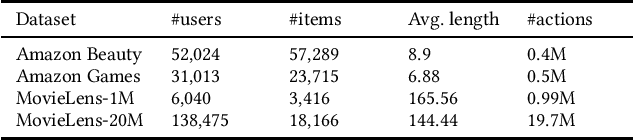
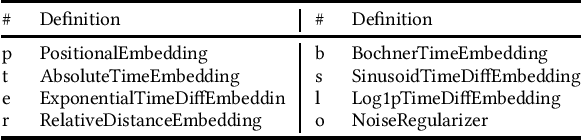

Sequential recommendation models have achieved state-of-the-art performance using self-attention mechanism. It has since been found that moving beyond only using item ID and positional embeddings leads to a significant accuracy boost when predicting the next item. In recent literature, it was reported that a multi-dimensional kernel embedding with temporal contextual kernels to capture users' diverse behavioral patterns results in a substantial performance improvement. In this study, we further improve the sequential recommender model's robustness and generalization by introducing a mix-attention mechanism with a layer-wise noise injection (LNI) regularization. We refer to our proposed model as adaptive robust sequential recommendation framework (ADRRec), and demonstrate through extensive experiments that our model outperforms existing self-attention architectures.
CD-NGP: A Fast Scalable Continual Representation for Dynamic Scenes
Sep 08, 2024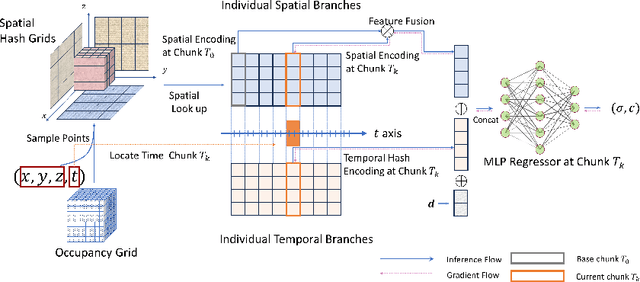
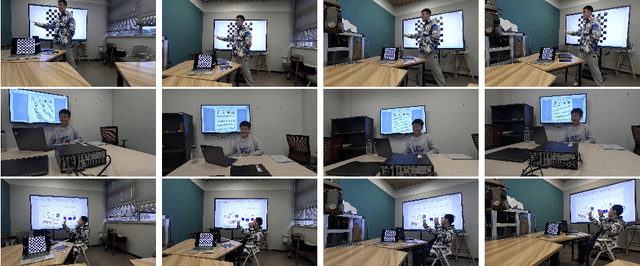
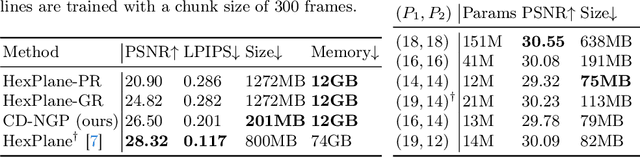
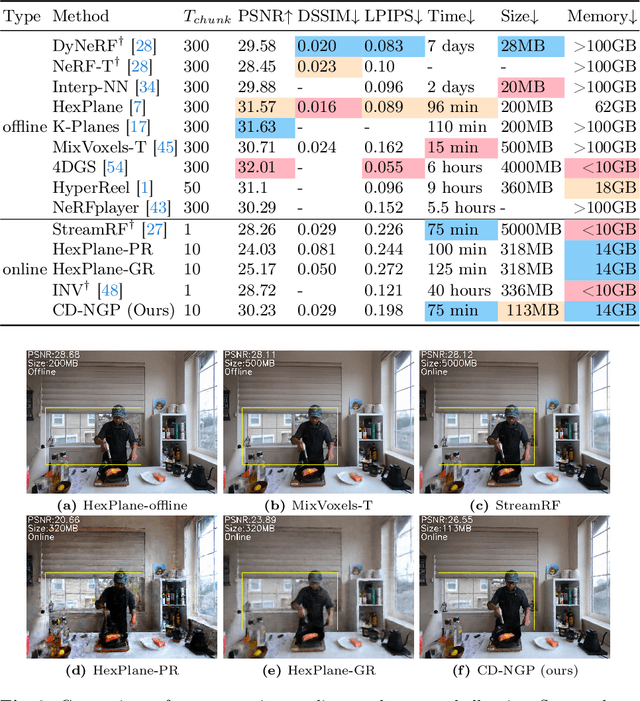
We present CD-NGP, which is a fast and scalable representation for 3D reconstruction and novel view synthesis in dynamic scenes. Inspired by continual learning, our method first segments input videos into multiple chunks, followed by training the model chunk by chunk, and finally, fuses features of the first branch and subsequent branches. Experiments on the prevailing DyNeRF dataset demonstrate that our proposed novel representation reaches a great balance between memory consumption, model size, training speed, and rendering quality. Specifically, our method consumes $85\%$ less training memory ($<14$GB) than offline methods and requires significantly lower streaming bandwidth ($<0.4$MB/frame) than other online alternatives.
Situation-aware Autonomous Driving Decision Making with Cooperative Perception on Demand
Sep 03, 2024This paper investigates the impact of cooperative perception on autonomous driving decision making on urban roads. The extended perception range contributed by the cooperative perception can be properly leveraged to address the implicit dependencies within the vehicles, thereby the vehicle decision making performance can be improved. Meanwhile, we acknowledge the inherent limitation of wireless communication and propose a Cooperative Perception on Demand (CPoD) strategy, where the cooperative perception will only be activated when the extended perception range is necessary for proper situation-awareness. The situation-aware decision making with CPoD is modeled as a Partially Observable Markov Decision Process (POMDP) and solved in an online manner. The evaluation results demonstrate that the proposed approach can function safely and efficiently for autonomous driving on urban roads.
Dreaming is All You Need
Sep 03, 2024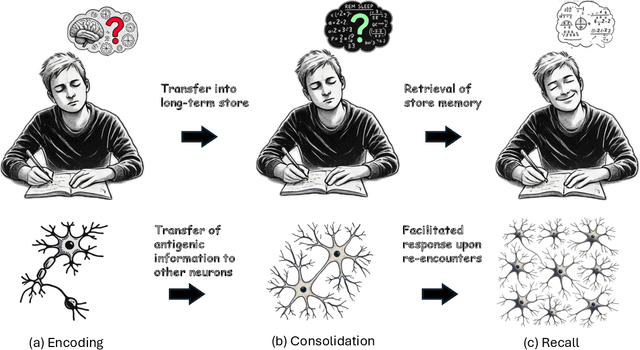
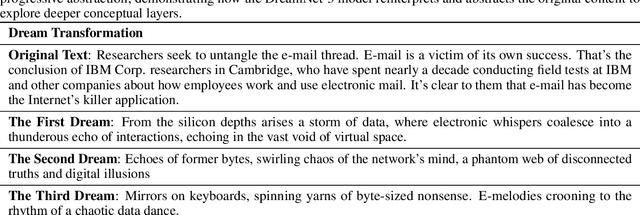
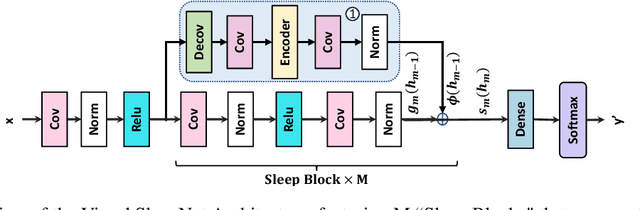
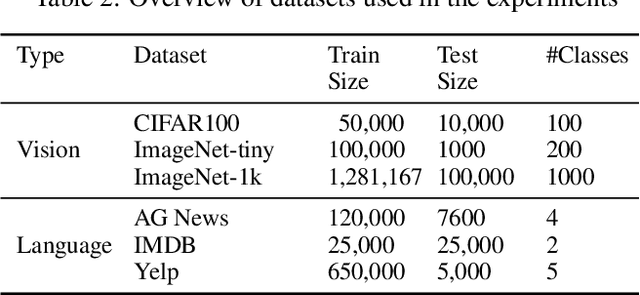
In classification tasks, achieving a harmonious balance between exploration and precision is of paramount importance. To this end, this research introduces two novel deep learning models, SleepNet and DreamNet, to strike this balance. SleepNet seamlessly integrates supervised learning with unsupervised ``sleep" stages using pre-trained encoder models. Dedicated neurons within SleepNet are embedded in these unsupervised features, forming intermittent ``sleep" blocks that facilitate exploratory learning. Building upon the foundation of SleepNet, DreamNet employs full encoder-decoder frameworks to reconstruct the hidden states, mimicking the human "dreaming" process. This reconstruction process enables further exploration and refinement of the learned representations. Moreover, the principle ideas of our SleepNet and DreamNet are generic and can be applied to both computer vision and natural language processing downstream tasks. Through extensive empirical evaluations on diverse image and text datasets, SleepNet and DreanNet have demonstrated superior performance compared to state-of-the-art models, showcasing the strengths of unsupervised exploration and supervised precision afforded by our innovative approaches.
Follow-Your-Canvas: Higher-Resolution Video Outpainting with Extensive Content Generation
Sep 02, 2024This paper explores higher-resolution video outpainting with extensive content generation. We point out common issues faced by existing methods when attempting to largely outpaint videos: the generation of low-quality content and limitations imposed by GPU memory. To address these challenges, we propose a diffusion-based method called \textit{Follow-Your-Canvas}. It builds upon two core designs. First, instead of employing the common practice of "single-shot" outpainting, we distribute the task across spatial windows and seamlessly merge them. It allows us to outpaint videos of any size and resolution without being constrained by GPU memory. Second, the source video and its relative positional relation are injected into the generation process of each window. It makes the generated spatial layout within each window harmonize with the source video. Coupling with these two designs enables us to generate higher-resolution outpainting videos with rich content while keeping spatial and temporal consistency. Follow-Your-Canvas excels in large-scale video outpainting, e.g., from 512X512 to 1152X2048 (9X), while producing high-quality and aesthetically pleasing results. It achieves the best quantitative results across various resolution and scale setups. The code is released on https://github.com/mayuelala/FollowYourCanvas