 Add to Chrome
 Add to Firefox
 Add to Edge
DeltaFlow: Noise-Adaptive Bidirectional Gated Delta Networks for Embedded Language Flows
Aug 02, 2026
Embedded Language Flows (ELF) rely primarily on full non-causal attention for iterative denoising, repeatedly incurring quadratic sequence-mixing cost at each sampling step. Gated Delta Networks (GDNs) provide an efficient recurrent alternative, but their standard causal formulation cannot directly capture the bidirectional context required by ELF. We introduce DeltaFlow, a noise-adaptive bidirectional GDN backbone for continuous language denoising. We study two variants: DeltaFlow-A, which alternates scan directions across layers, and DeltaFlow-P, which performs parallel forward and backward scans within each layer. We further introduce noise-adaptive memory control and scheduled Temporal State Consistency (TSC) to stabilize hidden representations across nearby noise levels. On OpenWebText, using a 32-step stochastic differential equation sampler, DeltaFlow-P reduces generated perplexity from 24.218 for the full-attention ELF baseline to 21.228 while maintaining comparable unigram entropy, with 36B training-token exposure compared with 45B for the baseline. In a denoiser-only benchmark, DeltaFlow-P achieves a 2.72x throughput speedup over the full-attention baseline at a sequence length of 16k. These results show that DeltaFlow is a promising alternative to dense attention for efficient continuous language denoising.

HP-JEPA: Hierarchical Partitioning for Multi-Resolution Graph Joint-Embedding Predictive Learning
Aug 01, 2026Graph self-supervised learning aims to learn transferable representations from large-scale unlabeled graph data. Joint-embedding predictive architectures (JEPAs) avoid explicit negative-pair construction and raw-input reconstruction by predicting masked targets directly in latent space. However, existing graph JEPAs typically rely on a single predefined graph partition, biasing the learned representations toward one structural granularity and limiting their ability to capture complementary patterns at different graph scales. To address this limitation, we propose HP-JEPA, a hierarchical partitioning framework for multi-resolution graph joint-embedding prediction. HP-JEPA organizes each graph into an ordered bank of coarse-to-fine partition resolutions and performs context-target latent prediction separately at each resolution using an online encoder, an exponential-moving-average target encoder, and a latent predictor. The resulting resolution-specific graph representations are subsequently integrated through concatenation or task-specific resolution weighting, allowing downstream models to combine complementary local, regional, and global structural information. Experiments on seven graph classification benchmarks and one graph regression benchmark show that HP-JEPA outperforms the fixed-resolution Graph-JEPA baseline on 6 of 8 tasks, improving upon Graph-JEPA on most evaluated benchmarks. Size-stratified analyses further show that HP-JEPA achieves higher accuracy than Graph-JEPA in most evaluated graph-size quartiles on three representative datasets. These results highlight the effectiveness of hierarchical multi-resolution partitioning for transferable graph representation learning.
S-JEPA : Soft Clustering Anchors for Self-Supervised Speech Representation Learning
Jun 17, 2026Self-supervised speech encoders are predominantly trained by predicting discrete hard cluster IDs at masked positions, a recipe that collapses acoustic ambiguity at category boundaries and requires interrupting training to re-cluster the entire corpus between iterations. We introduce S-JEPA, a JEPA-style encoder-predictor pair trained to match the soft posteriors of a Gaussian Mixture Model at masked positions via KL divergence. Training runs as one continuous optimization trajectory in two phases: a fixed GMM over MFCC features, then an online GMM over encoder features, with the input layer selected adaptively from a label-free signal, removing both the offline re-cluster step and the hand-tuned choice of which transformer layer to cluster on. Under the SUPERB protocol, S-JEPA achieves the lowest WER among evaluated SSL methods below 90M parameters and matches HuBERT-Base on emotion recognition at roughly half its parameter count, establishing a new Pareto frontier without offline re-clustering or teacher distillation. An analysis of the predictor's per-frame entropy on held-out speech reveals a bimodal distribution with a substantial minority of frames near the entropy of a perfect two-cluster tie, providing direct empirical evidence that the soft-target objective preserves the acoustic ambiguity that hard targets would collapse. Code is available at https://github.com/gioannides/s-jepa.
State-Grounded Multi-Agent Synthetic Data Generation for Tool-Augmented LLMs
Jun 15, 2026Training tool-augmented LLM agents requires large corpora of multi-turn, tool-grounded conversational data that is expensive to annotate, privacy-constrained in production settings, and largely absent from public datasets. We present StateGen, a synthetic data generation platform that produces scored, reasoning-trace-rich training conversations by orchestrating a four-role LLM loop: a persona-conditioned user simulator, an agent under test, a state-grounded tool simulator, and a multi-axis LLM judge. The key architectural contribution is an authoritative state manager that maintains a structured world-state object across turns, enforcing a backend-is-truth invariant that eliminates the dominant class of tool-call hallucinations by construction. StateGen extends naturally to hierarchical multi-agent settings by declaring sub-agents as tools, all sharing a single state object. We report results on 64,698 evaluated conversations across three production corpora: tool-call hallucination scores reach 9.66/10, the system supports persona-driven variation via a 23-dimensional trait vector, and a cleanly separated train and golden evaluation set split confirms the data is not memorization bait (per-criterion gap analysis). Comparison with eight external systems shows that no single publicly available platform combines multi-turn generation, state-grounded tool simulation, hierarchical multi-agent support, and built-in judge scoring.
Beyond Soft Masks: Hard-Perturbation Mixup Explainer for Robust GNN Explainability
Jun 04, 2026Graph Neural Networks (GNNs) have demonstrated remarkable performance across a range of applications involving graph-structured data, particularly in high-stakes domains. However, the opaque nature of their decision-making processes limits their trustworthiness and broader adoption. Existing post-hoc explanation methods aim to improve explainability by identifying subgraphs that influence GNN predictions and adopt mixup strategies to alleviate the out-of-distribution (OOD) issue caused by using subgraphs for prediction. Yet, these approaches typically rely on soft masks, which are inherently unable to fully eliminate label-irrelevant information, allowing redundant structures to leak into the mixup process and hindering the resolution of the OOD problem, thereby degrading explanation fidelity. In this work, we propose HPME, a Hard-Perturbation Mixup Explanation framework grounded in a generalized Graph Information Bottleneck, which leverages graph pooling to extract discrete explanatory subgraphs and to yield an information-capacity bound to thoroughly compress label-irrelevant components. Furthermore, we introduce a novel mixup strategy built upon structure-level replacement, generating in-distribution explanations to effectively mitigate the distribution shift. Extensive experiments on diverse tasks demonstrate that HPME achieves state-of-the-art performance in generating robust and interpretable explanations across both synthetic and real-world datasets.
Ada-RS: Adaptive Rejection Sampling for Selective Thinking
Feb 23, 2026Large language models (LLMs) are increasingly being deployed in cost and latency-sensitive settings. While chain-of-thought improves reasoning, it can waste tokens on simple requests. We study selective thinking for tool-using LLMs and introduce Adaptive Rejection Sampling (Ada-RS), an algorithm-agnostic sample filtering framework for learning selective and efficient reasoning. For each given context, Ada-RS scores multiple sampled completions with an adaptive length-penalized reward then applies stochastic rejection sampling to retain only high-reward candidates (or preference pairs) for downstream optimization. We demonstrate how Ada-RS plugs into both preference pair (e.g. DPO) or grouped policy optimization strategies (e.g. DAPO). Using Qwen3-8B with LoRA on a synthetic tool call-oriented e-commerce benchmark, Ada-RS improves the accuracy-efficiency frontier over standard algorithms by reducing average output tokens by up to 80% and reducing thinking rate by up to 95% while maintaining or improving tool call accuracy. These results highlight that training-signal selection is a powerful lever for efficient reasoning in latency-sensitive deployments.
Toward Scalable Verifiable Reward: Proxy State-Based Evaluation for Multi-turn Tool-Calling LLM Agents
Feb 18, 2026Interactive large language model (LLM) agents operating via multi-turn dialogue and multi-step tool calling are increasingly used in production. Benchmarks for these agents must both reliably compare models and yield on-policy training data. Prior agentic benchmarks (e.g., tau-bench, tau2-bench, AppWorld) rely on fully deterministic backends, which are costly to build and iterate. We propose Proxy State-Based Evaluation, an LLM-driven simulation framework that preserves final state-based evaluation without a deterministic database. Specifically, a scenario specifies the user goal, user/system facts, expected final state, and expected agent behavior, and an LLM state tracker infers a structured proxy state from the full interaction trace. LLM judges then verify goal completion and detect tool/user hallucinations against scenario constraints. Empirically, our benchmark produces stable, model-differentiating rankings across families and inference-time reasoning efforts, and its on-/off-policy rollouts provide supervision that transfers to unseen scenarios. Careful scenario specification yields near-zero simulator hallucination rates as supported by ablation studies. The framework also supports sensitivity analyses over user personas. Human-LLM judge agreement exceeds 90%, indicating reliable automated evaluation. Overall, proxy state-based evaluation offers a practical, scalable alternative to deterministic agentic benchmarks for industrial LLM agents.
MCPShield: A Security Cognition Layer for Adaptive Trust Calibration in Model Context Protocol Agents
Feb 15, 2026The Model Context Protocol (MCP) standardizes tool use for LLM-based agents and enable third-party servers. This openness introduces a security misalignment: agents implicitly trust tools exposed by potentially untrusted MCP servers. However, despite its excellent utility, existing agents typically offer limited validation for third-party MCP servers. As a result, agents remain vulnerable to MCP-based attacks that exploit the misalignment between agents and servers throughout the tool invocation lifecycle. In this paper, we propose MCPShield as a plug-in security cognition layer that mitigates this misalignment and ensures agent security when invoking MCP-based tools. Drawing inspiration from human experience-driven tool validation, MCPShield assists agent forms security cognition with metadata-guided probing before invocation. Our method constrains execution within controlled boundaries while cognizing runtime events, and subsequently updates security cognition by reasoning over historical traces after invocation, building on human post-use reflection on tool behavior. Experiments demonstrate that MCPShield exhibits strong generalization in defending against six novel MCP-based attack scenarios across six widely used agentic LLMs, while avoiding false positives on benign servers and incurring low deployment overhead. Overall, our work provides a practical and robust security safeguard for MCP-based tool invocation in open agent ecosystems.
NEMO-4-PAYPAL: Leveraging NVIDIA's Nemo Framework for empowering PayPal's Commerce Agent
Dec 25, 2025We present the development and optimization of PayPal's Commerce Agent, powered by NEMO-4-PAYPAL, a multi-agent system designed to revolutionize agentic commerce on the PayPal platform. Through our strategic partnership with NVIDIA, we leveraged the NeMo Framework for LLM model fine-tuning to enhance agent performance. Specifically, we optimized the Search and Discovery agent by replacing our base model with a fine-tuned Nemotron small language model (SLM). We conducted comprehensive experiments using the llama3.1-nemotron-nano-8B-v1 architecture, training LoRA-based models through systematic hyperparameter sweeps across learning rates, optimizers (Adam, AdamW), cosine annealing schedules, and LoRA ranks. Our contributions include: (1) the first application of NVIDIA's NeMo Framework to commerce-specific agent optimization, (2) LLM powered fine-tuning strategy for retrieval-focused commerce tasks, (3) demonstration of significant improvements in latency and cost while maintaining agent quality, and (4) a scalable framework for multi-agent system optimization in production e-commerce environments. Our results demonstrate that the fine-tuned Nemotron SLM effectively resolves the key performance issue in the retrieval component, which represents over 50\% of total agent response time, while maintaining or enhancing overall system performance.
Solving Normalized Cut Problem with Constrained Action Space
May 20, 2025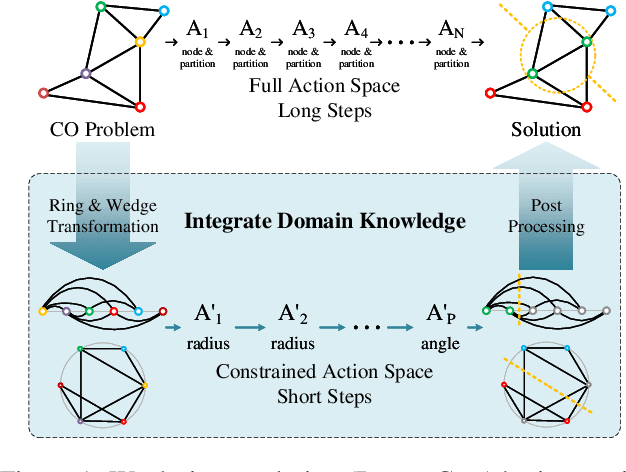
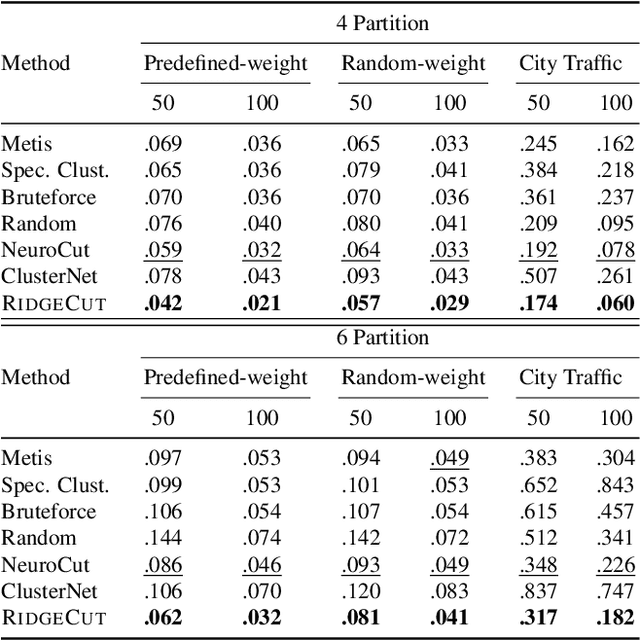
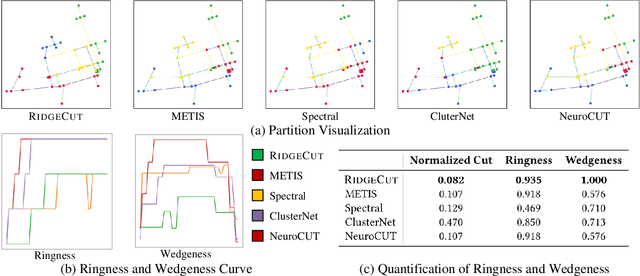
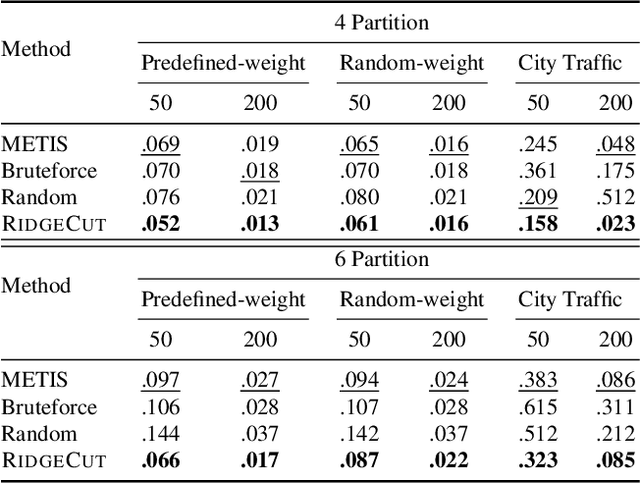
Reinforcement Learning (RL) has emerged as an important paradigm to solve combinatorial optimization problems primarily due to its ability to learn heuristics that can generalize across problem instances. However, integrating external knowledge that will steer combinatorial optimization problem solutions towards domain appropriate outcomes remains an extremely challenging task. In this paper, we propose the first RL solution that uses constrained action spaces to guide the normalized cut problem towards pre-defined template instances. Using transportation networks as an example domain, we create a Wedge and Ring Transformer that results in graph partitions that are shaped in form of Wedges and Rings and which are likely to be closer to natural optimal partitions. However, our approach is general as it is based on principles that can be generalized to other domains.