 Add to Chrome
 Add to Firefox
 Add to Edge
Hybrid Reinforcement Learning Breaks Sample Size Barriers in Linear MDPs
Aug 08, 2024
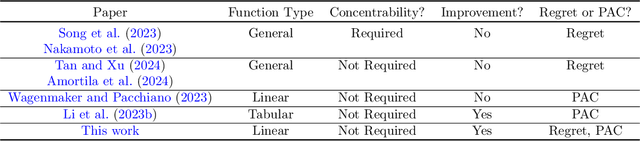
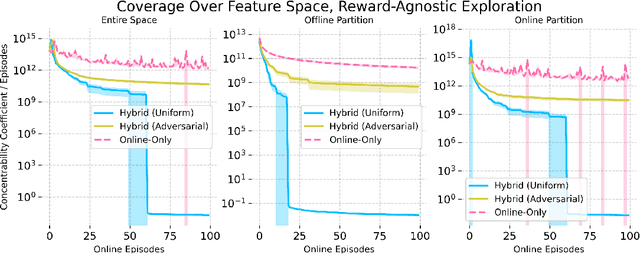
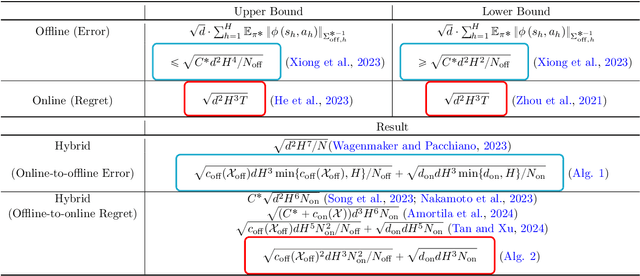
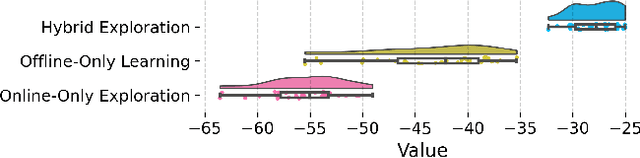
Hybrid Reinforcement Learning (RL), where an agent learns from both an offline dataset and online explorations in an unknown environment, has garnered significant recent interest. A crucial question posed by Xie et al. (2022) is whether hybrid RL can improve upon the existing lower bounds established in purely offline and purely online RL without relying on the single-policy concentrability assumption. While Li et al. (2023) provided an affirmative answer to this question in the tabular PAC RL case, the question remains unsettled for both the regret-minimizing RL case and the non-tabular case. In this work, building upon recent advancements in offline RL and reward-agnostic exploration, we develop computationally efficient algorithms for both PAC and regret-minimizing RL with linear function approximation, without single-policy concentrability. We demonstrate that these algorithms achieve sharper error or regret bounds that are no worse than, and can improve on, the optimal sample complexity in offline RL (the first algorithm, for PAC RL) and online RL (the second algorithm, for regret-minimizing RL) in linear Markov decision processes (MDPs), regardless of the quality of the behavior policy. To our knowledge, this work establishes the tightest theoretical guarantees currently available for hybrid RL in linear MDPs.

Evaluating and Enhancing LLMs Agent based on Theory of Mind in Guandan: A Multi-Player Cooperative Game under Imperfect Information
Aug 05, 2024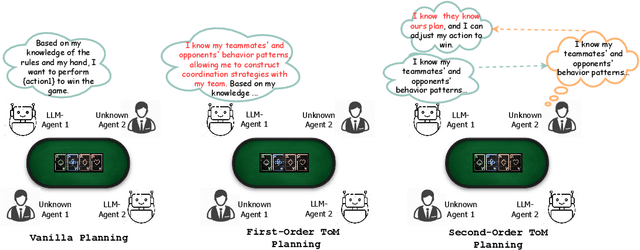
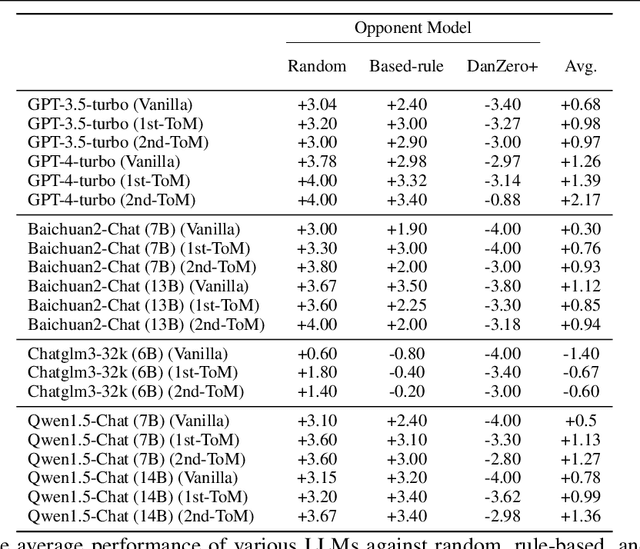
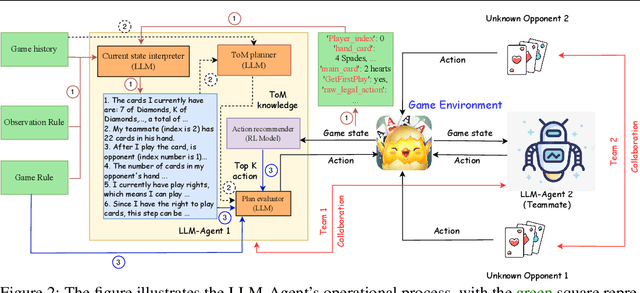
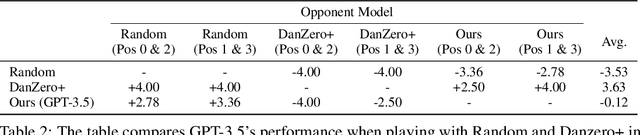
Large language models (LLMs) have shown success in handling simple games with imperfect information and enabling multi-agent coordination, but their ability to facilitate practical collaboration against other agents in complex, imperfect information environments, especially in a non-English environment, still needs to be explored. This study investigates the applicability of knowledge acquired by open-source and API-based LLMs to sophisticated text-based games requiring agent collaboration under imperfect information, comparing their performance to established baselines using other types of agents. We propose a Theory of Mind (ToM) planning technique that allows LLM agents to adapt their strategy against various adversaries using only game rules, current state, and historical context as input. An external tool was incorporated to mitigate the challenge of dynamic and extensive action spaces in this card game. Our results show that although a performance gap exists between current LLMs and state-of-the-art reinforcement learning (RL) models, LLMs demonstrate ToM capabilities in this game setting. It consistently improves their performance against opposing agents, suggesting their ability to understand the actions of allies and adversaries and establish collaboration with allies. To encourage further research and understanding, we have made our codebase openly accessible.
HEROS: Hierarchical Exploration with Online Subregion Updating for 3D Environment Coverage
Jul 16, 2024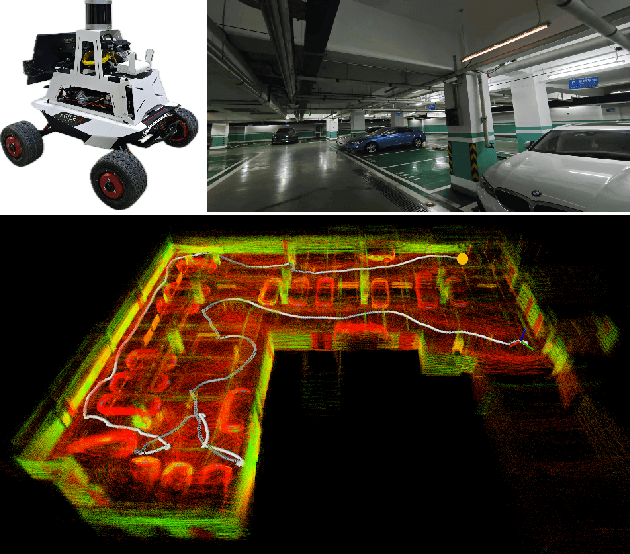
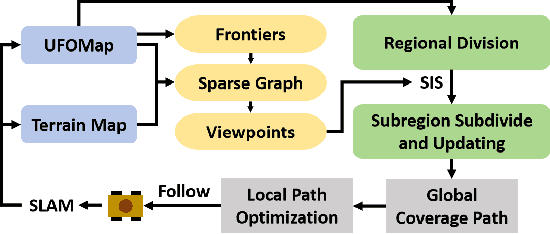
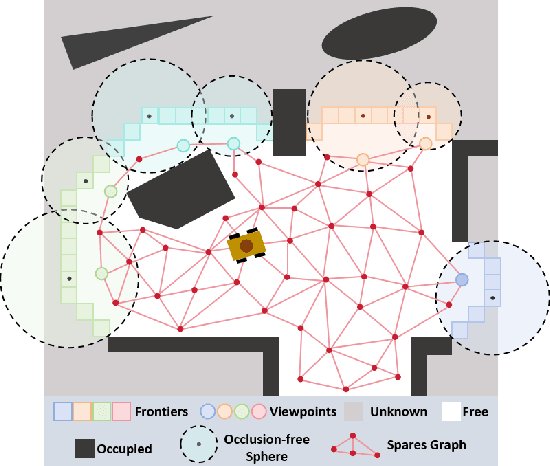
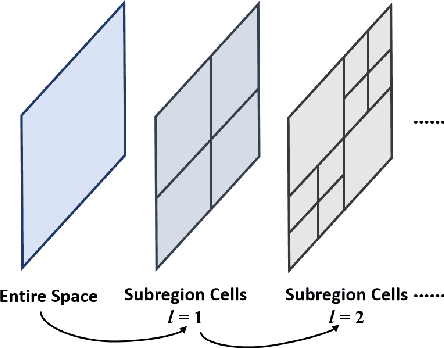
We present an autonomous exploration system for efficient coverage of unknown environments. First, a rapid environment preprocessing method is introduced to provide environmental information for subsequent exploration planning. Then, the whole exploration space is divided into multiple subregion cells, each with varying levels of detail. The subregion cells are capable of decomposition and updating online, effectively characterizing dynamic unknown regions with variable resolution. Finally, the hierarchical planning strategy treats subregions as basic planning units and computes an efficient global coverage path. Guided by the global path, the local path that sequentially visits the viewpoint set is refined to provide an executable path for the robot. This hierarchical planning from coarse to fine steps reduces the complexity of the planning scheme while improving exploration efficiency. The proposed method is compared with state-of-art methods in benchmark environments. Our approach demonstrates superior efficiency in completing exploration while using lower computational resources.
HPHS: Hierarchical Planning based on Hybrid Frontier Sampling for Unknown Environments Exploration
Jul 15, 2024Rapid sampling from the environment to acquire available frontier points and timely incorporating them into subsequent planning to reduce fragmented regions are critical to improve the efficiency of autonomous exploration. We propose HPHS, a fast and effective method for the autonomous exploration of unknown environments. In this work, we efficiently sample frontier points directly from the LiDAR data and the local map around the robot, while exploiting a hierarchical planning strategy to provide the robot with a global perspective. The hierarchical planning framework divides the updated environment into multiple subregions and arranges the order of access to them by considering the overall revenue of the global path. The combination of the hybrid frontier sampling method and hierarchical planning strategy reduces the complexity of the planning problem and mitigates the issue of region remnants during the exploration process. Detailed simulation and real-world experiments demonstrate the effectiveness and efficiency of our approach in various aspects. The source code will be released to benefit the further research.
PTaRL: Prototype-based Tabular Representation Learning via Space Calibration
Jul 07, 2024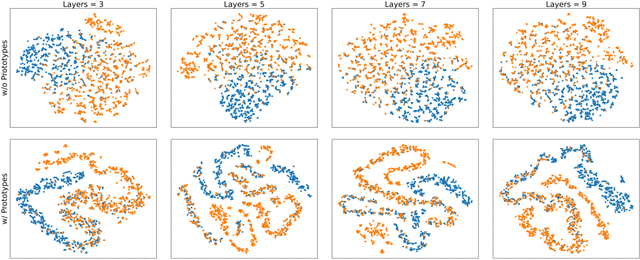
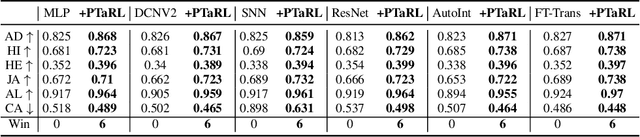
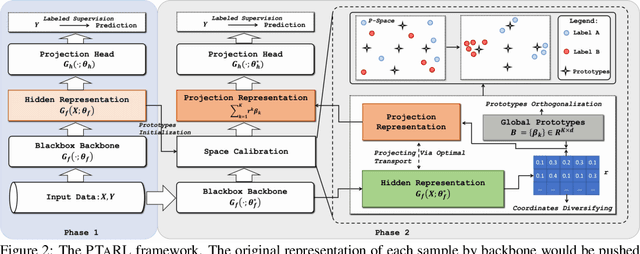

Tabular data have been playing a mostly important role in diverse real-world fields, such as healthcare, engineering, finance, etc. With the recent success of deep learning, many tabular machine learning (ML) methods based on deep networks (e.g., Transformer, ResNet) have achieved competitive performance on tabular benchmarks. However, existing deep tabular ML methods suffer from the representation entanglement and localization, which largely hinders their prediction performance and leads to performance inconsistency on tabular tasks. To overcome these problems, we explore a novel direction of applying prototype learning for tabular ML and propose a prototype-based tabular representation learning framework, PTaRL, for tabular prediction tasks. The core idea of PTaRL is to construct prototype-based projection space (P-Space) and learn the disentangled representation around global data prototypes. Specifically, PTaRL mainly involves two stages: (i) Prototype Generation, that constructs global prototypes as the basis vectors of P-Space for representation, and (ii) Prototype Projection, that projects the data samples into P-Space and keeps the core global data information via Optimal Transport. Then, to further acquire the disentangled representations, we constrain PTaRL with two strategies: (i) to diversify the coordinates towards global prototypes of different representations within P-Space, we bring up a diversification constraint for representation calibration; (ii) to avoid prototype entanglement in P-Space, we introduce a matrix orthogonalization constraint to ensure the independence of global prototypes. Finally, we conduct extensive experiments in PTaRL coupled with state-of-the-art deep tabular ML models on various tabular benchmarks and the results have shown our consistent superiority.
Deep Frequency Derivative Learning for Non-stationary Time Series Forecasting
Jun 29, 2024While most time series are non-stationary, it is inevitable for models to face the distribution shift issue in time series forecasting. Existing solutions manipulate statistical measures (usually mean and std.) to adjust time series distribution. However, these operations can be theoretically seen as the transformation towards zero frequency component of the spectrum which cannot reveal full distribution information and would further lead to information utilization bottleneck in normalization, thus hindering forecasting performance. To address this problem, we propose to utilize the whole frequency spectrum to transform time series to make full use of data distribution from the frequency perspective. We present a deep frequency derivative learning framework, DERITS, for non-stationary time series forecasting. Specifically, DERITS is built upon a novel reversible transformation, namely Frequency Derivative Transformation (FDT) that makes signals derived in the frequency domain to acquire more stationary frequency representations. Then, we propose the Order-adaptive Fourier Convolution Network to conduct adaptive frequency filtering and learning. Furthermore, we organize DERITS as a parallel-stacked architecture for the multi-order derivation and fusion for forecasting. Finally, we conduct extensive experiments on several datasets which show the consistent superiority in both time series forecasting and shift alleviation.
GoldCoin: Grounding Large Language Models in Privacy Laws via Contextual Integrity Theory
Jun 17, 2024Privacy issues arise prominently during the inappropriate transmission of information between entities. Existing research primarily studies privacy by exploring various privacy attacks, defenses, and evaluations within narrowly predefined patterns, while neglecting that privacy is not an isolated, context-free concept limited to traditionally sensitive data (e.g., social security numbers), but intertwined with intricate social contexts that complicate the identification and analysis of potential privacy violations. The advent of Large Language Models (LLMs) offers unprecedented opportunities for incorporating the nuanced scenarios outlined in privacy laws to tackle these complex privacy issues. However, the scarcity of open-source relevant case studies restricts the efficiency of LLMs in aligning with specific legal statutes. To address this challenge, we introduce a novel framework, GoldCoin, designed to efficiently ground LLMs in privacy laws for judicial assessing privacy violations. Our framework leverages the theory of contextual integrity as a bridge, creating numerous synthetic scenarios grounded in relevant privacy statutes (e.g., HIPAA), to assist LLMs in comprehending the complex contexts for identifying privacy risks in the real world. Extensive experimental results demonstrate that GoldCoin markedly enhances LLMs' capabilities in recognizing privacy risks across real court cases, surpassing the baselines on different judicial tasks.
On the Role of Entity and Event Level Conceptualization in Generalizable Reasoning: A Survey of Tasks, Methods, Applications, and Future Directions
Jun 16, 2024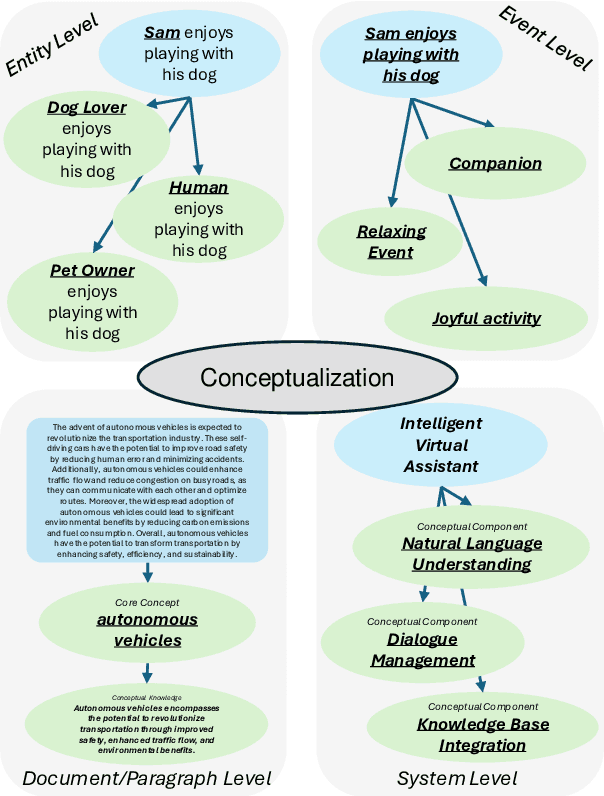


Entity- and event-level conceptualization, as fundamental elements of human cognition, plays a pivotal role in generalizable reasoning. This process involves abstracting specific instances into higher-level concepts and forming abstract knowledge that can be applied in unfamiliar or novel situations, which can enhance models' inferential capabilities and support the effective transfer of knowledge across various domains. Despite its significance, there is currently a lack of a systematic overview that comprehensively examines existing works in the definition, execution, and application of conceptualization to enhance reasoning tasks. In this paper, we address this gap by presenting the first comprehensive survey of 150+ papers, categorizing various definitions, resources, methods, and downstream applications related to conceptualization into a unified taxonomy, with a focus on the entity and event levels. Furthermore, we shed light on potential future directions in this field and hope to garner more attention from the community.
MLIP: Efficient Multi-Perspective Language-Image Pretraining with Exhaustive Data Utilization
Jun 04, 2024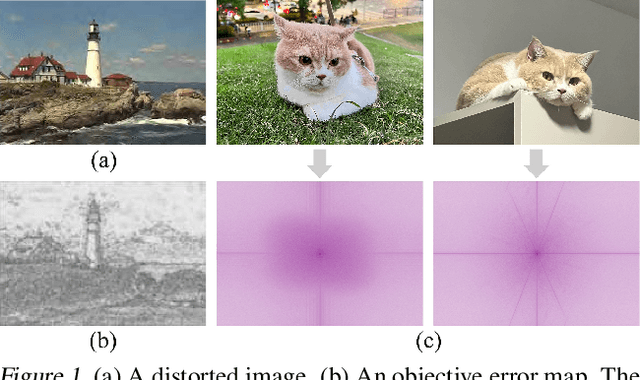
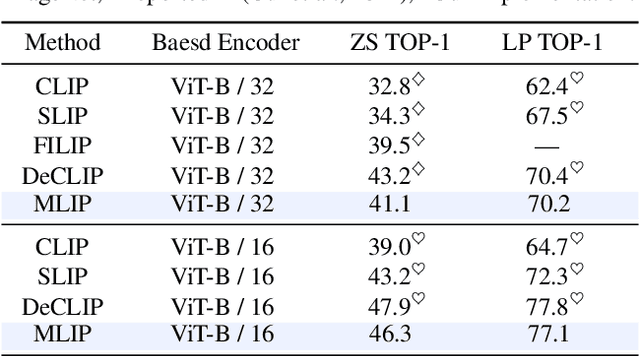
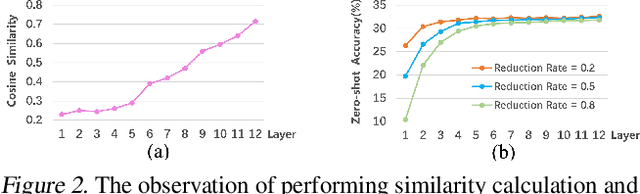
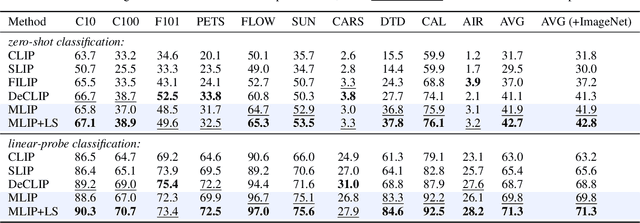
Contrastive Language-Image Pretraining (CLIP) has achieved remarkable success, leading to rapid advancements in multimodal studies. However, CLIP faces a notable challenge in terms of inefficient data utilization. It relies on a single contrastive supervision for each image-text pair during representation learning, disregarding a substantial amount of valuable information that could offer richer supervision. Additionally, the retention of non-informative tokens leads to increased computational demands and time costs, particularly in CLIP's ViT image encoder. To address these issues, we propose Multi-Perspective Language-Image Pretraining (MLIP). In MLIP, we leverage the frequency transform's sensitivity to both high and low-frequency variations, which complements the spatial domain's sensitivity limited to low-frequency variations only. By incorporating frequency transforms and token-level alignment, we expand CILP's single supervision into multi-domain and multi-level supervision, enabling a more thorough exploration of informative image features. Additionally, we introduce a token merging method guided by comprehensive semantics from the frequency and spatial domains. This allows us to merge tokens to multi-granularity tokens with a controllable compression rate to accelerate CLIP. Extensive experiments validate the effectiveness of our design.
FedGCS: A Generative Framework for Efficient Client Selection in Federated Learning via Gradient-based Optimization
May 10, 2024

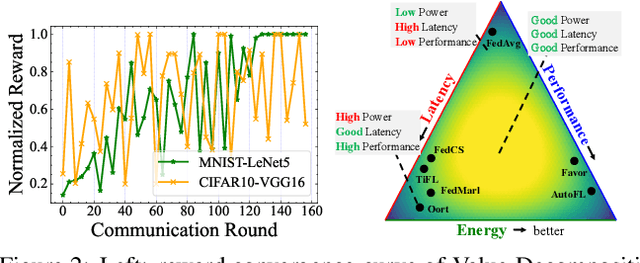
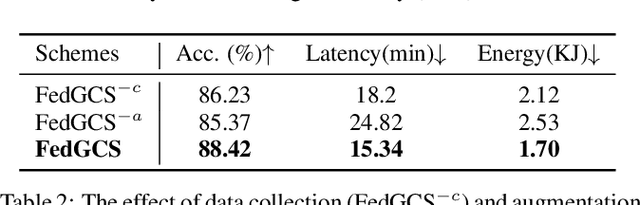
Federated Learning faces significant challenges in statistical and system heterogeneity, along with high energy consumption, necessitating efficient client selection strategies. Traditional approaches, including heuristic and learning-based methods, fall short of addressing these complexities holistically. In response, we propose FedGCS, a novel generative client selection framework that innovatively recasts the client selection process as a generative task. Drawing inspiration from the methodologies used in large language models, FedGCS efficiently encodes abundant decision-making knowledge within a continuous representation space, enabling efficient gradient-based optimization to search for optimal client selection that will be finally output via generation. The framework comprises four steps: (1) automatic collection of diverse "selection-score" pair data using classical client selection methods; (2) training an encoder-evaluator-decoder framework on this data to construct a continuous representation space; (3) employing gradient-based optimization in this space for optimal client selection; (4) generating the final optimal client selection via using beam search for the well-trained decoder. FedGCS outperforms traditional methods by being more comprehensive, generalizable, and efficient, simultaneously optimizing for model performance, latency, and energy consumption. The effectiveness of FedGCS is proven through extensive experimental analyses.