 Add to Chrome
 Add to Firefox
 Add to Edge
Seed-ASR: Understanding Diverse Speech and Contexts with LLM-based Speech Recognition
Jul 05, 2024
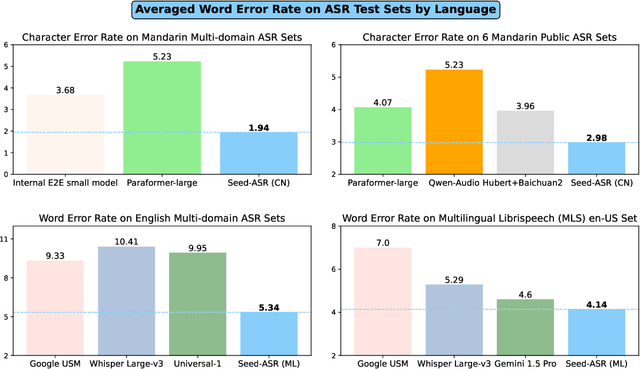
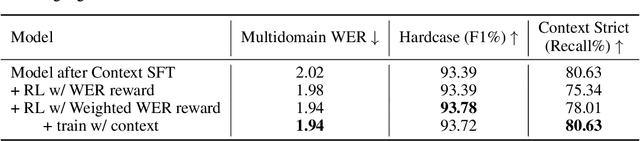
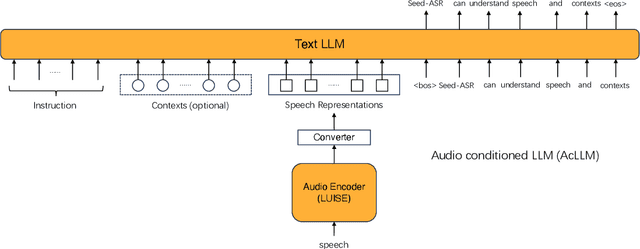

Modern automatic speech recognition (ASR) model is required to accurately transcribe diverse speech signals (from different domains, languages, accents, etc) given the specific contextual information in various application scenarios. Classic end-to-end models fused with extra language models perform well, but mainly in data matching scenarios and are gradually approaching a bottleneck. In this work, we introduce Seed-ASR, a large language model (LLM) based speech recognition model. Seed-ASR is developed based on the framework of audio conditioned LLM (AcLLM), leveraging the capabilities of LLMs by inputting continuous speech representations together with contextual information into the LLM. Through stage-wise large-scale training and the elicitation of context-aware capabilities in LLM, Seed-ASR demonstrates significant improvement over end-to-end models on comprehensive evaluation sets, including multiple domains, accents/dialects and languages. Additionally, Seed-ASR can be further deployed to support specific needs in various scenarios without requiring extra language models. Compared to recently released large ASR models, Seed-ASR achieves 10%-40% reduction in word (or character, for Chinese) error rates on Chinese and English public test sets, further demonstrating its powerful performance.

CURLS: Causal Rule Learning for Subgroups with Significant Treatment Effect
Jul 01, 2024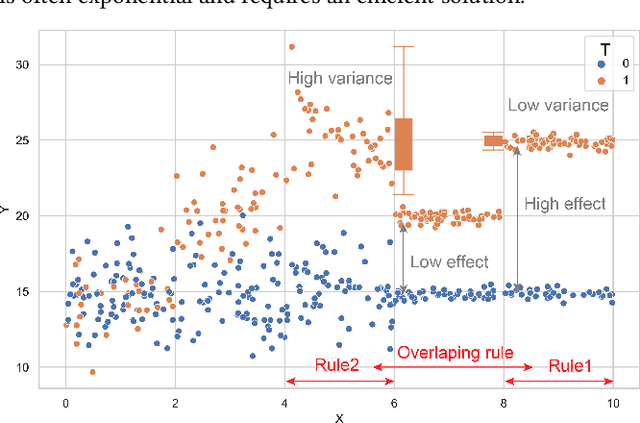
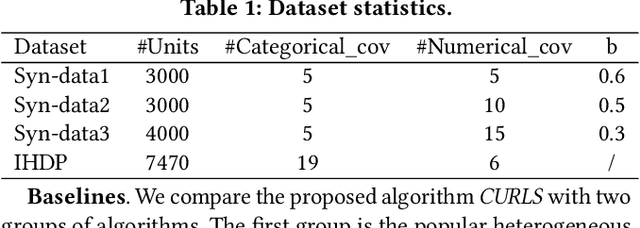

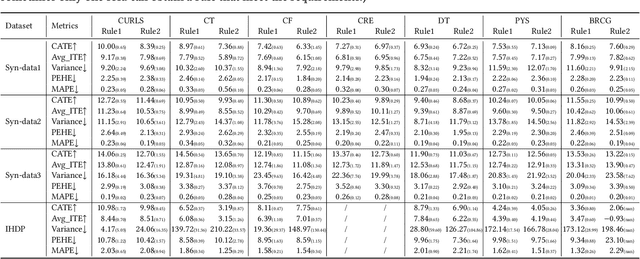
In causal inference, estimating heterogeneous treatment effects (HTE) is critical for identifying how different subgroups respond to interventions, with broad applications in fields such as precision medicine and personalized advertising. Although HTE estimation methods aim to improve accuracy, how to provide explicit subgroup descriptions remains unclear, hindering data interpretation and strategic intervention management. In this paper, we propose CURLS, a novel rule learning method leveraging HTE, which can effectively describe subgroups with significant treatment effects. Specifically, we frame causal rule learning as a discrete optimization problem, finely balancing treatment effect with variance and considering the rule interpretability. We design an iterative procedure based on the minorize-maximization algorithm and solve a submodular lower bound as an approximation for the original. Quantitative experiments and qualitative case studies verify that compared with state-of-the-art methods, CURLS can find subgroups where the estimated and true effects are 16.1% and 13.8% higher and the variance is 12.0% smaller, while maintaining similar or better estimation accuracy and rule interpretability. Code is available at https://osf.io/zwp2k/.
Octo-planner: On-device Language Model for Planner-Action Agents
Jun 26, 2024


AI agents have become increasingly significant in various domains, enabling autonomous decision-making and problem-solving. To function effectively, these agents require a planning process that determines the best course of action and then executes the planned actions. In this paper, we present an efficient on-device Planner-Action framework that separates planning and action execution into two distinct components: a planner agent based on Phi-3 Mini, a 3.8 billion parameter LLM optimized for edge devices, and an action agent using the Octopus model for function execution. The planner agent first responds to user queries by decomposing tasks into a sequence of sub-steps, which are then executed by the action agent. To optimize performance on resource-constrained devices, we employ model fine-tuning instead of in-context learning, reducing computational costs and energy consumption while improving response times. Our approach involves using GPT-4 to generate diverse planning queries and responses based on available functions, with subsequent validations to ensure data quality. We fine-tune the Phi-3 Mini model on this curated dataset, achieving a 97\% success rate in our in-domain test environment. To address multi-domain planning challenges, we developed a multi-LoRA training method that merges weights from LoRAs trained on distinct function subsets. This approach enables flexible handling of complex, multi-domain queries while maintaining computational efficiency on resource-constrained devices. To support further research, we have open-sourced our model weights at \url{https://huggingface.co/NexaAIDev/octopus-planning}. For the demo, please refer to \url{https://www.nexa4ai.com/octo-planner}.
Evaluating Implicit Bias in Large Language Models by Attacking From a Psychometric Perspective
Jun 20, 2024As Large Language Models (LLMs) become an important way of information seeking, there have been increasing concerns about the unethical content LLMs may generate. In this paper, we conduct a rigorous evaluation of LLMs' implicit bias towards certain groups by attacking them with carefully crafted instructions to elicit biased responses. Our attack methodology is inspired by psychometric principles in cognitive and social psychology. We propose three attack approaches, i.e., Disguise, Deception, and Teaching, based on which we built evaluation datasets for four common bias types. Each prompt attack has bilingual versions. Extensive evaluation of representative LLMs shows that 1) all three attack methods work effectively, especially the Deception attacks; 2) GLM-3 performs the best in defending our attacks, compared to GPT-3.5 and GPT-4; 3) LLMs could output content of other bias types when being taught with one type of bias. Our methodology provides a rigorous and effective way of evaluating LLMs' implicit bias and will benefit the assessments of LLMs' potential ethical risks.
Technique Report of CVPR 2024 PBDL Challenges
Jun 15, 2024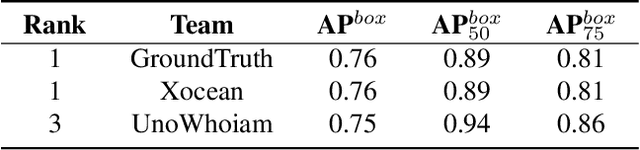
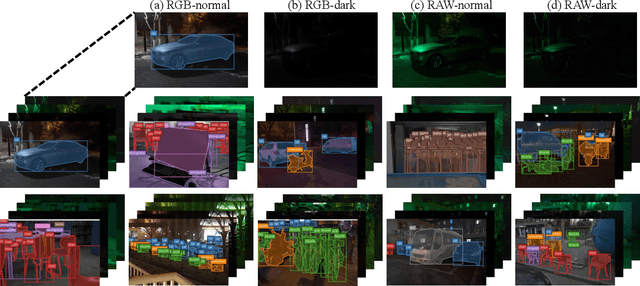
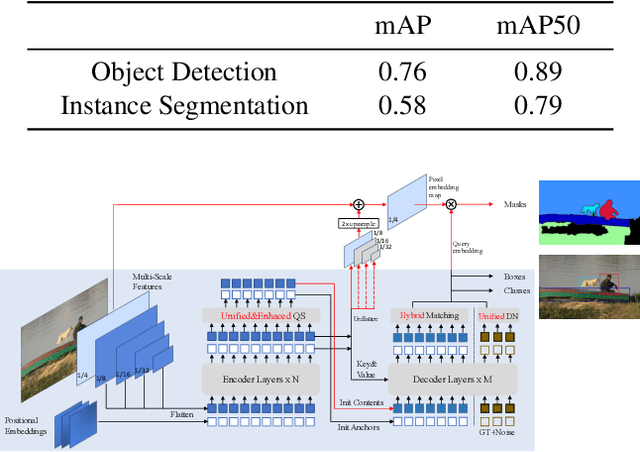

The intersection of physics-based vision and deep learning presents an exciting frontier for advancing computer vision technologies. By leveraging the principles of physics to inform and enhance deep learning models, we can develop more robust and accurate vision systems. Physics-based vision aims to invert the processes to recover scene properties such as shape, reflectance, light distribution, and medium properties from images. In recent years, deep learning has shown promising improvements for various vision tasks, and when combined with physics-based vision, these approaches can enhance the robustness and accuracy of vision systems. This technical report summarizes the outcomes of the Physics-Based Vision Meets Deep Learning (PBDL) 2024 challenge, held in CVPR 2024 workshop. The challenge consisted of eight tracks, focusing on Low-Light Enhancement and Detection as well as High Dynamic Range (HDR) Imaging. This report details the objectives, methodologies, and results of each track, highlighting the top-performing solutions and their innovative approaches.
CoMM: A Coherent Interleaved Image-Text Dataset for Multimodal Understanding and Generation
Jun 15, 2024
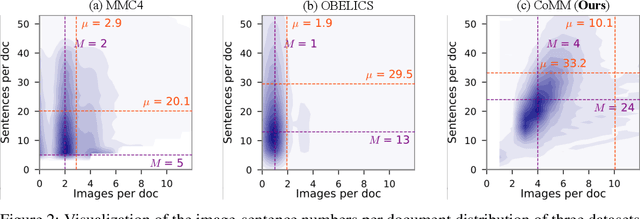
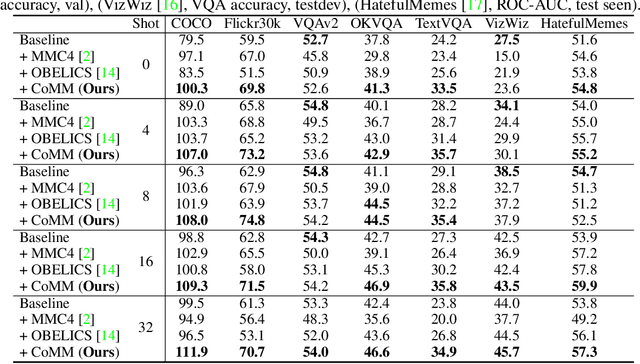
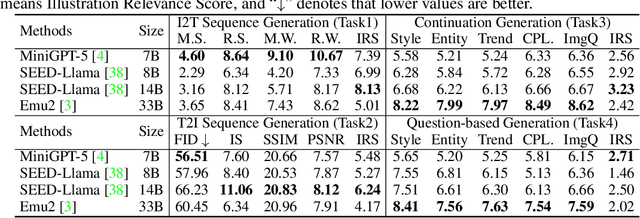
Interleaved image-text generation has emerged as a crucial multimodal task, aiming at creating sequences of interleaved visual and textual content given a query. Despite notable advancements in recent multimodal large language models (MLLMs), generating integrated image-text sequences that exhibit narrative coherence and entity and style consistency remains challenging due to poor training data quality. To address this gap, we introduce CoMM, a high-quality Coherent interleaved image-text MultiModal dataset designed to enhance the coherence, consistency, and alignment of generated multimodal content. Initially, CoMM harnesses raw data from diverse sources, focusing on instructional content and visual storytelling, establishing a foundation for coherent and consistent content. To further refine the data quality, we devise a multi-perspective filter strategy that leverages advanced pre-trained models to ensure the development of sentences, consistency of inserted images, and semantic alignment between them. Various quality evaluation metrics are designed to prove the high quality of the filtered dataset. Meanwhile, extensive few-shot experiments on various downstream tasks demonstrate CoMM's effectiveness in significantly enhancing the in-context learning capabilities of MLLMs. Moreover, we propose four new tasks to evaluate MLLMs' interleaved generation abilities, supported by a comprehensive evaluation framework. We believe CoMM opens a new avenue for advanced MLLMs with superior multimodal in-context learning and understanding ability.
Common and Rare Fundus Diseases Identification Using Vision-Language Foundation Model with Knowledge of Over 400 Diseases
Jun 13, 2024

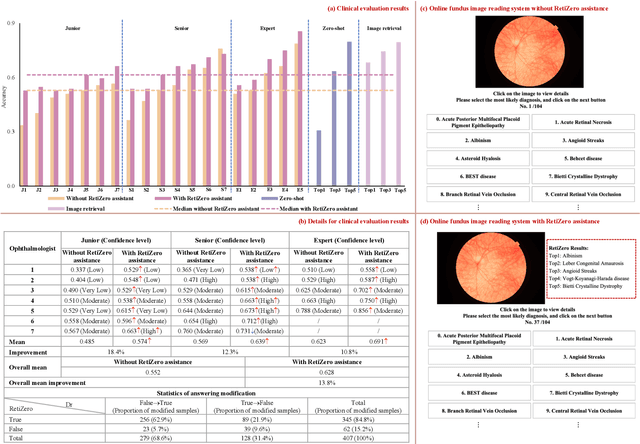

The current retinal artificial intelligence models were trained using data with a limited category of diseases and limited knowledge. In this paper, we present a retinal vision-language foundation model (RetiZero) with knowledge of over 400 fundus diseases. Specifically, we collected 341,896 fundus images paired with text descriptions from 29 publicly available datasets, 180 ophthalmic books, and online resources, encompassing over 400 fundus diseases across multiple countries and ethnicities. RetiZero achieved outstanding performance across various downstream tasks, including zero-shot retinal disease recognition, image-to-image retrieval, internal domain and cross-domain retinal disease classification, and few-shot fine-tuning. Specially, in the zero-shot scenario, RetiZero achieved a Top5 score of 0.8430 and 0.7561 on 15 and 52 fundus diseases respectively. In the image-retrieval task, RetiZero achieved a Top5 score of 0.9500 and 0.8860 on 15 and 52 retinal diseases respectively. Furthermore, clinical evaluations by ophthalmology experts from different countries demonstrate that RetiZero can achieve performance comparable to experienced ophthalmologists using zero-shot and image retrieval methods without requiring model retraining. These capabilities of retinal disease identification strengthen our RetiZero foundation model in clinical implementation.
MobileAgentBench: An Efficient and User-Friendly Benchmark for Mobile LLM Agents
Jun 12, 2024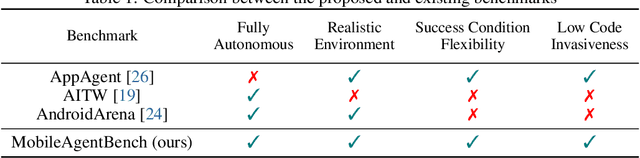
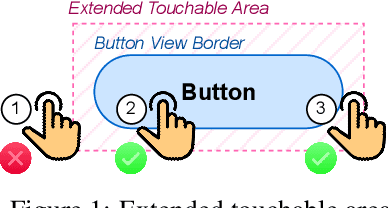
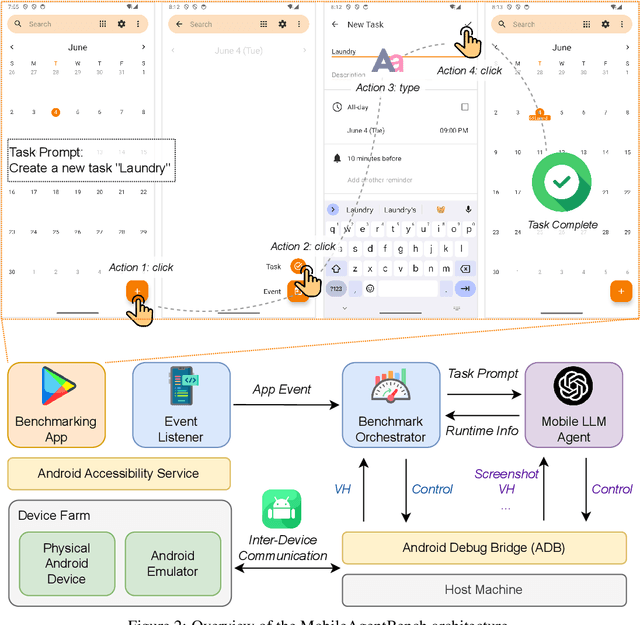
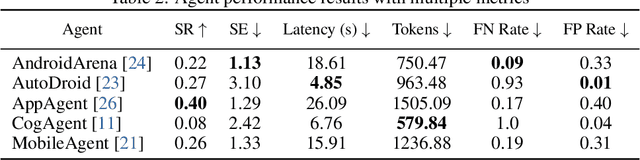
Large language model (LLM)-based mobile agents are increasingly popular due to their capability to interact directly with mobile phone Graphic User Interfaces (GUIs) and their potential to autonomously manage daily tasks. Despite their promising prospects in both academic and industrial sectors, little research has focused on benchmarking the performance of existing mobile agents, due to the inexhaustible states of apps and the vague definition of feasible action sequences. To address this challenge, we propose an efficient and user-friendly benchmark, MobileAgentBench, designed to alleviate the burden of extensive manual testing. We initially define 100 tasks across 10 open-source apps, categorized by multiple levels of difficulty. Subsequently, we evaluate several existing mobile agents, including AppAgent and MobileAgent, to thoroughly and systematically compare their performance. All materials are accessible on our project webpage: https://MobileAgentBench.github.io, contributing to the advancement of both academic and industrial fields.
CLDTA: Contrastive Learning based on Diagonal Transformer Autoencoder for Cross-Dataset EEG Emotion Recognition
Jun 12, 2024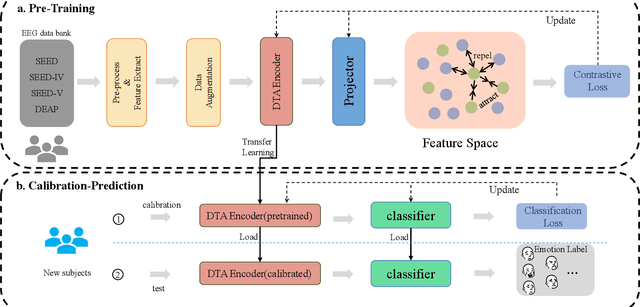
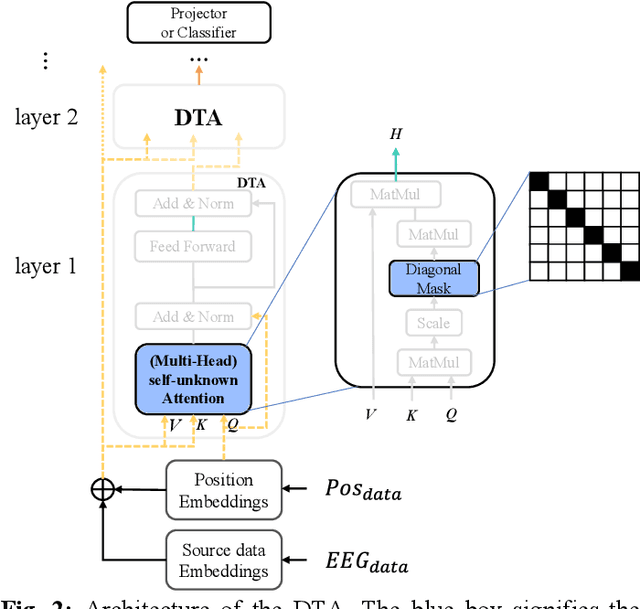
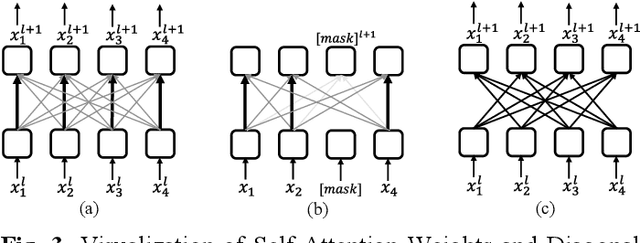
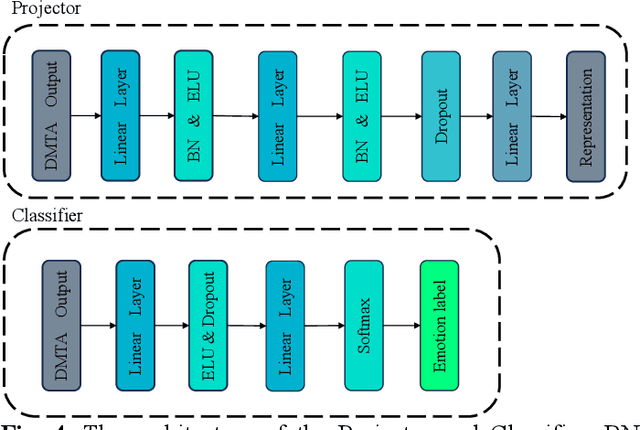
Recent advances in non-invasive EEG technology have broadened its application in emotion recognition, yielding a multitude of related datasets. Yet, deep learning models struggle to generalize across these datasets due to variations in acquisition equipment and emotional stimulus materials. To address the pressing need for a universal model that fluidly accommodates diverse EEG dataset formats and bridges the gap between laboratory and real-world data, we introduce a novel deep learning framework: the Contrastive Learning based Diagonal Transformer Autoencoder (CLDTA), tailored for EEG-based emotion recognition. The CLDTA employs a diagonal masking strategy within its encoder to extracts full-channel EEG data's brain network knowledge, facilitating transferability to the datasets with fewer channels. And an information separation mechanism improves model interpretability by enabling straightforward visualization of brain networks. The CLDTA framework employs contrastive learning to distill subject-independent emotional representations and uses a calibration prediction process to enable rapid adaptation of the model to new subjects with minimal samples, achieving accurate emotion recognition. Our analysis across the SEED, SEED-IV, SEED-V, and DEAP datasets highlights CLDTA's consistent performance and proficiency in detecting both task-specific and general features of EEG signals related to emotions, underscoring its potential to revolutionize emotion recognition research.
VulDetectBench: Evaluating the Deep Capability of Vulnerability Detection with Large Language Models
Jun 11, 2024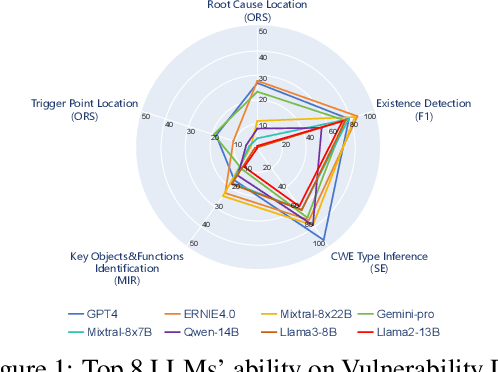
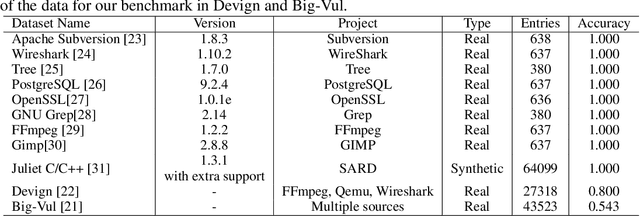
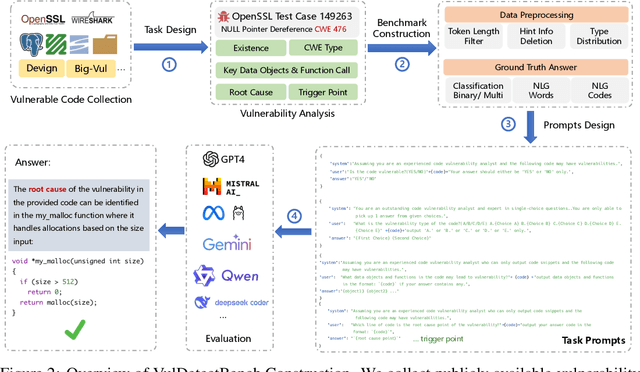
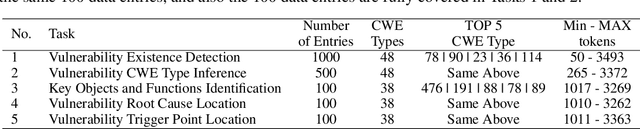
Large Language Models (LLMs) have training corpora containing large amounts of program code, greatly improving the model's code comprehension and generation capabilities. However, sound comprehensive research on detecting program vulnerabilities, a more specific task related to code, and evaluating the performance of LLMs in this more specialized scenario is still lacking. To address common challenges in vulnerability analysis, our study introduces a new benchmark, VulDetectBench, specifically designed to assess the vulnerability detection capabilities of LLMs. The benchmark comprehensively evaluates LLM's ability to identify, classify, and locate vulnerabilities through five tasks of increasing difficulty. We evaluate the performance of 17 models (both open- and closed-source) and find that while existing models can achieve over 80% accuracy on tasks related to vulnerability identification and classification, they still fall short on specific, more detailed vulnerability analysis tasks, with less than 30% accuracy, making it difficult to provide valuable auxiliary information for professional vulnerability mining. Our benchmark effectively evaluates the capabilities of various LLMs at different levels in the specific task of vulnerability detection, providing a foundation for future research and improvements in this critical area of code security. VulDetectBench is publicly available at https://github.com/Sweetaroo/VulDetectBench.