 Add to Chrome
 Add to Firefox
 Add to Edge
PDF-WuKong: A Large Multimodal Model for Efficient Long PDF Reading with End-to-End Sparse Sampling
Oct 08, 2024
Document understanding is a challenging task to process and comprehend large amounts of textual and visual information. Recent advances in Large Language Models (LLMs) have significantly improved the performance of this task. However, existing methods typically focus on either plain text or a limited number of document images, struggling to handle long PDF documents with interleaved text and images, especially in academic papers. In this paper, we introduce PDF-WuKong, a multimodal large language model (MLLM) which is designed to enhance multimodal question-answering (QA) for long PDF documents. PDF-WuKong incorporates a sparse sampler that operates on both text and image representations, significantly improving the efficiency and capability of the MLLM. The sparse sampler is integrated with the MLLM's image encoder and selects the paragraphs or diagrams most pertinent to user queries for processing by the language model. To effectively train and evaluate our model, we construct PaperPDF, a dataset consisting of a broad collection of academic papers sourced from arXiv, multiple strategies are proposed to generate automatically 1M QA pairs along with their corresponding evidence sources. Experimental results demonstrate the superiority and high efficiency of our approach over other models on the task of long multimodal PDF understanding, surpassing proprietary products by an average of 8.6% on F1. Our code and dataset will be released at https://github.com/yh-hust/PDF-Wukong.

LoTLIP: Improving Language-Image Pre-training for Long Text Understanding
Oct 07, 2024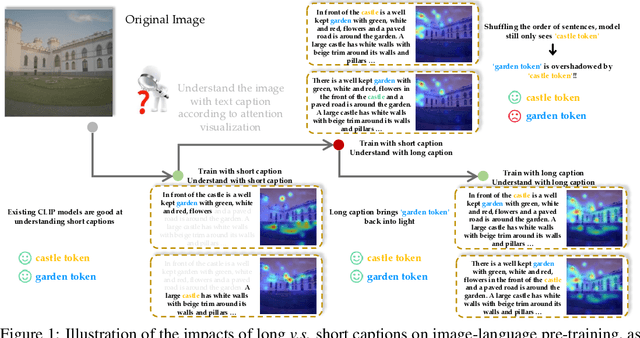

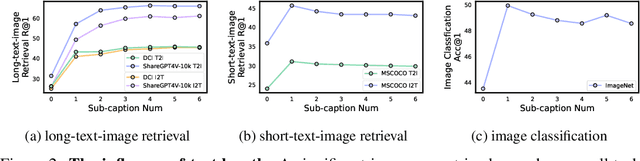

Understanding long text is of great demands in practice but beyond the reach of most language-image pre-training (LIP) models. In this work, we empirically confirm that the key reason causing such an issue is that the training images are usually paired with short captions, leaving certain tokens easily overshadowed by salient tokens. Towards this problem, our initial attempt is to relabel the data with long captions, however, directly learning with which may lead to performance degradation in understanding short text (e.g., in the image classification task). Then, after incorporating corner tokens to aggregate diverse textual information, we manage to help the model catch up to its original level of short text understanding yet greatly enhance its capability of long text understanding. We further look into whether the model can continuously benefit from longer captions and notice a clear trade-off between the performance and the efficiency. Finally, we validate the effectiveness of our approach using a self-constructed large-scale dataset, which consists of 100M long caption oriented text-image pairs. It is noteworthy that, on the task of long-text image retrieval, we beat the competitor using long captions with 11.1% improvement (i.e., from 72.62% to 83.72%). We will release the code, the model, and the new dataset to facilitate the reproducibility and further research. The project page is available at https://wuw2019.github.io/lotlip.
MC-CoT: A Modular Collaborative CoT Framework for Zero-shot Medical-VQA with LLM and MLLM Integration
Oct 06, 2024

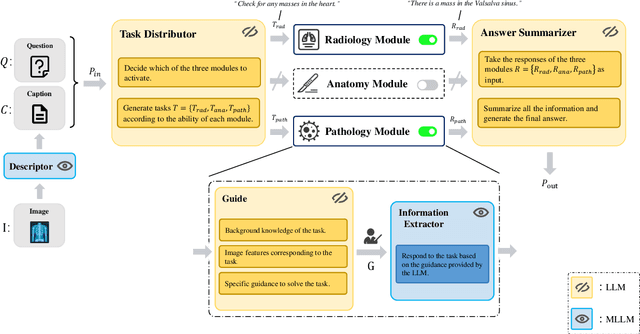

In recent advancements, multimodal large language models (MLLMs) have been fine-tuned on specific medical image datasets to address medical visual question answering (Med-VQA) tasks. However, this common approach of task-specific fine-tuning is costly and necessitates separate models for each downstream task, limiting the exploration of zero-shot capabilities. In this paper, we introduce MC-CoT, a modular cross-modal collaboration Chain-of-Thought (CoT) framework designed to enhance the zero-shot performance of MLLMs in Med-VQA by leveraging large language models (LLMs). MC-CoT improves reasoning and information extraction by integrating medical knowledge and task-specific guidance, where LLM provides various complex medical reasoning chains and MLLM provides various observations of medical images based on instructions of the LLM. Our experiments on datasets such as SLAKE, VQA-RAD, and PATH-VQA show that MC-CoT surpasses standalone MLLMs and various multimodality CoT frameworks in recall rate and accuracy. These findings highlight the importance of incorporating background information and detailed guidance in addressing complex zero-shot Med-VQA tasks.
Structural-Entropy-Based Sample Selection for Efficient and Effective Learning
Oct 03, 2024


Sample selection improves the efficiency and effectiveness of machine learning models by providing informative and representative samples. Typically, samples can be modeled as a sample graph, where nodes are samples and edges represent their similarities. Most existing methods are based on local information, such as the training difficulty of samples, thereby overlooking global information, such as connectivity patterns. This oversight can result in suboptimal selection because global information is crucial for ensuring that the selected samples well represent the structural properties of the graph. To address this issue, we employ structural entropy to quantify global information and losslessly decompose it from the whole graph to individual nodes using the Shapley value. Based on the decomposition, we present $\textbf{S}$tructural-$\textbf{E}$ntropy-based sample $\textbf{S}$election ($\textbf{SES}$), a method that integrates both global and local information to select informative and representative samples. SES begins by constructing a $k$NN-graph among samples based on their similarities. It then measures sample importance by combining structural entropy (global metric) with training difficulty (local metric). Finally, SES applies importance-biased blue noise sampling to select a set of diverse and representative samples. Comprehensive experiments on three learning scenarios -- supervised learning, active learning, and continual learning -- clearly demonstrate the effectiveness of our method.
Model-Based GNN Enabled Energy-Efficient Beamforming for Ultra-Dense Wireless Networks
Oct 03, 2024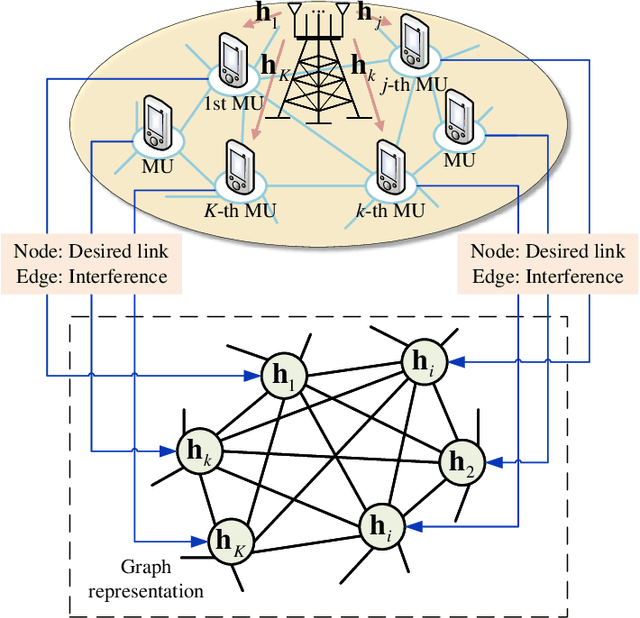
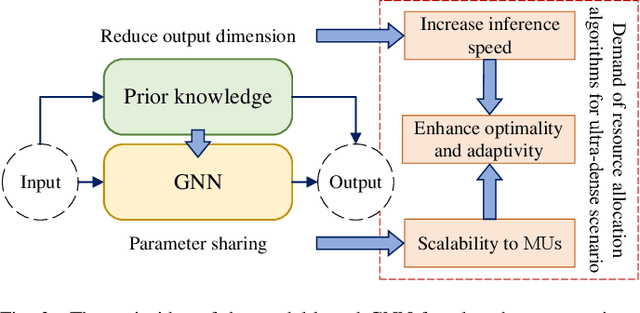
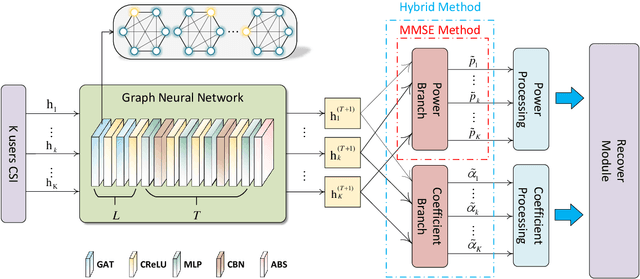
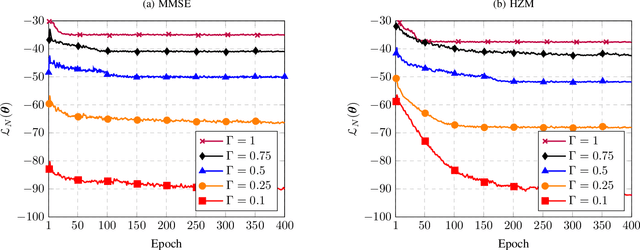
This paper investigates deep learning enabled beamforming design for ultra-dense wireless networks by integrating prior knowledge and graph neural network (GNN), named model-based GNN. A energy efficiency (EE) maximization problem is formulated subject to power budget and quality of service (QoS) requirements, which is reformulated based on the minimum mean square error scheme and the hybrid zero-forcing and maximum ratio transmission schemes. Based on the reformulated problem, the model-based GNN to realize the mapping from channel state information to beamforming vectors. Particular, the multi-head attention mechanism and residual connection are adopted to enhance the feature extracting, and a scheme selection module is designed to improve the adaptability of GNN. The unsupervised learning is adopted, and a various-input training strategy is proposed to enhance the stability of GNN. Numerical results demonstrate the millisecond-level response with limited performance loss, the scalability to different users and the adaptability to various channel conditions and QoS requirements of the model-based GNN in ultra-dense wireless networks.
GNN-Enabled Optimization of Placement and Transmission Design for UAV Communications
Oct 03, 2024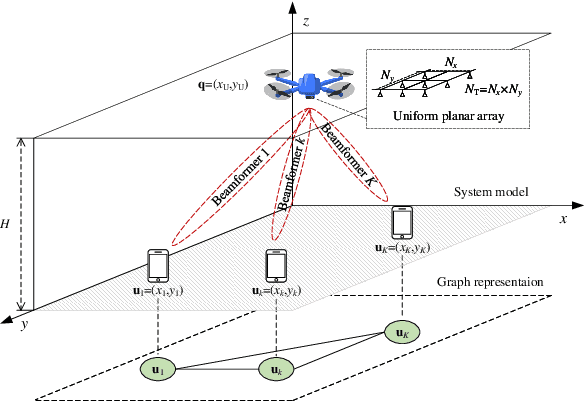
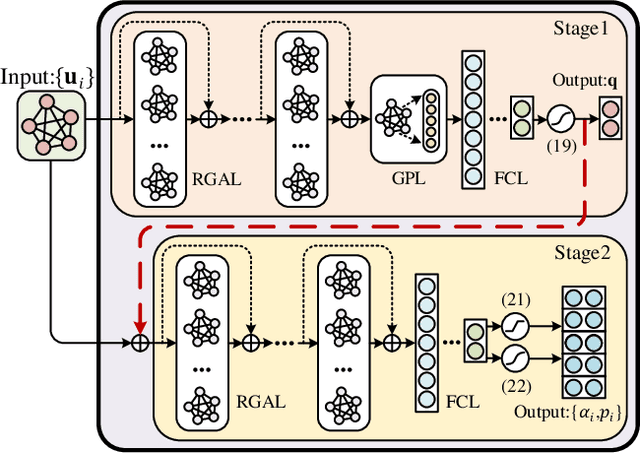
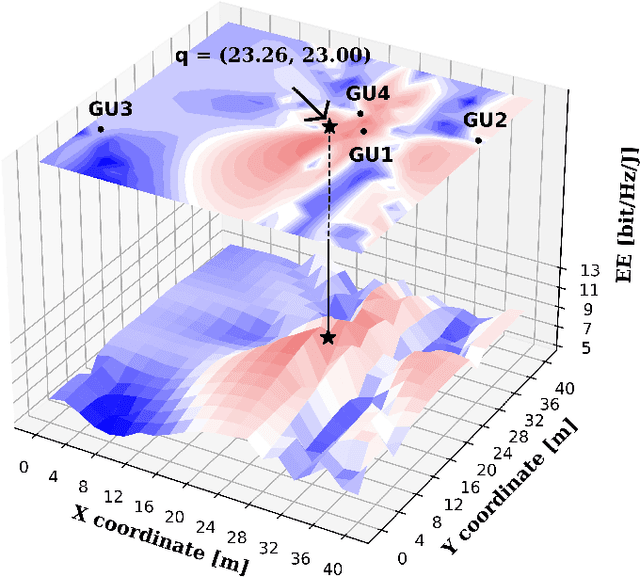
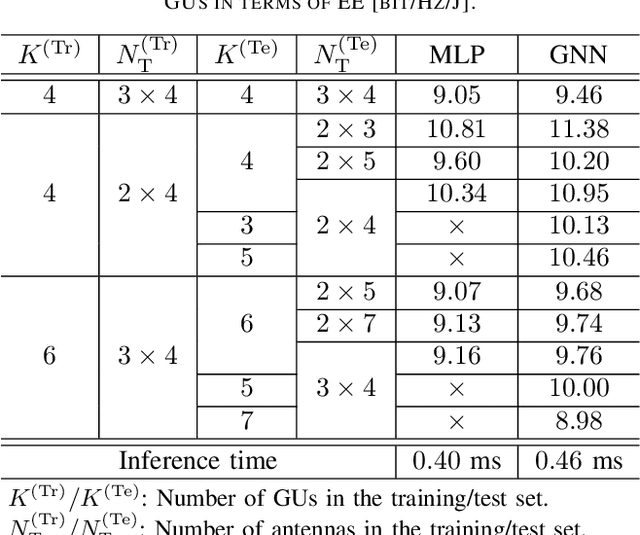
This paper applies graph neural networks (GNN) in UAV communications to optimize the placement and transmission design. We consider a multiple-user multiple-input-single-output UAV communication system where a UAV intends to find a placement to hover and serve users with maximum energy efficiency (EE). To facilitate the GNN-based learning, we adopt the hybrid maximum ratio transmission and zero forcing scheme to design the beamforming vectors and a feature augment is implemented by manually setting edge features. Furthermore, we propose a two-stage GNN-based model where the first stage and the second stage yield the placement and the transmission design, respectively. The two stages are connected via a residual and their learnable weights are jointly optimized by via unsupervised learning. Numerical results illustrate the effectiveness and validate the scalability to both UAV antennas and users of the proposed model.
Generative Retrieval Meets Multi-Graded Relevance
Sep 27, 2024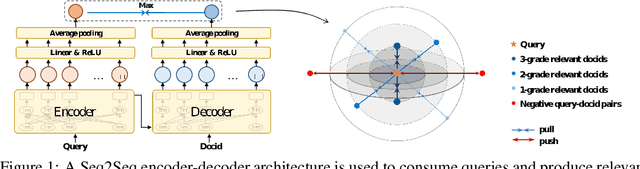
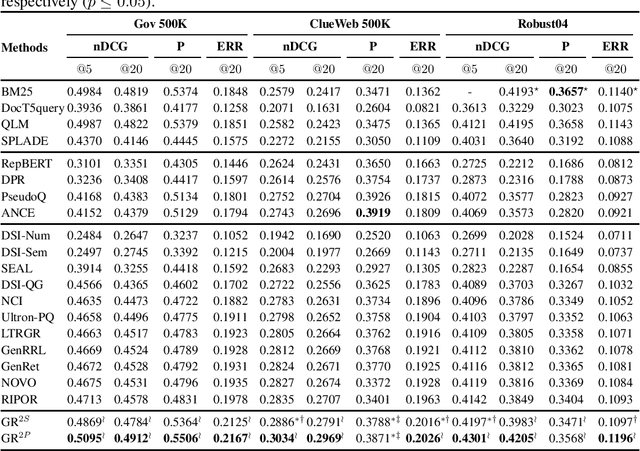
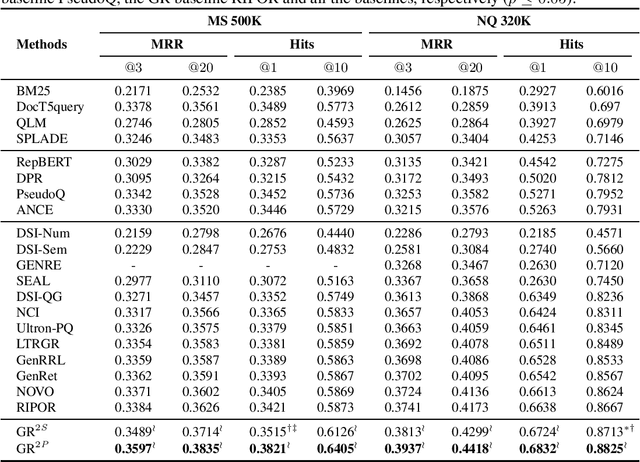
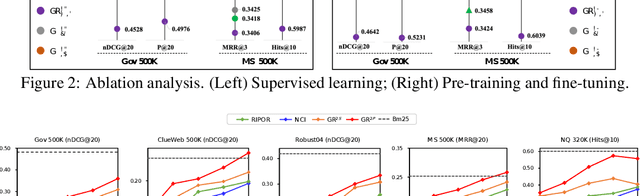
Generative retrieval represents a novel approach to information retrieval. It uses an encoder-decoder architecture to directly produce relevant document identifiers (docids) for queries. While this method offers benefits, current approaches are limited to scenarios with binary relevance data, overlooking the potential for documents to have multi-graded relevance. Extending generative retrieval to accommodate multi-graded relevance poses challenges, including the need to reconcile likelihood probabilities for docid pairs and the possibility of multiple relevant documents sharing the same identifier. To address these challenges, we introduce a framework called GRaded Generative Retrieval (GR$^2$). GR$^2$ focuses on two key components: ensuring relevant and distinct identifiers, and implementing multi-graded constrained contrastive training. First, we create identifiers that are both semantically relevant and sufficiently distinct to represent individual documents effectively. This is achieved by jointly optimizing the relevance and distinctness of docids through a combination of docid generation and autoencoder models. Second, we incorporate information about the relationship between relevance grades to guide the training process. We use a constrained contrastive training strategy to bring the representations of queries and the identifiers of their relevant documents closer together, based on their respective relevance grades. Extensive experiments on datasets with both multi-graded and binary relevance demonstrate the effectiveness of GR$^2$.
Haptic-ACT: Bridging Human Intuition with Compliant Robotic Manipulation via Immersive VR
Sep 18, 2024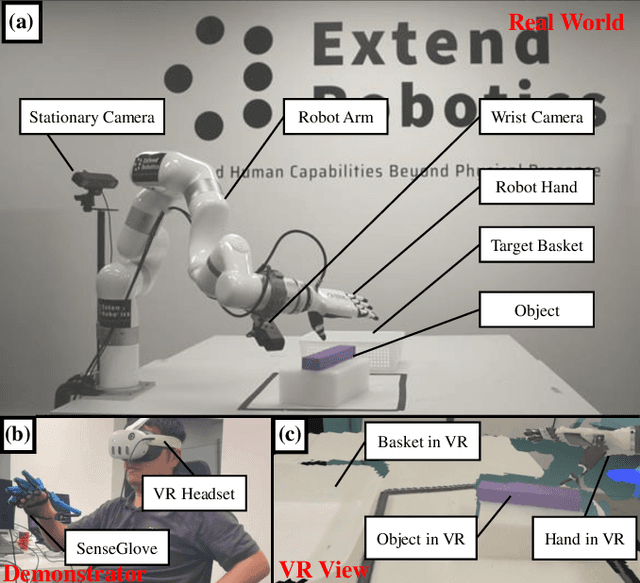
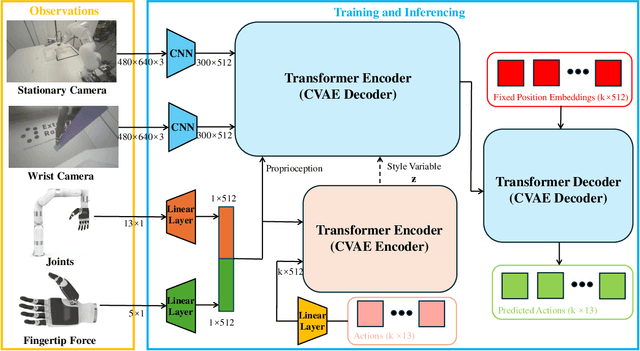
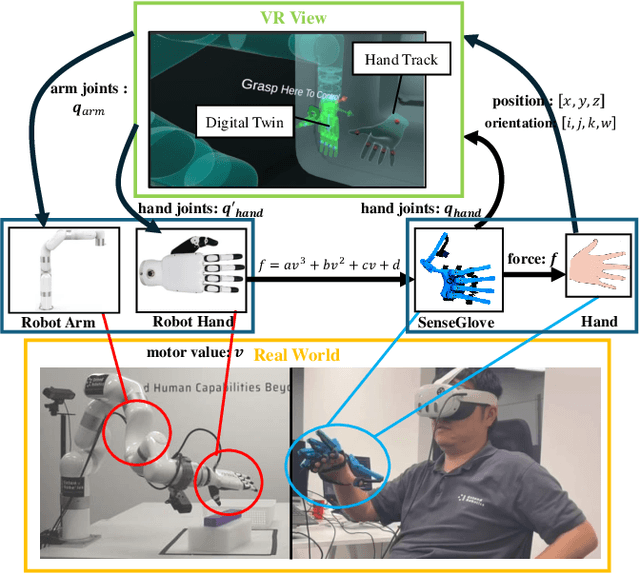
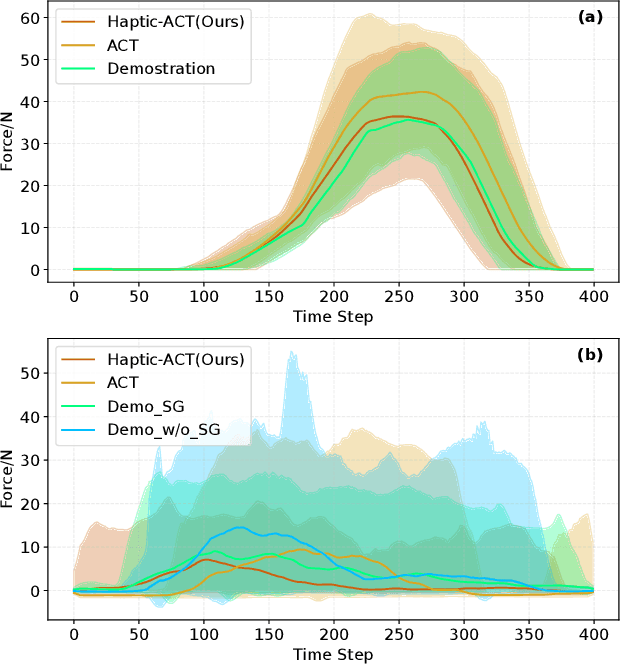
Robotic manipulation is essential for the widespread adoption of robots in industrial and home settings and has long been a focus within the robotics community. Advances in artificial intelligence have introduced promising learning-based methods to address this challenge, with imitation learning emerging as particularly effective. However, efficiently acquiring high-quality demonstrations remains a challenge. In this work, we introduce an immersive VR-based teleoperation setup designed to collect demonstrations from a remote human user. We also propose an imitation learning framework called Haptic Action Chunking with Transformers (Haptic-ACT). To evaluate the platform, we conducted a pick-and-place task and collected 50 demonstration episodes. Results indicate that the immersive VR platform significantly reduces demonstrator fingertip forces compared to systems without haptic feedback, enabling more delicate manipulation. Additionally, evaluations of the Haptic-ACT framework in both the MuJoCo simulator and on a real robot demonstrate its effectiveness in teaching robots more compliant manipulation compared to the original ACT. Additional materials are available at https://sites.google.com/view/hapticact.
RobustSVC: HuBERT-based Melody Extractor and Adversarial Learning for Robust Singing Voice Conversion
Sep 10, 2024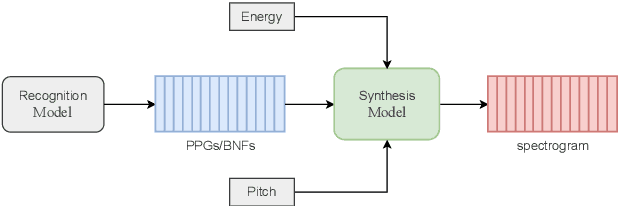
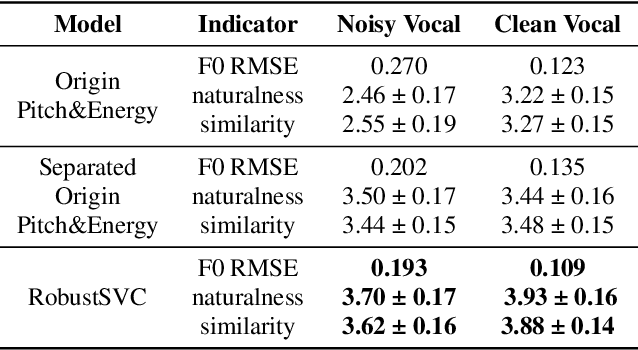
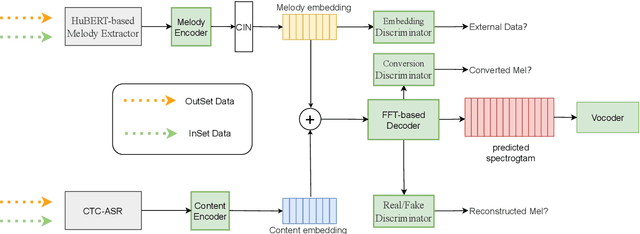

Singing voice conversion (SVC) is hindered by noise sensitivity due to the use of non-robust methods for extracting pitch and energy during the inference. As clean signals are key for the source audio in SVC, music source separation preprocessing offers a viable solution for handling noisy audio, like singing with background music (BGM). However, current separating methods struggle to fully remove noise or excessively suppress signal components, affecting the naturalness and similarity of the processed audio. To tackle this, our study introduces RobustSVC, a novel any-to-one SVC framework that converts noisy vocals into clean vocals sung by the target singer. We replace the non-robust feature with a HuBERT-based melody extractor and use adversarial training mechanisms with three discriminators to reduce information leakage in self-supervised representations. Experimental results show that RobustSVC is noise-robust and achieves higher similarity and naturalness than baseline methods in both noisy and clean vocal conditions.
Squid: Long Context as a New Modality for Energy-Efficient On-Device Language Models
Sep 03, 2024
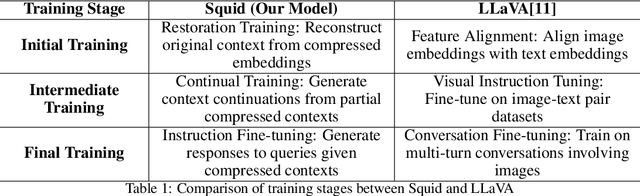
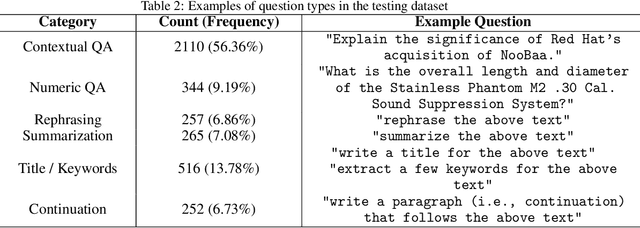
This paper presents Dolphin, a novel decoder-decoder architecture for energy-efficient processing of long contexts in language models. Our approach addresses the significant energy consumption and latency challenges inherent in on-device models. Dolphin employs a compact 0.5B parameter decoder to distill extensive contextual information into a memory embedding, substantially reducing the input length for the primary 7B parameter decoder model. Inspired by vision-language models, we repurpose the image embedding projector to encode long textual contexts, effectively treating extended context as a distinct modality. This innovative method enables processing of substantially longer contexts without the typical computational overhead associated with extended input sequences. Empirical evaluations demonstrate a 10-fold improvement in energy efficiency and a 5-fold reduction in latency compared to conventional full-length context processing methods without losing quality of the response. Our work contributes to the development of more sustainable and scalable language models for on-device applications, addressing the critical need for energy-efficient and responsive AI technologies in resource-constrained environments while maintaining the accuracy to understand long contexts. This research has implications for the broader field of natural language processing, particularly in the domain of efficient model design for resource-limited settings. By enabling more sophisticated AI capabilities on edge devices, Dolphin paves the way for advanced language processing in a wide range of applications where computational resources are at a premium. The Dolphin model is publicly available at https://huggingface.co/NexaAIDev/Dolphin.