 Add to Chrome
 Add to Firefox
 Add to Edge
BendTwin: Robust Dense-to-Sparse Physical Reconstruction with Bending-Aware Differentiable Spring-Mass Models
Aug 06, 2026
Reconstructing objects with mechanical properties from video observations enables physically consistent dynamic prediction, benefiting robotics planning and interaction. Existing spring--mass based physical driven reconstruction approaches offer efficient and differentiable physical reconstruction, but they typically rely on axial springs alone. Such formulations oversimplify the underlying structural mechanics and can become mechanically under-constrained when the physical graph is coarsened, limiting their ability to preserve stable local deformation. We present BendTwin, a bending-aware differentiable spring--mass framework for video-based reconstruction and future prediction of deformable objects. BendTwin introduces bending stiffness and damping over local surface triplets, penalizing deviations from rest angles and regularizing higher-order deformation. These bending constraints improve mechanical stability while preserving the simplicity of spring--mass system. Experiments show that BendTwin consistently outperforms the axial-only PhysTwin baseline. Ablation studies further demonstrate that the bending constraints maintain system stability across different downsampling ratios and consistently improve upon the original PhysTwin formulation. Overall, BendTwin provides an effective approach for constructing mechanically faithful digital twins from sparse-view RGB-D videos.

Perceptual Anchoring: Prototype-Guided Text Calibration for Training-free Open-Vocabulary Semantic Segmentation
Aug 05, 2026Training-free open-vocabulary semantic segmentation (OVSS) partitions an image into semantically distinct regions based on arbitrary text descriptions, without learning any additional parameters. However, existing methods typically focus on improving visual representations while treating text embeddings that encode only generic category concepts as fixed classification references. The resulting semantic gap between these generic concepts and the visual representations that capture the specific appearances of target instances often causes incomplete masks and erroneous predictions in non-target regions. Inspired by the symbol-percept correspondence underlying perceptual anchoring, we propose Prototype-Guided Text Calibration (PTC) for training-free OVSS. In the Perceiving stage, PTC selects reliable visual evidence based on initial matching scores to construct category-specific visual prototypes. In the Anchoring stage, PTC uses these prototypes to calibrate their corresponding text embeddings, with the calibration strength adaptively adjusted based on the amount of visual evidence. Consequently, the calibrated text embeddings align more accurately with instance-specific visual representations while preserving generic category semantics and open-vocabulary generalization. Moreover, PTC requires neither additional training nor external models and can serve as a plug-and-play module for existing methods. Extensive experiments across eight benchmarks show that PTC significantly enhances the performance of six representative methods and yields more complete and accurate segmentation results. These results validate PTC as a simple and effective approach to improving visual-text alignment.
Predictive Training with Latent Imagination for Visual Quadruped Navigation
Jul 20, 2026Reinforcement-learning navigation policies for legged robots select actions reactively from current observations and short-term memory, with limited capacity to anticipate how moving obstacles will evolve in the near future. In dynamic environments, this reactivity causes the robot to respond too late because collision risk depends on short-horizon scene structure rather than on current obstacle positions alone. Lightweight predictive supervision applied to the policy's recurrent state during training can encode anticipatory obstacle dynamics without modifying the inference-time controller. We augment a reactive LSTM-SRU navigation backbone with an auxiliary JEPA-style predictor and SIGReg regularization: during training, the predictor supervises the deterministic hidden state to anticipate its own next state; at inference, it is fully discarded, incurring zero additional computational cost. On simulated and real-world navigation benchmarks with dynamic obstacles, our method substantially improves navigation success while reducing collision rates through the predictive training signal alone, without additional inference-time parameters. Real-robot deployment on a Unitree Go2 demonstrates zero-shot sim-to-real transfer: the controller navigates cluttered indoor and dynamic outdoor environments without fine-tuning, with evasive behavior consistent with the collision reduction observed in simulation.
Objective Shaping with Hard Negatives: Windowed Partial AUC Optimization for RL-based LLM Recommenders
Apr 24, 2026Reinforcement learning (RL) effectively optimizes Large Language Model (LLM)-based recommenders by contrasting positive and negative items. Empirically, training with beam-search negatives consistently outperforms random negatives, yet the mechanism is not well understood. We address this gap by analyzing the induced optimization objective and show that: (i) Under binary reward feedback, optimizing LLM recommenders with Group Relative Policy Optimization (GRPO) is theoretically equivalent to maximizing the Area Under the ROC Curve (AUC), which is often misaligned with Top-$K$ recommendation; and (ii) Replacing random negatives with beam-search negatives reshapes the objective toward partial AUC, improving alignment with Top-$K$ metrics. Motivated by this perspective, we introduce Windowed Partial AUC (WPAUC), which constrains the false positive rate (FPR) to a window [$α,α+d$] to more directly align with Top-$K$ metrics. We further propose an efficient Threshold-Adjusted Windowed reweighting (TAWin) RL method for its optimization, enabling explicit control over the targeted Top-$K$ performance. Experiments on four real-world datasets validate the theory and deliver consistent state-of-the-art performance.
A Mamba-Based Multimodal Network for Multiscale Blast-Induced Rapid Structural Damage Assessment
Apr 13, 2026Accurate and rapid structural damage assessment (SDA) is crucial for post-disaster management, helping responders prioritise resources, plan rescues, and support recovery. Traditional field inspections, though precise, are limited by accessibility, safety risks, and time constraints, especially after large explosions. Machine learning with remote sensing has emerged as a scalable solution for rapid SDA, with Mamba-based networks achieving state-of-the-art performance. However, these methods often require extensive training and large datasets, limiting real-world applicability. Moreover, they fail to incorporate key physical characteristics of blast loading for SDA. To overcome these challenges, we propose a Mamba-based multimodal network for rapid SDA that integrates multi-scale blast-loading information with optical remote sensing images. Evaluated on the 2020 Beirut explosion, our method significantly improves performance over state-of-the-art approaches. Code is available at: https://github.com/IMPACTSquad/Blast-Mamba
M2F: Automated Formalization of Mathematical Literature at Scale
Feb 19, 2026Automated formalization of mathematics enables mechanical verification but remains limited to isolated theorems and short snippets. Scaling to textbooks and research papers is largely unaddressed, as it requires managing cross-file dependencies, resolving imports, and ensuring that entire projects compile end-to-end. We present M2F (Math-to-Formal), the first agentic framework for end-to-end, project-scale autoformalization in Lean. The framework operates in two stages. The statement compilation stage splits the document into atomic blocks, orders them via inferred dependencies, and repairs declaration skeletons until the project compiles, allowing placeholders in proofs. The proof repair stage closes these holes under fixed signatures using goal-conditioned local edits. Throughout both stages, M2F keeps the verifier in the loop, committing edits only when toolchain feedback confirms improvement. In approximately three weeks, M2F converts long-form mathematical sources into a project-scale Lean library of 153,853 lines from 479 pages textbooks on real analysis and convex analysis, fully formalized as Lean declarations with accompanying proofs. This represents textbook-scale formalization at a pace that would typically require months or years of expert effort. On FATE-H, we achieve $96\%$ proof success (vs.\ $80\%$ for a strong baseline). Together, these results demonstrate that practical, large-scale automated formalization of mathematical literature is within reach. The full generated Lean code from our runs is available at https://github.com/optsuite/ReasBook.git.
SITA: A Framework for Structure-to-Instance Theorem Autoformalization
Nov 13, 2025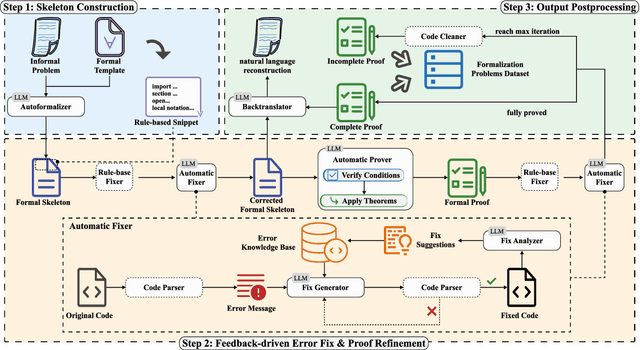
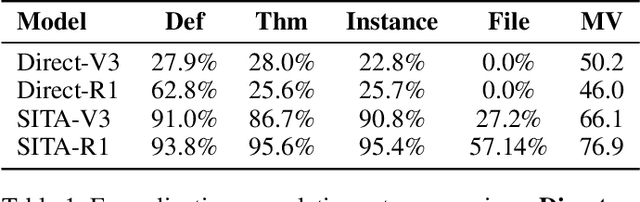
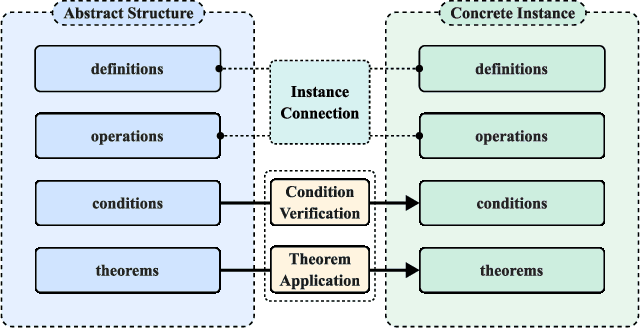
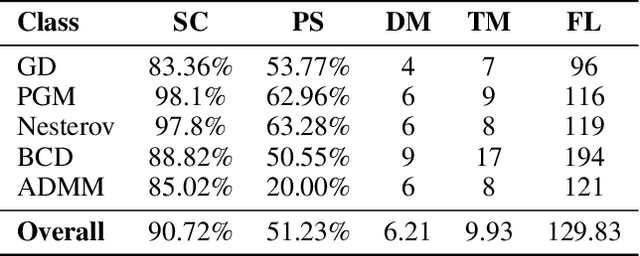
While large language models (LLMs) have shown progress in mathematical reasoning, they still face challenges in formalizing theorems that arise from instantiating abstract structures in concrete settings. With the goal of auto-formalizing mathematical results at the research level, we develop a framework for structure-to-instance theorem autoformalization (SITA), which systematically bridges the gap between abstract mathematical theories and their concrete applications in Lean proof assistant. Formalized abstract structures are treated as modular templates that contain definitions, assumptions, operations, and theorems. These templates serve as reusable guides for the formalization of concrete instances. Given a specific instantiation, we generate corresponding Lean definitions and instance declarations, integrate them using Lean's typeclass mechanism, and construct verified theorems by checking structural assumptions. We incorporate LLM-based generation with feedback-guided refinement to ensure both automation and formal correctness. Experiments on a dataset of optimization problems demonstrate that SITA effectively formalizes diverse instances grounded in abstract structures.
Core-Set Selection for Data-efficient Land Cover Segmentation
May 02, 2025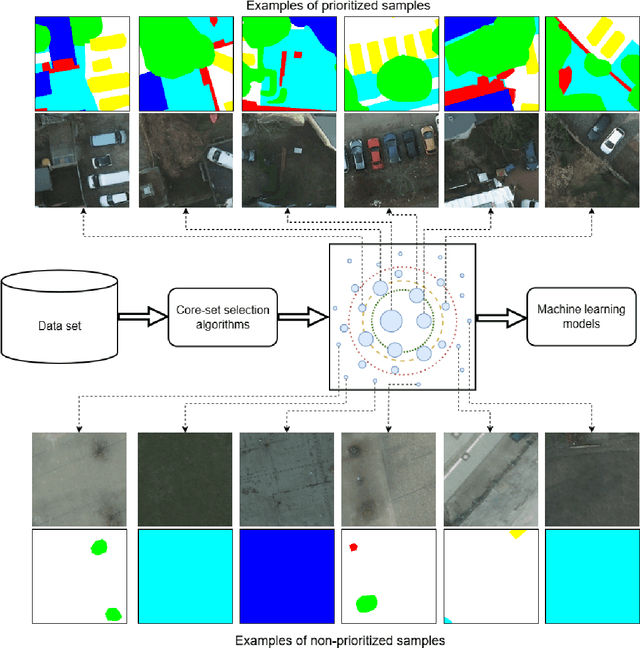
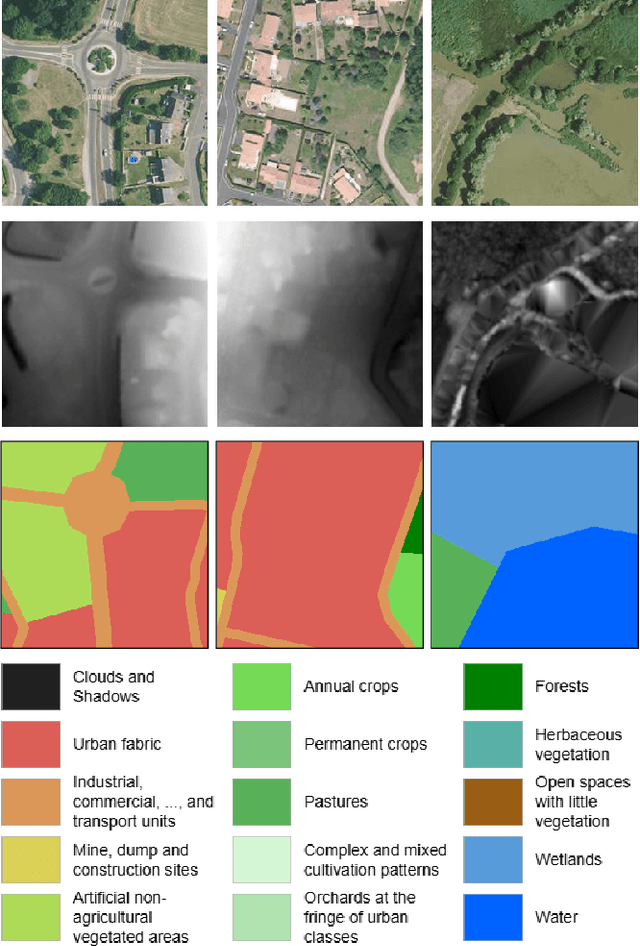
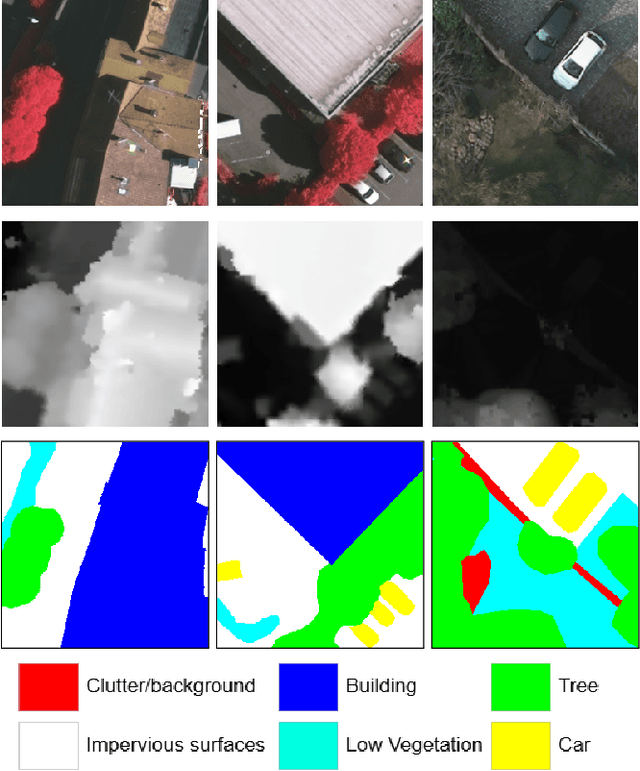
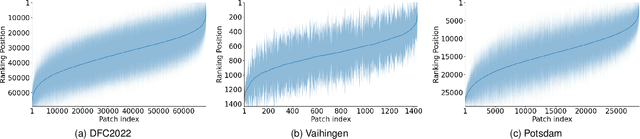
The increasing accessibility of remotely sensed data and the potential of such data to inform large-scale decision-making has driven the development of deep learning models for many Earth Observation tasks. Traditionally, such models must be trained on large datasets. However, the common assumption that broadly larger datasets lead to better outcomes tends to overlook the complexities of the data distribution, the potential for introducing biases and noise, and the computational resources required for processing and storing vast datasets. Therefore, effective solutions should consider both the quantity and quality of data. In this paper, we propose six novel core-set selection methods for selecting important subsets of samples from remote sensing image segmentation datasets that rely on imagery only, labels only, and a combination of each. We benchmark these approaches against a random-selection baseline on three commonly used land cover classification datasets: DFC2022, Vaihingen, and Potsdam. In each of the datasets, we demonstrate that training on a subset of samples outperforms the random baseline, and some approaches outperform training on all available data. This result shows the importance and potential of data-centric learning for the remote sensing domain. The code is available at https://github.com/keillernogueira/data-centric-rs-classification/.
Integrating Semi-Supervised and Active Learning for Semantic Segmentation
Jan 31, 2025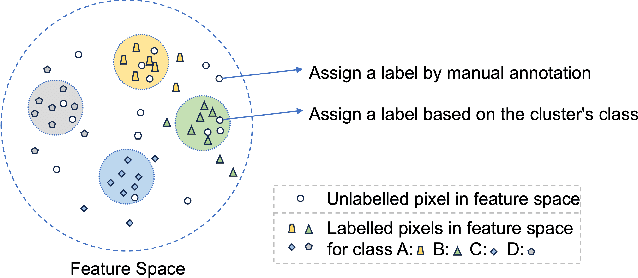
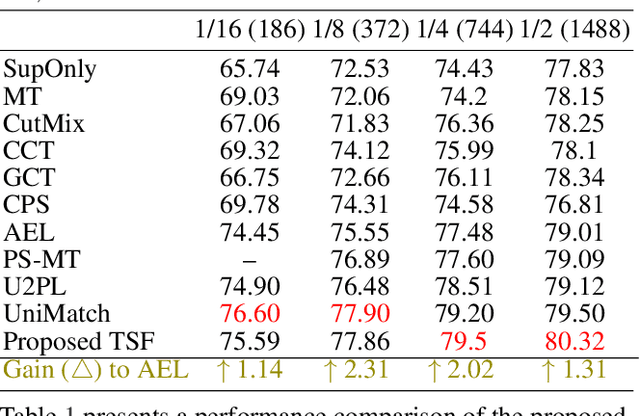
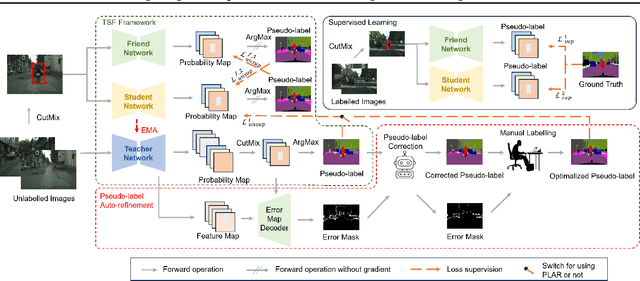
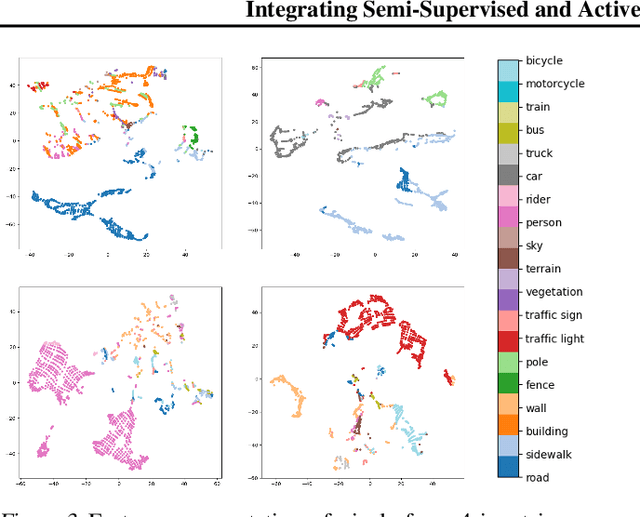
In this paper, we propose a novel active learning approach integrated with an improved semi-supervised learning framework to reduce the cost of manual annotation and enhance model performance. Our proposed approach effectively leverages both the labelled data selected through active learning and the unlabelled data excluded from the selection process. The proposed active learning approach pinpoints areas where the pseudo-labels are likely to be inaccurate. Then, an automatic and efficient pseudo-label auto-refinement (PLAR) module is proposed to correct pixels with potentially erroneous pseudo-labels by comparing their feature representations with those of labelled regions. This approach operates without increasing the labelling budget and is based on the cluster assumption, which states that pixels belonging to the same class should exhibit similar representations in feature space. Furthermore, manual labelling is only applied to the most difficult and uncertain areas in unlabelled data, where insufficient information prevents the PLAR module from making a decision. We evaluated the proposed hybrid semi-supervised active learning framework on two benchmark datasets, one from natural and the other from remote sensing imagery domains. In both cases, it outperformed state-of-the-art methods in the semantic segmentation task.
Patch-GAN Transfer Learning with Reconstructive Models for Cloud Removal
Jan 09, 2025Cloud removal plays a crucial role in enhancing remote sensing image analysis, yet accurately reconstructing cloud-obscured regions remains a significant challenge. Recent advancements in generative models have made the generation of realistic images increasingly accessible, offering new opportunities for this task. Given the conceptual alignment between image generation and cloud removal tasks, generative models present a promising approach for addressing cloud removal in remote sensing. In this work, we propose a deep transfer learning approach built on a generative adversarial network (GAN) framework to explore the potential of the novel masked autoencoder (MAE) image reconstruction model in cloud removal. Due to the complexity of remote sensing imagery, we further propose using a patch-wise discriminator to determine whether each patch of the image is real or not. The proposed reconstructive transfer learning approach demonstrates significant improvements in cloud removal performance compared to other GAN-based methods. Additionally, whilst direct comparisons with some of the state-of-the-art cloud removal techniques are limited due to unclear details regarding their train/test data splits, the proposed model achieves competitive results based on available benchmarks.