 Add to Chrome
 Add to Firefox
 Add to Edge
Predictive Training with Latent Imagination for Visual Quadruped Navigation
Jul 20, 2026
Reinforcement-learning navigation policies for legged robots select actions reactively from current observations and short-term memory, with limited capacity to anticipate how moving obstacles will evolve in the near future. In dynamic environments, this reactivity causes the robot to respond too late because collision risk depends on short-horizon scene structure rather than on current obstacle positions alone. Lightweight predictive supervision applied to the policy's recurrent state during training can encode anticipatory obstacle dynamics without modifying the inference-time controller. We augment a reactive LSTM-SRU navigation backbone with an auxiliary JEPA-style predictor and SIGReg regularization: during training, the predictor supervises the deterministic hidden state to anticipate its own next state; at inference, it is fully discarded, incurring zero additional computational cost. On simulated and real-world navigation benchmarks with dynamic obstacles, our method substantially improves navigation success while reducing collision rates through the predictive training signal alone, without additional inference-time parameters. Real-robot deployment on a Unitree Go2 demonstrates zero-shot sim-to-real transfer: the controller navigates cluttered indoor and dynamic outdoor environments without fine-tuning, with evasive behavior consistent with the collision reduction observed in simulation.

Enhancing Agent Safety Judgment: Controlled Benchmark Rewriting and Analogical Reasoning for Deceptive Out-of-Distribution Scenarios
May 05, 2026Tool-using agent systems powered by large language models (LLMs) are increasingly deployed across web, app, operating-system, and transactional environments. Yet existing safety benchmarks still emphasize explicit risks, potentially overstating a model's ability to judge deceptive or ambiguous trajectories. To address this gap, we introduce ROME (Red-team Orchestrated Multi-agent Evolution), a controlled benchmark-construction pipeline that rewrites known unsafe trajectories into more deceptive evaluation instances while preserving their underlying risk labels. Starting from 100 unsafe source trajectories, ROME produces 300 challenge instances spanning contextual ambiguity, implicit risks, and shortcut decision-making. Experiments show that these challenge sets substantially degrade safety-judgment performance, with hidden-risk cases remaining particularly non-trivial even for recent frontier models. We further study ARISE (Analogical Reasoning for Inference-time Safety Enhancement), a retrieval-guided inference-time enhancement that retrieves ReAct-style analogical safety trajectories from an external analogical base and injects them as structured reasoning exemplars. ARISE improves judgment quality without retraining, but is best viewed as a task-specific robustness enhancement rather than a standalone safety guarantee. Together, ROME and ARISE provide practical tools for stress-testing and improving agent safety judgment under deceptive distribution shifts.
The Battling Influencers Game: Nash Equilibria Structure of a Potential Game and Implications to Value Alignment
Feb 03, 2025
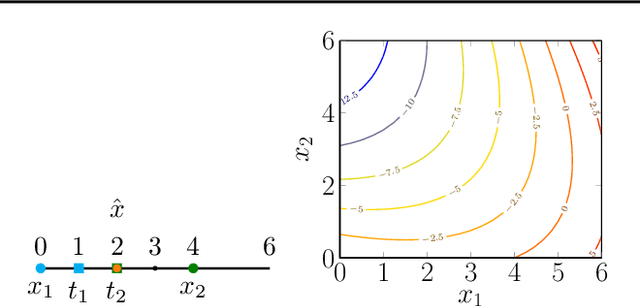
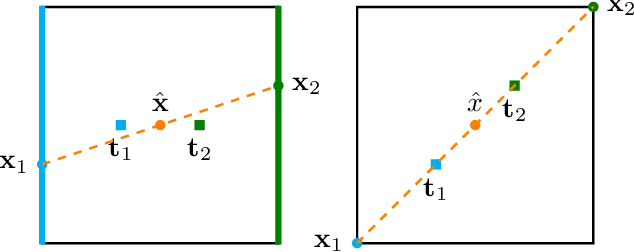
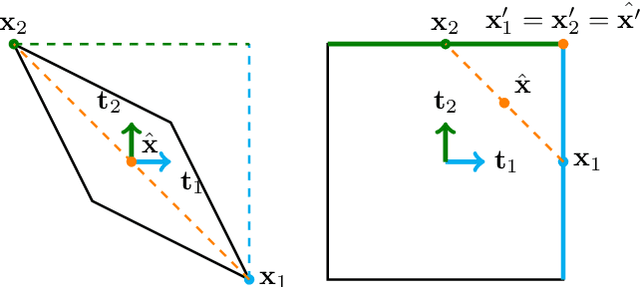
When multiple influencers attempt to compete for a receiver's attention, their influencing strategies must account for the presence of one another. We introduce the Battling Influencers Game (BIG), a multi-player simultaneous-move general-sum game, to provide a game-theoretic characterization of this social phenomenon. We prove that BIG is a potential game, that it has either one or an infinite number of pure Nash equilibria (NEs), and these pure NEs can be found by convex optimization. Interestingly, we also prove that at any pure NE, all (except at most one) influencers must exaggerate their actions to the maximum extent. In other words, it is rational for the influencers to be non-truthful and extreme because they anticipate other influencers to cancel out part of their influence. We discuss the implications of BIG to value alignment.
MRI Field-transfer Reconstruction with Limited Data: Regularization by Neural Style Transfer
Aug 21, 2023
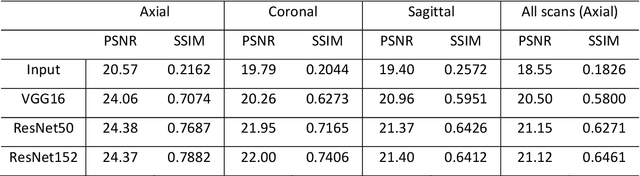


Recent works have demonstrated success in MRI reconstruction using deep learning-based models. However, most reported approaches require training on a task-specific, large-scale dataset. Regularization by denoising (RED) is a general pipeline which embeds a denoiser as a prior for image reconstruction. The potential of RED has been demonstrated for multiple image-related tasks such as denoising, deblurring and super-resolution. In this work, we propose a regularization by neural style transfer (RNST) method to further leverage the priors from the neural transfer and denoising engine. This enables RNST to reconstruct a high-quality image from a noisy low-quality image with different image styles and limited data. We validate RNST with clinical MRI scans from 1.5T and 3T and show that RNST can significantly boost image quality. Our results highlight the capability of the RNST framework for MRI reconstruction and the potential for reconstruction tasks with limited data.