 Add to Chrome
 Add to Firefox
 Add to Edge
Smartwatch Photoplethysmography-Derived Heart Age via ECG-Guided Cross-Modal Pretraining as a Digital Biomarker of Vascular Aging
Aug 03, 2026
Digital biomarkers of cardiovascular aging, often termed heart or vascular age, have been widely studied, but most rely on resting electrocardiography (ECG), imaging, or specialized vascular assessments. Evidence linking wearable photoplethysmography (PPG) to arterial stiffness and hypertension remains limited. We developed an ECG-guided cross-modal framework that uses synchronized smartwatch ECG to enhance PPG representation learning during pretraining while requiring only PPG at inference. The study included three OPPO cohorts across China, comprising 581,804 participants and 7,452,131 recordings. The Vascular Health Study cohort supported ECG-PPG self-supervised pretraining, fine-tuning, and internal validation, while two external cohorts assessed associations with pulse wave velocity (PWV) and prevalent hypertension. Combining subject-aware learning with ECG-PPG contrastive alignment, the PPG-only model achieved subject-level mean absolute errors of 5.895 years (Pearson r=0.819) in the PWV cohort and 4.344 years (r=0.800) in the home blood pressure monitoring cohort. Aggregating repeated recordings further improved short-term stability. After adjustment for chronological age, heart age gap was associated with PWV (partial r=0.2627, P<0.001); each 1-year increase corresponded to 0.062 m/s higher PWV, and accelerated versus decelerated heart aging was associated with 0.91 m/s higher adjusted PWV. Each 1-SD increase in adjusted heart age gap was associated with greater odds of prevalent hypertension (OR 1.72, 95% CI 1.49-1.99), while the highest versus lowest quartile had an OR of 4.25. These findings support smartwatch PPG-derived heart age gap as a scalable digital biomarker of arterial stiffness and prevalent hypertension.

LSTrans: Efficient Knowledge Transfer for Lightweight and Automated ECG Classification
Jul 12, 2026Deploying deep learning models for automated electrocardiogram classification on resource-constrained wearable devices remains challenging due to high computational costs. To address this, we propose LSTrans, a lightweight hybrid model designed for efficient and sensitive ECG analysis. LSTrans introduces a specialized 1D convolutional backbone with an interleaved layer architecture to capture both macroscopic rhythmic trends and microscopic morphological variations. This backbone is cascaded with a Transformer encoder to model long-range temporal dependencies, incorporating Low-Rank Adaptation across critical layers to compress the model and reduce the trainable parameter space. We further employ homogeneous and heterogeneous knowledge distillation to transfer diagnostic expertise from high-capacity teacher models to the student. Experimental results on multiple benchmark datasets demonstrate that LSTrans achieves a competitive balance between diagnostic sensitivity and resource efficiency, substantially reducing peak memory footprints and training latency during downstream adaptation. The source code is available for review at https://github.com/zyee00128/LSTrans4BIBM.
Separating Expert Retention from Autonomous Source Inference in Raw-ECG-Replay-Free Continual ECG Deployment
Jul 02, 2026In multi-source ECG deployment, models may need to incorporate new data sources when earlier raw ECGs cannot be retained or replayed. Freezing a pretrained backbone and assigning each source an isolated classifier prevents parameter interference, but deployment still requires selecting an expert when source metadata are unavailable. We study this distinction through \ours{}, an incremental expert bank built on frozen 1024-dimensional ECGFounder features. Each arriving domain adds a balanced-softmax linear expert, while a lightweight router is fitted only on retained training features and domain labels from sources observed so far. A validation-calibrated margin rule fuses the two most likely experts instead of committing to a single routed expert. On CPSC, PTB-XL, Georgia, and Chapman-Shaoxing, source-aware expert selection reaches $0.7915\pm0.0036$ Macro-F1 and a matched offline independent-head reference reaches $0.7885\pm0.0009$, supporting strong source-aware expert retention. Without source IDs, an MLP router reaches $0.7756\pm0.0027$ and top-2 margin fusion reaches $0.7782\pm0.0022$. The top-2 gain over hard MLP routing is small ($+0.0026$), with a 95\% confidence interval from paired bootstrap that includes zero. Across three domain orders, the top-2-to-oracle gap remains $0.0111$--$0.0133$, identifying autonomous source inference as the main remaining bottleneck. No raw ECGs are replayed, but frozen training features are retained for router updates; the method is therefore not memory-free.
Richer Representations for Neural Algorithmic Reasoning via Auxiliary Reconstruction
May 30, 2026Neural algorithmic reasoning has emerged as a popular research direction. It aims to train neural networks to mimic the step-by-step behavior of classical rule-based algorithms. More specifically, the execution of such algorithms can be abstracted as a sequence of states, where each state represents the intermediate outcome after an execution step. The training objective is to generate state sequences that replicate the underlying algorithmic process. A common framework for this task adopts an encoder-processor-decoder architecture, where the encoder learns representations of states, the processor simulates algorithmic steps, and the decoder reconstructs output states. While prior work has focused on improving the processor, the role of the encoder in representation learning has received little attention. Most methods rely on simple MLP encoders, raising the question of whether such representations are sufficiently informative for supporting algorithmic reasoning. This paper investigates how to improve encoder representations for neural algorithmic reasoning. We propose a reconstruction module that aims to recover the input state from its encoded representation. This auxiliary reconstruction task encourages the encoder to retain critical information about the input. We demonstrate that incorporating this task during training improves the performance of existing neural architectures on standard benchmarks. Furthermore, we observe that current encoders often underutilize the correlations among features within a state. To address this, we draw inspiration from self-supervised learning and design an enhanced variant of the auxiliary task that encourages the encoder to capture intra-state feature dependencies. Experimental results show that our method enables the encoder to learn richer representations, thereby enhancing the performance of existing processors on algorithmic reasoning tasks.
CRAG: Can 3D Generative Models Help 3D Assembly?
Feb 26, 2026Most existing 3D assembly methods treat the problem as pure pose estimation, rearranging observed parts via rigid transformations. In contrast, human assembly naturally couples structural reasoning with holistic shape inference. Inspired by this intuition, we reformulate 3D assembly as a joint problem of assembly and generation. We show that these two processes are mutually reinforcing: assembly provides part-level structural priors for generation, while generation injects holistic shape context that resolves ambiguities in assembly. Unlike prior methods that cannot synthesize missing geometry, we propose CRAG, which simultaneously generates plausible complete shapes and predicts poses for input parts. Extensive experiments demonstrate state-of-the-art performance across in-the-wild objects with diverse geometries, varying part counts, and missing pieces. Our code and models will be released.
Auto-Augmentation Contrastive Learning for Wearable-based Human Activity Recognition
Jan 30, 2026For low-semantic sensor signals from human activity recognition (HAR), contrastive learning (CL) is essential to implement novel applications or generic models without manual annotation, which is a high-performance self-supervised learning (SSL) method. However, CL relies heavily on data augmentation for pairwise comparisons. Especially for low semantic data in the HAR area, conducting good performance augmentation strategies in pretext tasks still rely on manual attempts lacking generalizability and flexibility. To reduce the augmentation burden, we propose an end-to-end auto-augmentation contrastive learning (AutoCL) method for wearable-based HAR. AutoCL is based on a Siamese network architecture that shares the parameters of the backbone and with a generator embedded to learn auto-augmentation. AutoCL trains the generator based on the representation in the latent space to overcome the disturbances caused by noise and redundant information in raw sensor data. The architecture empirical study indicates the effectiveness of this design. Furthermore, we propose a stop-gradient design and correlation reduction strategy in AutoCL to enhance encoder representation learning. Extensive experiments based on four wide-used HAR datasets demonstrate that the proposed AutoCL method significantly improves recognition accuracy compared with other SOTA methods.
Combating Spurious Correlations in Graph Interpretability via Self-Reflection
Jan 16, 2026Interpretable graph learning has recently emerged as a popular research topic in machine learning. The goal is to identify the important nodes and edges of an input graph that are crucial for performing a specific graph reasoning task. A number of studies have been conducted in this area, and various benchmark datasets have been proposed to facilitate evaluation. Among them, one of the most challenging is the Spurious-Motif benchmark, introduced at ICLR 2022. The datasets in this synthetic benchmark are deliberately designed to include spurious correlations, making it particularly difficult for models to distinguish truly relevant structures from misleading patterns. As a result, existing methods exhibit significantly worse performance on this benchmark compared to others. In this paper, we focus on improving interpretability on the challenging Spurious-Motif datasets. We demonstrate that the self-reflection technique, commonly used in large language models to tackle complex tasks, can also be effectively adapted to enhance interpretability in datasets with strong spurious correlations. Specifically, we propose a self-reflection framework that can be integrated with existing interpretable graph learning methods. When such a method produces importance scores for each node and edge, our framework feeds these predictions back into the original method to perform a second round of evaluation. This iterative process mirrors how large language models employ self-reflective prompting to reassess their previous outputs. We further analyze the reasons behind this improvement from the perspective of graph representation learning, which motivates us to propose a fine-tuning training method based on this feedback mechanism.
Self-Augmented Mixture-of-Experts for QoS Prediction
Jan 16, 2026Quality of Service (QoS) prediction is one of the most fundamental problems in service computing and personalized recommendation. In the problem, there is a set of users and services, each associated with a set of descriptive features. Interactions between users and services produce feedback values, typically represented as numerical QoS metrics such as response time or availability. Given the observed feedback for a subset of user-service pairs, the goal is to predict the QoS values for the remaining pairs. A key challenge in QoS prediction is the inherent sparsity of user-service interactions, as only a small subset of feedback values is typically observed. To address this, we propose a self-augmented strategy that leverages a model's own predictions for iterative refinement. In particular, we partially mask the predicted values and feed them back into the model to predict again. Building on this idea, we design a self-augmented mixture-of-experts model, where multiple expert networks iteratively and collaboratively estimate QoS values. We find that the iterative augmentation process naturally aligns with the MoE architecture by enabling inter-expert communication: in the second round, each expert receives the first-round predictions and refines its output accordingly. Experiments on benchmark datasets show that our method outperforms existing baselines and achieves competitive results.
H-LDM: Hierarchical Latent Diffusion Models for Controllable and Interpretable PCG Synthesis from Clinical Metadata
Nov 18, 2025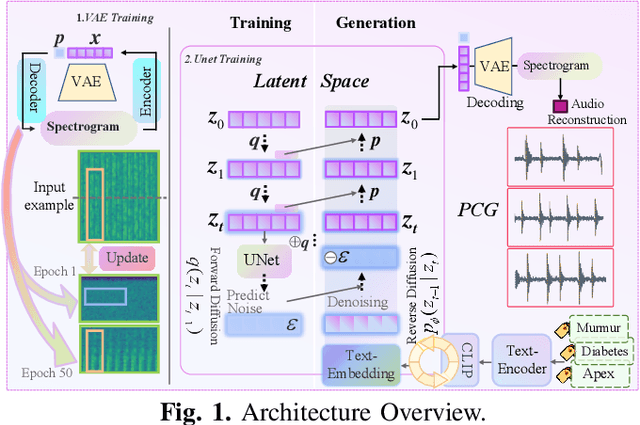
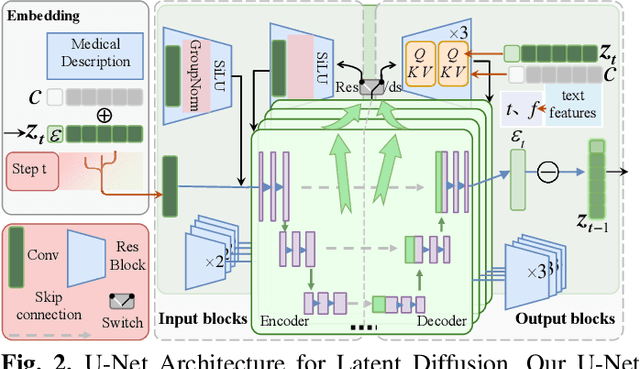
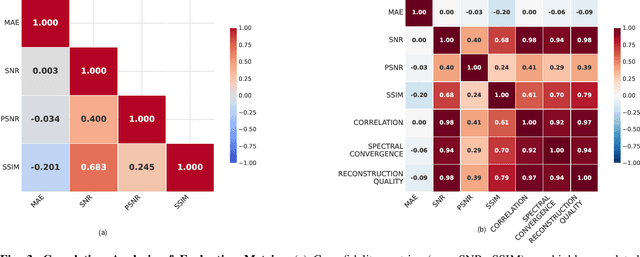
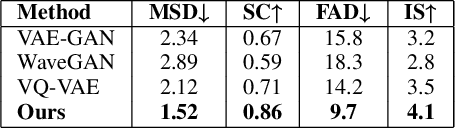
Phonocardiogram (PCG) analysis is vital for cardiovascular disease diagnosis, yet the scarcity of labeled pathological data hinders the capability of AI systems. To bridge this, we introduce H-LDM, a Hierarchical Latent Diffusion Model for generating clinically accurate and controllable PCG signals from structured metadata. Our approach features: (1) a multi-scale VAE that learns a physiologically-disentangled latent space, separating rhythm, heart sounds, and murmurs; (2) a hierarchical text-to-biosignal pipeline that leverages rich clinical metadata for fine-grained control over 17 distinct conditions; and (3) an interpretable diffusion process guided by a novel Medical Attention module. Experiments on the PhysioNet CirCor dataset demonstrate state-of-the-art performance, achieving a Fréchet Audio Distance of 9.7, a 92% attribute disentanglement score, and 87.1% clinical validity confirmed by cardiologists. Augmenting diagnostic models with our synthetic data improves the accuracy of rare disease classification by 11.3\%. H-LDM establishes a new direction for data augmentation in cardiac diagnostics, bridging data scarcity with interpretable clinical insights.
GARF: Learning Generalizable 3D Reassembly for Real-World Fractures
Apr 07, 20253D reassembly is a challenging spatial intelligence task with broad applications across scientific domains. While large-scale synthetic datasets have fueled promising learning-based approaches, their generalizability to different domains is limited. Critically, it remains uncertain whether models trained on synthetic datasets can generalize to real-world fractures where breakage patterns are more complex. To bridge this gap, we propose GARF, a generalizable 3D reassembly framework for real-world fractures. GARF leverages fracture-aware pretraining to learn fracture features from individual fragments, with flow matching enabling precise 6-DoF alignments. At inference time, we introduce one-step preassembly, improving robustness to unseen objects and varying numbers of fractures. In collaboration with archaeologists, paleoanthropologists, and ornithologists, we curate Fractura, a diverse dataset for vision and learning communities, featuring real-world fracture types across ceramics, bones, eggshells, and lithics. Comprehensive experiments have shown our approach consistently outperforms state-of-the-art methods on both synthetic and real-world datasets, achieving 82.87\% lower rotation error and 25.15\% higher part accuracy. This sheds light on training on synthetic data to advance real-world 3D puzzle solving, demonstrating its strong generalization across unseen object shapes and diverse fracture types.