 Add to Chrome
 Add to Firefox
 Add to Edge
ScienceFlow: A long-horizon agent for ML research, scientific discovery and beyond
Aug 14, 2026
Enabling LLM agents to sustain productive, stable, and goal-aligned research over extended horizons is a central challenge for autonomous machine learning and scientific discovery, as progress hinges on continuously managing evolving state, exploration decisions, and computational resources. Pioneering autoresearch agents, despite great success, still lack mechanisms for continuity, recovery from dead ends, and value-driven compute allocation, which inherently undermines overall search efficiency, wastes computational resources, and lowers the chance of ultimate success. To bridge this gap, we introduce ScienceFlow, an end-to-end autoresearch agent framework that organizes long-horizon research work into research segments grounded in executable workspaces. It represents research progress as recoverable executable states, enabling efficient exploration, revision, and execution. Transitions between research segments are governed by Executable-State Transition through Re-Anchoring (ESTRA), which selects either the live state or an archived state as the next anchor and determines whether to continue or redirect the research trajectory. An evidence-aware execution controller allocates resources to physical jobs based on resource availability, remaining budget, and validated progress. We evaluate ScienceFlow on tasks spanning machine learning, scientific modeling, and mathematical optimization. Results on diverse long-horizon benchmarks demonstrate its ability to sustain effective research processes, highlighted by a SOTA 70.22 percent Any-Medal score on the full MLE-bench within a 24-hour budget, outperforming prior reported results by 4.92 percentage points. The efficacy of ScienceFlow further demonstrates that efficient state management, adaptive exploration, and objective-aligned execution are critical for scaling autonomous research beyond short-horizon interactions.

Empowering Polymeric Materials Discovery by Artificial Intelligence
Jun 18, 2026Polymeric materials underpin modern technologies spanning energy storage, microelectronics, healthcare and sustainable manufacturing. Yet their rational design remains exceptionally challenging because material performance emerges from complex interactions among molecular composition, chain architecture, processing history and hierarchical structural evolution across multiple length and time scales. Consequently, polymer research has long relied on labor-intensive experimentation and fragmented modeling approaches, limiting both mechanistic understanding and innovation efficiency. Recent advances in data infrastructure, machine learning, large artificial intelligence (AI) models and laboratory automation are beginning to reshape this landscape. Rather than functioning as isolated tools, polymer databases, predictive models, AI agents and automated laboratories are increasingly converging into interconnected discovery ecosystems. As a result, the central challenge is shifting from improving predictive accuracy alone to enabling reliable decision-making, adaptive learning and seamless integration across computation, experimentation and scientific reasoning. We argue that polymer science is entering an era of autonomous discovery, in which data, simulation, reasoning and experimentation operate within self-improving feedback loops that continuously generate hypotheses, design materials, execute experiments and refine predictive models. By unifying molecular design, process optimization, experimental validation and industrial translation, such autonomous ecosystems establish a more predictive, reproducible and scalable paradigm for polymer innovation, fundamentally transforming how polymer research is conducted.
GlobalDentBench: A Multinational Benchmark for Evaluating LLM Clinical Reasoning in Dentistry with Expert Calibration
May 26, 2026While large language models (LLMs) hold transformative potential for medicine, their reasoning robustness and safety in real-world clinical scenarios remain critically underexplored, particularly in dentistry. Here we introduce GlobalDentBench, the first multinational dental benchmark, featuring a taxonomy that encompasses 14 dental specialties across 88 countries and regions spanning six continents. The benchmark comprises 8,978 expert-validated questions across three formats (multiple-choice, short-answer, and case-based questions) and assesses three progressive reasoning levels: knowledge recall (L1), routine reasoning (L2), and individualized reasoning (L3). To ensure data quality, the automated construction framework was calibrated by six senior dentists, achieving expert agreement rates of 99.98% for multiple-choice and short-answer questions and 96.78% for the more complex case-based questions. Evaluation of 12 frontier LLMs on GlobalDentBench revealed a sharp, stepwise performance degradation with increasing reasoning complexity. Specifically, accuracy plummeted from 81.34% on multiple-choice to 64.53% on short-answer and 22.34% on case-based questions, while declining markedly from 74.01% at L1 to 55.64% at L2 and 35.71% at L3. More critically, risk analysis of real-world dental cases demonstrated an alarming overall unsafe rate of 31.01% in LLM-generated clinical recommendations, with 4.51% posing risks of irreversible patient harm and risks particularly pronounced in specialties such as orthodontics. These findings expose fundamental limitations in the medical reasoning and safety of current LLMs. Consequently, GlobalDentBench provides a scalable foundation for trustworthy clinical AI evaluation, underscoring the urgent need for rigorous validation before the safe deployment of these models in healthcare.
DentalGPT: Incentivizing Multimodal Complex Reasoning in Dentistry
Dec 12, 2025Reliable interpretation of multimodal data in dentistry is essential for automated oral healthcare, yet current multimodal large language models (MLLMs) struggle to capture fine-grained dental visual details and lack sufficient reasoning ability for precise diagnosis. To address these limitations, we present DentalGPT, a specialized dental MLLM developed through high-quality domain knowledge injection and reinforcement learning. Specifically, the largest annotated multimodal dataset for dentistry to date was constructed by aggregating over 120k dental images paired with detailed descriptions that highlight diagnostically relevant visual features, making it the multimodal dataset with the most extensive collection of dental images to date. Training on this dataset significantly enhances the MLLM's visual understanding of dental conditions, while the subsequent reinforcement learning stage further strengthens its capability for multimodal complex reasoning. Comprehensive evaluations on intraoral and panoramic benchmarks, along with dental subsets of medical VQA benchmarks, show that DentalGPT achieves superior performance in disease classification and dental VQA tasks, outperforming many state-of-the-art MLLMs despite having only 7B parameters. These results demonstrate that high-quality dental data combined with staged adaptation provides an effective pathway for building capable and domain-specialized dental MLLMs.
Unsupervised Discovery of Long-Term Spatiotemporal Periodic Workflows in Human Activities
Nov 18, 2025Periodic human activities with implicit workflows are common in manufacturing, sports, and daily life. While short-term periodic activities -- characterized by simple structures and high-contrast patterns -- have been widely studied, long-term periodic workflows with low-contrast patterns remain largely underexplored. To bridge this gap, we introduce the first benchmark comprising 580 multimodal human activity sequences featuring long-term periodic workflows. The benchmark supports three evaluation tasks aligned with real-world applications: unsupervised periodic workflow detection, task completion tracking, and procedural anomaly detection. We also propose a lightweight, training-free baseline for modeling diverse periodic workflow patterns. Experiments show that: (i) our benchmark presents significant challenges to both unsupervised periodic detection methods and zero-shot approaches based on powerful large language models (LLMs); (ii) our baseline outperforms competing methods by a substantial margin in all evaluation tasks; and (iii) in real-world applications, our baseline demonstrates deployment advantages on par with traditional supervised workflow detection approaches, eliminating the need for annotation and retraining. Our project page is https://sites.google.com/view/periodicworkflow.
CASCADE: LLM-Powered JavaScript Deobfuscator at Google
Jul 23, 2025Software obfuscation, particularly prevalent in JavaScript, hinders code comprehension and analysis, posing significant challenges to software testing, static analysis, and malware detection. This paper introduces CASCADE, a novel hybrid approach that integrates the advanced coding capabilities of Gemini with the deterministic transformation capabilities of a compiler Intermediate Representation (IR), specifically JavaScript IR (JSIR). By employing Gemini to identify critical prelude functions, the foundational components underlying the most prevalent obfuscation techniques, and leveraging JSIR for subsequent code transformations, CASCADE effectively recovers semantic elements like original strings and API names, and reveals original program behaviors. This method overcomes limitations of existing static and dynamic deobfuscation techniques, eliminating hundreds to thousands of hardcoded rules while achieving reliability and flexibility. CASCADE is already deployed in Google's production environment, demonstrating substantial improvements in JavaScript deobfuscation efficiency and reducing reverse engineering efforts.
FieldWorkArena: Agentic AI Benchmark for Real Field Work Tasks
May 26, 2025This paper proposes FieldWorkArena, a benchmark for agentic AI targeting real-world field work. With the recent increase in demand for agentic AI, they are required to monitor and report safety and health incidents, as well as manufacturing-related incidents, that may occur in real-world work environments. Existing agentic AI benchmarks have been limited to evaluating web tasks and are insufficient for evaluating agents in real-world work environments, where complexity increases significantly. In this paper, we define a new action space that agentic AI should possess for real world work environment benchmarks and improve the evaluation function from previous methods to assess the performance of agentic AI in diverse real-world tasks. The dataset consists of videos captured on-site and documents actually used in factories and warehouses, and tasks were created based on interviews with on-site workers and managers. Evaluation results confirmed that performance evaluation considering the characteristics of Multimodal LLM (MLLM) such as GPT-4o is feasible. Additionally, the effectiveness and limitations of the proposed new evaluation method were identified. The complete dataset (HuggingFace) and evaluation program (GitHub) can be downloaded from the following website: https://en-documents.research.global.fujitsu.com/fieldworkarena/.
High-Quality Pseudo-Label Generation Based on Visual Prompt Assisted Cloud Model Update
Apr 01, 2025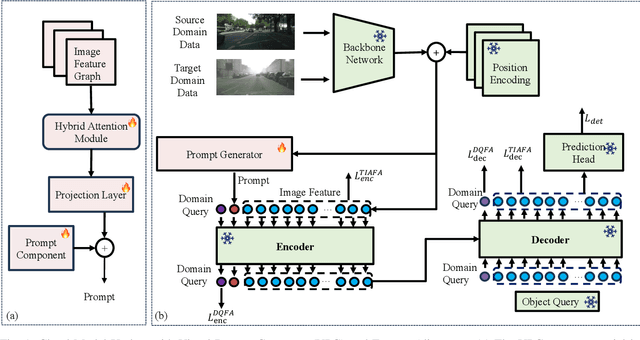
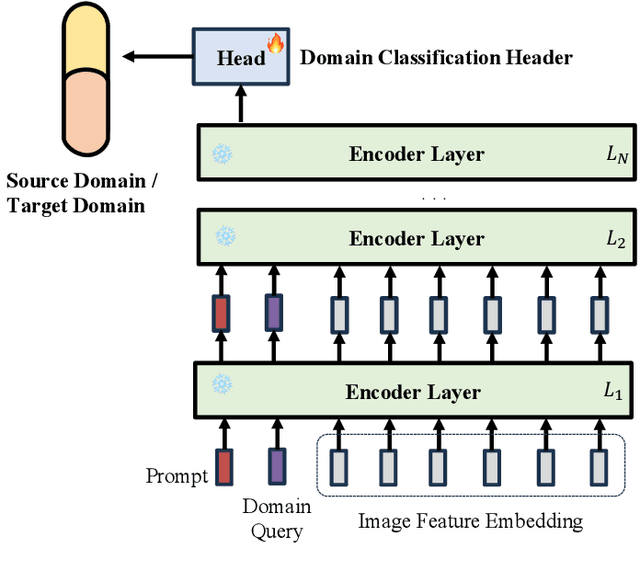
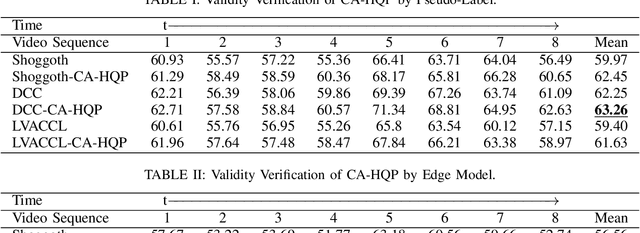
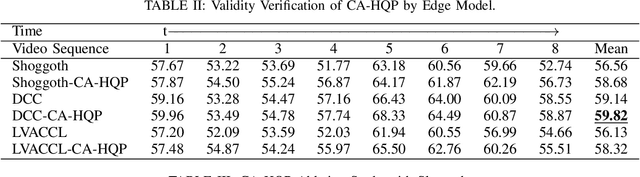
Generating high-quality pseudo-labels on the cloud is crucial for cloud-edge object detection, especially in dynamic traffic monitoring where data distributions evolve. Existing methods often assume reliable cloud models, neglecting potential errors or struggling with complex distribution shifts. This paper proposes Cloud-Adaptive High-Quality Pseudo-label generation (CA-HQP), addressing these limitations by incorporating a learnable Visual Prompt Generator (VPG) and dual feature alignment into cloud model updates. The VPG enables parameter-efficient adaptation by injecting visual prompts, enhancing flexibility without extensive fine-tuning. CA-HQP mitigates domain discrepancies via two feature alignment techniques: global Domain Query Feature Alignment (DQFA) capturing scene-level shifts, and fine-grained Temporal Instance-Aware Feature Embedding Alignment (TIAFA) addressing instance variations. Experiments on the Bellevue traffic dataset demonstrate that CA-HQP significantly improves pseudo-label quality compared to existing methods, leading to notable performance gains for the edge model and showcasing CA-HQP's adaptation effectiveness. Ablation studies validate each component (DQFA, TIAFA, VPG) and the synergistic effect of combined alignment strategies, highlighting the importance of adaptive cloud updates and domain adaptation for robust object detection in evolving scenarios. CA-HQP provides a promising solution for enhancing cloud-edge object detection systems in real-world applications.
Target-aware Bidirectional Fusion Transformer for Aerial Object Tracking
Mar 13, 2025The trackers based on lightweight neural networks have achieved great success in the field of aerial remote sensing, most of which aggregate multi-stage deep features to lift the tracking quality. However, existing algorithms usually only generate single-stage fusion features for state decision, which ignore that diverse kinds of features are required for identifying and locating the object, limiting the robustness and precision of tracking. In this paper, we propose a novel target-aware Bidirectional Fusion transformer (BFTrans) for UAV tracking. Specifically, we first present a two-stream fusion network based on linear self and cross attentions, which can combine the shallow and the deep features from both forward and backward directions, providing the adjusted local details for location and global semantics for recognition. Besides, a target-aware positional encoding strategy is designed for the above fusion model, which is helpful to perceive the object-related attributes during the fusion phase. Finally, the proposed method is evaluated on several popular UAV benchmarks, including UAV-123, UAV20L and UAVTrack112. Massive experimental results demonstrate that our approach can exceed other state-of-the-art trackers and run with an average speed of 30.5 FPS on embedded platform, which is appropriate for practical drone deployments.
Multimodal Inconsistency Reasoning (MMIR): A New Benchmark for Multimodal Reasoning Models
Feb 22, 2025Existing Multimodal Large Language Models (MLLMs) are predominantly trained and tested on consistent visual-textual inputs, leaving open the question of whether they can handle inconsistencies in real-world, layout-rich content. To bridge this gap, we propose the Multimodal Inconsistency Reasoning (MMIR) benchmark to assess MLLMs' ability to detect and reason about semantic mismatches in artifacts such as webpages, presentation slides, and posters. MMIR comprises 534 challenging samples, each containing synthetically injected errors across five reasoning-heavy categories: Factual Contradiction, Identity Misattribution, Contextual Mismatch, Quantitative Discrepancy, and Temporal/Spatial Incoherence. We evaluate six state-of-the-art MLLMs, showing that models with dedicated multimodal reasoning capabilities, such as o1, substantially outperform their counterparts while open-source models remain particularly vulnerable to inconsistency errors. Detailed error analyses further show that models excel in detecting inconsistencies confined to a single modality, particularly in text, but struggle with cross-modal conflicts and complex layouts. Probing experiments reveal that single-modality prompting, including Chain-of-Thought (CoT) and Set-of-Mark (SoM) methods, yields marginal gains, revealing a key bottleneck in cross-modal reasoning. Our findings highlight the need for advanced multimodal reasoning and point to future research on multimodal inconsistency.