 Add to Chrome
 Add to Firefox
 Add to Edge
View-Aware Semantic Alignment for Aerial-Ground Person Re-Identification
May 18, 2026
Aerial-Ground Person Re-Identification (AGPReID) remains highly challenging due to drastic viewpoint variations between drones and fixed cameras. Existing methods typically follow a view-invariant paradigm, aligning shared features across views to achieve robustness. However, view-invariant inherently enforces part-level alignment, which ignores view-specific cues and discriminative identity information. To this end, this work proposes ViSA (View-aware Semantic Alignment), a view-aware framework that achieves cross-view semantic consistency containing an Expert-driven Token Generation Module (ETGM) and a Dual-branch Local Fusion Module (DLFM). Technically, the former constructs a set of view-aware experts to generate adaptive semantic queries that perceive viewpoint-specific patterns, while the latter leverages graph reasoning to extract and align local regions responsive to different experts. Extensive experiments on three AGPReID benchmarks including AG-ReID.v2, CARGO and LAGPeR demonstrate that ViSA consistently achieves superior performance, with a notable 10.06\% mAP improvement on the challenging CARGO cross-view protocol. The code is available at \href{https://github.com/Cat-Zero/ViSA}{https://github.com/Cat-Zero/ViSA}.

Thinking Before Matching: A Reinforcement Reasoning Paradigm Towards General Person Re-Identification
Apr 21, 2026Learning identity-discriminative representations with multi-scene generality has become a critical objective in person re-identification (ReID). However, mainstream perception-driven paradigms tend to identify fitting from massive annotated data rather than identity-causal cues understanding, which presents a fragile representation against multiple disruptions. In this work, ReID-R is proposed as a novel reasoning-driven paradigm that achieves explicit identity understanding and reasoning by incorporating chain-of-thought into the ReID pipeline. Specifically, ReID-R consists of a two-stage contribution: (i) Discriminative reasoning warm-up, where a model is trained in a CoT label-free manner to acquire identity-aware feature understanding; and (ii) Efficient reinforcement learning, which proposes a non-trivial sampling to construct scene-generalizable data. On this basis, ReID-R leverages high-quality reward signals to guide the model toward focusing on ID-related cues, achieving accurate reasoning and correct responses. Extensive experiments on multiple ReID benchmarks demonstrate that ReID-R achieves competitive identity discrimination as superior methods using only 14.3K non-trivial data (20.9% of the existing data scale). Furthermore, benefit from inherent reasoning, ReID-R can provide high-quality interpretation for results.
Evaluating Privilege Usage of Agents on Real-World Tools
Mar 30, 2026Equipping LLM agents with real-world tools can substantially improve productivity. However, granting agents autonomy over tool use also transfers the associated privileges to both the agent and the underlying LLM. Improper privilege usage may lead to serious consequences, including information leakage and infrastructure damage. While several benchmarks have been built to study agents' security, they often rely on pre-coded tools and restricted interaction patterns. Such crafted environments differ substantially from the real-world, making it hard to assess agents' security capabilities in critical privilege control and usage. Therefore, we propose GrantBox, a security evaluation sandbox for analyzing agent privilege usage. GrantBox automatically integrates real-world tools and allows LLM agents to invoke genuine privileges, enabling the evaluation of privilege usage under prompt injection attacks. Our results indicate that while LLMs exhibit basic security awareness and can block some direct attacks, they remain vulnerable to more sophisticated attacks, resulting in an average attack success rate of 84.80% in carefully crafted scenarios.
FCL-COD: Weakly Supervised Camouflaged Object Detection with Frequency-aware and Contrastive Learning
Mar 24, 2026Existing camouflage object detection (COD) methods typically rely on fully-supervised learning guided by mask annotations. However, obtaining mask annotations is time-consuming and labor-intensive. Compared to fully-supervised methods, existing weakly-supervised COD methods exhibit significantly poorer performance. Even for the Segment Anything Model (SAM), there are still challenges in handling weakly-supervised camouflage object detection (WSCOD), such as: a. non-camouflage target responses, b. local responses, c. extreme responses, and d. lack of refined boundary awareness, which leads to unsatisfactory results in camouflage scenes. To alleviate these issues, we propose a frequency-aware and contrastive learning-based WSCOD framework in this paper, named FCL-COD. To mitigate the problem of non-camouflaged object responses, we propose the Frequency-aware Low-rank Adaptation (FoRA) method, which incorporates frequency-aware camouflage scene knowledge into SAM. To overcome the challenges of local and extreme responses, we introduce a gradient-aware contrastive learning approach that effectively delineates precise foreground-background boundaries. Additionally, to address the lack of refined boundary perception, we present a multi-scale frequency-aware representation learning strategy that facilitates the modeling of more refined boundaries. We validate the effectiveness of our approach through extensive empirical experiments on three widely recognized COD benchmarks. The results confirm that our method surpasses both state-of-the-art weakly supervised and even fully supervised techniques.
ERNIE 5.0 Technical Report
Feb 04, 2026In this report, we introduce ERNIE 5.0, a natively autoregressive foundation model desinged for unified multimodal understanding and generation across text, image, video, and audio. All modalities are trained from scratch under a unified next-group-of-tokens prediction objective, based on an ultra-sparse mixture-of-experts (MoE) architecture with modality-agnostic expert routing. To address practical challenges in large-scale deployment under diverse resource constraints, ERNIE 5.0 adopts a novel elastic training paradigm. Within a single pre-training run, the model learns a family of sub-models with varying depths, expert capacities, and routing sparsity, enabling flexible trade-offs among performance, model size, and inference latency in memory- or time-constrained scenarios. Moreover, we systematically address the challenges of scaling reinforcement learning to unified foundation models, thereby guaranteeing efficient and stable post-training under ultra-sparse MoE architectures and diverse multimodal settings. Extensive experiments demonstrate that ERNIE 5.0 achieves strong and balanced performance across multiple modalities. To the best of our knowledge, among publicly disclosed models, ERNIE 5.0 represents the first production-scale realization of a trillion-parameter unified autoregressive model that supports both multimodal understanding and generation. To facilitate further research, we present detailed visualizations of modality-agnostic expert routing in the unified model, alongside comprehensive empirical analysis of elastic training, aiming to offer profound insights to the community.
Advancing Ocean State Estimation with efficient and scalable AI
Nov 08, 2025Accurate and efficient global ocean state estimation remains a grand challenge for Earth system science, hindered by the dual bottlenecks of computational scalability and degraded data fidelity in traditional data assimilation (DA) and deep learning (DL) approaches. Here we present an AI-driven Data Assimilation Framework for Ocean (ADAF-Ocean) that directly assimilates multi-source and multi-scale observations, ranging from sparse in-situ measurements to 4 km satellite swaths, without any interpolation or data thinning. Inspired by Neural Processes, ADAF-Ocean learns a continuous mapping from heterogeneous inputs to ocean states, preserving native data fidelity. Through AI-driven super-resolution, it reconstructs 0.25$^\circ$ mesoscale dynamics from coarse 1$^\circ$ fields, which ensures both efficiency and scalability, with just 3.7\% more parameters than the 1$^\circ$ configuration. When coupled with a DL forecasting system, ADAF-Ocean extends global forecast skill by up to 20 days compared to baselines without assimilation. This framework establishes a computationally viable and scientifically rigorous pathway toward real-time, high-resolution Earth system monitoring.
Pose State Perception of Interventional Robot for Cardio-cerebrovascular Procedures
Jun 17, 2025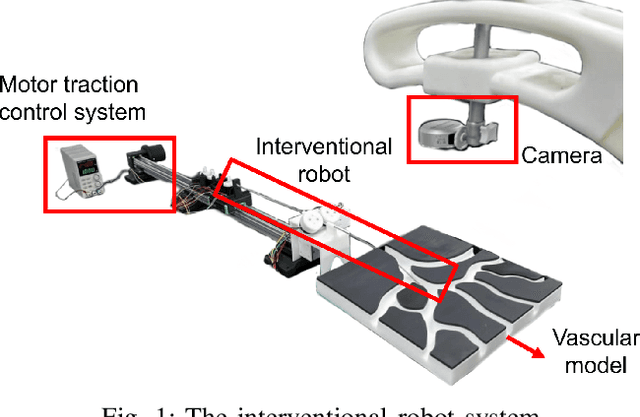
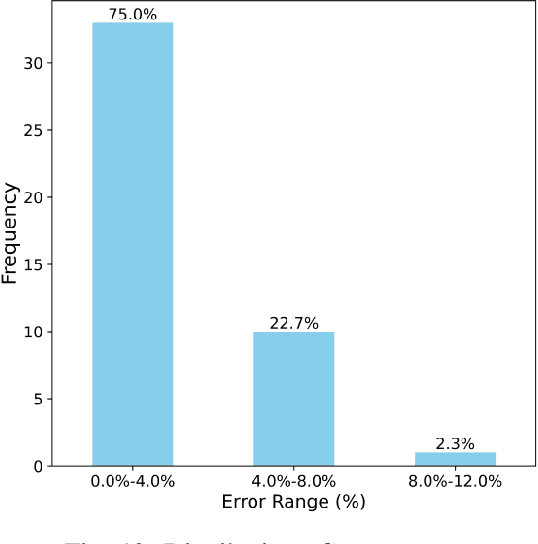
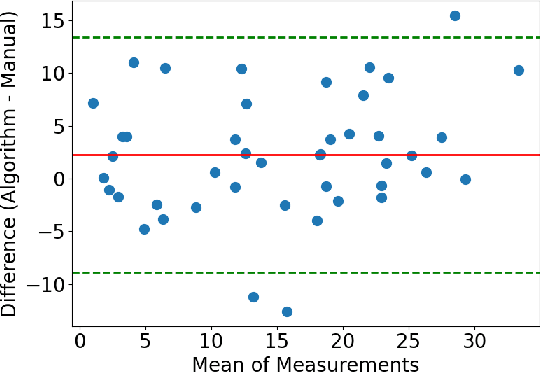
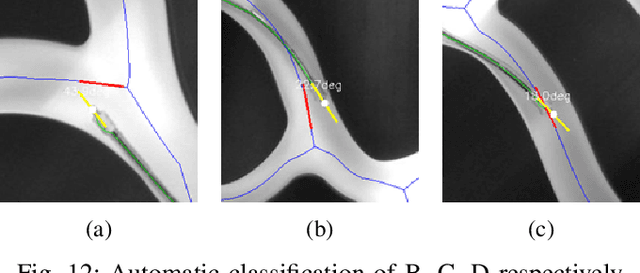
In response to the increasing demand for cardiocerebrovascular interventional surgeries, precise control of interventional robots has become increasingly important. Within these complex vascular scenarios, the accurate and reliable perception of the pose state for interventional robots is particularly crucial. This paper presents a novel vision-based approach without the need of additional sensors or markers. The core of this paper's method consists of a three-part framework: firstly, a dual-head multitask U-Net model for simultaneous vessel segment and interventional robot detection; secondly, an advanced algorithm for skeleton extraction and optimization; and finally, a comprehensive pose state perception system based on geometric features is implemented to accurately identify the robot's pose state and provide strategies for subsequent control. The experimental results demonstrate the proposed method's high reliability and accuracy in trajectory tracking and pose state perception.
CLIP-AE: CLIP-assisted Cross-view Audio-Visual Enhancement for Unsupervised Temporal Action Localization
May 29, 2025Temporal Action Localization (TAL) has garnered significant attention in information retrieval. Existing supervised or weakly supervised methods heavily rely on labeled temporal boundaries and action categories, which are labor-intensive and time-consuming. Consequently, unsupervised temporal action localization (UTAL) has gained popularity. However, current methods face two main challenges: 1) Classification pre-trained features overly focus on highly discriminative regions; 2) Solely relying on visual modality information makes it difficult to determine contextual boundaries. To address these issues, we propose a CLIP-assisted cross-view audiovisual enhanced UTAL method. Specifically, we introduce visual language pre-training (VLP) and classification pre-training-based collaborative enhancement to avoid excessive focus on highly discriminative regions; we also incorporate audio perception to provide richer contextual boundary information. Finally, we introduce a self-supervised cross-view learning paradigm to achieve multi-view perceptual enhancement without additional annotations. Extensive experiments on two public datasets demonstrate our model's superiority over several state-of-the-art competitors.
IMDPrompter: Adapting SAM to Image Manipulation Detection by Cross-View Automated Prompt Learning
Feb 04, 2025Using extensive training data from SA-1B, the Segment Anything Model (SAM) has demonstrated exceptional generalization and zero-shot capabilities, attracting widespread attention in areas such as medical image segmentation and remote sensing image segmentation. However, its performance in the field of image manipulation detection remains largely unexplored and unconfirmed. There are two main challenges in applying SAM to image manipulation detection: a) reliance on manual prompts, and b) the difficulty of single-view information in supporting cross-dataset generalization. To address these challenges, we develops a cross-view prompt learning paradigm called IMDPrompter based on SAM. Benefiting from the design of automated prompts, IMDPrompter no longer relies on manual guidance, enabling automated detection and localization. Additionally, we propose components such as Cross-view Feature Perception, Optimal Prompt Selection, and Cross-View Prompt Consistency, which facilitate cross-view perceptual learning and guide SAM to generate accurate masks. Extensive experimental results from five datasets (CASIA, Columbia, Coverage, IMD2020, and NIST16) validate the effectiveness of our proposed method.
Rethinking Pseudo-Label Guided Learning for Weakly Supervised Temporal Action Localization from the Perspective of Noise Correction
Jan 19, 2025
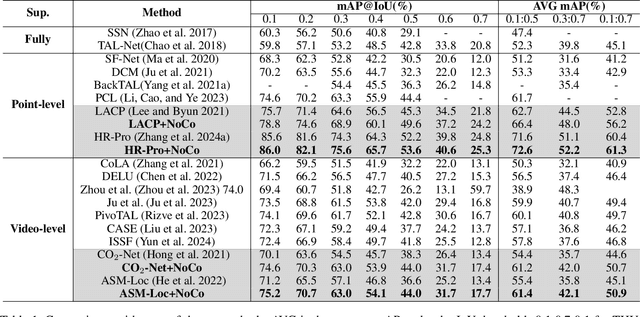

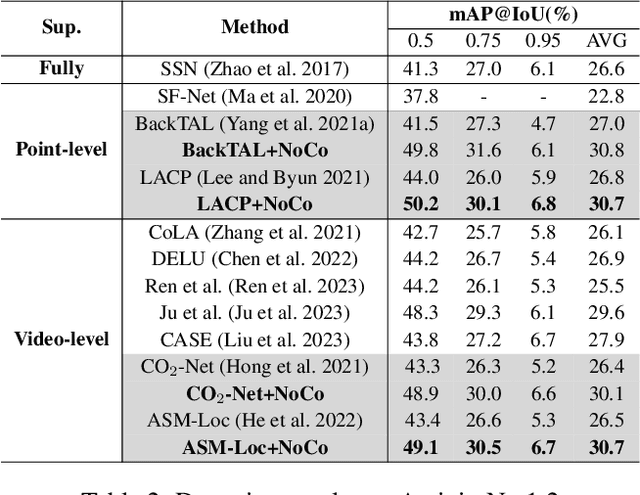
Pseudo-label learning methods have been widely applied in weakly-supervised temporal action localization. Existing works directly utilize weakly-supervised base model to generate instance-level pseudo-labels for training the fully-supervised detection head. We argue that the noise in pseudo-labels would interfere with the learning of fully-supervised detection head, leading to significant performance leakage. Issues with noisy labels include:(1) inaccurate boundary localization; (2) undetected short action clips; (3) multiple adjacent segments incorrectly detected as one segment. To target these issues, we introduce a two-stage noisy label learning strategy to harness every potential useful signal in noisy labels. First, we propose a frame-level pseudo-label generation model with a context-aware denoising algorithm to refine the boundaries. Second, we introduce an online-revised teacher-student framework with a missing instance compensation module and an ambiguous instance correction module to solve the short-action-missing and many-to-one problems. Besides, we apply a high-quality pseudo-label mining loss in our online-revised teacher-student framework to add different weights to the noisy labels to train more effectively. Our model outperforms the previous state-of-the-art method in detection accuracy and inference speed greatly upon the THUMOS14 and ActivityNet v1.2 benchmarks.