 Add to Chrome
 Add to Firefox
 Add to Edge
SafeSceneReason: A Multimodal Reasoning Benchmark Connecting Industrial Hazards with Accident Knowledge
Aug 10, 2026
Industrial-safety understanding requires more than detecting workers, equipment, and personal protective equipment. Models must also assess compliance, identify hazardous interactions, explain potential accident mechanisms, and recommend preventive actions. Existing safety datasets primarily focus on visual perception or isolated violation recognition and provide limited supervision for evidence-grounded reasoning. We introduce SafeSceneReason, a multimodal industrial-safety reasoning benchmark and companion training corpus that connects workplace scenes with knowledge from occupational accident investigations. SafeSceneReason combines two complementary data-construction pipelines. The scene-centric pipeline converts annotated workplace images into executable safety scene graphs and generates deterministic answers through program execution over objects, relations, and safety rules. The report-centric pipeline extracts figures and contextual evidence from accident reports and constructs multimodal questions using evidence graphs, explicit information boundaries, multi-step reasoning paths, and iterative verification. The resulting resource contains 110,581 verified scene-centric question--answer pairs and 13,114 refined report-centric question--answer pairs, covering perception, spatial and quantitative reasoning, compliance assessment, evidence synthesis, causal analysis, and mitigation-oriented decision making. Evaluation of representative proprietary and open-source vision--language models reveals substantial performance differences and persistent weaknesses in comparative, technical, and multi-evidence reasoning, demonstrating that strong general visual understanding does not yet guarantee reliable industrial-safety reasoning.

MMArch: Benchmarking Multimodal Reasoning Grounded in Architectural Evidence
Aug 10, 2026Multimodal large language models (MLLMs) perform strongly on engineering imagery, yet existing benchmarks mostly test drawing recognition, information extraction, or compliance checking, leaving open whether models can combine distributed visual evidence with engineering principles to reach a conclusion. We introduce MMArch, a benchmark for architecture and civil engineering spanning ten subdomains and built entirely from figures in peer-reviewed papers. Its $1{,}212$ short-answer items are produced by a decoupled planner--writer pipeline and validated through automated screening, a blind adversarial audit, and expert review, so that answering requires perceiving the relevant evidence, identifying the governing principle, and applying it, not exploiting textual or single-figure shortcuts. Evaluating $18$ open-weight and proprietary MLLMs against a domain-expert panel, we find a wide gap: the strongest open-source model attains about $30\%$ and the best proprietary system $52\%$, while human experts reach $95\%$, more than forty points ahead. Our error analysis shows that failures concentrate in applying principles and combining evidence across figures rather than in locating it, pointing to substantial headroom for future research. Code and data are available at https://dcx-swjtu.github.io/MMArch/.
CircuitReason-1k: Benchmarking Long-Horizon Visual-to-Symbolic Reasoning inElectrical Circuits
Aug 10, 2026Electrical circuit analysis requires more than recognizing components in an image. A solver must ground symbols and labels, recover latent topology, select a physical model, formulate coupled equations, propagate intermediate quantities, and preserve units, signs, directions, and phase conventions. We introduce \benchmark, a benchmark of 1,000 authentic textbook problems for evaluating this complete long-horizon visual-to-symbolic reasoning process. Each problem pairs one or more circuit diagrams with a self-contained question, a typed or semantically specified answer, and a reference worked solution. An evidence-first construction pipeline aligns questions, figures, and solutions, while a reasoning-oriented taxonomy organizes problems by circuit type and dependency depth. Evaluation combines conservative typed scoring with identity-blinded multi-model semantic consensus, retaining every problem in the denominator. Across three commercial chatbot systems and six open-source multimodal large language models, the highest-scoring system reaches 84.8\% accuracy. However, performance consistently deteriorates on long-horizon problems, and qualitative analysis exposes persistent failures in topology-to-target binding, physical conventions, and late-stage output propagation. \benchmark{} provides a focused testbed for measuring whether multimodal models can transform technical visual evidence into sustained, physically valid symbolic reasoning. Code are available at GitHub - CircuitReason/CircuitReason1K.
Conversational Human Audio-visual Talking Dialogue Generation
Jul 02, 2026Large-scale dyadic interactive audio-visual dialogue (DIAD) datasets provide fundamental data resources for developing humanoid interactive virtual agents and digital humans. However, collecting such data is time-consuming, expensive, and ethically sensitive. To address this, we propose CHAT, a new dyadic interactive audio-visual dialogue generation (DIADG) framework that generates diverse, paired, and mutually responsive speech-face dialogue clips from a single textual prompt. CHAT unifies large language models and talking face models with interactive audio and facial behaviour refinement modules, enabling the generation of aligned dyadic dialogue clips with diverse contents and facial identities. Experiments show that CHAT outperforms existing related methods designed for similar tasks under both objective and subjective evaluations. Moreover, our synthesised CHAT-AVD-50k dataset serves as effective pre-training data for downstream interactive head generation, consistently improving PerFRDiff and ReactDiff on REACT 2024. CHAT offers a scalable alternative to the costly and ethically sensitive collection of real dyadic interaction data.
ParaVT: Taming the Tool Prior Paradox for Parallel Tool Use in Agentic Video Reinforcement Learning
May 21, 2026Training large multimodal models (LMMs) via reinforcement learning (RL) to natively invoke video-processing tools (e.g., cropping) has become a promising route to long-video understanding. However, existing native-RL methods dispatch tool calls sequentially (i.e., one per turn): a single wrong crop propagates errors without peer correction, multi-turn tool calls corrupt context, and inference cost scales linearly with the number of turns. We introduce ParaVT, the first multi-agent end-to-end RL-trained framework for Parallel Video Tool calling, dispatching multiple time-window crops in a single turn for cleaner context and better fault tolerance. Yet applying standard RL to ParaVT reveals an obstacle we term the Tool Prior Paradox: the pretrained tool priors that enable tool exploration also destabilize cold-started structural format and expose the skip-tool reward shortcut under temperature sampling. A cross-model contrast on a weaker-prior LMM supports this claim: format stays stable but RL elicits zero tool calls, indicating that prior strength is the shared driver of both format collapse and tool exploration. We propose PARA-GRPO (Parseability-Anchored and Ratio-gAted GRPO), which augments standard RL with two complementary mechanisms: (i) a targeted format reward applied only at the structural-token positions most prone to collapse, and (ii) a per-prompt frame-budget randomization that creates training prompts where calling the tool yields a measurable reward signal over skipping it. Across six long-video understanding benchmarks, ParaVT improves over the Qwen3-VL baseline by +7.9% on average, with PARA-GRPO lifting training-time format compliance from 0.13 to 0.64. As tool capabilities become increasingly internalized in modern LMMs, RL must cooperate with the resulting priors, and ParaVT offers a general recipe for agentic RL. Code, data, and model weights are publicly available.
Towards Successful Implementation of Automated Raveling Detection: Effects of Training Data Size, Illumination Difference, and Spatial Shift
Apr 14, 2026Raveling, the loss of aggregates, is a major form of asphalt pavement surface distress, especially on highways. While research has shown that machine learning and deep learning-based methods yield promising results for raveling detection by classification on range images, their performance often degrades in large-scale deployments where more diverse inference data may originate from different runs, sensors, and environmental conditions. This degradation highlights the need of a more generalizable and robust solution for real-world implementation. Thus, the objectives of this study are to 1) identify and assess potential variations that impact model robustness, such as the quantity of training data, illumination difference, and spatial shift; and 2) leverage findings to enhance model robustness under real-world conditions. To this end, we propose RavelingArena, a benchmark designed to evaluate model robustness to variations in raveling detection. Instead of collecting extensive new data, it is built by augmenting an existing dataset with diverse, controlled variations, thereby enabling variation-controlled experiments to quantify the impact of each variation. Results demonstrate that both the quantity and diversity of training data are critical to the accuracy of models, achieving at least a 9.2% gain in accuracy under the most diverse conditions in experiments. Additionally, a case study applying these findings to a multi-year test section in Georgia, U.S., shows significant improvements in year-to-year consistency, laying foundations for future studies on temporal deterioration modeling. These insights provide guidance for more reliable model deployment in raveling detection and other real-world tasks that require adaptability to diverse conditions.
SVAgent: Storyline-Guided Long Video Understanding via Cross-Modal Multi-Agent Collaboration
Apr 06, 2026Video question answering (VideoQA) is a challenging task that requires integrating spatial, temporal, and semantic information to capture the complex dynamics of video sequences. Although recent advances have introduced various approaches for video understanding, most existing methods still rely on locating relevant frames to answer questions rather than reasoning through the evolving storyline as humans do. Humans naturally interpret videos through coherent storylines, an ability that is crucial for making robust and contextually grounded predictions. To address this gap, we propose SVAgent, a storyline-guided cross-modal multi-agent framework for VideoQA. The storyline agent progressively constructs a narrative representation based on frames suggested by a refinement suggestion agent that analyzes historical failures. In addition, cross-modal decision agents independently predict answers from visual and textual modalities under the guidance of the evolving storyline. Their outputs are then evaluated by a meta-agent to align cross-modal predictions and enhance reasoning robustness and answer consistency. Experimental results demonstrate that SVAgent achieves superior performance and interpretability by emulating human-like storyline reasoning in video understanding.
XR: Cross-Modal Agents for Composed Image Retrieval
Jan 20, 2026Retrieval is being redefined by agentic AI, demanding multimodal reasoning beyond conventional similarity-based paradigms. Composed Image Retrieval (CIR) exemplifies this shift as each query combines a reference image with textual modifications, requiring compositional understanding across modalities. While embedding-based CIR methods have achieved progress, they remain narrow in perspective, capturing limited cross-modal cues and lacking semantic reasoning. To address these limitations, we introduce XR, a training-free multi-agent framework that reframes retrieval as a progressively coordinated reasoning process. It orchestrates three specialized types of agents: imagination agents synthesize target representations through cross-modal generation, similarity agents perform coarse filtering via hybrid matching, and question agents verify factual consistency through targeted reasoning for fine filtering. Through progressive multi-agent coordination, XR iteratively refines retrieval to meet both semantic and visual query constraints, achieving up to a 38% gain over strong training-free and training-based baselines on FashionIQ, CIRR, and CIRCO, while ablations show each agent is essential. Code is available: https://01yzzyu.github.io/xr.github.io/.
Deep Learning for Crack Detection: A Review of Learning Paradigms, Generalizability, and Datasets
Aug 14, 2025Crack detection plays a crucial role in civil infrastructures, including inspection of pavements, buildings, etc., and deep learning has significantly advanced this field in recent years. While numerous technical and review papers exist in this domain, emerging trends are reshaping the landscape. These shifts include transitions in learning paradigms (from fully supervised learning to semi-supervised, weakly-supervised, unsupervised, few-shot, domain adaptation and fine-tuning foundation models), improvements in generalizability (from single-dataset performance to cross-dataset evaluation), and diversification in dataset reacquisition (from RGB images to specialized sensor-based data). In this review, we systematically analyze these trends and highlight representative works. Additionally, we introduce a new dataset collected with 3D laser scans, 3DCrack, to support future research and conduct extensive benchmarking experiments to establish baselines for commonly used deep learning methodologies, including recent foundation models. Our findings provide insights into the evolving methodologies and future directions in deep learning-based crack detection. Project page: https://github.com/nantonzhang/Awesome-Crack-Detection
Pose State Perception of Interventional Robot for Cardio-cerebrovascular Procedures
Jun 17, 2025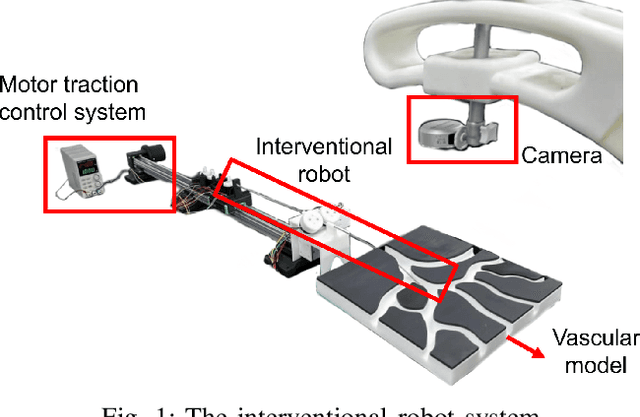
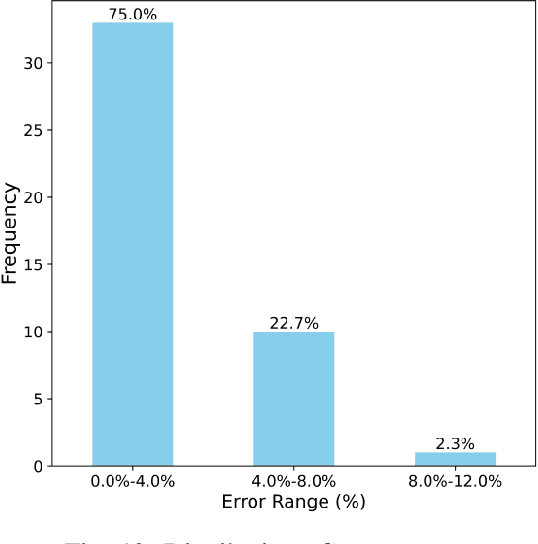
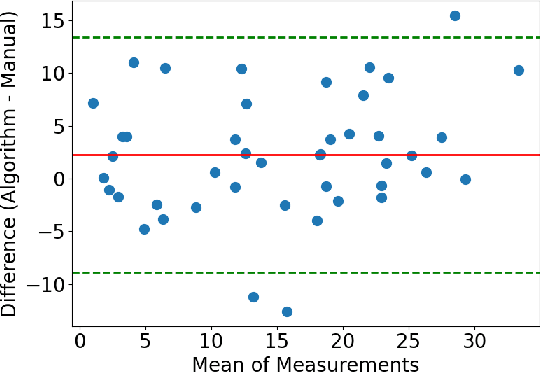
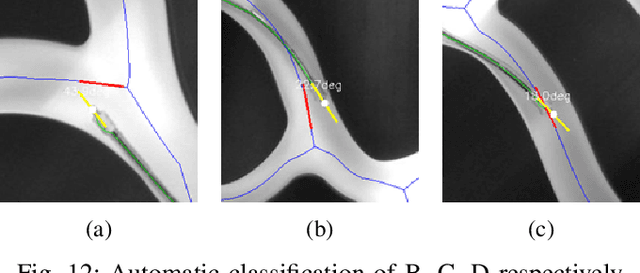
In response to the increasing demand for cardiocerebrovascular interventional surgeries, precise control of interventional robots has become increasingly important. Within these complex vascular scenarios, the accurate and reliable perception of the pose state for interventional robots is particularly crucial. This paper presents a novel vision-based approach without the need of additional sensors or markers. The core of this paper's method consists of a three-part framework: firstly, a dual-head multitask U-Net model for simultaneous vessel segment and interventional robot detection; secondly, an advanced algorithm for skeleton extraction and optimization; and finally, a comprehensive pose state perception system based on geometric features is implemented to accurately identify the robot's pose state and provide strategies for subsequent control. The experimental results demonstrate the proposed method's high reliability and accuracy in trajectory tracking and pose state perception.