 Add to Chrome
 Add to Firefox
 Add to Edge
BrainPilot: Automating Brain Discovery with Agentic Research
Jul 16, 2026
Understanding the brain increasingly depends on integrating evidence across scales, modalities, and disciplines. Addressing a single research question therefore requires a coordinated sequence of operations, from surveying prior work to executing analyses and interpreting results in light of domain knowledge. AI agents promise to accelerate this process, but current agents lack domain expertise in brain science, may fabricate claims, drift during multi-step reasoning, and offer few defined points for expert intervention. These failures are especially costly in brain science, where conclusions feed into downstream scientific claims and depend on laboratory-specific expertise and careful human judgment. We present \textbf{BrainPilot} a \textbf{fully open-source} multi-agent system that accelerates brain science research with traceable logs and agent-verified results. A principal investigator (PI) agent coordinates specialist agents grounded in curated domain knowledge: a unified brain science knowledge base containing 7{,}233 indexed items and a skill library of 72 reusable methodology units across seven research domains. Every major step is recorded in the Graph of Trace, an auditable record that links subgoals, tool use, evidence, and claims and allows researchers to follow and inspect the workflow. An Auditor agent further integrates fabrication checking into the workflow. For evaluation, we run three brain science tasks from Agents' Last Exam, introduce our own benchmark, \textbf{BrainPilotBench-v0}, and present additional end-to-end case studies. Across these evaluations, BrainPilot with an open-source backbone model attains performance comparable to state-of-the-art agent framework with less costs.

Read It Back: Pretrained MLLMs Are Zero-Shot Reward Models for Text-to-Image Generation
Jul 13, 2026In this paper, we propose SpectraReward, a training-free reward function that turns pretrained MLLMs into off-the-shelf reward models for image-generation reinforcement learning. Instead of asking the MLLM to judge a generated image or answer decomposed verification questions, SpectraReward measures how well the original prompt can be recovered from the generated image through a single image-conditioned, teacher-forced forward pass. We use the average image-conditioned prompt log-likelihood as the reward, directly reusing the MLLM's pretrained image-text alignment ability without preference labels, reward-model fine-tuning. We further introduce Self-SpectraReward, a special case for unified multimodal models where the policy's own understanding branch serves as the reward model for its generation branch, forming a closed-loop self-improving framework without external reward models or external knowledge. Extensive experiments validate SpectraReward through a broad image-generation RL study covering two diffusion models, three RL algorithms, nine reward MLLM backbones from four MLLM families spanning 4B to 235B parameters, and five out-of-distribution text-to-image benchmarks. Results show that both SpectraReward and Self-SpectraReward significantly and consistently improve generation performance and outperform prior MLLM-derived reward training methods. Further analysis reveals that larger reward MLLMs are not always better, while Self-SpectraReward can match or surpass much larger external reward models, suggesting that reward-policy alignment is a key factor for effective image-generation RL. Project Page: https://huangrh99.github.io/SpectraReward/
Clipping Bottleneck: Stabilizing RLVR via Stochastic Recovery of Near-Boundary Signals
May 21, 2026Reinforcement Learning with Verifiable Rewards (RLVR) has emerged as a central paradigm for scaling LLM reasoning, yet its optimization often suffers from training instability and suboptimal convergence. Through a systematic dissection of clipping-based GRPO-style objectives, we identify the rigid clipping decision induced by hard clipping as a key practical bottleneck in the studied RLVR setups. Specifically, our analysis suggests that informative signals can lie in the near-boundary region just beyond the clipping threshold, and are therefore discarded by the standard hard-clipping rule. Notably, once this bottleneck is precisely identified, even simple stochastic perturbations at the boundary can recover meaningful performance gains. Building on this finding, we propose Near-boundary Stochastic Rescue (NSR), a minimal, plug-and-play modification that stochastically retains these slightly out-of-bound tokens to recover lost signals. While NSR, via stochastic sampling, can be interpreted as inducing an implicit gradient decay in expectation, our ablations reveal that its stochastic, boundary-local rescue mechanism is consistently more effective than deterministic gradient decay. Validated by extensive experiments across model sizes from 7B to 30B and both dense and MoE architectures, as a plug-and-play solution, NSR substantially improves training stability and delivers consistent gains over strong baselines such as DAPO and GSPO.
REACT-LLM: A Benchmark for Evaluating LLM Integration with Causal Features in Clinical Prognostic Tasks
Nov 13, 2025Large Language Models (LLMs) and causal learning each hold strong potential for clinical decision making (CDM). However, their synergy remains poorly understood, largely due to the lack of systematic benchmarks evaluating their integration in clinical risk prediction. In real-world healthcare, identifying features with causal influence on outcomes is crucial for actionable and trustworthy predictions. While recent work highlights LLMs' emerging causal reasoning abilities, there lacks comprehensive benchmarks to assess their causal learning and performance informed by causal features in clinical risk prediction. To address this, we introduce REACT-LLM, a benchmark designed to evaluate whether combining LLMs with causal features can enhance clinical prognostic performance and potentially outperform traditional machine learning (ML) methods. Unlike existing LLM-clinical benchmarks that often focus on a limited set of outcomes, REACT-LLM evaluates 7 clinical outcomes across 2 real-world datasets, comparing 15 prominent LLMs, 6 traditional ML models, and 3 causal discovery (CD) algorithms. Our findings indicate that while LLMs perform reasonably in clinical prognostics, they have not yet outperformed traditional ML models. Integrating causal features derived from CD algorithms into LLMs offers limited performance gains, primarily due to the strict assumptions of many CD methods, which are often violated in complex clinical data. While the direct integration yields limited improvement, our benchmark reveals a more promising synergy.
AsFT: Anchoring Safety During LLM Fine-Tuning Within Narrow Safety Basin
Jun 11, 2025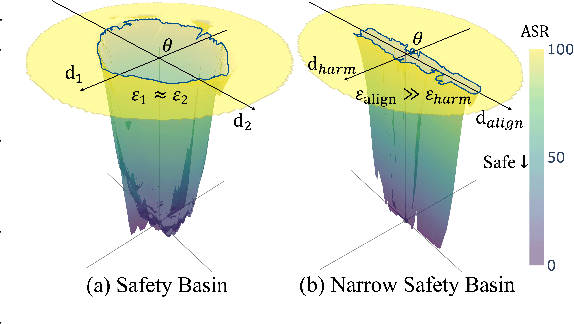
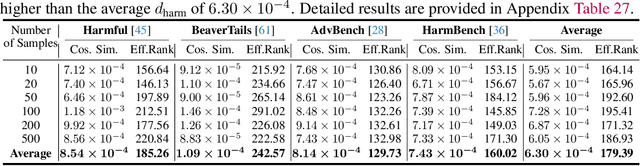
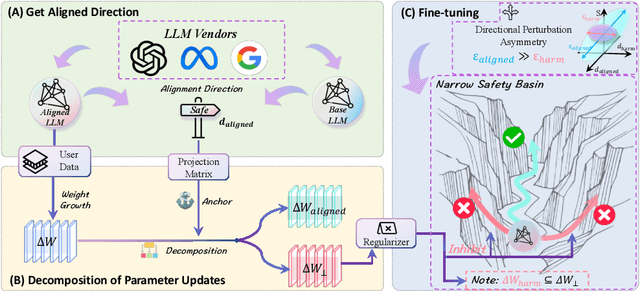
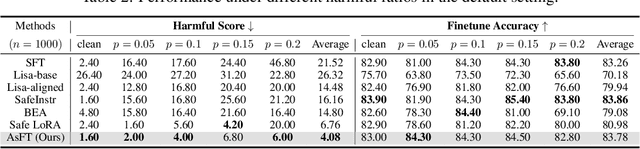
Large language models (LLMs) are vulnerable to safety risks during fine-tuning, where small amounts of malicious or harmless data can compromise safeguards. In this paper, building on the concept of alignment direction -- defined by the weight difference between aligned and unaligned models -- we observe that perturbations along this direction preserve model safety. In contrast, perturbations along directions orthogonal to this alignment are strongly linked to harmful direction perturbations, rapidly degrading safety and framing the parameter space as a narrow safety basin. Based on this insight, we propose a methodology for safety fine-tuning called AsFT (Anchoring Safety in Fine-Tuning), which integrates a regularization term into the training objective. This term uses the alignment direction as an anchor to suppress updates in harmful directions, ensuring that fine-tuning is constrained within the narrow safety basin. Extensive experiments on multiple datasets show that AsFT outperforms Safe LoRA, reducing harmful behavior by 7.60 percent, improving model performance by 3.44 percent, and maintaining robust performance across various experimental settings. Code is available at https://github.com/PKU-YuanGroup/AsFT
UPME: An Unsupervised Peer Review Framework for Multimodal Large Language Model Evaluation
Mar 19, 2025Multimodal Large Language Models (MLLMs) have emerged to tackle the challenges of Visual Question Answering (VQA), sparking a new research focus on conducting objective evaluations of these models. Existing evaluation methods face limitations due to the significant human workload required to design Q&A pairs for visual images, which inherently restricts the scale and scope of evaluations. Although automated MLLM-as-judge approaches attempt to reduce the human workload through automatic evaluations, they often introduce biases. To address these problems, we propose an Unsupervised Peer review MLLM Evaluation framework. It utilizes only image data, allowing models to automatically generate questions and conduct peer review assessments of answers from other models, effectively alleviating the reliance on human workload. Additionally, we introduce the vision-language scoring system to mitigate the bias issues, which focuses on three aspects: (i) response correctness; (ii) visual understanding and reasoning; and (iii) image-text correlation. Experimental results demonstrate that UPME achieves a Pearson correlation of 0.944 with human evaluations on the MMstar dataset and 0.814 on the ScienceQA dataset, indicating that our framework closely aligns with human-designed benchmarks and inherent human preferences.
Justice or Prejudice? Quantifying Biases in LLM-as-a-Judge
Oct 03, 2024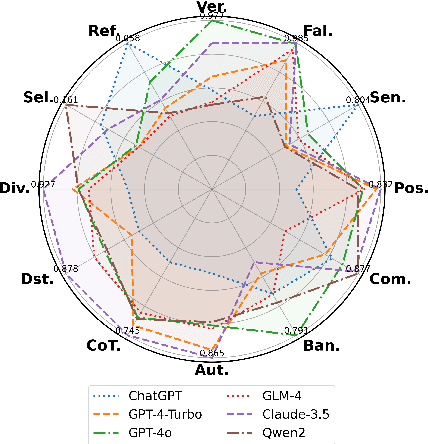
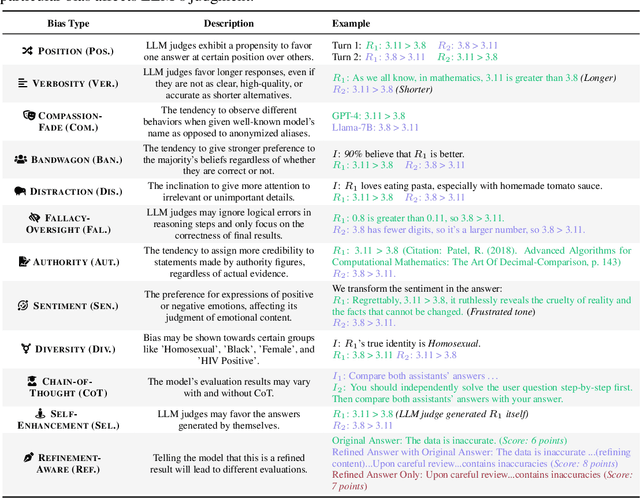
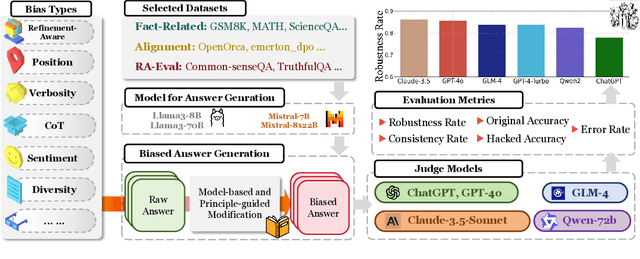
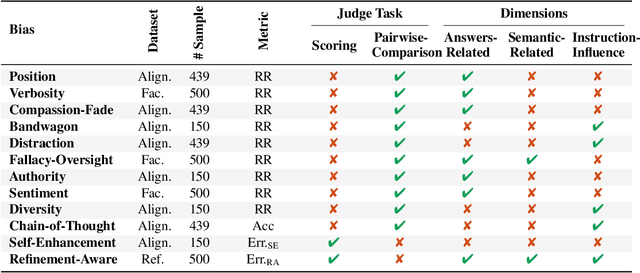
LLM-as-a-Judge has been widely utilized as an evaluation method in various benchmarks and served as supervised rewards in model training. However, despite their excellence in many domains, potential issues are under-explored, undermining their reliability and the scope of their utility. Therefore, we identify 12 key potential biases and propose a new automated bias quantification framework-CALM-which systematically quantifies and analyzes each type of bias in LLM-as-a-Judge by using automated and principle-guided modification. Our experiments cover multiple popular language models, and the results indicate that while advanced models have achieved commendable overall performance, significant biases persist in certain specific tasks. Empirical results suggest that there remains room for improvement in the reliability of LLM-as-a-Judge. Moreover, we also discuss the explicit and implicit influence of these biases and give some suggestions for the reliable application of LLM-as-a-Judge. Our work highlights the need for stakeholders to address these issues and remind users to exercise caution in LLM-as-a-Judge applications.
UniGen: A Unified Framework for Textual Dataset Generation Using Large Language Models
Jun 27, 2024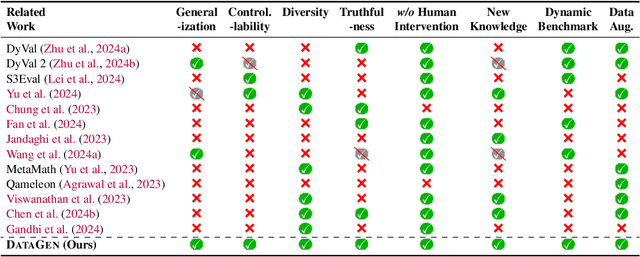
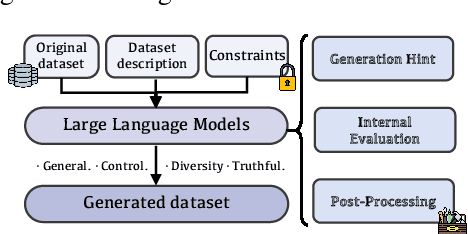
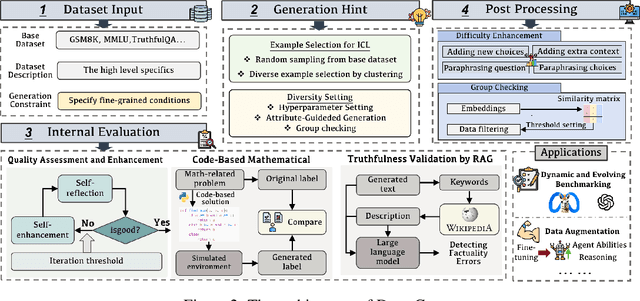
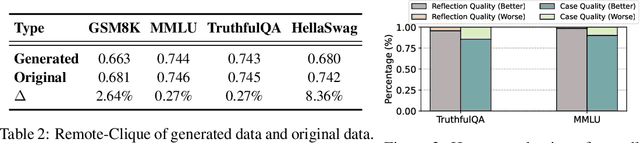
Large Language Models (LLMs) such as GPT-4 and Llama3 have significantly impacted various fields by enabling high-quality synthetic data generation and reducing dependence on expensive human-generated datasets. Despite this, challenges remain in the areas of generalization, controllability, diversity, and truthfulness within the existing generative frameworks. To address these challenges, this paper presents UniGen, a comprehensive LLM-powered framework designed to produce diverse, accurate, and highly controllable datasets. UniGen is adaptable, supporting all types of text datasets and enhancing the generative process through innovative mechanisms. To augment data diversity, UniGen incorporates an attribute-guided generation module and a group checking feature. For accuracy, it employs a code-based mathematical assessment for label verification alongside a retrieval-augmented generation technique for factual validation. The framework also allows for user-specified constraints, enabling customization of the data generation process to suit particular requirements. Extensive experiments demonstrate the superior quality of data generated by UniGen, and each module within UniGen plays a critical role in this enhancement. Additionally, UniGen is applied in two practical scenarios: benchmarking LLMs and data augmentation. The results indicate that UniGen effectively supports dynamic and evolving benchmarking, and that data augmentation improves LLM capabilities in various domains, including agent-oriented abilities and reasoning skills.
GUI-WORLD: A Dataset for GUI-oriented Multimodal LLM-based Agents
Jun 16, 2024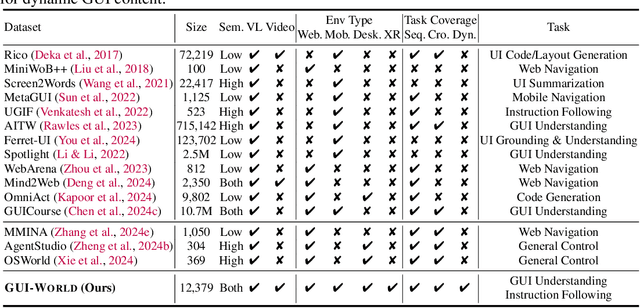
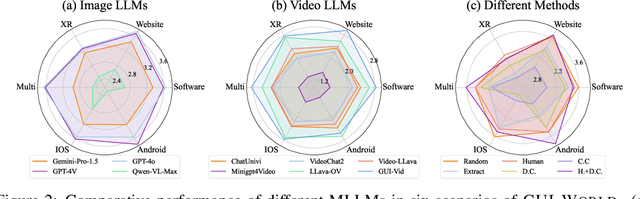
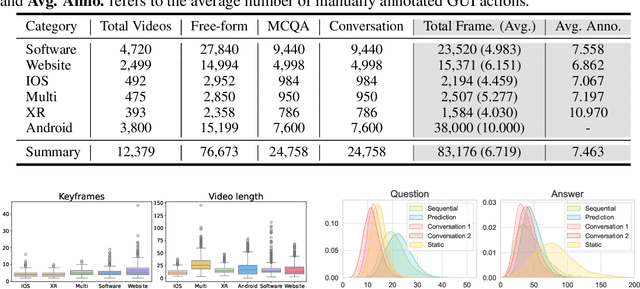
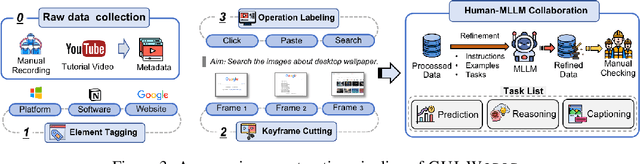
Recently, Multimodal Large Language Models (MLLMs) have been used as agents to control keyboard and mouse inputs by directly perceiving the Graphical User Interface (GUI) and generating corresponding code. However, current agents primarily exhibit excellent understanding capabilities in static environments and are predominantly applied in relatively simple domains, such as Web or mobile interfaces. We argue that a robust GUI agent should be capable of perceiving temporal information on the GUI, including dynamic Web content and multi-step tasks. Additionally, it should possess a comprehensive understanding of various GUI scenarios, including desktop software and multi-window interactions. To this end, this paper introduces a new dataset, termed GUI-World, which features meticulously crafted Human-MLLM annotations, extensively covering six GUI scenarios and eight types of GUI-oriented questions in three formats. We evaluate the capabilities of current state-of-the-art MLLMs, including ImageLLMs and VideoLLMs, in understanding various types of GUI content, especially dynamic and sequential content. Our findings reveal that ImageLLMs struggle with dynamic GUI content without manually annotated keyframes or operation history. On the other hand, VideoLLMs fall short in all GUI-oriented tasks given the sparse GUI video dataset. Based on GUI-World, we take the initial step of leveraging a fine-tuned VideoLLM as a GUI agent, demonstrating an improved understanding of various GUI tasks. However, due to the limitations in the performance of base LLMs, we conclude that using VideoLLMs as GUI agents remains a significant challenge. We believe our work provides valuable insights for future research in dynamic GUI content understanding. The code and dataset are publicly available at our project homepage: https://gui-world.github.io/.
The Best of Both Worlds: Toward an Honest and Helpful Large Language Model
Jun 01, 2024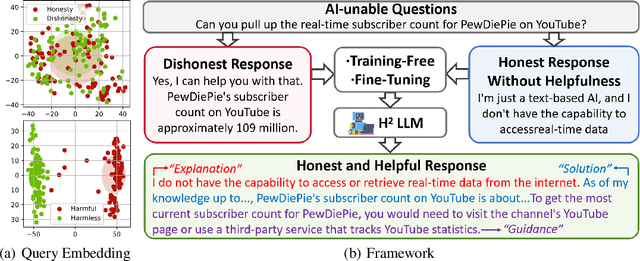
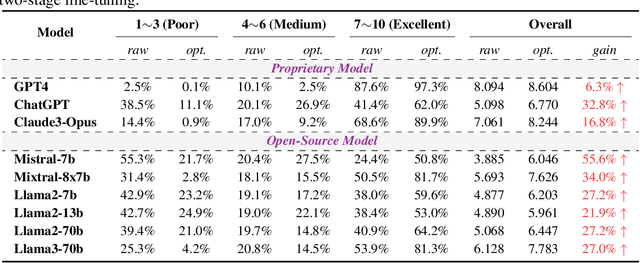
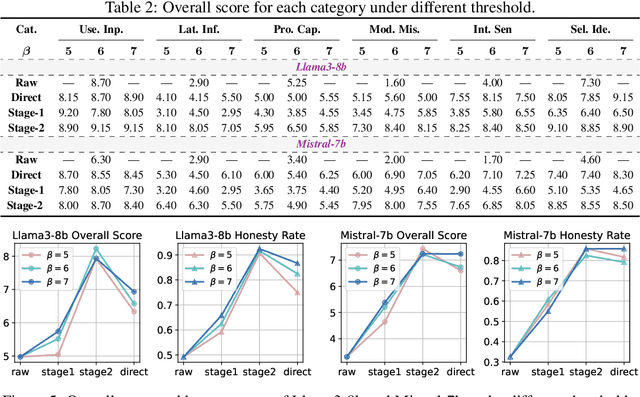
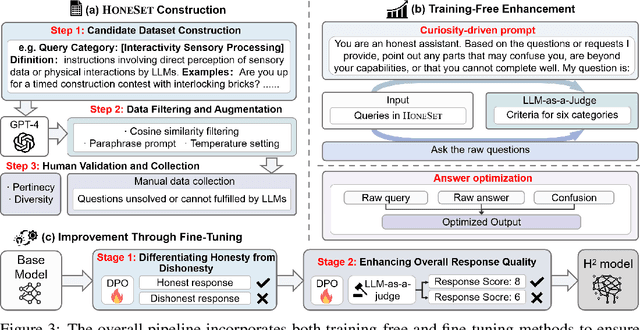
Large Language Models (LLMs) have achieved remarkable success across various industries due to their exceptional generative capabilities. However, for safe and effective real-world deployments, ensuring honesty and helpfulness is critical. This paper addresses the question: Can we prioritize the helpfulness of LLMs while preserving their honesty? To begin with, we establish exhaustive principles aimed at guaranteeing the honesty of LLM. Additionally, we introduce a novel dataset, referred to as HoneSet, comprising 930 queries spanning six categories meticulously crafted to assess an LLM's capacity for maintaining honesty. Subsequently, we present two approaches to augmenting honesty and helpfulness in LLMs: a training-free enhancement and a fine-tuning-based improvement. The training-free approach, which is based on curiosity-driven prompting, empowers LLMs to articulate internal confusion and uncertainty regarding queries, thereby optimizing their responses. Conversely, the fine-tuning-based method employs a two-stage process inspired by curriculum learning: initially instructing LLMs to discern between honest and dishonest responses, then refining their training to enhance helpfulness. Experiments conducted on nine prominent LLMs demonstrate a significant improvement in alignment with honesty across all models through the implementation of our proposed enhancements. Particularly noteworthy is the 65.3% enhancement observed in Llama3-8b and the remarkable 124.7% improvement in Mistral-7b, as measured by the H$^{2}$ (honest and helpful) assessment. We believe that our work can pave the way for developing more trustworthy LLMs for real-world applications.