 Add to Chrome
 Add to Firefox
 Add to Edge
Dual Prototyping with Domain and Class Prototypes for Affective Brain-Computer Interface in Unseen Target Conditions
Nov 27, 2024
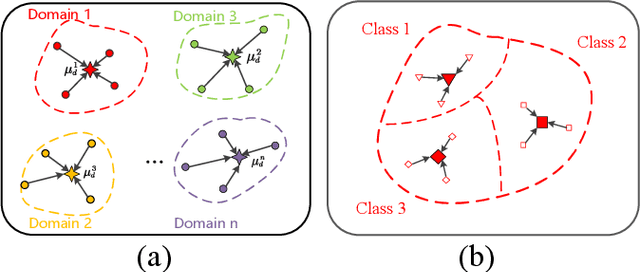
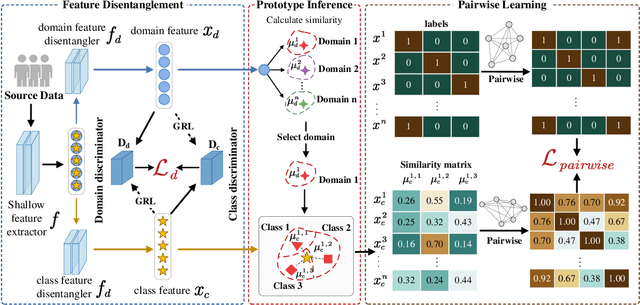
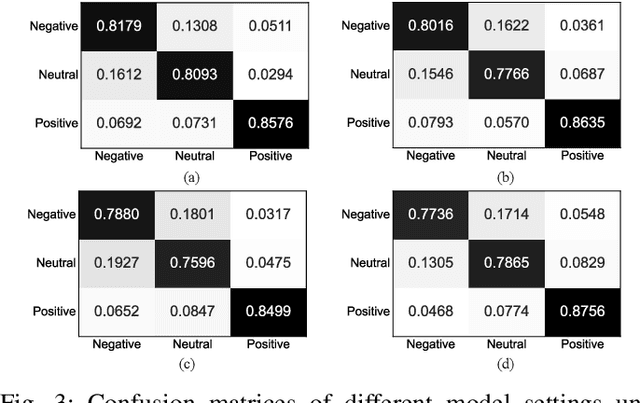
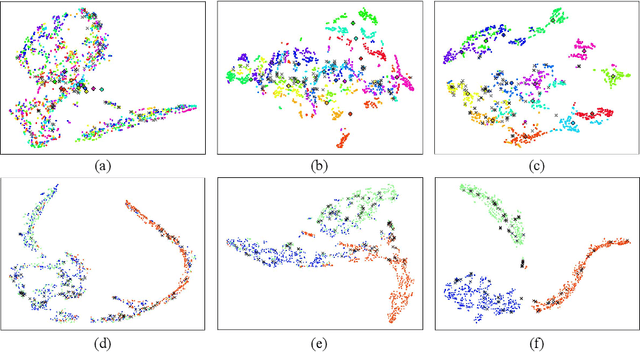
EEG signals have emerged as a powerful tool in affective brain-computer interfaces, playing a crucial role in emotion recognition. However, current deep transfer learning-based methods for EEG recognition face challenges due to the reliance of both source and target data in model learning, which significantly affect model performance and generalization. To overcome this limitation, we propose a novel framework (PL-DCP) and introduce the concepts of feature disentanglement and prototype inference. The dual prototyping mechanism incorporates both domain and class prototypes: domain prototypes capture individual variations across subjects, while class prototypes represent the ideal class distributions within their respective domains. Importantly, the proposed PL-DCP framework operates exclusively with source data during training, meaning that target data remains completely unseen throughout the entire process. To address label noise, we employ a pairwise learning strategy that encodes proximity relationships between sample pairs, effectively reducing the influence of mislabeled data. Experimental validation on the SEED and SEED-IV datasets demonstrates that PL-DCP, despite not utilizing target data during training, achieves performance comparable to deep transfer learning methods that require both source and target data. This highlights the potential of PL-DCP as an effective and robust approach for EEG-based emotion recognition.

Boost 3D Reconstruction using Diffusion-based Monocular Camera Calibration
Nov 26, 2024
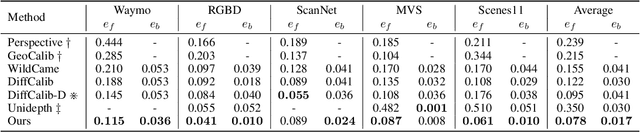


In this paper, we present DM-Calib, a diffusion-based approach for estimating pinhole camera intrinsic parameters from a single input image. Monocular camera calibration is essential for many 3D vision tasks. However, most existing methods depend on handcrafted assumptions or are constrained by limited training data, resulting in poor generalization across diverse real-world images. Recent advancements in stable diffusion models, trained on massive data, have shown the ability to generate high-quality images with varied characteristics. Emerging evidence indicates that these models implicitly capture the relationship between camera focal length and image content. Building on this insight, we explore how to leverage the powerful priors of diffusion models for monocular pinhole camera calibration. Specifically, we introduce a new image-based representation, termed Camera Image, which losslessly encodes the numerical camera intrinsics and integrates seamlessly with the diffusion framework. Using this representation, we reformulate the problem of estimating camera intrinsics as the generation of a dense Camera Image conditioned on an input image. By fine-tuning a stable diffusion model to generate a Camera Image from a single RGB input, we can extract camera intrinsics via a RANSAC operation. We further demonstrate that our monocular calibration method enhances performance across various 3D tasks, including zero-shot metric depth estimation, 3D metrology, pose estimation and sparse-view reconstruction. Extensive experiments on multiple public datasets show that our approach significantly outperforms baselines and provides broad benefits to 3D vision tasks. Code is available at https://github.com/JunyuanDeng/DM-Calib.
MapEval: Towards Unified, Robust and Efficient SLAM Map Evaluation Framework
Nov 26, 2024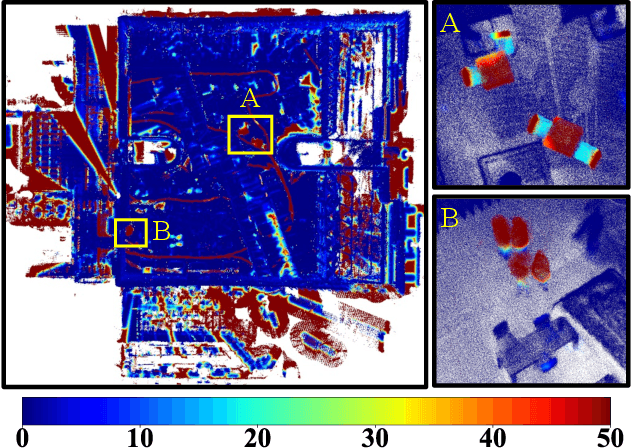
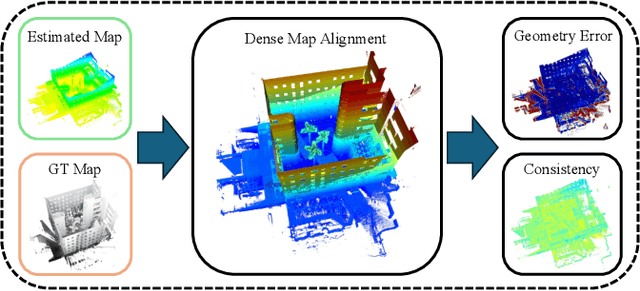
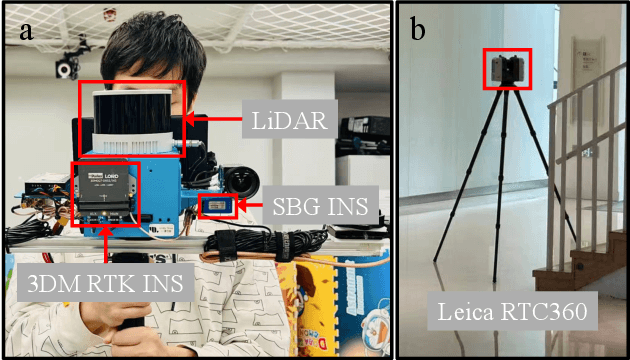
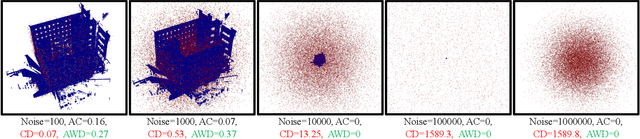
Evaluating massive-scale point cloud maps in Simultaneous Localization and Mapping (SLAM) remains challenging, primarily due to the absence of unified, robust and efficient evaluation frameworks. We present MapEval, an open-source framework for comprehensive quality assessment of point cloud maps, specifically addressing SLAM scenarios where ground truth map is inherently sparse compared to the mapped environment. Through systematic analysis of existing evaluation metrics in SLAM applications, we identify their fundamental limitations and establish clear guidelines for consistent map quality assessment. Building upon these insights, we propose a novel Gaussian-approximated Wasserstein distance in voxelized space, enabling two complementary metrics under the same error standard: Voxelized Average Wasserstein Distance (AWD) for global geometric accuracy and Spatial Consistency Score (SCS) for local consistency evaluation. This theoretical foundation leads to significant improvements in both robustness against noise and computational efficiency compared to conventional metrics. Extensive experiments on both simulated and real-world datasets demonstrate that MapEval achieves at least \SI{100}{}-\SI{500}{} times faster while maintaining evaluation integrity. The MapEval library\footnote{\texttt{https://github.com/JokerJohn/Cloud\_Map\_Evaluation}} will be publicly available to promote standardized map evaluation practices in the robotics community.
LM-Gaussian: Boost Sparse-view 3D Gaussian Splatting with Large Model Priors
Sep 05, 2024

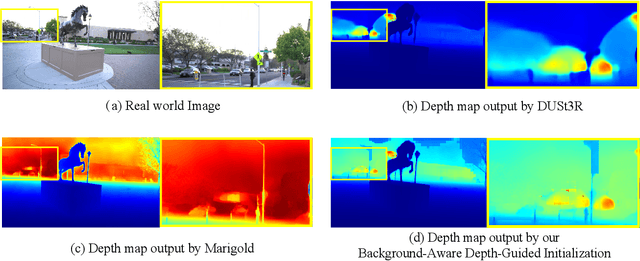

We aim to address sparse-view reconstruction of a 3D scene by leveraging priors from large-scale vision models. While recent advancements such as 3D Gaussian Splatting (3DGS) have demonstrated remarkable successes in 3D reconstruction, these methods typically necessitate hundreds of input images that densely capture the underlying scene, making them time-consuming and impractical for real-world applications. However, sparse-view reconstruction is inherently ill-posed and under-constrained, often resulting in inferior and incomplete outcomes. This is due to issues such as failed initialization, overfitting on input images, and a lack of details. To mitigate these challenges, we introduce LM-Gaussian, a method capable of generating high-quality reconstructions from a limited number of images. Specifically, we propose a robust initialization module that leverages stereo priors to aid in the recovery of camera poses and the reliable point clouds. Additionally, a diffusion-based refinement is iteratively applied to incorporate image diffusion priors into the Gaussian optimization process to preserve intricate scene details. Finally, we utilize video diffusion priors to further enhance the rendered images for realistic visual effects. Overall, our approach significantly reduces the data acquisition requirements compared to previous 3DGS methods. We validate the effectiveness of our framework through experiments on various public datasets, demonstrating its potential for high-quality 360-degree scene reconstruction. Visual results are on our website.
MS-Mapping: An Uncertainty-Aware Large-Scale Multi-Session LiDAR Mapping System
Aug 07, 2024
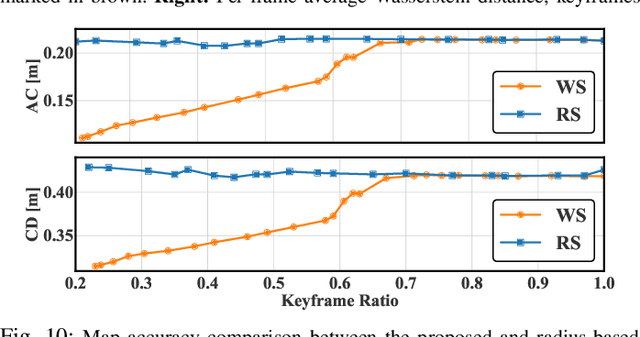


Large-scale multi-session LiDAR mapping is essential for a wide range of applications, including surveying, autonomous driving, crowdsourced mapping, and multi-agent navigation. However, existing approaches often struggle with data redundancy, robustness, and accuracy in complex environments. To address these challenges, we present MS-Mapping, an novel multi-session LiDAR mapping system that employs an incremental mapping scheme for robust and accurate map assembly in large-scale environments. Our approach introduces three key innovations: 1) A distribution-aware keyframe selection method that captures the subtle contributions of each point cloud frame to the map by analyzing the similarity of map distributions. This method effectively reduces data redundancy and pose graph size, while enhancing graph optimization speed; 2) An uncertainty model that automatically performs least-squares adjustments according to the covariance matrix during graph optimization, improving mapping precision, robustness, and flexibility without the need for scene-specific parameter tuning. This uncertainty model enables our system to monitor pose uncertainty and avoid ill-posed optimizations, thereby increasing adaptability to diverse and challenging environments. 3) To ensure fair evaluation, we redesign baseline comparisons and the evaluation benchmark. Direct assessment of map accuracy demonstrates the superiority of the proposed MS-Mapping algorithm compared to state-of-the-art methods. In addition to employing public datasets such as Urban-Nav, FusionPortable, and Newer College, we conducted extensive experiments on such a large \SI{855}{m}$\times$\SI{636}{m} ground truth map, collecting over \SI{20}{km} of indoor and outdoor data across more than ten sequences...
HIVE: HIerarchical Volume Encoding for Neural Implicit Surface Reconstruction
Aug 03, 2024Neural implicit surface reconstruction has become a new trend in reconstructing a detailed 3D shape from images. In previous methods, however, the 3D scene is only encoded by the MLPs which do not have an explicit 3D structure. To better represent 3D shapes, we introduce a volume encoding to explicitly encode the spatial information. We further design hierarchical volumes to encode the scene structures in multiple scales. The high-resolution volumes capture the high-frequency geometry details since spatially varying features could be learned from different 3D points, while the low-resolution volumes enforce the spatial consistency to keep the shape smooth since adjacent locations possess the same low-resolution feature. In addition, we adopt a sparse structure to reduce the memory consumption at high-resolution volumes, and two regularization terms to enhance results smoothness. This hierarchical volume encoding could be appended to any implicit surface reconstruction method as a plug-and-play module, and can generate a smooth and clean reconstruction with more details. Superior performance is demonstrated in DTU, EPFL, and BlendedMVS datasets with significant improvement on the standard metrics.
PointRegGPT: Boosting 3D Point Cloud Registration using Generative Point-Cloud Pairs for Training
Jul 19, 2024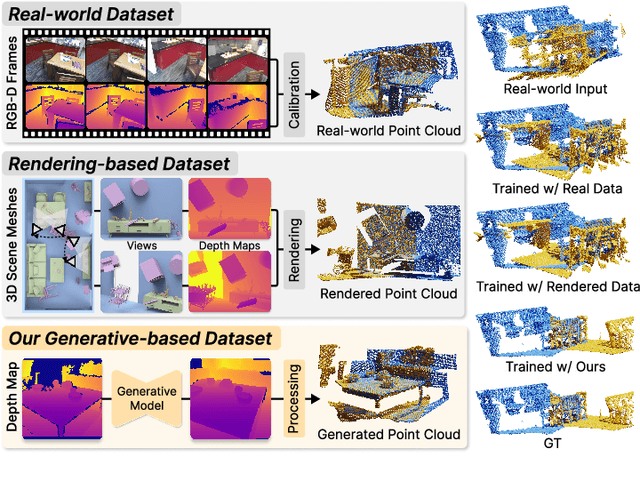
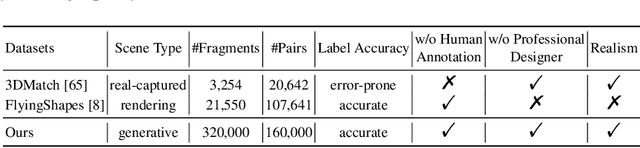

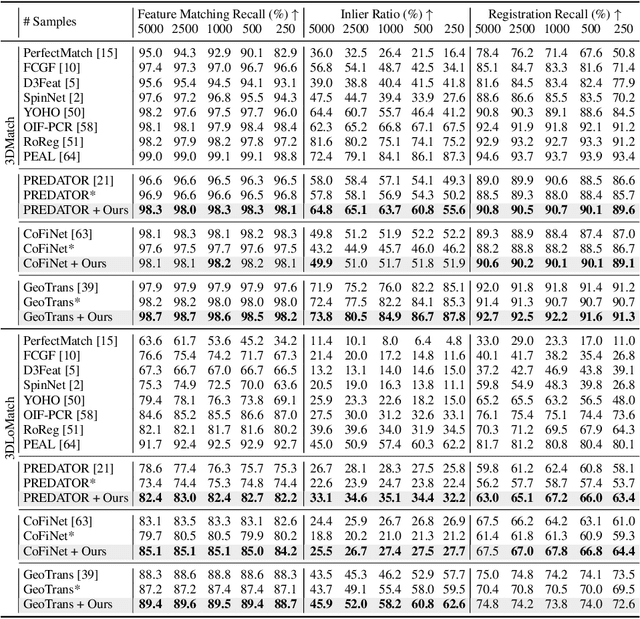
Data plays a crucial role in training learning-based methods for 3D point cloud registration. However, the real-world dataset is expensive to build, while rendering-based synthetic data suffers from domain gaps. In this work, we present PointRegGPT, boosting 3D point cloud registration using generative point-cloud pairs for training. Given a single depth map, we first apply a random camera motion to re-project it into a target depth map. Converting them to point clouds gives a training pair. To enhance the data realism, we formulate a generative model as a depth inpainting diffusion to process the target depth map with the re-projected source depth map as the condition. Also, we design a depth correction module to alleviate artifacts caused by point penetration during the re-projection. To our knowledge, this is the first generative approach that explores realistic data generation for indoor point cloud registration. When equipped with our approach, several recent algorithms can improve their performance significantly and achieve SOTA consistently on two common benchmarks. The code and dataset will be released on https://github.com/Chen-Suyi/PointRegGPT.
GV-Bench: Benchmarking Local Feature Matching for Geometric Verification of Long-term Loop Closure Detection
Jul 16, 2024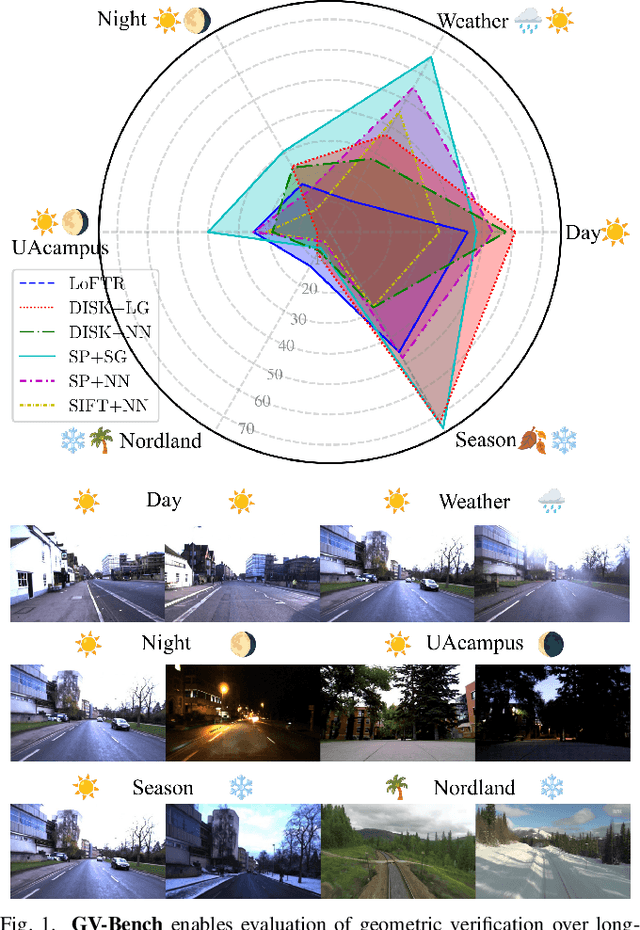
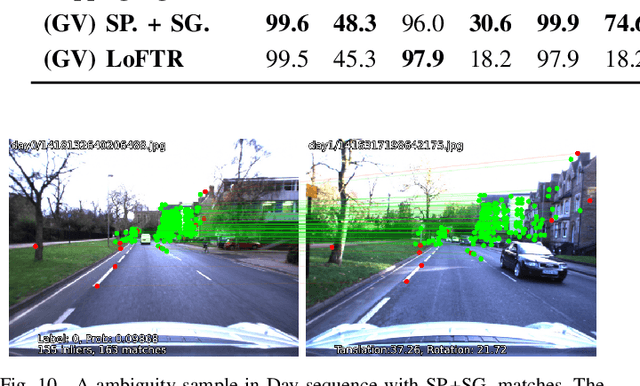
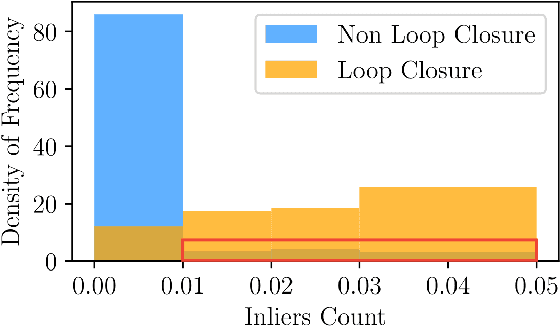
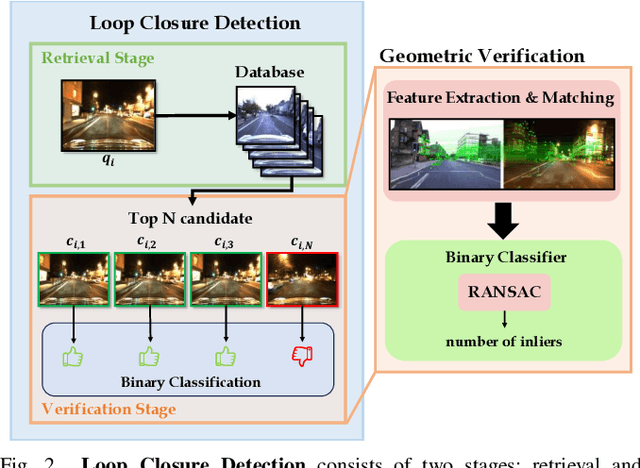
Visual loop closure detection is an important module in visual simultaneous localization and mapping (SLAM), which associates current camera observation with previously visited places. Loop closures correct drifts in trajectory estimation to build a globally consistent map. However, a false loop closure can be fatal, so verification is required as an additional step to ensure robustness by rejecting the false positive loops. Geometric verification has been a well-acknowledged solution that leverages spatial clues provided by local feature matching to find true positives. Existing feature matching methods focus on homography and pose estimation in long-term visual localization, lacking references for geometric verification. To fill the gap, this paper proposes a unified benchmark targeting geometric verification of loop closure detection under long-term conditional variations. Furthermore, we evaluate six representative local feature matching methods (handcrafted and learning-based) under the benchmark, with in-depth analysis for limitations and future directions.
MS-Mapping: Multi-session LiDAR Mapping with Wasserstein-based Keyframe Selection
Jun 04, 2024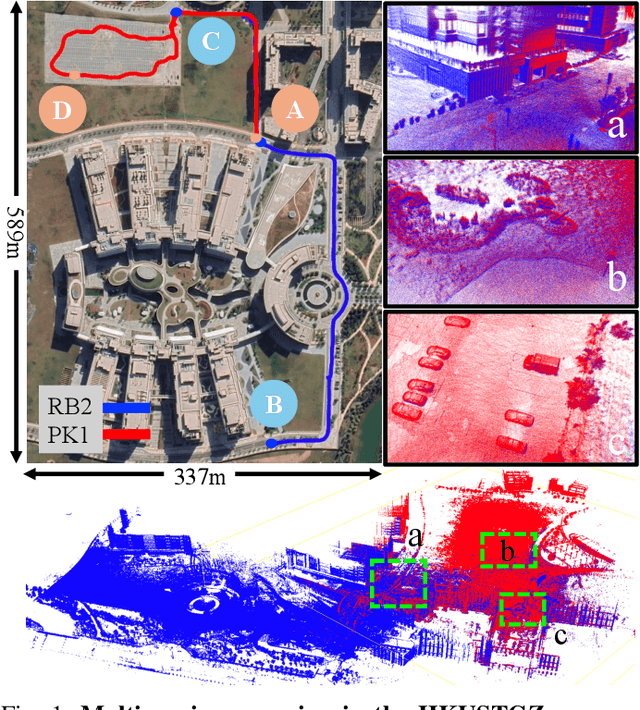
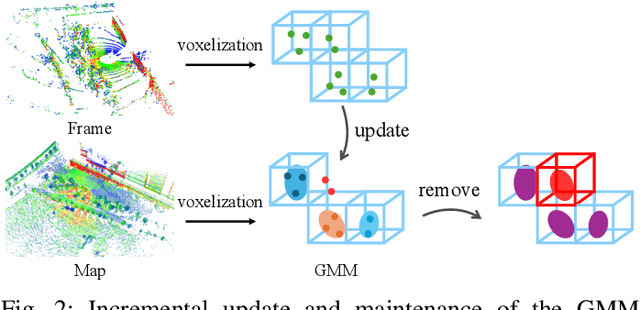
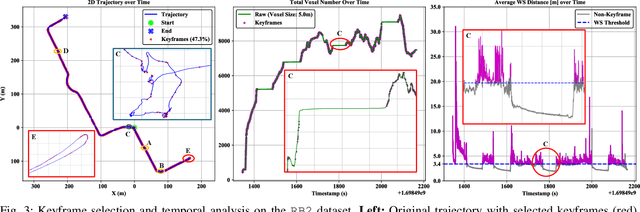
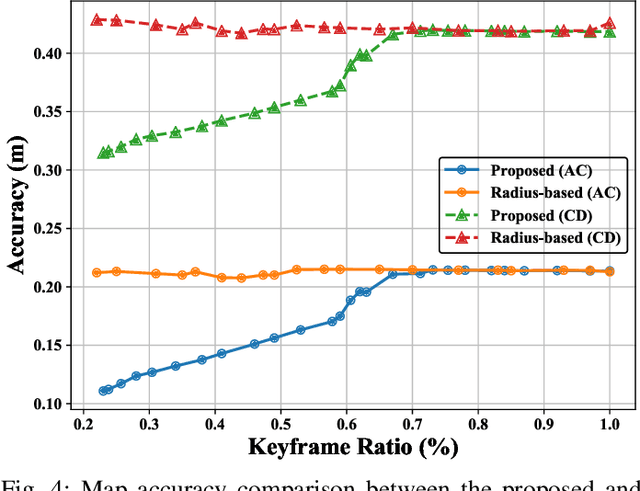
Large-scale multi-session LiDAR mapping plays a crucial role in various applications but faces significant challenges in data redundancy and pose graph scalability. This paper present MS-Mapping, a novel multi-session LiDAR mapping system that combines an incremental mapping scheme with support for various LiDAR-based odometry, enabling high-precision and consistent map assembly in large-scale environments. Our approach introduces a real-time keyframe selection method based on the Wasserstein distance, which effectively reduces data redundancy and pose graph complexity. We formulate the LiDAR point cloud keyframe selection problem using a similarity method based on Gaussian mixture models (GMM) and tackle the real-time challenge by employing an incremental voxel update method. Extensive experiments on large-scale campus scenes and over \SI{12.8}{km} of public and self-collected datasets demonstrate the efficiency, accuracy, and consistency of our map assembly approach. To facilitate further research and development in the community, we make our code https://github.com/JokerJohn/MS-Mapping and datasets publicly available.
RaDe-GS: Rasterizing Depth in Gaussian Splatting
Jun 03, 2024
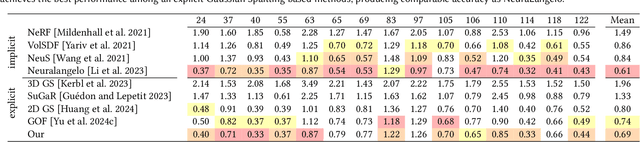
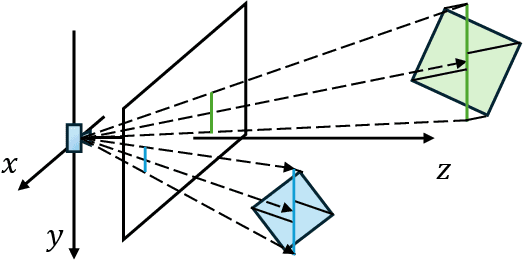
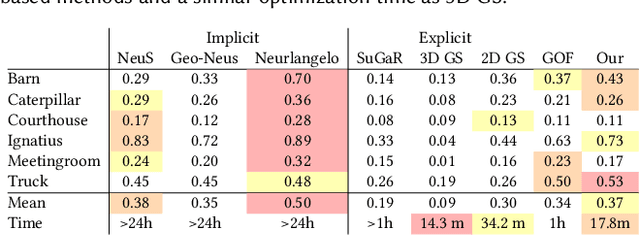
Gaussian Splatting (GS) has proven to be highly effective in novel view synthesis, achieving high-quality and real-time rendering. However, its potential for reconstructing detailed 3D shapes has not been fully explored. Existing methods often suffer from limited shape accuracy due to the discrete and unstructured nature of Gaussian splats, which complicates the shape extraction. While recent techniques like 2D GS have attempted to improve shape reconstruction, they often reformulate the Gaussian primitives in ways that reduce both rendering quality and computational efficiency. To address these problems, our work introduces a rasterized approach to render the depth maps and surface normal maps of general 3D Gaussian splats. Our method not only significantly enhances shape reconstruction accuracy but also maintains the computational efficiency intrinsic to Gaussian Splatting. Our approach achieves a Chamfer distance error comparable to NeuraLangelo on the DTU dataset and similar training and rendering time as traditional Gaussian Splatting on the Tanks & Temples dataset. Our method is a significant advancement in Gaussian Splatting and can be directly integrated into existing Gaussian Splatting-based methods.