 Add to Chrome
 Add to Firefox
 Add to Edge
Attribute-Aware Deep Hashing with Self-Consistency for Large-Scale Fine-Grained Image Retrieval
Nov 21, 2023
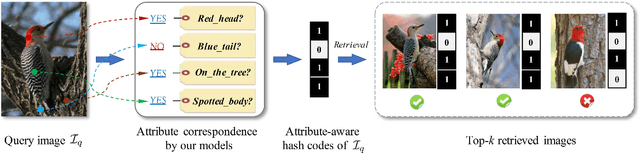
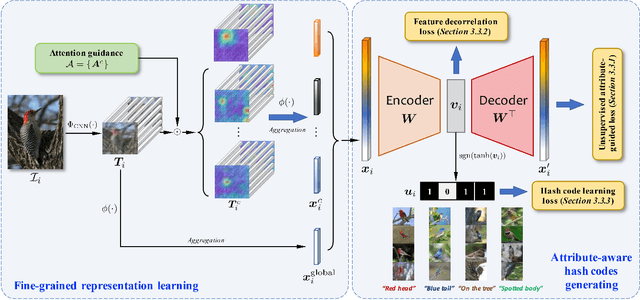
Our work focuses on tackling large-scale fine-grained image retrieval as ranking the images depicting the concept of interests (i.e., the same sub-category labels) highest based on the fine-grained details in the query. It is desirable to alleviate the challenges of both fine-grained nature of small inter-class variations with large intra-class variations and explosive growth of fine-grained data for such a practical task. In this paper, we propose attribute-aware hashing networks with self-consistency for generating attribute-aware hash codes to not only make the retrieval process efficient, but also establish explicit correspondences between hash codes and visual attributes. Specifically, based on the captured visual representations by attention, we develop an encoder-decoder structure network of a reconstruction task to unsupervisedly distill high-level attribute-specific vectors from the appearance-specific visual representations without attribute annotations. Our models are also equipped with a feature decorrelation constraint upon these attribute vectors to strengthen their representative abilities. Then, driven by preserving original entities' similarity, the required hash codes can be generated from these attribute-specific vectors and thus become attribute-aware. Furthermore, to combat simplicity bias in deep hashing, we consider the model design from the perspective of the self-consistency principle and propose to further enhance models' self-consistency by equipping an additional image reconstruction path. Comprehensive quantitative experiments under diverse empirical settings on six fine-grained retrieval datasets and two generic retrieval datasets show the superiority of our models over competing methods.

FollowEval: A Multi-Dimensional Benchmark for Assessing the Instruction-Following Capability of Large Language Models
Nov 16, 2023


The effective assessment of the instruction-following ability of large language models (LLMs) is of paramount importance. A model that cannot adhere to human instructions might be not able to provide reliable and helpful responses. In pursuit of this goal, various benchmarks have been constructed to evaluate the instruction-following capacity of these models. However, these benchmarks are limited to a single language and are constructed using automated approaches, which restricts their applicability and the quality of the test examples they contain. To bridge this gap, we introduce the FollowEval benchmark in this paper. This benchmark is composed of instances in both English and Chinese, and all test examples are crafted by human experts. Furthermore, the FollowEval benchmark is designed to assess LLMs across five critical dimensions of instruction following: string manipulation, commonsense reasoning, logical reasoning, spatial reasoning, and response constraints. To enhance the complexity and present a sufficient challenge, each test example is designed to evaluate more than one dimension. We have evaluated various LLMs using the FollowEval benchmark and found that their performance significantly lags behind that of humans. This highlights the considerable room for improvement in the instruction-following ability of these models.
Open-Vocabulary Video Anomaly Detection
Nov 15, 2023Video anomaly detection (VAD) with weak supervision has achieved remarkable performance in utilizing video-level labels to discriminate whether a video frame is normal or abnormal. However, current approaches are inherently limited to a closed-set setting and may struggle in open-world applications where there can be anomaly categories in the test data unseen during training. A few recent studies attempt to tackle a more realistic setting, open-set VAD, which aims to detect unseen anomalies given seen anomalies and normal videos. However, such a setting focuses on predicting frame anomaly scores, having no ability to recognize the specific categories of anomalies, despite the fact that this ability is essential for building more informed video surveillance systems. This paper takes a step further and explores open-vocabulary video anomaly detection (OVVAD), in which we aim to leverage pre-trained large models to detect and categorize seen and unseen anomalies. To this end, we propose a model that decouples OVVAD into two mutually complementary tasks -- class-agnostic detection and class-specific classification -- and jointly optimizes both tasks. Particularly, we devise a semantic knowledge injection module to introduce semantic knowledge from large language models for the detection task, and design a novel anomaly synthesis module to generate pseudo unseen anomaly videos with the help of large vision generation models for the classification task. These semantic knowledge and synthesis anomalies substantially extend our model's capability in detecting and categorizing a variety of seen and unseen anomalies. Extensive experiments on three widely-used benchmarks demonstrate our model achieves state-of-the-art performance on OVVAD task.
DMV3D: Denoising Multi-View Diffusion using 3D Large Reconstruction Model
Nov 15, 2023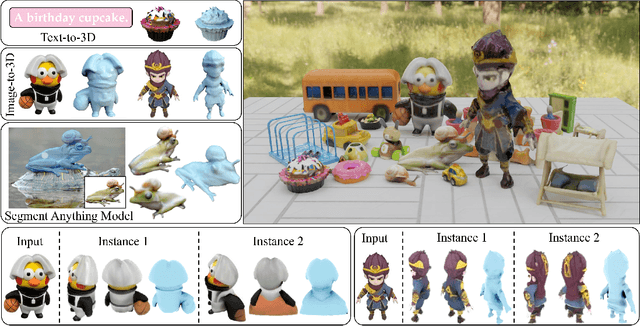
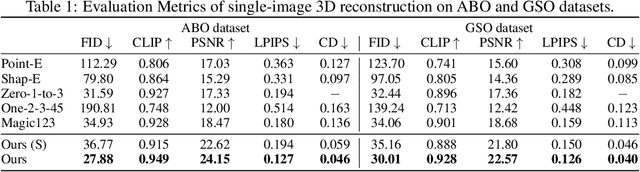

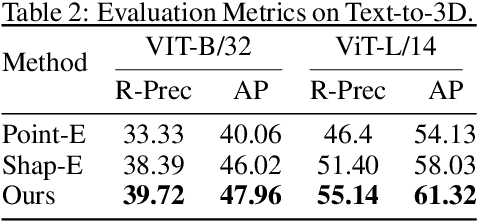
We propose \textbf{DMV3D}, a novel 3D generation approach that uses a transformer-based 3D large reconstruction model to denoise multi-view diffusion. Our reconstruction model incorporates a triplane NeRF representation and can denoise noisy multi-view images via NeRF reconstruction and rendering, achieving single-stage 3D generation in $\sim$30s on single A100 GPU. We train \textbf{DMV3D} on large-scale multi-view image datasets of highly diverse objects using only image reconstruction losses, without accessing 3D assets. We demonstrate state-of-the-art results for the single-image reconstruction problem where probabilistic modeling of unseen object parts is required for generating diverse reconstructions with sharp textures. We also show high-quality text-to-3D generation results outperforming previous 3D diffusion models. Our project website is at: https://justimyhxu.github.io/projects/dmv3d/ .
Interpretable Graph Anomaly Detection using Gradient Attention Maps
Nov 10, 2023Detecting unusual patterns in graph data is a crucial task in data mining. However, existing methods often face challenges in consistently achieving satisfactory performance and lack interpretability, which hinders our understanding of anomaly detection decisions. In this paper, we propose a novel approach to graph anomaly detection that leverages the power of interpretability to enhance performance. Specifically, our method extracts an attention map derived from gradients of graph neural networks, which serves as a basis for scoring anomalies. In addition, we conduct theoretical analysis using synthetic data to validate our method and gain insights into its decision-making process. To demonstrate the effectiveness of our method, we extensively evaluate our approach against state-of-the-art graph anomaly detection techniques. The results consistently demonstrate the superior performance of our method compared to the baselines.
Understanding Deep Representation Learning via Layerwise Feature Compression and Discrimination
Nov 06, 2023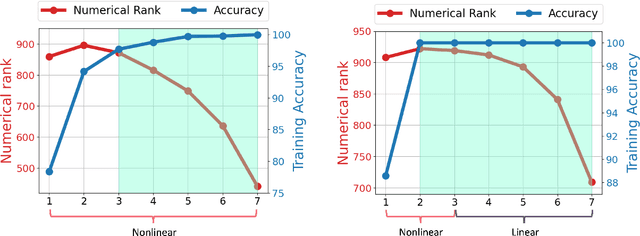
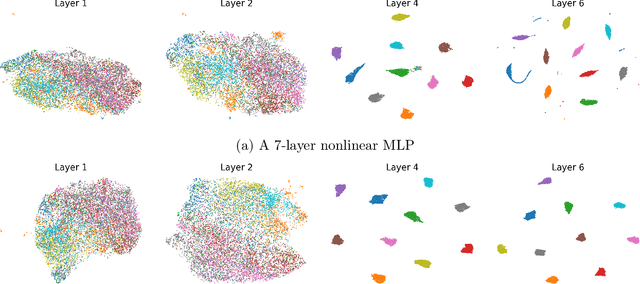
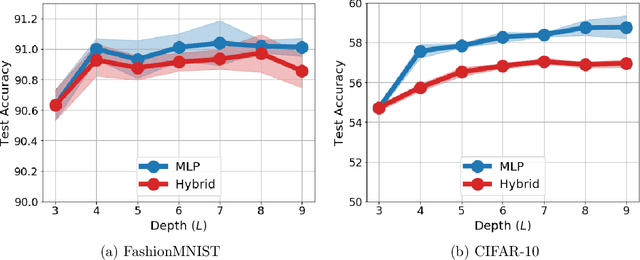

Over the past decade, deep learning has proven to be a highly effective tool for learning meaningful features from raw data. However, it remains an open question how deep networks perform hierarchical feature learning across layers. In this work, we attempt to unveil this mystery by investigating the structures of intermediate features. Motivated by our empirical findings that linear layers mimic the roles of deep layers in nonlinear networks for feature learning, we explore how deep linear networks transform input data into output by investigating the output (i.e., features) of each layer after training in the context of multi-class classification problems. Toward this goal, we first define metrics to measure within-class compression and between-class discrimination of intermediate features, respectively. Through theoretical analysis of these two metrics, we show that the evolution of features follows a simple and quantitative pattern from shallow to deep layers when the input data is nearly orthogonal and the network weights are minimum-norm, balanced, and approximate low-rank: Each layer of the linear network progressively compresses within-class features at a geometric rate and discriminates between-class features at a linear rate with respect to the number of layers that data have passed through. To the best of our knowledge, this is the first quantitative characterization of feature evolution in hierarchical representations of deep linear networks. Empirically, our extensive experiments not only validate our theoretical results numerically but also reveal a similar pattern in deep nonlinear networks which aligns well with recent empirical studies. Moreover, we demonstrate the practical implications of our results in transfer learning. Our code is available at \url{https://github.com/Heimine/PNC_DLN}.
PERF: Panoramic Neural Radiance Field from a Single Panorama
Oct 28, 2023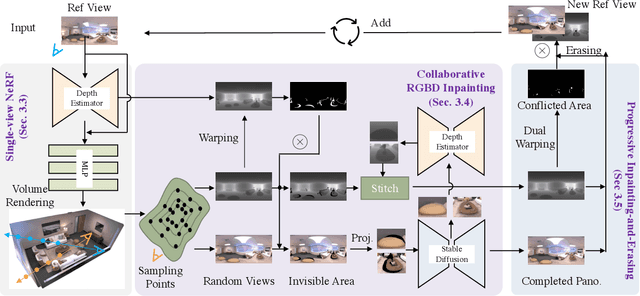
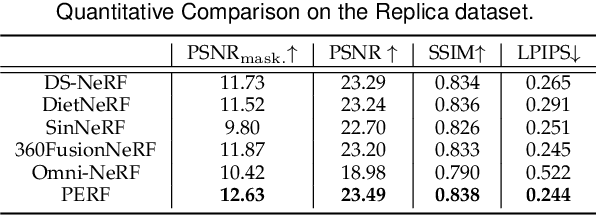
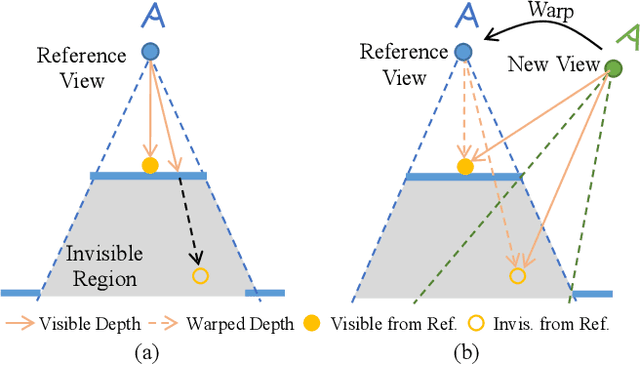
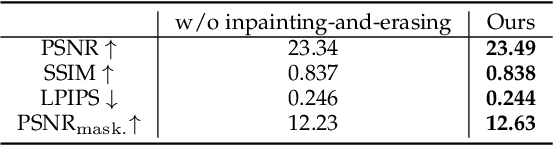
Neural Radiance Field (NeRF) has achieved substantial progress in novel view synthesis given multi-view images. Recently, some works have attempted to train a NeRF from a single image with 3D priors. They mainly focus on a limited field of view with a few occlusions, which greatly limits their scalability to real-world 360-degree panoramic scenarios with large-size occlusions. In this paper, we present PERF, a 360-degree novel view synthesis framework that trains a panoramic neural radiance field from a single panorama. Notably, PERF allows 3D roaming in a complex scene without expensive and tedious image collection. To achieve this goal, we propose a novel collaborative RGBD inpainting method and a progressive inpainting-and-erasing method to lift up a 360-degree 2D scene to a 3D scene. Specifically, we first predict a panoramic depth map as initialization given a single panorama and reconstruct visible 3D regions with volume rendering. Then we introduce a collaborative RGBD inpainting approach into a NeRF for completing RGB images and depth maps from random views, which is derived from an RGB Stable Diffusion model and a monocular depth estimator. Finally, we introduce an inpainting-and-erasing strategy to avoid inconsistent geometry between a newly-sampled view and reference views. The two components are integrated into the learning of NeRFs in a unified optimization framework and achieve promising results. Extensive experiments on Replica and a new dataset PERF-in-the-wild demonstrate the superiority of our PERF over state-of-the-art methods. Our PERF can be widely used for real-world applications, such as panorama-to-3D, text-to-3D, and 3D scene stylization applications. Project page and code are available at https://perf-project.github.io/ and https://github.com/perf-project/PeRF.
Recent Advances in Multi-modal 3D Scene Understanding: A Comprehensive Survey and Evaluation
Oct 24, 2023Multi-modal 3D scene understanding has gained considerable attention due to its wide applications in many areas, such as autonomous driving and human-computer interaction. Compared to conventional single-modal 3D understanding, introducing an additional modality not only elevates the richness and precision of scene interpretation but also ensures a more robust and resilient understanding. This becomes especially crucial in varied and challenging environments where solely relying on 3D data might be inadequate. While there has been a surge in the development of multi-modal 3D methods over past three years, especially those integrating multi-camera images (3D+2D) and textual descriptions (3D+language), a comprehensive and in-depth review is notably absent. In this article, we present a systematic survey of recent progress to bridge this gap. We begin by briefly introducing a background that formally defines various 3D multi-modal tasks and summarizes their inherent challenges. After that, we present a novel taxonomy that delivers a thorough categorization of existing methods according to modalities and tasks, exploring their respective strengths and limitations. Furthermore, comparative results of recent approaches on several benchmark datasets, together with insightful analysis, are offered. Finally, we discuss the unresolved issues and provide several potential avenues for future research.
Zero-Shot Object Goal Visual Navigation With Class-Independent Relationship Network
Oct 15, 2023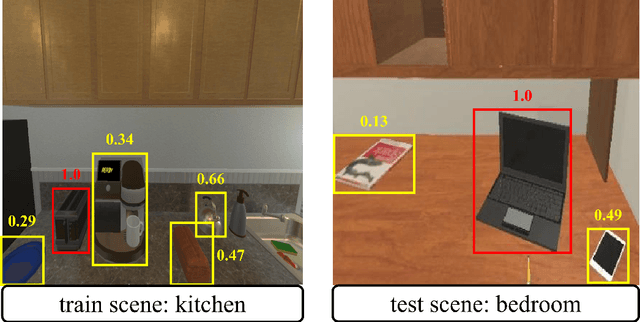
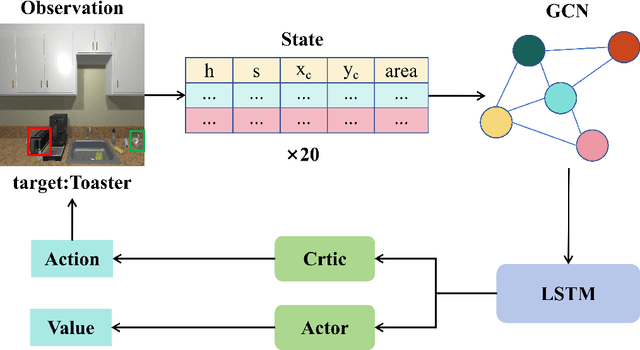
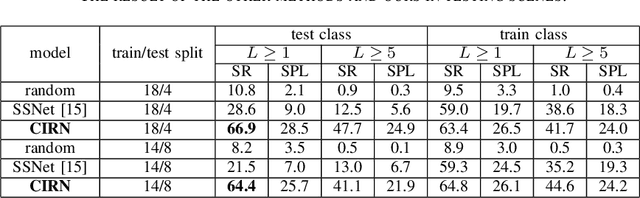

This paper investigates the zero-shot object goal visual navigation problem. In the object goal visual navigation task, the agent needs to locate navigation targets from its egocentric visual input. "Zero-shot" means that the target the agent needs to find is not trained during the training phase. To address the issue of coupling navigation ability with target features during training, we propose the Class-Independent Relationship Network (CIRN). This method combines target detection information with the relative semantic similarity between the target and the navigation target, and constructs a brand new state representation based on similarity ranking, this state representation does not include target feature or environment feature, effectively decoupling the agent's navigation ability from target features. And a Graph Convolutional Network (GCN) is employed to learn the relationships between different objects based on their similarities. During testing, our approach demonstrates strong generalization capabilities, including zero-shot navigation tasks with different targets and environments. Through extensive experiments in the AI2-THOR virtual environment, our method outperforms the current state-of-the-art approaches in the zero-shot object goal visual navigation task. Furthermore, we conducted experiments in more challenging cross-target and cross-scene settings, which further validate the robustness and generalization ability of our method. Our code is available at: https://github.com/SmartAndCleverRobot/ICRA-CIRN.
Generalized Neural Collapse for a Large Number of Classes
Oct 15, 2023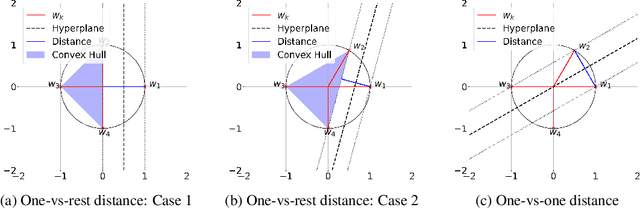

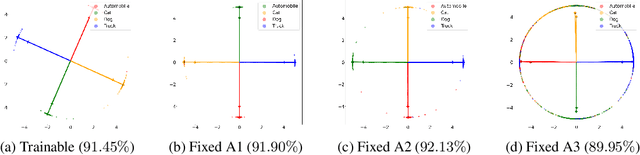
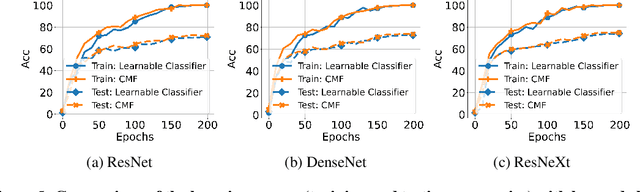
Neural collapse provides an elegant mathematical characterization of learned last layer representations (a.k.a. features) and classifier weights in deep classification models. Such results not only provide insights but also motivate new techniques for improving practical deep models. However, most of the existing empirical and theoretical studies in neural collapse focus on the case that the number of classes is small relative to the dimension of the feature space. This paper extends neural collapse to cases where the number of classes are much larger than the dimension of feature space, which broadly occur for language models, retrieval systems, and face recognition applications. We show that the features and classifier exhibit a generalized neural collapse phenomenon, where the minimum one-vs-rest margins is maximized.We provide empirical study to verify the occurrence of generalized neural collapse in practical deep neural networks. Moreover, we provide theoretical study to show that the generalized neural collapse provably occurs under unconstrained feature model with spherical constraint, under certain technical conditions on feature dimension and number of classes.