 Add to Chrome
 Add to Firefox
 Add to Edge
SPIRAL: Learning to Search and Aggregate
Jun 22, 2026
Language model reasoning can be substantially improved at test time via scaffolds that scale inference compute across different primitives -- sequential reasoning within a trace, independently sampled parallel traces, and aggregation of multiple reasoning traces into a final response. During post-training, however, language models are optimized only for sequential reasoning within a single trace. We introduce Sequential-Parallel-Aggregative Reinforcement Learning (SPIRAL), a framework in which a language model is trained to use all three primitives, as part of a unified inference compute pipeline. Concretely, the language model first samples a set of independent traces in parallel, each produced through sequential chain-of-thought reasoning, and then generates a final aggregation trace conditioned on those traces; all components are optimized end-to-end against the reward of the final aggregated response. To train this system, SPIRAL uses set reinforcement learning to teach models to produce a set of traces that are collectively useful for an aggregator and standard reinforcement learning to teach models to aggregate the set into improved final responses. Our experiments on reasoning tasks show that SPIRAL effectively scales with inference compute, outperforming GRPO by up to 11$\times$ scaling efficiency and 15% higher performance when all three compute primitives are scaled.

A Model of Multi-turn Human Persuadability Using Probabilistic Belief Tracing
Jun 03, 2026Large language models can shift human beliefs across high-stakes domains, but most persuasion studies rely on pre/post belief change. These endpoint measures identify whether persuasion occurred, yet miss where and how beliefs moved within a dialogue. We present PERSUASIONTRACE, a framework for studying persuasion in human-LLM interaction. Built on a web-based experimental platform, PERSUASIONTRACE contributes a tool for multi-turn persuasion studies and a process-level evaluation protocol: it records multi-turn belief reports from human or simulated targets of persuasion, annotates persuader turns with rhetorical dimensions (logos/pathos/ethos), and evaluates simulators by fidelity to real human belief dynamics. Using this framework, we find that human targets group into two clusters of multi-turn belief updates and exhibit susceptibility to rhetorical strategies, and that LLMs are persuasive across generic and personalized topics, text and audio modalities, and multi-turn interactions. Prior work has chiefly used vanilla-prompted LLMs to simulate human targets, but we show that these simulators fail to replicate human belief dynamics. We introduce a Bayesian-network simulated target that maintains an explicit latent belief state over time so each persuader message yields cognitively realistic belief updates. In human-likeness evaluation, our Bayesian target scores near a human reference (81 vs 80), while baseline LLM targets score substantially lower (64). PERSUASIONTRACE reframes persuasion evaluation from endpoint movement alone to process fidelity, providing a stronger basis for scientific analysis and safer optimization of persuasive systems.
Manifold Steering Reveals the Shared Geometry of Neural Network Representation and Behavior
May 06, 2026Neural representations carry rich geometric structure; but does that structure causally shape behavior? To address this question, we intervene along paths through activation space defined by different geometries, and measure the behavioral trajectories they induce. In particular, we test whether interventions that respect the geometry of activation space will yield behaviors close to those the model exhibits naturally. Concretely, we first fit an activation manifold $M_h$ to representations and a behavior manifold $M_y$ to output probability distributions. We then test the link $M_h \leftrightarrow M_y$ via interventions: we find that steering along $M_h$, which we term manifold steering, yields behavioral trajectories that follow $M_y$, while linear steering -- which assumes a Euclidean geometry -- cuts through off-manifold regions and hence produces unnatural outputs. Moreover, optimizing interventions in activation space to produce paths along $M_y$ recovers activation trajectories that trace the curvature of $M_h$. We demonstrate this bidirectional relationship between the geometry of representation and behavior across tasks and modalities. In language models, we use reasoning tasks with cyclic and sequential geometries as well as in-context learning tasks with more complex graph geometries. In a video world model, we use a task with geometry corresponding to physical dynamics. Overall, our work shows that geometry in neural representation is not merely incidental, but is in fact the proper object for enabling principled control via intervention on internals. This recasts the core problem of steering from finding the right direction to finding the right geometry.
Poly-EPO: Training Exploratory Reasoning Models
Apr 19, 2026Exploration is a cornerstone of learning from experience: it enables agents to find solutions to complex problems, generalize to novel ones, and scale performance with test-time compute. In this paper, we present a framework for post-training language models (LMs) that explicitly encourages optimistic exploration and promotes a synergy between exploration and exploitation. The central idea is to train the LM to generate sets of responses that are collectively accurate under the reward function and exploratory in their reasoning strategies. We first develop a general recipe for optimizing LMs with set reinforcement learning (set RL) under arbitrary objective functions, showing how standard RL algorithms can be adapted to this setting through a modification to the advantage computation. We then propose Polychromic Exploratory Policy Optimization (Poly-EPO), which instantiates this framework with an objective that explicitly synergizes exploration and exploitation. Across a range of reasoning benchmarks, we show that Poly-EPO improves generalization, as evidenced by higher pass@$k$ coverage, preserves greater diversity in model generations, and effectively scales with test-time compute.
Large Language Model Reasoning Failures
Feb 05, 2026Large Language Models (LLMs) have exhibited remarkable reasoning capabilities, achieving impressive results across a wide range of tasks. Despite these advances, significant reasoning failures persist, occurring even in seemingly simple scenarios. To systematically understand and address these shortcomings, we present the first comprehensive survey dedicated to reasoning failures in LLMs. We introduce a novel categorization framework that distinguishes reasoning into embodied and non-embodied types, with the latter further subdivided into informal (intuitive) and formal (logical) reasoning. In parallel, we classify reasoning failures along a complementary axis into three types: fundamental failures intrinsic to LLM architectures that broadly affect downstream tasks; application-specific limitations that manifest in particular domains; and robustness issues characterized by inconsistent performance across minor variations. For each reasoning failure, we provide a clear definition, analyze existing studies, explore root causes, and present mitigation strategies. By unifying fragmented research efforts, our survey provides a structured perspective on systemic weaknesses in LLM reasoning, offering valuable insights and guiding future research towards building stronger, more reliable, and robust reasoning capabilities. We additionally release a comprehensive collection of research works on LLM reasoning failures, as a GitHub repository at https://github.com/Peiyang-Song/Awesome-LLM-Reasoning-Failures, to provide an easy entry point to this area.
The Singapore Consensus on Global AI Safety Research Priorities
Jun 25, 2025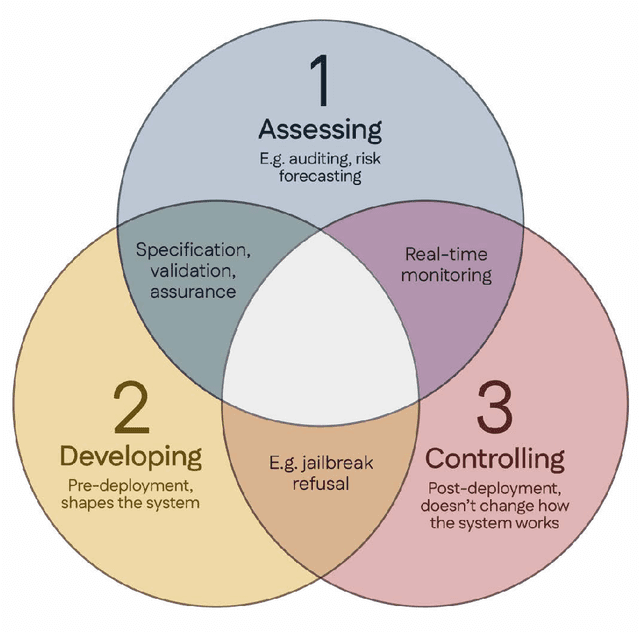
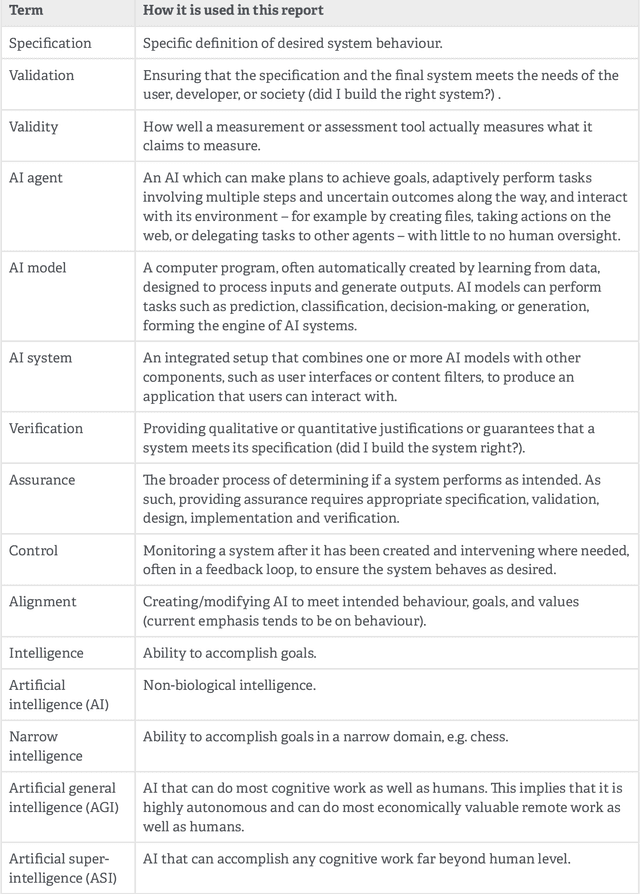
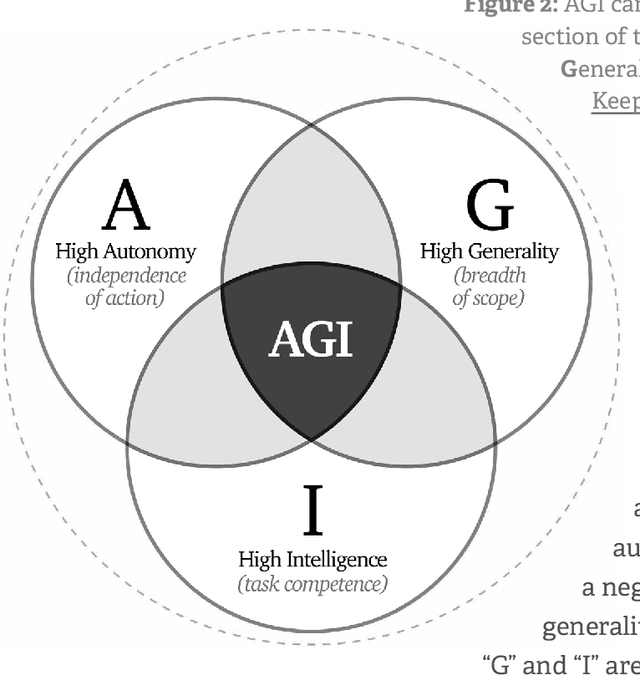
Rapidly improving AI capabilities and autonomy hold significant promise of transformation, but are also driving vigorous debate on how to ensure that AI is safe, i.e., trustworthy, reliable, and secure. Building a trusted ecosystem is therefore essential -- it helps people embrace AI with confidence and gives maximal space for innovation while avoiding backlash. The "2025 Singapore Conference on AI (SCAI): International Scientific Exchange on AI Safety" aimed to support research in this space by bringing together AI scientists across geographies to identify and synthesise research priorities in AI safety. This resulting report builds on the International AI Safety Report chaired by Yoshua Bengio and backed by 33 governments. By adopting a defence-in-depth model, this report organises AI safety research domains into three types: challenges with creating trustworthy AI systems (Development), challenges with evaluating their risks (Assessment), and challenges with monitoring and intervening after deployment (Control).
An Approach to Technical AGI Safety and Security
Apr 02, 2025Artificial General Intelligence (AGI) promises transformative benefits but also presents significant risks. We develop an approach to address the risk of harms consequential enough to significantly harm humanity. We identify four areas of risk: misuse, misalignment, mistakes, and structural risks. Of these, we focus on technical approaches to misuse and misalignment. For misuse, our strategy aims to prevent threat actors from accessing dangerous capabilities, by proactively identifying dangerous capabilities, and implementing robust security, access restrictions, monitoring, and model safety mitigations. To address misalignment, we outline two lines of defense. First, model-level mitigations such as amplified oversight and robust training can help to build an aligned model. Second, system-level security measures such as monitoring and access control can mitigate harm even if the model is misaligned. Techniques from interpretability, uncertainty estimation, and safer design patterns can enhance the effectiveness of these mitigations. Finally, we briefly outline how these ingredients could be combined to produce safety cases for AGI systems.
Value Profiles for Encoding Human Variation
Mar 19, 2025Modelling human variation in rating tasks is crucial for enabling AI systems for personalization, pluralistic model alignment, and computational social science. We propose representing individuals using value profiles -- natural language descriptions of underlying values compressed from in-context demonstrations -- along with a steerable decoder model to estimate ratings conditioned on a value profile or other rater information. To measure the predictive information in rater representations, we introduce an information-theoretic methodology. We find that demonstrations contain the most information, followed by value profiles and then demographics. However, value profiles offer advantages in terms of scrutability, interpretability, and steerability due to their compressed natural language format. Value profiles effectively compress the useful information from demonstrations (>70% information preservation). Furthermore, clustering value profiles to identify similarly behaving individuals better explains rater variation than the most predictive demographic groupings. Going beyond test set performance, we show that the decoder models interpretably change ratings according to semantic profile differences, are well-calibrated, and can help explain instance-level disagreement by simulating an annotator population. These results demonstrate that value profiles offer novel, predictive ways to describe individual variation beyond demographics or group information.
Bayesian Preference Elicitation with Language Models
Mar 08, 2024
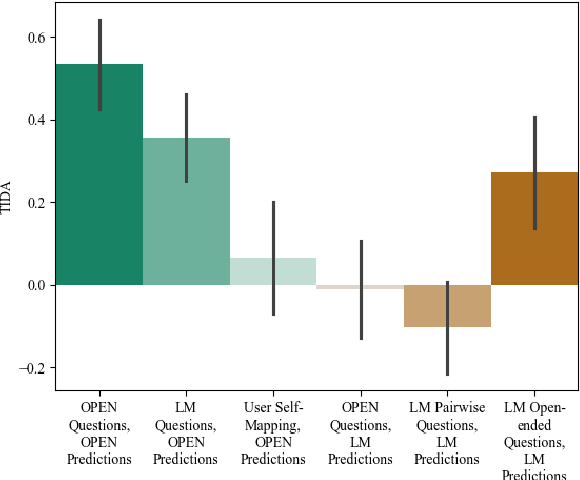
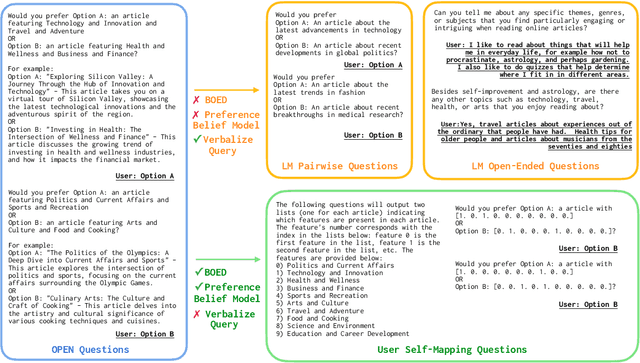
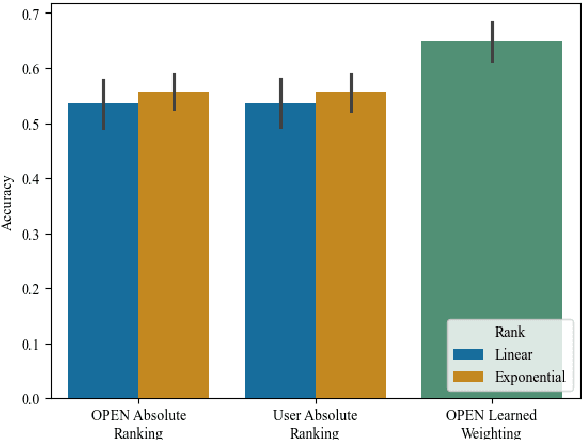
Aligning AI systems to users' interests requires understanding and incorporating humans' complex values and preferences. Recently, language models (LMs) have been used to gather information about the preferences of human users. This preference data can be used to fine-tune or guide other LMs and/or AI systems. However, LMs have been shown to struggle with crucial aspects of preference learning: quantifying uncertainty, modeling human mental states, and asking informative questions. These challenges have been addressed in other areas of machine learning, such as Bayesian Optimal Experimental Design (BOED), which focus on designing informative queries within a well-defined feature space. But these methods, in turn, are difficult to scale and apply to real-world problems where simply identifying the relevant features can be difficult. We introduce OPEN (Optimal Preference Elicitation with Natural language) a framework that uses BOED to guide the choice of informative questions and an LM to extract features and translate abstract BOED queries into natural language questions. By combining the flexibility of LMs with the rigor of BOED, OPEN can optimize the informativity of queries while remaining adaptable to real-world domains. In user studies, we find that OPEN outperforms existing LM- and BOED-based methods for preference elicitation.
Backtracing: Retrieving the Cause of the Query
Mar 06, 2024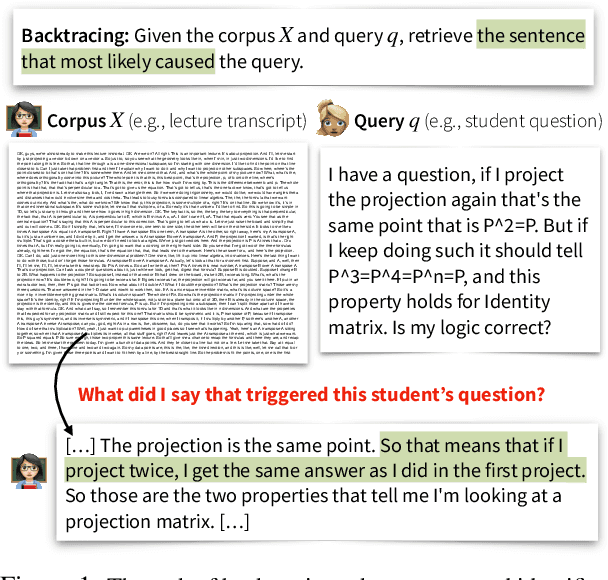
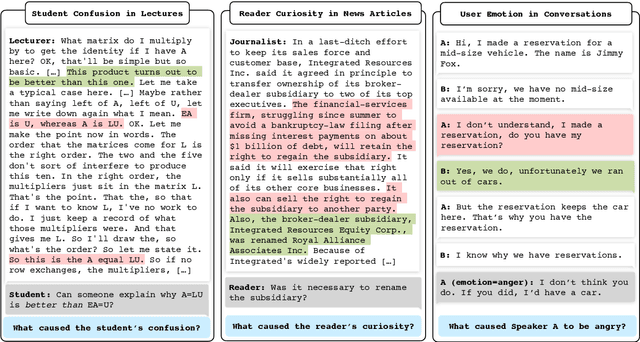
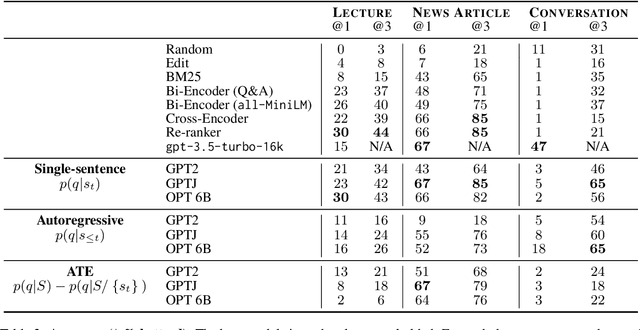
Many online content portals allow users to ask questions to supplement their understanding (e.g., of lectures). While information retrieval (IR) systems may provide answers for such user queries, they do not directly assist content creators -- such as lecturers who want to improve their content -- identify segments that _caused_ a user to ask those questions. We introduce the task of backtracing, in which systems retrieve the text segment that most likely caused a user query. We formalize three real-world domains for which backtracing is important in improving content delivery and communication: understanding the cause of (a) student confusion in the Lecture domain, (b) reader curiosity in the News Article domain, and (c) user emotion in the Conversation domain. We evaluate the zero-shot performance of popular information retrieval methods and language modeling methods, including bi-encoder, re-ranking and likelihood-based methods and ChatGPT. While traditional IR systems retrieve semantically relevant information (e.g., details on "projection matrices" for a query "does projecting multiple times still lead to the same point?"), they often miss the causally relevant context (e.g., the lecturer states "projecting twice gets me the same answer as one projection"). Our results show that there is room for improvement on backtracing and it requires new retrieval approaches. We hope our benchmark serves to improve future retrieval systems for backtracing, spawning systems that refine content generation and identify linguistic triggers influencing user queries. Our code and data are open-sourced: https://github.com/rosewang2008/backtracing.