 Add to Chrome
 Add to Firefox
 Add to Edge
AG-REPA: Causal Layer Selection for Representation Alignment in Audio Flow Matching
Mar 01, 2026
REPresentation Alignment (REPA) improves the training of generative flow models by aligning intermediate hidden states with pretrained teacher features, but its effectiveness in token-conditioned audio Flow Matching critically depends on the choice of supervised layers, which is typically made heuristically based on the depth. In this work, we introduce Attribution-Guided REPresentation Alignment (AG-REPA), a novel causal layer selection strategy for representation alignment in audio Flow Matching. Firstly, we find that layers that best store semantic/acoustic information (high teacher-space similarity) are not necessarily the layers that contribute most to the velocity field that drives generation, and we call it Store-Contribute Dissociation (SCD). To turn this insight into an actionable training guidance, we propose a forward-only gate ablation (FoG-A) that quantifies each layer's causal contribution via the induced change in the predicted velocity field, enabling sparse layer selection and adaptive weighting for alignment. Across unified speech and general-audio training (LibriSpeech + AudioSet) under different token-conditioning topologies, AG-REPA consistently outperforms REPA baselines. Overall, our results show that alignment is most effective when applied to the causally dominant layers that drive the velocity field, rather than to layers that are representationally rich but functionally passive.

Resp-Agent: An Agent-Based System for Multimodal Respiratory Sound Generation and Disease Diagnosis
Feb 19, 2026Deep learning-based respiratory auscultation is currently hindered by two fundamental challenges: (i) inherent information loss, as converting signals into spectrograms discards transient acoustic events and clinical context; (ii) limited data availability, exacerbated by severe class imbalance. To bridge these gaps, we present Resp-Agent, an autonomous multimodal system orchestrated by a novel Active Adversarial Curriculum Agent (Thinker-A$^2$CA). Unlike static pipelines, Thinker-A$^2$CA serves as a central controller that actively identifies diagnostic weaknesses and schedules targeted synthesis in a closed loop. To address the representation gap, we introduce a Modality-Weaving Diagnoser that weaves EHR data with audio tokens via Strategic Global Attention and sparse audio anchors, capturing both long-range clinical context and millisecond-level transients. To address the data gap, we design a Flow Matching Generator that adapts a text-only Large Language Model (LLM) via modality injection, decoupling pathological content from acoustic style to synthesize hard-to-diagnose samples. As a foundation for these efforts, we introduce Resp-229k, a benchmark corpus of 229k recordings paired with LLM-distilled clinical narratives. Extensive experiments demonstrate that Resp-Agent consistently outperforms prior approaches across diverse evaluation settings, improving diagnostic robustness under data scarcity and long-tailed class imbalance. Our code and data are available at https://github.com/zpforlove/Resp-Agent.
* 24 pages, 3 figures. Published as a conference paper at ICLR 2026
L2R: Low-Rank and Lipschitz-Controlled Routing for Mixture-of-Experts
Jan 29, 2026Mixture-of-Experts (MoE) models scale neural networks by conditionally activating a small subset of experts, where the router plays a central role in determining expert specialization and overall model performance. However, many modern MoE systems still adopt linear routers in raw high-dimensional representation spaces, where representation mismatch, angular concentration, and scale-sensitive scoring can jointly undermine routing discriminability and stable expert specialization. In this work, we propose Low-rank \& Lipschitz-controlled Routing (L2R), a unified routing framework that reshapes both the routing space and scoring geometry. L2R performs expert assignment in a shared low-rank latent routing space and introduces Saturated Inner-Product Scoring (SIPS) to explicitly control the Lipschitz behavior of routing functions, yielding smoother and more stable routing geometry. In addition, L2R incorporates a parameter-efficient multi-anchor routing mechanism to enhance expert expressiveness. Extensive experiments on a large-scale language MoE model and a vision MoE setting on ImageNet demonstrate that L2R consistently improves routing stability, expert specialization, and overall model performance.
Adaptive Shared Experts with LoRA-Based Mixture of Experts for Multi-Task Learning
Oct 01, 2025Mixture-of-Experts (MoE) has emerged as a powerful framework for multi-task learning (MTL). However, existing MoE-MTL methods often rely on single-task pretrained backbones and suffer from redundant adaptation and inefficient knowledge sharing during the transition from single-task to multi-task learning (STL to MTL). To address these limitations, we propose adaptive shared experts (ASE) within a low-rank adaptation (LoRA) based MoE, where shared experts are assigned router-computed gating weights jointly normalized with sparse experts. This design facilitates STL to MTL transition, enhances expert specialization, and cooperation. Furthermore, we incorporate fine-grained experts by increasing the number of LoRA experts while proportionally reducing their rank, enabling more effective knowledge sharing under a comparable parameter budget. Extensive experiments on the PASCAL-Context benchmark, under unified training settings, demonstrate that ASE consistently improves performance across diverse configurations and validates the effectiveness of fine-grained designs for MTL.
TaskCraft: Automated Generation of Agentic Tasks
Jun 11, 2025Agentic tasks, which require multi-step problem solving with autonomy, tool use, and adaptive reasoning, are becoming increasingly central to the advancement of NLP and AI. However, existing instruction data lacks tool interaction, and current agentic benchmarks rely on costly human annotation, limiting their scalability. We introduce \textsc{TaskCraft}, an automated workflow for generating difficulty-scalable, multi-tool, and verifiable agentic tasks with execution trajectories. TaskCraft expands atomic tasks using depth-based and width-based extensions to create structurally and hierarchically complex challenges. Empirical results show that these tasks improve prompt optimization in the generation workflow and enhance supervised fine-tuning of agentic foundation models. We present a large-scale synthetic dataset of approximately 36,000 tasks with varying difficulty to support future research on agent tuning and evaluation.
Multimodal 3D Genome Pre-training
Apr 12, 2025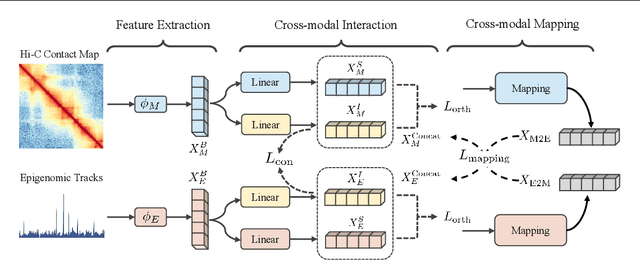
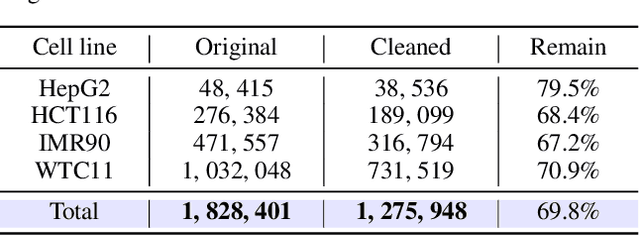
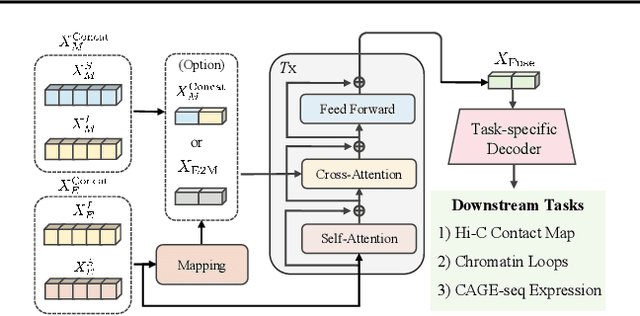
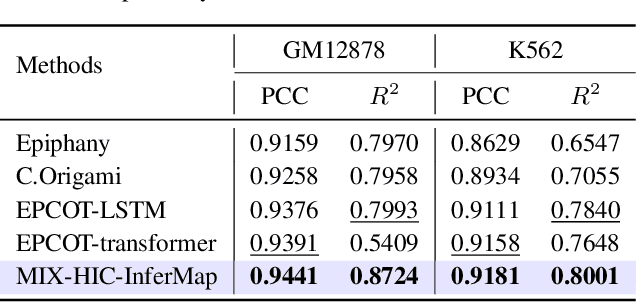
Deep learning techniques have driven significant progress in various analytical tasks within 3D genomics in computational biology. However, a holistic understanding of 3D genomics knowledge remains underexplored. Here, we propose MIX-HIC, the first multimodal foundation model of 3D genome that integrates both 3D genome structure and epigenomic tracks, which obtains unified and comprehensive semantics. For accurate heterogeneous semantic fusion, we design the cross-modal interaction and mapping blocks for robust unified representation, yielding the accurate aggregation of 3D genome knowledge. Besides, we introduce the first large-scale dataset comprising over 1 million pairwise samples of Hi-C contact maps and epigenomic tracks for high-quality pre-training, enabling the exploration of functional implications in 3D genomics. Extensive experiments show that MIX-HIC can significantly surpass existing state-of-the-art methods in diverse downstream tasks. This work provides a valuable resource for advancing 3D genomics research.
AURORA:Automated Training Framework of Universal Process Reward Models via Ensemble Prompting and Reverse Verification
Feb 17, 2025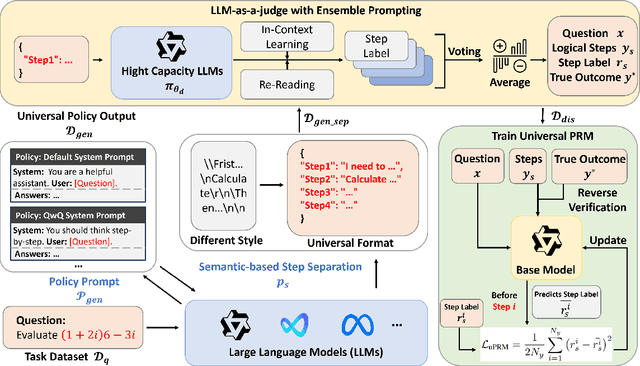
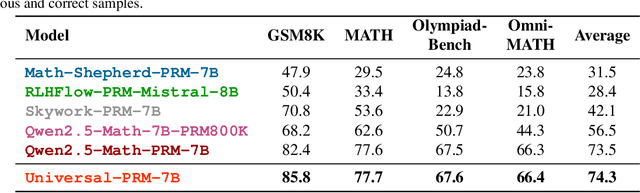
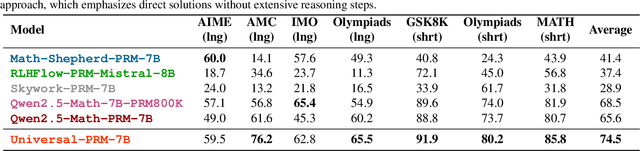
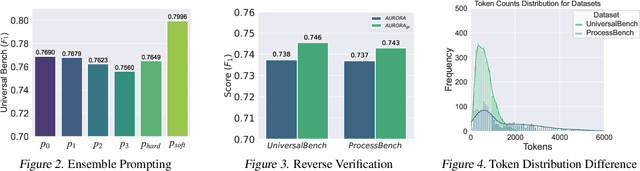
The reasoning capabilities of advanced large language models (LLMs) like o1 have revolutionized artificial intelligence applications. Nevertheless, evaluating and optimizing complex reasoning processes remain significant challenges due to diverse policy distributions and the inherent limitations of human effort and accuracy. In this paper, we present AURORA, a novel automated framework for training universal process reward models (PRMs) using ensemble prompting and reverse verification. The framework employs a two-phase approach: First, it uses diverse prompting strategies and ensemble methods to perform automated annotation and evaluation of processes, ensuring robust assessments for reward learning. Second, it leverages practical reference answers for reverse verification, enhancing the model's ability to validate outputs and improving training accuracy. To assess the framework's performance, we extend beyond the existing ProcessBench benchmark by introducing UniversalBench, which evaluates reward predictions across full trajectories under diverse policy distribtion with long Chain-of-Thought (CoT) outputs. Experimental results demonstrate that AURORA enhances process evaluation accuracy, improves PRMs' accuracy for diverse policy distributions and long-CoT responses. The project will be open-sourced at https://auroraprm.github.io/. The Universal-PRM-7B is available at https://huggingface.co/infly/Universal-PRM-7B.
Biology Instructions: A Dataset and Benchmark for Multi-Omics Sequence Understanding Capability of Large Language Models
Dec 26, 2024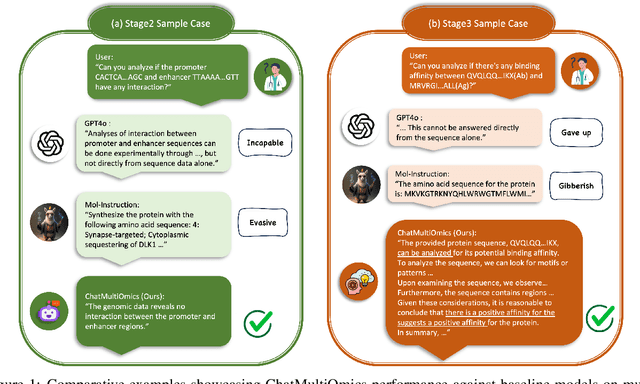
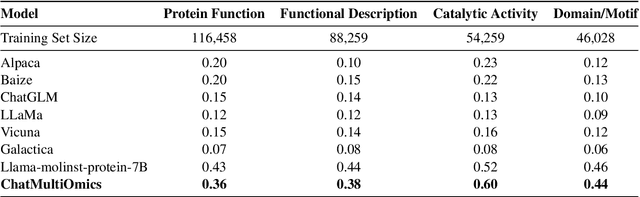
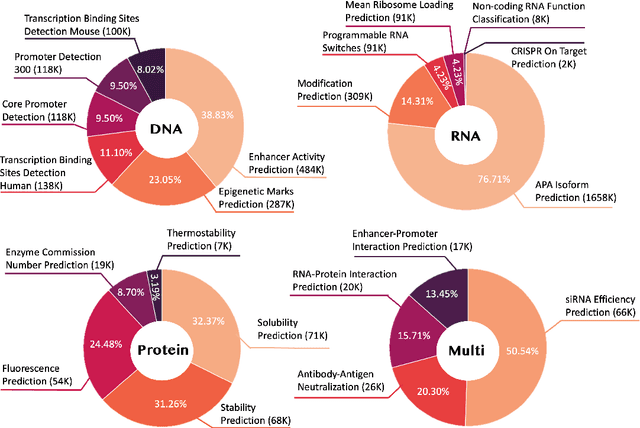
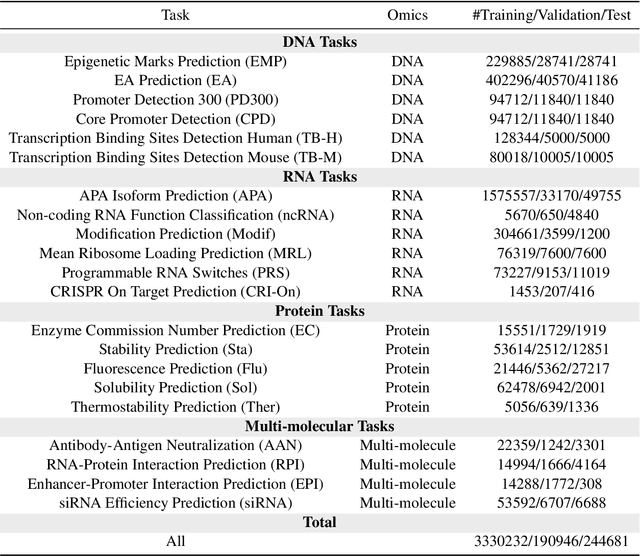
Large language models have already demonstrated their formidable capabilities in general domains, ushering in a revolutionary transformation. However, exploring and exploiting the extensive knowledge of these models to comprehend multi-omics biology remains underexplored. To fill this research gap, we first introduce Biology-Instructions, the first large-scale multi-omics biological sequences-related instruction-tuning dataset including DNA, RNA, proteins, and multi-molecules, designed to bridge the gap between large language models (LLMs) and complex biological sequences-related tasks. This dataset can enhance the versatility of LLMs by integrating diverse biological sequenced-based prediction tasks with advanced reasoning capabilities, while maintaining conversational fluency. Additionally, we reveal significant performance limitations in even state-of-the-art LLMs on biological sequence-related multi-omics tasks without specialized pre-training and instruction-tuning. We further develop a strong baseline called ChatMultiOmics with a novel three-stage training pipeline, demonstrating the powerful ability to understand biology by using Biology-Instructions. Biology-Instructions and ChatMultiOmics are publicly available and crucial resources for enabling more effective integration of LLMs with multi-omics sequence analysis.
Detect an Object At Once without Fine-tuning
Nov 04, 2024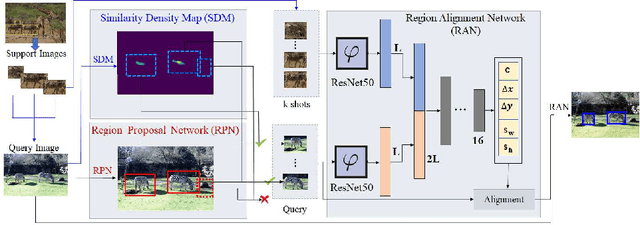

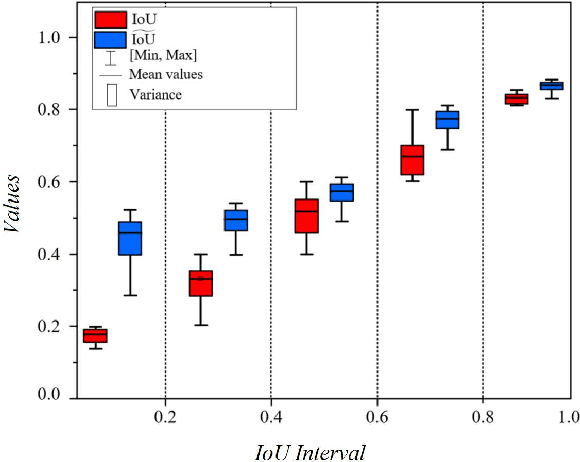
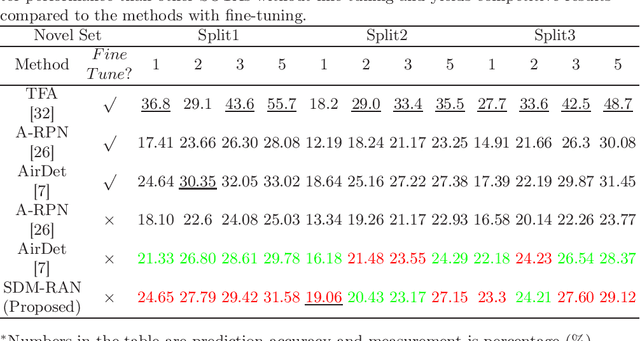
When presented with one or a few photos of a previously unseen object, humans can instantly recognize it in different scenes. Although the human brain mechanism behind this phenomenon is still not fully understood, this work introduces a novel technical realization of this task. It consists of two phases: (1) generating a Similarity Density Map (SDM) by convolving the scene image with the given object image patch(es) so that the highlight areas in the SDM indicate the possible locations; (2) obtaining the object occupied areas in the scene through a Region Alignment Network (RAN). The RAN is constructed on a backbone of Deep Siamese Network (DSN), and different from the traditional DSNs, it aims to obtain the object accurate regions by regressing the location and area differences between the ground truths and the predicted ones indicated by the highlight areas in SDM. By pre-learning from labels annotated in traditional datasets, the SDM-RAN can detect previously unknown objects without fine-tuning. Experiments were conducted on the MS COCO, PASCAL VOC datasets. The results indicate that the proposed method outperforms state-of-the-art methods on the same task.
Decay Pruning Method: Smooth Pruning With a Self-Rectifying Procedure
Jun 06, 2024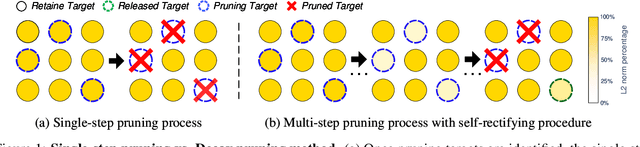
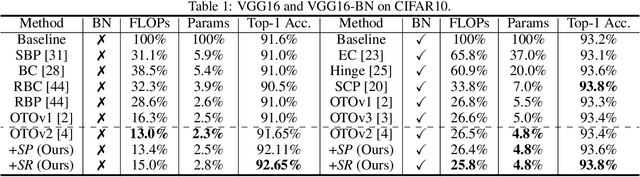
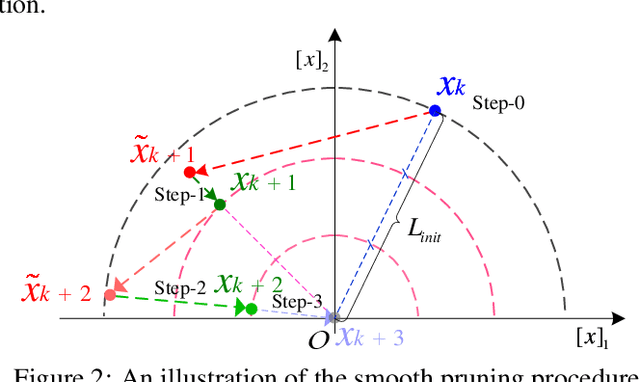
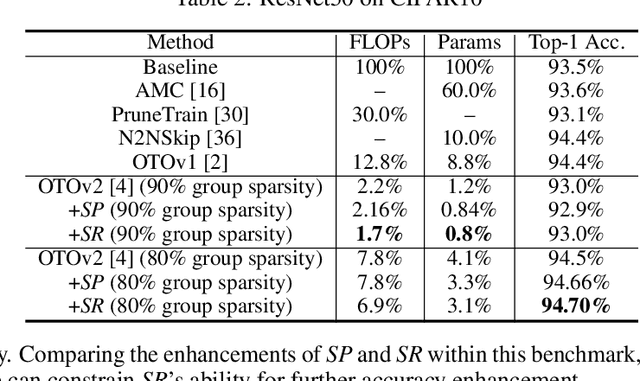
Current structured pruning methods often result in considerable accuracy drops due to abrupt network changes and loss of information from pruned structures. To address these issues, we introduce the Decay Pruning Method (DPM), a novel smooth pruning approach with a self-rectifying mechanism. DPM consists of two key components: (i) Smooth Pruning: It converts conventional single-step pruning into multi-step smooth pruning, gradually reducing redundant structures to zero over N steps with ongoing optimization. (ii) Self-Rectifying: This procedure further enhances the aforementioned process by rectifying sub-optimal pruning based on gradient information. Our approach demonstrates strong generalizability and can be easily integrated with various existing pruning methods. We validate the effectiveness of DPM by integrating it with three popular pruning methods: OTOv2, Depgraph, and Gate Decorator. Experimental results show consistent improvements in performance compared to the original pruning methods, along with further reductions of FLOPs in most scenarios.