 Add to Chrome
 Add to Firefox
 Add to Edge
Capek 0.5: An Execution-Centric Vision-Language Model for Embodied Intelligence
Aug 07, 2026
Vision-language models are increasingly serving as the reasoning core of embodied agents. Robot execution is inherently iterative: each action reshapes the scene and physical state, continually renewing what must be perceived, reasoned about, and verified. Meeting these demands requires complementary capabilities that differ in supervision signals, prediction formats, and verification criteria. Existing approaches typically develop these capabilities against isolated, task-specific objectives, leaving open how they should be organized and integrated around execution as a whole. We present Capek 0.5, an embodied vision-language model built around an execution-centric capability taxonomy. Rather than organizing training by datasets or tasks, the taxonomy groups embodied capabilities according to their functional roles throughout execution and comprises four capability families: Spatial Reasoning, Temporal Understanding, Action Guidance, and State Verification. Each capability is first acquired by a dedicated specialist through reinforcement learning with verifiable rewards from a shared backbone, and the specialists are then consolidated into a single inference-time model through weight-space merging followed by routed policy-space distillation. We instantiate Capek 0.5 at the 2B and 35B-A3B scales and evaluate it from three complementary perspectives: comprehensive benchmark suites including Capek-StateBench, a new benchmark for state verification; a controlled study of capability retention from specialists to the unified model; and closed-loop evaluation in simulated embodied environments. Capek 0.5 improves the large majority of matched benchmark rows over its initialization, retains all four specialized capabilities in one checkpoint with quantified losses, and transfers to closed-loop embodied task execution.

Infinity-Parser2 Technical Report
Jul 08, 2026We present Infinity-Parser2, a large multimodal model that couples a controllable data-synthesis pipeline with multi-task reinforcement learning for end-to-end document parsing, addressing the persistent scarcity of faithfully annotated parsing corpora. Our contributions are threefold. First, we build a scalable synthesis engine, pairing a controllable rendering framework with an iterative refinement loop, and use it to construct and open-source Infinity-Doc2-5M: a 5-million-sample bilingual (Chinese/English) corpus spanning diverse document types, annotated with element bounding boxes, canonical content forms (Markdown, HTML, LaTeX, SMILES, structured charts), and full-page reading order. Second, we introduce a verifiable, multi-task reward system that enables Joint Reinforcement Learning across eight co-trained objectives (document parsing, layout analysis, table parsing, math formula parsing, chart parsing, chemical formula parsing, document VQA, and general multimodal understanding), unifying perception, structure, and reasoning in a single optimization signal. Third, we release two variants under a shared architecture: Infinity-Parser2-Flash, optimized for low-latency inference with a $3.68\times$ throughput gain over Infinity-Parser-7B, and Infinity-Parser2-Pro, engineered for precision-critical settings. Infinity-Parser2-Pro reaches state-of-the-art 87.6% on olmOCR-Bench and 74.3% on ParseBench, surpassing DeepSeek-OCR-2, PaddleOCR-VL-1.5, and MinerU2.5, with strong generalization to charts, chemical formulas, and document VQA.
Fast and principled equation discovery from chaos to climate
Apr 13, 2026Our ability to predict, control, and ultimately understand complex systems rests on discovering the equations that govern their dynamics. Identifying these equations directly from noisy, limited observations has therefore become a central challenge in data-driven science, yet existing library-based sparse regression methods force a compromise between automation, statistical rigor, and computational efficiency. Here we develop Bayesian-ARGOS, a hybrid framework that reconciles these demands by combining rapid frequentist screening with focused Bayesian inference, enabling automated equation discovery with principled uncertainty quantification at a fraction of the computational cost of existing methods. Tested on seven chaotic systems under varying data scarcity and noise levels, Bayesian-ARGOS outperforms two state-of-the-art methods in most scenarios. It surpasses SINDy in data efficiency for all systems and noise tolerance for six out of the seven, with a two-order-of-magnitude reduction in computational cost compared to bootstrap-based ARGOS. The probabilistic formulation additionally enables a suite of standard statistical diagnostics, including influence analysis and multicollinearity detection that expose failure modes otherwise opaque. When integrated with representation learning (SINDy-SHRED) for high dimensional sea surface temperature reconstruction, Bayesian-ARGOS increases the yield of valid latent equations with significantly improved long horizon stability. Bayesian-ARGOS thus provides a principled, automated, and computationally efficient route from scarce and noisy observations to interpretable governing equations, offering a practical framework for equation discovery across scales, from benchmark chaotic systems to the latent dynamics underlying global climate patterns.
TaskCraft: Automated Generation of Agentic Tasks
Jun 11, 2025Agentic tasks, which require multi-step problem solving with autonomy, tool use, and adaptive reasoning, are becoming increasingly central to the advancement of NLP and AI. However, existing instruction data lacks tool interaction, and current agentic benchmarks rely on costly human annotation, limiting their scalability. We introduce \textsc{TaskCraft}, an automated workflow for generating difficulty-scalable, multi-tool, and verifiable agentic tasks with execution trajectories. TaskCraft expands atomic tasks using depth-based and width-based extensions to create structurally and hierarchically complex challenges. Empirical results show that these tasks improve prompt optimization in the generation workflow and enhance supervised fine-tuning of agentic foundation models. We present a large-scale synthetic dataset of approximately 36,000 tasks with varying difficulty to support future research on agent tuning and evaluation.
PupiNet: Seamless OCT-OCTA Interconversion Through Wavelet-Driven and Multi-Scale Attention Mechanisms
Mar 31, 2025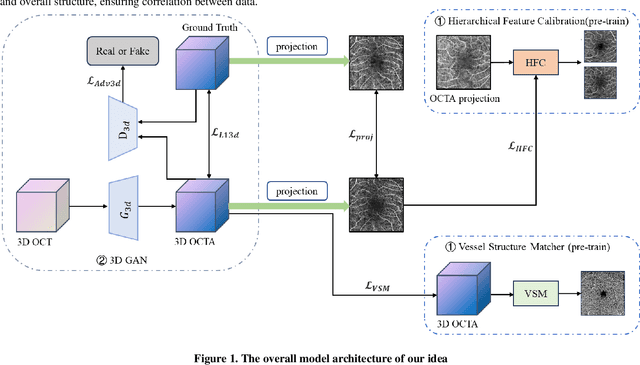
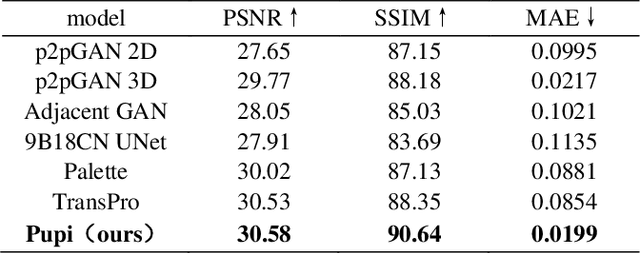
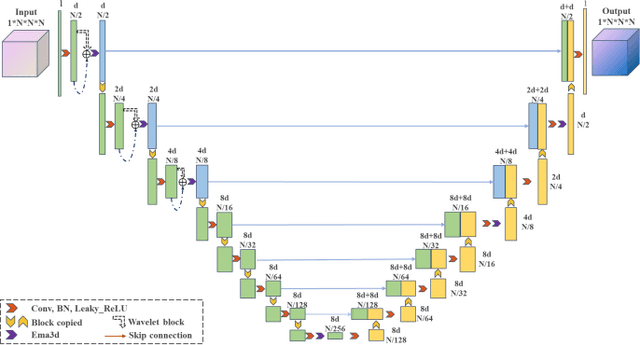
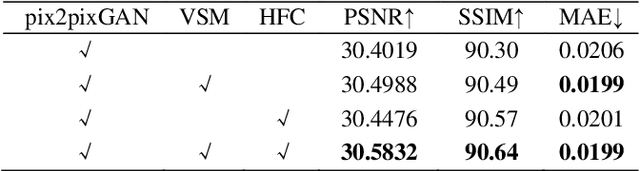
Optical Coherence Tomography (OCT) and Optical Coherence Tomography Angiography (OCTA) are key diagnostic tools for clinical evaluation and management of retinal diseases. Compared to traditional OCT, OCTA provides richer microvascular information, but its acquisition requires specialized sensors and high-cost equipment, creating significant challenges for the clinical deployment of hardware-dependent OCTA imaging methods. Given the technical complexity of OCTA image acquisition and potential mechanical artifacts, this study proposes a bidirectional image conversion framework called PupiNet, which accurately achieves bidirectional transformation between 3D OCT and 3D OCTA. The generator module of this framework innovatively integrates wavelet transformation and multi-scale attention mechanisms, significantly enhancing image conversion quality. Meanwhile, an Adaptive Discriminator Augmentation (ADA) module has been incorporated into the discriminator to optimize model training stability and convergence efficiency. To ensure clinical accuracy of vascular structures in the converted images, we designed a Vessel Structure Matcher (VSM) supervision module, achieving precise matching of vascular morphology between generated images and target images. Additionally, the Hierarchical Feature Calibration (HFC) module further guarantees high consistency of texture details between generated images and target images across different depth levels. To rigorously validate the clinical effectiveness of the proposed method, we conducted a comprehensive evaluation on a paired OCT-OCTA image dataset containing 300 eyes with various retinal pathologies. Experimental results demonstrate that PupiNet not only reliably achieves high-quality bidirectional transformation between the two modalities but also shows significant advantages in image fidelity, vessel structure preservation, and clinical usability.
RetinaRegen: A Hybrid Model for Readability and Detail Restoration in Fundus Images
Feb 26, 2025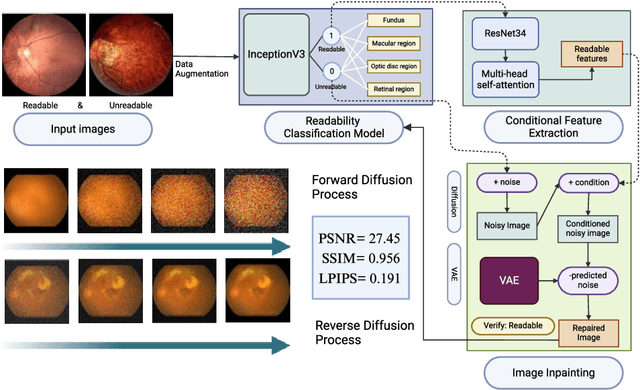
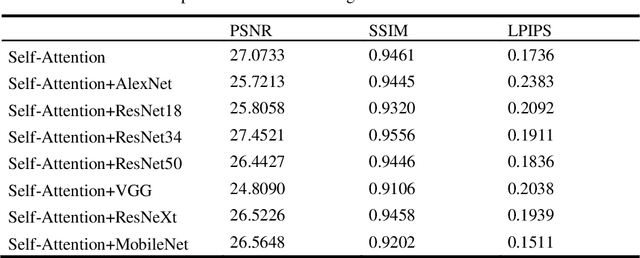
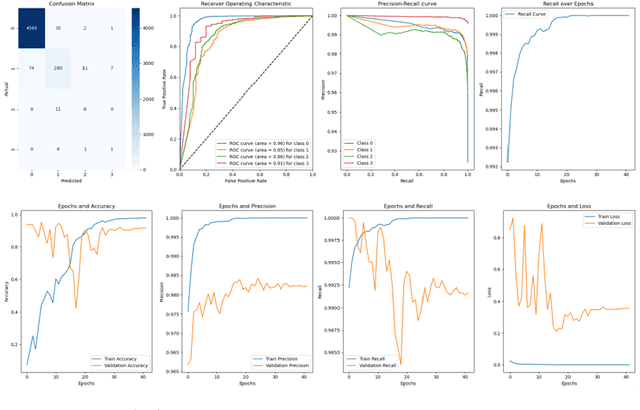
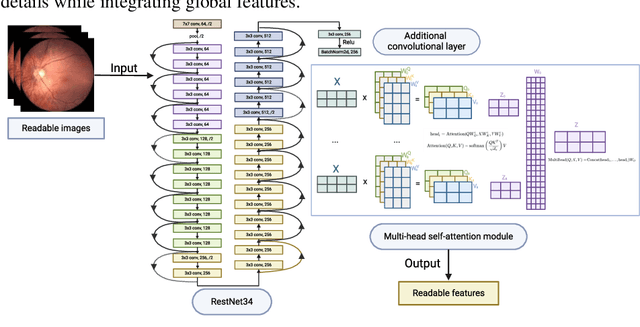
Fundus image quality is crucial for diagnosing eye diseases, but real-world conditions often result in blurred or unreadable images, increasing diagnostic uncertainty. To address these challenges, this study proposes RetinaRegen, a hybrid model for retinal image restoration that integrates a readability classifi-cation model, a Diffusion Model, and a Variational Autoencoder (VAE). Ex-periments on the SynFundus-1M dataset show that the proposed method achieves a PSNR of 27.4521, an SSIM of 0.9556, and an LPIPS of 0.1911 for the readability labels of the optic disc (RO) region. These results demonstrate superior performance in restoring key regions, offering an effective solution to enhance fundus image quality and support clinical diagnosis.
Automating the Discovery of Partial Differential Equations in Dynamical Systems
May 02, 2024Identifying partial differential equations (PDEs) from data is crucial for understanding the governing mechanisms of natural phenomena, yet it remains a challenging task. We present an extension to the ARGOS framework, ARGOS-RAL, which leverages sparse regression with the recurrent adaptive lasso to identify PDEs from limited prior knowledge automatically. Our method automates calculating partial derivatives, constructing a candidate library, and estimating a sparse model. We rigorously evaluate the performance of ARGOS-RAL in identifying canonical PDEs under various noise levels and sample sizes, demonstrating its robustness in handling noisy and non-uniformly distributed data. We also test the algorithm's performance on datasets consisting solely of random noise to simulate scenarios with severely compromised data quality. Our results show that ARGOS-RAL effectively and reliably identifies the underlying PDEs from data, outperforming the sequential threshold ridge regression method in most cases. We highlight the potential of combining statistical methods, machine learning, and dynamical systems theory to automatically discover governing equations from collected data, streamlining the scientific modeling process.
Automatically identifying ordinary differential equations from data
May 03, 2023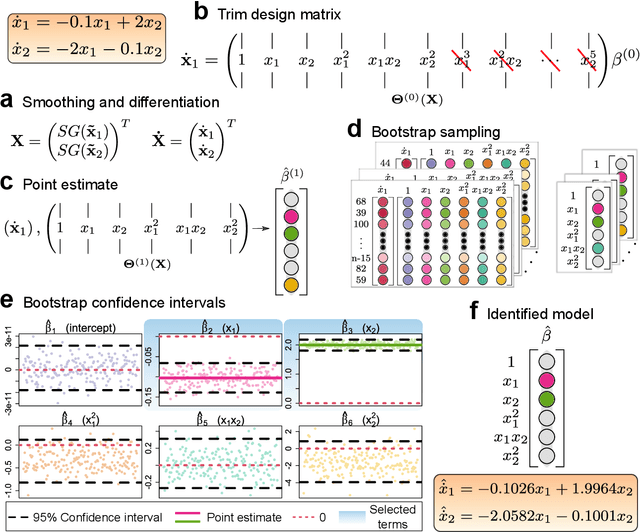
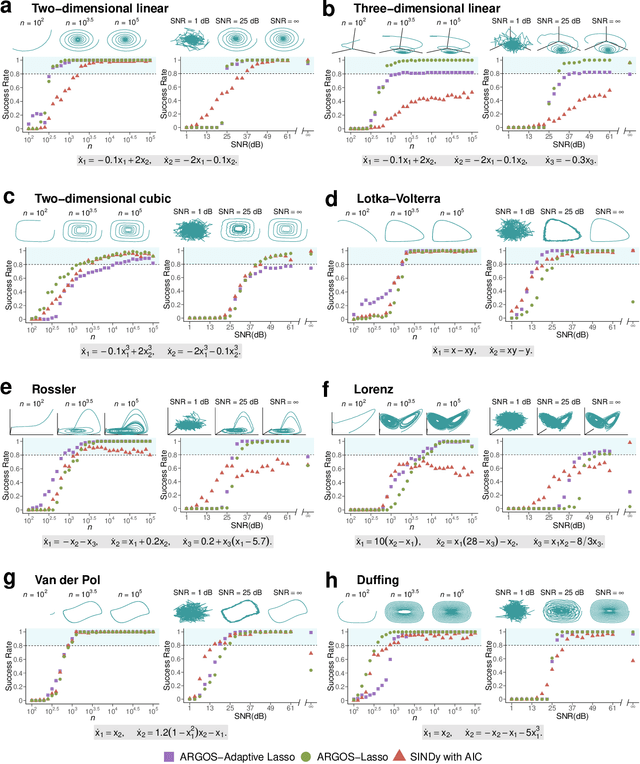
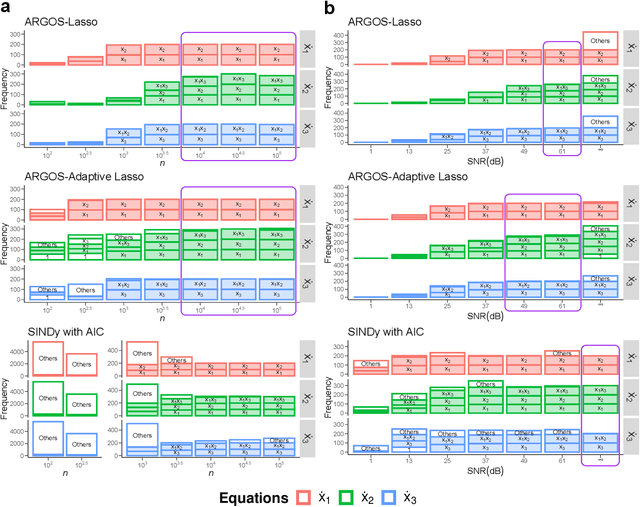
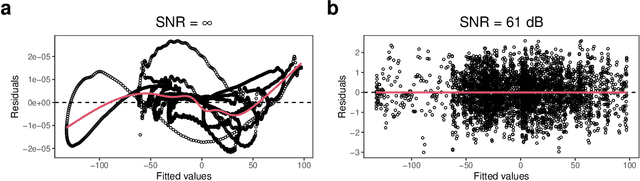
Discovering nonlinear differential equations that describe system dynamics from empirical data is a fundamental challenge in contemporary science. Here, we propose a methodology to identify dynamical laws by integrating denoising techniques to smooth the signal, sparse regression to identify the relevant parameters, and bootstrap confidence intervals to quantify the uncertainty of the estimates. We evaluate our method on well-known ordinary differential equations with an ensemble of random initial conditions, time series of increasing length, and varying signal-to-noise ratios. Our algorithm consistently identifies three-dimensional systems, given moderately-sized time series and high levels of signal quality relative to background noise. By accurately discovering dynamical systems automatically, our methodology has the potential to impact the understanding of complex systems, especially in fields where data are abundant, but developing mathematical models demands considerable effort.