 Add to Chrome
 Add to Firefox
 Add to Edge
TASAR: Transferable Attack on Skeletal Action Recognition
Sep 04, 2024
Skeletal sequences, as well-structured representations of human behaviors, are crucial in Human Activity Recognition (HAR). The transferability of adversarial skeletal sequences enables attacks in real-world HAR scenarios, such as autonomous driving, intelligent surveillance, and human-computer interactions. However, existing Skeleton-based HAR (S-HAR) attacks exhibit weak adversarial transferability and, therefore, cannot be considered true transfer-based S-HAR attacks. More importantly, the reason for this failure remains unclear. In this paper, we study this phenomenon through the lens of loss surface, and find that its sharpness contributes to the poor transferability in S-HAR. Inspired by this observation, we assume and empirically validate that smoothening the rugged loss landscape could potentially improve adversarial transferability in S-HAR. To this end, we propose the first Transfer-based Attack on Skeletal Action Recognition, TASAR. TASAR explores the smoothed model posterior without re-training the pre-trained surrogates, which is achieved by a new post-train Dual Bayesian optimization strategy. Furthermore, unlike previous transfer-based attacks that treat each frame independently and overlook temporal coherence within sequences, TASAR incorporates motion dynamics into the Bayesian attack gradient, effectively disrupting the spatial-temporal coherence of S-HARs. To exhaustively evaluate the effectiveness of existing methods and our method, we build the first large-scale robust S-HAR benchmark, comprising 7 S-HAR models, 10 attack methods, 3 S-HAR datasets and 2 defense models. Extensive results demonstrate the superiority of TASAR. Our benchmark enables easy comparisons for future studies, with the code available in the supplementary material.

MedSAM-U: Uncertainty-Guided Auto Multi-Prompt Adaptation for Reliable MedSAM
Sep 02, 2024

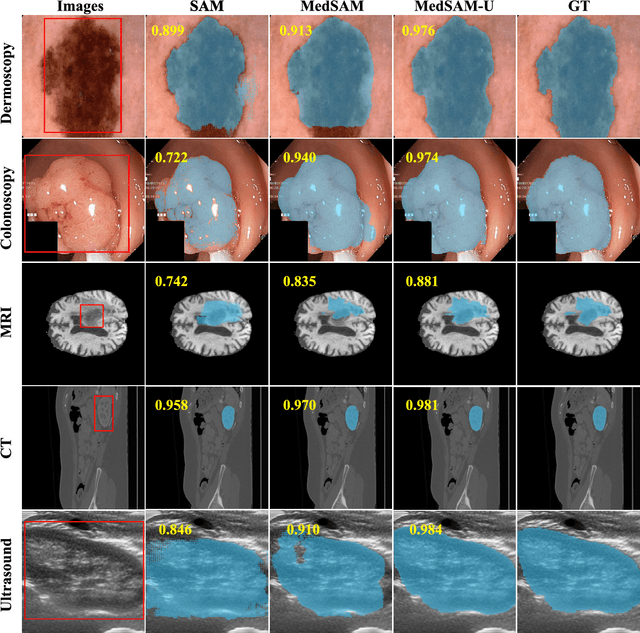

The Medical Segment Anything Model (MedSAM) has shown remarkable performance in medical image segmentation, drawing significant attention in the field. However, its sensitivity to varying prompt types and locations poses challenges. This paper addresses these challenges by focusing on the development of reliable prompts that enhance MedSAM's accuracy. We introduce MedSAM-U, an uncertainty-guided framework designed to automatically refine multi-prompt inputs for more reliable and precise medical image segmentation. Specifically, we first train a Multi-Prompt Adapter integrated with MedSAM, creating MPA-MedSAM, to adapt to diverse multi-prompt inputs. We then employ uncertainty-guided multi-prompt to effectively estimate the uncertainties associated with the prompts and their initial segmentation results. In particular, a novel uncertainty-guided prompts adaptation technique is then applied automatically to derive reliable prompts and their corresponding segmentation outcomes. We validate MedSAM-U using datasets from multiple modalities to train a universal image segmentation model. Compared to MedSAM, experimental results on five distinct modal datasets demonstrate that the proposed MedSAM-U achieves an average performance improvement of 1.7\% to 20.5\% across uncertainty-guided prompts.
OG-Mapping: Octree-based Structured 3D Gaussians for Online Dense Mapping
Aug 30, 2024
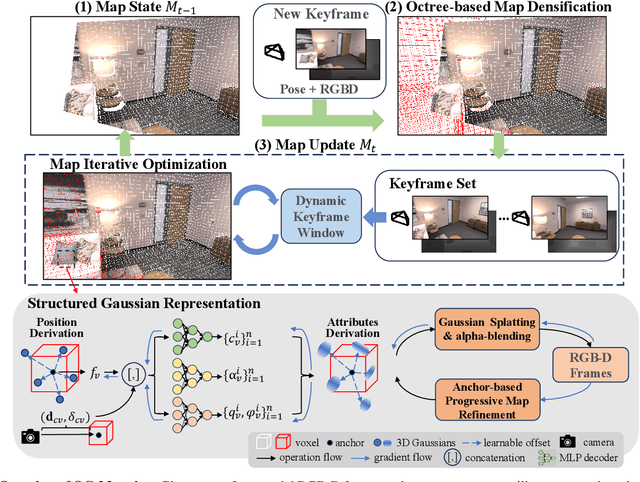

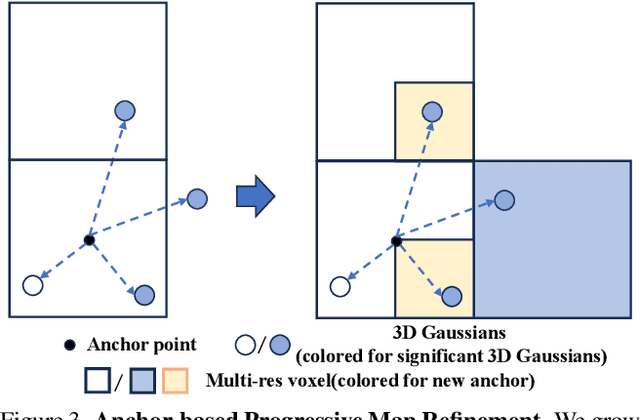
3D Gaussian splatting (3DGS) has recently demonstrated promising advancements in RGB-D online dense mapping. Nevertheless, existing methods excessively rely on per-pixel depth cues to perform map densification, which leads to significant redundancy and increased sensitivity to depth noise. Additionally, explicitly storing 3D Gaussian parameters of room-scale scene poses a significant storage challenge. In this paper, we introduce OG-Mapping, which leverages the robust scene structural representation capability of sparse octrees, combined with structured 3D Gaussian representations, to achieve efficient and robust online dense mapping. Moreover, OG-Mapping employs an anchor-based progressive map refinement strategy to recover the scene structures at multiple levels of detail. Instead of maintaining a small number of active keyframes with a fixed keyframe window as previous approaches do, a dynamic keyframe window is employed to allow OG-Mapping to better tackle false local minima and forgetting issues. Experimental results demonstrate that OG-Mapping delivers more robust and superior realism mapping results than existing Gaussian-based RGB-D online mapping methods with a compact model, and no additional post-processing is required.
Say No to Freeloader: Protecting Intellectual Property of Your Deep Model
Aug 27, 2024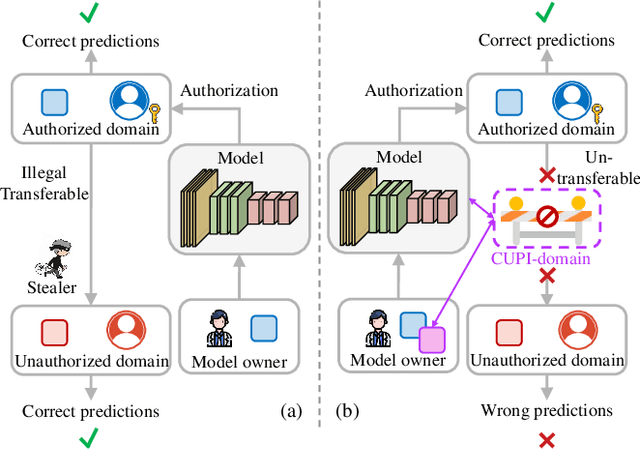

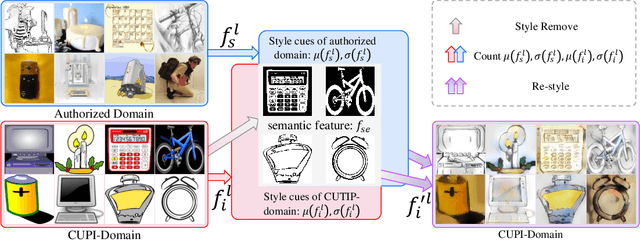

Model intellectual property (IP) protection has attracted growing attention as science and technology advancements stem from human intellectual labor and computational expenses. Ensuring IP safety for trainers and owners is of utmost importance, particularly in domains where ownership verification and applicability authorization are required. A notable approach to safeguarding model IP involves proactively preventing the use of well-trained models of authorized domains from unauthorized domains. In this paper, we introduce a novel Compact Un-transferable Pyramid Isolation Domain (CUPI-Domain) which serves as a barrier against illegal transfers from authorized to unauthorized domains. Drawing inspiration from human transitive inference and learning abilities, the CUPI-Domain is designed to obstruct cross-domain transfers by emphasizing the distinctive style features of the authorized domain. This emphasis leads to failure in recognizing irrelevant private style features on unauthorized domains. To this end, we propose novel CUPI-Domain generators, which select features from both authorized and CUPI-Domain as anchors. Then, we fuse the style features and semantic features of these anchors to generate labeled and style-rich CUPI-Domain. Additionally, we design external Domain-Information Memory Banks (DIMB) for storing and updating labeled pyramid features to obtain stable domain class features and domain class-wise style features. Based on the proposed whole method, the novel style and discriminative loss functions are designed to effectively enhance the distinction in style and discriminative features between authorized and unauthorized domains, respectively. Moreover, we provide two solutions for utilizing CUPI-Domain based on whether the unauthorized domain is known: target-specified CUPI-Domain and target-free CUPI-Domain.
SDI-Net: Toward Sufficient Dual-View Interaction for Low-light Stereo Image Enhancement
Aug 20, 2024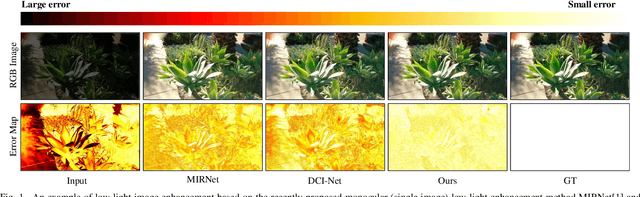
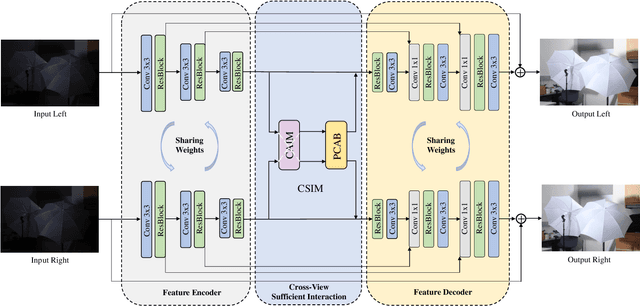
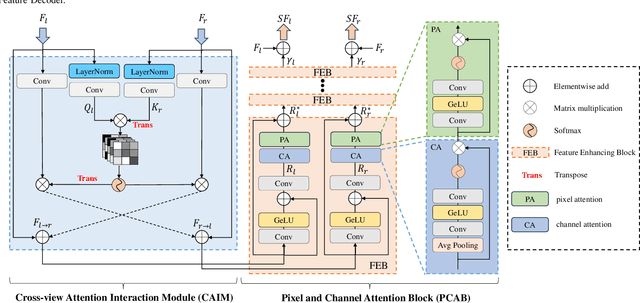
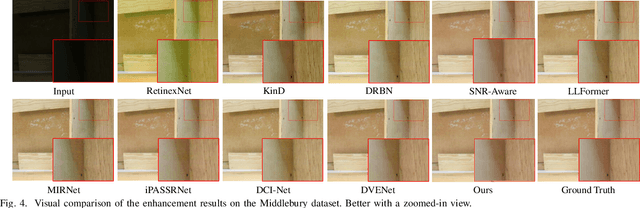
Currently, most low-light image enhancement methods only consider information from a single view, neglecting the correlation between cross-view information. Therefore, the enhancement results produced by these methods are often unsatisfactory. In this context, there have been efforts to develop methods specifically for low-light stereo image enhancement. These methods take into account the cross-view disparities and enable interaction between the left and right views, leading to improved performance. However, these methods still do not fully exploit the interaction between left and right view information. To address this issue, we propose a model called Toward Sufficient Dual-View Interaction for Low-light Stereo Image Enhancement (SDI-Net). The backbone structure of SDI-Net is two encoder-decoder pairs, which are used to learn the mapping function from low-light images to normal-light images. Among the encoders and the decoders, we design a module named Cross-View Sufficient Interaction Module (CSIM), aiming to fully exploit the correlations between the binocular views via the attention mechanism. The quantitative and visual results on public datasets validate the superiority of our method over other related methods. Ablation studies also demonstrate the effectiveness of the key elements in our model.
When Video Coding Meets Multimodal Large Language Models: A Unified Paradigm for Video Coding
Aug 15, 2024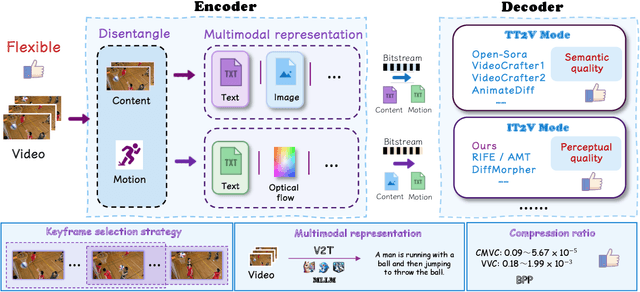

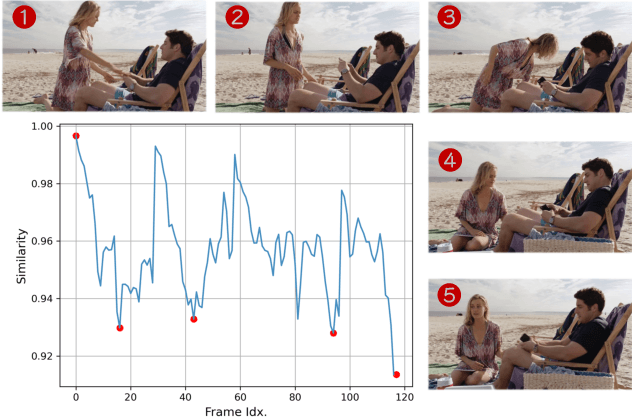
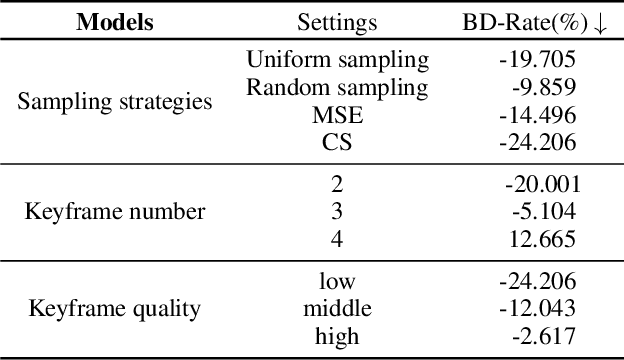
Existing codecs are designed to eliminate intrinsic redundancies to create a compact representation for compression. However, strong external priors from Multimodal Large Language Models (MLLMs) have not been explicitly explored in video compression. Herein, we introduce a unified paradigm for Cross-Modality Video Coding (CMVC), which is a pioneering approach to explore multimodality representation and video generative models in video coding. Specifically, on the encoder side, we disentangle a video into spatial content and motion components, which are subsequently transformed into distinct modalities to achieve very compact representation by leveraging MLLMs. During decoding, previously encoded components and video generation models are leveraged to create multiple encoding-decoding modes that optimize video reconstruction quality for specific decoding requirements, including Text-Text-to-Video (TT2V) mode to ensure high-quality semantic information and Image-Text-to-Video (IT2V) mode to achieve superb perceptual consistency. In addition, we propose an efficient frame interpolation model for IT2V mode via Low-Rank Adaption (LoRA) tuning to guarantee perceptual quality, which allows the generated motion cues to behave smoothly. Experiments on benchmarks indicate that TT2V achieves effective semantic reconstruction, while IT2V exhibits competitive perceptual consistency. These results highlight potential directions for future research in video coding.
Prototype Learning for Micro-gesture Classification
Aug 06, 2024In this paper, we briefly introduce the solution developed by our team, HFUT-VUT, for the track of Micro-gesture Classification in the MiGA challenge at IJCAI 2024. The task of micro-gesture classification task involves recognizing the category of a given video clip, which focuses on more fine-grained and subtle body movements compared to typical action recognition tasks. Given the inherent complexity of micro-gesture recognition, which includes large intra-class variability and minimal inter-class differences, we utilize two innovative modules, i.e., the cross-modal fusion module and prototypical refinement module, to improve the discriminative ability of MG features, thereby improving the classification accuracy. Our solution achieved significant success, ranking 1st in the track of Micro-gesture Classification. We surpassed the performance of last year's leading team by a substantial margin, improving Top-1 accuracy by 6.13%.
Large-scale Deployment of Vision-based Tactile Sensors on Multi-fingered Grippers
Aug 05, 2024Vision-based Tactile Sensors (VBTSs) show significant promise in that they can leverage image measurements to provide high-spatial-resolution human-like performance. However, current VBTS designs, typically confined to the fingertips of robotic grippers, prove somewhat inadequate, as many grasping and manipulation tasks require multiple contact points with the object. With an end goal of enabling large-scale, multi-surface tactile sensing via VBTSs, our research (i) develops a synchronized image acquisition system with minimal latency,(ii) proposes a modularized VBTS design for easy integration into finger phalanges, and (iii) devises a zero-shot calibration approach to improve data efficiency in the simultaneous calibration of multiple VBTSs. In validating the system within a miniature 3-fingered robotic gripper equipped with 7 VBTSs we demonstrate improved tactile perception performance by covering the contact surfaces of both gripper fingers and palm. Additionally, we show that our VBTS design can be seamlessly integrated into various end-effector morphologies significantly reducing the data requirements for calibration.
Vulnerabilities in AI-generated Image Detection: The Challenge of Adversarial Attacks
Jul 30, 2024Recent advancements in image synthesis, particularly with the advent of GAN and Diffusion models, have amplified public concerns regarding the dissemination of disinformation. To address such concerns, numerous AI-generated Image (AIGI) Detectors have been proposed and achieved promising performance in identifying fake images. However, there still lacks a systematic understanding of the adversarial robustness of these AIGI detectors. In this paper, we examine the vulnerability of state-of-the-art AIGI detectors against adversarial attack under white-box and black-box settings, which has been rarely investigated so far. For the task of AIGI detection, we propose a new attack containing two main parts. First, inspired by the obvious difference between real images and fake images in the frequency domain, we add perturbations under the frequency domain to push the image away from its original frequency distribution. Second, we explore the full posterior distribution of the surrogate model to further narrow this gap between heterogeneous models, e.g. transferring adversarial examples across CNNs and ViTs. This is achieved by introducing a novel post-train Bayesian strategy that turns a single surrogate into a Bayesian one, capable of simulating diverse victim models using one pre-trained surrogate, without the need for re-training. We name our method as frequency-based post-train Bayesian attack, or FPBA. Through FPBA, we show that adversarial attack is truly a real threat to AIGI detectors, because FPBA can deliver successful black-box attacks across models, generators, defense methods, and even evade cross-generator detection, which is a crucial real-world detection scenario.
Modular RAG: Transforming RAG Systems into LEGO-like Reconfigurable Frameworks
Jul 26, 2024


Retrieval-augmented Generation (RAG) has markedly enhanced the capabilities of Large Language Models (LLMs) in tackling knowledge-intensive tasks. The increasing demands of application scenarios have driven the evolution of RAG, leading to the integration of advanced retrievers, LLMs and other complementary technologies, which in turn has amplified the intricacy of RAG systems. However, the rapid advancements are outpacing the foundational RAG paradigm, with many methods struggling to be unified under the process of "retrieve-then-generate". In this context, this paper examines the limitations of the existing RAG paradigm and introduces the modular RAG framework. By decomposing complex RAG systems into independent modules and specialized operators, it facilitates a highly reconfigurable framework. Modular RAG transcends the traditional linear architecture, embracing a more advanced design that integrates routing, scheduling, and fusion mechanisms. Drawing on extensive research, this paper further identifies prevalent RAG patterns-linear, conditional, branching, and looping-and offers a comprehensive analysis of their respective implementation nuances. Modular RAG presents innovative opportunities for the conceptualization and deployment of RAG systems. Finally, the paper explores the potential emergence of new operators and paradigms, establishing a solid theoretical foundation and a practical roadmap for the continued evolution and practical deployment of RAG technologies.