 Add to Chrome
 Add to Firefox
 Add to Edge
Lending Interaction Wings to Recommender Systems with Conversational Agents
Oct 06, 2023

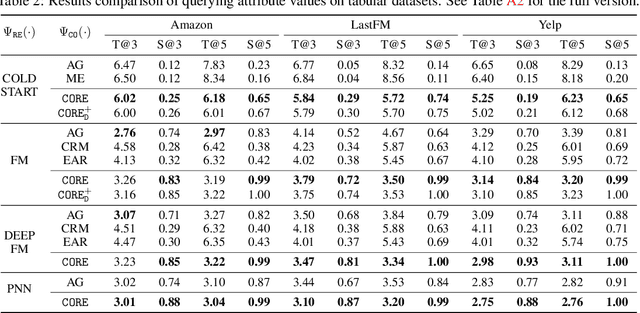
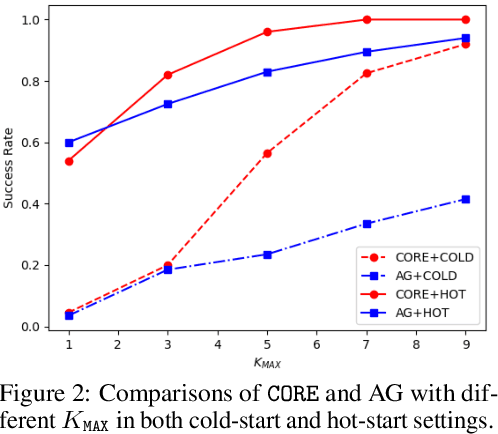
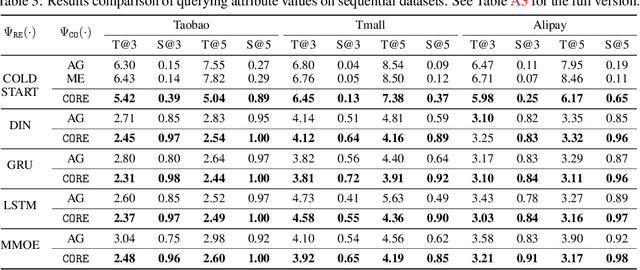
Recommender systems trained on offline historical user behaviors are embracing conversational techniques to online query user preference. Unlike prior conversational recommendation approaches that systemically combine conversational and recommender parts through a reinforcement learning framework, we propose CORE, a new offline-training and online-checking paradigm that bridges a COnversational agent and REcommender systems via a unified uncertainty minimization framework. It can benefit any recommendation platform in a plug-and-play style. Here, CORE treats a recommender system as an offline relevance score estimator to produce an estimated relevance score for each item; while a conversational agent is regarded as an online relevance score checker to check these estimated scores in each session. We define uncertainty as the summation of unchecked relevance scores. In this regard, the conversational agent acts to minimize uncertainty via querying either attributes or items. Based on the uncertainty minimization framework, we derive the expected certainty gain of querying each attribute and item, and develop a novel online decision tree algorithm to decide what to query at each turn. Experimental results on 8 industrial datasets show that CORE could be seamlessly employed on 9 popular recommendation approaches. We further demonstrate that our conversational agent could communicate as a human if empowered by a pre-trained large language model.

Making Users Indistinguishable: Attribute-wise Unlearning in Recommender Systems
Oct 06, 2023
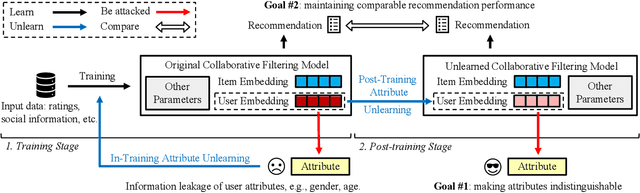


With the growing privacy concerns in recommender systems, recommendation unlearning, i.e., forgetting the impact of specific learned targets, is getting increasing attention. Existing studies predominantly use training data, i.e., model inputs, as the unlearning target. However, we find that attackers can extract private information, i.e., gender, race, and age, from a trained model even if it has not been explicitly encountered during training. We name this unseen information as attribute and treat it as the unlearning target. To protect the sensitive attribute of users, Attribute Unlearning (AU) aims to degrade attacking performance and make target attributes indistinguishable. In this paper, we focus on a strict but practical setting of AU, namely Post-Training Attribute Unlearning (PoT-AU), where unlearning can only be performed after the training of the recommendation model is completed. To address the PoT-AU problem in recommender systems, we design a two-component loss function that consists of i) distinguishability loss: making attribute labels indistinguishable from attackers, and ii) regularization loss: preventing drastic changes in the model that result in a negative impact on recommendation performance. Specifically, we investigate two types of distinguishability measurements, i.e., user-to-user and distribution-to-distribution. We use the stochastic gradient descent algorithm to optimize our proposed loss. Extensive experiments on three real-world datasets demonstrate the effectiveness of our proposed methods.
Realistic Speech-to-Face Generation with Speech-Conditioned Latent Diffusion Model with Face Prior
Oct 05, 2023Speech-to-face generation is an intriguing area of research that focuses on generating realistic facial images based on a speaker's audio speech. However, state-of-the-art methods employing GAN-based architectures lack stability and cannot generate realistic face images. To fill this gap, we propose a novel speech-to-face generation framework, which leverages a Speech-Conditioned Latent Diffusion Model, called SCLDM. To the best of our knowledge, this is the first work to harness the exceptional modeling capabilities of diffusion models for speech-to-face generation. Preserving the shared identity information between speech and face is crucial in generating realistic results. Therefore, we employ contrastive pre-training for both the speech encoder and the face encoder. This pre-training strategy facilitates effective alignment between the attributes of speech, such as age and gender, and the corresponding facial characteristics in the face images. Furthermore, we tackle the challenge posed by excessive diversity in the synthesis process caused by the diffusion model. To overcome this challenge, we introduce the concept of residuals by integrating a statistical face prior to the diffusion process. This addition helps to eliminate the shared component across the faces and enhances the subtle variations captured by the speech condition. Extensive quantitative, qualitative, and user study experiments demonstrate that our method can produce more realistic face images while preserving the identity of the speaker better than state-of-the-art methods. Highlighting the notable enhancements, our method demonstrates significant gains in all metrics on the AVSpeech dataset and Voxceleb dataset, particularly noteworthy are the improvements of 32.17 and 32.72 on the cosine distance metric for the two datasets, respectively.
Alphazero-like Tree-Search can Guide Large Language Model Decoding and Training
Sep 29, 2023

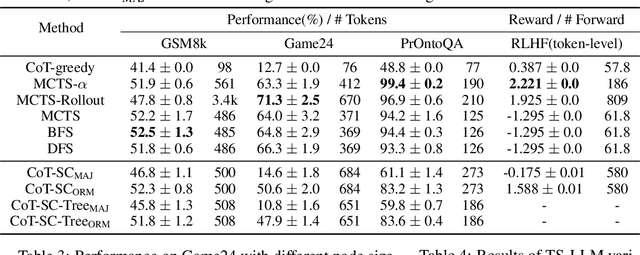
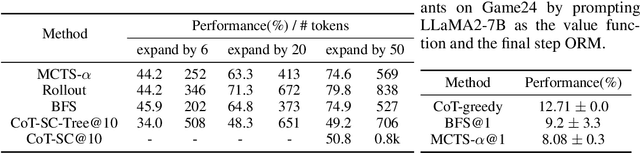
Large language models (LLMs) typically employ sampling or beam search, accompanied by prompts such as Chain-of-Thought (CoT), to boost reasoning and decoding ability. Recent work like Tree-of-Thought (ToT) and Reasoning via Planning (RAP) aim to augment the reasoning capabilities of LLMs by utilizing tree-search algorithms to guide multi-step reasoning. These methods mainly focus on LLMs' reasoning ability during inference and heavily rely on human-designed prompts to activate LLM as a value function, which lacks general applicability and scalability. To address these limitations, we present an AlphaZero-like tree-search framework for LLMs (termed TS-LLM), systematically illustrating how tree-search with a learned value function can guide LLMs' decoding ability. TS-LLM distinguishes itself in two key ways: (1) Leveraging a learned value function, our approach can be generally applied to different tasks beyond reasoning (such as RLHF alignment), and LLMs of any size, without prompting advanced, large-scale models. (2) It can guide LLM's decoding during both inference and training. Empirical evaluations across reasoning, planning, and RLHF alignment tasks validate the effectiveness of TS-LLM, even on trees with a depth of 64.
MiChao-HuaFen 1.0: A Specialized Pre-trained Corpus Dataset for Domain-specific Large Models
Sep 26, 2023
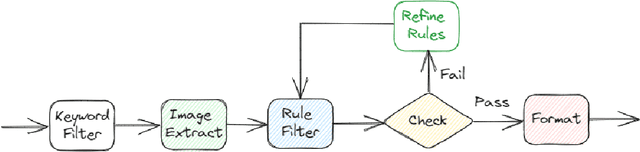
With the advancement of deep learning technologies, general-purpose large models such as GPT-4 have demonstrated exceptional capabilities across various domains. Nevertheless, there remains a demand for high-quality, domain-specific outputs in areas like healthcare, law, and finance. This paper first evaluates the existing large models for specialized domains and discusses their limitations. To cater to the specific needs of certain domains, we introduce the ``MiChao-HuaFen 1.0'' pre-trained corpus dataset, tailored for the news and governmental sectors. The dataset, sourced from publicly available internet data from 2022, underwent multiple rounds of cleansing and processing to ensure high quality and reliable origins, with provisions for consistent and stable updates. This dataset not only supports the pre-training of large models for Chinese vertical domains but also aids in propelling deep learning research and applications in related fields.
D-Separation for Causal Self-Explanation
Sep 23, 2023Rationalization is a self-explaining framework for NLP models. Conventional work typically uses the maximum mutual information (MMI) criterion to find the rationale that is most indicative of the target label. However, this criterion can be influenced by spurious features that correlate with the causal rationale or the target label. Instead of attempting to rectify the issues of the MMI criterion, we propose a novel criterion to uncover the causal rationale, termed the Minimum Conditional Dependence (MCD) criterion, which is grounded on our finding that the non-causal features and the target label are \emph{d-separated} by the causal rationale. By minimizing the dependence between the unselected parts of the input and the target label conditioned on the selected rationale candidate, all the causes of the label are compelled to be selected. In this study, we employ a simple and practical measure of dependence, specifically the KL-divergence, to validate our proposed MCD criterion. Empirically, we demonstrate that MCD improves the F1 score by up to $13.7\%$ compared to previous state-of-the-art MMI-based methods. Our code is available at: \url{https://github.com/jugechengzi/Rationalization-MCD}.
Invariant Learning via Probability of Sufficient and Necessary Causes
Sep 22, 2023Out-of-distribution (OOD) generalization is indispensable for learning models in the wild, where testing distribution typically unknown and different from the training. Recent methods derived from causality have shown great potential in achieving OOD generalization. However, existing methods mainly focus on the invariance property of causes, while largely overlooking the property of \textit{sufficiency} and \textit{necessity} conditions. Namely, a necessary but insufficient cause (feature) is invariant to distribution shift, yet it may not have required accuracy. By contrast, a sufficient yet unnecessary cause (feature) tends to fit specific data well but may have a risk of adapting to a new domain. To capture the information of sufficient and necessary causes, we employ a classical concept, the probability of sufficiency and necessary causes (PNS), which indicates the probability of whether one is the necessary and sufficient cause. To associate PNS with OOD generalization, we propose PNS risk and formulate an algorithm to learn representation with a high PNS value. We theoretically analyze and prove the generalizability of the PNS risk. Experiments on both synthetic and real-world benchmarks demonstrate the effectiveness of the proposed method. The details of the implementation can be found at the GitHub repository: https://github.com/ymy4323460/CaSN.
Conformal Temporal Logic Planning using Large Language Models: Knowing When to Do What and When to Ask for Help
Sep 18, 2023

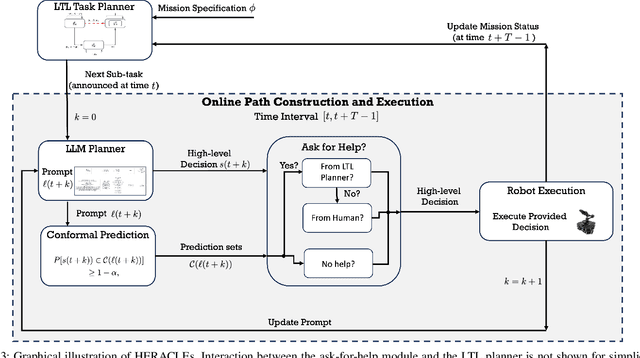

This paper addresses a new motion planning problem for mobile robots tasked with accomplishing multiple high-level sub-tasks, expressed using natural language (NL), in a temporal and logical order. To formally define such missions, we leverage LTL defined over NL-based atomic predicates modeling the considered NL-based sub-tasks. This is contrast to related planning approaches that define LTL tasks over atomic predicates capturing desired low-level system configurations. Our goal is to design robot plans that satisfy LTL tasks defined over NL-based atomic propositions. A novel technical challenge arising in this setup lies in reasoning about correctness of a robot plan with respect to such LTL-encoded tasks. To address this problem, we propose HERACLEs, a hierarchical conformal natural language planner, that relies on a novel integration of existing tools that include (i) automata theory to determine the NL-specified sub-task the robot should accomplish next to make mission progress; (ii) Large Language Models to design robot plans satisfying these sub-tasks; and (iii) conformal prediction to reason probabilistically about correctness of the designed plans and mission satisfaction and to determine if external assistance is required. We provide extensive comparative experiments on mobile manipulation tasks. The project website is ltl-llm.github.io.
Cross-Utterance Conditioned VAE for Speech Generation
Sep 08, 2023
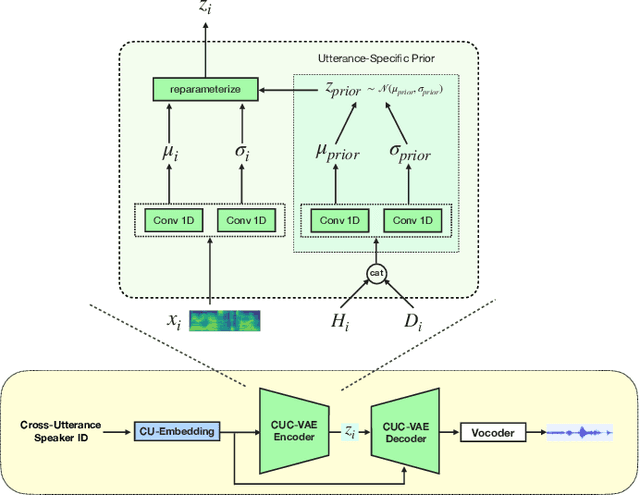
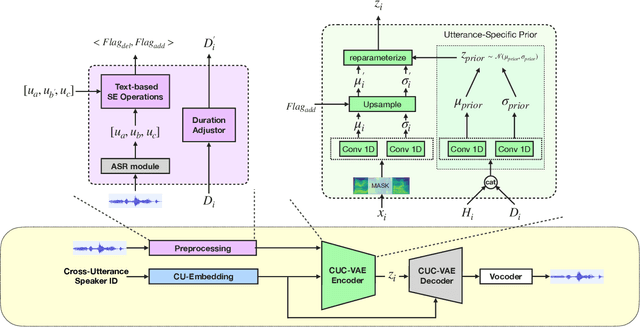

Speech synthesis systems powered by neural networks hold promise for multimedia production, but frequently face issues with producing expressive speech and seamless editing. In response, we present the Cross-Utterance Conditioned Variational Autoencoder speech synthesis (CUC-VAE S2) framework to enhance prosody and ensure natural speech generation. This framework leverages the powerful representational capabilities of pre-trained language models and the re-expression abilities of variational autoencoders (VAEs). The core component of the CUC-VAE S2 framework is the cross-utterance CVAE, which extracts acoustic, speaker, and textual features from surrounding sentences to generate context-sensitive prosodic features, more accurately emulating human prosody generation. We further propose two practical algorithms tailored for distinct speech synthesis applications: CUC-VAE TTS for text-to-speech and CUC-VAE SE for speech editing. The CUC-VAE TTS is a direct application of the framework, designed to generate audio with contextual prosody derived from surrounding texts. On the other hand, the CUC-VAE SE algorithm leverages real mel spectrogram sampling conditioned on contextual information, producing audio that closely mirrors real sound and thereby facilitating flexible speech editing based on text such as deletion, insertion, and replacement. Experimental results on the LibriTTS datasets demonstrate that our proposed models significantly enhance speech synthesis and editing, producing more natural and expressive speech.
In-processing User Constrained Dominant Sets for User-Oriented Fairness in Recommender Systems
Sep 04, 2023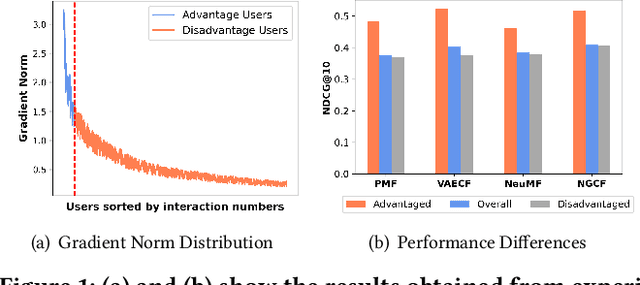
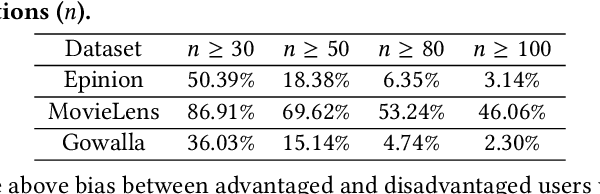
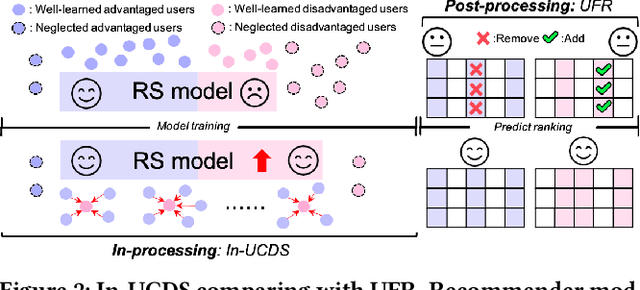
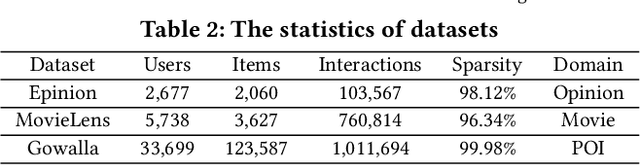
Recommender systems are typically biased toward a small group of users, leading to severe unfairness in recommendation performance, i.e., User-Oriented Fairness (UOF) issue. The existing research on UOF is limited and fails to deal with the root cause of the UOF issue: the learning process between advantaged and disadvantaged users is unfair. To tackle this issue, we propose an In-processing User Constrained Dominant Sets (In-UCDS) framework, which is a general framework that can be applied to any backbone recommendation model to achieve user-oriented fairness. We split In-UCDS into two stages, i.e., the UCDS modeling stage and the in-processing training stage. In the UCDS modeling stage, for each disadvantaged user, we extract a constrained dominant set (a user cluster) containing some advantaged users that are similar to it. In the in-processing training stage, we move the representations of disadvantaged users closer to their corresponding cluster by calculating a fairness loss. By combining the fairness loss with the original backbone model loss, we address the UOF issue and maintain the overall recommendation performance simultaneously. Comprehensive experiments on three real-world datasets demonstrate that In-UCDS outperforms the state-of-the-art methods, leading to a fairer model with better overall recommendation performance.