 Add to Chrome
 Add to Firefox
 Add to Edge
Segmentation Guided Sparse Transformer for Under-Display Camera Image Restoration
Mar 09, 2024
Under-Display Camera (UDC) is an emerging technology that achieves full-screen display via hiding the camera under the display panel. However, the current implementation of UDC causes serious degradation. The incident light required for camera imaging undergoes attenuation and diffraction when passing through the display panel, leading to various artifacts in UDC imaging. Presently, the prevailing UDC image restoration methods predominantly utilize convolutional neural network architectures, whereas Transformer-based methods have exhibited superior performance in the majority of image restoration tasks. This is attributed to the Transformer's capability to sample global features for the local reconstruction of images, thereby achieving high-quality image restoration. In this paper, we observe that when using the Vision Transformer for UDC degraded image restoration, the global attention samples a large amount of redundant information and noise. Furthermore, compared to the ordinary Transformer employing dense attention, the Transformer utilizing sparse attention can alleviate the adverse impact of redundant information and noise. Building upon this discovery, we propose a Segmentation Guided Sparse Transformer method (SGSFormer) for the task of restoring high-quality images from UDC degraded images. Specifically, we utilize sparse self-attention to filter out redundant information and noise, directing the model's attention to focus on the features more relevant to the degraded regions in need of reconstruction. Moreover, we integrate the instance segmentation map as prior information to guide the sparse self-attention in filtering and focusing on the correct regions.

Scene Graph Aided Radiology Report Generation
Mar 08, 2024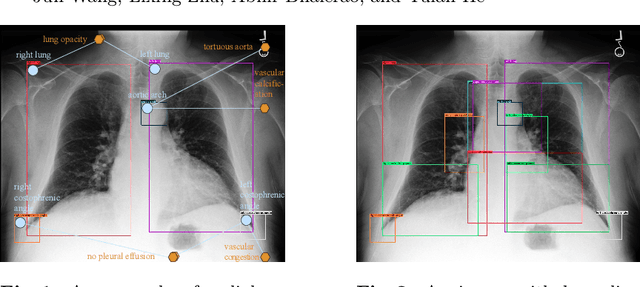
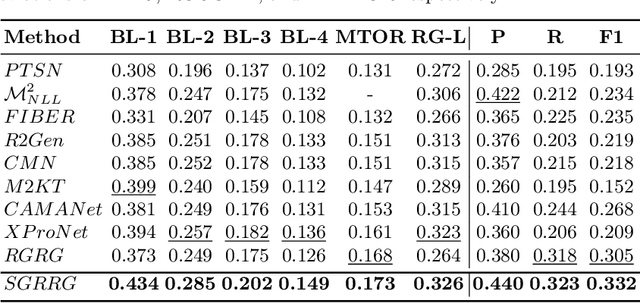
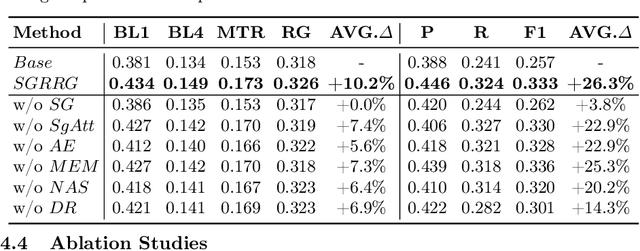
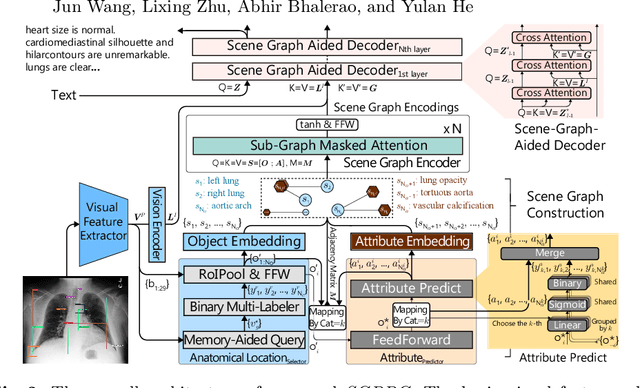
Radiology report generation (RRG) methods often lack sufficient medical knowledge to produce clinically accurate reports. The scene graph contains rich information to describe the objects in an image. We explore enriching the medical knowledge for RRG via a scene graph, which has not been done in the current RRG literature. To this end, we propose the Scene Graph aided RRG (SGRRG) network, a framework that generates region-level visual features, predicts anatomical attributes, and leverages an automatically generated scene graph, thus achieving medical knowledge distillation in an end-to-end manner. SGRRG is composed of a dedicated scene graph encoder responsible for translating the scene graph, and a scene graph-aided decoder that takes advantage of both patch-level and region-level visual information. A fine-grained, sentence-level attention method is designed to better dis-till the scene graph information. Extensive experiments demonstrate that SGRRG outperforms previous state-of-the-art methods in report generation and can better capture abnormal findings.
Looking Ahead to Avoid Being Late: Solving Hard-Constrained Traveling Salesman Problem
Mar 08, 2024Many real-world problems can be formulated as a constrained Traveling Salesman Problem (TSP). However, the constraints are always complex and numerous, making the TSPs challenging to solve. When the number of complicated constraints grows, it is time-consuming for traditional heuristic algorithms to avoid illegitimate outcomes. Learning-based methods provide an alternative to solve TSPs in a soft manner, which also supports GPU acceleration to generate solutions quickly. Nevertheless, the soft manner inevitably results in difficulty solving hard-constrained problems with learning algorithms, and the conflicts between legality and optimality may substantially affect the optimality of the solution. To overcome this problem and to have an effective solution against hard constraints, we proposed a novel learning-based method that uses looking-ahead information as the feature to improve the legality of TSP with Time Windows (TSPTW) solutions. Besides, we constructed TSPTW datasets with hard constraints in order to accurately evaluate and benchmark the statistical performance of various approaches, which can serve the community for future research. With comprehensive experiments on diverse datasets, MUSLA outperforms existing baselines and shows generalizability potential.
A Comprehensive Survey on Process-Oriented Automatic Text Summarization with Exploration of LLM-Based Methods
Mar 05, 2024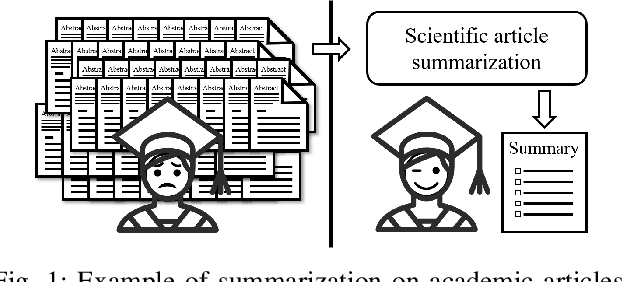
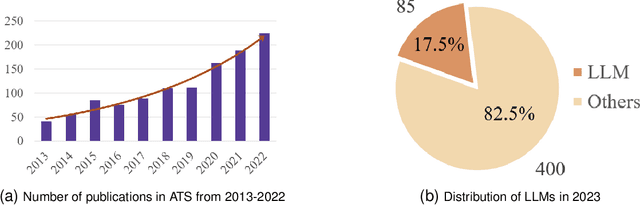
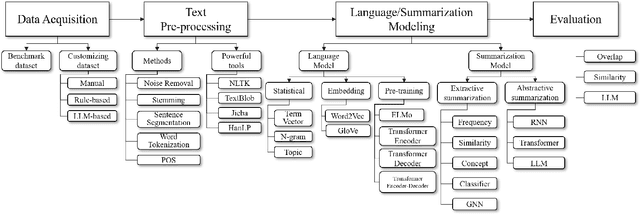
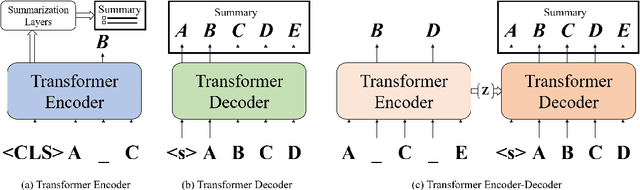
Automatic Text Summarization (ATS), utilizing Natural Language Processing (NLP) algorithms, aims to create concise and accurate summaries, thereby significantly reducing the human effort required in processing large volumes of text. ATS has drawn considerable interest in both academic and industrial circles. Many studies have been conducted in the past to survey ATS methods; however, they generally lack practicality for real-world implementations, as they often categorize previous methods from a theoretical standpoint. Moreover, the advent of Large Language Models (LLMs) has altered conventional ATS methods. In this survey, we aim to 1) provide a comprehensive overview of ATS from a ``Process-Oriented Schema'' perspective, which is best aligned with real-world implementations; 2) comprehensively review the latest LLM-based ATS works; and 3) deliver an up-to-date survey of ATS, bridging the two-year gap in the literature. To the best of our knowledge, this is the first survey to specifically investigate LLM-based ATS methods.
ZSL-RPPO: Zero-Shot Learning for Quadrupedal Locomotion in Challenging Terrains using Recurrent Proximal Policy Optimization
Mar 04, 2024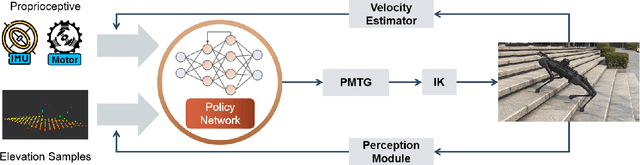
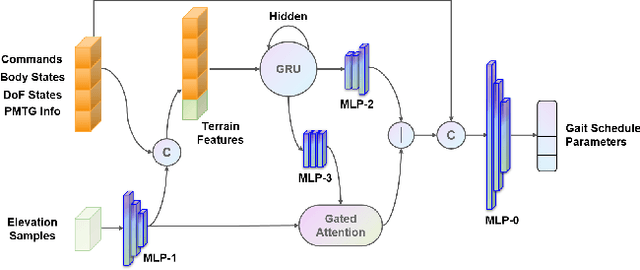
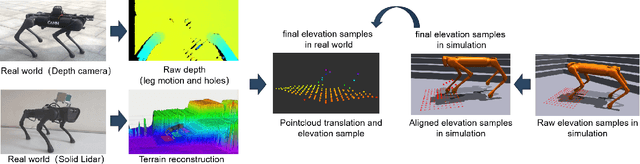
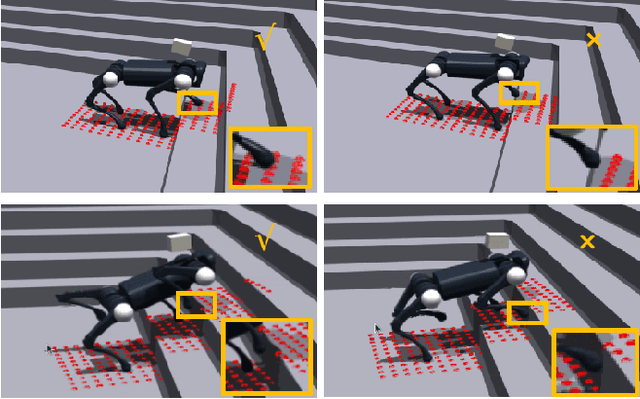
We present ZSL-RPPO, an improved zero-shot learning architecture that overcomes the limitations of teacher-student neural networks and enables generating robust, reliable, and versatile locomotion for quadrupedal robots in challenging terrains. We propose a new algorithm RPPO (Recurrent Proximal Policy Optimization) that directly trains recurrent neural network in partially observable environments and results in more robust training using domain randomization. Our locomotion controller supports extensive perturbation across simulation-to-reality transfer for both intrinsic and extrinsic physical parameters without further fine-tuning. This can avoid the significant decline of student's performance during simulation-to-reality transfer and therefore enhance the robustness and generalization of the locomotion controller. We deployed our controller on the Unitree A1 and Aliengo robots in real environment and exteroceptive perception is provided by either a solid-state Lidar or a depth camera. Our locomotion controller was tested in various challenging terrains like slippery surfaces, Grassy Terrain, and stairs. Our experiment results and comparison show that our approach significantly outperforms the state-of-the-art.
CyberDemo: Augmenting Simulated Human Demonstration for Real-World Dexterous Manipulation
Mar 01, 2024We introduce CyberDemo, a novel approach to robotic imitation learning that leverages simulated human demonstrations for real-world tasks. By incorporating extensive data augmentation in a simulated environment, CyberDemo outperforms traditional in-domain real-world demonstrations when transferred to the real world, handling diverse physical and visual conditions. Regardless of its affordability and convenience in data collection, CyberDemo outperforms baseline methods in terms of success rates across various tasks and exhibits generalizability with previously unseen objects. For example, it can rotate novel tetra-valve and penta-valve, despite human demonstrations only involving tri-valves. Our research demonstrates the significant potential of simulated human demonstrations for real-world dexterous manipulation tasks. More details can be found at https://cyber-demo.github.io
Explainable Session-based Recommendation via Path Reasoning
Feb 28, 2024This paper explores providing explainability for session-based recommendation (SR) by path reasoning. Current SR models emphasize accuracy but lack explainability, while traditional path reasoning prioritizes knowledge graph exploration, ignoring sequential patterns present in the session history. Therefore, we propose a generalized hierarchical reinforcement learning framework for SR, which improves the explainability of existing SR models via Path Reasoning, namely PR4SR. Considering the different importance of items to the session, we design the session-level agent to select the items in the session as the starting point for path reasoning and the path-level agent to perform path reasoning. In particular, we design a multi-target reward mechanism to adapt to the skip behaviors of sequential patterns in SR, and introduce path midpoint reward to enhance the exploration efficiency in knowledge graphs. To improve the completeness of the knowledge graph and to diversify the paths of explanation, we incorporate extracted feature information from images into the knowledge graph. We instantiate PR4SR in five state-of-the-art SR models (i.e., GRU4REC, NARM, GCSAN, SR-GNN, SASRec) and compare it with other explainable SR frameworks, to demonstrate the effectiveness of PR4SR for recommendation and explanation tasks through extensive experiments with these approaches on four datasets.
Merino: Entropy-driven Design for Generative Language Models on IoT Devices
Feb 28, 2024Generative Large Language Models (LLMs) stand as a revolutionary advancement in the modern era of artificial intelligence (AI). However, directly deploying LLMs in resource-constrained hardware, such as Internet-of-Things (IoT) devices, is difficult due to their high computational cost. In this paper, we propose a novel information-entropy framework for designing mobile-friendly generative language models. Our key design paradigm is to maximize the entropy of transformer decoders within the given computational budgets. The whole design procedure involves solving a mathematical programming (MP) problem, which can be done on the CPU within minutes, making it nearly zero-cost. We evaluate our designed models, termed MeRino, across nine NLP downstream tasks, showing their competitive performance against the state-of-the-art autoregressive transformer models under the mobile setting. Notably, MeRino achieves similar or better zero performance compared to the 350M parameter OPT while being 4.9x faster on NVIDIA Jetson Nano with 5.5x reduction in model size. Code will be made available soon.
GARNN: An Interpretable Graph Attentive Recurrent Neural Network for Predicting Blood Glucose Levels via Multivariate Time Series
Feb 26, 2024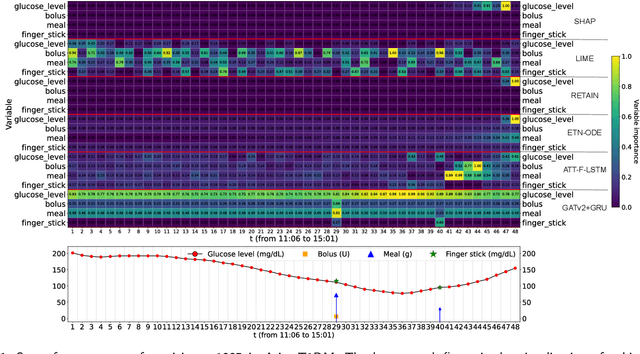
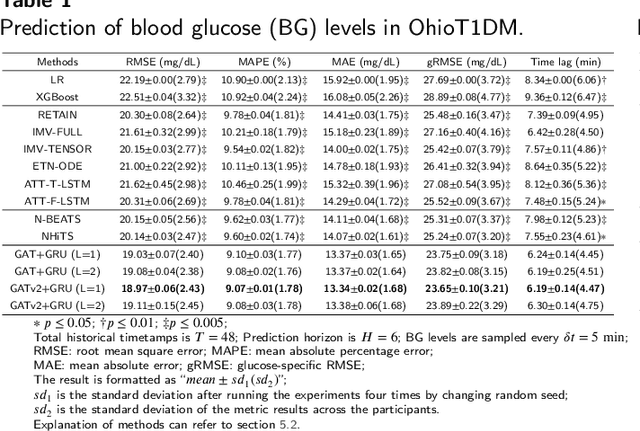
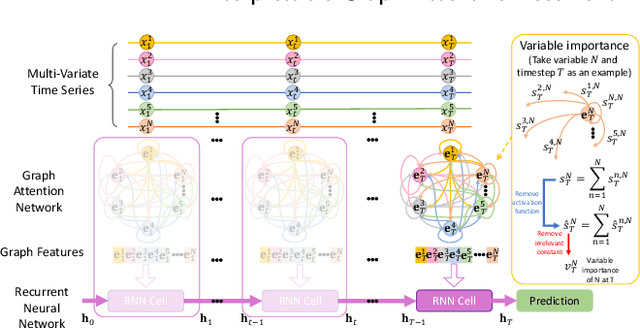
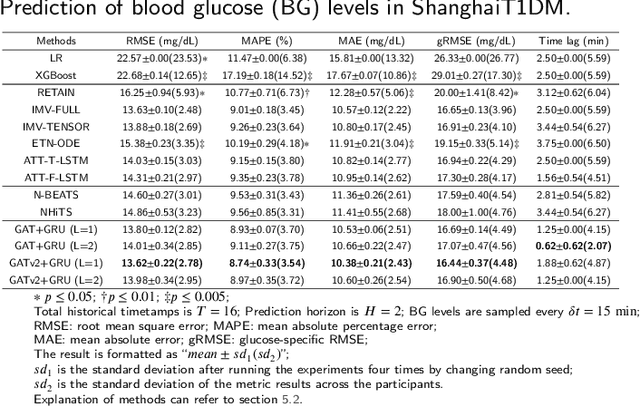
Accurate prediction of future blood glucose (BG) levels can effectively improve BG management for people living with diabetes, thereby reducing complications and improving quality of life. The state of the art of BG prediction has been achieved by leveraging advanced deep learning methods to model multi-modal data, i.e., sensor data and self-reported event data, organised as multi-variate time series (MTS). However, these methods are mostly regarded as ``black boxes'' and not entirely trusted by clinicians and patients. In this paper, we propose interpretable graph attentive recurrent neural networks (GARNNs) to model MTS, explaining variable contributions via summarizing variable importance and generating feature maps by graph attention mechanisms instead of post-hoc analysis. We evaluate GARNNs on four datasets, representing diverse clinical scenarios. Upon comparison with twelve well-established baseline methods, GARNNs not only achieve the best prediction accuracy but also provide high-quality temporal interpretability, in particular for postprandial glucose levels as a result of corresponding meal intake and insulin injection. These findings underline the potential of GARNN as a robust tool for improving diabetes care, bridging the gap between deep learning technology and real-world healthcare solutions.
Safe Task Planning for Language-Instructed Multi-Robot Systems using Conformal Prediction
Feb 23, 2024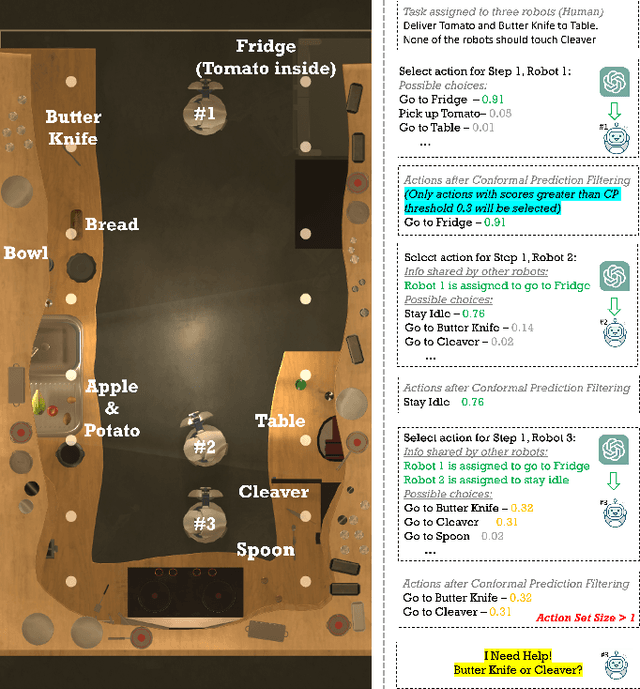
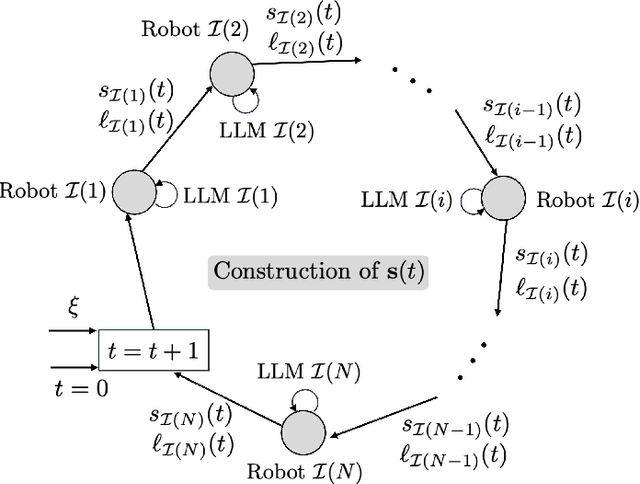
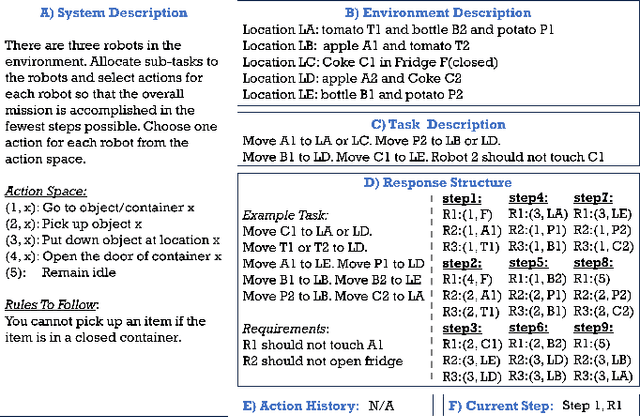
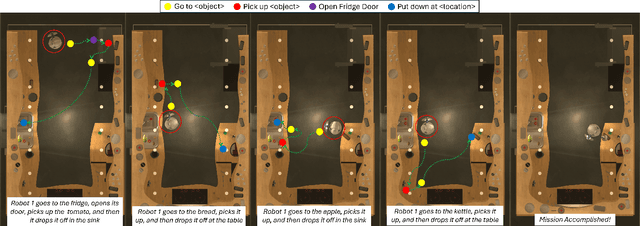
This paper addresses task planning problems for language-instructed robot teams. Tasks are expressed in natural language (NL), requiring the robots to apply their capabilities (e.g., mobility, manipulation, and sensing) at various locations and semantic objects. Several recent works have addressed similar planning problems by leveraging pre-trained Large Language Models (LLMs) to design effective multi-robot plans. However, these approaches lack mission performance and safety guarantees. To address this challenge, we introduce a new decentralized LLM-based planner that is capable of achieving high mission success rates. This is accomplished by leveraging conformal prediction (CP), a distribution-free uncertainty quantification tool in black-box models. CP allows the proposed multi-robot planner to reason about its inherent uncertainty in a decentralized fashion, enabling robots to make individual decisions when they are sufficiently certain and seek help otherwise. We show, both theoretically and empirically, that the proposed planner can achieve user-specified task success rates while minimizing the overall number of help requests. We demonstrate the performance of our approach on multi-robot home service applications. We also show through comparative experiments, that our method outperforms recent centralized and decentralized multi-robot LLM-based planners in terms of in terms of its ability to design correct plans. The advantage of our algorithm over baselines becomes more pronounced with increasing mission complexity and robot team size.