 Add to Chrome
 Add to Firefox
 Add to Edge
3D Concept Learning and Reasoning from Multi-View Images
Mar 20, 2023
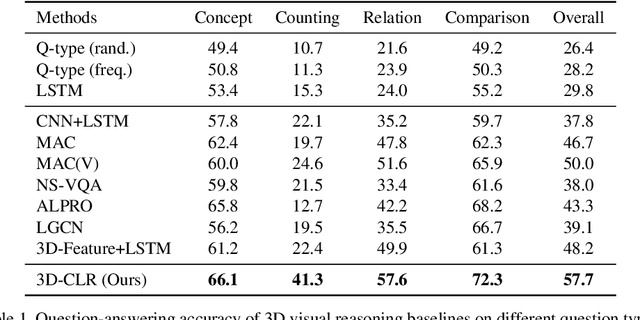
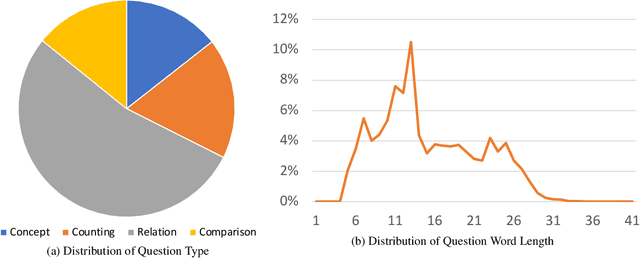
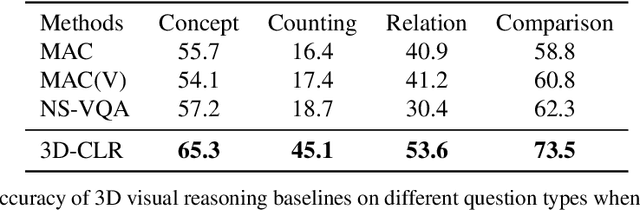

Humans are able to accurately reason in 3D by gathering multi-view observations of the surrounding world. Inspired by this insight, we introduce a new large-scale benchmark for 3D multi-view visual question answering (3DMV-VQA). This dataset is collected by an embodied agent actively moving and capturing RGB images in an environment using the Habitat simulator. In total, it consists of approximately 5k scenes, 600k images, paired with 50k questions. We evaluate various state-of-the-art models for visual reasoning on our benchmark and find that they all perform poorly. We suggest that a principled approach for 3D reasoning from multi-view images should be to infer a compact 3D representation of the world from the multi-view images, which is further grounded on open-vocabulary semantic concepts, and then to execute reasoning on these 3D representations. As the first step towards this approach, we propose a novel 3D concept learning and reasoning (3D-CLR) framework that seamlessly combines these components via neural fields, 2D pre-trained vision-language models, and neural reasoning operators. Experimental results suggest that our framework outperforms baseline models by a large margin, but the challenge remains largely unsolved. We further perform an in-depth analysis of the challenges and highlight potential future directions.

SoftZoo: A Soft Robot Co-design Benchmark For Locomotion In Diverse Environments
Mar 16, 2023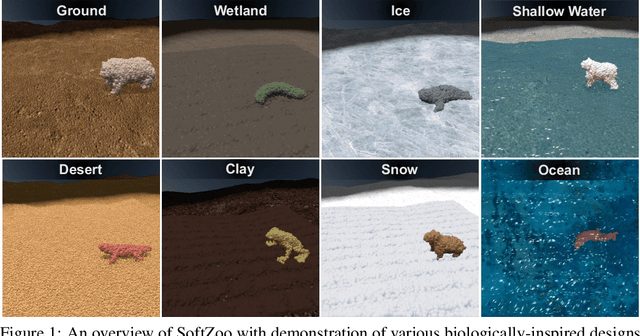
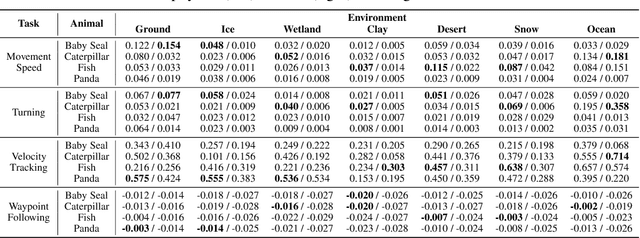
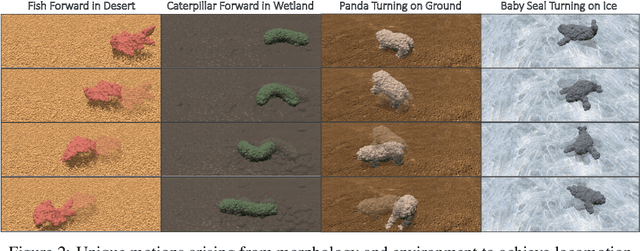
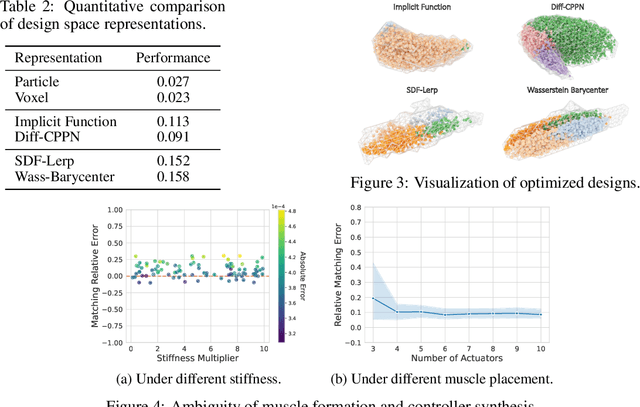
While significant research progress has been made in robot learning for control, unique challenges arise when simultaneously co-optimizing morphology. Existing work has typically been tailored for particular environments or representations. In order to more fully understand inherent design and performance tradeoffs and accelerate the development of new breeds of soft robots, a comprehensive virtual platform with well-established tasks, environments, and evaluation metrics is needed. In this work, we introduce SoftZoo, a soft robot co-design platform for locomotion in diverse environments. SoftZoo supports an extensive, naturally-inspired material set, including the ability to simulate environments such as flat ground, desert, wetland, clay, ice, snow, shallow water, and ocean. Further, it provides a variety of tasks relevant for soft robotics, including fast locomotion, agile turning, and path following, as well as differentiable design representations for morphology and control. Combined, these elements form a feature-rich platform for analysis and development of soft robot co-design algorithms. We benchmark prevalent representations and co-design algorithms, and shed light on 1) the interplay between environment, morphology, and behavior; 2) the importance of design space representations; 3) the ambiguity in muscle formation and controller synthesis; and 4) the value of differentiable physics. We envision that SoftZoo will serve as a standard platform and template an approach toward the development of novel representations and algorithms for co-designing soft robots' behavioral and morphological intelligence.
NeuSE: Neural SE(3)-Equivariant Embedding for Consistent Spatial Understanding with Objects
Mar 13, 2023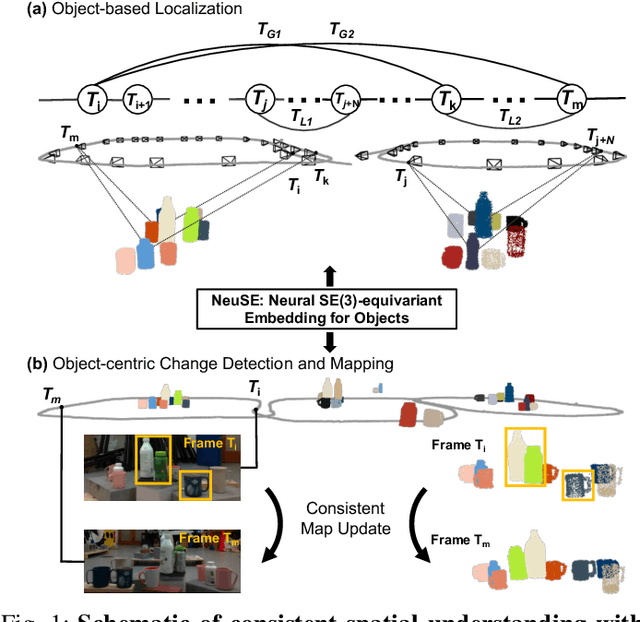
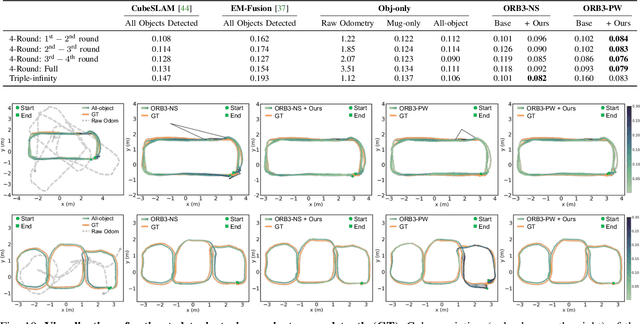
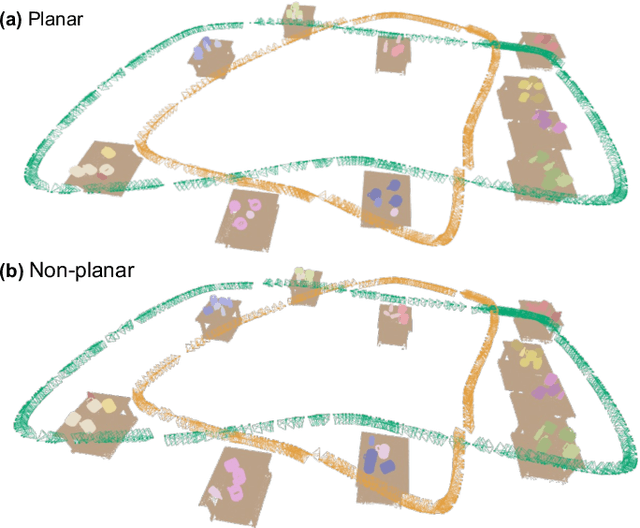
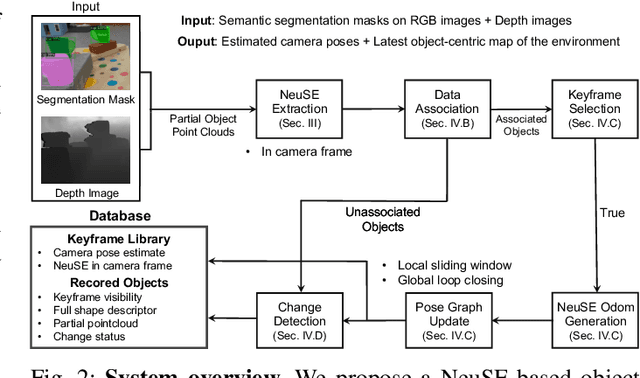
We present NeuSE, a novel Neural SE(3)-Equivariant Embedding for objects, and illustrate how it supports object SLAM for consistent spatial understanding with long-term scene changes. NeuSE is a set of latent object embeddings created from partial object observations. It serves as a compact point cloud surrogate for complete object models, encoding full shape information while transforming SE(3)-equivariantly in tandem with the object in the physical world. With NeuSE, relative frame transforms can be directly derived from inferred latent codes. Our proposed SLAM paradigm, using NeuSE for object shape and pose characterization, can operate independently or in conjunction with typical SLAM systems. It directly infers SE(3) camera pose constraints that are compatible with general SLAM pose graph optimization, while also maintaining a lightweight object-centric map that adapts to real-world changes. Our approach is evaluated on synthetic and real-world sequences featuring changed objects and shows improved localization accuracy and change-aware mapping capability, when working either standalone or jointly with a common SLAM pipeline.
Tactile-Filter: Interactive Tactile Perception for Part Mating
Mar 10, 2023Humans rely on touch and tactile sensing for a lot of dexterous manipulation tasks. Our tactile sensing provides us with a lot of information regarding contact formations as well as geometric information about objects during any interaction. With this motivation, vision-based tactile sensors are being widely used for various robotic perception and control tasks. In this paper, we present a method for interactive perception using vision-based tactile sensors for multi-object assembly. In particular, we are interested in tactile perception during part mating, where a robot can use tactile sensors and a feedback mechanism using particle filter to incrementally improve its estimate of objects that fit together for assembly. To do this, we first train a deep neural network that makes use of tactile images to predict the probabilistic correspondence between arbitrarily shaped objects that fit together. The trained model is used to design a particle filter which is used twofold. First, given one partial (or non-unique) observation of the hole, it incrementally improves the estimate of the correct peg by sampling more tactile observations. Second, it selects the next action for the robot to sample the next touch (and thus image) which results in maximum uncertainty reduction to minimize the number of interactions during the perception task. We evaluate our method on several part-mating tasks for assembly using a robot equipped with a vision-based tactile sensor. We also show the efficiency of the proposed action selection method against a naive method. See supplementary video at https://www.youtube.com/watch?v=jMVBg_e3gLw .
PDSketch: Integrated Planning Domain Programming and Learning
Mar 09, 2023This paper studies a model learning and online planning approach towards building flexible and general robots. Specifically, we investigate how to exploit the locality and sparsity structures in the underlying environmental transition model to improve model generalization, data-efficiency, and runtime-efficiency. We present a new domain definition language, named PDSketch. It allows users to flexibly define high-level structures in the transition models, such as object and feature dependencies, in a way similar to how programmers use TensorFlow or PyTorch to specify kernel sizes and hidden dimensions of a convolutional neural network. The details of the transition model will be filled in by trainable neural networks. Based on the defined structures and learned parameters, PDSketch automatically generates domain-independent planning heuristics without additional training. The derived heuristics accelerate the performance-time planning for novel goals.
Learning Rational Subgoals from Demonstrations and Instructions
Mar 09, 2023We present a framework for learning useful subgoals that support efficient long-term planning to achieve novel goals. At the core of our framework is a collection of rational subgoals (RSGs), which are essentially binary classifiers over the environmental states. RSGs can be learned from weakly-annotated data, in the form of unsegmented demonstration trajectories, paired with abstract task descriptions, which are composed of terms initially unknown to the agent (e.g., collect-wood then craft-boat then go-across-river). Our framework also discovers dependencies between RSGs, e.g., the task collect-wood is a helpful subgoal for the task craft-boat. Given a goal description, the learned subgoals and the derived dependencies facilitate off-the-shelf planning algorithms, such as A* and RRT, by setting helpful subgoals as waypoints to the planner, which significantly improves performance-time efficiency.
On the Expressiveness and Generalization of Hypergraph Neural Networks
Mar 09, 2023This extended abstract describes a framework for analyzing the expressiveness, learning, and (structural) generalization of hypergraph neural networks (HyperGNNs). Specifically, we focus on how HyperGNNs can learn from finite datasets and generalize structurally to graph reasoning problems of arbitrary input sizes. Our first contribution is a fine-grained analysis of the expressiveness of HyperGNNs, that is, the set of functions that they can realize. Our result is a hierarchy of problems they can solve, defined in terms of various hyperparameters such as depths and edge arities. Next, we analyze the learning properties of these neural networks, especially focusing on how they can be trained on a finite set of small graphs and generalize to larger graphs, which we term structural generalization. Our theoretical results are further supported by the empirical results.
Planning with Large Language Models for Code Generation
Mar 09, 2023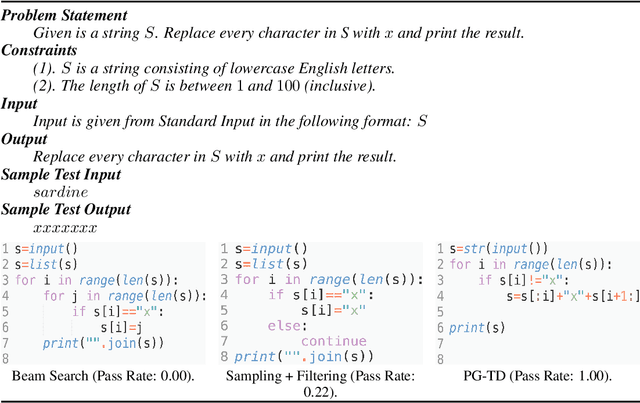

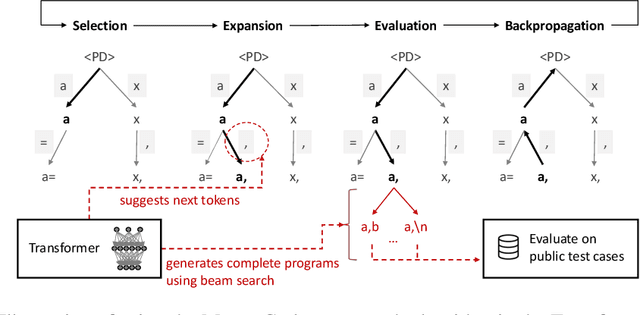
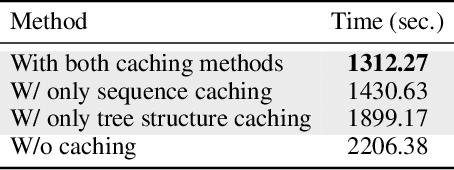
Existing large language model-based code generation pipelines typically use beam search or sampling algorithms during the decoding process. Although the programs they generate achieve high token-matching-based scores, they often fail to compile or generate incorrect outputs. The main reason is that conventional Transformer decoding algorithms may not be the best choice for code generation. In this work, we propose a novel Transformer decoding algorithm, Planning-Guided Transformer Decoding (PG-TD), that uses a planning algorithm to do lookahead search and guide the Transformer to generate better programs. Specifically, instead of simply optimizing the likelihood of the generated sequences, the Transformer makes use of a planner to generate candidate programs and test them on public test cases. The Transformer can therefore make more informed decisions and generate tokens that will eventually lead to higher-quality programs. We also design a mechanism that shares information between the Transformer and the planner to make our algorithm computationally efficient. We empirically evaluate our framework with several large language models as backbones on public coding challenge benchmarks, showing that 1) it can generate programs that consistently achieve higher performance compared with competing baseline methods; 2) it enables controllable code generation, such as concise codes and highly-commented codes by optimizing modified objective.
Reduce, Reuse, Recycle: Compositional Generation with Energy-Based Diffusion Models and MCMC
Feb 22, 2023


Since their introduction, diffusion models have quickly become the prevailing approach to generative modeling in many domains. They can be interpreted as learning the gradients of a time-varying sequence of log-probability density functions. This interpretation has motivated classifier-based and classifier-free guidance as methods for post-hoc control of diffusion models. In this work, we build upon these ideas using the score-based interpretation of diffusion models, and explore alternative ways to condition, modify, and reuse diffusion models for tasks involving compositional generation and guidance. In particular, we investigate why certain types of composition fail using current techniques and present a number of solutions. We conclude that the sampler (not the model) is responsible for this failure and propose new samplers, inspired by MCMC, which enable successful compositional generation. Further, we propose an energy-based parameterization of diffusion models which enables the use of new compositional operators and more sophisticated, Metropolis-corrected samplers. Intriguingly we find these samplers lead to notable improvements in compositional generation across a wide set of problems such as classifier-guided ImageNet modeling and compositional text-to-image generation.
ConceptFusion: Open-set Multimodal 3D Mapping
Feb 15, 2023Building 3D maps of the environment is central to robot navigation, planning, and interaction with objects in a scene. Most existing approaches that integrate semantic concepts with 3D maps largely remain confined to the closed-set setting: they can only reason about a finite set of concepts, pre-defined at training time. Further, these maps can only be queried using class labels, or in recent work, using text prompts. We address both these issues with ConceptFusion, a scene representation that is (1) fundamentally open-set, enabling reasoning beyond a closed set of concepts and (ii) inherently multimodal, enabling a diverse range of possible queries to the 3D map, from language, to images, to audio, to 3D geometry, all working in concert. ConceptFusion leverages the open-set capabilities of today's foundation models pre-trained on internet-scale data to reason about concepts across modalities such as natural language, images, and audio. We demonstrate that pixel-aligned open-set features can be fused into 3D maps via traditional SLAM and multi-view fusion approaches. This enables effective zero-shot spatial reasoning, not needing any additional training or finetuning, and retains long-tailed concepts better than supervised approaches, outperforming them by more than 40% margin on 3D IoU. We extensively evaluate ConceptFusion on a number of real-world datasets, simulated home environments, a real-world tabletop manipulation task, and an autonomous driving platform. We showcase new avenues for blending foundation models with 3D open-set multimodal mapping. For more information, visit our project page https://concept-fusion.github.io or watch our 5-minute explainer video https://www.youtube.com/watch?v=rkXgws8fiDs