 Add to Chrome
 Add to Firefox
 Add to Edge
SARA: Structural and Adversarial Representation Alignment for Training-efficient Diffusion Models
Mar 11, 2025

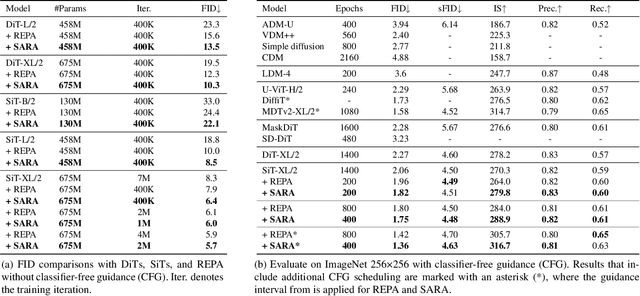
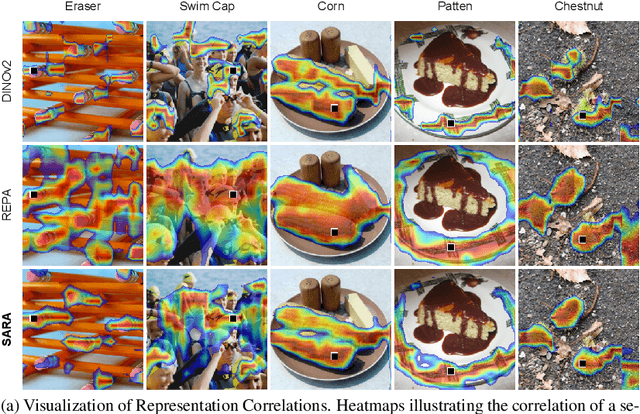
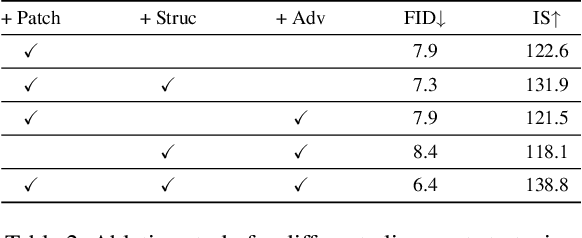
Modern diffusion models encounter a fundamental trade-off between training efficiency and generation quality. While existing representation alignment methods, such as REPA, accelerate convergence through patch-wise alignment, they often fail to capture structural relationships within visual representations and ensure global distribution consistency between pretrained encoders and denoising networks. To address these limitations, we introduce SARA, a hierarchical alignment framework that enforces multi-level representation constraints: (1) patch-wise alignment to preserve local semantic details, (2) autocorrelation matrix alignment to maintain structural consistency within representations, and (3) adversarial distribution alignment to mitigate global representation discrepancies. Unlike previous approaches, SARA explicitly models both intra-representation correlations via self-similarity matrices and inter-distribution coherence via adversarial alignment, enabling comprehensive alignment across local and global scales. Experiments on ImageNet-256 show that SARA achieves an FID of 1.36 while converging twice as fast as REPA, surpassing recent state-of-the-art image generation methods. This work establishes a systematic paradigm for optimizing diffusion training through hierarchical representation alignment.

Silent Hazards of Token Reduction in Vision-Language Models: The Hidden Impact on Consistency
Mar 11, 2025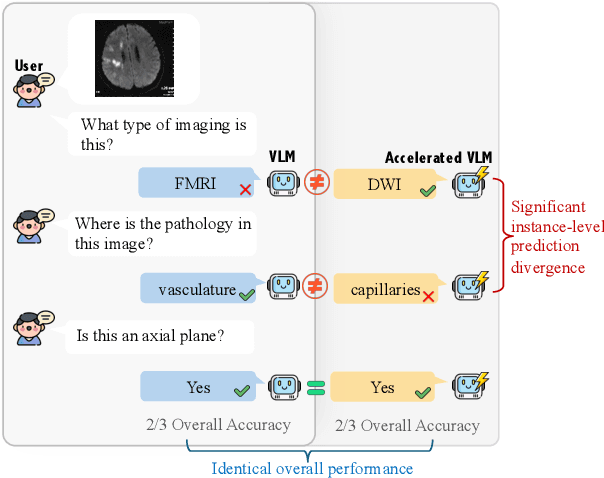
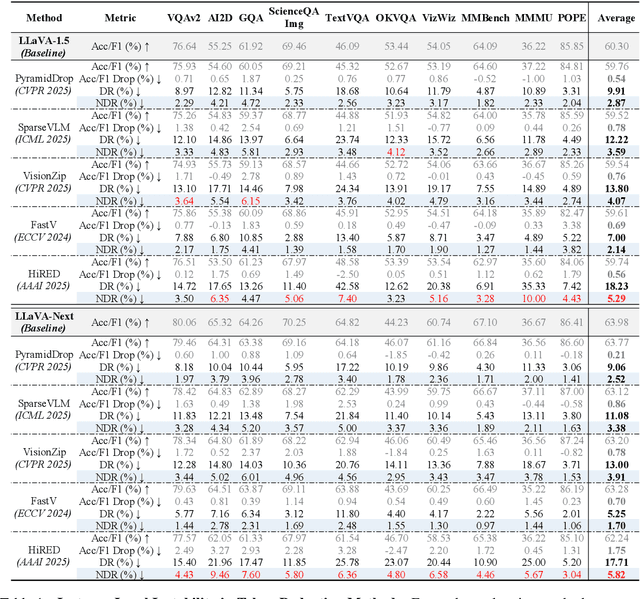
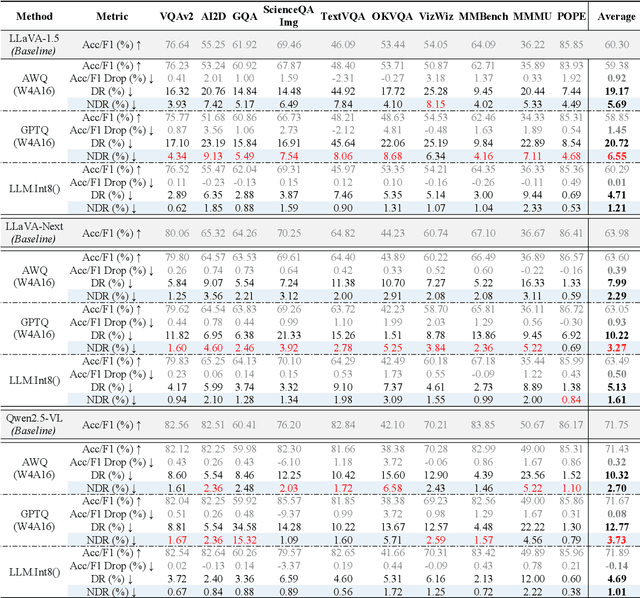
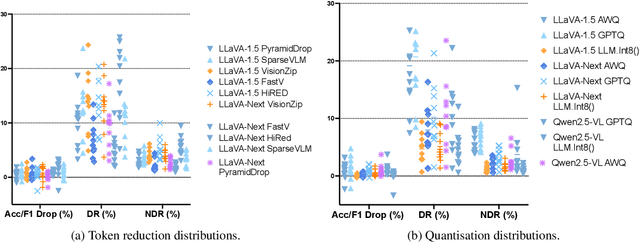
Vision language models (VLMs) have excelled in visual reasoning but often incur high computational costs. One key reason is the redundancy of visual tokens. Although recent token reduction methods claim to achieve minimal performance loss, our extensive experiments reveal that token reduction can substantially alter a model's output distribution, leading to changes in prediction patterns that standard metrics such as accuracy loss do not fully capture. Such inconsistencies are especially concerning for practical applications where system stability is critical. To investigate this phenomenon, we analyze how token reduction influences the energy distribution of a VLM's internal representations using a lower-rank approximation via Singular Value Decomposition (SVD). Our results show that changes in the Inverse Participation Ratio of the singular value spectrum are strongly correlated with the model's consistency after token reduction. Based on these insights, we propose LoFi--a training-free visual token reduction method that utilizes the leverage score from SVD for token pruning. Experimental evaluations demonstrate that LoFi not only reduces computational costs with minimal performance degradation but also significantly outperforms state-of-the-art methods in terms of output consistency.
Unified Reward Model for Multimodal Understanding and Generation
Mar 07, 2025Recent advances in human preference alignment have significantly enhanced multimodal generation and understanding. A key approach is training reward models to guide preference optimization. However, existing models are often task-specific, limiting their adaptability across diverse visual applications. We also argue that jointly learning to assess multiple tasks may foster a synergistic effect, where improved image understanding enhances image generation assessment, and refined image evaluation benefits video assessment through better frame analysis. To this end, this paper proposes UnifiedReward, the first unified reward model for multimodal understanding and generation assessment, enabling both pairwise ranking and pointwise scoring, which can be employed for vision model preference alignment. Specifically, (1) we first develop UnifiedReward on our constructed large-scale human preference dataset, including both image and video generation/understanding tasks. (2) Then, it is utilized to automatically construct high-quality preference pair data based on the vision models, fine-gradually filtering their outputs through pair ranking and point sifting. (3) Finally, these data are used for their preference alignment through Direct Preference Optimization (DPO). Experimental results demonstrate that joint learning to assess diverse visual tasks can lead to substantial mutual benefits and we apply our pipeline to both image and video understanding/generation tasks, significantly improving the performance in each domain.
Towards Universal Learning-based Model for Cardiac Image Reconstruction: Summary of the CMRxRecon2024 Challenge
Mar 05, 2025Cardiovascular magnetic resonance (CMR) offers diverse imaging contrasts for assessment of cardiac function and tissue characterization. However, acquiring each single CMR modality is often time-consuming, and comprehensive clinical protocols require multiple modalities with various sampling patterns, further extending the overall acquisition time and increasing susceptibility to motion artifacts. Existing deep learning-based reconstruction methods are often designed for specific acquisition parameters, which limits their ability to generalize across a variety of scan scenarios. As part of the CMRxRecon Series, the CMRxRecon2024 challenge provides diverse datasets encompassing multi-modality multi-view imaging with various sampling patterns, and a platform for the international community to develop and benchmark reconstruction solutions in two well-crafted tasks. Task 1 is a modality-universal setting, evaluating the out-of-distribution generalization of the reconstructed model, while Task 2 follows sampling-universal setting assessing the one-for-all adaptability of the universal model. Main contributions include providing the first and largest publicly available multi-modality, multi-view cardiac k-space dataset; developing a benchmarking platform that simulates clinical acceleration protocols, with a shared code library and tutorial for various k-t undersampling patterns and data processing; giving technical insights of enhanced data consistency based on physic-informed networks and adaptive prompt-learning embedding to be versatile to different clinical settings; additional finding on evaluation metrics to address the limitations of conventional ground-truth references in universal reconstruction tasks.
BRIDGE: Bootstrapping Text to Control Time-Series Generation via Multi-Agent Iterative Optimization and Diffusion Modelling
Mar 05, 2025


Time-series Generation (TSG) is a prominent research area with broad applications in simulations, data augmentation, and counterfactual analysis. While existing methods have shown promise in unconditional single-domain TSG, real-world applications demand for cross-domain approaches capable of controlled generation tailored to domain-specific constraints and instance-level requirements. In this paper, we argue that text can provide semantic insights, domain information and instance-specific temporal patterns, to guide and improve TSG. We introduce ``Text-Controlled TSG'', a task focused on generating realistic time series by incorporating textual descriptions. To address data scarcity in this setting, we propose a novel LLM-based Multi-Agent framework that synthesizes diverse, realistic text-to-TS datasets. Furthermore, we introduce BRIDGE, a hybrid text-controlled TSG framework that integrates semantic prototypes with text description for supporting domain-level guidance. This approach achieves state-of-the-art generation fidelity on 11 of 12 datasets, and improves controllability by 12.52% on MSE and 6.34% MAE compared to no text input generation, highlighting its potential for generating tailored time-series data.
TacCap: A Wearable FBG-Based Tactile Sensor for Seamless Human-to-Robot Skill Transfer
Mar 03, 2025Tactile sensing is essential for dexterous manipulation, yet large-scale human demonstration datasets lack tactile feedback, limiting their effectiveness in skill transfer to robots. To address this, we introduce TacCap, a wearable Fiber Bragg Grating (FBG)-based tactile sensor designed for seamless human-to-robot transfer. TacCap is lightweight, durable, and immune to electromagnetic interference, making it ideal for real-world data collection. We detail its design and fabrication, evaluate its sensitivity, repeatability, and cross-sensor consistency, and assess its effectiveness through grasp stability prediction and ablation studies. Our results demonstrate that TacCap enables transferable tactile data collection, bridging the gap between human demonstrations and robotic execution. To support further research and development, we open-source our hardware design and software.
Raccoon: Multi-stage Diffusion Training with Coarse-to-Fine Curating Videos
Feb 28, 2025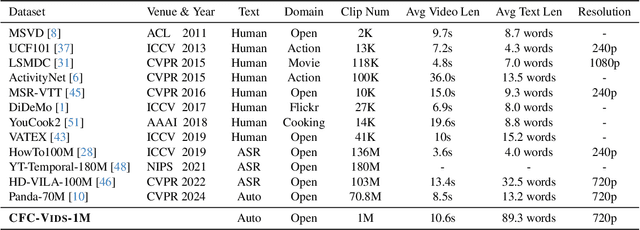
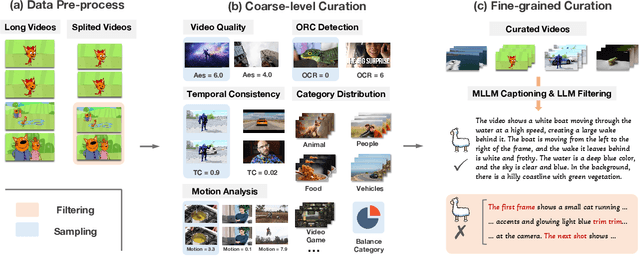
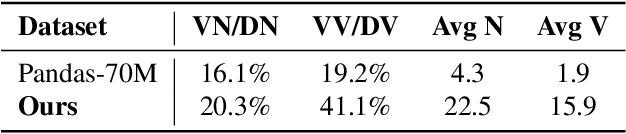
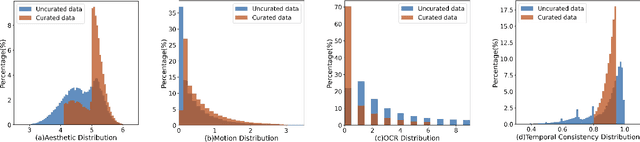
Text-to-video generation has demonstrated promising progress with the advent of diffusion models, yet existing approaches are limited by dataset quality and computational resources. To address these limitations, this paper presents a comprehensive approach that advances both data curation and model design. We introduce CFC-VIDS-1M, a high-quality video dataset constructed through a systematic coarse-to-fine curation pipeline. The pipeline first evaluates video quality across multiple dimensions, followed by a fine-grained stage that leverages vision-language models to enhance text-video alignment and semantic richness. Building upon the curated dataset's emphasis on visual quality and temporal coherence, we develop RACCOON, a transformer-based architecture with decoupled spatial-temporal attention mechanisms. The model is trained through a progressive four-stage strategy designed to efficiently handle the complexities of video generation. Extensive experiments demonstrate that our integrated approach of high-quality data curation and efficient training strategy generates visually appealing and temporally coherent videos while maintaining computational efficiency. We will release our dataset, code, and models.
Unveiling and Causalizing CoT: A Causal Pespective
Feb 25, 2025Although Chain-of-Thought (CoT) has achieved remarkable success in enhancing the reasoning ability of large language models (LLMs), the mechanism of CoT remains a ``black box''. Even if the correct answers can frequently be obtained, existing CoTs struggle to make the reasoning understandable to human. In this paper, we unveil and causalize CoT from a causal perspective to ensure both correctness and understandability of all reasoning steps (to the best of our knowledge, the first such). We model causality of CoT via structural causal models (SCM) to unveil the reasoning mechanism of CoT. To measure the causality of CoT, we define the CoT Average Causal Effect (CACE) to test the causal relations between steps. For those steps without causality (wrong or unintelligible steps), we design a role-playing causal query algorithm to causalize these steps, resulting a causalized CoT with all steps correct and understandable. Experimental results on both open-source and closed-source LLMs demonstrate that the causal errors commonly in steps are effectively corrected and the reasoning ability of LLMs is significantly improved.
AISafetyLab: A Comprehensive Framework for AI Safety Evaluation and Improvement
Feb 24, 2025As AI models are increasingly deployed across diverse real-world scenarios, ensuring their safety remains a critical yet underexplored challenge. While substantial efforts have been made to evaluate and enhance AI safety, the lack of a standardized framework and comprehensive toolkit poses significant obstacles to systematic research and practical adoption. To bridge this gap, we introduce AISafetyLab, a unified framework and toolkit that integrates representative attack, defense, and evaluation methodologies for AI safety. AISafetyLab features an intuitive interface that enables developers to seamlessly apply various techniques while maintaining a well-structured and extensible codebase for future advancements. Additionally, we conduct empirical studies on Vicuna, analyzing different attack and defense strategies to provide valuable insights into their comparative effectiveness. To facilitate ongoing research and development in AI safety, AISafetyLab is publicly available at https://github.com/thu-coai/AISafetyLab, and we are committed to its continuous maintenance and improvement.
From Target Tracking to Targeting Track -- Part II: Regularized Polynomial Trajectory Optimization
Feb 22, 2025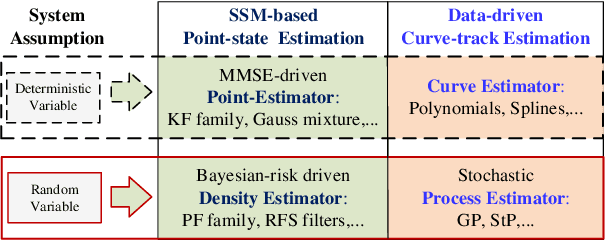
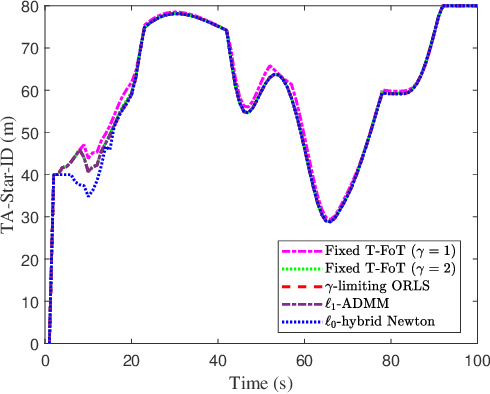
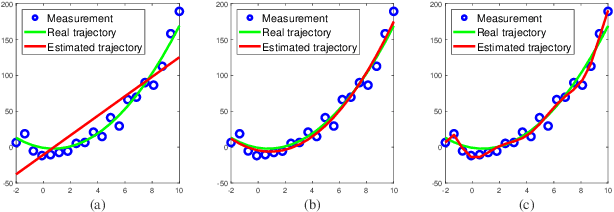
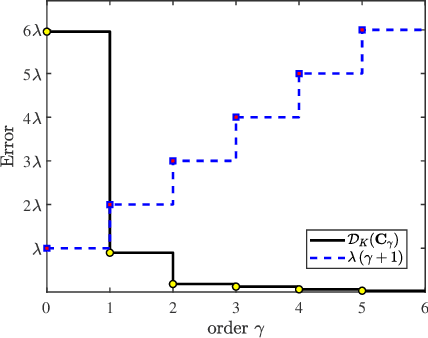
Target tracking entails the estimation of the evolution of the target state over time, namely the target trajectory. Different from the classical state space model, our series of studies, including this paper, model the collection of the target state as a stochastic process (SP) that is further decomposed into a deterministic part which represents the trend of the trajectory and a residual SP representing the residual fitting error. Subsequently, the tracking problem is formulated as a learning problem regarding the trajectory SP for which a key part is to estimate a trajectory FoT (T-FoT) best fitting the measurements in time series. For this purpose, we consider the polynomial T-FoT and address the regularized polynomial T-FoT optimization employing two distinct regularization strategies seeking trade-off between the accuracy and simplicity. One limits the order of the polynomial and then the best choice is determined by grid searching in a narrow, bounded range while the other adopts $\ell_0$ norm regularization for which the hybrid Newton solver is employed. Simulation results obtained in both single and multiple maneuvering target scenarios demonstrate the effectiveness of our approaches.