 Add to Chrome
 Add to Firefox
 Add to Edge
S-Crescendo: A Nested Transformer Weaving Framework for Scalable Nonlinear System in S-Domain Representation
May 17, 2025
Simulation of high-order nonlinear system requires extensive computational resources, especially in modern VLSI backend design where bifurcation-induced instability and chaos-like transient behaviors pose challenges. We present S-Crescendo - a nested transformer weaving framework that synergizes S-domain with neural operators for scalable time-domain prediction in high-order nonlinear networks, alleviating the computational bottlenecks of conventional solvers via Newton-Raphson method. By leveraging the partial-fraction decomposition of an n-th order transfer function into first-order modal terms with repeated poles and residues, our method bypasses the conventional Jacobian matrix-based iterations and efficiently reduces computational complexity from cubic $O(n^3)$ to linear $O(n)$.The proposed architecture seamlessly integrates an S-domain encoder with an attention-based correction operator to simultaneously isolate dominant response and adaptively capture higher-order non-linearities. Validated on order-1 to order-10 networks, our method achieves up to 0.99 test-set ($R^2$) accuracy against HSPICE golden waveforms and accelerates simulation by up to 18(X), providing a scalable, physics-aware framework for high-dimensional nonlinear modeling.

Self-cross Feature based Spiking Neural Networks for Efficient Few-shot Learning
May 15, 2025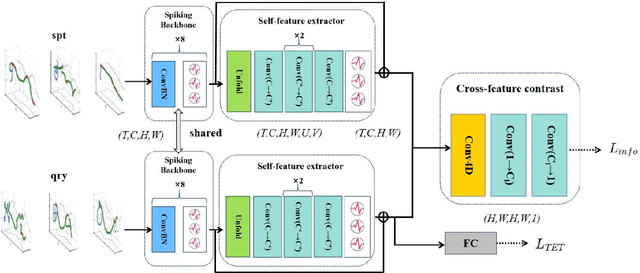
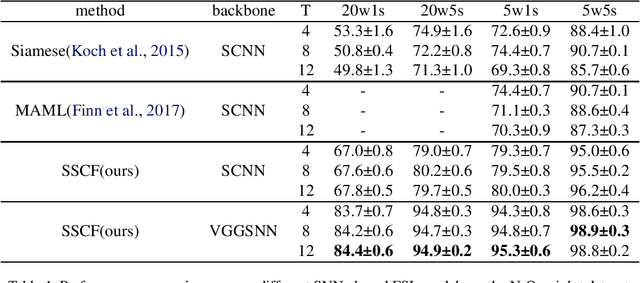
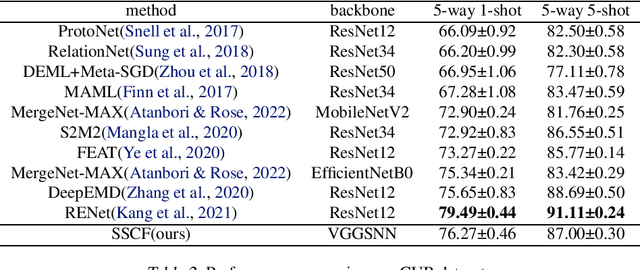
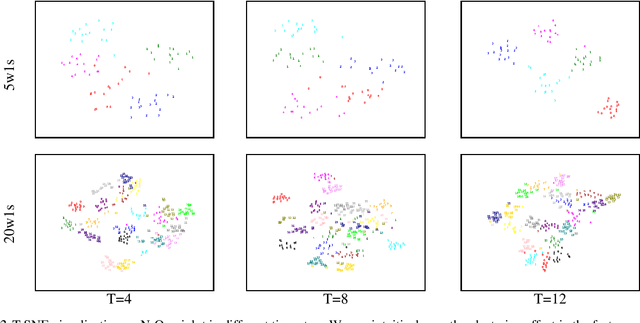
Deep neural networks (DNNs) excel in computer vision tasks, especially, few-shot learning (FSL), which is increasingly important for generalizing from limited examples. However, DNNs are computationally expensive with scalability issues in real world. Spiking Neural Networks (SNNs), with their event-driven nature and low energy consumption, are particularly efficient in processing sparse and dynamic data, though they still encounter difficulties in capturing complex spatiotemporal features and performing accurate cross-class comparisons. To further enhance the performance and efficiency of SNNs in few-shot learning, we propose a few-shot learning framework based on SNNs, which combines a self-feature extractor module and a cross-feature contrastive module to refine feature representation and reduce power consumption. We apply the combination of temporal efficient training loss and InfoNCE loss to optimize the temporal dynamics of spike trains and enhance the discriminative power. Experimental results show that the proposed FSL-SNN significantly improves the classification performance on the neuromorphic dataset N-Omniglot, and also achieves competitive performance to ANNs on static datasets such as CUB and miniImageNet with low power consumption.
Sage Deer: A Super-Aligned Driving Generalist Is Your Copilot
May 15, 2025The intelligent driving cockpit, an important part of intelligent driving, needs to match different users' comfort, interaction, and safety needs. This paper aims to build a Super-Aligned and GEneralist DRiving agent, SAGE DeeR. Sage Deer achieves three highlights: (1) Super alignment: It achieves different reactions according to different people's preferences and biases. (2) Generalist: It can understand the multi-view and multi-mode inputs to reason the user's physiological indicators, facial emotions, hand movements, body movements, driving scenarios, and behavioral decisions. (3) Self-Eliciting: It can elicit implicit thought chains in the language space to further increase generalist and super-aligned abilities. Besides, we collected multiple data sets and built a large-scale benchmark. This benchmark measures the deer's perceptual decision-making ability and the super alignment's accuracy.
PARM: Multi-Objective Test-Time Alignment via Preference-Aware Autoregressive Reward Model
May 06, 2025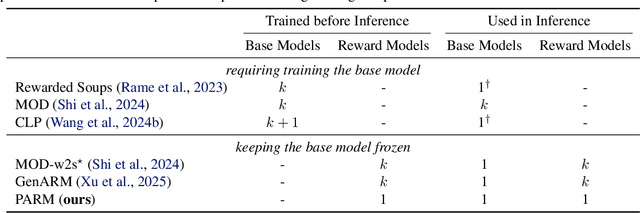
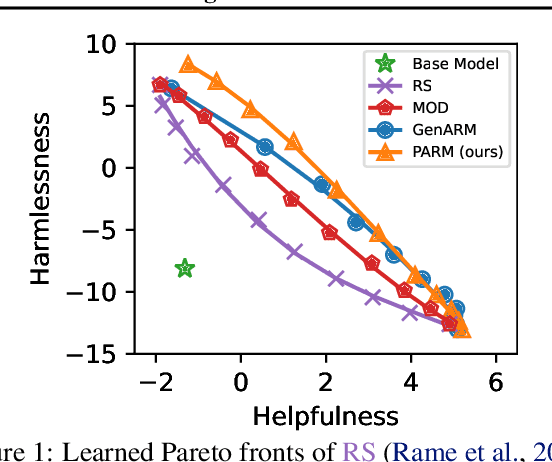
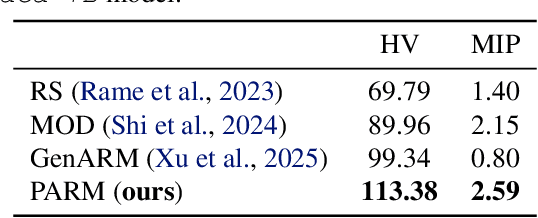
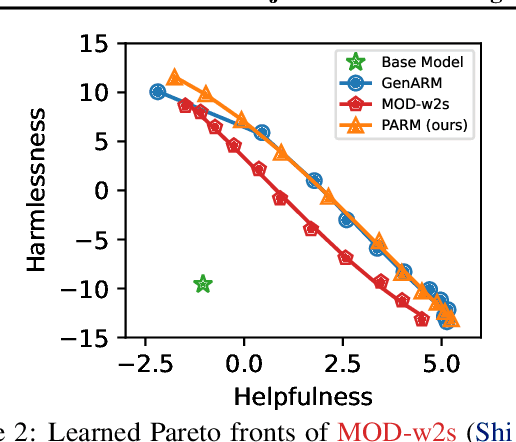
Multi-objective test-time alignment aims to adapt large language models (LLMs) to diverse multi-dimensional user preferences during inference while keeping LLMs frozen. Recently, GenARM (Xu et al., 2025) first independently trains Autoregressive Reward Models (ARMs) for each preference dimension without awareness of each other, then combines their outputs based on user-specific preference vectors during inference to achieve multi-objective test-time alignment, leading to two key limitations: the need for \textit{multiple} ARMs increases the inference cost, and the separate training of ARMs causes the misalignment between the guided generation and the user preferences. To address these issues, we propose Preference-aware ARM (PARM), a single unified ARM trained across all preference dimensions. PARM uses our proposed Preference-Aware Bilinear Low-Rank Adaptation (PBLoRA), which employs a bilinear form to condition the ARM on preference vectors, enabling it to achieve precise control over preference trade-offs during inference. Experiments demonstrate that PARM reduces inference costs and achieves better alignment with preference vectors compared with existing methods. Additionally, PARM enables weak-to-strong guidance, allowing a smaller PARM to guide a larger frozen LLM without expensive training, making multi-objective alignment accessible with limited computing resources. The code is available at https://github.com/Baijiong-Lin/PARM.
Learn to Swim: Data-Driven LSTM Hydrodynamic Model for Quadruped Robot Gait Optimization
May 06, 2025
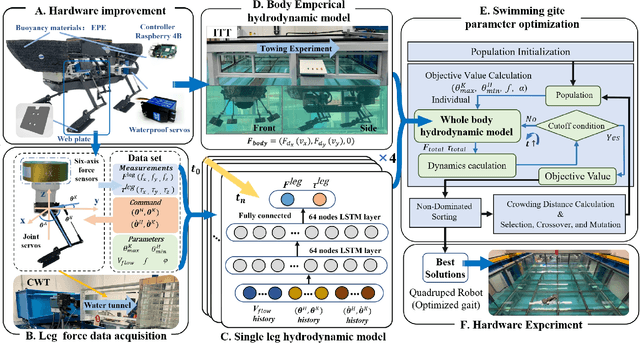
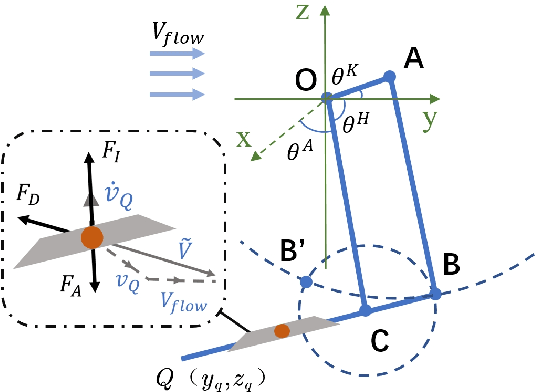
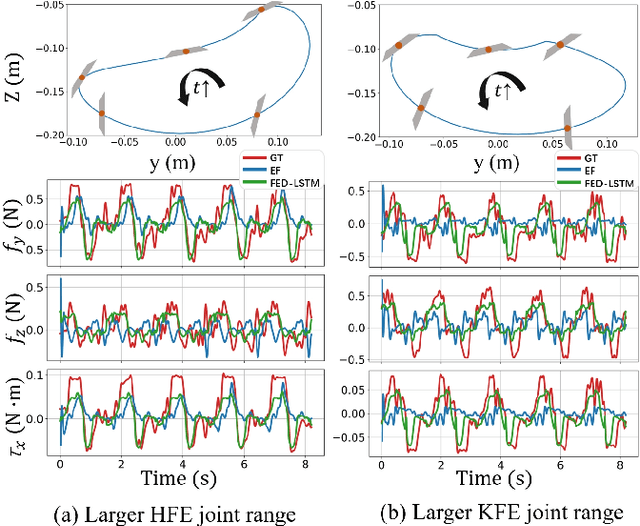
This paper presents a Long Short-Term Memory network-based Fluid Experiment Data-Driven model (FED-LSTM) for predicting unsteady, nonlinear hydrodynamic forces on the underwater quadruped robot we constructed. Trained on experimental data from leg force and body drag tests conducted in both a recirculating water tank and a towing tank, FED-LSTM outperforms traditional Empirical Formulas (EF) commonly used for flow prediction over flat surfaces. The model demonstrates superior accuracy and adaptability in capturing complex fluid dynamics, particularly in straight-line and turning-gait optimizations via the NSGA-II algorithm. FED-LSTM reduces deflection errors during straight-line swimming and improves turn times without increasing the turning radius. Hardware experiments further validate the model's precision and stability over EF. This approach provides a robust framework for enhancing the swimming performance of legged robots, laying the groundwork for future advances in underwater robotic locomotion.
An Arbitrary-Modal Fusion Network for Volumetric Cranial Nerves Tract Segmentation
May 05, 2025The segmentation of cranial nerves (CNs) tract provides a valuable quantitative tool for the analysis of the morphology and trajectory of individual CNs. Multimodal CNs tract segmentation networks, e.g., CNTSeg, which combine structural Magnetic Resonance Imaging (MRI) and diffusion MRI, have achieved promising segmentation performance. However, it is laborious or even infeasible to collect complete multimodal data in clinical practice due to limitations in equipment, user privacy, and working conditions. In this work, we propose a novel arbitrary-modal fusion network for volumetric CNs tract segmentation, called CNTSeg-v2, which trains one model to handle different combinations of available modalities. Instead of directly combining all the modalities, we select T1-weighted (T1w) images as the primary modality due to its simplicity in data acquisition and contribution most to the results, which supervises the information selection of other auxiliary modalities. Our model encompasses an Arbitrary-Modal Collaboration Module (ACM) designed to effectively extract informative features from other auxiliary modalities, guided by the supervision of T1w images. Meanwhile, we construct a Deep Distance-guided Multi-stage (DDM) decoder to correct small errors and discontinuities through signed distance maps to improve segmentation accuracy. We evaluate our CNTSeg-v2 on the Human Connectome Project (HCP) dataset and the clinical Multi-shell Diffusion MRI (MDM) dataset. Extensive experimental results show that our CNTSeg-v2 achieves state-of-the-art segmentation performance, outperforming all competing methods.
A Survey of Interactive Generative Video
Apr 30, 2025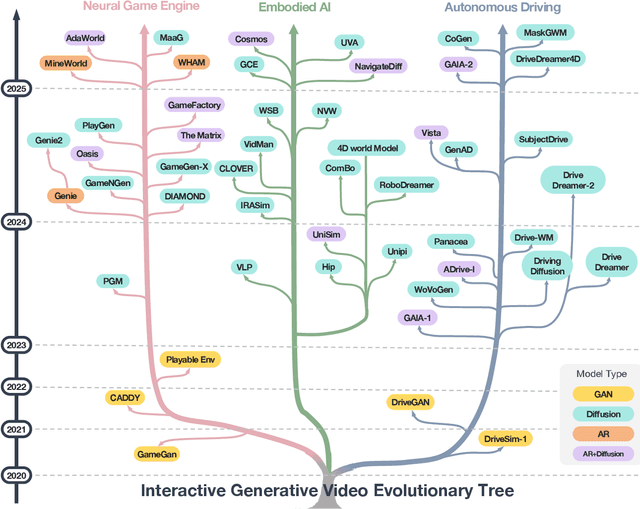
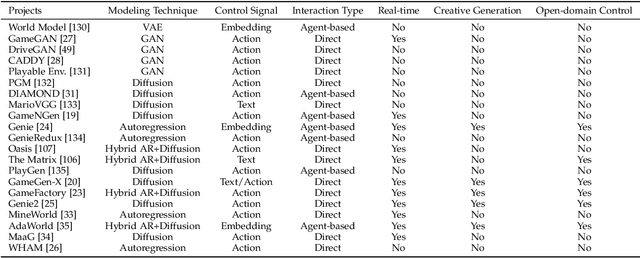
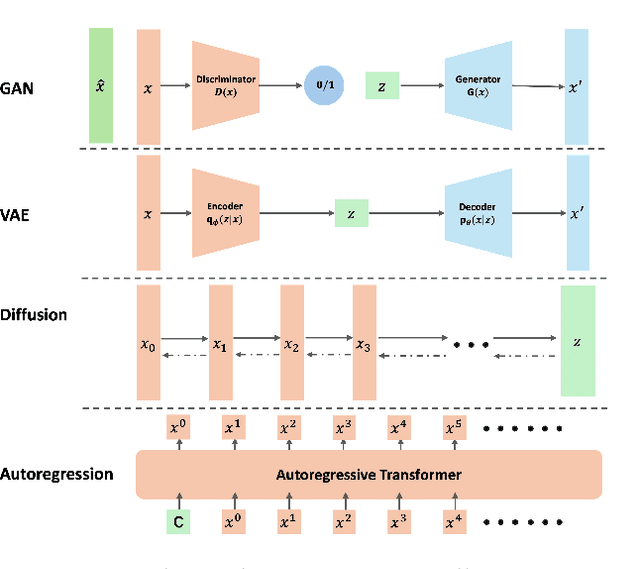
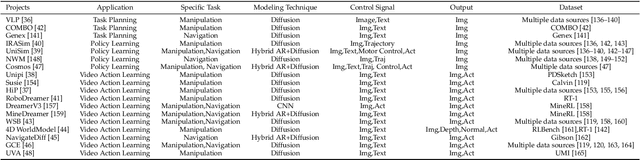
Interactive Generative Video (IGV) has emerged as a crucial technology in response to the growing demand for high-quality, interactive video content across various domains. In this paper, we define IGV as a technology that combines generative capabilities to produce diverse high-quality video content with interactive features that enable user engagement through control signals and responsive feedback. We survey the current landscape of IGV applications, focusing on three major domains: 1) gaming, where IGV enables infinite exploration in virtual worlds; 2) embodied AI, where IGV serves as a physics-aware environment synthesizer for training agents in multimodal interaction with dynamically evolving scenes; and 3) autonomous driving, where IGV provides closed-loop simulation capabilities for safety-critical testing and validation. To guide future development, we propose a comprehensive framework that decomposes an ideal IGV system into five essential modules: Generation, Control, Memory, Dynamics, and Intelligence. Furthermore, we systematically analyze the technical challenges and future directions in realizing each component for an ideal IGV system, such as achieving real-time generation, enabling open-domain control, maintaining long-term coherence, simulating accurate physics, and integrating causal reasoning. We believe that this systematic analysis will facilitate future research and development in the field of IGV, ultimately advancing the technology toward more sophisticated and practical applications.
UniBiomed: A Universal Foundation Model for Grounded Biomedical Image Interpretation
Apr 30, 2025Multi-modal interpretation of biomedical images opens up novel opportunities in biomedical image analysis. Conventional AI approaches typically rely on disjointed training, i.e., Large Language Models (LLMs) for clinical text generation and segmentation models for target extraction, which results in inflexible real-world deployment and a failure to leverage holistic biomedical information. To this end, we introduce UniBiomed, the first universal foundation model for grounded biomedical image interpretation. UniBiomed is based on a novel integration of Multi-modal Large Language Model (MLLM) and Segment Anything Model (SAM), which effectively unifies the generation of clinical texts and the segmentation of corresponding biomedical objects for grounded interpretation. In this way, UniBiomed is capable of tackling a wide range of biomedical tasks across ten diverse biomedical imaging modalities. To develop UniBiomed, we curate a large-scale dataset comprising over 27 million triplets of images, annotations, and text descriptions across ten imaging modalities. Extensive validation on 84 internal and external datasets demonstrated that UniBiomed achieves state-of-the-art performance in segmentation, disease recognition, region-aware diagnosis, visual question answering, and report generation. Moreover, unlike previous models that rely on clinical experts to pre-diagnose images and manually craft precise textual or visual prompts, UniBiomed can provide automated and end-to-end grounded interpretation for biomedical image analysis. This represents a novel paradigm shift in clinical workflows, which will significantly improve diagnostic efficiency. In summary, UniBiomed represents a novel breakthrough in biomedical AI, unlocking powerful grounded interpretation capabilities for more accurate and efficient biomedical image analysis.
CoCo-Bench: A Comprehensive Code Benchmark For Multi-task Large Language Model Evaluation
Apr 29, 2025Large language models (LLMs) play a crucial role in software engineering, excelling in tasks like code generation and maintenance. However, existing benchmarks are often narrow in scope, focusing on a specific task and lack a comprehensive evaluation framework that reflects real-world applications. To address these gaps, we introduce CoCo-Bench (Comprehensive Code Benchmark), designed to evaluate LLMs across four critical dimensions: code understanding, code generation, code modification, and code review. These dimensions capture essential developer needs, ensuring a more systematic and representative evaluation. CoCo-Bench includes multiple programming languages and varying task difficulties, with rigorous manual review to ensure data quality and accuracy. Empirical results show that CoCo-Bench aligns with existing benchmarks while uncovering significant variations in model performance, effectively highlighting strengths and weaknesses. By offering a holistic and objective evaluation, CoCo-Bench provides valuable insights to guide future research and technological advancements in code-oriented LLMs, establishing a reliable benchmark for the field.
Low-Rank Adaptive Structural Priors for Generalizable Diabetic Retinopathy Grading
Apr 27, 2025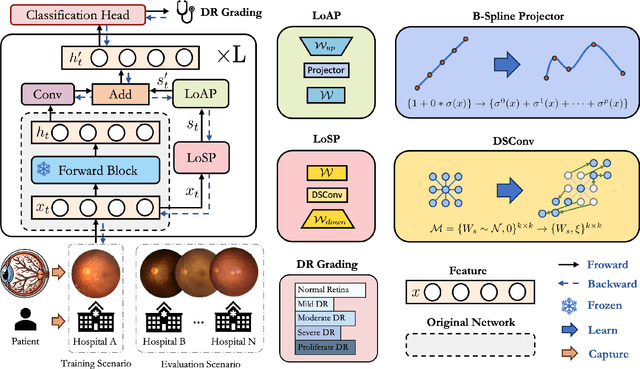
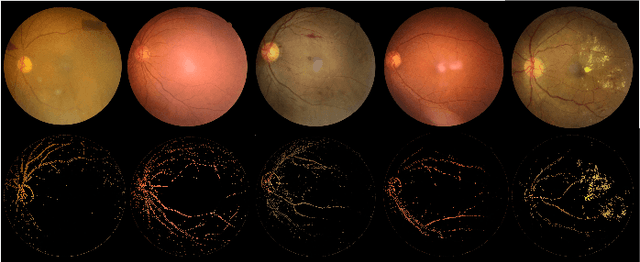
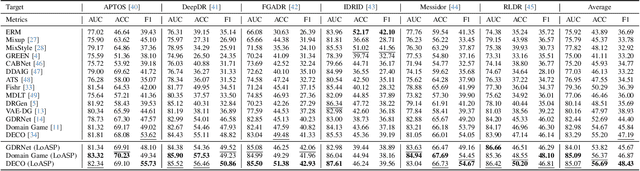
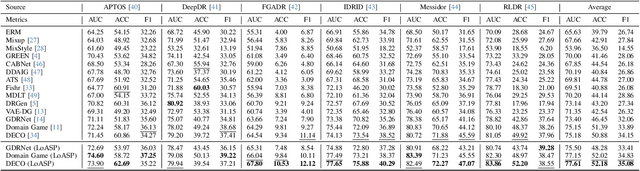
Diabetic retinopathy (DR), a serious ocular complication of diabetes, is one of the primary causes of vision loss among retinal vascular diseases. Deep learning methods have been extensively applied in the grading of diabetic retinopathy (DR). However, their performance declines significantly when applied to data outside the training distribution due to domain shifts. Domain generalization (DG) has emerged as a solution to this challenge. However, most existing DG methods overlook lesion-specific features, resulting in insufficient accuracy. In this paper, we propose a novel approach that enhances existing DG methods by incorporating structural priors, inspired by the observation that DR grading is heavily dependent on vessel and lesion structures. We introduce Low-rank Adaptive Structural Priors (LoASP), a plug-and-play framework designed for seamless integration with existing DG models. LoASP improves generalization by learning adaptive structural representations that are finely tuned to the complexities of DR diagnosis. Extensive experiments on eight diverse datasets validate its effectiveness in both single-source and multi-source domain scenarios. Furthermore, visualizations reveal that the learned structural priors intuitively align with the intricate architecture of the vessels and lesions, providing compelling insights into their interpretability and diagnostic relevance.