 Add to Chrome
 Add to Firefox
 Add to Edge
$β$-CLIP: Text-Conditioned Contrastive Learning for Multi-Granular Vision-Language Alignment
Dec 14, 2025
CLIP achieves strong zero-shot image-text retrieval by aligning global vision and text representations, yet it falls behind on fine-grained tasks even when fine-tuned on long, detailed captions. In this work, we propose $β$-CLIP, a multi-granular text-conditioned contrastive learning framework designed to achieve hierarchical alignment between multiple textual granularities-from full captions to sentences and phrases-and their corresponding visual regions. For each level of granularity, $β$-CLIP utilizes cross-attention to dynamically pool image patches, producing contextualized visual embeddings. To address the semantic overlap inherent in this hierarchy, we introduce the $β$-Contextualized Contrastive Alignment Loss ($β$-CAL). This objective parameterizes the trade-off between strict query-specific matching and relaxed intra-image contextualization, supporting both soft Cross-Entropy and hard Binary Cross-Entropy formulations. Through extensive experiments, we demonstrate that $β$-CLIP significantly improves dense alignment: achieving 91.8% T2I 92.3% I2T at R@1 on Urban1K and 30.9% on FG-OVD (Hard), setting state-of-the-art among methods trained without hard negatives. $β$-CLIP establishes a robust, adaptive baseline for dense vision-language correspondence. The code and models are released at https://github.com/fzohra/B-CLIP.

Blood Pressure Prediction for Coronary Artery Disease Diagnosis using Coronary Computed Tomography Angiography
Dec 11, 2025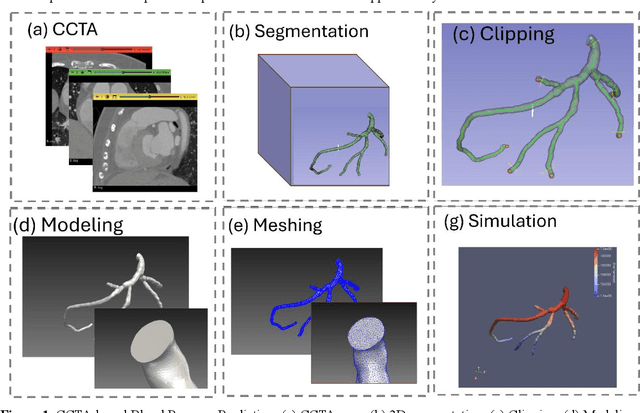
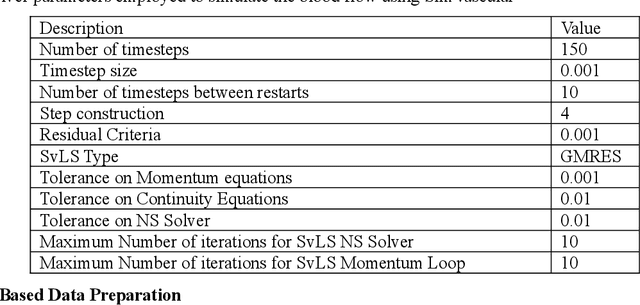
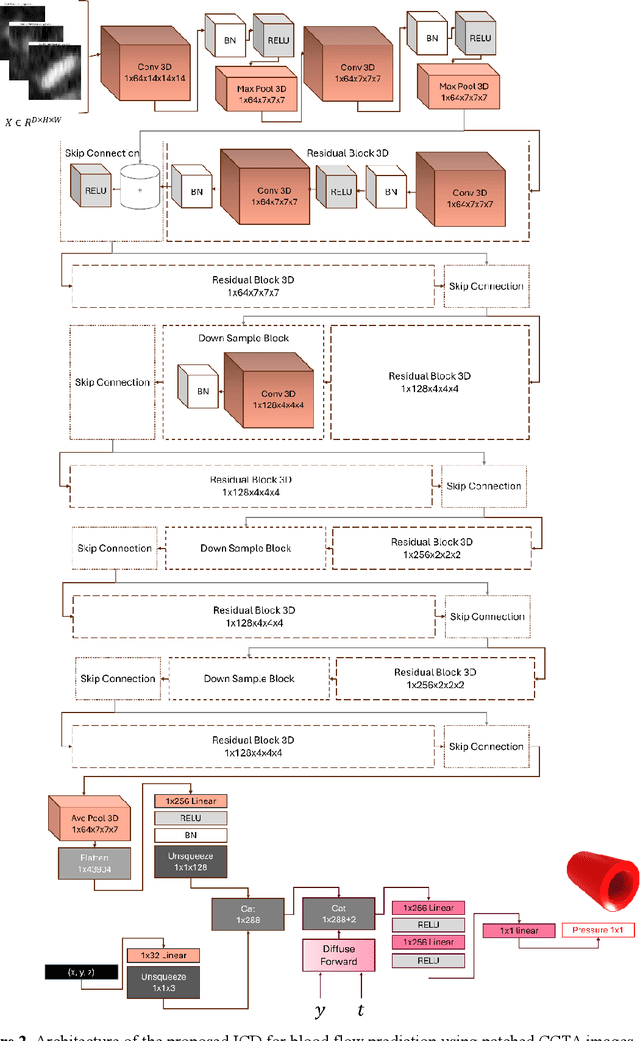
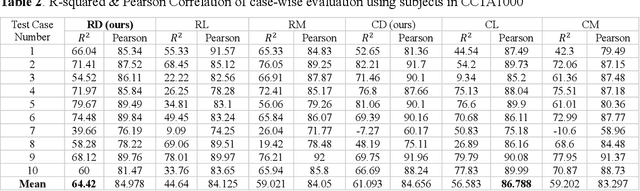
Computational fluid dynamics (CFD) based simulation of coronary blood flow provides valuable hemodynamic markers, such as pressure gradients, for diagnosing coronary artery disease (CAD). However, CFD is computationally expensive, time-consuming, and difficult to integrate into large-scale clinical workflows. These limitations restrict the availability of labeled hemodynamic data for training AI models and hinder broad adoption of non-invasive, physiology based CAD assessment. To address these challenges, we develop an end to end pipeline that automates coronary geometry extraction from coronary computed tomography angiography (CCTA), streamlines simulation data generation, and enables efficient learning of coronary blood pressure distributions. The pipeline reduces the manual burden associated with traditional CFD workflows while producing consistent training data. We further introduce a diffusion-based regression model designed to predict coronary blood pressure directly from CCTA derived features, bypassing the need for slow CFD computation during inference. Evaluated on a dataset of simulated coronary hemodynamics, the proposed model achieves state of the art performance, with an R2 of 64.42%, a root mean squared error of 0.0974, and a normalized RMSE of 0.154, outperforming several baseline approaches. This work provides a scalable and accessible framework for rapid, non-invasive blood pressure prediction to support CAD diagnosis.
SkillGen: Learning Domain Skills for In-Context Sequential Decision Making
Nov 18, 2025Large language models (LLMs) are increasingly applied to sequential decision-making through in-context learning (ICL), yet their effectiveness is highly sensitive to prompt quality. Effective prompts should meet three principles: focus on decision-critical information, provide step-level granularity, and minimize reliance on expert annotations through label efficiency. However, existing ICL methods often fail to satisfy all three criteria simultaneously. Motivated by these challenges, we introduce SkillGen, a skill-based ICL framework for structured sequential reasoning. It constructs an action-centric, domain-level graph from sampled trajectories, identifies high-utility actions via temporal-difference credit assignment, and retrieves step-wise skills to generate fine-grained, context-aware prompts. We further present a theoretical analysis showing that focusing on high-utility segments supports task identifiability and informs more effective ICL prompt design. Experiments on ALFWorld, BabyAI, and ScienceWorld, using both open-source and proprietary LLMs, show that SkillGen achieves consistent gains, improving progress rate by 5.9%-16.5% on average across models.
Out-of-Distribution Detection with Positive and Negative Prompt Supervision Using Large Language Models
Nov 14, 2025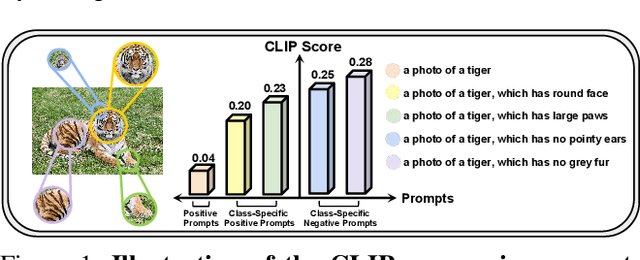
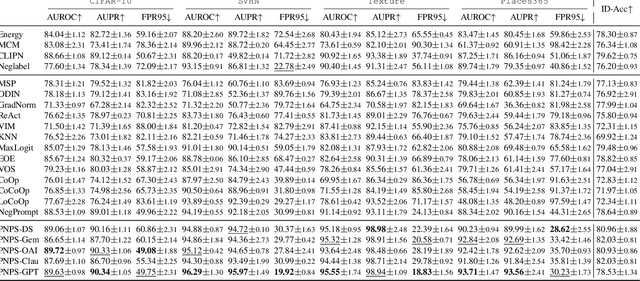
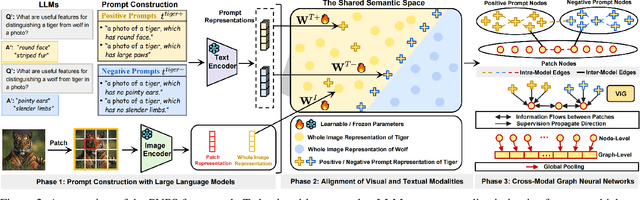
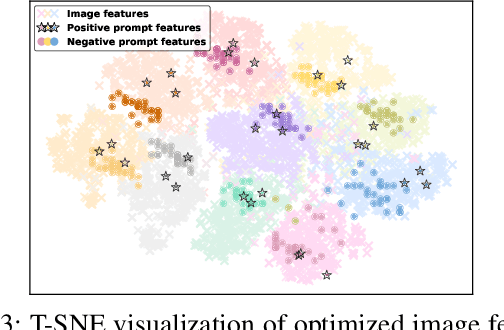
Out-of-distribution (OOD) detection is committed to delineating the classification boundaries between in-distribution (ID) and OOD images. Recent advances in vision-language models (VLMs) have demonstrated remarkable OOD detection performance by integrating both visual and textual modalities. In this context, negative prompts are introduced to emphasize the dissimilarity between image features and prompt content. However, these prompts often include a broad range of non-ID features, which may result in suboptimal outcomes due to the capture of overlapping or misleading information. To address this issue, we propose Positive and Negative Prompt Supervision, which encourages negative prompts to capture inter-class features and transfers this semantic knowledge to the visual modality to enhance OOD detection performance. Our method begins with class-specific positive and negative prompts initialized by large language models (LLMs). These prompts are subsequently optimized, with positive prompts focusing on features within each class, while negative prompts highlight features around category boundaries. Additionally, a graph-based architecture is employed to aggregate semantic-aware supervision from the optimized prompt representations and propagate it to the visual branch, thereby enhancing the performance of the energy-based OOD detector. Extensive experiments on two benchmarks, CIFAR-100 and ImageNet-1K, across eight OOD datasets and five different LLMs, demonstrate that our method outperforms state-of-the-art baselines.
Exploring the Feasibility of End-to-End Large Language Model as a Compiler
Nov 06, 2025In recent years, end-to-end Large Language Model (LLM) technology has shown substantial advantages across various domains. As critical system software and infrastructure, compilers are responsible for transforming source code into target code. While LLMs have been leveraged to assist in compiler development and maintenance, their potential as an end-to-end compiler remains largely unexplored. This paper explores the feasibility of LLM as a Compiler (LaaC) and its future directions. We designed the CompilerEval dataset and framework specifically to evaluate the capabilities of mainstream LLMs in source code comprehension and assembly code generation. In the evaluation, we analyzed various errors, explored multiple methods to improve LLM-generated code, and evaluated cross-platform compilation capabilities. Experimental results demonstrate that LLMs exhibit basic capabilities as compilers but currently achieve low compilation success rates. By optimizing prompts, scaling up the model, and incorporating reasoning methods, the quality of assembly code generated by LLMs can be significantly enhanced. Based on these findings, we maintain an optimistic outlook for LaaC and propose practical architectural designs and future research directions. We believe that with targeted training, knowledge-rich prompts, and specialized infrastructure, LaaC has the potential to generate high-quality assembly code and drive a paradigm shift in the field of compilation.
PF-DAformer: Proximal Femur Segmentation via Domain Adaptive Transformer for Dual-Center QCT
Oct 30, 2025Quantitative computed tomography (QCT) plays a crucial role in assessing bone strength and fracture risk by enabling volumetric analysis of bone density distribution in the proximal femur. However, deploying automated segmentation models in practice remains difficult because deep networks trained on one dataset often fail when applied to another. This failure stems from domain shift, where scanners, reconstruction settings, and patient demographics vary across institutions, leading to unstable predictions and unreliable quantitative metrics. Overcoming this barrier is essential for multi-center osteoporosis research and for ensuring that radiomics and structural finite element analysis results remain reproducible across sites. In this work, we developed a domain-adaptive transformer segmentation framework tailored for multi-institutional QCT. Our model is trained and validated on one of the largest hip fracture related research cohorts to date, comprising 1,024 QCT images scans from Tulane University and 384 scans from Rochester, Minnesota for proximal femur segmentation. To address domain shift, we integrate two complementary strategies within a 3D TransUNet backbone: adversarial alignment via Gradient Reversal Layer (GRL), which discourages the network from encoding site-specific cues, and statistical alignment via Maximum Mean Discrepancy (MMD), which explicitly reduces distributional mismatches between institutions. This dual mechanism balances invariance and fine-grained alignment, enabling scanner-agnostic feature learning while preserving anatomical detail.
UltraHR-100K: Enhancing UHR Image Synthesis with A Large-Scale High-Quality Dataset
Oct 23, 2025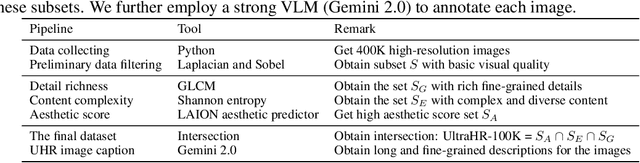
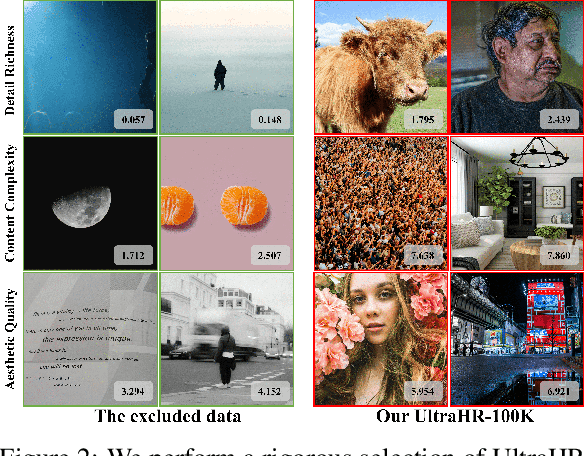
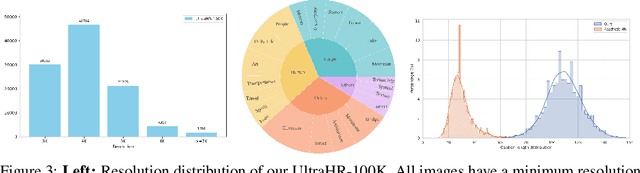
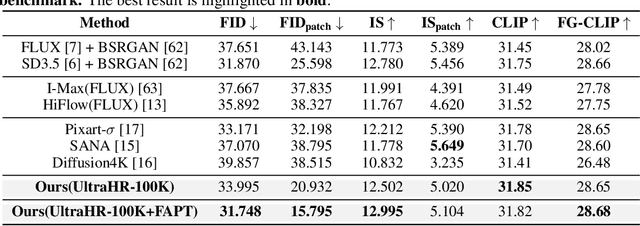
Ultra-high-resolution (UHR) text-to-image (T2I) generation has seen notable progress. However, two key challenges remain : 1) the absence of a large-scale high-quality UHR T2I dataset, and (2) the neglect of tailored training strategies for fine-grained detail synthesis in UHR scenarios. To tackle the first challenge, we introduce \textbf{UltraHR-100K}, a high-quality dataset of 100K UHR images with rich captions, offering diverse content and strong visual fidelity. Each image exceeds 3K resolution and is rigorously curated based on detail richness, content complexity, and aesthetic quality. To tackle the second challenge, we propose a frequency-aware post-training method that enhances fine-detail generation in T2I diffusion models. Specifically, we design (i) \textit{Detail-Oriented Timestep Sampling (DOTS)} to focus learning on detail-critical denoising steps, and (ii) \textit{Soft-Weighting Frequency Regularization (SWFR)}, which leverages Discrete Fourier Transform (DFT) to softly constrain frequency components, encouraging high-frequency detail preservation. Extensive experiments on our proposed UltraHR-eval4K benchmarks demonstrate that our approach significantly improves the fine-grained detail quality and overall fidelity of UHR image generation. The code is available at \href{https://github.com/NJU-PCALab/UltraHR-100k}{here}.
MRMR: A Realistic and Expert-Level Multidisciplinary Benchmark for Reasoning-Intensive Multimodal Retrieval
Oct 10, 2025We introduce MRMR, the first expert-level multidisciplinary multimodal retrieval benchmark requiring intensive reasoning. MRMR contains 1,502 queries spanning 23 domains, with positive documents carefully verified by human experts. Compared to prior benchmarks, MRMR introduces three key advancements. First, it challenges retrieval systems across diverse areas of expertise, enabling fine-grained model comparison across domains. Second, queries are reasoning-intensive, with images requiring deeper interpretation such as diagnosing microscopic slides. We further introduce Contradiction Retrieval, a novel task requiring models to identify conflicting concepts. Finally, queries and documents are constructed as image-text interleaved sequences. Unlike earlier benchmarks restricted to single images or unimodal documents, MRMR offers a realistic setting with multi-image queries and mixed-modality corpus documents. We conduct an extensive evaluation of 4 categories of multimodal retrieval systems and 14 frontier models on MRMR. The text embedding model Qwen3-Embedding with LLM-generated image captions achieves the highest performance, highlighting substantial room for improving multimodal retrieval models. Although latest multimodal models such as Ops-MM-Embedding perform competitively on expert-domain queries, they fall short on reasoning-intensive tasks. We believe that MRMR paves the way for advancing multimodal retrieval in more realistic and challenging scenarios.
SFD-Mamba2Net: Strcture-Guided Frequency-Enhanced Dual-Stream Mamba2 Network for Coronary Artery Segmentation
Sep 10, 2025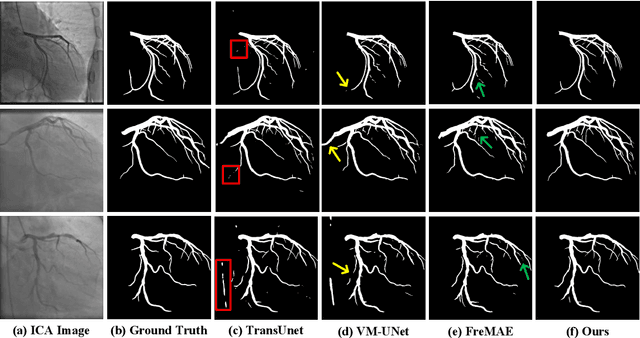

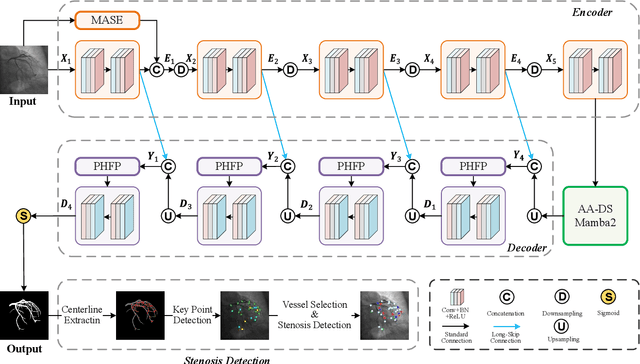

Background: Coronary Artery Disease (CAD) is one of the leading causes of death worldwide. Invasive Coronary Angiography (ICA), regarded as the gold standard for CAD diagnosis, necessitates precise vessel segmentation and stenosis detection. However, ICA images are typically characterized by low contrast, high noise levels, and complex, fine-grained vascular structures, which pose significant challenges to the clinical adoption of existing segmentation and detection methods. Objective: This study aims to improve the accuracy of coronary artery segmentation and stenosis detection in ICA images by integrating multi-scale structural priors, state-space-based long-range dependency modeling, and frequency-domain detail enhancement strategies. Methods: We propose SFD-Mamba2Net, an end-to-end framework tailored for ICA-based vascular segmentation and stenosis detection. In the encoder, a Curvature-Aware Structural Enhancement (CASE) module is embedded to leverage multi-scale responses for highlighting slender tubular vascular structures, suppressing background interference, and directing attention toward vascular regions. In the decoder, we introduce a Progressive High-Frequency Perception (PHFP) module that employs multi-level wavelet decomposition to progressively refine high-frequency details while integrating low-frequency global structures. Results and Conclusions: SFD-Mamba2Net consistently outperformed state-of-the-art methods across eight segmentation metrics, and achieved the highest true positive rate and positive predictive value in stenosis detection.
Superclass-Guided Representation Disentanglement for Spurious Correlation Mitigation
Aug 12, 2025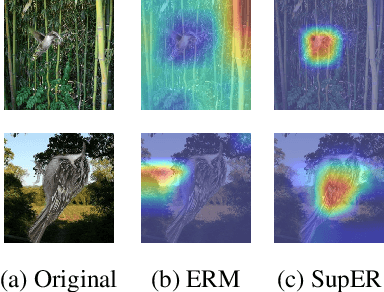
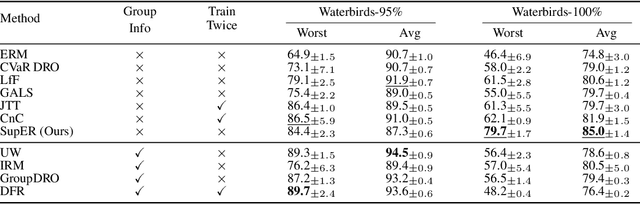
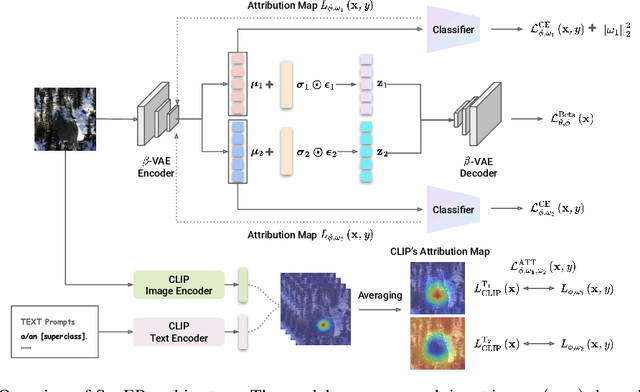
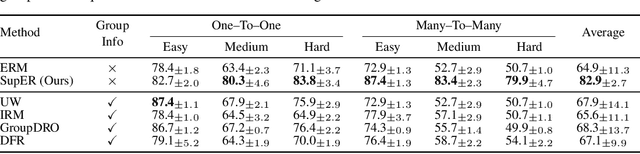
To enhance group robustness to spurious correlations, prior work often relies on auxiliary annotations for groups or spurious features and assumes identical sets of groups across source and target domains. These two requirements are both unnatural and impractical in real-world settings. To overcome these limitations, we propose a method that leverages the semantic structure inherent in class labels--specifically, superclass information--to naturally reduce reliance on spurious features. Our model employs gradient-based attention guided by a pre-trained vision-language model to disentangle superclass-relevant and irrelevant features. Then, by promoting the use of all superclass-relevant features for prediction, our approach achieves robustness to more complex spurious correlations without the need to annotate any source samples. Experiments across diverse datasets demonstrate that our method significantly outperforms baselines in domain generalization tasks, with clear improvements in both quantitative metrics and qualitative visualizations.