 Add to Chrome
 Add to Firefox
 Add to Edge
Structure-Enhanced Protein Instruction Tuning: Towards General-Purpose Protein Understanding
Oct 04, 2024
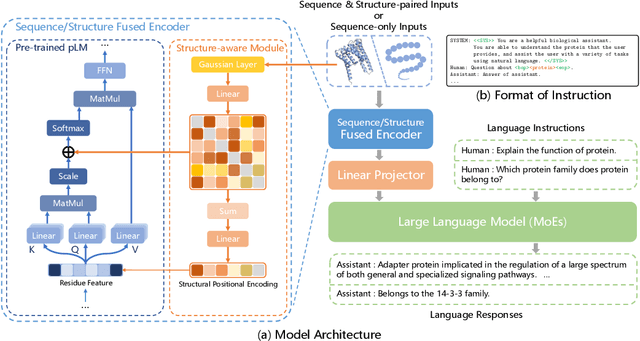
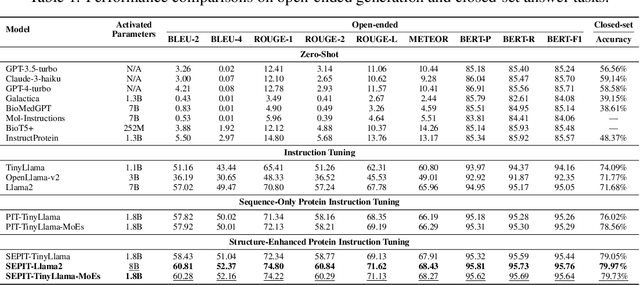
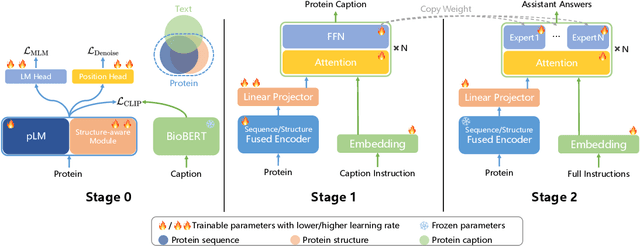
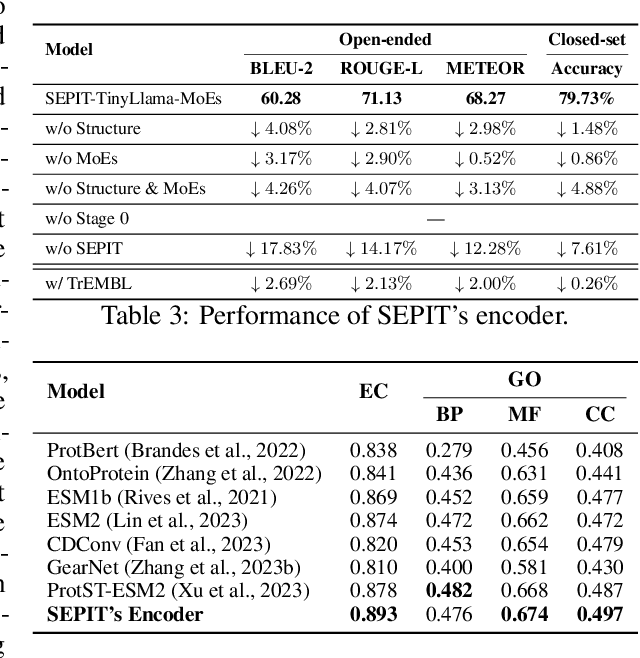
Proteins, as essential biomolecules, play a central role in biological processes, including metabolic reactions and DNA replication. Accurate prediction of their properties and functions is crucial in biological applications. Recent development of protein language models (pLMs) with supervised fine tuning provides a promising solution to this problem. However, the fine-tuned model is tailored for particular downstream prediction task, and achieving general-purpose protein understanding remains a challenge. In this paper, we introduce Structure-Enhanced Protein Instruction Tuning (SEPIT) framework to bridge this gap. Our approach integrates a noval structure-aware module into pLMs to inform them with structural knowledge, and then connects these enhanced pLMs to large language models (LLMs) to generate understanding of proteins. In this framework, we propose a novel two-stage instruction tuning pipeline that first establishes a basic understanding of proteins through caption-based instructions and then refines this understanding using a mixture of experts (MoEs) to learn more complex properties and functional information with the same amount of activated parameters. Moreover, we construct the largest and most comprehensive protein instruction dataset to date, which allows us to train and evaluate the general-purpose protein understanding model. Extensive experimental results on open-ended generation and closed-set answer tasks demonstrate the superior performance of SEPIT over both closed-source general LLMs and open-source LLMs trained with protein knowledge.

An Approach to Elicit Human-Understandable Robot Expressions to Support Human-Robot Interaction
Oct 01, 2024Understanding the intentions of robots is essential for natural and seamless human-robot collaboration. Ensuring that robots have means for non-verbal communication is a basis for intuitive and implicit interaction. For this, we contribute an approach to elicit and design human-understandable robot expressions. We outline the approach in the context of non-humanoid robots. We paired human mimicking and enactment with research from gesture elicitation in two phases: first, to elicit expressions, and second, to ensure they are understandable. We present an example application through two studies (N=16 \& N=260) of our approach to elicit expressions for a simple 6-DoF robotic arm. We show that it enabled us to design robot expressions that signal curiosity and interest in getting attention. Our main contribution is an approach to generate and validate understandable expressions for robots, enabling more natural human-robot interaction.
RLPF: Reinforcement Learning from Prediction Feedback for User Summarization with LLMs
Sep 06, 2024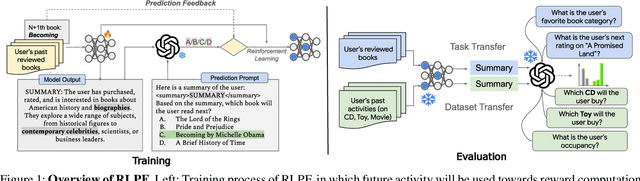
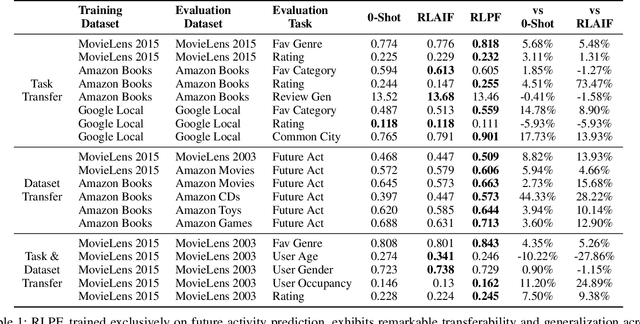
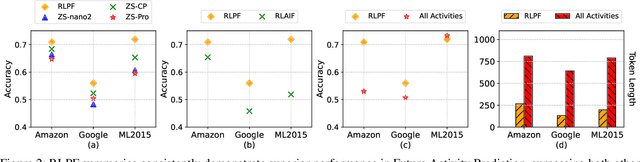
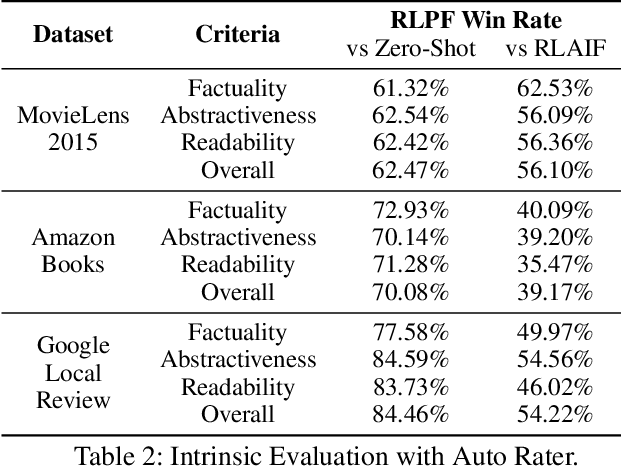
LLM-powered personalization agent systems employ Large Language Models (LLMs) to predict users' behavior from their past activities. However, their effectiveness often hinges on the ability to effectively leverage extensive, long user historical data due to its inherent noise and length of such data. Existing pretrained LLMs may generate summaries that are concise but lack the necessary context for downstream tasks, hindering their utility in personalization systems. To address these challenges, we introduce Reinforcement Learning from Prediction Feedback (RLPF). RLPF fine-tunes LLMs to generate concise, human-readable user summaries that are optimized for downstream task performance. By maximizing the usefulness of the generated summaries, RLPF effectively distills extensive user history data while preserving essential information for downstream tasks. Our empirical evaluation demonstrates significant improvements in both extrinsic downstream task utility and intrinsic summary quality, surpassing baseline methods by up to 22% on downstream task performance and achieving an up to 84.59% win rate on Factuality, Abstractiveness, and Readability. RLPF also achieves a remarkable 74% reduction in context length while improving performance on 16 out of 19 unseen tasks and/or datasets, showcasing its generalizability. This approach offers a promising solution for enhancing LLM personalization by effectively transforming long, noisy user histories into informative and human-readable representations.
FairQuant: Certifying and Quantifying Fairness of Deep Neural Networks
Sep 05, 2024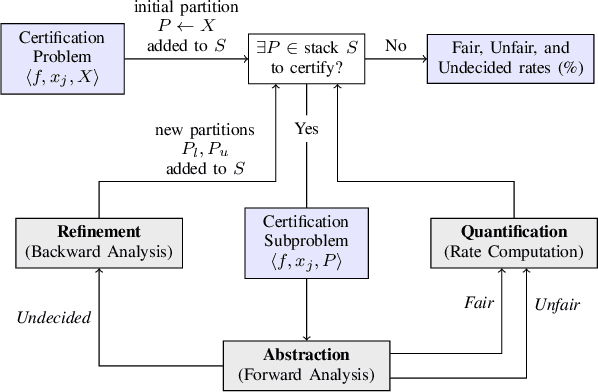
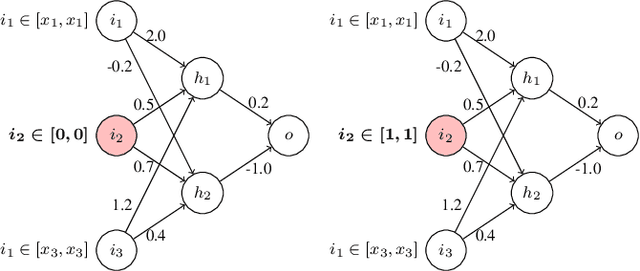
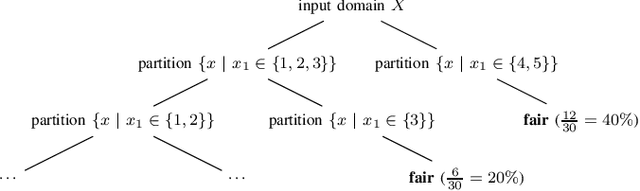
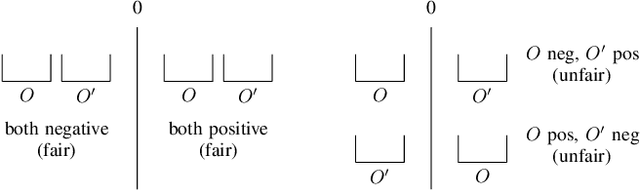
We propose a method for formally certifying and quantifying individual fairness of deep neural networks (DNN). Individual fairness guarantees that any two individuals who are identical except for a legally protected attribute (e.g., gender or race) receive the same treatment. While there are existing techniques that provide such a guarantee, they tend to suffer from lack of scalability or accuracy as the size and input dimension of the DNN increase. Our method overcomes this limitation by applying abstraction to a symbolic interval based analysis of the DNN followed by iterative refinement guided by the fairness property. Furthermore, our method lifts the symbolic interval based analysis from conventional qualitative certification to quantitative certification, by computing the percentage of individuals whose classification outputs are provably fair, instead of merely deciding if the DNN is fair. We have implemented our method and evaluated it on deep neural networks trained on four popular fairness research datasets. The experimental results show that our method is not only more accurate than state-of-the-art techniques but also several orders-of-magnitude faster.
UserSumBench: A Benchmark Framework for Evaluating User Summarization Approaches
Aug 30, 2024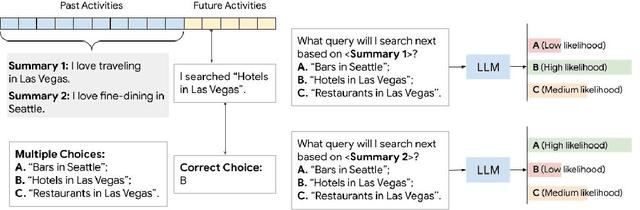
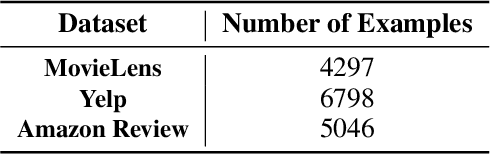
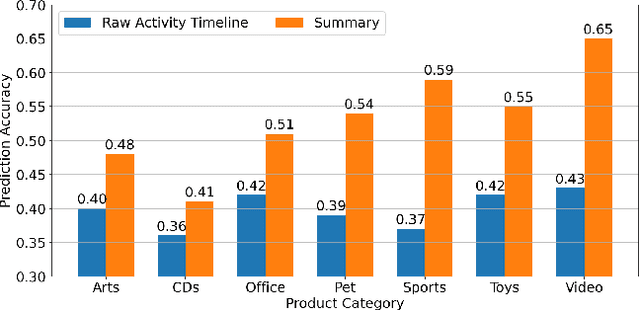

Large language models (LLMs) have shown remarkable capabilities in generating user summaries from a long list of raw user activity data. These summaries capture essential user information such as preferences and interests, and therefore are invaluable for LLM-based personalization applications, such as explainable recommender systems. However, the development of new summarization techniques is hindered by the lack of ground-truth labels, the inherent subjectivity of user summaries, and human evaluation which is often costly and time-consuming. To address these challenges, we introduce \UserSumBench, a benchmark framework designed to facilitate iterative development of LLM-based summarization approaches. This framework offers two key components: (1) A reference-free summary quality metric. We show that this metric is effective and aligned with human preferences across three diverse datasets (MovieLens, Yelp and Amazon Review). (2) A novel robust summarization method that leverages time-hierarchical summarizer and self-critique verifier to produce high-quality summaries while eliminating hallucination. This method serves as a strong baseline for further innovation in summarization techniques.
Multi-modal Adversarial Training for Zero-Shot Voice Cloning
Aug 28, 2024A text-to-speech (TTS) model trained to reconstruct speech given text tends towards predictions that are close to the average characteristics of a dataset, failing to model the variations that make human speech sound natural. This problem is magnified for zero-shot voice cloning, a task that requires training data with high variance in speaking styles. We build off of recent works which have used Generative Advsarial Networks (GAN) by proposing a Transformer encoder-decoder architecture to conditionally discriminates between real and generated speech features. The discriminator is used in a training pipeline that improves both the acoustic and prosodic features of a TTS model. We introduce our novel adversarial training technique by applying it to a FastSpeech2 acoustic model and training on Libriheavy, a large multi-speaker dataset, for the task of zero-shot voice cloning. Our model achieves improvements over the baseline in terms of speech quality and speaker similarity. Audio examples from our system are available online.
SpikingSSMs: Learning Long Sequences with Sparse and Parallel Spiking State Space Models
Aug 27, 2024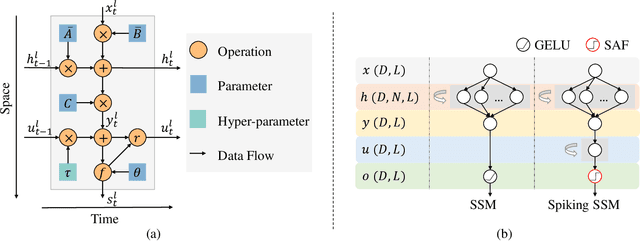
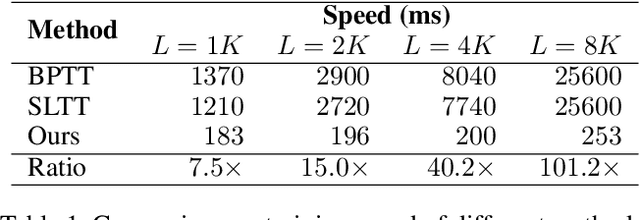


Known as low energy consumption networks, spiking neural networks (SNNs) have gained a lot of attention within the past decades. While SNNs are increasing competitive with artificial neural networks (ANNs) for vision tasks, they are rarely used for long sequence tasks, despite their intrinsic temporal dynamics. In this work, we develop spiking state space models (SpikingSSMs) for long sequence learning by leveraging on the sequence learning abilities of state space models (SSMs). Inspired by dendritic neuron structure, we hierarchically integrate neuronal dynamics with the original SSM block, meanwhile realizing sparse synaptic computation. Furthermore, to solve the conflict of event-driven neuronal dynamics with parallel computing, we propose a light-weight surrogate dynamic network which accurately predicts the after-reset membrane potential and compatible to learnable thresholds, enabling orders of acceleration in training speed compared with conventional iterative methods. On the long range arena benchmark task, SpikingSSM achieves competitive performance to state-of-the-art SSMs meanwhile realizing on average 90\% of network sparsity. On language modeling, our network significantly surpasses existing spiking large language models (spikingLLMs) on the WikiText-103 dataset with only a third of the model size, demonstrating its potential as backbone architecture for low computation cost LLMs.
Loss-based Bayesian Sequential Prediction of Value at Risk with a Long-Memory and Non-linear Realized Volatility Model
Aug 24, 2024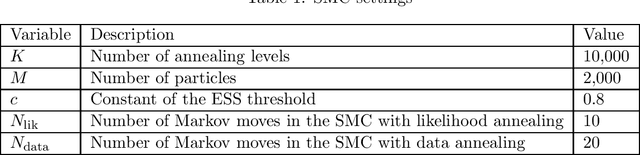
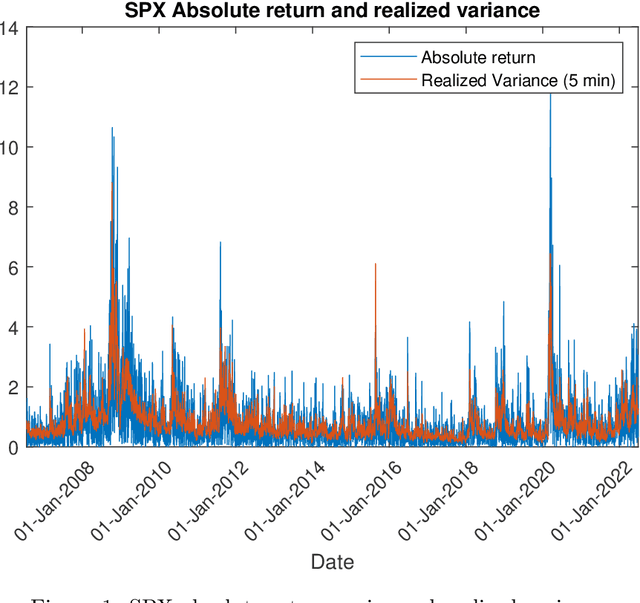
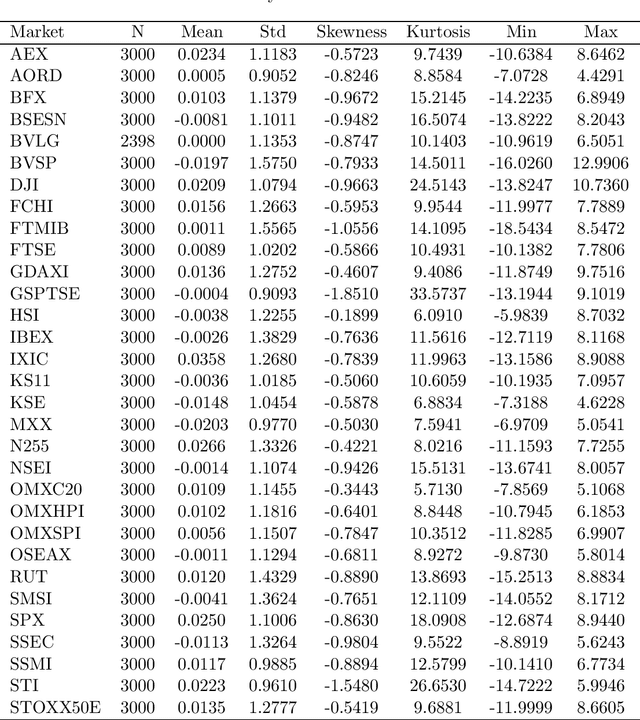
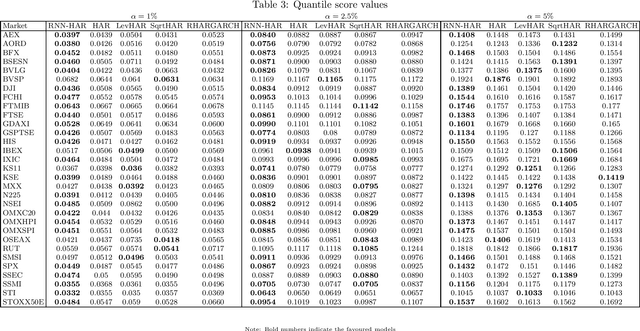
A long memory and non-linear realized volatility model class is proposed for direct Value at Risk (VaR) forecasting. This model, referred to as RNN-HAR, extends the heterogeneous autoregressive (HAR) model, a framework known for efficiently capturing long memory in realized measures, by integrating a Recurrent Neural Network (RNN) to handle non-linear dynamics. Loss-based generalized Bayesian inference with Sequential Monte Carlo is employed for model estimation and sequential prediction in RNN HAR. The empirical analysis is conducted using daily closing prices and realized measures from 2000 to 2022 across 31 market indices. The proposed models one step ahead VaR forecasting performance is compared against a basic HAR model and its extensions. The results demonstrate that the proposed RNN-HAR model consistently outperforms all other models considered in the study.
First Activations Matter: Training-Free Methods for Dynamic Activation in Large Language Models
Aug 21, 2024Dynamic activation (DA) techniques, such as DejaVu and MoEfication, have demonstrated their potential to significantly enhance the inference efficiency of large language models (LLMs). However, these techniques often rely on ReLU activation functions or require additional parameters and training to maintain performance. This paper introduces a training-free Threshold-based Dynamic Activation(TDA) method that leverage sequence information to exploit the inherent sparsity of models across various architectures. This method is designed to accelerate generation speed by 18-25\% without significantly compromising task performance, thereby addressing the limitations of existing DA techniques. Moreover, we delve into the root causes of LLM sparsity and theoretically analyze two of its critical features: history-related activation uncertainty and semantic-irrelevant activation inertia. Our comprehensive analyses not only provide a robust theoretical foundation for DA methods but also offer valuable insights to guide future research in optimizing LLMs for greater efficiency and effectiveness.
HDRGS: High Dynamic Range Gaussian Splatting
Aug 13, 2024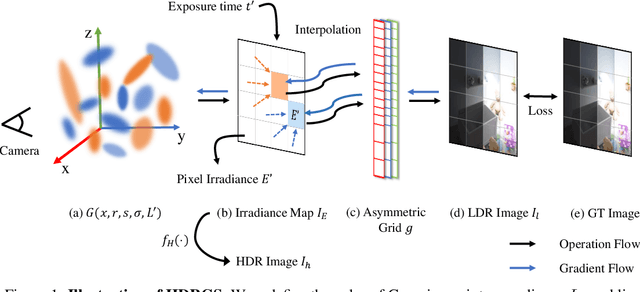
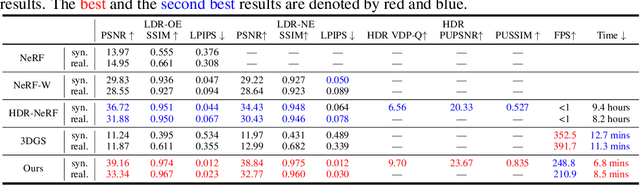
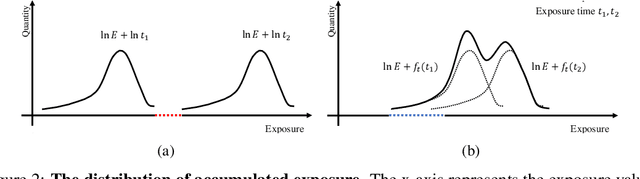
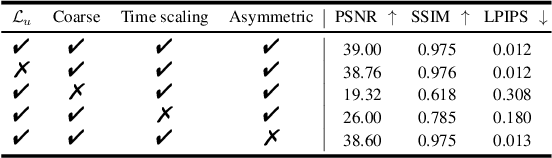
Recent years have witnessed substantial advancements in the field of 3D reconstruction from 2D images, particularly following the introduction of the neural radiance field (NeRF) technique. However, reconstructing a 3D high dynamic range (HDR) radiance field, which aligns more closely with real-world conditions, from 2D multi-exposure low dynamic range (LDR) images continues to pose significant challenges. Approaches to this issue fall into two categories: grid-based and implicit-based. Implicit methods, using multi-layer perceptrons (MLP), face inefficiencies, limited solvability, and overfitting risks. Conversely, grid-based methods require significant memory and struggle with image quality and long training times. In this paper, we introduce Gaussian Splatting-a recent, high-quality, real-time 3D reconstruction technique-into this domain. We further develop the High Dynamic Range Gaussian Splatting (HDR-GS) method, designed to address the aforementioned challenges. This method enhances color dimensionality by including luminance and uses an asymmetric grid for tone-mapping, swiftly and precisely converting pixel irradiance to color. Our approach improves HDR scene recovery accuracy and integrates a novel coarse-to-fine strategy to speed up model convergence, enhancing robustness against sparse viewpoints and exposure extremes, and preventing local optima. Extensive testing confirms that our method surpasses current state-of-the-art techniques in both synthetic and real-world scenarios. Code will be released at \url{https://github.com/WuJH2001/HDRGS}