 Add to Chrome
 Add to Firefox
 Add to Edge
PPA-Game: Characterizing and Learning Competitive Dynamics Among Online Content Creators
Mar 22, 2024
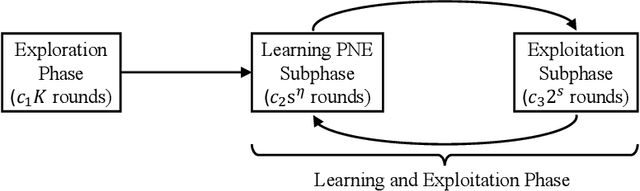
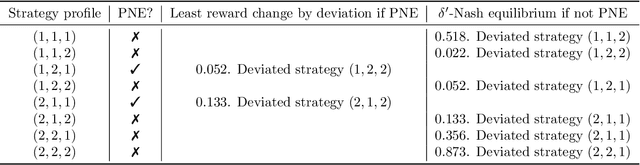
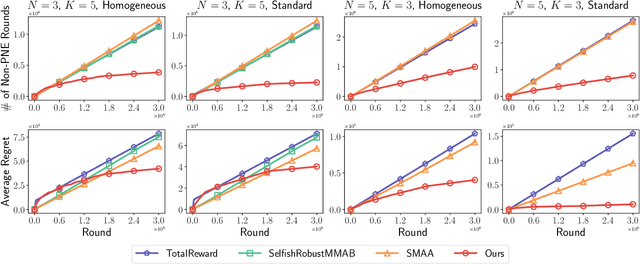
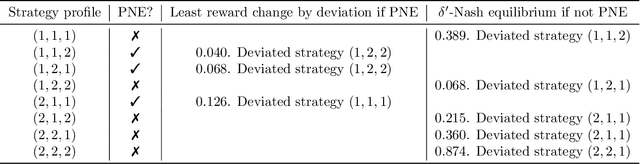
We introduce the Proportional Payoff Allocation Game (PPA-Game) to model how agents, akin to content creators on platforms like YouTube and TikTok, compete for divisible resources and consumers' attention. Payoffs are allocated to agents based on heterogeneous weights, reflecting the diversity in content quality among creators. Our analysis reveals that although a pure Nash equilibrium (PNE) is not guaranteed in every scenario, it is commonly observed, with its absence being rare in our simulations. Beyond analyzing static payoffs, we further discuss the agents' online learning about resource payoffs by integrating a multi-player multi-armed bandit framework. We propose an online algorithm facilitating each agent's maximization of cumulative payoffs over $T$ rounds. Theoretically, we establish that the regret of any agent is bounded by $O(\log^{1 + \eta} T)$ for any $\eta > 0$. Empirical results further validate the effectiveness of our approach.

Contrastive Balancing Representation Learning for Heterogeneous Dose-Response Curves Estimation
Mar 21, 2024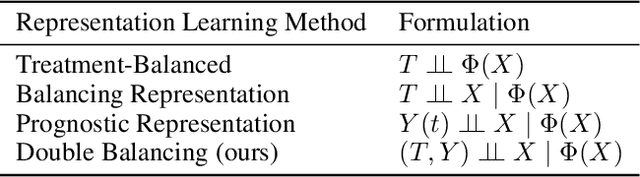
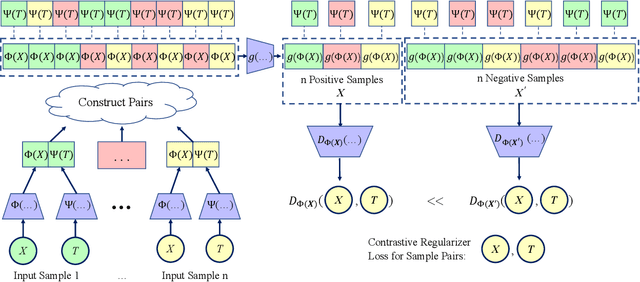
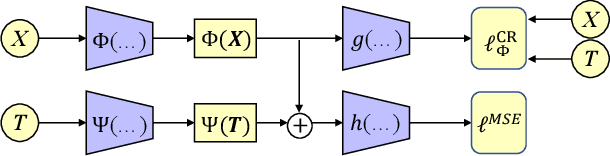
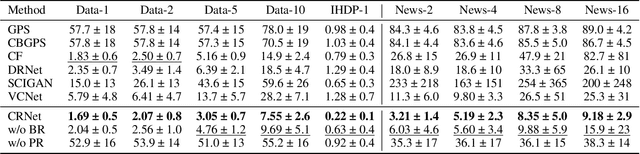
Estimating the individuals' potential response to varying treatment doses is crucial for decision-making in areas such as precision medicine and management science. Most recent studies predict counterfactual outcomes by learning a covariate representation that is independent of the treatment variable. However, such independence constraints neglect much of the covariate information that is useful for counterfactual prediction, especially when the treatment variables are continuous. To tackle the above issue, in this paper, we first theoretically demonstrate the importance of the balancing and prognostic representations for unbiased estimation of the heterogeneous dose-response curves, that is, the learned representations are constrained to satisfy the conditional independence between the covariates and both of the treatment variables and the potential responses. Based on this, we propose a novel Contrastive balancing Representation learning Network using a partial distance measure, called CRNet, for estimating the heterogeneous dose-response curves without losing the continuity of treatments. Extensive experiments are conducted on synthetic and real-world datasets demonstrating that our proposal significantly outperforms previous methods.
Empowering Segmentation Ability to Multi-modal Large Language Models
Mar 21, 2024Multi-modal large language models (MLLMs) can understand image-language prompts and demonstrate impressive reasoning ability. In this paper, we extend MLLMs' output by empowering MLLMs with the segmentation ability. The extended MLLMs can both output language responses to the image-language prompts and segment the regions that the complex question or query in the language prompts focuses on. To this end, the existing work, LISA, enlarges the original word embeddings with an additional segment token and fine-tunes dialogue generation and query-focused segmentation together, where the feature of the segment token is used to prompt the segment-anything model. Although they achieve superior segmentation performance, we observe that the dialogue ability decreases by a large margin compared to the original MLLMs. To maintain the original MLLMs' dialogue ability, we propose a novel MLLMs framework, coined as LLaVASeg, which leverages a chain-of-thought prompting strategy to instruct the MLLMs to segment the target region queried by the user. The MLLMs are first prompted to reason about the simple description of the target region from the complicated user query, then extract the visual attributes of the target region according to the understanding of MLLMs to the image. These visual attributes, such as color and relative locations, are utilized to prompt the downstream segmentation model. Experiments show that the proposed method keeps the original dialogue ability and equips the MLLMs' model with strong reasoning segmentation ability. The code is available at https://github.com/YuqiYang213/LLaVASeg.
RigorLLM: Resilient Guardrails for Large Language Models against Undesired Content
Mar 19, 2024Recent advancements in Large Language Models (LLMs) have showcased remarkable capabilities across various tasks in different domains. However, the emergence of biases and the potential for generating harmful content in LLMs, particularly under malicious inputs, pose significant challenges. Current mitigation strategies, while effective, are not resilient under adversarial attacks. This paper introduces Resilient Guardrails for Large Language Models (RigorLLM), a novel framework designed to efficiently and effectively moderate harmful and unsafe inputs and outputs for LLMs. By employing a multi-faceted approach that includes energy-based training data augmentation through Langevin dynamics, optimizing a safe suffix for inputs via minimax optimization, and integrating a fusion-based model combining robust KNN with LLMs based on our data augmentation, RigorLLM offers a robust solution to harmful content moderation. Our experimental evaluations demonstrate that RigorLLM not only outperforms existing baselines like OpenAI API and Perspective API in detecting harmful content but also exhibits unparalleled resilience to jailbreaking attacks. The innovative use of constrained optimization and a fusion-based guardrail approach represents a significant step forward in developing more secure and reliable LLMs, setting a new standard for content moderation frameworks in the face of evolving digital threats.
Decoding Compressed Trust: Scrutinizing the Trustworthiness of Efficient LLMs Under Compression
Mar 18, 2024


Compressing high-capability Large Language Models (LLMs) has emerged as a favored strategy for resource-efficient inferences. While state-of-the-art (SoTA) compression methods boast impressive advancements in preserving benign task performance, the potential risks of compression in terms of safety and trustworthiness have been largely neglected. This study conducts the first, thorough evaluation of three (3) leading LLMs using five (5) SoTA compression techniques across eight (8) trustworthiness dimensions. Our experiments highlight the intricate interplay between compression and trustworthiness, revealing some interesting patterns. We find that quantization is currently a more effective approach than pruning in achieving efficiency and trustworthiness simultaneously. For instance, a 4-bit quantized model retains the trustworthiness of its original counterpart, but model pruning significantly degrades trustworthiness, even at 50% sparsity. Moreover, employing quantization within a moderate bit range could unexpectedly improve certain trustworthiness dimensions such as ethics and fairness. Conversely, extreme quantization to very low bit levels (3 bits) tends to significantly reduce trustworthiness. This increased risk cannot be uncovered by looking at benign performance alone, in turn, mandating comprehensive trustworthiness evaluation in practice. These findings culminate in practical recommendations for simultaneously achieving high utility, efficiency, and trustworthiness in LLMs. Models and code are available at https://decoding-comp-trust.github.io/.
COLEP: Certifiably Robust Learning-Reasoning Conformal Prediction via Probabilistic Circuits
Mar 17, 2024


Conformal prediction has shown spurring performance in constructing statistically rigorous prediction sets for arbitrary black-box machine learning models, assuming the data is exchangeable. However, even small adversarial perturbations during the inference can violate the exchangeability assumption, challenge the coverage guarantees, and result in a subsequent decline in empirical coverage. In this work, we propose a certifiably robust learning-reasoning conformal prediction framework (COLEP) via probabilistic circuits, which comprise a data-driven learning component that trains statistical models to learn different semantic concepts, and a reasoning component that encodes knowledge and characterizes the relationships among the trained models for logic reasoning. To achieve exact and efficient reasoning, we employ probabilistic circuits (PCs) within the reasoning component. Theoretically, we provide end-to-end certification of prediction coverage for COLEP in the presence of bounded adversarial perturbations. We also provide certified coverage considering the finite size of the calibration set. Furthermore, we prove that COLEP achieves higher prediction coverage and accuracy over a single model as long as the utilities of knowledge models are non-trivial. Empirically, we show the validity and tightness of our certified coverage, demonstrating the robust conformal prediction of COLEP on various datasets, including GTSRB, CIFAR10, and AwA2. We show that COLEP achieves up to 12% improvement in certified coverage on GTSRB, 9% on CIFAR-10, and 14% on AwA2.
BjTT: A Large-scale Multimodal Dataset for Traffic Prediction
Mar 14, 2024Traffic prediction is one of the most significant foundations in Intelligent Transportation Systems (ITS). Traditional traffic prediction methods rely only on historical traffic data to predict traffic trends and face two main challenges. 1) insensitivity to unusual events. 2) limited performance in long-term prediction. In this work, we explore how generative models combined with text describing the traffic system can be applied for traffic generation, and name the task Text-to-Traffic Generation (TTG). The key challenge of the TTG task is how to associate text with the spatial structure of the road network and traffic data for generating traffic situations. To this end, we propose ChatTraffic, the first diffusion model for text-to-traffic generation. To guarantee the consistency between synthetic and real data, we augment a diffusion model with the Graph Convolutional Network (GCN) to extract spatial correlations of traffic data. In addition, we construct a large dataset containing text-traffic pairs for the TTG task. We benchmarked our model qualitatively and quantitatively on the released dataset. The experimental results indicate that ChatTraffic can generate realistic traffic situations from the text. Our code and dataset are available at https://github.com/ChyaZhang/ChatTraffic.
Shake to Leak: Fine-tuning Diffusion Models Can Amplify the Generative Privacy Risk
Mar 14, 2024While diffusion models have recently demonstrated remarkable progress in generating realistic images, privacy risks also arise: published models or APIs could generate training images and thus leak privacy-sensitive training information. In this paper, we reveal a new risk, Shake-to-Leak (S2L), that fine-tuning the pre-trained models with manipulated data can amplify the existing privacy risks. We demonstrate that S2L could occur in various standard fine-tuning strategies for diffusion models, including concept-injection methods (DreamBooth and Textual Inversion) and parameter-efficient methods (LoRA and Hypernetwork), as well as their combinations. In the worst case, S2L can amplify the state-of-the-art membership inference attack (MIA) on diffusion models by $5.4\%$ (absolute difference) AUC and can increase extracted private samples from almost $0$ samples to $16.3$ samples on average per target domain. This discovery underscores that the privacy risk with diffusion models is even more severe than previously recognized. Codes are available at https://github.com/VITA-Group/Shake-to-Leak.
3D-aware Image Generation and Editing with Multi-modal Conditions
Mar 11, 20243D-consistent image generation from a single 2D semantic label is an important and challenging research topic in computer graphics and computer vision. Although some related works have made great progress in this field, most of the existing methods suffer from poor disentanglement performance of shape and appearance, and lack multi-modal control. In this paper, we propose a novel end-to-end 3D-aware image generation and editing model incorporating multiple types of conditional inputs, including pure noise, text and reference image. On the one hand, we dive into the latent space of 3D Generative Adversarial Networks (GANs) and propose a novel disentanglement strategy to separate appearance features from shape features during the generation process. On the other hand, we propose a unified framework for flexible image generation and editing tasks with multi-modal conditions. Our method can generate diverse images with distinct noises, edit the attribute through a text description and conduct style transfer by giving a reference RGB image. Extensive experiments demonstrate that the proposed method outperforms alternative approaches both qualitatively and quantitatively on image generation and editing.
2023 Low-Power Computer Vision Challenge (LPCVC) Summary
Mar 11, 2024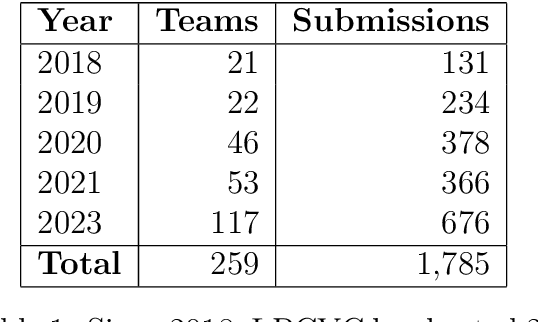
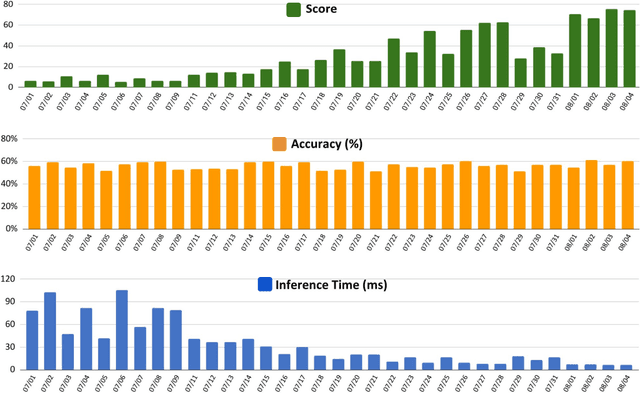


This article describes the 2023 IEEE Low-Power Computer Vision Challenge (LPCVC). Since 2015, LPCVC has been an international competition devoted to tackling the challenge of computer vision (CV) on edge devices. Most CV researchers focus on improving accuracy, at the expense of ever-growing sizes of machine models. LPCVC balances accuracy with resource requirements. Winners must achieve high accuracy with short execution time when their CV solutions run on an embedded device, such as Raspberry PI or Nvidia Jetson Nano. The vision problem for 2023 LPCVC is segmentation of images acquired by Unmanned Aerial Vehicles (UAVs, also called drones) after disasters. The 2023 LPCVC attracted 60 international teams that submitted 676 solutions during the submission window of one month. This article explains the setup of the competition and highlights the winners' methods that improve accuracy and shorten execution time.