 Add to Chrome
 Add to Firefox
 Add to Edge
MPO: Multilingual Safety Alignment via Reward Gap Optimization
May 22, 2025
Large language models (LLMs) have become increasingly central to AI applications worldwide, necessitating robust multilingual safety alignment to ensure secure deployment across diverse linguistic contexts. Existing preference learning methods for safety alignment, such as RLHF and DPO, are primarily monolingual and struggle with noisy multilingual data. To address these limitations, we introduce Multilingual reward gaP Optimization (MPO), a novel approach that leverages the well-aligned safety capabilities of the dominant language (English) to improve safety alignment across multiple languages. MPO directly minimizes the reward gap difference between the dominant language and target languages, effectively transferring safety capabilities while preserving the original strengths of the dominant language. Extensive experiments on three LLMs, LLaMA-3.1, Gemma-2 and Qwen2.5, validate MPO's efficacy in multilingual safety alignment without degrading general multilingual utility.

When Less Language is More: Language-Reasoning Disentanglement Makes LLMs Better Multilingual Reasoners
May 21, 2025Multilingual reasoning remains a significant challenge for large language models (LLMs), with performance disproportionately favoring high-resource languages. Drawing inspiration from cognitive neuroscience, which suggests that human reasoning functions largely independently of language processing, we hypothesize that LLMs similarly encode reasoning and language as separable components that can be disentangled to enhance multilingual reasoning. To evaluate this, we perform a causal intervention by ablating language-specific representations at inference time. Experiments on 10 open-source LLMs spanning 11 typologically diverse languages show that this language-specific ablation consistently boosts multilingual reasoning performance. Layer-wise analyses further confirm that language and reasoning representations can be effectively decoupled throughout the model, yielding improved multilingual reasoning capabilities, while preserving top-layer language features remains essential for maintaining linguistic fidelity. Compared to post-training such as supervised fine-tuning or reinforcement learning, our training-free ablation achieves comparable or superior results with minimal computational overhead. These findings shed light on the internal mechanisms underlying multilingual reasoning in LLMs and suggest a lightweight and interpretable strategy for improving cross-lingual generalization.
Teaching Language Models to Evolve with Users: Dynamic Profile Modeling for Personalized Alignment
May 21, 2025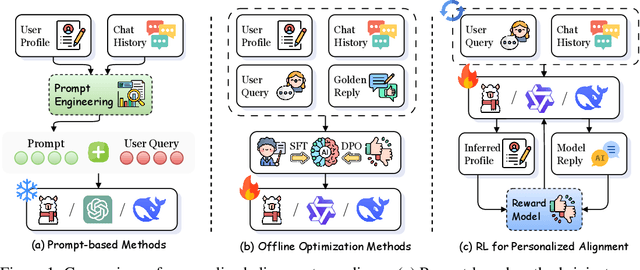
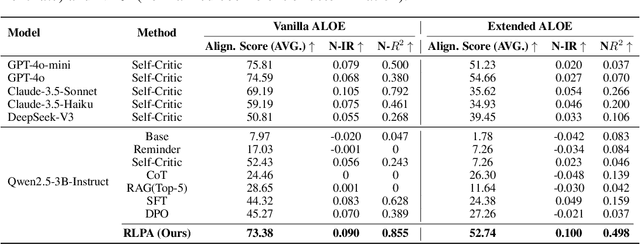
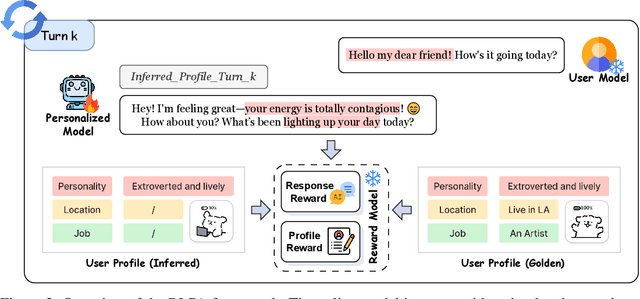

Personalized alignment is essential for enabling large language models (LLMs) to engage effectively in user-centric dialogue. While recent prompt-based and offline optimization methods offer preliminary solutions, they fall short in cold-start scenarios and long-term personalization due to their inherently static and shallow designs. In this work, we introduce the Reinforcement Learning for Personalized Alignment (RLPA) framework, in which an LLM interacts with a simulated user model to iteratively infer and refine user profiles through dialogue. The training process is guided by a dual-level reward structure: the Profile Reward encourages accurate construction of user representations, while the Response Reward incentivizes generation of responses consistent with the inferred profile. We instantiate RLPA by fine-tuning Qwen-2.5-3B-Instruct, resulting in Qwen-RLPA, which achieves state-of-the-art performance in personalized dialogue. Empirical evaluations demonstrate that Qwen-RLPA consistently outperforms prompting and offline fine-tuning baselines, and even surpasses advanced commercial models such as Claude-3.5 and GPT-4o. Further analysis highlights Qwen-RLPA's robustness in reconciling conflicting user preferences, sustaining long-term personalization and delivering more efficient inference compared to recent reasoning-focused LLMs. These results emphasize the potential of dynamic profile inference as a more effective paradigm for building personalized dialogue systems.
Investigating and Enhancing the Robustness of Large Multimodal Models Against Temporal Inconsistency
May 20, 2025Large Multimodal Models (LMMs) have recently demonstrated impressive performance on general video comprehension benchmarks. Nevertheless, for broader applications, the robustness of their temporal analysis capability needs to be thoroughly investigated yet predominantly ignored. Motivated by this, we propose a novel temporal robustness benchmark (TemRobBench), which introduces temporal inconsistency perturbations separately at the visual and textual modalities to assess the robustness of models. We evaluate 16 mainstream LMMs and find that they exhibit over-reliance on prior knowledge and textual context in adversarial environments, while ignoring the actual temporal dynamics in the video. To mitigate this issue, we design panoramic direct preference optimization (PanoDPO), which encourages LMMs to incorporate both visual and linguistic feature preferences simultaneously. Experimental results show that PanoDPO can effectively enhance the model's robustness and reliability in temporal analysis.
UFO-RL: Uncertainty-Focused Optimization for Efficient Reinforcement Learning Data Selection
May 18, 2025Scaling RL for LLMs is computationally expensive, largely due to multi-sampling for policy optimization and evaluation, making efficient data selection crucial. Inspired by the Zone of Proximal Development (ZPD) theory, we hypothesize LLMs learn best from data within their potential comprehension zone. Addressing the limitation of conventional, computationally intensive multi-sampling methods for data assessment, we introduce UFO-RL. This novel framework uses a computationally efficient single-pass uncertainty estimation to identify informative data instances, achieving up to 185x faster data evaluation. UFO-RL leverages this metric to select data within the estimated ZPD for training. Experiments show that training with just 10% of data selected by UFO-RL yields performance comparable to or surpassing full-data training, reducing overall training time by up to 16x while enhancing stability and generalization. UFO-RL offers a practical and highly efficient strategy for scaling RL fine-tuning of LLMs by focusing learning on valuable data.
Beyond Frameworks: Unpacking Collaboration Strategies in Multi-Agent Systems
May 18, 2025Multi-agent collaboration has emerged as a pivotal paradigm for addressing complex, distributed tasks in large language model (LLM)-driven applications. While prior research has focused on high-level architectural frameworks, the granular mechanisms governing agents, critical to performance and scalability, remain underexplored. This study systematically investigates four dimensions of collaboration strategies: (1) agent governance, (2) participation control, (3) interaction dynamics, and (4) dialogue history management. Through rigorous experimentation under two context-dependent scenarios: Distributed Evidence Integration (DEI) and Structured Evidence Synthesis (SES), we quantify the impact of these strategies on both task accuracy and computational efficiency. Our findings reveal that centralized governance, instructor-led participation, ordered interaction patterns, and instructor-curated context summarization collectively optimize the trade-off between decision quality and resource utilization with the support of the proposed Token-Accuracy Ratio (TAR). This work establishes a foundation for designing adaptive, scalable multi-agent systems, shifting the focus from structural novelty to strategic interaction mechanics.
Simulating Before Planning: Constructing Intrinsic User World Model for User-Tailored Dialogue Policy Planning
Apr 18, 2025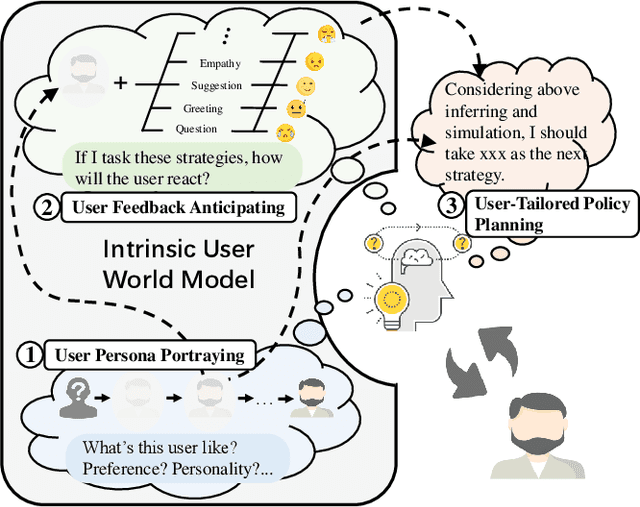
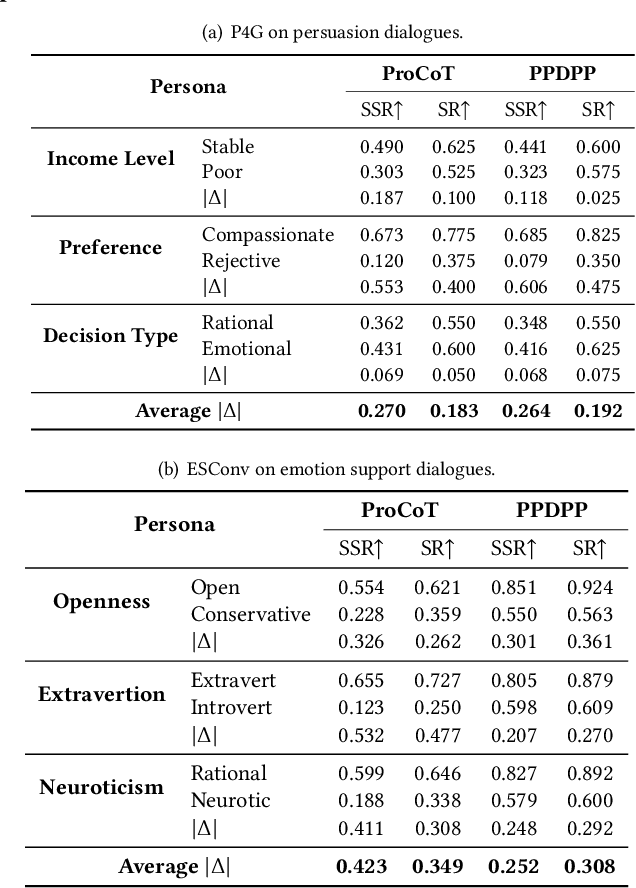
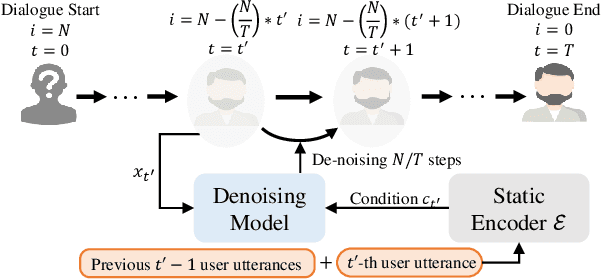
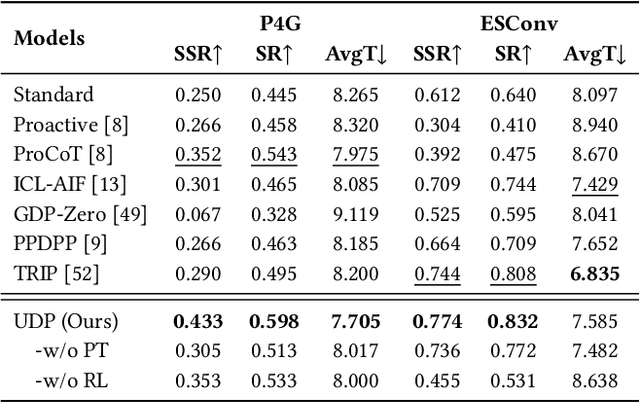
Recent advancements in dialogue policy planning have emphasized optimizing system agent policies to achieve predefined goals, focusing on strategy design, trajectory acquisition, and efficient training paradigms. However, these approaches often overlook the critical role of user characteristics, which are essential in real-world scenarios like conversational search and recommendation, where interactions must adapt to individual user traits such as personality, preferences, and goals. To address this gap, we first conduct a comprehensive study utilizing task-specific user personas to systematically assess dialogue policy planning under diverse user behaviors. By leveraging realistic user profiles for different tasks, our study reveals significant limitations in existing approaches, highlighting the need for user-tailored dialogue policy planning. Building on this foundation, we present the User-Tailored Dialogue Policy Planning (UDP) framework, which incorporates an Intrinsic User World Model to model user traits and feedback. UDP operates in three stages: (1) User Persona Portraying, using a diffusion model to dynamically infer user profiles; (2) User Feedback Anticipating, leveraging a Brownian Bridge-inspired anticipator to predict user reactions; and (3) User-Tailored Policy Planning, integrating these insights to optimize response strategies. To ensure robust performance, we further propose an active learning approach that prioritizes challenging user personas during training. Comprehensive experiments on benchmarks, including collaborative and non-collaborative settings, demonstrate the effectiveness of UDP in learning user-specific dialogue strategies. Results validate the protocol's utility and highlight UDP's robustness, adaptability, and potential to advance user-centric dialogue systems.
Information Gain-Guided Causal Intervention for Autonomous Debiasing Large Language Models
Apr 17, 2025Despite significant progress, recent studies indicate that current large language models (LLMs) may still capture dataset biases and utilize them during inference, leading to the poor generalizability of LLMs. However, due to the diversity of dataset biases and the insufficient nature of bias suppression based on in-context learning, the effectiveness of previous prior knowledge-based debiasing methods and in-context learning based automatic debiasing methods is limited. To address these challenges, we explore the combination of causal mechanisms with information theory and propose an information gain-guided causal intervention debiasing (IGCIDB) framework. This framework first utilizes an information gain-guided causal intervention method to automatically and autonomously balance the distribution of instruction-tuning dataset. Subsequently, it employs a standard supervised fine-tuning process to train LLMs on the debiased dataset. Experimental results show that IGCIDB can effectively debias LLM to improve its generalizability across different tasks.
AdaSteer: Your Aligned LLM is Inherently an Adaptive Jailbreak Defender
Apr 13, 2025Despite extensive efforts in safety alignment, large language models (LLMs) remain vulnerable to jailbreak attacks. Activation steering offers a training-free defense method but relies on fixed steering coefficients, resulting in suboptimal protection and increased false rejections of benign inputs. To address this, we propose AdaSteer, an adaptive activation steering method that dynamically adjusts model behavior based on input characteristics. We identify two key properties: Rejection Law (R-Law), which shows that stronger steering is needed for jailbreak inputs opposing the rejection direction, and Harmfulness Law (H-Law), which differentiates adversarial and benign inputs. AdaSteer steers input representations along both the Rejection Direction (RD) and Harmfulness Direction (HD), with adaptive coefficients learned via logistic regression, ensuring robust jailbreak defense while preserving benign input handling. Experiments on LLaMA-3.1, Gemma-2, and Qwen2.5 show that AdaSteer outperforms baseline methods across multiple jailbreak attacks with minimal impact on utility. Our results highlight the potential of interpretable model internals for real-time, flexible safety enforcement in LLMs.
Chain of Strategy Optimization Makes Large Language Models Better Emotional Supporter
Mar 07, 2025The growing emotional stress in modern society has increased the demand for Emotional Support Conversations (ESC). While Large Language Models (LLMs) show promise for ESC, they face two key challenges: (1) low strategy selection accuracy, and (2) preference bias, limiting their adaptability to emotional needs of users. Existing supervised fine-tuning (SFT) struggles to address these issues, as it rigidly trains models on single gold-standard responses without modeling nuanced strategy trade-offs. To overcome these limitations, we propose Chain-of-Strategy Optimization (CSO), a novel approach that optimizes strategy selection preferences at each dialogue turn. We first leverage Monte Carlo Tree Search to construct ESC-Pro, a high-quality preference dataset with turn-level strategy-response pairs. Training on ESC-Pro with CSO improves both strategy accuracy and bias mitigation, enabling LLMs to generate more empathetic and contextually appropriate responses. Experiments on LLaMA-3.1-8B, Gemma-2-9B, and Qwen2.5-7B demonstrate that CSO outperforms standard SFT, highlighting the efficacy of fine-grained, turn-level preference modeling in ESC.