 Add to Chrome
 Add to Firefox
 Add to Edge
Vision Model Pre-training on Interleaved Image-Text Data via Latent Compression Learning
Jun 11, 2024
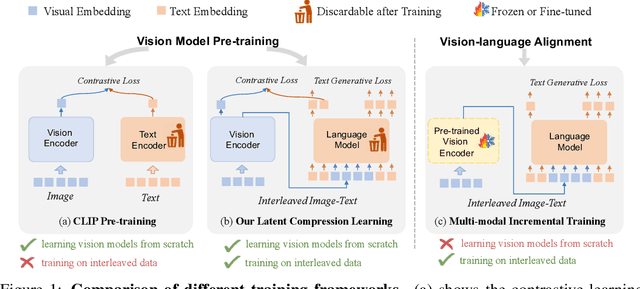

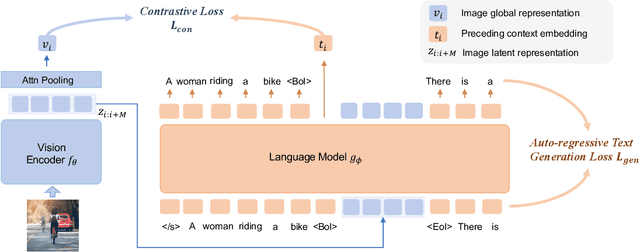
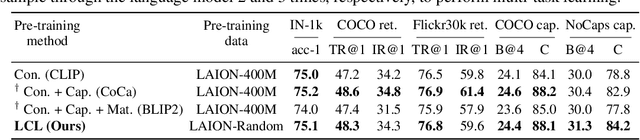
Recently, vision model pre-training has evolved from relying on manually annotated datasets to leveraging large-scale, web-crawled image-text data. Despite these advances, there is no pre-training method that effectively exploits the interleaved image-text data, which is very prevalent on the Internet. Inspired by the recent success of compression learning in natural language processing, we propose a novel vision model pre-training method called Latent Compression Learning (LCL) for interleaved image-text data. This method performs latent compression learning by maximizing the mutual information between the inputs and outputs of a causal attention model. The training objective can be decomposed into two basic tasks: 1) contrastive learning between visual representation and preceding context, and 2) generating subsequent text based on visual representation. Our experiments demonstrate that our method not only matches the performance of CLIP on paired pre-training datasets (e.g., LAION), but can also leverage interleaved pre-training data (e.g., MMC4) to learn robust visual representation from scratch, showcasing the potential of vision model pre-training with interleaved image-text data. Code is released at https://github.com/OpenGVLab/LCL.

Synthesizing Efficient Data with Diffusion Models for Person Re-Identification Pre-Training
Jun 10, 2024
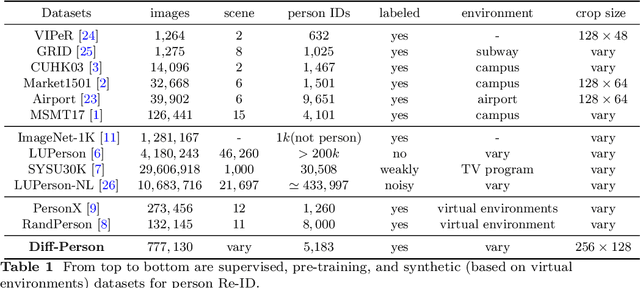
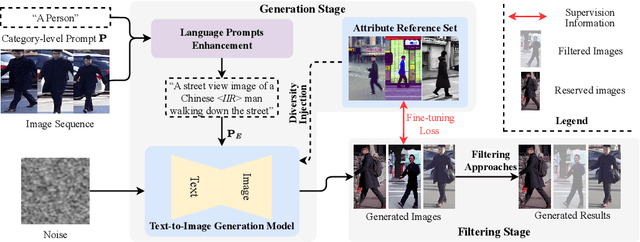
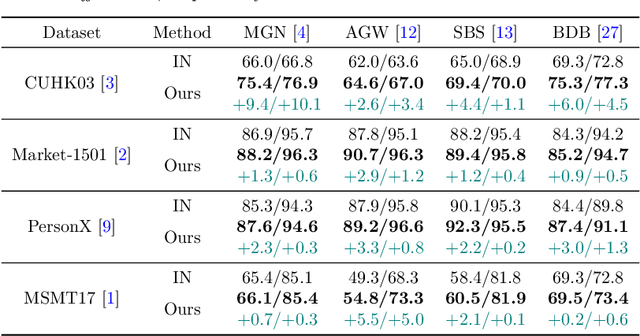
Existing person re-identification (Re-ID) methods principally deploy the ImageNet-1K dataset for model initialization, which inevitably results in sub-optimal situations due to the large domain gap. One of the key challenges is that building large-scale person Re-ID datasets is time-consuming. Some previous efforts address this problem by collecting person images from the internet e.g., LUPerson, but it struggles to learn from unlabeled, uncontrollable, and noisy data. In this paper, we present a novel paradigm Diffusion-ReID to efficiently augment and generate diverse images based on known identities without requiring any cost of data collection and annotation. Technically, this paradigm unfolds in two stages: generation and filtering. During the generation stage, we propose Language Prompts Enhancement (LPE) to ensure the ID consistency between the input image sequence and the generated images. In the diffusion process, we propose a Diversity Injection (DI) module to increase attribute diversity. In order to make the generated data have higher quality, we apply a Re-ID confidence threshold filter to further remove the low-quality images. Benefiting from our proposed paradigm, we first create a new large-scale person Re-ID dataset Diff-Person, which consists of over 777K images from 5,183 identities. Next, we build a stronger person Re-ID backbone pre-trained on our Diff-Person. Extensive experiments are conducted on four person Re-ID benchmarks in six widely used settings. Compared with other pre-training and self-supervised competitors, our approach shows significant superiority.
Ghost imaging-based Non-contact Heart Rate Detection
Jun 04, 2024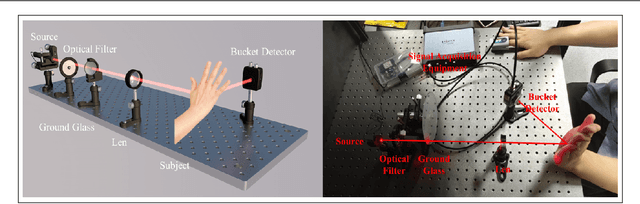
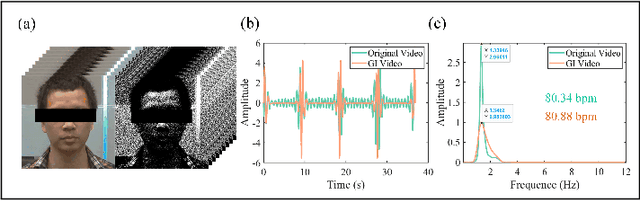
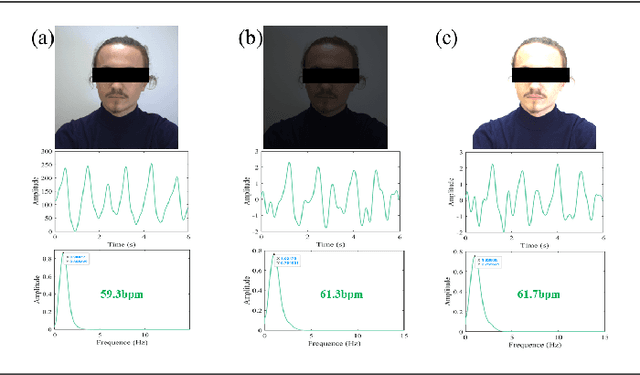
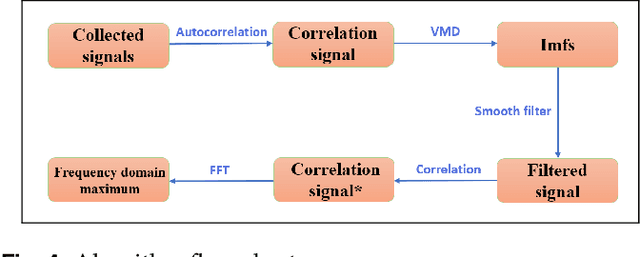
Remote heart rate measurement is an increasingly concerned research field, usually using remote photoplethysmography (rPPG) to collect heart rate information through video data collection. However, in certain specific scenarios (such as low light conditions, intense lighting, and non-line-of-sight situations), traditional imaging methods fail to capture image information effectively, that may lead to difficulty or inability in measuring heart rate. To address these limitations, this study proposes using ghost imaging as a substitute for traditional imaging in the aforementioned scenarios. The mean absolute error between experimental measurements and reference true values is 4.24 bpm.Additionally, the bucket signals obtained by the ghost imaging system can be directly processed using digital signal processing techniques, thereby enhancing personal privacy protection.
Distribution Aligned Semantics Adaption for Lifelong Person Re-Identification
May 30, 2024
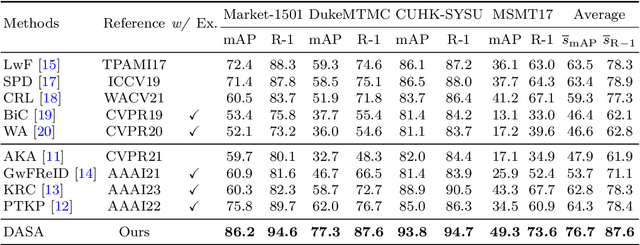

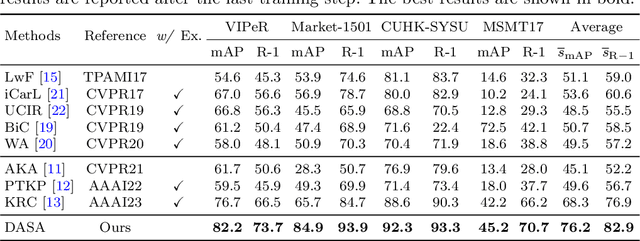
In real-world scenarios, person Re-IDentification (Re-ID) systems need to be adaptable to changes in space and time. Therefore, the adaptation of Re-ID models to new domains while preserving previously acquired knowledge is crucial, known as Lifelong person Re-IDentification (LReID). Advanced LReID methods rely on replaying exemplars from old domains and applying knowledge distillation in logits with old models. However, due to privacy concerns, retaining previous data is inappropriate. Additionally, the fine-grained and open-set characteristics of Re-ID limit the effectiveness of the distillation paradigm for accumulating knowledge. We argue that a Re-ID model trained on diverse and challenging pedestrian images at a large scale can acquire robust and general human semantic knowledge. These semantics can be readily utilized as shared knowledge for lifelong applications. In this paper, we identify the challenges and discrepancies associated with adapting a pre-trained model to each application domain, and introduce the Distribution Aligned Semantics Adaption (DASA) framework. It efficiently adjusts Batch Normalization (BN) to mitigate interference from data distribution discrepancy and freezes the pre-trained convolutional layers to preserve shared knowledge. Additionally, we propose the lightweight Semantics Adaption (SA) module, which effectively adapts learned semantics to enhance pedestrian representations. Extensive experiments demonstrate the remarkable superiority of our proposed framework over advanced LReID methods, and it exhibits significantly reduced storage consumption. DASA presents a novel and cost-effective perspective on effectively adapting pre-trained models for LReID.
World Models for General Surgical Grasping
May 28, 2024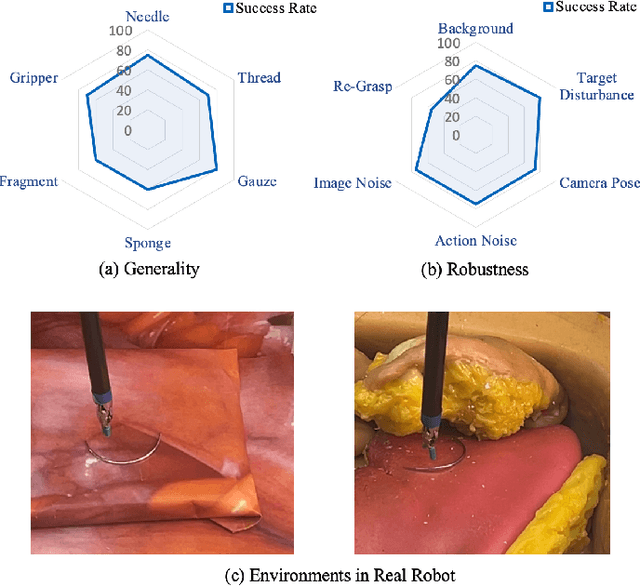
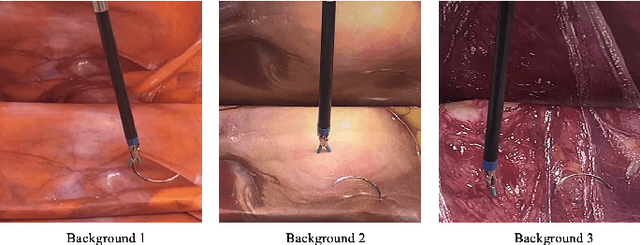
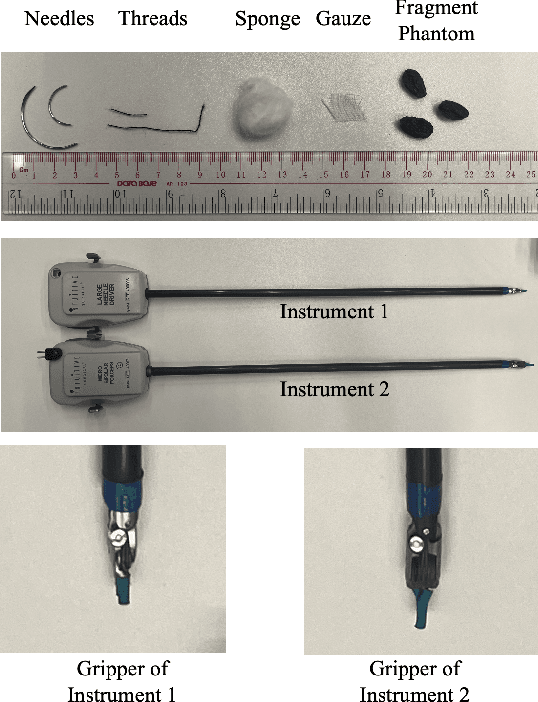
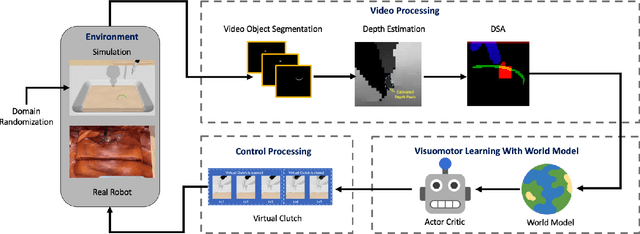
Intelligent vision control systems for surgical robots should adapt to unknown and diverse objects while being robust to system disturbances. Previous methods did not meet these requirements due to mainly relying on pose estimation and feature tracking. We propose a world-model-based deep reinforcement learning framework "Grasp Anything for Surgery" (GAS), that learns a pixel-level visuomotor policy for surgical grasping, enhancing both generality and robustness. In particular, a novel method is proposed to estimate the values and uncertainties of depth pixels for a rigid-link object's inaccurate region based on the empirical prior of the object's size; both depth and mask images of task objects are encoded to a single compact 3-channel image (size: 64x64x3) by dynamically zooming in the mask regions, minimizing the information loss. The learned controller's effectiveness is extensively evaluated in simulation and in a real robot. Our learned visuomotor policy handles: i) unseen objects, including 5 types of target grasping objects and a robot gripper, in unstructured real-world surgery environments, and ii) disturbances in perception and control. Note that we are the first work to achieve a unified surgical control system that grasps diverse surgical objects using different robot grippers on real robots in complex surgery scenes (average success rate: 69%). Our system also demonstrates significant robustness across 6 conditions including background variation, target disturbance, camera pose variation, kinematic control error, image noise, and re-grasping after the gripped target object drops from the gripper. Videos and codes can be found on our project page: https://linhongbin.github.io/gas/.
Image-Text-Image Knowledge Transferring for Lifelong Person Re-Identification with Hybrid Clothing States
May 26, 2024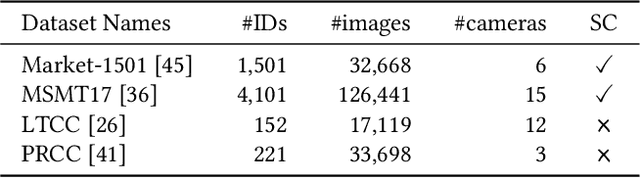
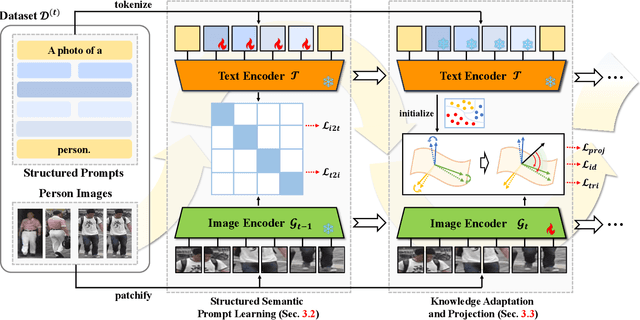
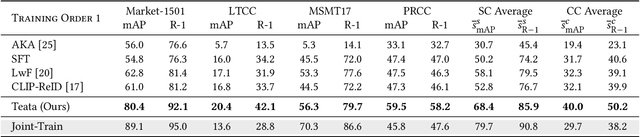
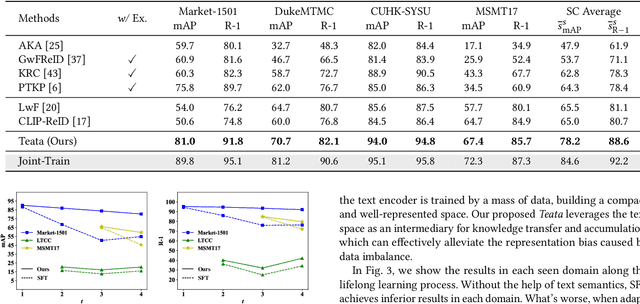
With the continuous expansion of intelligent surveillance networks, lifelong person re-identification (LReID) has received widespread attention, pursuing the need of self-evolution across different domains. However, existing LReID studies accumulate knowledge with the assumption that people would not change their clothes. In this paper, we propose a more practical task, namely lifelong person re-identification with hybrid clothing states (LReID-Hybrid), which takes a series of cloth-changing and cloth-consistent domains into account during lifelong learning. To tackle the challenges of knowledge granularity mismatch and knowledge presentation mismatch that occurred in LReID-Hybrid, we take advantage of the consistency and generalization of the text space, and propose a novel framework, dubbed $Teata$, to effectively align, transfer and accumulate knowledge in an "image-text-image" closed loop. Concretely, to achieve effective knowledge transfer, we design a Structured Semantic Prompt (SSP) learning to decompose the text prompt into several structured pairs to distill knowledge from the image space with a unified granularity of text description. Then, we introduce a Knowledge Adaptation and Projection strategy (KAP), which tunes text knowledge via a slow-paced learner to adapt to different tasks without catastrophic forgetting. Extensive experiments demonstrate the superiority of our proposed $Teata$ for LReID-Hybrid as well as on conventional LReID benchmarks over advanced methods.
Content and Salient Semantics Collaboration for Cloth-Changing Person Re-Identification
May 26, 2024
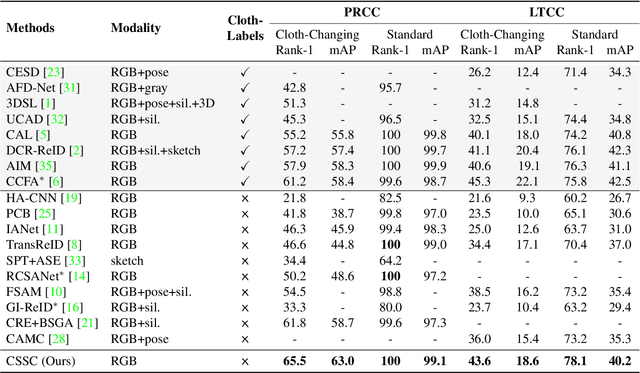

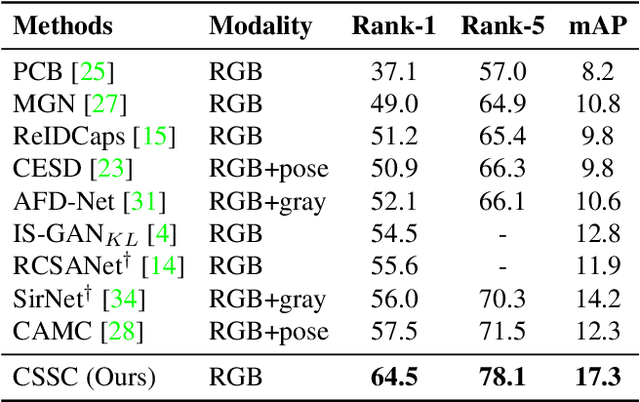
Cloth-changing person Re-IDentification (Re-ID) aims at recognizing the same person with clothing changes across non-overlapping cameras. Conventional person Re-ID methods usually bias the model's focus on cloth-related appearance features rather than identity-sensitive features associated with biological traits. Recently, advanced cloth-changing person Re-ID methods either resort to identity-related auxiliary modalities (e.g., sketches, silhouettes, keypoints and 3D shapes) or clothing labels to mitigate the impact of clothes. However, relying on unpractical and inflexible auxiliary modalities or annotations limits their real-world applicability. In this paper, we promote cloth-changing person Re-ID by effectively leveraging abundant semantics present within pedestrian images without the need for any auxiliaries. Specifically, we propose the Content and Salient Semantics Collaboration (CSSC) framework, facilitating cross-parallel semantics interaction and refinement. Our framework is simple yet effective, and the vital design is the Semantics Mining and Refinement (SMR) module. It extracts robust identity features about content and salient semantics, while mitigating interference from clothing appearances effectively. By capitalizing on the mined abundant semantic features, our proposed approach achieves state-of-the-art performance on three cloth-changing benchmarks as well as conventional benchmarks, demonstrating its superiority over advanced competitors.
Simultaneous Estimation of Shape and Force along Highly Deformable Surgical Manipulators Using Sparse FBG Measurement
Apr 25, 2024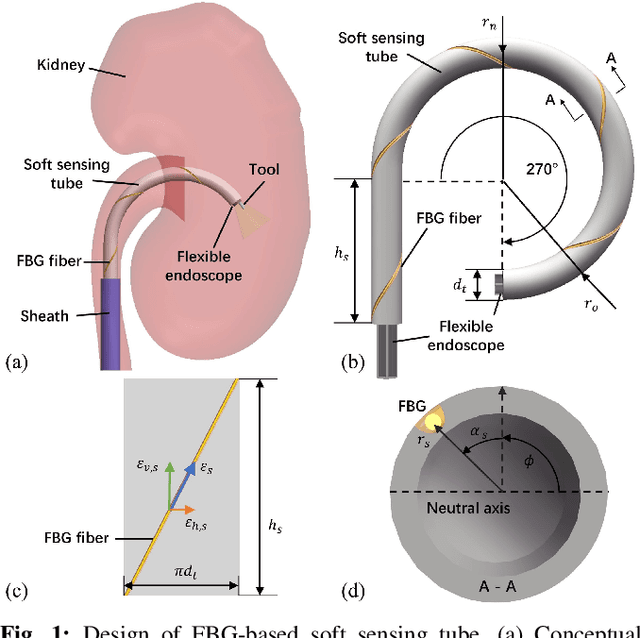
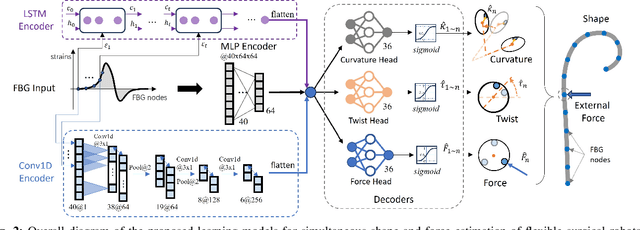
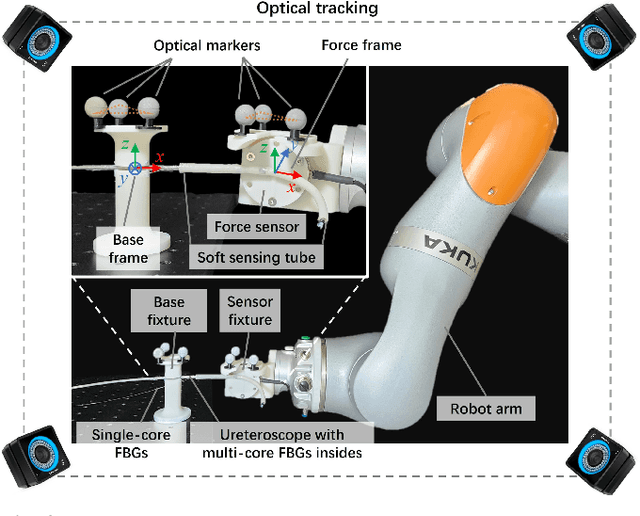
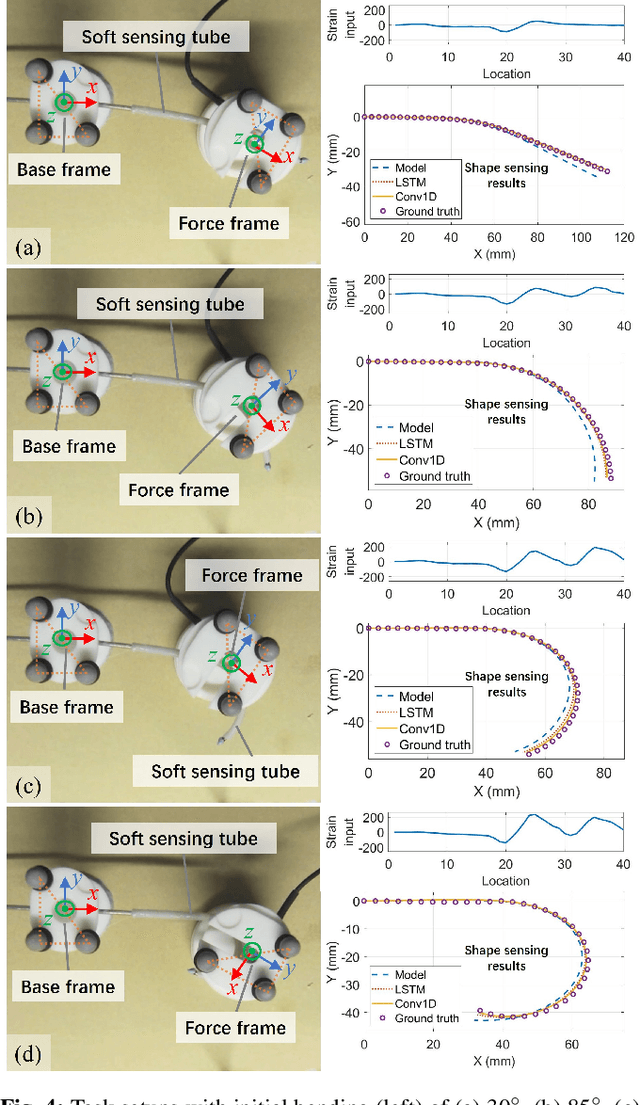
Recently, fiber optic sensors such as fiber Bragg gratings (FBGs) have been widely investigated for shape reconstruction and force estimation of flexible surgical robots. However, most existing approaches need precise model parameters of FBGs inside the fiber and their alignments with the flexible robots for accurate sensing results. Another challenge lies in online acquiring external forces at arbitrary locations along the flexible robots, which is highly required when with large deflections in robotic surgery. In this paper, we propose a novel data-driven paradigm for simultaneous estimation of shape and force along highly deformable flexible robots by using sparse strain measurement from a single-core FBG fiber. A thin-walled soft sensing tube helically embedded with FBG sensors is designed for a robotic-assisted flexible ureteroscope with large deflection up to 270 degrees and a bend radius under 10 mm. We introduce and study three learning models by incorporating spatial strain encoders, and compare their performances in both free space and constrained environments with contact forces at different locations. The experimental results in terms of dynamic shape-force sensing accuracy demonstrate the effectiveness and superiority of the proposed methods.
FreqBlender: Enhancing DeepFake Detection by Blending Frequency Knowledge
Apr 22, 2024Generating synthetic fake faces, known as pseudo-fake faces, is an effective way to improve the generalization of DeepFake detection. Existing methods typically generate these faces by blending real or fake faces in color space. While these methods have shown promise, they overlook the simulation of frequency distribution in pseudo-fake faces, limiting the learning of generic forgery traces in-depth. To address this, this paper introduces {\em FreqBlender}, a new method that can generate pseudo-fake faces by blending frequency knowledge. Specifically, we investigate the major frequency components and propose a Frequency Parsing Network to adaptively partition frequency components related to forgery traces. Then we blend this frequency knowledge from fake faces into real faces to generate pseudo-fake faces. Since there is no ground truth for frequency components, we describe a dedicated training strategy by leveraging the inner correlations among different frequency knowledge to instruct the learning process. Experimental results demonstrate the effectiveness of our method in enhancing DeepFake detection, making it a potential plug-and-play strategy for other methods.
Beyond MMSE: Rank-1 Subspace Channel Estimator for Massive MIMO Systems
Apr 21, 2024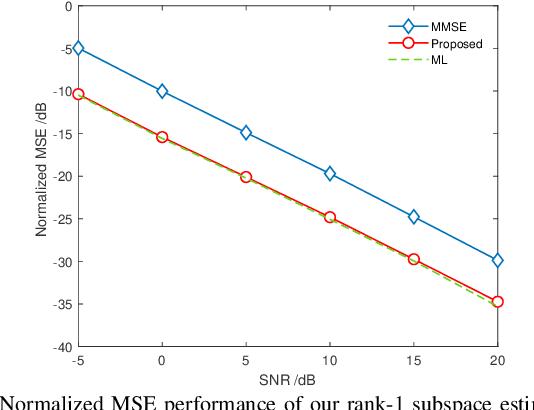
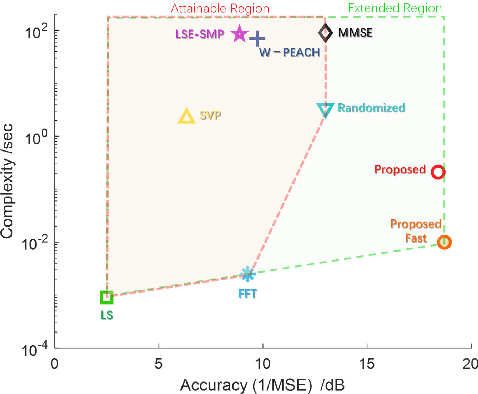
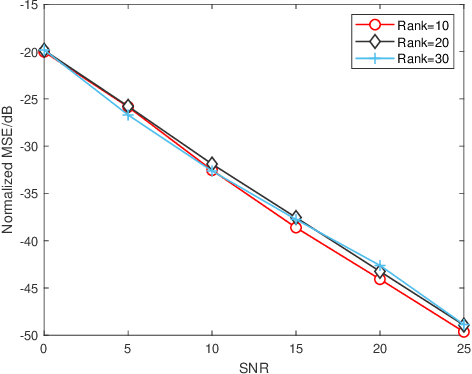
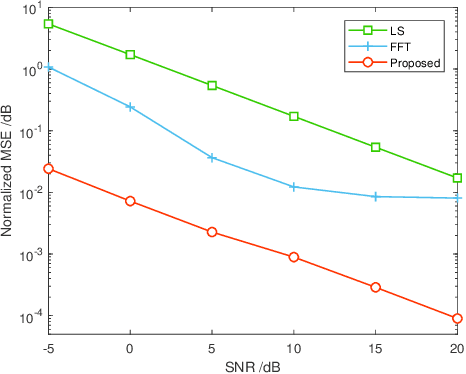
To glean the benefits offered by massive multi-input multi-output (MIMO) systems, channel state information must be accurately acquired. Despite the high accuracy, the computational complexity of classical linear minimum mean squared error (MMSE) estimator becomes prohibitively high in the context of massive MIMO, while the other low-complexity methods degrade the estimation accuracy seriously. In this paper, we develop a novel rank-1 subspace channel estimator to approximate the maximum likelihood (ML) estimator, which outperforms the linear MMSE estimator, but incurs a surprisingly low computational complexity. Our method first acquires the highly accurate angle-of-arrival (AoA) information via a constructed space-embedding matrix and the rank-1 subspace method. Then, it adopts the post-reception beamforming to acquire the unbiased estimate of channel gains. Furthermore, a fast method is designed to implement our new estimator. Theoretical analysis shows that the extra gain achieved by our method over the linear MMSE estimator grows according to the rule of O($\log_{10}M$), while its computational complexity is linearly scalable to the number of antennas $M$. Numerical simulations also validate the theoretical results. Our new method substantially extends the accuracy-complexity region and constitutes a promising channel estimation solution to the emerging massive MIMO communications.