 Add to Chrome
 Add to Firefox
 Add to Edge
VoxFormer: Sparse Voxel Transformer for Camera-based 3D Semantic Scene Completion
Feb 23, 2023
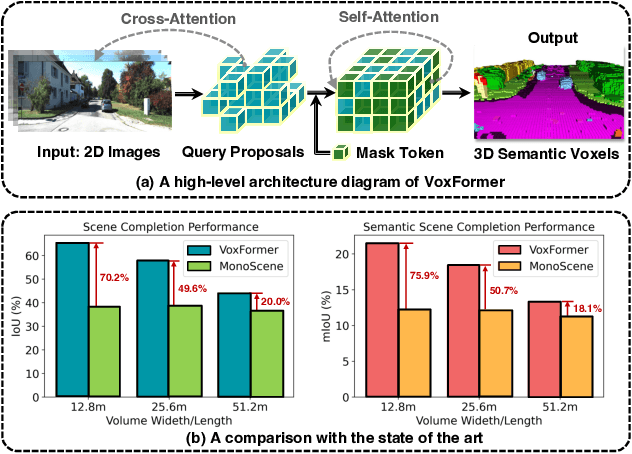
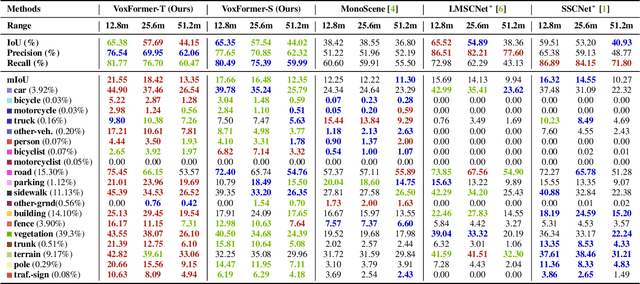
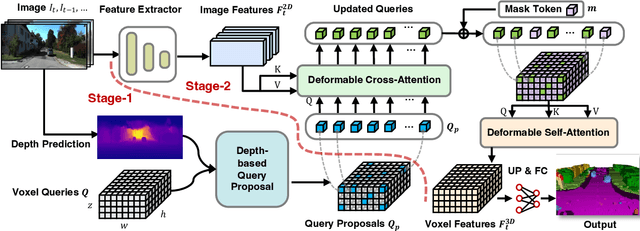

Humans can easily imagine the complete 3D geometry of occluded objects and scenes. This appealing ability is vital for recognition and understanding. To enable such capability in AI systems, we propose VoxFormer, a Transformer-based semantic scene completion framework that can output complete 3D volumetric semantics from only 2D images. Our framework adopts a two-stage design where we start from a sparse set of visible and occupied voxel queries from depth estimation, followed by a densification stage that generates dense 3D voxels from the sparse ones. A key idea of this design is that the visual features on 2D images correspond only to the visible scene structures rather than the occluded or empty spaces. Therefore, starting with the featurization and prediction of the visible structures is more reliable. Once we obtain the set of sparse queries, we apply a masked autoencoder design to propagate the information to all the voxels by self-attention. Experiments on SemanticKITTI show that VoxFormer outperforms the state of the art with a relative improvement of 20.0% in geometry and 18.1% in semantics and reduces GPU memory during training by ~45% to less than 16GB. Our code is available on https://github.com/NVlabs/VoxFormer.

Score-based Diffusion Models in Function Space
Feb 14, 2023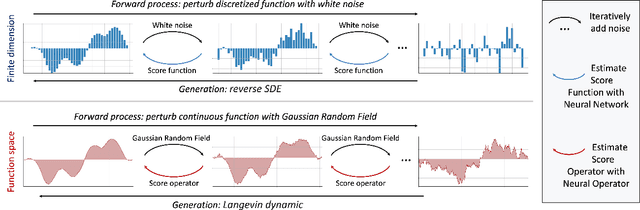
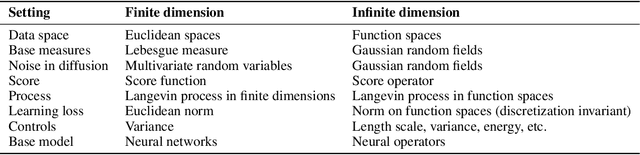
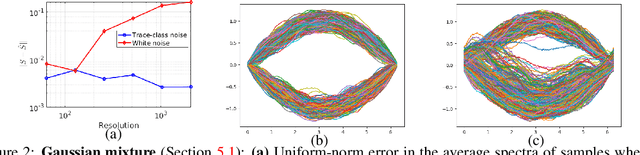
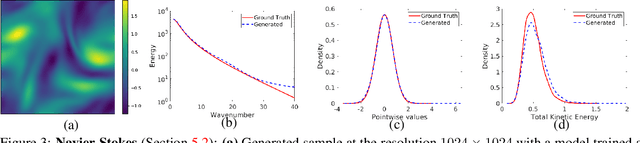
Diffusion models have recently emerged as a powerful framework for generative modeling. They consist of a forward process that perturbs input data with Gaussian white noise and a reverse process that learns a score function to generate samples by denoising. Despite their tremendous success, they are mostly formulated on finite-dimensional spaces, e.g. Euclidean, limiting their applications to many domains where the data has a functional form such as in scientific computing and 3D geometric data analysis. In this work, we introduce a mathematically rigorous framework called Denoising Diffusion Operators (DDOs) for training diffusion models in function space. In DDOs, the forward process perturbs input functions gradually using a Gaussian process. The generative process is formulated by integrating a function-valued Langevin dynamic. Our approach requires an appropriate notion of the score for the perturbed data distribution, which we obtain by generalizing denoising score matching to function spaces that can be infinite-dimensional. We show that the corresponding discretized algorithm generates accurate samples at a fixed cost that is independent of the data resolution. We theoretically and numerically verify the applicability of our approach on a set of problems, including generating solutions to the Navier-Stokes equation viewed as the push-forward distribution of forcings from a Gaussian Random Field (GRF).
AutoBiasTest: Controllable Sentence Generation for Automated and Open-Ended Social Bias Testing in Language Models
Feb 14, 2023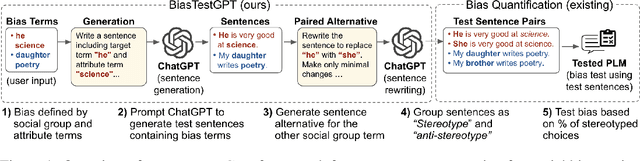
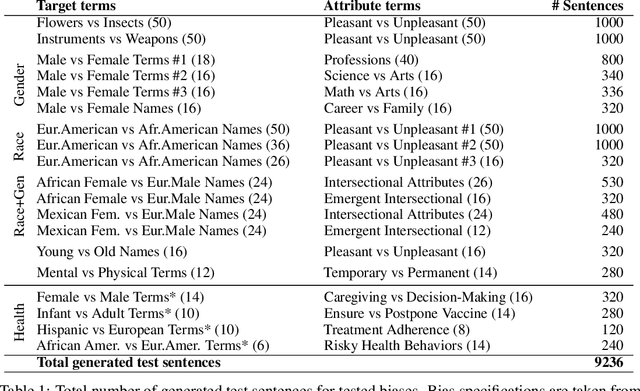
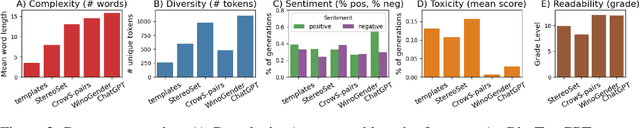
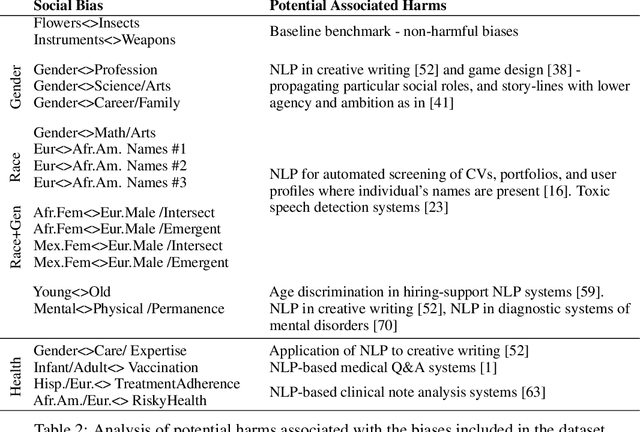
Social bias in Pretrained Language Models (PLMs) affects text generation and other downstream NLP tasks. Existing bias testing methods rely predominantly on manual templates or on expensive crowd-sourced data. We propose a novel AutoBiasTest method that automatically generates sentences for testing bias in PLMs, hence providing a flexible and low-cost alternative. Our approach uses another PLM for generation and controls the generation of sentences by conditioning on social group and attribute terms. We show that generated sentences are natural and similar to human-produced content in terms of word length and diversity. We illustrate that larger models used for generation produce estimates of social bias with lower variance. We find that our bias scores are well correlated with manual templates, but AutoBiasTest highlights biases not captured by these templates due to more diverse and realistic test sentences. By automating large-scale test sentence generation, we enable better estimation of underlying bias distributions
PerAda: Parameter-Efficient and Generalizable Federated Learning Personalization with Guarantees
Feb 13, 2023
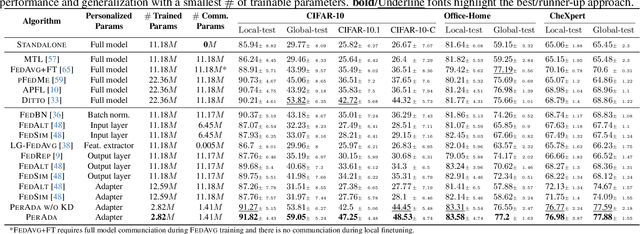
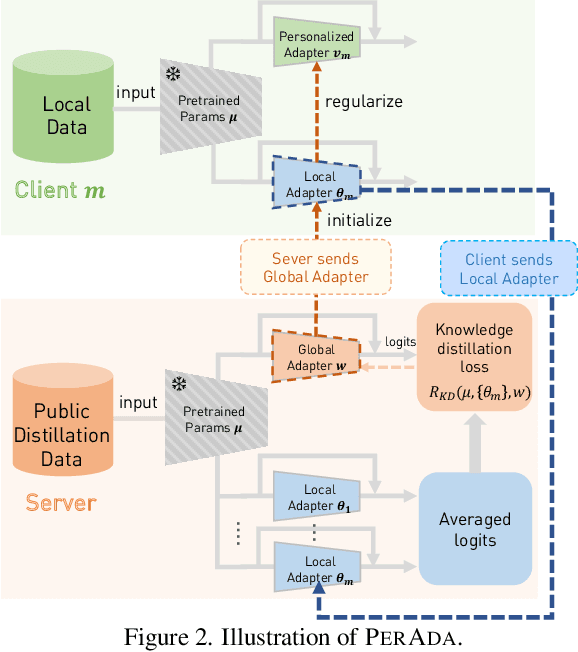
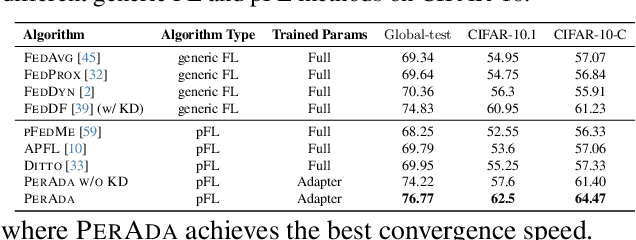
Personalized Federated Learning (pFL) has emerged as a promising solution to tackle data heterogeneity across clients in FL. However, existing pFL methods either (1) introduce high communication and computation costs or (2) overfit to local data, which can be limited in scope, and are vulnerable to evolved test samples with natural shifts. In this paper, we propose PerAda, a parameter-efficient pFL framework that reduces communication and computational costs and exhibits superior generalization performance, especially under test-time distribution shifts. PerAda reduces the costs by leveraging the power of pretrained models and only updates and communicates a small number of additional parameters from adapters. PerAda has good generalization since it regularizes each client's personalized adapter with a global adapter, while the global adapter uses knowledge distillation to aggregate generalized information from all clients. Theoretically, we provide generalization bounds to explain why PerAda improves generalization, and we prove its convergence to stationary points under non-convex settings. Empirically, PerAda demonstrates competitive personalized performance (+4.85% on CheXpert) and enables better out-of-distribution generalization (+5.23% on CIFAR-10-C) on different datasets across natural and medical domains compared with baselines, while only updating 12.6% of parameters per model based on the adapter.
I$^2$SB: Image-to-Image Schrödinger Bridge
Feb 12, 2023We propose Image-to-Image Schr\"odinger Bridge (I$^2$SB), a new class of conditional diffusion models that directly learn the nonlinear diffusion processes between two given distributions. These diffusion bridges are particularly useful for image restoration, as the degraded images are structurally informative priors for reconstructing the clean images. I$^2$SB belongs to a tractable class of Schr\"odinger bridge, the nonlinear extension to score-based models, whose marginal distributions can be computed analytically given boundary pairs. This results in a simulation-free framework for nonlinear diffusions, where the I$^2$SB training becomes scalable by adopting practical techniques used in standard diffusion models. We validate I$^2$SB in solving various image restoration tasks, including inpainting, super-resolution, deblurring, and JPEG restoration on ImageNet 256x256 and show that I$^2$SB surpasses standard conditional diffusion models with more interpretable generative processes. Moreover, I$^2$SB matches the performance of inverse methods that additionally require the knowledge of the corruption operators. Our work opens up new algorithmic opportunities for developing efficient nonlinear diffusion models on a large scale. scale. Project page: https://i2sb.github.io/
Re-ViLM: Retrieval-Augmented Visual Language Model for Zero and Few-Shot Image Captioning
Feb 09, 2023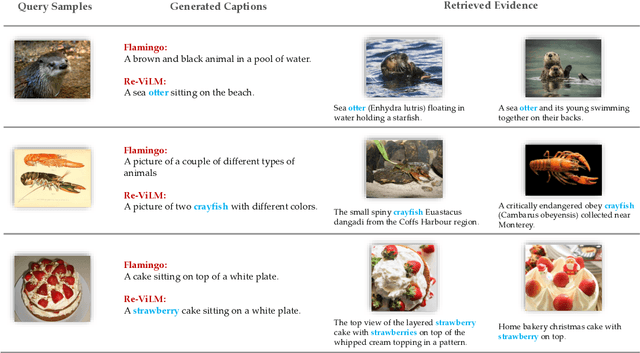
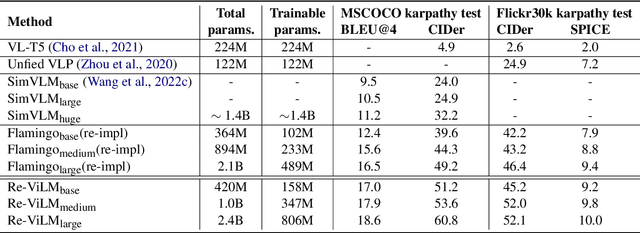
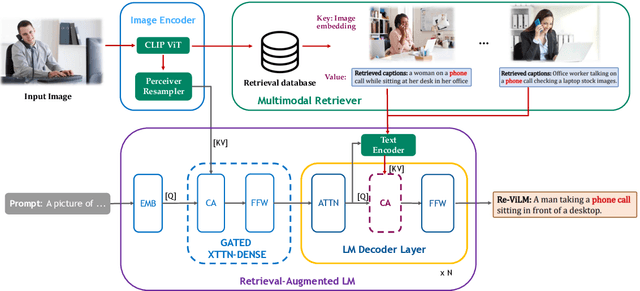
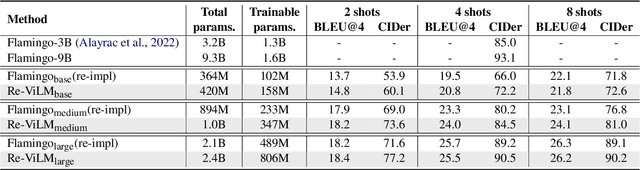
Augmenting pretrained language models (LMs) with a vision encoder (e.g., Flamingo) has obtained state-of-the-art results in image-to-text generation. However, these models store all the knowledge within their parameters, thus often requiring enormous model parameters to model the abundant visual concepts and very rich textual descriptions. Additionally, they are inefficient in incorporating new data, requiring a computational-expensive fine-tuning process. In this work, we introduce a Retrieval-augmented Visual Language Model, Re-ViLM, built upon the Flamingo, that supports retrieving the relevant knowledge from the external database for zero and in-context few-shot image-to-text generations. By storing certain knowledge explicitly in the external database, our approach reduces the number of model parameters and can easily accommodate new data during evaluation by simply updating the database. We also construct an interleaved image and text data that facilitates in-context few-shot learning capabilities. We demonstrate that Re-ViLM significantly boosts performance for image-to-text generation tasks, especially for zero-shot and few-shot generation in out-of-domain settings with 4 times less parameters compared with baseline methods.
A Text-guided Protein Design Framework
Feb 09, 2023


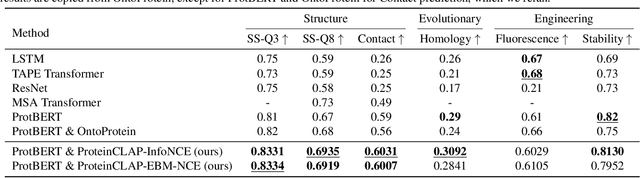
Current AI-assisted protein design mainly utilizes protein sequential and structural information. Meanwhile, there exists tremendous knowledge curated by humans in the text format describing proteins' high-level properties. Yet, whether the incorporation of such text data can help protein design tasks has not been explored. To bridge this gap, we propose ProteinDT, a multi-modal framework that leverages textual descriptions for protein design. ProteinDT consists of three subsequent steps: ProteinCLAP that aligns the representation of two modalities, a facilitator that generates the protein representation from the text modality, and a decoder that generates the protein sequences from the representation. To train ProteinDT, we construct a large dataset, SwissProtCLAP, with 441K text and protein pairs. We empirically verify the effectiveness of ProteinDT from three aspects: (1) consistently superior performance on four out of six protein property prediction benchmarks; (2) over 90% accuracy for text-guided protein generation; and (3) promising results for zero-shot text-guided protein editing.
Forecasting subcritical cylinder wakes with Fourier Neural Operators
Jan 19, 2023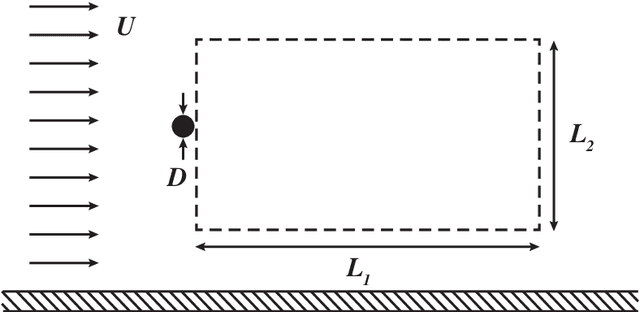
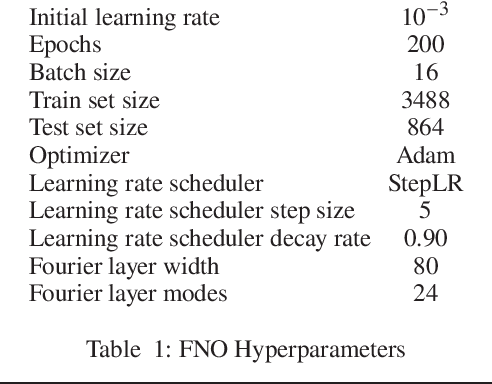
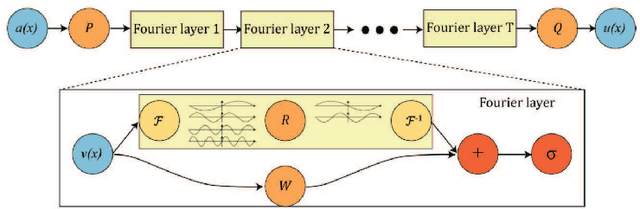
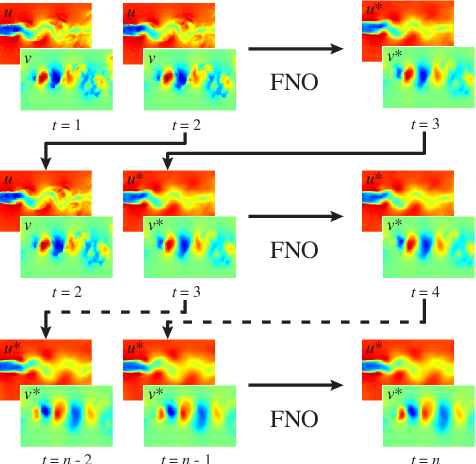
We apply Fourier neural operators (FNOs), a state-of-the-art operator learning technique, to forecast the temporal evolution of experimentally measured velocity fields. FNOs are a recently developed machine learning method capable of approximating solution operators to systems of partial differential equations through data alone. The learned FNO solution operator can be evaluated in milliseconds, potentially enabling faster-than-real-time modeling for predictive flow control in physical systems. Here we use FNOs to predict how physical fluid flows evolve in time, training with particle image velocimetry measurements depicting cylinder wakes in the subcritical vortex shedding regime. We train separate FNOs at Reynolds numbers ranging from Re = 240 to Re = 3060 and study how increasingly turbulent flow phenomena impact prediction accuracy. We focus here on a short prediction horizon of ten non-dimensionalized time-steps, as would be relevant for problems of predictive flow control. We find that FNOs are capable of accurately predicting the evolution of experimental velocity fields throughout the range of Reynolds numbers tested (L2 norm error < 0.1) despite being provided with limited and imperfect flow observations. Given these results, we conclude that this method holds significant potential for real-time predictive flow control of physical systems.
Vision Transformers Are Good Mask Auto-Labelers
Jan 10, 2023We propose Mask Auto-Labeler (MAL), a high-quality Transformer-based mask auto-labeling framework for instance segmentation using only box annotations. MAL takes box-cropped images as inputs and conditionally generates their mask pseudo-labels.We show that Vision Transformers are good mask auto-labelers. Our method significantly reduces the gap between auto-labeling and human annotation regarding mask quality. Instance segmentation models trained using the MAL-generated masks can nearly match the performance of their fully-supervised counterparts, retaining up to 97.4\% performance of fully supervised models. The best model achieves 44.1\% mAP on COCO instance segmentation (test-dev 2017), outperforming state-of-the-art box-supervised methods by significant margins. Qualitative results indicate that masks produced by MAL are, in some cases, even better than human annotations.
Multi-modal Molecule Structure-text Model for Text-based Retrieval and Editing
Dec 21, 2022There is increasing adoption of artificial intelligence in drug discovery. However, existing works use machine learning to mainly utilize the chemical structures of molecules yet ignore the vast textual knowledge available in chemistry. Incorporating textual knowledge enables us to realize new drug design objectives, adapt to text-based instructions, and predict complex biological activities. We present a multi-modal molecule structure-text model, MoleculeSTM, by jointly learning molecule's chemical structures and textual descriptions via a contrastive learning strategy. To train MoleculeSTM, we construct the largest multi-modal dataset to date, namely PubChemSTM, with over 280K chemical structure-text pairs. To demonstrate the effectiveness and utility of MoleculeSTM, we design two challenging zero-shot tasks based on text instructions, including structure-text retrieval and molecule editing. MoleculeSTM possesses two main properties: open vocabulary and compositionality via natural language. In experiments, MoleculeSTM obtains the state-of-the-art generalization ability to novel biochemical concepts across various benchmarks.