 Add to Chrome
 Add to Firefox
 Add to Edge
TemporalGS: Training-Free Plug-and-Play Acceleration for 3D Gaussian Splatting Rendering via Temporal Priors
Jul 03, 2026
3D Gaussian Splatting (3DGS) has revolutionized novel-view synthesis with its fast and high-fidelity rendering. However, rendering at high FPS and low latency across various scenes remains a challenge, especially when large amounts of 3D Gaussian ellipsoids appear in the scene. To address this issue, we introduce TemporalGS, to the best of our knowledge, the first training-free plug-and-play algorithmic approach to accelerate 3DGS rendering without any post-training or post-processing, implemented on top of tile-based software rasterization. The key idea is that, instead of rendering frames independently as 3DGS, we leverage the temporal priors, represented by novel geometry and appearance buffers, etc., to reduce redundancy of Gaussian preprocessing, sorting, and rasterization operations of consecutive frames. Specifically, we propose two acceleration strategies: (1) temporal dynamic culling, which filters out Gaussians that contribute less to current frame rendering; (2) selective rendering, which renders only a small portion of tiles that cannot be approximated by the temporal priors. By adapting and interleaving these two strategies, TemporalGS yields a simple but effective plug-and-play solution for 3DGS rendering speed-up without any training. Extensive experiments show that TemporalGS achieves comparable or even better performance compared to existing state-of-the-art post-training or post-processing-based 3DGS rendering acceleration approaches. TemporalGS can significantly enhance the rendering speed of various 3DGS methods, achieving up to $1.48\times$ acceleration, while maintaining competitive rendering quality. We further extend our TemporalGS to hardware rasterization-based 3DGS to show the portability of our algorithm.

From Item-Only to Query-Item: Query-Conditioned Generative Search with QGS in Quark
May 25, 2026Generative sequence models have shown strong results in recommendation. Applying them to search ranking is more challenging. Search behavior is inherently query-driven. Each query switch introduces a sharp topic shift in the user's interaction history. Existing generative methods flatten queries and items into a single token sequence. They do not distinguish query boundaries. This causes the model to mix different query intents into one prediction target, resulting in noisy supervision. We present Query-Conditioned Generative Search (QGS). QGS encodes each interaction as a (query, item) pair token. It trains with a query-conditioned next-item objective. The prediction target changes from a noisy marginal P(item_{t+1}|context_{<=t}) to a clean conditional P(item_{t+1}|context_{<=t}, query_{t+1}). This directly removes the semantic discontinuity caused by query switches. Encoding long interaction histories with standard attention has quadratic cost. This is impractical under strict online latency budgets. We introduce a Linear HSTU encoder. It replaces full attention with causal linear recurrence. Per-layer complexity drops from O(L^2) to O(L) with no loss in ranking quality. Traditional search ranking depends on hand-crafted features like text-matching scores, statistical signals, and behavioral features. We propose HFG-Attention to preserve them in the generative framework. It organizes heterogeneous features into semantic groups and fuses them through a dedicated attention block. This bridges sparse engineered signals with dense sequential representations. QGS is deployed in the ranking module of Quark Search, a major commercial search engine in China. Online A/B tests show statistically significant gains: +0.62% CTR, +0.38% Click-Search Ratio, and +3.55% PV Duration over the production deep learning baseline.
HorizonDrive: Self-Corrective Autoregressive World Model for Long-horizon Driving Simulation
May 12, 2026Closed-loop driving simulation requires real-time interaction beyond short offline clips, pushing current driving world models toward autoregressive (AR) rollout. Existing AR distillation approaches typically rely on frame sinks or student-side degradation training. The former transfers poorly to driving due to fast ego-motion and rapid scene changes, while the latter remains bounded by the teacher's single-pass output length and thus provides only a limited supervision horizon. A natural question is: can the teacher itself be extended via AR rollout to provide unbounded-horizon supervision at bounded memory cost? The key difficulty is that a standard teacher drifts under its own predictions, contaminating the supervision it provides. Our key insight is to make the teacher rollout-capable, ensuring reliable supervision from its own AR rollouts. This is instantiated as HorizonDrive, an anti-drifting training-and-distillation framework for AR driving simulation. First, scheduled rollout recovery (SRR) trains the base model to reconstruct ground-truth future clips from prediction-corrupted histories, yielding a teacher that remains stable across long AR rollouts. Second, the rollout-capable teacher is extended via AR rollout, providing long-horizon distribution-matching supervision under bounded memory, while a short-window student aligns to it with teacher rollout DMD (TRD) for efficient real-time deployment. HorizonDrive natively supports minute-scale AR rollout under bounded memory; on nuScenes, HorizonDrive reduces FID by 52% and FVD by 37%, and lowers ARE and DTW by 21% and 9% relative to the strongest long-horizon streaming baselines, while remaining competitive with single-pass driving video generators.
Driving with DINO: Vision Foundation Features as a Unified Bridge for Sim-to-Real Generation in Autonomous Driving
Feb 09, 2026Driven by the emergence of Controllable Video Diffusion, existing Sim2Real methods for autonomous driving video generation typically rely on explicit intermediate representations to bridge the domain gap. However, these modalities face a fundamental Consistency-Realism Dilemma. Low-level signals (e.g., edges, blurred images) ensure precise control but compromise realism by "baking in" synthetic artifacts, whereas high-level priors (e.g., depth, semantics, HDMaps) facilitate photorealism but lack the structural detail required for consistent guidance. In this work, we present Driving with DINO (DwD), a novel framework that leverages Vision Foundation Module (VFM) features as a unified bridge between the simulation and real-world domains. We first identify that these features encode a spectrum of information, from high-level semantics to fine-grained structure. To effectively utilize this, we employ Principal Subspace Projection to discard the high-frequency elements responsible for "texture baking," while concurrently introducing Random Channel Tail Drop to mitigate the structural loss inherent in rigid dimensionality reduction, thereby reconciling realism with control consistency. Furthermore, to fully leverage DINOv3's high-resolution capabilities for enhancing control precision, we introduce a learnable Spatial Alignment Module that adapts these high-resolution features to the diffusion backbone. Finally, we propose a Causal Temporal Aggregator employing causal convolutions to explicitly preserve historical motion context when integrating frame-wise DINO features, which effectively mitigates motion blur and guarantees temporal stability. Project page: https://albertchen98.github.io/DwD-project/
Efficient LLM Safety Evaluation through Multi-Agent Debate
Nov 09, 2025Safety evaluation of large language models (LLMs) increasingly relies on LLM-as-a-Judge frameworks, but the high cost of frontier models limits scalability. We propose a cost-efficient multi-agent judging framework that employs Small Language Models (SLMs) through structured debates among critic, defender, and judge agents. To rigorously assess safety judgments, we construct HAJailBench, a large-scale human-annotated jailbreak benchmark comprising 12,000 adversarial interactions across diverse attack methods and target models. The dataset provides fine-grained, expert-labeled ground truth for evaluating both safety robustness and judge reliability. Our SLM-based framework achieves agreement comparable to GPT-4o judges on HAJailBench while substantially reducing inference cost. Ablation results show that three rounds of debate yield the optimal balance between accuracy and efficiency. These findings demonstrate that structured, value-aligned debate enables SLMs to capture semantic nuances of jailbreak attacks and that HAJailBench offers a reliable foundation for scalable LLM safety evaluation.
Cambrian-S: Towards Spatial Supersensing in Video
Nov 06, 2025We argue that progress in true multimodal intelligence calls for a shift from reactive, task-driven systems and brute-force long context towards a broader paradigm of supersensing. We frame spatial supersensing as four stages beyond linguistic-only understanding: semantic perception (naming what is seen), streaming event cognition (maintaining memory across continuous experiences), implicit 3D spatial cognition (inferring the world behind pixels), and predictive world modeling (creating internal models that filter and organize information). Current benchmarks largely test only the early stages, offering narrow coverage of spatial cognition and rarely challenging models in ways that require true world modeling. To drive progress in spatial supersensing, we present VSI-SUPER, a two-part benchmark: VSR (long-horizon visual spatial recall) and VSC (continual visual spatial counting). These tasks require arbitrarily long video inputs yet are resistant to brute-force context expansion. We then test data scaling limits by curating VSI-590K and training Cambrian-S, achieving +30% absolute improvement on VSI-Bench without sacrificing general capabilities. Yet performance on VSI-SUPER remains limited, indicating that scale alone is insufficient for spatial supersensing. We propose predictive sensing as a path forward, presenting a proof-of-concept in which a self-supervised next-latent-frame predictor leverages surprise (prediction error) to drive memory and event segmentation. On VSI-SUPER, this approach substantially outperforms leading proprietary baselines, showing that spatial supersensing requires models that not only see but also anticipate, select, and organize experience.
BPQA Dataset: Evaluating How Well Language Models Leverage Blood Pressures to Answer Biomedical Questions
Mar 06, 2025


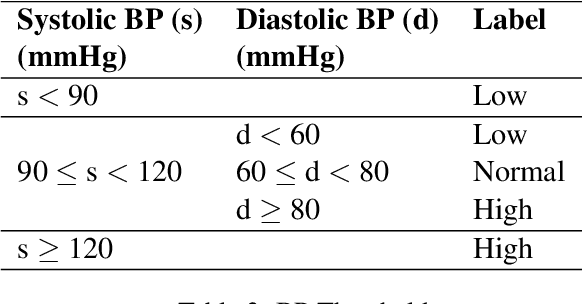
Clinical measurements such as blood pressures and respiration rates are critical in diagnosing and monitoring patient outcomes. It is an important component of biomedical data, which can be used to train transformer-based language models (LMs) for improving healthcare delivery. It is, however, unclear whether LMs can effectively interpret and use clinical measurements. We investigate two questions: First, can LMs effectively leverage clinical measurements to answer related medical questions? Second, how to enhance an LM's performance on medical question-answering (QA) tasks that involve measurements? We performed a case study on blood pressure readings (BPs), a vital sign routinely monitored by medical professionals. We evaluated the performance of four LMs: BERT, BioBERT, MedAlpaca, and GPT-3.5, on our newly developed dataset, BPQA (Blood Pressure Question Answering). BPQA contains $100$ medical QA pairs that were verified by medical students and designed to rely on BPs . We found that GPT-3.5 and MedAlpaca (larger and medium sized LMs) benefit more from the inclusion of BPs than BERT and BioBERT (small sized LMs). Further, augmenting measurements with labels improves the performance of BioBERT and Medalpaca (domain specific LMs), suggesting that retrieval may be useful for improving domain-specific LMs.
Refining Packing and Shuffling Strategies for Enhanced Performance in Generative Language Models
Aug 19, 2024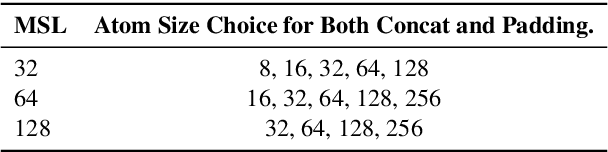
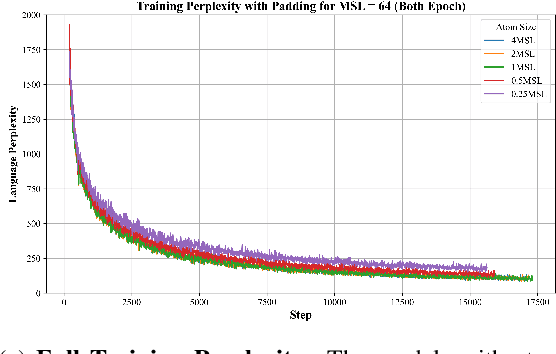
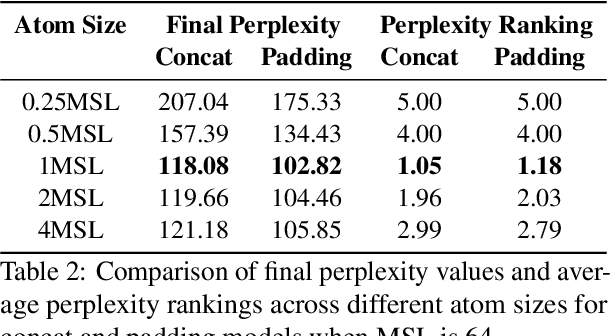
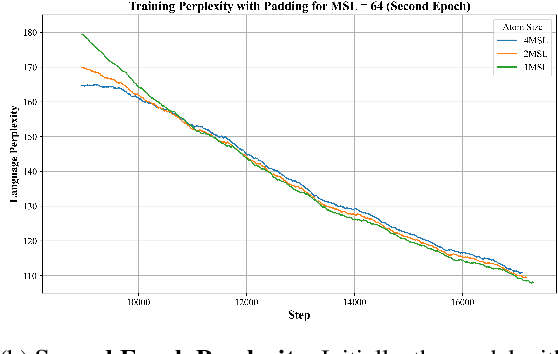
Packing and shuffling tokens is a common practice in training auto-regressive language models (LMs) to prevent overfitting and improve efficiency. Typically documents are concatenated to chunks of maximum sequence length (MSL) and then shuffled. However setting the atom size, the length for each data chunk accompanied by random shuffling, to MSL may lead to contextual incoherence due to tokens from different documents being packed into the same chunk. An alternative approach is to utilize padding, another common data packing strategy, to avoid contextual incoherence by only including one document in each shuffled chunk. To optimize both packing strategies (concatenation vs padding), we investigated the optimal atom size for shuffling and compared their performance and efficiency. We found that matching atom size to MSL optimizes performance for both packing methods (concatenation and padding), and padding yields lower final perplexity (higher performance) than concatenation at the cost of more training steps and lower compute efficiency. This trade-off informs the choice of packing methods in training language models.
Frequency Guidance Matters: Skeletal Action Recognition by Frequency-Aware Mixed Transformer
Jul 17, 2024Recently, transformers have demonstrated great potential for modeling long-term dependencies from skeleton sequences and thereby gained ever-increasing attention in skeleton action recognition. However, the existing transformer-based approaches heavily rely on the naive attention mechanism for capturing the spatiotemporal features, which falls short in learning discriminative representations that exhibit similar motion patterns. To address this challenge, we introduce the Frequency-aware Mixed Transformer (FreqMixFormer), specifically designed for recognizing similar skeletal actions with subtle discriminative motions. First, we introduce a frequency-aware attention module to unweave skeleton frequency representations by embedding joint features into frequency attention maps, aiming to distinguish the discriminative movements based on their frequency coefficients. Subsequently, we develop a mixed transformer architecture to incorporate spatial features with frequency features to model the comprehensive frequency-spatial patterns. Additionally, a temporal transformer is proposed to extract the global correlations across frames. Extensive experiments show that FreqMiXFormer outperforms SOTA on 3 popular skeleton action recognition datasets, including NTU RGB+D, NTU RGB+D 120, and NW-UCLA datasets.
FAD-SAR: A Novel Fishing Activity Detection System via Synthetic Aperture Radar Images Based on Deep Learning Method
Apr 28, 2024Illegal, unreported, and unregulated (IUU) fishing seriously affects various aspects of human life. However, current methods for detecting and monitoring IUU activities at sea have limitations. While Synthetic Aperture Radar (SAR) can complement existing vessel detection systems, extracting useful information from SAR images using traditional methods, especially for IUU fishing identification, poses challenges. This paper proposes a deep learning-based system for detecting fishing activities. We implemented this system on the xView3 dataset using six classical object detection models: Faster R-CNN, Cascade R-CNN, SSD, RetinaNet, FSAF, and FCOS. We applied improvement methods to enhance the performance of the Faster R-CNN model. Specifically, training the Faster R-CNN model using Online Hard Example Mining (OHEM) strategy improved the Avg-F1 value from 0.212 to 0.216, representing a 1.96% improvement.