 Add to Chrome
 Add to Firefox
 Add to Edge
Synthetic Forgetting without Access: A Few-shot Zero-glance Framework for Machine Unlearning
Nov 17, 2025
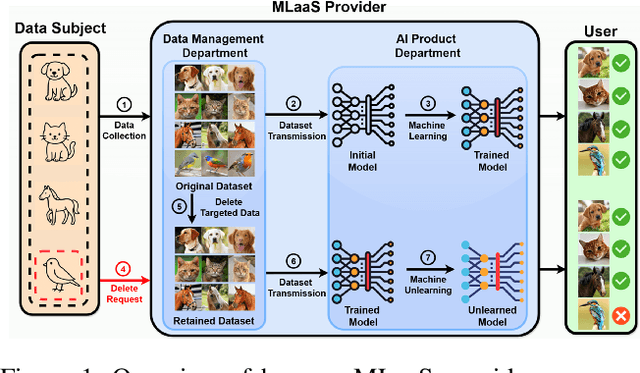
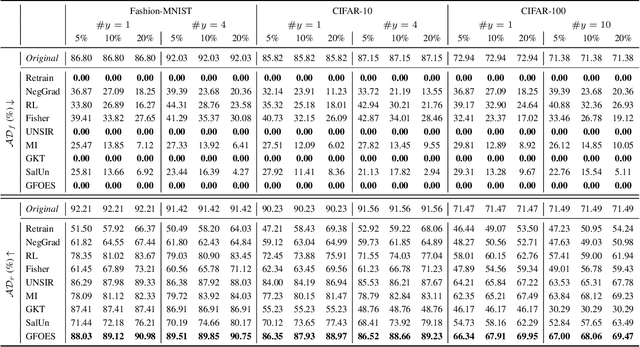
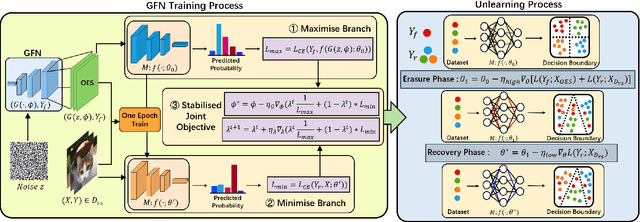
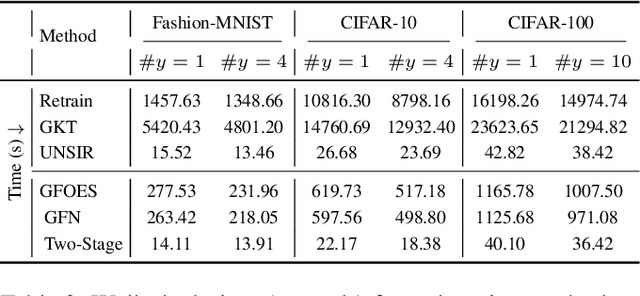
Machine unlearning aims to eliminate the influence of specific data from trained models to ensure privacy compliance. However, most existing methods assume full access to the original training dataset, which is often impractical. We address a more realistic yet challenging setting: few-shot zero-glance, where only a small subset of the retained data is available and the forget set is entirely inaccessible. We introduce GFOES, a novel framework comprising a Generative Feedback Network (GFN) and a two-phase fine-tuning procedure. GFN synthesises Optimal Erasure Samples (OES), which induce high loss on target classes, enabling the model to forget class-specific knowledge without access to the original forget data, while preserving performance on retained classes. The two-phase fine-tuning procedure enables aggressive forgetting in the first phase, followed by utility restoration in the second. Experiments on three image classification datasets demonstrate that GFOES achieves effective forgetting at both logit and representation levels, while maintaining strong performance using only 5% of the original data. Our framework offers a practical and scalable solution for privacy-preserving machine learning under data-constrained conditions.

From Noise to Latent: Generating Gaussian Latents for INR-Based Image Compression
Nov 11, 2025Recent implicit neural representation (INR)-based image compression methods have shown competitive performance by overfitting image-specific latent codes. However, they remain inferior to end-to-end (E2E) compression approaches due to the absence of expressive latent representations. On the other hand, E2E methods rely on transmitting latent codes and requiring complex entropy models, leading to increased decoding complexity. Inspired by the normalization strategy in E2E codecs where latents are transformed into Gaussian noise to demonstrate the removal of spatial redundancy, we explore the inverse direction: generating latents directly from Gaussian noise. In this paper, we propose a novel image compression paradigm that reconstructs image-specific latents from a multi-scale Gaussian noise tensor, deterministically generated using a shared random seed. A Gaussian Parameter Prediction (GPP) module estimates the distribution parameters, enabling one-shot latent generation via reparameterization trick. The predicted latent is then passed through a synthesis network to reconstruct the image. Our method eliminates the need to transmit latent codes while preserving latent-based benefits, achieving competitive rate-distortion performance on Kodak and CLIC dataset. To the best of our knowledge, this is the first work to explore Gaussian latent generation for learned image compression.
Agent Bain vs. Agent McKinsey: A New Text-to-SQL Benchmark for the Business Domain
Oct 08, 2025In the business domain, where data-driven decision making is crucial, text-to-SQL is fundamental for easy natural language access to structured data. While recent LLMs have achieved strong performance in code generation, existing text-to-SQL benchmarks remain focused on factual retrieval of past records. We introduce CORGI, a new benchmark specifically designed for real-world business contexts. CORGI is composed of synthetic databases inspired by enterprises such as Doordash, Airbnb, and Lululemon. It provides questions across four increasingly complex categories of business queries: descriptive, explanatory, predictive, and recommendational. This challenge calls for causal reasoning, temporal forecasting, and strategic recommendation, reflecting multi-level and multi-step agentic intelligence. We find that LLM performance drops on high-level questions, struggling to make accurate predictions and offer actionable plans. Based on execution success rate, the CORGI benchmark is about 21\% more difficult than the BIRD benchmark. This highlights the gap between popular LLMs and the need for real-world business intelligence. We release a public dataset and evaluation framework, and a website for public submissions.
FaMA: LLM-Empowered Agentic Assistant for Consumer-to-Consumer Marketplace
Sep 04, 2025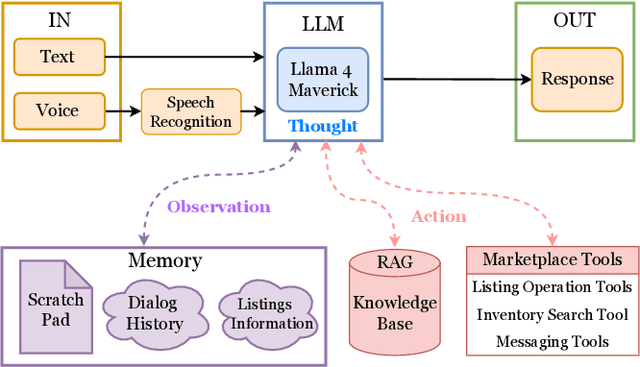
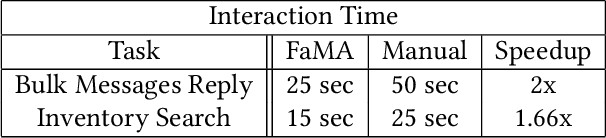

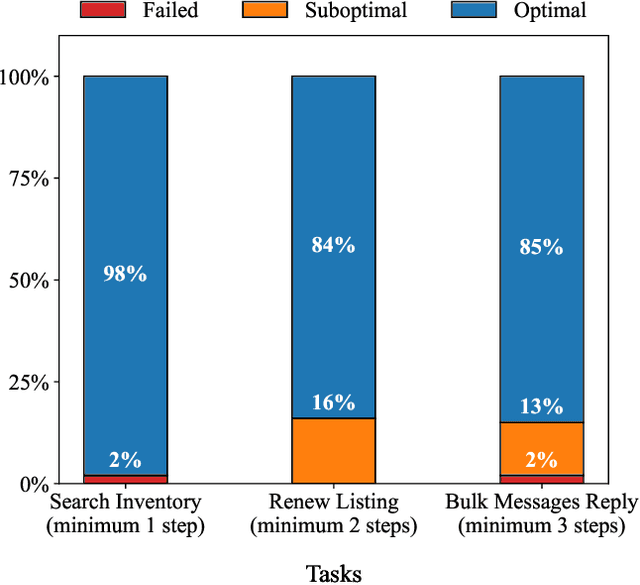
The emergence of agentic AI, powered by Large Language Models (LLMs), marks a paradigm shift from reactive generative systems to proactive, goal-oriented autonomous agents capable of sophisticated planning, memory, and tool use. This evolution presents a novel opportunity to address long-standing challenges in complex digital environments. Core tasks on Consumer-to-Consumer (C2C) e-commerce platforms often require users to navigate complex Graphical User Interfaces (GUIs), making the experience time-consuming for both buyers and sellers. This paper introduces a novel approach to simplify these interactions through an LLM-powered agentic assistant. This agent functions as a new, conversational entry point to the marketplace, shifting the primary interaction model from a complex GUI to an intuitive AI agent. By interpreting natural language commands, the agent automates key high-friction workflows. For sellers, this includes simplified updating and renewal of listings, and the ability to send bulk messages. For buyers, the agent facilitates a more efficient product discovery process through conversational search. We present the architecture for Facebook Marketplace Assistant (FaMA), arguing that this agentic, conversational paradigm provides a lightweight and more accessible alternative to traditional app interfaces, allowing users to manage their marketplace activities with greater efficiency. Experiments show FaMA achieves a 98% task success rate on solving complex tasks on the marketplace and enables up to a 2x speedup on interaction time.
It's All About In-Context Learning! Teaching Extremely Low-Resource Languages to LLMs
Aug 26, 2025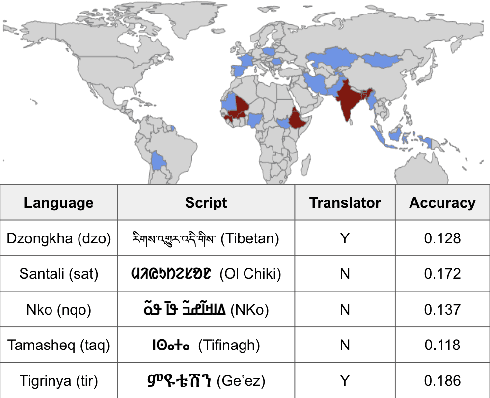
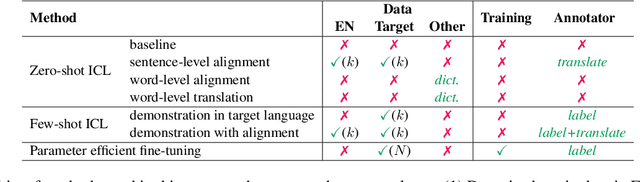
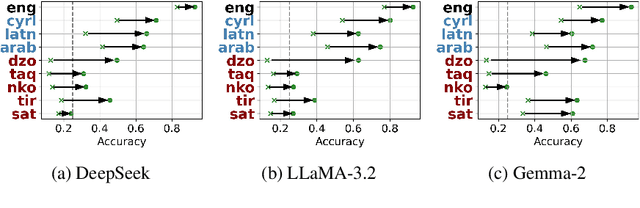
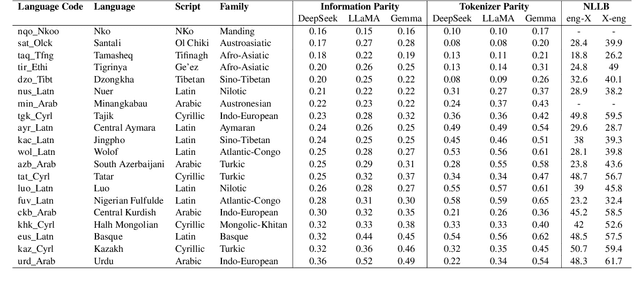
Extremely low-resource languages, especially those written in rare scripts, as shown in Figure 1, remain largely unsupported by large language models (LLMs). This is due in part to compounding factors such as the lack of training data. This paper delivers the first comprehensive analysis of whether LLMs can acquire such languages purely via in-context learning (ICL), with or without auxiliary alignment signals, and how these methods compare to parameter-efficient fine-tuning (PEFT). We systematically evaluate 20 under-represented languages across three state-of-the-art multilingual LLMs. Our findings highlight the limitation of PEFT when both language and its script are extremely under-represented by the LLM. In contrast, zero-shot ICL with language alignment is impressively effective on extremely low-resource languages, while few-shot ICL or PEFT is more beneficial for languages relatively better represented by LLMs. For LLM practitioners working on extremely low-resource languages, we summarise guidelines grounded by our results on adapting LLMs to low-resource languages, e.g., avoiding fine-tuning a multilingual model on languages of unseen scripts.
Development of an isotropic segmentation model for medial temporal lobe subregions on anisotropic MRI atlas using implicit neural representation
Aug 24, 2025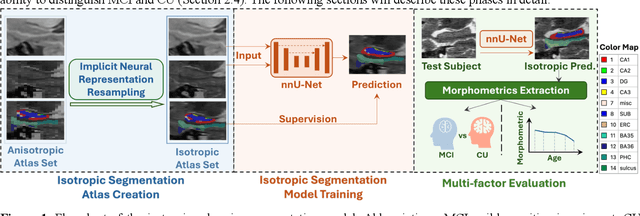
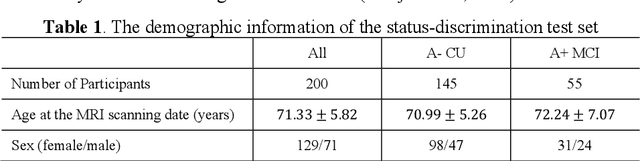
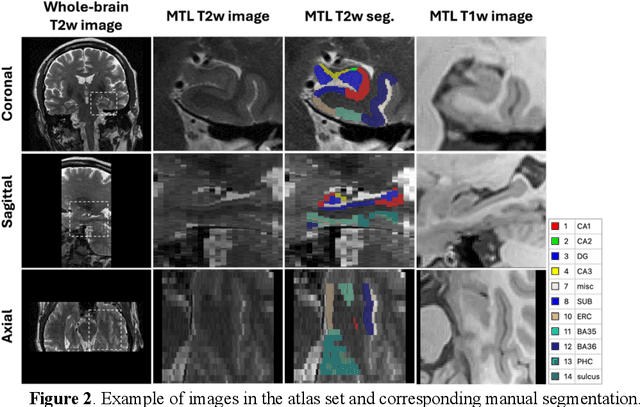
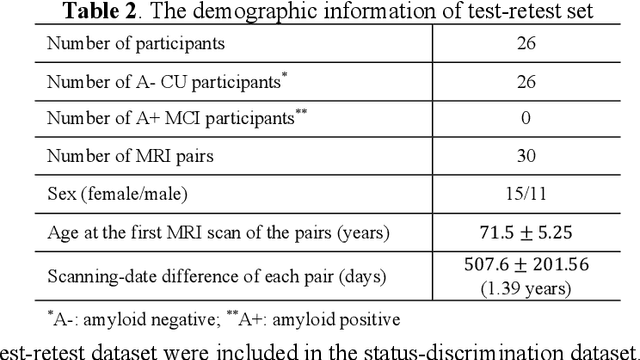
Imaging biomarkers in magnetic resonance imaging (MRI) are important tools for diagnosing and tracking Alzheimer's disease (AD). As medial temporal lobe (MTL) is the earliest region to show AD-related hallmarks, brain atrophy caused by AD can first be observed in the MTL. Accurate segmentation of MTL subregions and extraction of imaging biomarkers from them are important. However, due to imaging limitations, the resolution of T2-weighted (T2w) MRI is anisotropic, which makes it difficult to accurately extract the thickness of cortical subregions in the MTL. In this study, we used an implicit neural representation method to combine the resolution advantages of T1-weighted and T2w MRI to accurately upsample an MTL subregion atlas set from anisotropic space to isotropic space, establishing a multi-modality, high-resolution atlas set. Based on this atlas, we developed an isotropic MTL subregion segmentation model. In an independent test set, the cortical subregion thickness extracted using this isotropic model showed higher significance than an anisotropic method in distinguishing between participants with mild cognitive impairment and cognitively unimpaired (CU) participants. In longitudinal analysis, the biomarkers extracted using isotropic method showed greater stability in CU participants. This study improved the accuracy of AD imaging biomarkers without increasing the amount of atlas annotation work, which may help to more accurately quantify the relationship between AD and brain atrophy and provide more accurate measures for disease tracking.
Modeling Rapid Contextual Learning in the Visual Cortex with Fast-Weight Deep Autoencoder Networks
Aug 07, 2025Recent neurophysiological studies have revealed that the early visual cortex can rapidly learn global image context, as evidenced by a sparsification of population responses and a reduction in mean activity when exposed to familiar versus novel image contexts. This phenomenon has been attributed primarily to local recurrent interactions, rather than changes in feedforward or feedback pathways, supported by both empirical findings and circuit-level modeling. Recurrent neural circuits capable of simulating these effects have been shown to reshape the geometry of neural manifolds, enhancing robustness and invariance to irrelevant variations. In this study, we employ a Vision Transformer (ViT)-based autoencoder to investigate, from a functional perspective, how familiarity training can induce sensitivity to global context in the early layers of a deep neural network. We hypothesize that rapid learning operates via fast weights, which encode transient or short-term memory traces, and we explore the use of Low-Rank Adaptation (LoRA) to implement such fast weights within each Transformer layer. Our results show that (1) The proposed ViT-based autoencoder's self-attention circuit performs a manifold transform similar to a neural circuit model of the familiarity effect. (2) Familiarity training aligns latent representations in early layers with those in the top layer that contains global context information. (3) Familiarity training broadens the self-attention scope within the remembered image context. (4) These effects are significantly amplified by LoRA-based fast weights. Together, these findings suggest that familiarity training introduces global sensitivity to earlier layers in a hierarchical network, and that a hybrid fast-and-slow weight architecture may provide a viable computational model for studying rapid global context learning in the brain.
DISCOVERSE: Efficient Robot Simulation in Complex High-Fidelity Environments
Jul 29, 2025We present the first unified, modular, open-source 3DGS-based simulation framework for Real2Sim2Real robot learning. It features a holistic Real2Sim pipeline that synthesizes hyper-realistic geometry and appearance of complex real-world scenarios, paving the way for analyzing and bridging the Sim2Real gap. Powered by Gaussian Splatting and MuJoCo, Discoverse enables massively parallel simulation of multiple sensor modalities and accurate physics, with inclusive supports for existing 3D assets, robot models, and ROS plugins, empowering large-scale robot learning and complex robotic benchmarks. Through extensive experiments on imitation learning, Discoverse demonstrates state-of-the-art zero-shot Sim2Real transfer performance compared to existing simulators. For code and demos: https://air-discoverse.github.io/.
SceneSplat++: A Large Dataset and Comprehensive Benchmark for Language Gaussian Splatting
Jun 10, 20253D Gaussian Splatting (3DGS) serves as a highly performant and efficient encoding of scene geometry, appearance, and semantics. Moreover, grounding language in 3D scenes has proven to be an effective strategy for 3D scene understanding. Current Language Gaussian Splatting line of work fall into three main groups: (i) per-scene optimization-based, (ii) per-scene optimization-free, and (iii) generalizable approach. However, most of them are evaluated only on rendered 2D views of a handful of scenes and viewpoints close to the training views, limiting ability and insight into holistic 3D understanding. To address this gap, we propose the first large-scale benchmark that systematically assesses these three groups of methods directly in 3D space, evaluating on 1060 scenes across three indoor datasets and one outdoor dataset. Benchmark results demonstrate a clear advantage of the generalizable paradigm, particularly in relaxing the scene-specific limitation, enabling fast feed-forward inference on novel scenes, and achieving superior segmentation performance. We further introduce GaussianWorld-49K a carefully curated 3DGS dataset comprising around 49K diverse indoor and outdoor scenes obtained from multiple sources, with which we demonstrate the generalizable approach could harness strong data priors. Our codes, benchmark, and datasets will be made public to accelerate research in generalizable 3DGS scene understanding.
Bridging the Gap: In-Context Learning for Modeling Human Disagreement
Jun 06, 2025Large Language Models (LLMs) have shown strong performance on NLP classification tasks. However, they typically rely on aggregated labels-often via majority voting-which can obscure the human disagreement inherent in subjective annotations. This study examines whether LLMs can capture multiple perspectives and reflect annotator disagreement in subjective tasks such as hate speech and offensive language detection. We use in-context learning (ICL) in zero-shot and few-shot settings, evaluating four open-source LLMs across three label modeling strategies: aggregated hard labels, and disaggregated hard and soft labels. In few-shot prompting, we assess demonstration selection methods based on textual similarity (BM25, PLM-based), annotation disagreement (entropy), a combined ranking, and example ordering strategies (random vs. curriculum-based). Results show that multi-perspective generation is viable in zero-shot settings, while few-shot setups often fail to capture the full spectrum of human judgments. Prompt design and demonstration selection notably affect performance, though example ordering has limited impact. These findings highlight the challenges of modeling subjectivity with LLMs and the importance of building more perspective-aware, socially intelligent models.