 Add to Chrome
 Add to Firefox
 Add to Edge
Physics-informed Partitioned Coupled Neural Operator for Complex Networks
Oct 28, 2024
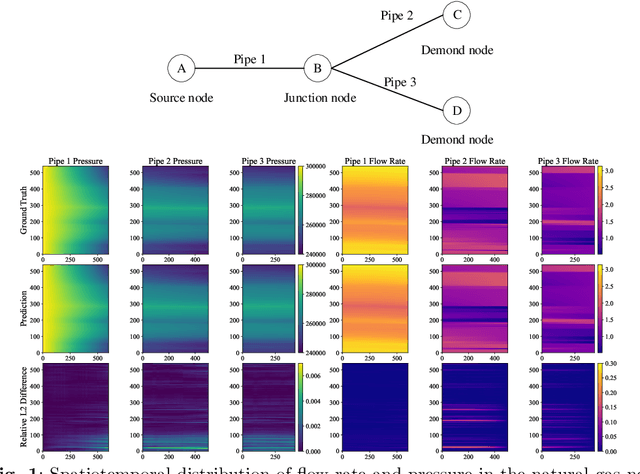
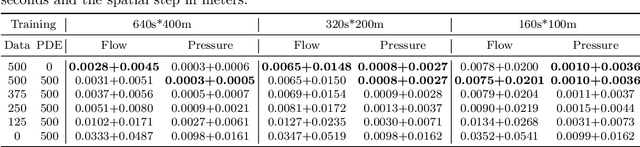

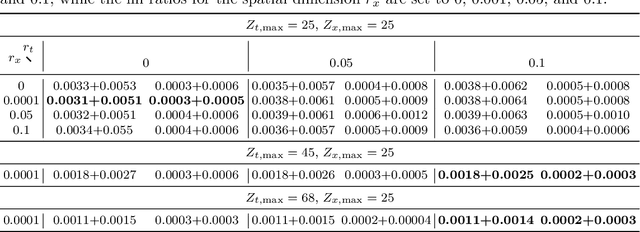
Physics-Informed Neural Operators provide efficient, high-fidelity simulations for systems governed by partial differential equations (PDEs). However, most existing studies focus only on multi-scale, multi-physics systems within a single spatial region, neglecting the case with multiple interconnected sub-regions, such as gas and thermal systems. To address this, this paper proposes a Physics-Informed Partitioned Coupled Neural Operator (PCNO) to enhance the simulation performance of such networks. Compared to the existing Fourier Neural Operator (FNO), this method designs a joint convolution operator within the Fourier layer, enabling global integration capturing all sub-regions. Additionally, grid alignment layers are introduced outside the Fourier layer to help the joint convolution operator accurately learn the coupling relationship between sub-regions in the frequency domain. Experiments on gas networks demonstrate that the proposed operator not only accurately simulates complex systems but also shows good generalization and low model complexity.

LFME: A Simple Framework for Learning from Multiple Experts in Domain Generalization
Oct 22, 2024
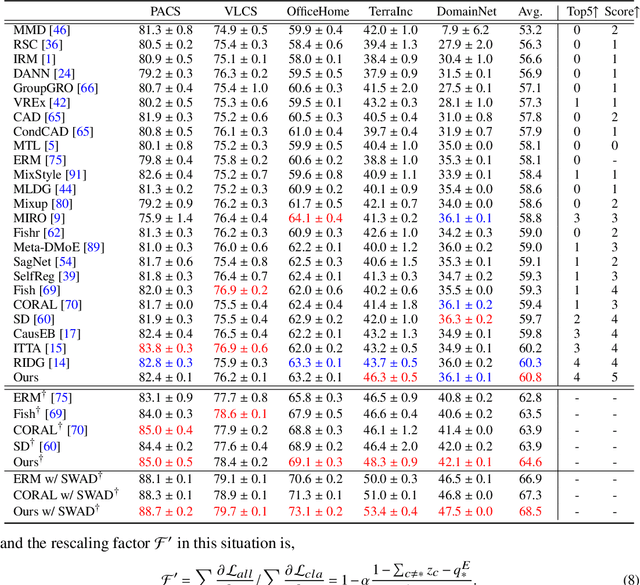
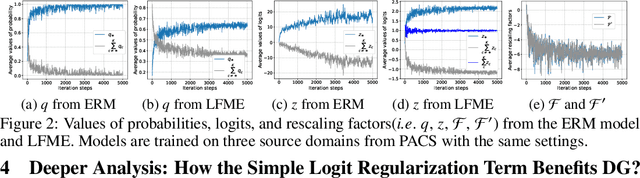
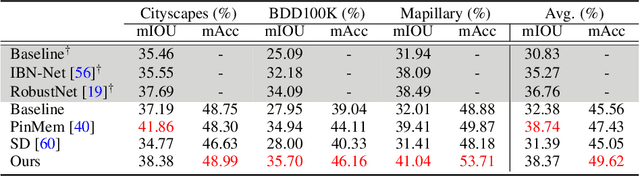
Domain generalization (DG) methods aim to maintain good performance in an unseen target domain by using training data from multiple source domains. While success on certain occasions are observed, enhancing the baseline across most scenarios remains challenging. This work introduces a simple yet effective framework, dubbed learning from multiple experts (LFME), that aims to make the target model an expert in all source domains to improve DG. Specifically, besides learning the target model used in inference, LFME will also train multiple experts specialized in different domains, whose output probabilities provide professional guidance by simply regularizing the logit of the target model. Delving deep into the framework, we reveal that the introduced logit regularization term implicitly provides effects of enabling the target model to harness more information, and mining hard samples from the experts during training. Extensive experiments on benchmarks from different DG tasks demonstrate that LFME is consistently beneficial to the baseline and can achieve comparable performance to existing arts. Code is available at~\url{https://github.com/liangchen527/LFME}.
Feature Augmentation for Self-supervised Contrastive Learning: A Closer Look
Oct 16, 2024

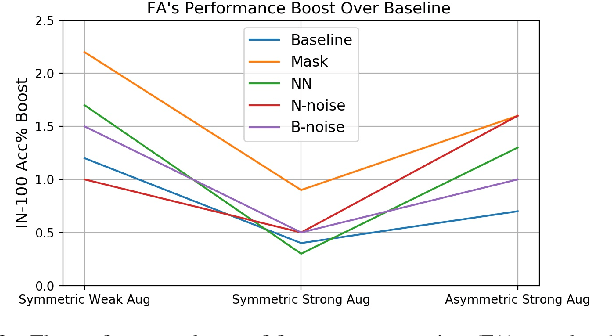

Self-supervised contrastive learning heavily relies on the view variance brought by data augmentation, so that it can learn a view-invariant pre-trained representation. Beyond increasing the view variance for contrast, this work focuses on improving the diversity of training data, to improve the generalization and robustness of the pre-trained models. To this end, we propose a unified framework to conduct data augmentation in the feature space, known as feature augmentation. This strategy is domain-agnostic, which augments similar features to the original ones and thus improves the data diversity. We perform a systematic investigation of various feature augmentation architectures, the gradient-flow skill, and the relationship between feature augmentation and traditional data augmentation. Our study reveals some practical principles for feature augmentation in self-contrastive learning. By integrating feature augmentation on the instance discrimination or the instance similarity paradigm, we consistently improve the performance of pre-trained feature learning and gain better generalization over the downstream image classification and object detection task.
Img2CAD: Conditioned 3D CAD Model Generation from Single Image with Structured Visual Geometry
Oct 04, 2024


In this paper, we propose Img2CAD, the first approach to our knowledge that uses 2D image inputs to generate CAD models with editable parameters. Unlike existing AI methods for 3D model generation using text or image inputs often rely on mesh-based representations, which are incompatible with CAD tools and lack editability and fine control, Img2CAD enables seamless integration between AI-based 3D reconstruction and CAD software. We have identified an innovative intermediate representation called Structured Visual Geometry (SVG), characterized by vectorized wireframes extracted from objects. This representation significantly enhances the performance of generating conditioned CAD models. Additionally, we introduce two new datasets to further support research in this area: ABC-mono, the largest known dataset comprising over 200,000 3D CAD models with rendered images, and KOCAD, the first dataset featuring real-world captured objects alongside their ground truth CAD models, supporting further research in conditioned CAD model generation.
StereoCrafter: Diffusion-based Generation of Long and High-fidelity Stereoscopic 3D from Monocular Videos
Sep 11, 2024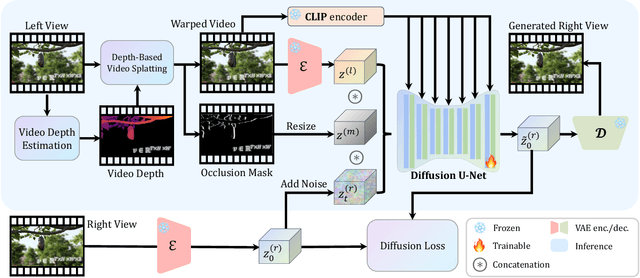


This paper presents a novel framework for converting 2D videos to immersive stereoscopic 3D, addressing the growing demand for 3D content in immersive experience. Leveraging foundation models as priors, our approach overcomes the limitations of traditional methods and boosts the performance to ensure the high-fidelity generation required by the display devices. The proposed system consists of two main steps: depth-based video splatting for warping and extracting occlusion mask, and stereo video inpainting. We utilize pre-trained stable video diffusion as the backbone and introduce a fine-tuning protocol for the stereo video inpainting task. To handle input video with varying lengths and resolutions, we explore auto-regressive strategies and tiled processing. Finally, a sophisticated data processing pipeline has been developed to reconstruct a large-scale and high-quality dataset to support our training. Our framework demonstrates significant improvements in 2D-to-3D video conversion, offering a practical solution for creating immersive content for 3D devices like Apple Vision Pro and 3D displays. In summary, this work contributes to the field by presenting an effective method for generating high-quality stereoscopic videos from monocular input, potentially transforming how we experience digital media.
Learn2Aggregate: Supervised Generation of Chvátal-Gomory Cuts Using Graph Neural Networks
Sep 10, 2024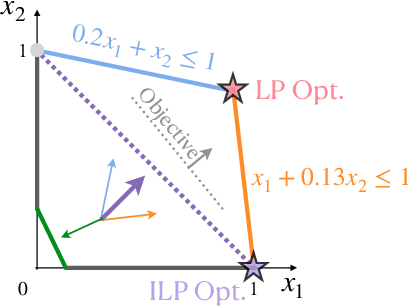
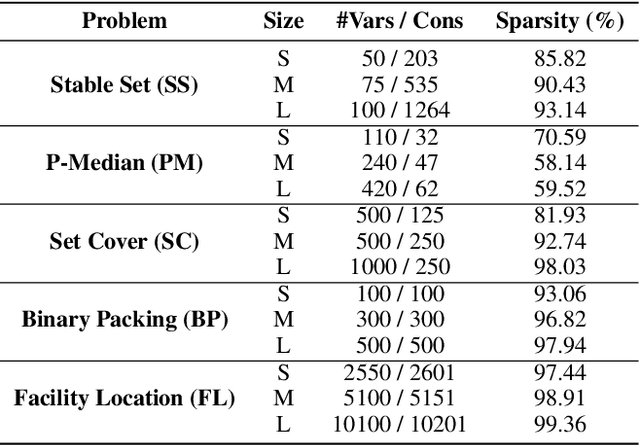
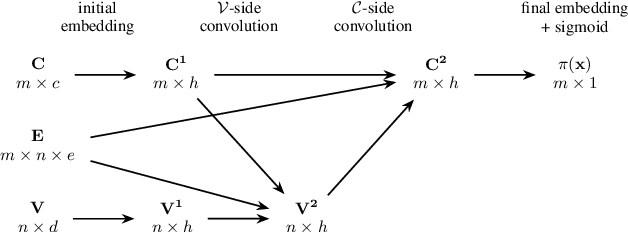
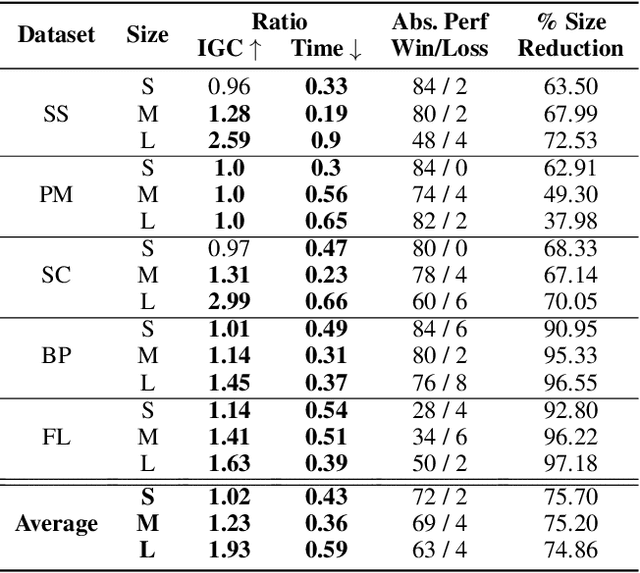
We present $\textit{Learn2Aggregate}$, a machine learning (ML) framework for optimizing the generation of Chv\'atal-Gomory (CG) cuts in mixed integer linear programming (MILP). The framework trains a graph neural network to classify useful constraints for aggregation in CG cut generation. The ML-driven CG separator selectively focuses on a small set of impactful constraints, improving runtimes without compromising the strength of the generated cuts. Key to our approach is the formulation of a constraint classification task which favours sparse aggregation of constraints, consistent with empirical findings. This, in conjunction with a careful constraint labeling scheme and a hybrid of deep learning and feature engineering, results in enhanced CG cut generation across five diverse MILP benchmarks. On the largest test sets, our method closes roughly $\textit{twice}$ as much of the integrality gap as the standard CG method while running 40$% faster. This performance improvement is due to our method eliminating 75% of the constraints prior to aggregation.
DepthCrafter: Generating Consistent Long Depth Sequences for Open-world Videos
Sep 03, 2024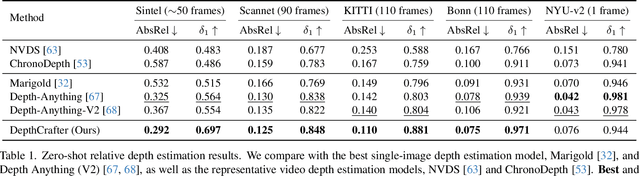
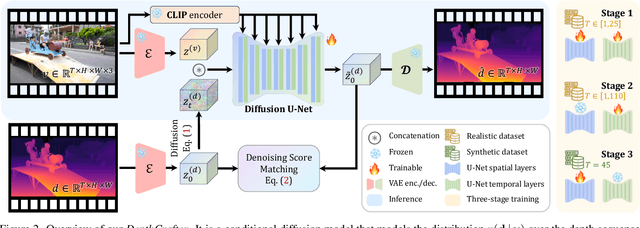
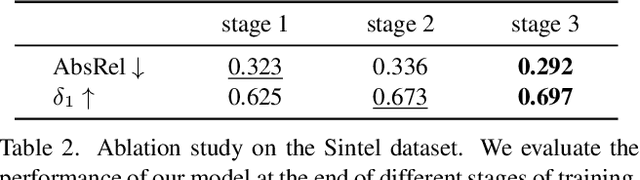
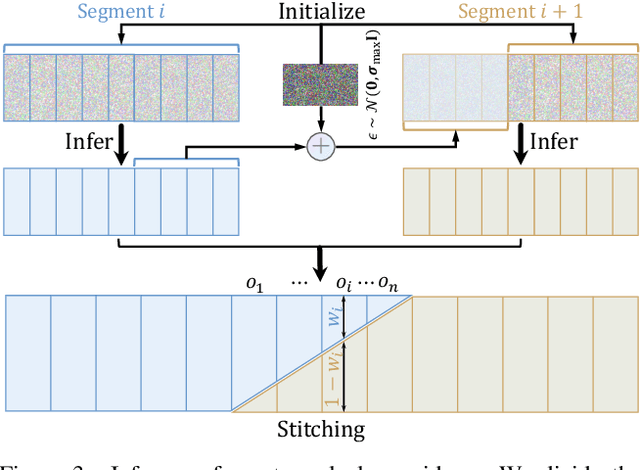
Despite significant advancements in monocular depth estimation for static images, estimating video depth in the open world remains challenging, since open-world videos are extremely diverse in content, motion, camera movement, and length. We present DepthCrafter, an innovative method for generating temporally consistent long depth sequences with intricate details for open-world videos, without requiring any supplementary information such as camera poses or optical flow. DepthCrafter achieves generalization ability to open-world videos by training a video-to-depth model from a pre-trained image-to-video diffusion model, through our meticulously designed three-stage training strategy with the compiled paired video-depth datasets. Our training approach enables the model to generate depth sequences with variable lengths at one time, up to 110 frames, and harvest both precise depth details and rich content diversity from realistic and synthetic datasets. We also propose an inference strategy that processes extremely long videos through segment-wise estimation and seamless stitching. Comprehensive evaluations on multiple datasets reveal that DepthCrafter achieves state-of-the-art performance in open-world video depth estimation under zero-shot settings. Furthermore, DepthCrafter facilitates various downstream applications, including depth-based visual effects and conditional video generation.
Towards Secure and Usable 3D Assets: A Novel Framework for Automatic Visible Watermarking
Aug 31, 2024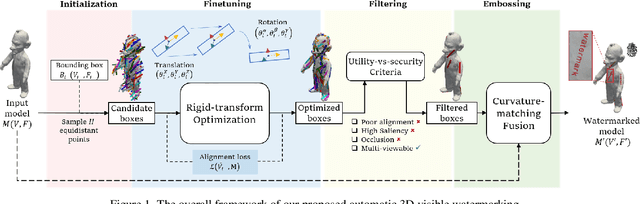
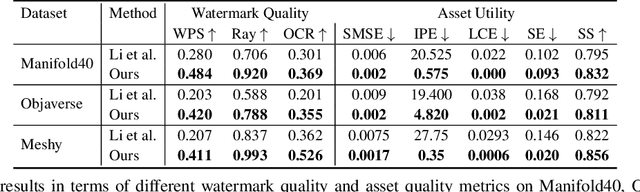
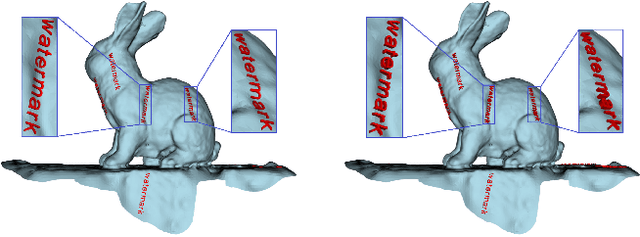
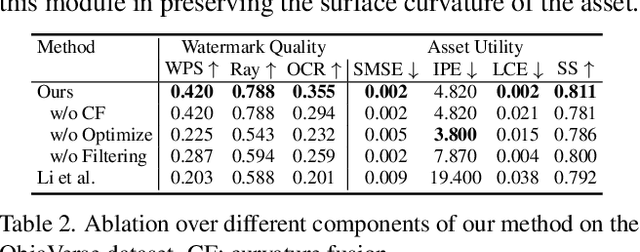
3D models, particularly AI-generated ones, have witnessed a recent surge across various industries such as entertainment. Hence, there is an alarming need to protect the intellectual property and avoid the misuse of these valuable assets. As a viable solution to address these concerns, we rigorously define the novel task of automated 3D visible watermarking in terms of two competing aspects: watermark quality and asset utility. Moreover, we propose a method of embedding visible watermarks that automatically determines the right location, orientation, and number of watermarks to be placed on arbitrary 3D assets for high watermark quality and asset utility. Our method is based on a novel rigid-body optimization that uses back-propagation to automatically learn transforms for ideal watermark placement. In addition, we propose a novel curvature-matching method for fusing the watermark into the 3D model that further improves readability and security. Finally, we provide a detailed experimental analysis on two benchmark 3D datasets validating the superior performance of our approach in comparison to baselines. Code and demo are available.
CustomCrafter: Customized Video Generation with Preserving Motion and Concept Composition Abilities
Aug 23, 2024


Customized video generation aims to generate high-quality videos guided by text prompts and subject's reference images. However, since it is only trained on static images, the fine-tuning process of subject learning disrupts abilities of video diffusion models (VDMs) to combine concepts and generate motions. To restore these abilities, some methods use additional video similar to the prompt to fine-tune or guide the model. This requires frequent changes of guiding videos and even re-tuning of the model when generating different motions, which is very inconvenient for users. In this paper, we propose CustomCrafter, a novel framework that preserves the model's motion generation and conceptual combination abilities without additional video and fine-tuning to recovery. For preserving conceptual combination ability, we design a plug-and-play module to update few parameters in VDMs, enhancing the model's ability to capture the appearance details and the ability of concept combinations for new subjects. For motion generation, we observed that VDMs tend to restore the motion of video in the early stage of denoising, while focusing on the recovery of subject details in the later stage. Therefore, we propose Dynamic Weighted Video Sampling Strategy. Using the pluggability of our subject learning modules, we reduce the impact of this module on motion generation in the early stage of denoising, preserving the ability to generate motion of VDMs. In the later stage of denoising, we restore this module to repair the appearance details of the specified subject, thereby ensuring the fidelity of the subject's appearance. Experimental results show that our method has a significant improvement compared to previous methods.
LaWa: Using Latent Space for In-Generation Image Watermarking
Aug 11, 2024
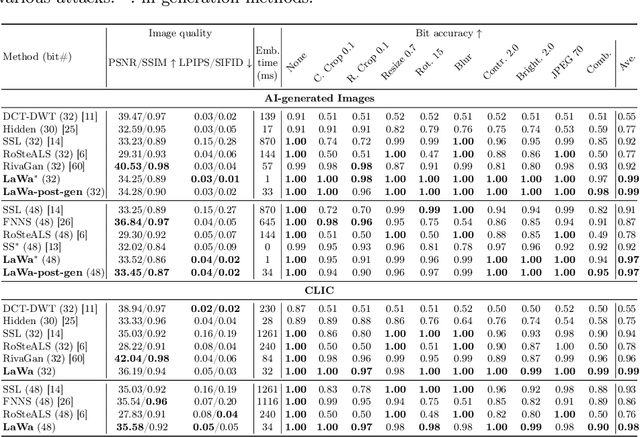
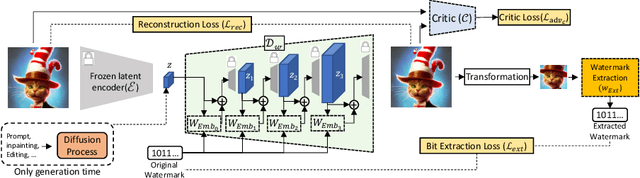

With generative models producing high quality images that are indistinguishable from real ones, there is growing concern regarding the malicious usage of AI-generated images. Imperceptible image watermarking is one viable solution towards such concerns. Prior watermarking methods map the image to a latent space for adding the watermark. Moreover, Latent Diffusion Models (LDM) generate the image in the latent space of a pre-trained autoencoder. We argue that this latent space can be used to integrate watermarking into the generation process. To this end, we present LaWa, an in-generation image watermarking method designed for LDMs. By using coarse-to-fine watermark embedding modules, LaWa modifies the latent space of pre-trained autoencoders and achieves high robustness against a wide range of image transformations while preserving perceptual quality of the image. We show that LaWa can also be used as a general image watermarking method. Through extensive experiments, we demonstrate that LaWa outperforms previous works in perceptual quality, robustness against attacks, and computational complexity, while having very low false positive rate. Code is available here.