 Add to Chrome
 Add to Firefox
 Add to Edge
Beyond Appearance: A Multi-cue Framework and Large-scale Benchmark for Pedestrian Association and Tracking on Mobile Aerial-Ground Platforms
Jul 26, 2026
Multi-view Multi-object Association and Tracking (MvMoAT) associates objects across camera views and tracks them over time, supporting identity persistence and forensic trajectory reconstruction in multi-platform cooperative perception. Unlike conventional multiple object tracking, MvMoAT faces frequent viewpoint shifts that distort appearance and undermine cross-view association and temporal tracking. We propose FUSION, a viewpoint-robust Feature Unification framework for multi-view aSsociation and IdentificatiON. Its Multi-cue Adaptive Combination (MAC) module adaptively integrates viewpoint-invariant cues with appearance features to improve cross-view association, while Online Multi-view Feature Synchronization (OMFS) aggregates pedestrian features across historical and cross-view frames for temporally consistent tracking. We also introduce RealMvMoAT, a large-scale benchmark featuring substantial inter- and intra-camera viewpoint variation. It contains 504.9K frames from 7 cameras (5 UAV and 2 ground views) across 10 scenes, with over 7.3M identity-labeled bounding boxes. All cameras exhibit random and substantial motion. To the best of our knowledge, RealMvMoAT is the largest MvMoAT dataset to date. Its scale, viewpoint diversity, complex platform motion, and realistic trajectories provide a comprehensive resource for future research. Experiments on RealMvMoAT and six public benchmarks show that FUSION achieves state-of-the-art performance.

4DVGGT-D: 4D Visual Geometry Transformer with Improved Dynamic Depth Estimation
May 12, 2026Reconstructing dynamic 4D scenes from monocular videos is a fundamental yet challenging task. While recent 3D foundation models provide strong geometric priors, their performance significantly degrades in dynamic environments. This degradation stems from a fundamental tension: the inherent coupling of camera ego-motion and object motion within global attention mechanisms. In this paper, we propose a novel, training-free progressive decoupling framework that disentangles dynamics from statics in a principled, coarse-to-fine manner. Our core insight is to resolve the tension by first stabilizing the camera pose, followed by geometric refinement. Specifically, our approach consists of three synergistic components: (1) a Dynamic-Mask-Guided Pose Decoupling module that isolates pose estimation from dynamic interference, yielding a stable motion-free reference frame; (2) a Topological Subspace Surgery mechanism that orthogonally decomposes the depth manifold, safely preserving dynamic objects while injecting refined, mask-aware geometry into static regions; and (3) an Information-Theoretic Confidence-Aware Fusion strategy that formulates depth integration as a heteroscedastic Bayesian inference problem, adaptively blending multi-pass predictions via inverse-variance weighting. Extensive experiments on standard 4D reconstruction benchmarks demonstrate that our method achieves consistent and substantial improvements across principal point-cloud metrics. Notably, our approach shows competitive performance in robust 4D scene reconstruction without requiring fine-tuning, suggesting the potential of mathematically grounded dynamic-static disentanglement.
Robust 4D Visual Geometry Transformer with Uncertainty-Aware Priors
Apr 10, 2026Reconstructing dynamic 4D scenes is an important yet challenging task. While 3D foundation models like VGGT excel in static settings, they often struggle with dynamic sequences where motion causes significant geometric ambiguity. To address this, we present a framework designed to disentangle dynamic and static components by modeling uncertainty across different stages of the reconstruction process. Our approach introduces three synergistic mechanisms: (1) Entropy-Guided Subspace Projection, which leverages information-theoretic weighting to adaptively aggregate multi-head attention distributions, effectively isolating dynamic motion cues from semantic noise; (2) Local-Consistency Driven Geometry Purification, which enforces spatial continuity via radius-based neighborhood constraints to eliminate structural outliers; and (3) Uncertainty-Aware Cross-View Consistency, which formulates multi-view projection refinement as a heteroscedastic maximum likelihood estimation problem, utilizing depth confidence as a probabilistic weight. Experiments on dynamic benchmarks show that our approach outperforms current state-of-the-art methods, reducing Mean Accuracy error by 13.43\% and improving segmentation F-measure by 10.49\%. Our framework maintains the efficiency of feed-forward inference and requires no task-specific fine-tuning or per-scene optimization.
HD-VGGT: High-Resolution Visual Geometry Transformer
Mar 28, 2026High-resolution imagery is essential for accurate 3D reconstruction, as many geometric details only emerge at fine spatial scales. Recent feed-forward approaches, such as the Visual Geometry Grounded Transformer (VGGT), have demonstrated the ability to infer scene geometry from large collections of images in a single forward pass. However, scaling these models to high-resolution inputs remains challenging: the number of tokens in transformer architectures grows rapidly with both image resolution and the number of views, leading to prohibitive computational and memory costs. Moreover, we observe that visually ambiguous regions, such as repetitive patterns, weak textures, or specular surfaces, often produce unstable feature tokens that degrade geometric inference, especially at higher resolutions. We introduce HD-VGGT, a dual-branch architecture for efficient and robust high-resolution 3D reconstruction. A low-resolution branch predicts a coarse, globally consistent geometry, while a high-resolution branch refines details via a learned feature upsampling module. To handle unstable tokens, we propose Feature Modulation, which suppresses unreliable features early in the transformer. HD-VGGT leverages high-resolution images and supervision without full-resolution transformer costs, achieving state-of-the-art reconstruction quality.
From Air to Wear: Personalized 3D Digital Fashion with AR/VR Immersive 3D Sketching
May 15, 2025In the era of immersive consumer electronics, such as AR/VR headsets and smart devices, people increasingly seek ways to express their identity through virtual fashion. However, existing 3D garment design tools remain inaccessible to everyday users due to steep technical barriers and limited data. In this work, we introduce a 3D sketch-driven 3D garment generation framework that empowers ordinary users - even those without design experience - to create high-quality digital clothing through simple 3D sketches in AR/VR environments. By combining a conditional diffusion model, a sketch encoder trained in a shared latent space, and an adaptive curriculum learning strategy, our system interprets imprecise, free-hand input and produces realistic, personalized garments. To address the scarcity of training data, we also introduce KO3DClothes, a new dataset of paired 3D garments and user-created sketches. Extensive experiments and user studies confirm that our method significantly outperforms existing baselines in both fidelity and usability, demonstrating its promise for democratized fashion design on next-generation consumer platforms.
Img2CAD: Conditioned 3D CAD Model Generation from Single Image with Structured Visual Geometry
Oct 04, 2024


In this paper, we propose Img2CAD, the first approach to our knowledge that uses 2D image inputs to generate CAD models with editable parameters. Unlike existing AI methods for 3D model generation using text or image inputs often rely on mesh-based representations, which are incompatible with CAD tools and lack editability and fine control, Img2CAD enables seamless integration between AI-based 3D reconstruction and CAD software. We have identified an innovative intermediate representation called Structured Visual Geometry (SVG), characterized by vectorized wireframes extracted from objects. This representation significantly enhances the performance of generating conditioned CAD models. Additionally, we introduce two new datasets to further support research in this area: ABC-mono, the largest known dataset comprising over 200,000 3D CAD models with rendered images, and KOCAD, the first dataset featuring real-world captured objects alongside their ground truth CAD models, supporting further research in conditioned CAD model generation.
KATO: Knowledge Alignment and Transfer for Transistor Sizing of Different Design and Technology
Apr 19, 2024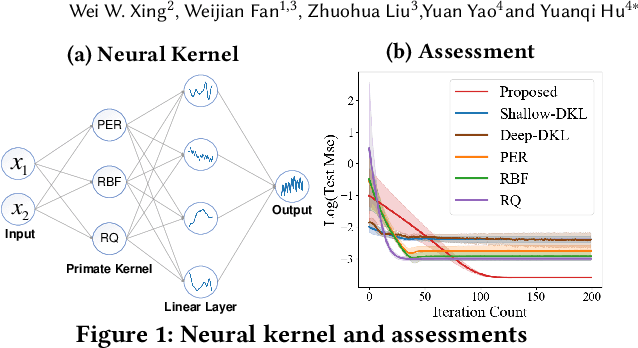
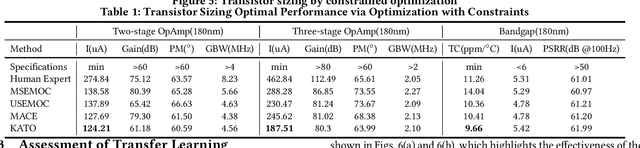
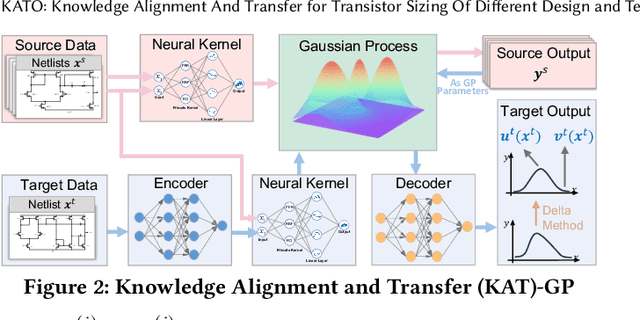
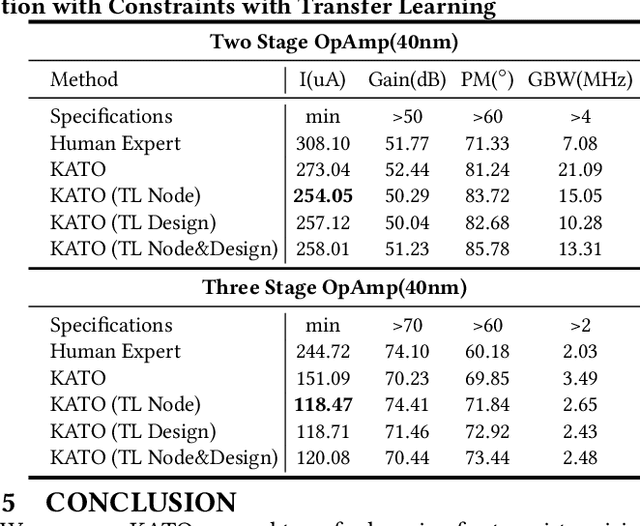
Automatic transistor sizing in circuit design continues to be a formidable challenge. Despite that Bayesian optimization (BO) has achieved significant success, it is circuit-specific, limiting the accumulation and transfer of design knowledge for broader applications. This paper proposes (1) efficient automatic kernel construction, (2) the first transfer learning across different circuits and technology nodes for BO, and (3) a selective transfer learning scheme to ensure only useful knowledge is utilized. These three novel components are integrated into BO with Multi-objective Acquisition Ensemble (MACE) to form Knowledge Alignment and Transfer Optimization (KATO) to deliver state-of-the-art performance: up to 2x simulation reduction and 1.2x design improvement over the baselines.