 Add to Chrome
 Add to Firefox
 Add to Edge
Wuying-Browser-Agent: Real-World Centric Fundamental Long-Horizon Browser Agents
Aug 18, 2026
Browser agents perform well on short, clean demonstrations, but real deployment is fundamentally different: agents must sustain dozens of decisions on live websites while recovering from mistakes and navigating complex UIs. We argue that closing this gap requires alignment at every level of the pipeline, including execution, supervision, optimization, and evaluation, rather than scale alone. We present Wuying-Browser-Agent, a unified framework that addresses each of these levels. A structured browser harness provides stable execution primitives and decision-oriented context management. Reflection and UI-specialized Curriculum SFT (RUIC-SFT) explicitly trains on recovery trajectories and complex-UI interactions. Divergence-Aware Online GRPO (DAO-GRPO) improves long-horizon credit assignment through potential-based reward shaping and divergence-aware step weighting. Finally, we introduce BrowserBench, a bilingual real-web benchmark of 350 tasks averaging 37.9 steps, because most existing benchmarks are too short to expose long-horizon failure modes. Wuying-Browser-Agent-27B achieves 80.6\% on WebVoyager, 66.7\% on Online-Mind2Web, and 65.1\% on BrowserBench, establishing a new open-source state of the art on browser-use benchmarks. The same pipeline also transfers beyond browser use, demonstrating strong general agentic ability and reaching an average score of 73.8 on Tau2-Bench, Claw-Eval, and BFCL-v4.

STEP-OPD: Rethinking Output Targets and Internal Dynamics in On-Policy Distillation for Diffusion Models
Aug 05, 2026On-policy distillation (OPD) has become an effective approach for consolidating multiple task-specialized image generation models into a single student. However, existing OPD methods optimize the student mainly to match the teacher's output velocity, making the teacher the upper limit of the optimization objective. While output-level supervision alone leaves the student's blockwise representation evolution underconstrained, which weakens the transfer of capabilities that must be progressively developed across layers. We propose STEP-OPD, an on-policy distillation framework for image generation that extends the student's learning target beyond the teacher and introduces explicit constraints on its internal representation evolution. Instead of treating the teacher as the final target, we use the velocity difference between each task-specific teacher and the shared base model as a direction for further learning and add a scaled version of this difference to the teacher velocity. In addition, we align the direction and magnitude of representation changes between the student and teacher, enabling the student to learn how representations are progressively transformed across network blocks. Experiments on compositional alignment, text rendering, and human preference show that our method consistently improves Standard OPD methods. In particular, it increases the GenEval score of DiffusionOPD from 0.927 to 0.961, while also improving OCR and all preference-based metrics. The resulting unified student surpasses the corresponding single-task teachers across all three capability groups, showing that output extrapolation enables beyond-teacher learning. And representation change alignment provides complementary guidance for the student's internal transformations.
EgoGenesis: Egocentric World-Action Modeling with Online Anchored Projective Memory and Action-3D RoPE
Jul 30, 2026Egocentric video offers rich manipulation experience for embodied AI, yet collecting diverse egocentric data across scenes, objects, motions, and embodiments remains costly. We present \method, an egocentric world-action simulator that synthesizes controllable, high-quality manipulation videos to expand scarce real-world training data. \method{} builds on a pretrained video generation prior and introduces two geometry-aware conditioning mechanisms. Online Anchored Projective Memory (OAPM) preserves a first-frame 3D scene anchor while periodically refreshing a recent state during autoregressive generation. Action-3D Rotary Position Embedding (A3D-RoPE) encodes end-effector motion with camera-aware 3D rotary coordinates, injecting action geometry into skeleton-to-video cross-attention for precise control. Together, these components improve visual fidelity, geometric stability, and action alignment in long egocentric rollouts. Moreover, augmenting 400 real trajectories with 400 \method-generated trajectories improves out-of-distribution real-robot success from 77\% to 84\% on single-arm tasks and from 53\% to 70\% on dual-arm tasks, demonstrating that the synthesized data substantially improve downstream WAM generalization.
SpecEdit: Training-Free Acceleration for Diffusion based Image Editing via Semantic Locking
May 04, 2026Diffusion-based image editing offers strong semantic controllability, but remains computationally expensive due to iterative high-resolution denoising over all spatial tokens. Dynamic-resolution sampling reduces this cost by performing early steps at reduced resolution. However, existing approaches prioritize upsampling using low-level heuristics such as edge detection or channel variance, which are weakly aligned with editing semantics and may lead to structural inconsistency. Moreover, spatial regions are often upsampled without verifying whether semantic modification is actually required, resulting in redundant high-resolution computation and accumulated errors. Therefore, we propose SpecEdit, a training-free dynamic-resolution framework tailored for diffusion-based image editing. SpecEdit follows a draft-and-verify scheme: a low-resolution draft first estimates the semantic outcome, after which token-level discrepancies are used to identify edit-relevant tokens for high-resolution denoising, while the remaining tokens stay at a coarse resolution. Experiments on Qwen-Image-Edit and FLUX.1-Kontext-dev demonstrate up to 10x and 7x acceleration, while maintaining strong quality. SpecEdit is complementary to step distillation and other acceleration techniques, achieving up to 13x speedup when combined with existing methods. Our code is in supplementary material and will be released on GitHub.
LLM-AutoDP: Automatic Data Processing via LLM Agents for Model Fine-tuning
Jan 28, 2026Large Language Models (LLMs) can be fine-tuned on domain-specific data to enhance their performance in specialized fields. However, such data often contains numerous low-quality samples, necessitating effective data processing (DP). In practice, DP strategies are typically developed through iterative manual analysis and trial-and-error adjustment. These processes inevitably incur high labor costs and may lead to privacy issues in high-privacy domains like healthcare due to direct human access to sensitive data. Thus, achieving automated data processing without exposing the raw data has become a critical challenge. To address this challenge, we propose LLM-AutoDP, a novel framework that leverages LLMs as agents to automatically generate and optimize data processing strategies. Our method generates multiple candidate strategies and iteratively refines them using feedback signals and comparative evaluations. This iterative in-context learning mechanism enables the agent to converge toward high-quality processing pipelines without requiring direct human intervention or access to the underlying data. To further accelerate strategy search, we introduce three key techniques: Distribution Preserving Sampling, which reduces data volume while maintaining distributional integrity; Processing Target Selection, which uses a binary classifier to identify low-quality samples for focused processing; Cache-and-Reuse Mechanism}, which minimizes redundant computations by reusing prior processing results. Results show that models trained on data processed by our framework achieve over 80% win rates against models trained on unprocessed data. Compared to AutoML baselines based on LLM agents, LLM-AutoDP achieves approximately a 65% win rate. Moreover, our acceleration techniques reduce the total searching time by up to 10 times, demonstrating both effectiveness and efficiency.
GradPruner: Gradient-Guided Layer Pruning Enabling Efficient Fine-Tuning and Inference for LLMs
Jan 27, 2026Fine-tuning Large Language Models (LLMs) with downstream data is often considered time-consuming and expensive. Structured pruning methods are primarily employed to improve the inference efficiency of pre-trained models. Meanwhile, they often require additional time and memory for training, knowledge distillation, structure search, and other strategies, making efficient model fine-tuning challenging to achieve. To simultaneously enhance the training and inference efficiency of downstream task fine-tuning, we introduce GradPruner, which can prune layers of LLMs guided by gradients in the early stages of fine-tuning. GradPruner uses the cumulative gradients of each parameter during the initial phase of fine-tuning to compute the Initial Gradient Information Accumulation Matrix (IGIA-Matrix) to assess the importance of layers and perform pruning. We sparsify the pruned layers based on the IGIA-Matrix and merge them with the remaining layers. Only elements with the same sign are merged to reduce interference from sign variations. We conducted extensive experiments on two LLMs across eight downstream datasets. Including medical, financial, and general benchmark tasks. The results demonstrate that GradPruner has achieved a parameter reduction of 40% with only a 0.99% decrease in accuracy. Our code is publicly available.
Prefix Probing: Lightweight Harmful Content Detection for Large Language Models
Dec 18, 2025Large language models often face a three-way trade-off among detection accuracy, inference latency, and deployment cost when used in real-world safety-sensitive applications. This paper introduces Prefix Probing, a black-box harmful content detection method that compares the conditional log-probabilities of "agreement/execution" versus "refusal/safety" opening prefixes and leverages prefix caching to reduce detection overhead to near first-token latency. During inference, the method requires only a single log-probability computation over the probe prefixes to produce a harmfulness score and apply a threshold, without invoking any additional models or multi-stage inference. To further enhance the discriminative power of the prefixes, we design an efficient prefix construction algorithm that automatically discovers highly informative prefixes, substantially improving detection performance. Extensive experiments demonstrate that Prefix Probing achieves detection effectiveness comparable to mainstream external safety models while incurring only minimal computational cost and requiring no extra model deployment, highlighting its strong practicality and efficiency.
AnchorSync: Global Consistency Optimization for Long Video Editing
Aug 20, 2025Editing long videos remains a challenging task due to the need for maintaining both global consistency and temporal coherence across thousands of frames. Existing methods often suffer from structural drift or temporal artifacts, particularly in minute-long sequences. We introduce AnchorSync, a novel diffusion-based framework that enables high-quality, long-term video editing by decoupling the task into sparse anchor frame editing and smooth intermediate frame interpolation. Our approach enforces structural consistency through a progressive denoising process and preserves temporal dynamics via multimodal guidance. Extensive experiments show that AnchorSync produces coherent, high-fidelity edits, surpassing prior methods in visual quality and temporal stability.
VeFIA: An Efficient Inference Auditing Framework for Vertical Federated Collaborative Software
Jul 03, 2025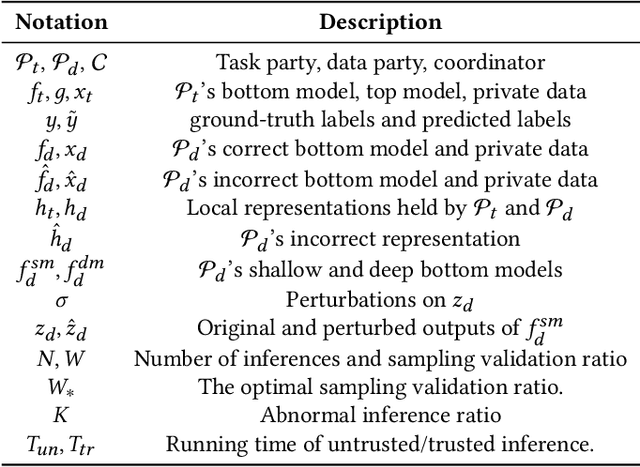
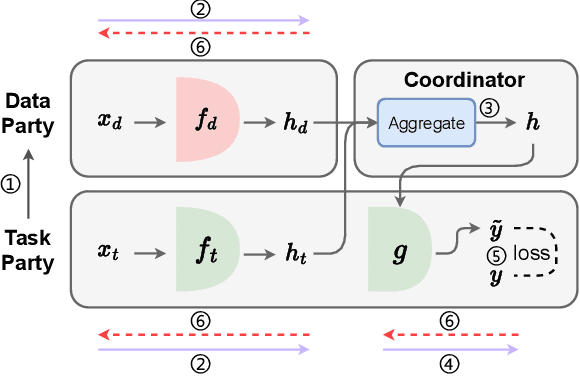
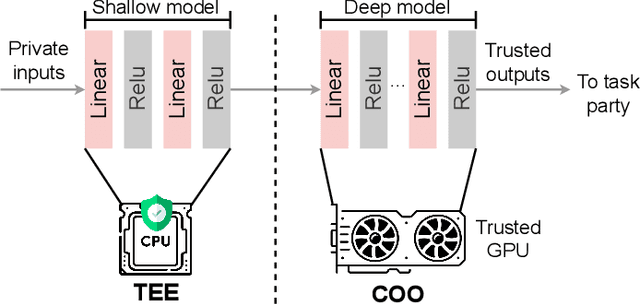
Vertical Federated Learning (VFL) is a distributed AI software deployment mechanism for cross-silo collaboration without accessing participants' data. However, existing VFL work lacks a mechanism to audit the execution correctness of the inference software of the data party. To address this problem, we design a Vertical Federated Inference Auditing (VeFIA) framework. VeFIA helps the task party to audit whether the data party's inference software is executed as expected during large-scale inference without leaking the data privacy of the data party or introducing additional latency to the inference system. The core of VeFIA is that the task party can use the inference results from a framework with Trusted Execution Environments (TEE) and the coordinator to validate the correctness of the data party's computation results. VeFIA guarantees that, as long as the abnormal inference exceeds 5.4%, the task party can detect execution anomalies in the inference software with a probability of 99.99%, without incurring any additional online inference latency. VeFIA's random sampling validation achieves 100% positive predictive value, negative predictive value, and true positive rate in detecting abnormal inference. To the best of our knowledge, this is the first paper to discuss the correctness of inference software execution in VFL.
Losing is for Cherishing: Data Valuation Based on Machine Unlearning and Shapley Value
May 22, 2025The proliferation of large models has intensified the need for efficient data valuation methods to quantify the contribution of individual data providers. Traditional approaches, such as game-theory-based Shapley value and influence-function-based techniques, face prohibitive computational costs or require access to full data and model training details, making them hardly achieve partial data valuation. To address this, we propose Unlearning Shapley, a novel framework that leverages machine unlearning to estimate data values efficiently. By unlearning target data from a pretrained model and measuring performance shifts on a reachable test set, our method computes Shapley values via Monte Carlo sampling, avoiding retraining and eliminating dependence on full data. Crucially, Unlearning Shapley supports both full and partial data valuation, making it scalable for large models (e.g., LLMs) and practical for data markets. Experiments on benchmark datasets and large-scale text corpora demonstrate that our approach matches the accuracy of state-of-the-art methods while reducing computational overhead by orders of magnitude. Further analysis confirms a strong correlation between estimated values and the true impact of data subsets, validating its reliability in real-world scenarios. This work bridges the gap between data valuation theory and practical deployment, offering a scalable, privacy-compliant solution for modern AI ecosystems.