 Add to Chrome
 Add to Firefox
 Add to Edge
Independently-Normalized SGD for Generalized-Smooth Nonconvex Optimization
Oct 17, 2024

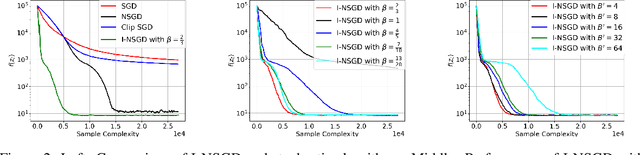

Recent studies have shown that many nonconvex machine learning problems meet a so-called generalized-smooth condition that extends beyond traditional smooth nonconvex optimization. However, the existing algorithms designed for generalized-smooth nonconvex optimization encounter significant limitations in both their design and convergence analysis. In this work, we first study deterministic generalized-smooth nonconvex optimization and analyze the convergence of normalized gradient descent under the generalized Polyak-Lojasiewicz condition. Our results provide a comprehensive understanding of the interplay between gradient normalization and function geometry. Then, for stochastic generalized-smooth nonconvex optimization, we propose an independently-normalized stochastic gradient descent algorithm, which leverages independent sampling, gradient normalization and clipping to achieve an $\mathcal{O}(\epsilon^{-4})$ sample complexity under relaxed assumptions. Experiments demonstrate the fast convergence of our algorithm.

WorldCuisines: A Massive-Scale Benchmark for Multilingual and Multicultural Visual Question Answering on Global Cuisines
Oct 16, 2024

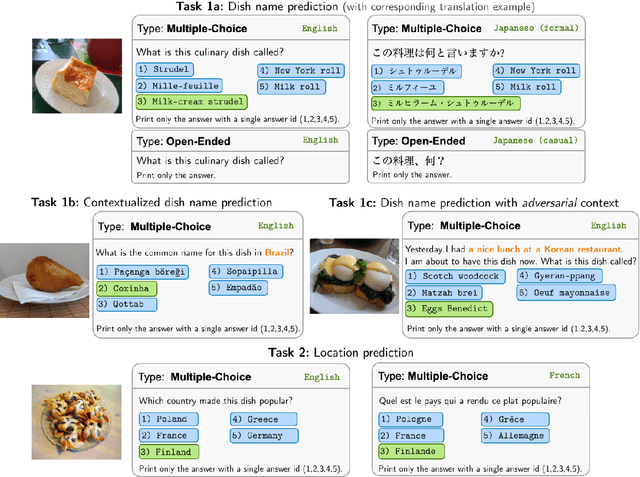

Vision Language Models (VLMs) often struggle with culture-specific knowledge, particularly in languages other than English and in underrepresented cultural contexts. To evaluate their understanding of such knowledge, we introduce WorldCuisines, a massive-scale benchmark for multilingual and multicultural, visually grounded language understanding. This benchmark includes a visual question answering (VQA) dataset with text-image pairs across 30 languages and dialects, spanning 9 language families and featuring over 1 million data points, making it the largest multicultural VQA benchmark to date. It includes tasks for identifying dish names and their origins. We provide evaluation datasets in two sizes (12k and 60k instances) alongside a training dataset (1 million instances). Our findings show that while VLMs perform better with correct location context, they struggle with adversarial contexts and predicting specific regional cuisines and languages. To support future research, we release a knowledge base with annotated food entries and images along with the VQA data.
ESVO2: Direct Visual-Inertial Odometry with Stereo Event Cameras
Oct 12, 2024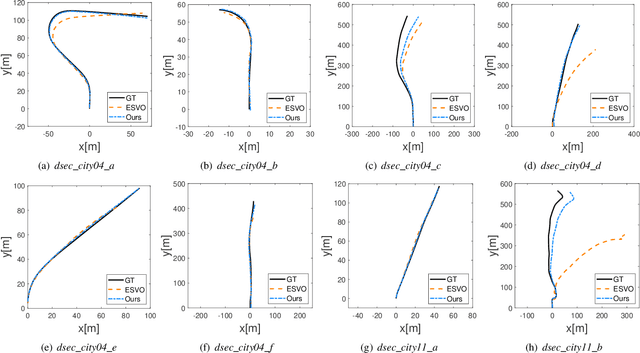
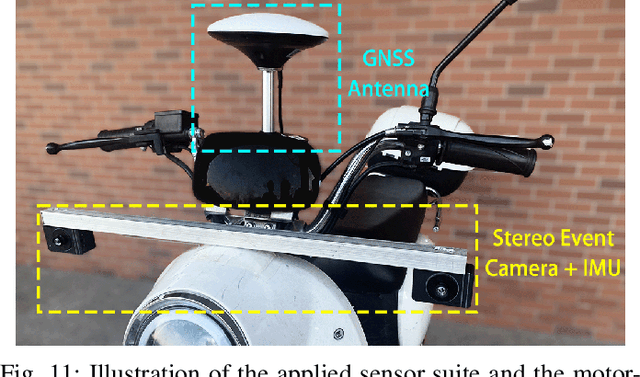
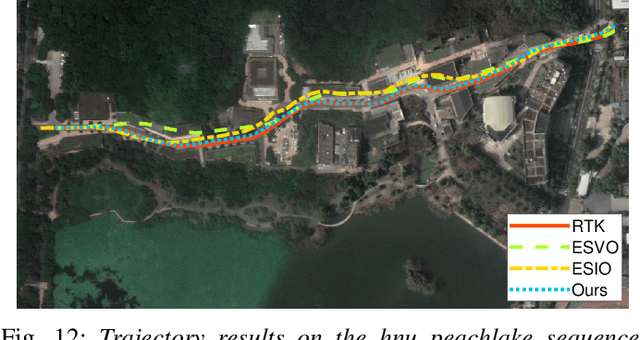
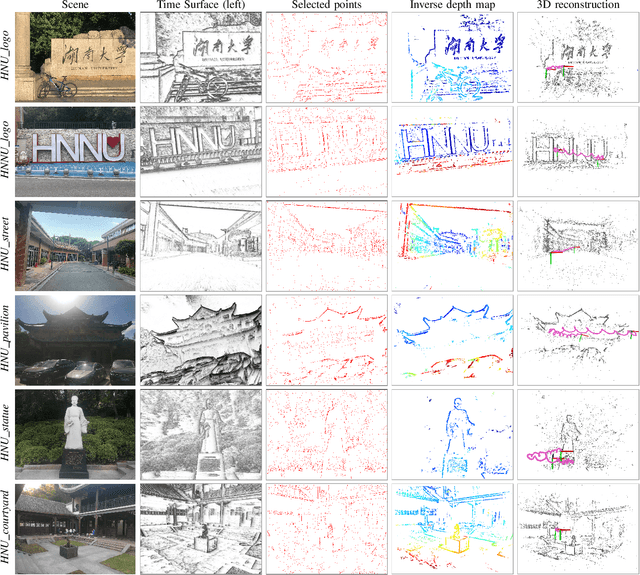
Event-based visual odometry is a specific branch of visual Simultaneous Localization and Mapping (SLAM) techniques, which aims at solving tracking and mapping sub-problems in parallel by exploiting the special working principles of neuromorphic (ie, event-based) cameras. Due to the motion-dependent nature of event data, explicit data association ie, feature matching under large-baseline view-point changes is hardly established, making direct methods a more rational choice. However, state-of-the-art direct methods are limited by the high computational complexity of the mapping sub-problem and the degeneracy of camera pose tracking in certain degrees of freedom (DoF) in rotation. In this paper, we resolve these issues by building an event-based stereo visual-inertial odometry system on top of our previous direct pipeline Event-based Stereo Visual Odometry. Specifically, to speed up the mapping operation, we propose an efficient strategy for sampling contour points according to the local dynamics of events. The mapping performance is also improved in terms of structure completeness and local smoothness by merging the temporal stereo and static stereo results. To circumvent the degeneracy of camera pose tracking in recovering the pitch and yaw components of general six-DoF motion, we introduce IMU measurements as motion priors via pre-integration. To this end, a compact back-end is proposed for continuously updating the IMU bias and predicting the linear velocity, enabling an accurate motion prediction for camera pose tracking. The resulting system scales well with modern high-resolution event cameras and leads to better global positioning accuracy in large-scale outdoor environments. Extensive evaluations on five publicly available datasets featuring different resolutions and scenarios justify the superior performance of the proposed system against five state-of-the-art methods.
CryoFM: A Flow-based Foundation Model for Cryo-EM Densities
Oct 11, 2024Cryo-electron microscopy (cryo-EM) is a powerful technique in structural biology and drug discovery, enabling the study of biomolecules at high resolution. Significant advancements by structural biologists using cryo-EM have led to the production of over 38,626 protein density maps at various resolutions1. However, cryo-EM data processing algorithms have yet to fully benefit from our knowledge of biomolecular density maps, with only a few recent models being data-driven but limited to specific tasks. In this study, we present CryoFM, a foundation model designed as a generative model, learning the distribution of high-quality density maps and generalizing effectively to downstream tasks. Built on flow matching, CryoFM is trained to accurately capture the prior distribution of biomolecular density maps. Furthermore, we introduce a flow posterior sampling method that leverages CRYOFM as a flexible prior for several downstream tasks in cryo-EM and cryo-electron tomography (cryo-ET) without the need for fine-tuning, achieving state-of-the-art performance on most tasks and demonstrating its potential as a foundational model for broader applications in these fields.
Efficient Top-k s-Biplexes Search over Large Bipartite Graphs
Sep 27, 2024In a bipartite graph, a subgraph is an $s$-biplex if each vertex of the subgraph is adjacent to all but at most $s$ vertices on the opposite set. The enumeration of $s$-biplexes from a given graph is a fundamental problem in bipartite graph analysis. However, in real-world data engineering, finding all $s$-biplexes is neither necessary nor computationally affordable. A more realistic problem is to identify some of the largest $s$-biplexes from the large input graph. We formulate the problem as the {\em top-$k$ $s$-biplex search (TBS) problem}, which aims to find the top-$k$ maximal $s$-biplexes with the most vertices, where $k$ is an input parameter. We prove that the TBS problem is NP-hard for any fixed $k\ge 1$. Then, we propose a branching algorithm, named MVBP, that breaks the simple $2^n$ enumeration algorithm. Furthermore, from a practical perspective, we investigate three techniques to improve the performance of MVBP: 2-hop decomposition, single-side bounds, and progressive search. Complexity analysis shows that the improved algorithm, named FastMVBP, has a running time $O^*(\gamma_s^{d_2})$, where $\gamma_s<2$, and $d_2$ is a parameter much smaller than the number of vertex in the sparse real-world graphs, e.g. $d_2$ is only $67$ in the AmazonRatings dataset which has more than $3$ million vertices. Finally, we conducted extensive experiments on eight real-world and synthetic datasets to demonstrate the empirical efficiency of the proposed algorithms. In particular, FastMVBP outperforms the benchmark algorithms by up to three orders of magnitude in several instances.
KALE-LM: Unleash The Power Of AI For Science Via Knowledge And Logic Enhanced Large Model
Sep 27, 2024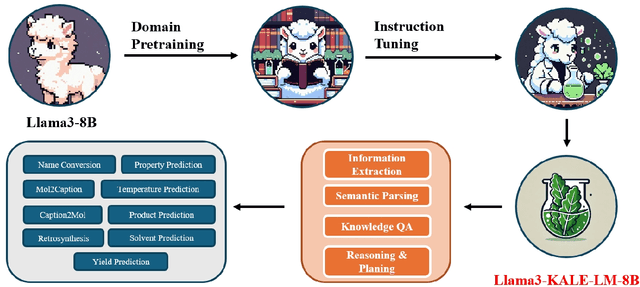
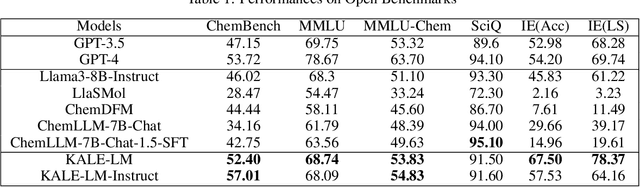
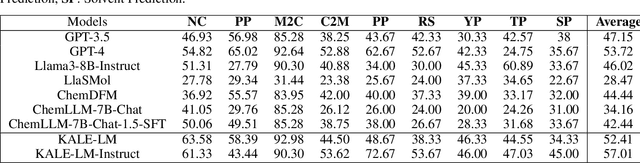
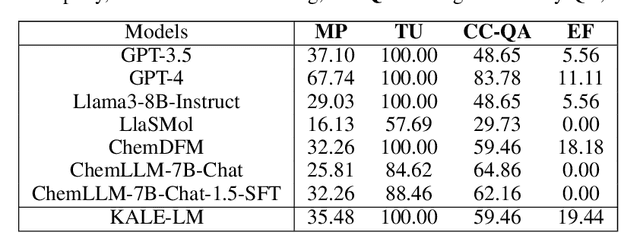
Artificial intelligence is gradually demonstrating its immense potential, and increasing attention is being given to how AI can be harnessed to advance scientific research. In this vision paper, we present our perspectives on how AI can better assist scientific inquiry and explore corresponding technical approach. We have proposed and open-sourced a large model of our KALE-LM model series, Llama3-KALE-LM-Chem-8B, which has achieved outstanding performance in tasks related to the field of chemistry. We hope that our work serves as a strong starting point, helping to realize more intelligent AI and promoting the advancement of human science and technology, as well as societal development.
MOSS: Enabling Code-Driven Evolution and Context Management for AI Agents
Sep 24, 2024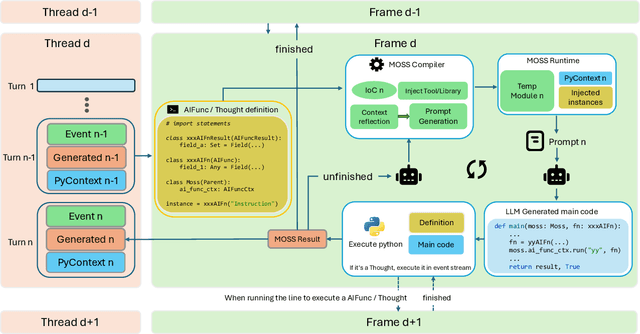
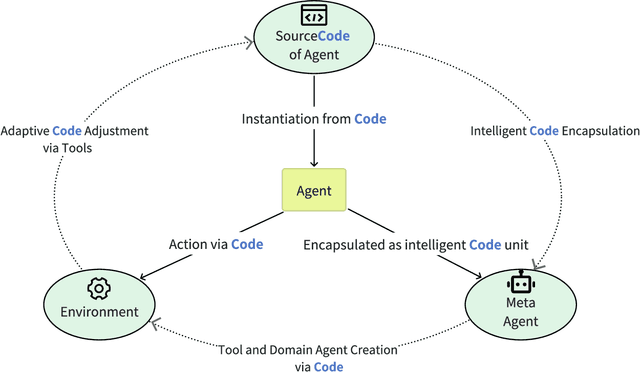
Developing AI agents powered by large language models (LLMs) faces significant challenges in achieving true Turing completeness and adaptive, code-driven evolution. Current approaches often generate code independently of its runtime context, relying heavily on the LLM's memory, which results in inefficiencies and limits adaptability. Manual protocol development in sandbox environments further constrains the agent's autonomous adaptability. Crucially, achieving consistency in code and context across multi-turn interactions and ensuring isolation of local variables within each interaction remains an unsolved problem. We introduce MOSS (llM-oriented Operating System Simulation), a novel framework that addresses these challenges by integrating code generation with a dynamic context management system. MOSS ensures consistency and adaptability by using a mechanism that maintains the Python context across interactions, including isolation of local variables and preservation of runtime integrity. At its core, the framework employs an Inversion of Control (IoC) container in conjunction with decorators to enforce the least knowledge principle, allowing agents to focus on abstract interfaces rather than concrete implementations. This facilitates seamless integration of new tools and libraries, enables runtime instance replacement, and reduces prompt complexity, providing a "what you see is what you get" environment for the agent. Through a series of case studies, we show how this framework can enhance the efficiency and capabilities of agent development and highlight its advantages in moving towards Turing-complete agents capable of evolving through code.
Multi-Modal Diffusion for Hand-Object Grasp Generation
Sep 06, 2024
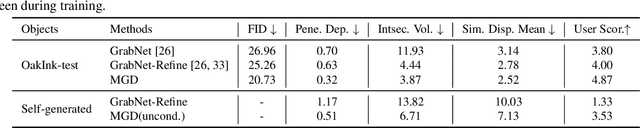


In this work, we focus on generating hand grasp over objects. Compared to previous works of generating hand poses with a given object, we aim to allow the generalization of both hand and object shapes by a single model. Our proposed method Multi-modal Grasp Diffusion (MGD) learns the prior and conditional posterior distribution of both modalities from heterogeneous data sources. Therefore it relieves the limitation of hand-object grasp datasets by leveraging the large-scale 3D object datasets. According to both qualitative and quantitative experiments, both conditional and unconditional generation of hand grasp achieve good visual plausibility and diversity. The proposed method also generalizes well to unseen object shapes. The code and weights will be available at \url{https://github.com/noahcao/mgd}.
Cross-sectional imaging of speed-of-sound distribution using photoacoustic reversal beacons
Aug 26, 2024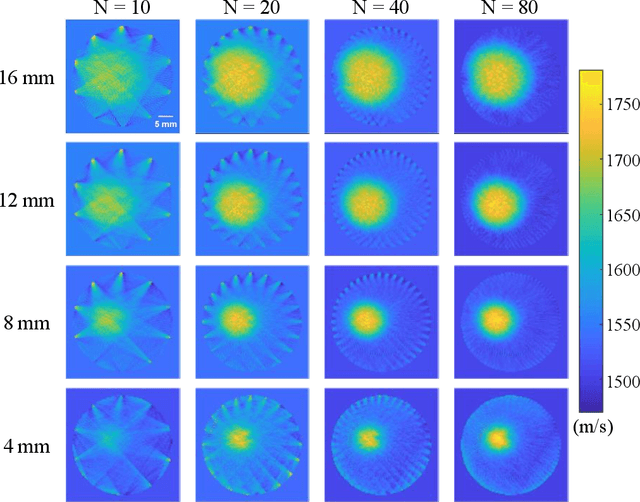
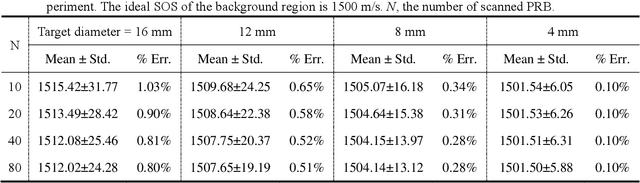
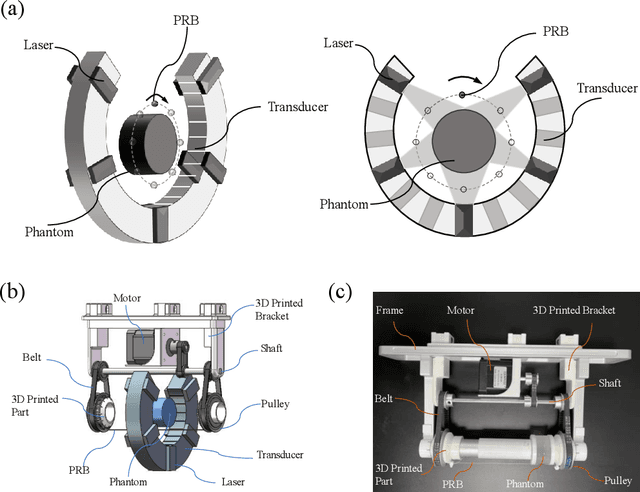
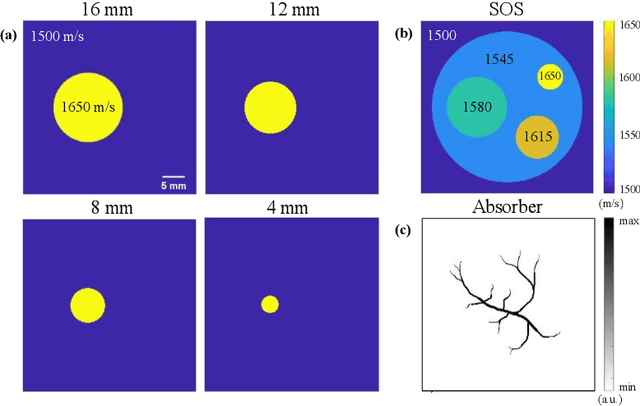
Photoacoustic tomography (PAT) enables non-invasive cross-sectional imaging of biological tissues, but it fails to map the spatial variation of speed-of-sound (SOS) within tissues. While SOS is intimately linked to density and elastic modulus of tissues, the imaging of SOS distri-bution serves as a complementary imaging modality to PAT. Moreover, an accurate SOS map can be leveraged to correct for PAT image degradation arising from acoustic heterogene-ities. Herein, we propose a novel approach for SOS reconstruction using only PAT imaging modality. Our method is based on photoacoustic reversal beacons (PRBs), which are small light-absorbing targets with strong photoacoustic contrast. We excite and scan a number of PRBs positioned at the periphery of the target, and the generated photoacoustic waves prop-agate through the target from various directions, thereby achieve spatial sampling of the internal SOS. We formulate a linear inverse model for pixel-wise SOS reconstruction and solve it with iterative optimization technique. We validate the feasibility of the proposed method through simulations, phantoms, and ex vivo biological tissue tests. Experimental results demonstrate that our approach can achieve accurate reconstruction of SOS distribu-tion. Leveraging the obtained SOS map, we further demonstrate significantly enhanced PAT image reconstruction with acoustic correction.
Exploiting Large Language Models Capabilities for Question Answer-Driven Knowledge Graph Completion Across Static and Temporal Domains
Aug 20, 2024


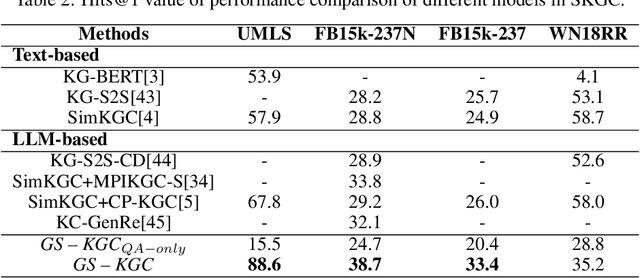
Knowledge graph completion (KGC) aims to identify missing triples in a knowledge graph (KG). This is typically achieved through tasks such as link prediction and instance completion. However, these methods often focus on either static knowledge graphs (SKGs) or temporal knowledge graphs (TKGs), addressing only within-scope triples. This paper introduces a new generative completion framework called Generative Subgraph-based KGC (GS-KGC). GS-KGC employs a question-answering format to directly generate target entities, addressing the challenge of questions having multiple possible answers. We propose a strategy that extracts subgraphs centered on entities and relationships within the KG, from which negative samples and neighborhood information are separately obtained to address the one-to-many problem. Our method generates negative samples using known facts to facilitate the discovery of new information. Furthermore, we collect and refine neighborhood path data of known entities, providing contextual information to enhance reasoning in large language models (LLMs). Our experiments evaluated the proposed method on four SKGs and two TKGs, achieving state-of-the-art Hits@1 metrics on five datasets. Analysis of the results shows that GS-KGC can discover new triples within existing KGs and generate new facts beyond the closed KG, effectively bridging the gap between closed-world and open-world KGC.