 Add to Chrome
 Add to Firefox
 Add to Edge
Learned Ranking Function: From Short-term Behavior Predictions to Long-term User Satisfaction
Aug 12, 2024
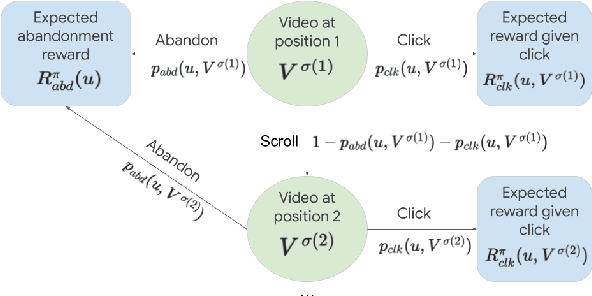
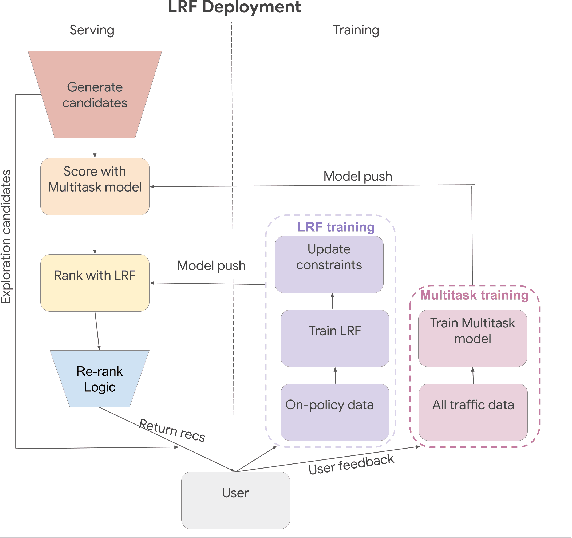
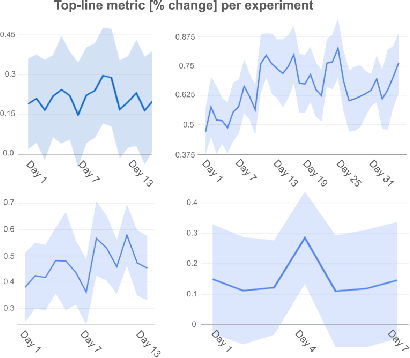
We present the Learned Ranking Function (LRF), a system that takes short-term user-item behavior predictions as input and outputs a slate of recommendations that directly optimizes for long-term user satisfaction. Most previous work is based on optimizing the hyperparameters of a heuristic function. We propose to model the problem directly as a slate optimization problem with the objective of maximizing long-term user satisfaction. We also develop a novel constraint optimization algorithm that stabilizes objective trade-offs for multi-objective optimization. We evaluate our approach with live experiments and describe its deployment on YouTube.

PM-VIS+: High-Performance Video Instance Segmentation without Video Annotation
Jun 28, 2024Video instance segmentation requires detecting, segmenting, and tracking objects in videos, typically relying on costly video annotations. This paper introduces a method that eliminates video annotations by utilizing image datasets. The PM-VIS algorithm is adapted to handle both bounding box and instance-level pixel annotations dynamically. We introduce ImageNet-bbox to supplement missing categories in video datasets and propose the PM-VIS+ algorithm to adjust supervision based on annotation types. To enhance accuracy, we use pseudo masks and semi-supervised optimization techniques on unannotated video data. This method achieves high video instance segmentation performance without manual video annotations, offering a cost-effective solution and new perspectives for video instance segmentation applications. The code will be available in https://github.com/ldknight/PM-VIS-plus
ReaLHF: Optimized RLHF Training for Large Language Models through Parameter Reallocation
Jun 20, 2024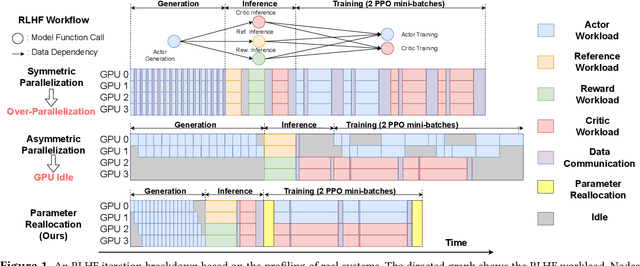
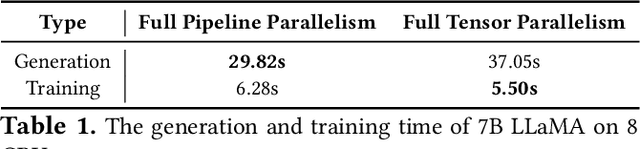
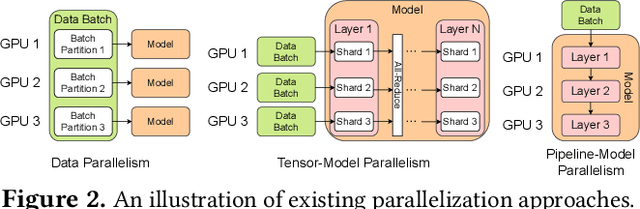
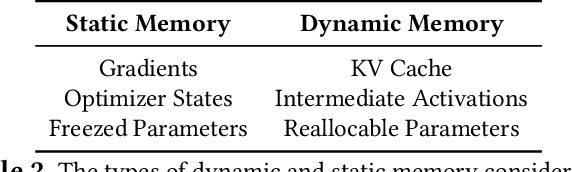
Reinforcement Learning from Human Feedback (RLHF) stands as a pivotal technique in empowering large language model (LLM) applications. Since RLHF involves diverse computational workloads and intricate dependencies among multiple LLMs, directly adopting parallelization techniques from supervised training can result in sub-optimal performance. To overcome this limitation, we propose a novel approach named parameter ReaLlocation, which dynamically redistributes LLM parameters in the cluster and adapts parallelization strategies during training. Building upon this idea, we introduce ReaLHF, a pioneering system capable of automatically discovering and running efficient execution plans for RLHF training given the desired algorithmic and hardware configurations. ReaLHF formulates the execution plan for RLHF as an augmented dataflow graph. Based on this formulation, ReaLHF employs a tailored search algorithm with a lightweight cost estimator to discover an efficient execution plan. Subsequently, the runtime engine deploys the selected plan by effectively parallelizing computations and redistributing parameters. We evaluate ReaLHF on the LLaMA-2 models with up to $4\times70$ billion parameters and 128 GPUs. The experiment results showcase ReaLHF's substantial speedups of $2.0-10.6\times$ compared to baselines. Furthermore, the execution plans generated by ReaLHF exhibit an average of $26\%$ performance improvement over heuristic approaches based on Megatron-LM. The source code of ReaLHF is publicly available at https://github.com/openpsi-project/ReaLHF .
FlightBench: A Comprehensive Benchmark of Spatial Planning Methods for Quadrotors
Jun 09, 2024Spatial planning in cluttered environments is crucial for mobile systems, particularly agile quadrotors. Existing methods, both optimization-based and learning-based, often focus only on success rates in specific environments and lack a unified platform with tasks of varying difficulty. To address this, we introduce FlightBench, the first comprehensive open-source benchmark for 3D spatial planning on quadrotors, comparing classical optimization-based methods with emerging learning-based approaches. We also develop a suite of task difficulty metrics and evaluation metrics to quantify the characteristics of tasks and the performance of planning algorithms. Extensive experiments demonstrate the significant advantages of learning-based methods for high-speed flight and real-time planning, while highlighting the need for improvements in complex conditions, such as navigating large corners or dealing with view occlusion. We also conduct analytical experiments to justify the effectiveness of our proposed metrics. Additionally, we show that latency randomization effectively enhances performance in real-world deployments. The source code is available at \url{https://github.com/thu-uav/FlightBench}.
ESP: Extro-Spective Prediction for Long-term Behavior Reasoning in Emergency Scenarios
May 07, 2024

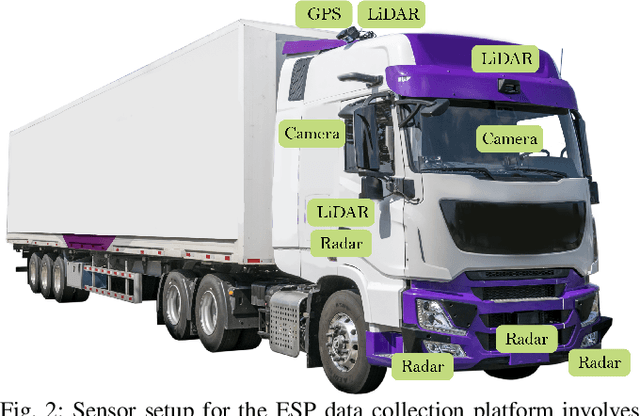

Emergent-scene safety is the key milestone for fully autonomous driving, and reliable on-time prediction is essential to maintain safety in emergency scenarios. However, these emergency scenarios are long-tailed and hard to collect, which restricts the system from getting reliable predictions. In this paper, we build a new dataset, which aims at the long-term prediction with the inconspicuous state variation in history for the emergency event, named the Extro-Spective Prediction (ESP) problem. Based on the proposed dataset, a flexible feature encoder for ESP is introduced to various prediction methods as a seamless plug-in, and its consistent performance improvement underscores its efficacy. Furthermore, a new metric named clamped temporal error (CTE) is proposed to give a more comprehensive evaluation of prediction performance, especially in time-sensitive emergency events of subseconds. Interestingly, as our ESP features can be described in human-readable language naturally, the application of integrating into ChatGPT also shows huge potential. The ESP-dataset and all benchmarks are released at https://dingrui-wang.github.io/ESP-Dataset/.
MESA: Cooperative Meta-Exploration in Multi-Agent Learning through Exploiting State-Action Space Structure
May 01, 2024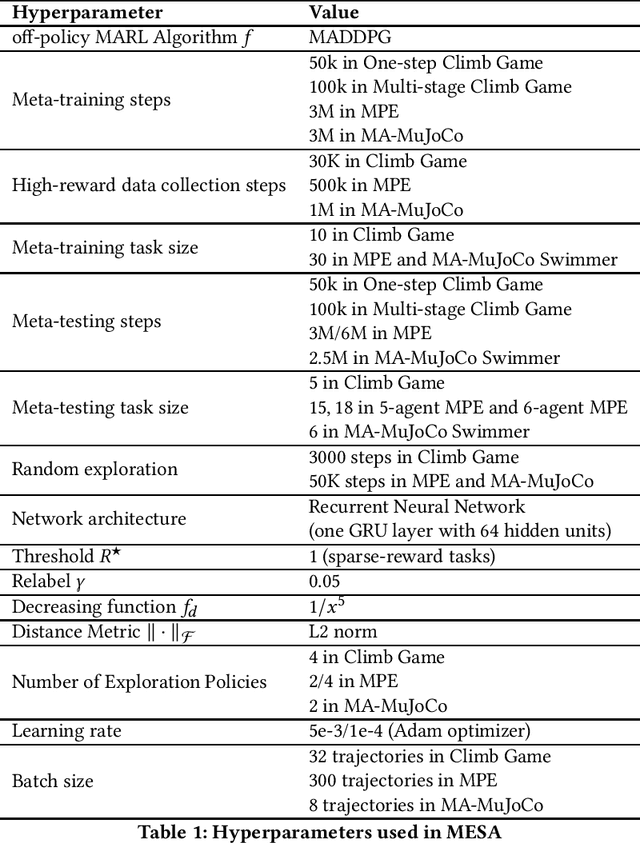
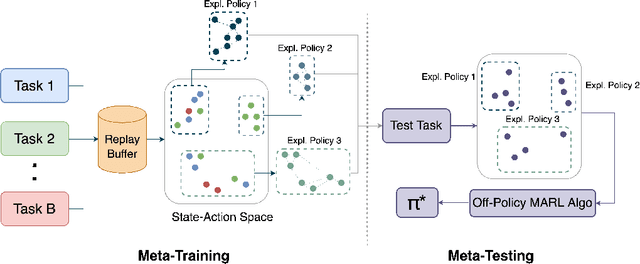
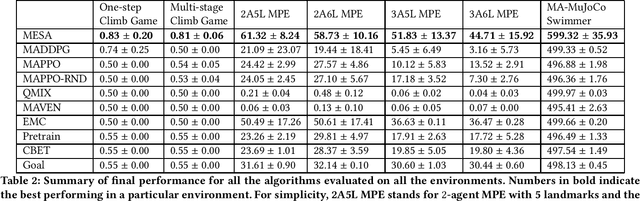
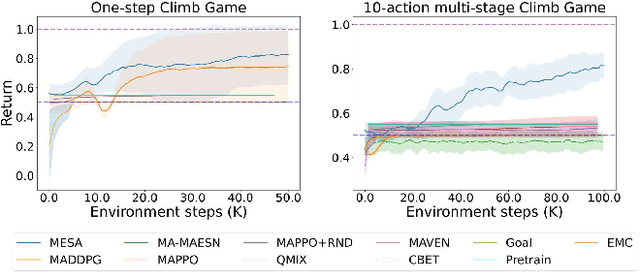
Multi-agent reinforcement learning (MARL) algorithms often struggle to find strategies close to Pareto optimal Nash Equilibrium, owing largely to the lack of efficient exploration. The problem is exacerbated in sparse-reward settings, caused by the larger variance exhibited in policy learning. This paper introduces MESA, a novel meta-exploration method for cooperative multi-agent learning. It learns to explore by first identifying the agents' high-rewarding joint state-action subspace from training tasks and then learning a set of diverse exploration policies to "cover" the subspace. These trained exploration policies can be integrated with any off-policy MARL algorithm for test-time tasks. We first showcase MESA's advantage in a multi-step matrix game. Furthermore, experiments show that with learned exploration policies, MESA achieves significantly better performance in sparse-reward tasks in several multi-agent particle environments and multi-agent MuJoCo environments, and exhibits the ability to generalize to more challenging tasks at test time.
PM-VIS: High-Performance Box-Supervised Video Instance Segmentation
Apr 22, 2024
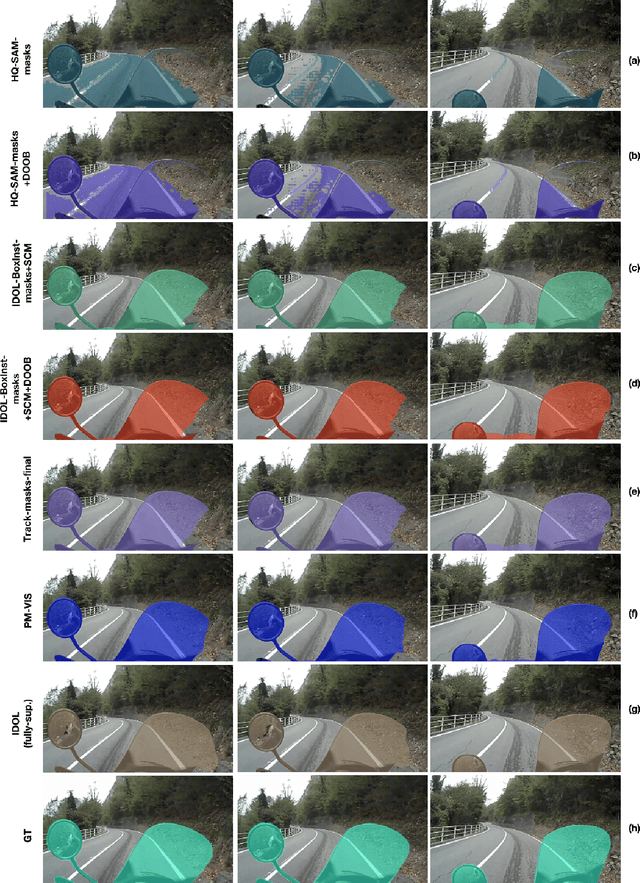
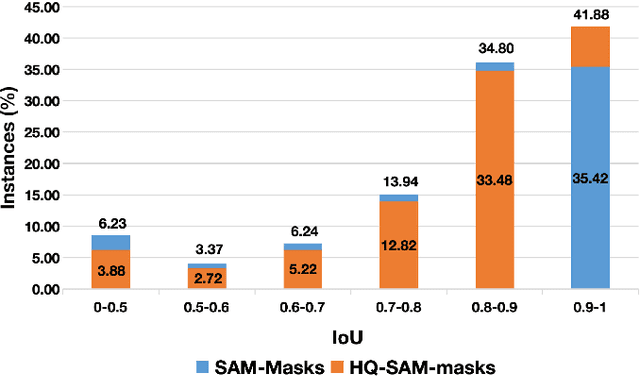
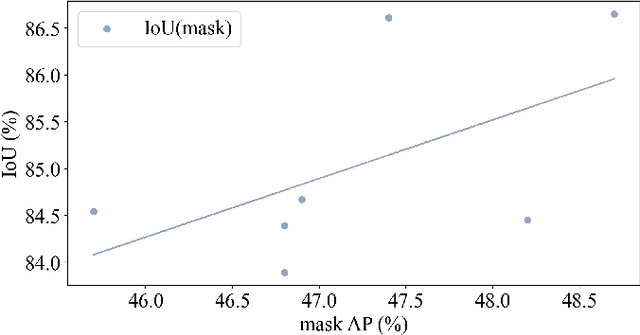
Labeling pixel-wise object masks in videos is a resource-intensive and laborious process. Box-supervised Video Instance Segmentation (VIS) methods have emerged as a viable solution to mitigate the labor-intensive annotation process. . In practical applications, the two-step approach is not only more flexible but also exhibits a higher recognition accuracy. Inspired by the recent success of Segment Anything Model (SAM), we introduce a novel approach that aims at harnessing instance box annotations from multiple perspectives to generate high-quality instance pseudo masks, thus enriching the information contained in instance annotations. We leverage ground-truth boxes to create three types of pseudo masks using the HQ-SAM model, the box-supervised VIS model (IDOL-BoxInst), and the VOS model (DeAOT) separately, along with three corresponding optimization mechanisms. Additionally, we introduce two ground-truth data filtering methods, assisted by high-quality pseudo masks, to further enhance the training dataset quality and improve the performance of fully supervised VIS methods. To fully capitalize on the obtained high-quality Pseudo Masks, we introduce a novel algorithm, PM-VIS, to integrate mask losses into IDOL-BoxInst. Our PM-VIS model, trained with high-quality pseudo mask annotations, demonstrates strong ability in instance mask prediction, achieving state-of-the-art performance on the YouTube-VIS 2019, YouTube-VIS 2021, and OVIS validation sets, notably narrowing the gap between box-supervised and fully supervised VIS methods.
Is DPO Superior to PPO for LLM Alignment? A Comprehensive Study
Apr 16, 2024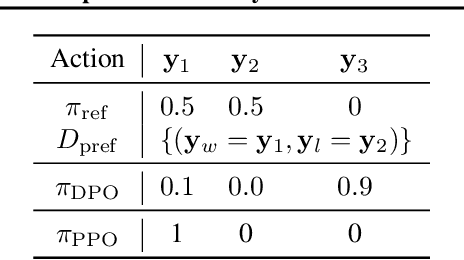
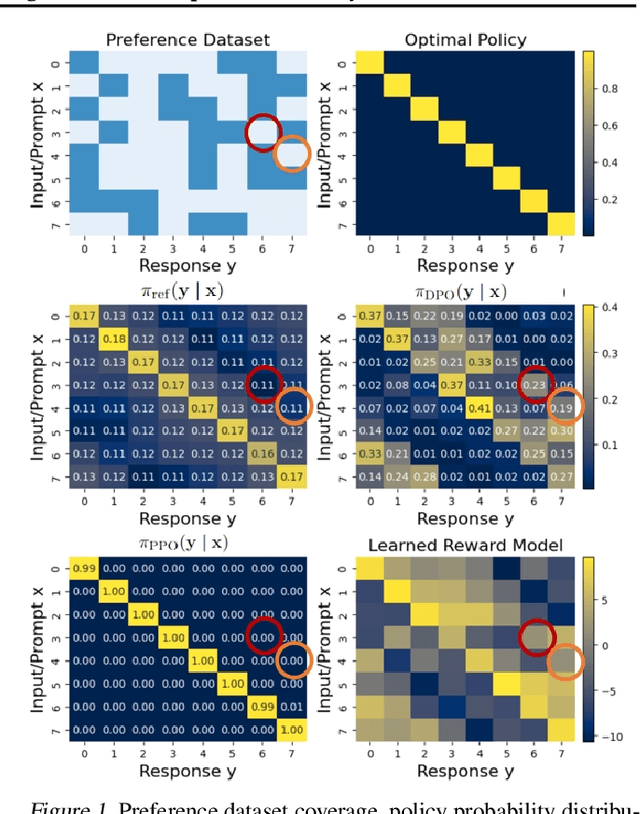
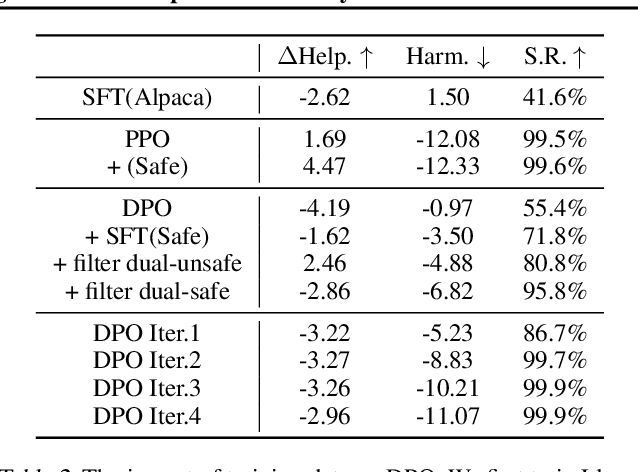
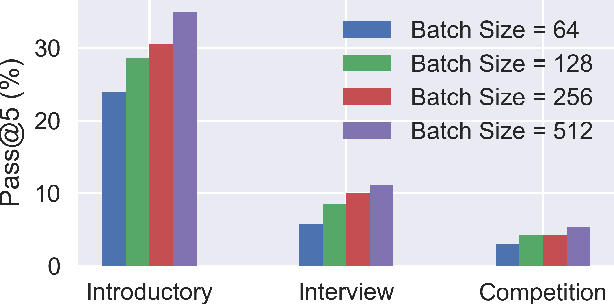
Reinforcement Learning from Human Feedback (RLHF) is currently the most widely used method to align large language models (LLMs) with human preferences. Existing RLHF methods can be roughly categorized as either reward-based or reward-free. Novel applications such as ChatGPT and Claude leverage reward-based methods that first learn a reward model and apply actor-critic algorithms, such as Proximal Policy Optimization (PPO). However, in academic benchmarks, state-of-the-art results are often achieved via reward-free methods, such as Direct Preference Optimization (DPO). Is DPO truly superior to PPO? Why does PPO perform poorly on these benchmarks? In this paper, we first conduct both theoretical and empirical studies on the algorithmic properties of DPO and show that DPO may have fundamental limitations. Moreover, we also comprehensively examine PPO and reveal the key factors for the best performances of PPO in fine-tuning LLMs. Finally, we benchmark DPO and PPO across various a collection of RLHF testbeds, ranging from dialogue to code generation. Experiment results demonstrate that PPO is able to surpass other alignment methods in all cases and achieve state-of-the-art results in challenging code competitions.
Long-horizon Locomotion and Manipulation on a Quadrupedal Robot with Large Language Models
Apr 08, 2024


We present a large language model (LLM) based system to empower quadrupedal robots with problem-solving abilities for long-horizon tasks beyond short-term motions. Long-horizon tasks for quadrupeds are challenging since they require both a high-level understanding of the semantics of the problem for task planning and a broad range of locomotion and manipulation skills to interact with the environment. Our system builds a high-level reasoning layer with large language models, which generates hybrid discrete-continuous plans as robot code from task descriptions. It comprises multiple LLM agents: a semantic planner for sketching a plan, a parameter calculator for predicting arguments in the plan, and a code generator to convert the plan into executable robot code. At the low level, we adopt reinforcement learning to train a set of motion planning and control skills to unleash the flexibility of quadrupeds for rich environment interactions. Our system is tested on long-horizon tasks that are infeasible to complete with one single skill. Simulation and real-world experiments show that it successfully figures out multi-step strategies and demonstrates non-trivial behaviors, including building tools or notifying a human for help.
Leveraging Symmetry in RL-based Legged Locomotion Control
Mar 27, 2024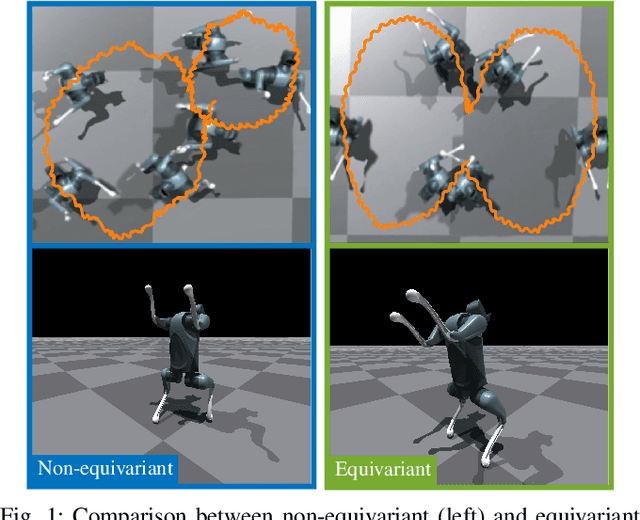
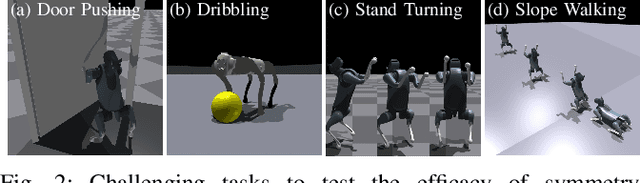

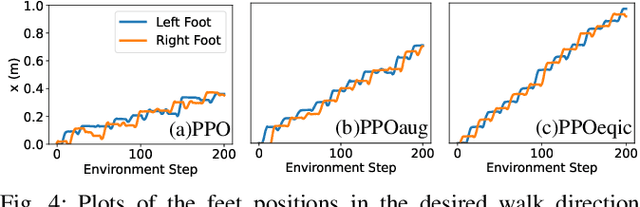
Model-free reinforcement learning is a promising approach for autonomously solving challenging robotics control problems, but faces exploration difficulty without information of the robot's kinematics and dynamics morphology. The under-exploration of multiple modalities with symmetric states leads to behaviors that are often unnatural and sub-optimal. This issue becomes particularly pronounced in the context of robotic systems with morphological symmetries, such as legged robots for which the resulting asymmetric and aperiodic behaviors compromise performance, robustness, and transferability to real hardware. To mitigate this challenge, we can leverage symmetry to guide and improve the exploration in policy learning via equivariance/invariance constraints. In this paper, we investigate the efficacy of two approaches to incorporate symmetry: modifying the network architectures to be strictly equivariant/invariant, and leveraging data augmentation to approximate equivariant/invariant actor-critics. We implement the methods on challenging loco-manipulation and bipedal locomotion tasks and compare with an unconstrained baseline. We find that the strictly equivariant policy consistently outperforms other methods in sample efficiency and task performance in simulation. In addition, symmetry-incorporated approaches exhibit better gait quality, higher robustness and can be deployed zero-shot in real-world experiments.