 Add to Chrome
 Add to Firefox
 Add to Edge
World Models in Pieces: Structural Certification for General Agents
Jun 23, 2026
In the big-world regime, agents cannot be universally capable and their ability is inevitably specialized across a world model in pieces. Consequently, standard uniform guarantees fail to distinguish between the understanding of critical bottlenecks and irrelevant failures. We first formalize this limitation by proving that general agents are not universal, rendering standard worst-case analysis uninformative. To overcome this, we introduce structural certification, a transition-local framework that maps bounded goal-conditioned performance to entry-wise guarantees on the agent's internal world model. Our main contribution is constructive. We provide algorithms that filter specific transitions using deep compositional goals and prove that a general agent on these goals has a structural world model with a $\mathcal{O}(1/n) + \mathcal{O}(δ)$ error bound. Conversely, this bound is tight in the small-$δ$ regime, whose existence is explicitly guaranteed by our certification. These results enable the certifiable deployment of general agents by localizing the specific transitions where long-horizon planning is reliable.

The Meta-Agent Challenge: Are Current Agents Capable of Autonomous Agent Development?
Jun 03, 2026Current AI benchmarks evaluate agents on task execution within human-designed workflows. These evaluations fundamentally fail to measure a critical next-level capability: whether models can autonomously develop agent systems. We introduce the Meta-Agent Challenge (MAC), an evaluation framework designed to test the capacity of frontier models for autonomous agent development. Specifically, a code agent (the meta-agent) is given a sandboxed environment, an evaluation API, and a time limitation to iteratively program an agent artifact that maximizes performance on a held-out test set across five domains. To ensure evaluation integrity, this framework is secured by multi-layer defenses against reward hacking. Leveraging this framework, we demonstrate that meta-agents rarely match human-engineered baseline policies, and the few that do are dominated by proprietary frontier models. Moreover, the design process exhibits high variance, and high optimization pressure surfaces emergent adversarial behaviors like ground-truth exfiltration-highlighting critical deficits in both robustness and model alignment. Ultimately, MAC provides a rigorous, open-source benchmark for autonomous AI research and development, offering an empirical proxy for evaluating recursive self-improvement. Benchmark is publicly available at: https://github.com/ant-research/meta-agent-challenge.
ReConFuse: Reconstruction-Error Guided Semantic Fusion for AI-Generated Video Detection
Jun 03, 2026AI-generated videos are becoming increasingly realistic, raising serious concerns about misinformation, content authenticity, and media trust. Reliable AI-generated video detection is therefore essential for multimedia forensics, yet remains challenging due to the need to capture spatial artifacts, temporal dynamics, and generalize to evolving generative models. In this paper, we explore reconstruction error as a discriminative forensic cue for AI-generated video detection. By reconstructing input videos with a pretrained WF-VAE, we observe that real and generated videos exhibit distinguishable frame-wise reconstruction error patterns, suggesting that reconstruction errors can reveal their distributional discrepancies. However, extending reconstruction-based image detection to videos is non-trivial, since video reconstruction errors are temporally organized across frames and require semantic context for effective interpretation. To address these challenges, we propose ReConFuse, a reconstruction-guided semantic fusion framework for video-level AI-generated video detection. ReConFuse extracts reconstruction error cues from WF-VAE reconstructed videos, aligns them with multi-frame semantic features, and uses a Mamba-based module to model temporal evolution for video-level classification. Experiments across multiple generators and evaluation settings demonstrate the effectiveness and strong generalization ability of ReConFuse.
LiteCoder-Terminal: Scaling Long-Horizon Terminal Environments for Learning Language Agents
May 28, 2026Mastering terminal environments requires language agents capable of multi-step planning, feedback-grounded execution, and dynamic state adaptation. However, training such agents is currently bottlenecked by a reliance on scraped external repositories, which limits domain diversity, environment controllability, and the targeting of specific capability deficits. We introduce LiteCoder-Terminal-Gen, a zero-dependency synthesis pipeline that autonomously generates executable and verifiable terminal training environments directly from domain specifications. Using this framework, we construct two large-scale resources: LiteCoder-Terminal-SFT, comprising 11,255 expert trajectories across 10 domains, and LiteCoder-Terminal-RL, featuring 602 verifiable environments for trajectory-level preference optimization. Supervised fine-tuning of Qwen-family models on our SFT dataset yields agents that significantly outperform their base counterparts. Notably, our 32B variant achieves 29.06%, 18.54%, and 34.00% pass@1 on Terminal Bench 1.0, 2.0, and Pro, respectively. Furthermore, applying Direct Multi-turn Preference Optimization (DMPO) on our RL environments yields additional performance gains. These results systematically demonstrate that fully synthetic, executable environments offer a scalable and verifiable supervision signal for mastering complex, real-world command-line workflows.
Learning to Rotate: Temporal and Semantic Rotary Encoding for Sequential Modeling
Apr 27, 2026Every Transformer architecture dedicates enormous capacity to learning rich representations in semantic embedding space -- yet the rotation manifold acted upon by Rotary Positional Embeddings (RoPE) has been treated as a fixed, hand-crafted structure, populated only by discrete ordinal indices. We argue that this rotation space is a largely overlooked second dimension of expressivity in the attention mechanism, one whose systematic exploration may open a new door for attention-based architectures. The analogy to complex numbers is instructive: just as introducing the imaginary axis -- orthogonal to and independent of the real line -- unlocked new algebraic structure once believed impossible, treating the rotation manifold as a learnable, signal-conditioned space opens an orthogonal degree of freedom in attention. In this framing, the token embedding encodes the semantic (real) component of a representation -- what a token means -- while the rotation encodes its dynamic (imaginary) component -- how it relates to every other token across time, position, and context. We introduce SIREN-RoPE, a concrete instantiation of this idea, which populates the rotation dimension with heterogeneous signals -- continuous timestamps, cyclical temporal patterns, and categorical metadata -- via a dual-branch Sinusoidal Representation Network (SIREN). As a proof of concept, we evaluate on a production-scale news feed dataset from a major social network using a generative recommender as the ranking model, demonstrating that activating this hidden dimension yields consistent improvements across calibration and ranking objectives with negligible computational overhead. We invite the community to view the rotation space not as a solved positional-encoding detail, but as an untapped axis whose rich structure may prove as consequential for attention as the imaginary unit proved for algebra.
Bridging Natural Language and Microgrid Dynamics: A Context-Aware Simulator and Dataset
Apr 07, 2026Addressing the critical need for intelligent, context-aware energy management in renewable systems, we introduce the \textbf{OpenCEM Simulator and Dataset}: the first open-source digital twin explicitly designed to integrate rich, unstructured contextual information with quantitative renewable energy dynamics. Traditional energy management relies heavily on numerical time series, thereby neglecting the significant predictive power embedded in human-generated context (e.g., event schedules, system logs, user intentions). OpenCEM bridges this gap by offering a unique platform comprising both a meticulously aligned, language-rich dataset from a real-world PV-and-battery microgrid installation and a modular simulator capable of natively processing this multi-modal context. The OpenCEM Simulator provides a high-fidelity environment for developing and validating novel control algorithms and prediction models, particularly those leveraging Large Language Models. We detail its component-based architecture, hybrid data-driven and physics-based modelling capabilities, and demonstrate its utility through practical examples, including context-aware load forecasting and the implementation of online optimal battery charging control strategies. By making this platform publicly available, OpenCEM aims to accelerate research into the next generation of intelligent, sustainable, and truly context-aware energy systems.
Suiren-1.0 Technical Report: A Family of Molecular Foundation Models
Mar 23, 2026We introduce Suiren-1.0, a family of molecular foundation models for the accurate modeling of diverse organic systems. Suiren-1.0 comprising three specialized variants (Suiren-Base, Suiren-Dimer, and Suiren-ConfAvg) is integrated within an algorithmic framework that bridges the gap between 3D conformational geometry and 2D statistical ensemble spaces. We first pre-train Suiren-Base (1.8B parameters) on a 70M-sample Density Functional Theory dataset using spatial self-supervision and SE(3)-equivariant architectures, achieving robust performance in quantum property prediction. Suiren-Dimer extends this capability through continued pre-training on 13.5M intermolecular interaction samples. To enable efficient downstream application, we propose Conformation Compression Distillation (CCD), a diffusion-based framework that distills complex 3D structural representations into 2D conformation-averaged representations. This yields the lightweight Suiren-ConfAvg, which generates high-fidelity representations from SMILES or molecular graphs. Our extensive evaluations demonstrate that Suiren-1.0 establishes state-of-the-art results across a range of tasks. All models and benchmarks are open-sourced.
P^2O: Joint Policy and Prompt Optimization
Mar 23, 2026Reinforcement Learning with Verifiable Rewards (RLVR) has emerged as a powerful paradigm for enhancing the reasoning capabilities of Large Language Models (LLMs). However, vanilla RLVR suffers from inefficient exploration, particularly when confronting "hard samples" that yield nearzero success rates. In such scenarios, the reliance on sparse outcome rewards typically results in zero-advantage estimates, effectively starving the model of supervision signals despite the high informational value of these instances. To address this, we propose P^2O, a novel framework that synergizes Prompt Optimization with Policy Optimization. P^2O identifies hard samples during training iterations and leverages the GeneticPareto (GEPA) prompt optimization algorithm to evolve prompt templates that guide the model toward discovering successful trajectories. Crucially, unlike traditional prompt engineering methods that rely on input augmentation, P^2O distills the reasoning gains induced by these optimized prompts directly into the model parameters. This mechanism provides denser positive supervision signals for hard samples and accelerates convergence. Extensive experiments demonstrate that P^2O not only achieves superior performance on in-distribution datasets but also exhibits strong generalization, yielding substantial improvements on out-of-distribution benchmarks (+4.7% avg.).
Equivariant Spherical Transformer for Efficient Molecular Modeling
May 29, 2025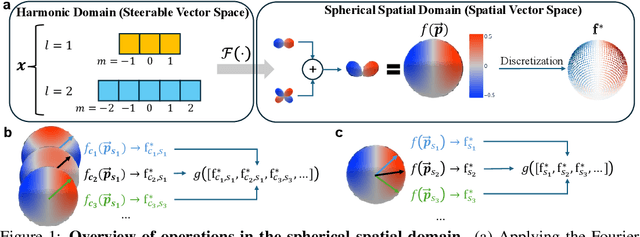
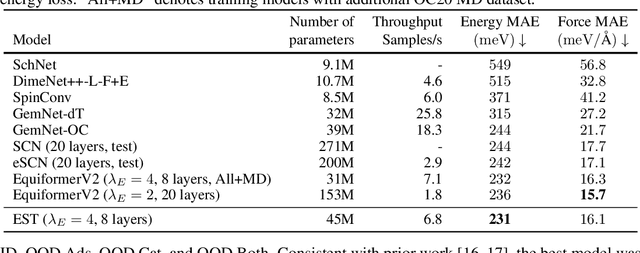
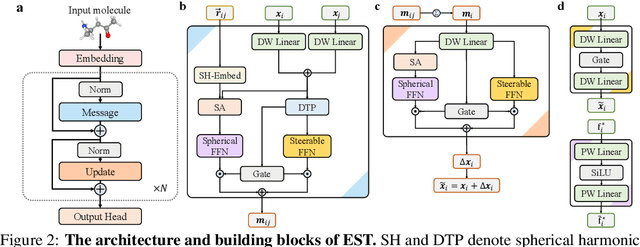
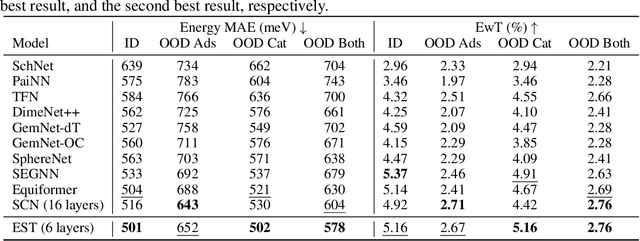
SE(3)-equivariant Graph Neural Networks (GNNs) have significantly advanced molecular system modeling by employing group representations. However, their message passing processes, which rely on tensor product-based convolutions, are limited by insufficient non-linearity and incomplete group representations, thereby restricting expressiveness. To overcome these limitations, we introduce the Equivariant Spherical Transformer (EST), a novel framework that leverages a Transformer structure within the spatial domain of group representations after Fourier transform. We theoretically and empirically demonstrate that EST can encompass the function space of tensor products while achieving superior expressiveness. Furthermore, EST's equivariant inductive bias is guaranteed through a uniform sampling strategy for the Fourier transform. Our experiments demonstrate state-of-the-art performance by EST on various molecular benchmarks, including OC20 and QM9.
Scalable Oversight for Superhuman AI via Recursive Self-Critiquing
Feb 07, 2025As AI capabilities increasingly surpass human proficiency in complex tasks, current alignment techniques including SFT and RLHF face fundamental challenges in ensuring reliable oversight. These methods rely on direct human assessment and become untenable when AI outputs exceed human cognitive thresholds. In response to this challenge, we explore two hypotheses: (1) critique of critique can be easier than critique itself, extending the widely-accepted observation that verification is easier than generation to the critique domain, as critique itself is a specialized form of generation; (2) this difficulty relationship is recursively held, suggesting that when direct evaluation is infeasible, performing high-order critiques (e.g., critique of critique of critique) offers a more tractable supervision pathway. To examine these hypotheses, we perform Human-Human, Human-AI, and AI-AI experiments across multiple tasks. Our results demonstrate encouraging evidence supporting these hypotheses and suggest that recursive self-critiquing is a promising direction for scalable oversight.