 Add to Chrome
 Add to Firefox
 Add to Edge
CASE: Causal Alignment and Structural Enforcement for Improving Chain-of-Thought Faithfulness
Jul 21, 2026
Chain-of-thought (CoT) reasoning is widely used to improve both the performance and interpretability of large language models (LLMs), yet the generated reasoning may not faithfully support the final answer. We study this problem from a causal perspective, where a faithful CoT process should follow the chain $Z\rightarrow X\rightarrow Y$, with $Z$, $X$, and $Y$ denoting the instruction, reasoning chain, and final answer, respectively. In this process, the instruction should affect the answer only through the reasoning chain. However, conventional autoregressive LLMs condition answer generation on both the instruction and the CoT, which still allows a direct instruction-to-answer shortcut. To address this issue, we propose CASE, a framework that combines training-time causal alignment and inference-time structural enforcement. During training, CASE builds counterfactual-CoT, biased-instruction, and empty-instruction datasets, and applies selective-loss fine-tuning to strengthen CoT-to-answer dependence while suppressing instruction shortcuts. During inference, CASE masks direct attention from instruction tokens to answer tokens, preventing the model from bypassing the generated CoT. We provide an information-theoretic analysis showing how these components promote faithful chains. Experiments on three models and four benchmarks show that CASE achieves a 37\% average per-setting relative improvement in overall CoT faithfulness over the strongest baselines, exhibits stronger cross-dataset faithfulness transfer, and maintains competitive average accuracy. Code is available at https://github.com/oddwang/CASE.

Metis: Bridging Text and Code Memory for Self-Evolving Agents
Jun 23, 2026Self-evolving agents improve over time by distilling experience from past executions and reusing it in future tasks. Existing systems represent such experience either as natural-language text injected into the agent context or as code exposed as callable tools. However, the choice between these representations is typically made at design time rather than derived from the characteristics of the experience itself, leaving the trade-offs between them poorly understood. We present the first controlled study that isolates text memory and code memory over an identical set of experiences. Our results show that the two forms exhibit complementary trade-offs in construction cost, execution efficiency, and transferability, such that neither representation alone is sufficient. Guided by these findings, we propose Metis, a self-evolving agent system built on a hierarchical dual-representation memory. Metis organizes textual experience into execution plans, environment facts, and common pitfalls, and selectively crystallizes recurring plans into validated callable tools. This design combines the broad applicability of text memory with the execution efficiency of code memory while incurring tool-generation cost only when justified by repeated reuse. We evaluate Metis on AppWorld, a challenging benchmark for interactive agents. The results show that Metis improves task accuracy by up to 20.6% over ReAct while reducing execution cost by up to 22.8%. Compared with representative self-evolving agent systems, Metis consistently achieves a better balance between accuracy, execution efficiency, and memory-construction cost.
SafeRedirect: Defeating Internal Safety Collapse via Task-Completion Redirection in Frontier LLMs
Apr 22, 2026Internal Safety Collapse (ISC) is a failure mode in which frontier LLMs, when executing legitimate professional tasks whose correct completion structurally requires harmful content, spontaneously generate that content with safety failure rates exceeding 95%. Existing input-level defenses achieve a 100% failure rate against ISC, and standard system prompt defenses provide only partial mitigation. We propose SafeRedirect, a system-level override that defeats ISC by redirecting the model's task-completion drive rather than suppressing it. SafeRedirect grants explicit permission to fail the task, prescribes a deterministic hard-stop output, and instructs the model to preserve harmful placeholders unresolved. Evaluated on seven frontier LLMs across three AI/ML-related ISC task types in the single-turn setting, SafeRedirect reduces average unsafe generation rates from 71.2% to 8.0%, compared to 55.0% for the strongest viable baseline. Multi-model ablation reveals that failure permission and condition specificity are universally critical, while the importance of other components varies across models. Cross-attack evaluation confirms state-of-the-art defense against ISC with generalization performance at least on par with the baseline on other attack families. Code is available at https://github.com/fzjcdt/SafeRedirect.
Scalable Training of Mixture-of-Experts Models with Megatron Core
Mar 10, 2026Scaling Mixture-of-Experts (MoE) training introduces systems challenges absent in dense models. Because each token activates only a subset of experts, this sparsity allows total parameters to grow much faster than per-token computation, creating coupled constraints across memory, communication, and computation. Optimizing one dimension often shifts pressure to another, demanding co-design across the full system stack. We address these challenges for MoE training through integrated optimizations spanning memory (fine-grained recomputation, offloading, etc.), communication (optimized dispatchers, overlapping, etc.), and computation (Grouped GEMM, fusions, CUDA Graphs, etc.). The framework also provides Parallel Folding for flexible multi-dimensional parallelism, low-precision training support for FP8 and NVFP4, and efficient long-context training. On NVIDIA GB300 and GB200, it achieves 1,233/1,048 TFLOPS/GPU for DeepSeek-V3-685B and 974/919 TFLOPS/GPU for Qwen3-235B. As a performant, scalable, and production-ready open-source solution, it has been used across academia and industry for training MoE models ranging from billions to trillions of parameters on clusters scaling up to thousands of GPUs. This report explains how these techniques work, their trade-offs, and their interactions at the systems level, providing practical guidance for scaling MoE models with Megatron Core.
Keep Rehearsing and Refining: Lifelong Learning Vehicle Routing under Continually Drifting Tasks
Jan 30, 2026Existing neural solvers for vehicle routing problems (VRPs) are typically trained either in a one-off manner on a fixed set of pre-defined tasks or in a lifelong manner on several tasks arriving sequentially, assuming sufficient training on each task. Both settings overlook a common real-world property: problem patterns may drift continually over time, yielding massive tasks sequentially arising while offering only limited training resources per task. In this paper, we study a novel lifelong learning paradigm for neural VRP solvers under continually drifting tasks over learning time steps, where sufficient training for any given task at any time is not available. We propose Dual Replay with Experience Enhancement (DREE), a general framework to improve learning efficiency and mitigate catastrophic forgetting under such drift. Extensive experiments show that, under such continual drift, DREE effectively learns new tasks, preserves prior knowledge, improves generalization to unseen tasks, and can be applied to diverse existing neural solvers.
ARGOS: Automated Functional Safety Requirement Synthesis for Embodied AI via Attribute-Guided Combinatorial Reasoning
Jan 30, 2026Ensuring functional safety is essential for the deployment of Embodied AI in complex open-world environments. However, traditional Hazard Analysis and Risk Assessment (HARA) methods struggle to scale in this domain. While HARA relies on enumerating risks for finite and pre-defined function lists, Embodied AI operates on open-ended natural language instructions, creating a challenge of combinatorial interaction risks. Whereas Large Language Models (LLMs) have emerged as a promising solution to this scalability challenge, they often lack physical grounding, yielding semantically superficial and incoherent hazard descriptions. To overcome these limitations, we propose a new framework ARGOS (AttRibute-Guided cOmbinatorial reaSoning), which bridges the gap between open-ended user instructions and concrete physical attributes. By dynamically decomposing entities from instructions into these fine-grained properties, ARGOS grounds LLM reasoning in causal risk factors to generate physically plausible hazard scenarios. It then instantiates abstract safety standards, such as ISO 13482, into context-specific Functional Safety Requirements (FSRs) by integrating these scenarios with robot capabilities. Extensive experiments validate that ARGOS produces high-quality FSRs and outperforms baselines in identifying long-tail risks. Overall, this work paves the way for systematic and grounded functional safety requirement generation, a critical step toward the safe industrial deployment of Embodied AI.
Posterior Distribution-assisted Evolutionary Dynamic Optimization as an Online Calibrator for Complex Social Simulations
Jan 27, 2026The calibration of simulators for complex social systems aims to identify the optimal parameter that drives the output of the simulator best matching the target data observed from the system. As many social systems may change internally over time, calibration naturally becomes an online task, requiring parameters to be updated continuously to maintain the simulator's fidelity. In this work, the online setting is first formulated as a dynamic optimization problem (DOP), requiring the search for a sequence of optimal parameters that fit the simulator to real system changes. However, in contrast to traditional DOP formulations, online calibration explicitly incorporates the observational data as the driver of environmental dynamics. Due to this fundamental difference, existing Evolutionary Dynamic Optimization (EDO) methods, despite being extensively studied for black-box DOPs, are ill-equipped to handle such a scenario. As a result, online calibration problems constitute a new set of challenging DOPs. Here, we propose to explicitly learn the posterior distributions of the parameters and the observational data, thereby facilitating both change detection and environmental adaptation of existing EDOs for this scenario. We thus present a pretrained posterior model for implementation, and fine-tune it during the optimization. Extensive tests on both economic and financial simulators verify that the posterior distribution strongly promotes EDOs in such DOPs widely existed in social science.
Integrating Knowledge Distillation Methods: A Sequential Multi-Stage Framework
Jan 22, 2026Knowledge distillation (KD) transfers knowledge from large teacher models to compact student models, enabling efficient deployment on resource constrained devices. While diverse KD methods, including response based, feature based, and relation based approaches, capture different aspects of teacher knowledge, integrating multiple methods or knowledge sources is promising but often hampered by complex implementation, inflexible combinations, and catastrophic forgetting, which limits practical effectiveness. This work proposes SMSKD (Sequential Multi Stage Knowledge Distillation), a flexible framework that sequentially integrates heterogeneous KD methods. At each stage, the student is trained with a specific distillation method, while a frozen reference model from the previous stage anchors learned knowledge to mitigate forgetting. In addition, we introduce an adaptive weighting mechanism based on the teacher true class probability (TCP) that dynamically adjusts the reference loss per sample to balance knowledge retention and integration. By design, SMSKD supports arbitrary method combinations and stage counts with negligible computational overhead. Extensive experiments show that SMSKD consistently improves student accuracy across diverse teacher student architectures and method combinations, outperforming existing baselines. Ablation studies confirm that stage wise distillation and reference model supervision are primary contributors to performance gains, with TCP based adaptive weighting providing complementary benefits. Overall, SMSKD is a practical and resource efficient solution for integrating heterogeneous KD methods.
ReaSeq: Unleashing World Knowledge via Reasoning for Sequential Modeling
Dec 24, 2025Industrial recommender systems face two fundamental limitations under the log-driven paradigm: (1) knowledge poverty in ID-based item representations that causes brittle interest modeling under data sparsity, and (2) systemic blindness to beyond-log user interests that constrains model performance within platform boundaries. These limitations stem from an over-reliance on shallow interaction statistics and close-looped feedback while neglecting the rich world knowledge about product semantics and cross-domain behavioral patterns that Large Language Models have learned from vast corpora. To address these challenges, we introduce ReaSeq, a reasoning-enhanced framework that leverages world knowledge in Large Language Models to address both limitations through explicit and implicit reasoning. Specifically, ReaSeq employs explicit Chain-of-Thought reasoning via multi-agent collaboration to distill structured product knowledge into semantically enriched item representations, and latent reasoning via Diffusion Large Language Models to infer plausible beyond-log behaviors. Deployed on Taobao's ranking system serving hundreds of millions of users, ReaSeq achieves substantial gains: >6.0% in IPV and CTR, >2.9% in Orders, and >2.5% in GMV, validating the effectiveness of world-knowledge-enhanced reasoning over purely log-driven approaches.
Estimate Hitting Time by Hitting Probability for Elitist Evolutionary Algorithms
Jun 18, 2025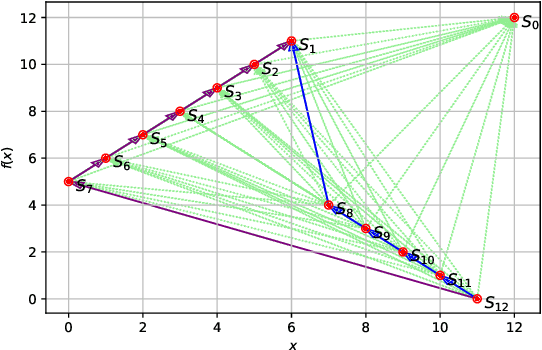
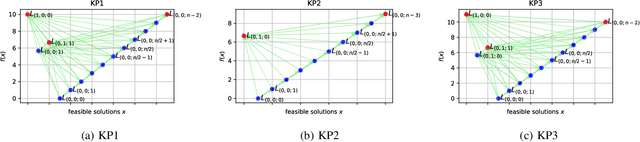
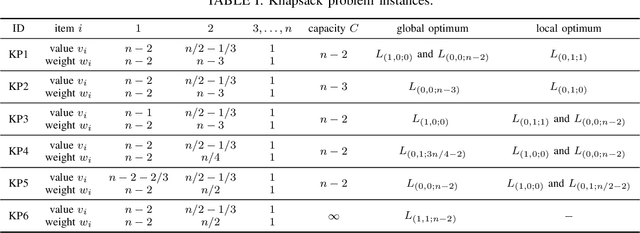

Drift analysis is a powerful tool for analyzing the time complexity of evolutionary algorithms. However, it requires manual construction of drift functions to bound hitting time for each specific algorithm and problem. To address this limitation, general linear drift functions were introduced for elitist evolutionary algorithms. But calculating linear bound coefficients effectively remains a problem. This paper proposes a new method called drift analysis of hitting probability to compute these coefficients. Each coefficient is interpreted as a bound on the hitting probability of a fitness level, transforming the task of estimating hitting time into estimating hitting probability. A novel drift analysis method is then developed to estimate hitting probability, where paths are introduced to handle multimodal fitness landscapes. Explicit expressions are constructed to compute hitting probability, significantly simplifying the estimation process. One advantage of the proposed method is its ability to estimate both the lower and upper bounds of hitting time and to compare the performance of two algorithms in terms of hitting time. To demonstrate this application, two algorithms for the knapsack problem, each incorporating feasibility rules and greedy repair respectively, are compared. The analysis indicates that neither constraint handling technique consistently outperforms the other.