 Add to Chrome
 Add to Firefox
 Add to Edge
The Next Screenshot Knows: Gated Hindsight Distillation for Mobile GUI Agents
Aug 06, 2026
GUI agents are commonly trained offline from successful interaction trajectories. Standard training decomposes each trajectory into prefix-action pairs: the agent predicts an action from the current screen and interaction history, while the subsequent observation is discarded. This removes the rationale of why an action is correct: the evidence often appears only on the subsequent screen. For example, to enable Soft Wrap, the agent should click Edit or View, but nothing reveals this until the menu opens. Without such evidence, standard imitation gives the model little chance of ever sampling and thus learning the correct reasoning. To address this issue, we propose Gated Hindsight Distillation (GHD), which uses the next screenshot as privileged information during training. A student predicts from the observable trajectory prefix, while a parameter-sharing teacher additionally observes the next screenshot and re-scores the student's on-policy responses. We apply distillation only when the student fails and the hindsight-conditioned teacher recovers the demonstrated action. GHD improves task success over GRPO on AndroidWorld and AndroidLab across two vision-language models. The code and checkpoints will be made available.

When Privileged Guidance Misaligns: State-Matched Routing and Contextualized Self-Distillation for Multi-Turn Agents
Aug 05, 2026Privileged on-policy distillation provides dense supervision for multi-turn agents by allowing a synchronized teacher to re-score the student's response at every turn with access to training-only references, such as successful trajectories. In interactive environments, however, the student's preceding actions continually change the execution state. As the student takes different actions or completes subgoals in a different order, its rollout may reach states not covered by the reference, making the reference an unreliable source of guidance for the state actually reached. Applying privileged distillation indiscriminately therefore creates state--reference mismatch. This mismatch motivates a central objective: providing privileged reference guidance that remains compatible with the student's current execution state. We introduce State-Matched Routing and Contextualized Self-Distillation (SMRC-SD), which explicitly determines when and how a privileged trajectory should guide an on-policy student. At each turn, SMRC-SD verifies whether the student's current execution state matches a supported state along the reference trajectory. Distillation is applied only at matched states, filtering out turns for which the reference lacks locally compatible guidance. For each matched state, SMRC-SD further constructs state-conditioned teacher context from the successful trajectory, grounding supervision in the state actually reached. Across ALFWorld and WebShop, SMRC-SD consistently outperforms unconditional successful full-path distillation. With Qwen3-1.7B, it improves task success from $0.746$ to $0.865$ on ALFWorld and from $0.574$ to $0.693$ on WebShop. Controlled routing and context ablations support both selecting locally supported turns and constructing state-compatible teacher context as contributors to these gains. Code is available at https://github.com/liujunzhuo/SMRC-SD.
LLM-Driven Reasoning for Constraint-Aware Feature Selection in Industrial Systems
Mar 26, 2026Feature selection is a crucial step in large-scale industrial machine learning systems, directly affecting model accuracy, efficiency, and maintainability. Traditional feature selection methods rely on labeled data and statistical heuristics, making them difficult to apply in production environments where labeled data are limited and multiple operational constraints must be satisfied. To address this, we propose Model Feature Agent (MoFA), a model-driven framework that performs sequential, reasoning-based feature selection using both semantic and quantitative feature information. MoFA incorporates feature definitions, importance scores, correlations, and metadata (e.g., feature groups or types) into structured prompts and selects features through interpretable, constraint-aware reasoning. We evaluate MoFA in three real-world industrial applications: (1) True Interest and Time-Worthiness Prediction, where it improves accuracy while reducing feature group complexity, (2) Value Model Enhancement, where it discovers high-order interaction terms that yield substantial engagement gains in online experiments, and (3) Notification Behavior Prediction, where it selects compact, high-value feature subsets that improve both model accuracy and inference efficiency. Together, these results demonstrate the practicality and effectiveness of LLM-based reasoning for feature selection in real production systems.
EBPO: Empirical Bayes Shrinkage for Stabilizing Group-Relative Policy Optimization
Feb 05, 2026Reinforcement Learning with Verifiable Rewards (RLVR) has proven effective for enhancing the reasoning capabilities of Large Language Models (LLMs). However, dominant approaches like Group Relative Policy Optimization (GRPO) face critical stability challenges: they suffer from high estimator variance under computational constraints (small group sizes) and vanishing gradient signals in saturated failure regimes where all responses yield identical zero rewards. To address this, we propose Empirical Bayes Policy Optimization (EBPO), a novel framework that regularizes local group-based baselines by borrowing strength from the policy's accumulated global statistics. Instead of estimating baselines in isolation, EBPO employs a shrinkage estimator that dynamically balances local group statistics with a global prior updated via Welford's online algorithm. Theoretically, we demonstrate that EBPO guarantees strictly lower Mean Squared Error (MSE), bounded entropy decay, and non-vanishing penalty signals in failure scenarios compared to GRPO. Empirically, EBPO consistently outperforms GRPO and other established baselines across diverse benchmarks, including AIME and OlympiadBench. Notably, EBPO exhibits superior training stability, achieving high-performance gains even with small group sizes, and benefits significantly from difficulty-stratified curriculum learning.
Let Samples Speak: Mitigating Spurious Correlation by Exploiting the Clusterness of Samples
Dec 28, 2025Deep learning models are known to often learn features that spuriously correlate with the class label during training but are irrelevant to the prediction task. Existing methods typically address this issue by annotating potential spurious attributes, or filtering spurious features based on some empirical assumptions (e.g., simplicity of bias). However, these methods may yield unsatisfactory performance due to the intricate and elusive nature of spurious correlations in real-world data. In this paper, we propose a data-oriented approach to mitigate the spurious correlation in deep learning models. We observe that samples that are influenced by spurious features tend to exhibit a dispersed distribution in the learned feature space. This allows us to identify the presence of spurious features. Subsequently, we obtain a bias-invariant representation by neutralizing the spurious features based on a simple grouping strategy. Then, we learn a feature transformation to eliminate the spurious features by aligning with this bias-invariant representation. Finally, we update the classifier by incorporating the learned feature transformation and obtain an unbiased model. By integrating the aforementioned identifying, neutralizing, eliminating and updating procedures, we build an effective pipeline for mitigating spurious correlation. Experiments on image and NLP debiasing benchmarks show an improvement in worst group accuracy of more than 20% compared to standard empirical risk minimization (ERM). Codes and checkpoints are available at https://github.com/davelee-uestc/nsf_debiasing .
Exploring System 1 and 2 communication for latent reasoning in LLMs
Oct 01, 2025Should LLM reasoning live in a separate module, or within a single model's forward pass and representational space? We study dual-architecture latent reasoning, where a fluent Base exchanges latent messages with a Coprocessor, and test two hypotheses aimed at improving latent communication over Liu et al. (2024): (H1) increase channel capacity; (H2) learn communication via joint finetuning. Under matched latent-token budgets on GPT-2 and Qwen-3, H2 is consistently strongest while H1 yields modest gains. A unified soft-embedding baseline, a single model with the same forward pass and shared representations, using the same latent-token budget, nearly matches H2 and surpasses H1, suggesting current dual designs mostly add compute rather than qualitatively improving reasoning. Across GSM8K, ProsQA, and a Countdown stress test with increasing branching factor, scaling the latent-token budget beyond small values fails to improve robustness. Latent analyses show overlapping subspaces with limited specialization, consistent with weak reasoning gains. We conclude dual-model latent reasoning remains promising in principle, but likely requires objectives and communication mechanisms that explicitly shape latent spaces for algorithmic planning.
LLM-Enhanced Dialogue Management for Full-Duplex Spoken Dialogue Systems
Feb 19, 2025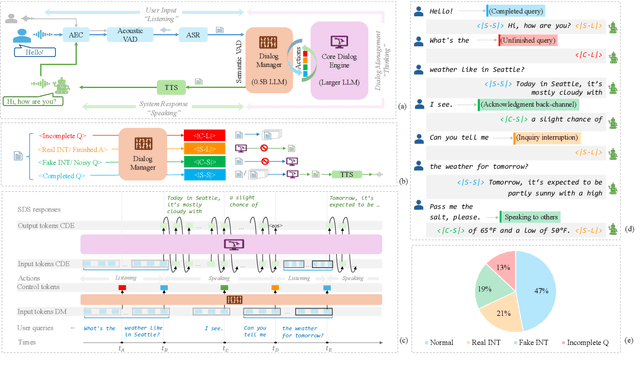
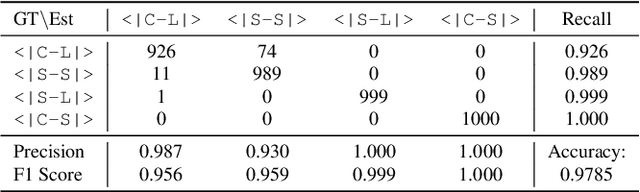
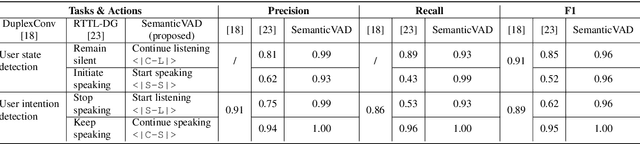
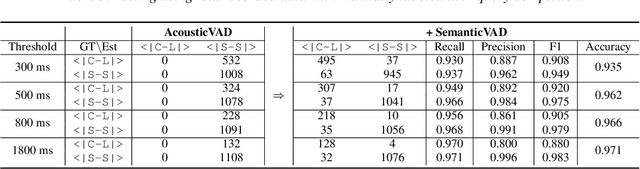
Achieving full-duplex communication in spoken dialogue systems (SDS) requires real-time coordination between listening, speaking, and thinking. This paper proposes a semantic voice activity detection (VAD) module as a dialogue manager (DM) to efficiently manage turn-taking in full-duplex SDS. Implemented as a lightweight (0.5B) LLM fine-tuned on full-duplex conversation data, the semantic VAD predicts four control tokens to regulate turn-switching and turn-keeping, distinguishing between intentional and unintentional barge-ins while detecting query completion for handling user pauses and hesitations. By processing input speech in short intervals, the semantic VAD enables real-time decision-making, while the core dialogue engine (CDE) is only activated for response generation, reducing computational overhead. This design allows independent DM optimization without retraining the CDE, balancing interaction accuracy and inference efficiency for scalable, next-generation full-duplex SDS.
Dynamic Analysis Method for Hidden Dangers in Substation Based on Knowledge Graph
Nov 22, 2023To address the challenge of identifying and understanding hidden dangers in substations from unstructured text data, a novel dynamic analysis method is proposed. This approach begins by analyzing and extracting data from the unstructured text related to hidden dangers. It then leverages a flexible, distributed data search engine built on Elastic-Search to handle this information. Following this, the hidden Markov model is employed to train the data within the engine. The Viterbi algorithm is integrated to decipher the hidden state sequences, facilitating the segmentation and labeling of entities related to hidden dangers. The final step involves using the Neo4j graph database to dynamically create a knowledge map that visualizes hidden dangers in the substation. This method's effectiveness is demonstrated through an example analysis using data from a specific substation's hidden dangers.
Distilling Heterogeneity: From Explanations of Heterogeneous Treatment Effect Models to Interpretable Policies
Nov 05, 2021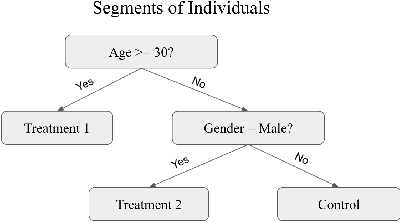
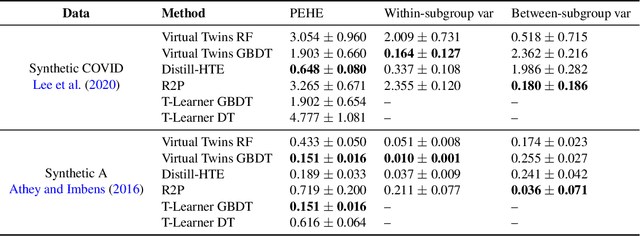
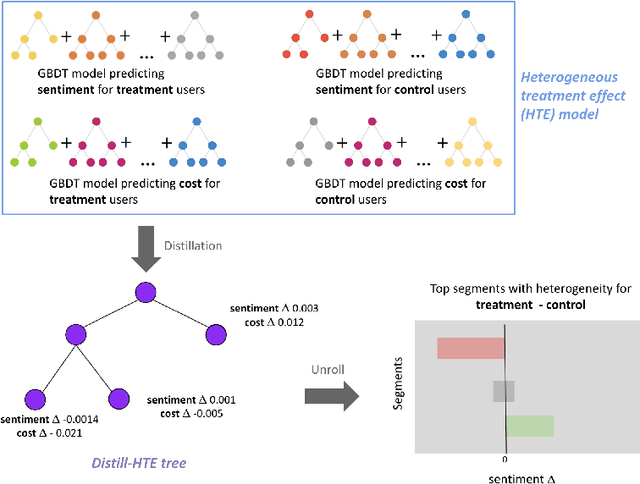
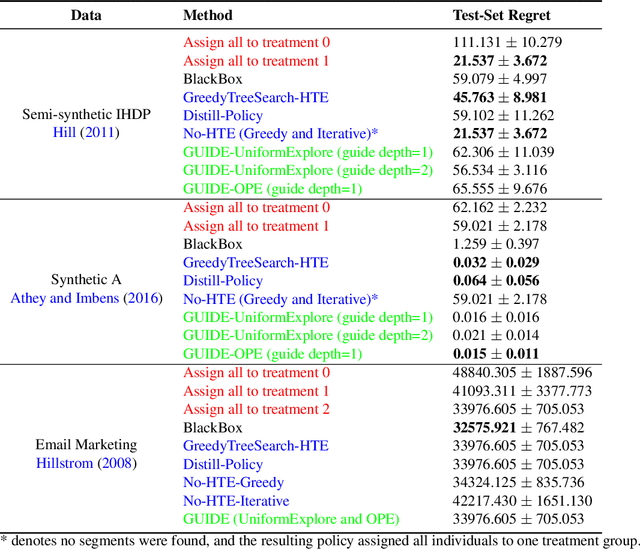
Internet companies are increasingly using machine learning models to create personalized policies which assign, for each individual, the best predicted treatment for that individual. They are frequently derived from black-box heterogeneous treatment effect (HTE) models that predict individual-level treatment effects. In this paper, we focus on (1) learning explanations for HTE models; (2) learning interpretable policies that prescribe treatment assignments. We also propose guidance trees, an approach to ensemble multiple interpretable policies without the loss of interpretability. These rule-based interpretable policies are easy to deploy and avoid the need to maintain a HTE model in a production environment.
Provable Data Clustering via Innovation Search
Aug 16, 2021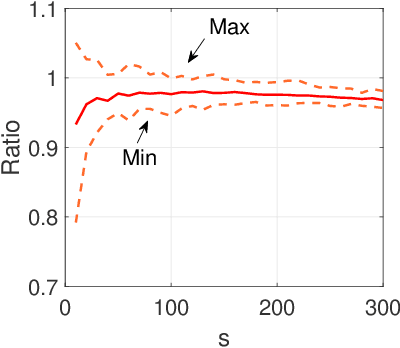
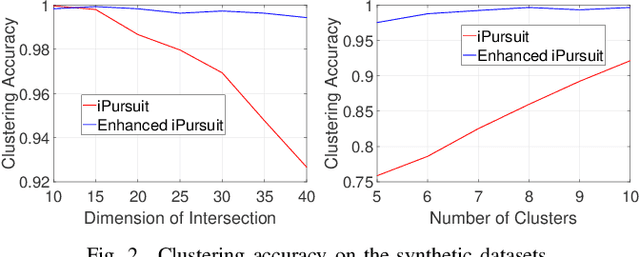
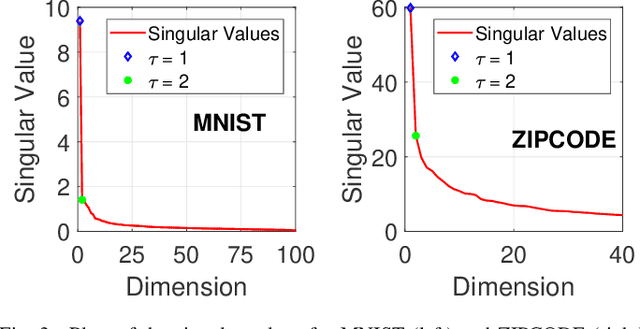

This paper studies the subspace clustering problem in which data points collected from high-dimensional ambient space lie in a union of linear subspaces. Subspace clustering becomes challenging when the dimension of intersection between subspaces is large and most of the self-representation based methods are sensitive to the intersection between the span of clusters. In sharp contrast to the self-representation based methods, a recently proposed clustering method termed Innovation Pursuit, computed a set of optimal directions (directions of innovation) to build the adjacency matrix. This paper focuses on the Innovation Pursuit Algorithm to shed light on its impressive performance when the subspaces are heavily intersected. It is shown that in contrast to most of the existing methods which require the subspaces to be sufficiently incoherent with each other, Innovation Pursuit only requires the innovative components of the subspaces to be sufficiently incoherent with each other. These new sufficient conditions allow the clusters to be strongly close to each other. Motivated by the presented theoretical analysis, a simple yet effective projection based technique is proposed which we show with both numerical and theoretical results that it can boost the performance of Innovation Pursuit.