 Add to Chrome
 Add to Firefox
 Add to Edge
CNNSum: Exploring Long-Conext Summarization with Large Language Models in Chinese Novels
Dec 05, 2024


Large Language Models (LLMs) have been well-researched in many long-context tasks. However, due to high annotation costs, high-quality long-context summary datasets for training or evaluation are scarce, limiting further research. In this work, we introduce CNNSum, a new multi-scale Chinese long-context novel summarization benchmark, including four subsets, length covering 16k\textasciitilde128k, 695 samples in total, the annotations are human-driven. We evaluate commercial and open-source models on CNNSum and conduct a detailed analysis. Based on the observations, we further conduct fine-tuning exploration with short-context summary data. In our study: (1) GPT-4o underperformed, due to excessive subjective commentary. (2) Currently, long-context summarization mainly relies on memory ability, small LLMs with stable longer context lengths are the most cost-effective. Using long data concatenated from short-context summaries makes a significant improvement. (3) Prompt templates may cause a large performance gap but can be mitigated through fine-tuning. (4) Fine-tuned Chat or Instruction versions may harm the Base model and further fine-tuning cannot bridge performance gap. (5) while models with RoPE base scaling exhibit strong extrapolation potential, their performance may vary significantly when combined with other interpolation methods and need careful selection. (6) CNNSum provides more reliable and insightful evaluation results than other benchmarks. We release CNNSum to advance research in this field.

LAA-Net: A Physical-prior-knowledge Based Network for Robust Nighttime Depth Estimation
Dec 05, 2024

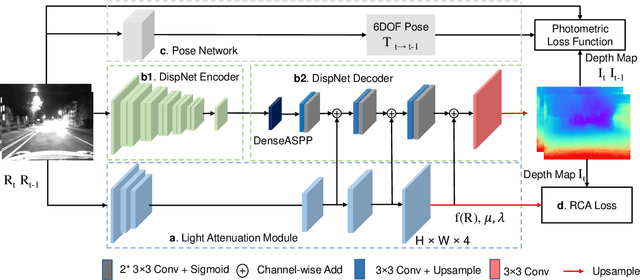
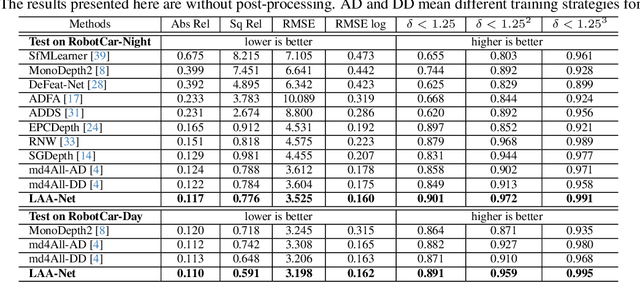
Existing self-supervised monocular depth estimation (MDE) models attempt to improve nighttime performance by using GANs to transfer nighttime images into their daytime versions. However, this can introduce inconsistencies due to the complexities of real-world daytime lighting variations, which may finally lead to inaccurate estimation results. To address this issue, we leverage physical-prior-knowledge about light wavelength and light attenuation during nighttime. Specifically, our model, Light-Attenuation-Aware Network (LAA-Net), incorporates physical insights from Rayleigh scattering theory for robust nighttime depth estimation: LAA-Net is trained based on red channel values because red light preserves more information under nighttime scenarios due to its longer wavelength. Additionally, based on Beer-Lambert law, we introduce Red Channel Attenuation (RCA) loss to guide LAA-Net's training. Experiments on the RobotCar-Night, nuScenes-Night, RobotCar-Day, and KITTI datasets demonstrate that our model outperforms SOTA models.
Learning Whole-Body Loco-Manipulation for Omni-Directional Task Space Pose Tracking with a Wheeled-Quadrupedal-Manipulator
Dec 04, 2024
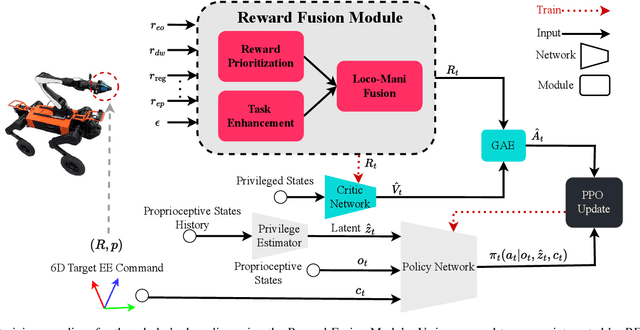
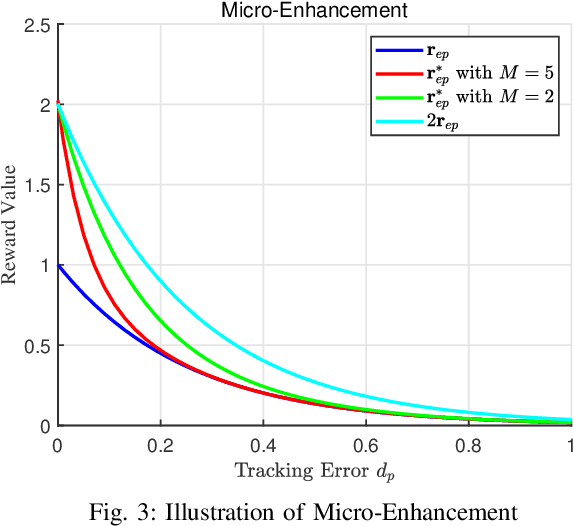
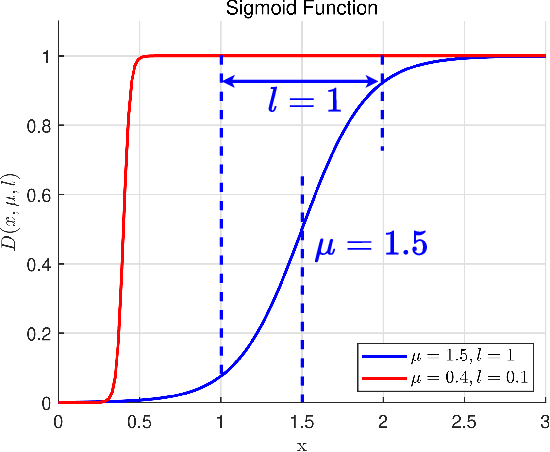
In this paper, we study the whole-body loco-manipulation problem using reinforcement learning (RL). Specifically, we focus on the problem of how to coordinate the floating base and the robotic arm of a wheeled-quadrupedal manipulator robot to achieve direct six-dimensional (6D) end-effector (EE) pose tracking in task space. Different from conventional whole-body loco-manipulation problems that track both floating-base and end-effector commands, the direct EE pose tracking problem requires inherent balance among redundant degrees of freedom in the whole-body motion. We leverage RL to solve this challenging problem. To address the associated difficulties, we develop a novel reward fusion module (RFM) that systematically integrates reward terms corresponding to different tasks in a nonlinear manner. In such a way, the inherent multi-stage and hierarchical feature of the loco-manipulation problem can be carefully accommodated. By combining the proposed RFM with the a teacher-student RL training paradigm, we present a complete RL scheme to achieve 6D EE pose tracking for the wheeled-quadruped manipulator robot. Extensive simulation and hardware experiments demonstrate the significance of the RFM. In particular, we enable smooth and precise tracking performance, achieving state-of-the-art tracking position error of less than 5 cm, and rotation error of less than 0.1 rad. Please refer to https://clearlab-sustech.github.io/RFM_loco_mani/ for more experimental videos.
CAdam: Confidence-Based Optimization for Online Learning
Nov 29, 2024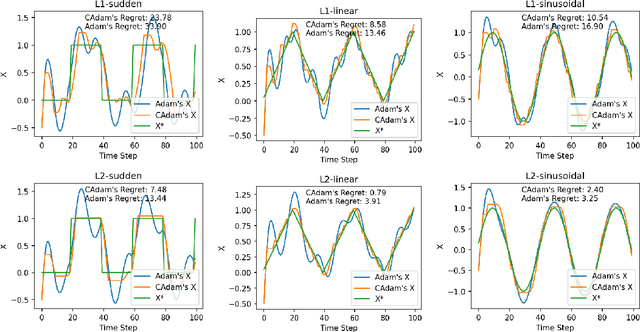
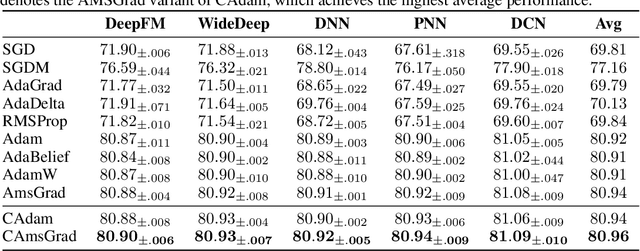
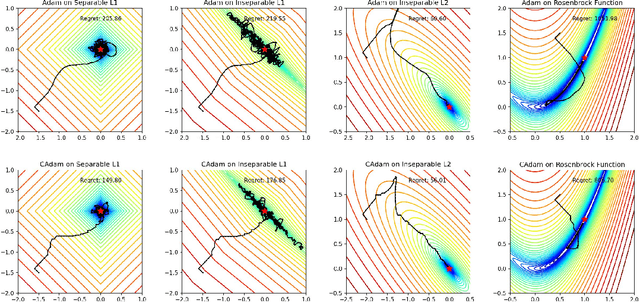
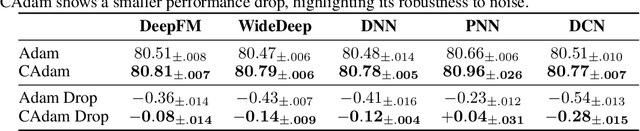
Modern recommendation systems frequently employ online learning to dynamically update their models with freshly collected data. The most commonly used optimizer for updating neural networks in these contexts is the Adam optimizer, which integrates momentum ($m_t$) and adaptive learning rate ($v_t$). However, the volatile nature of online learning data, characterized by its frequent distribution shifts and presence of noises, poses significant challenges to Adam's standard optimization process: (1) Adam may use outdated momentum and the average of squared gradients, resulting in slower adaptation to distribution changes, and (2) Adam's performance is adversely affected by data noise. To mitigate these issues, we introduce CAdam, a confidence-based optimization strategy that assesses the consistence between the momentum and the gradient for each parameter dimension before deciding on updates. If momentum and gradient are in sync, CAdam proceeds with parameter updates according to Adam's original formulation; if not, it temporarily withholds updates and monitors potential shifts in data distribution in subsequent iterations. This method allows CAdam to distinguish between the true distributional shifts and mere noise, and adapt more quickly to new data distributions. Our experiments with both synthetic and real-world datasets demonstrate that CAdam surpasses other well-known optimizers, including the original Adam, in efficiency and noise robustness. Furthermore, in large-scale A/B testing within a live recommendation system, CAdam significantly enhances model performance compared to Adam, leading to substantial increases in the system's gross merchandise volume (GMV).
HI-SLAM2: Geometry-Aware Gaussian SLAM for Fast Monocular Scene Reconstruction
Nov 27, 2024
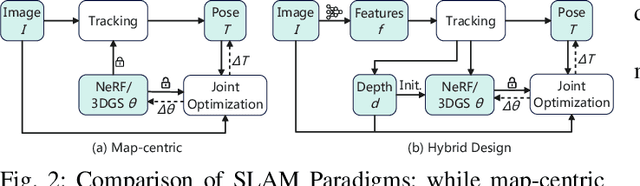


We present HI-SLAM2, a geometry-aware Gaussian SLAM system that achieves fast and accurate monocular scene reconstruction using only RGB input. Existing Neural SLAM or 3DGS-based SLAM methods often trade off between rendering quality and geometry accuracy, our research demonstrates that both can be achieved simultaneously with RGB input alone. The key idea of our approach is to enhance the ability for geometry estimation by combining easy-to-obtain monocular priors with learning-based dense SLAM, and then using 3D Gaussian splatting as our core map representation to efficiently model the scene. Upon loop closure, our method ensures on-the-fly global consistency through efficient pose graph bundle adjustment and instant map updates by explicitly deforming the 3D Gaussian units based on anchored keyframe updates. Furthermore, we introduce a grid-based scale alignment strategy to maintain improved scale consistency in prior depths for finer depth details. Through extensive experiments on Replica, ScanNet, and ScanNet++, we demonstrate significant improvements over existing Neural SLAM methods and even surpass RGB-D-based methods in both reconstruction and rendering quality. The project page and source code will be made available at https://hi-slam2.github.io/.
MapEval: Towards Unified, Robust and Efficient SLAM Map Evaluation Framework
Nov 26, 2024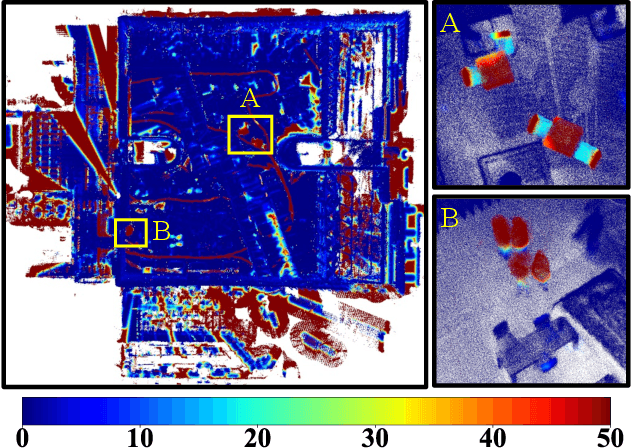
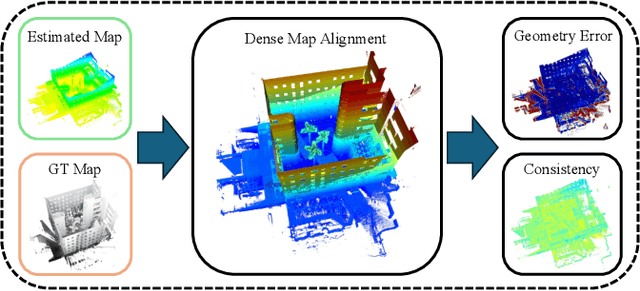
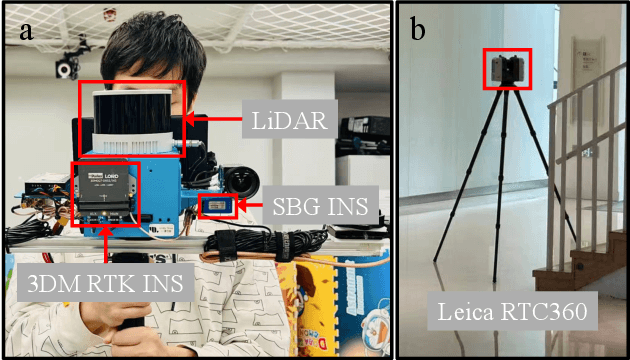
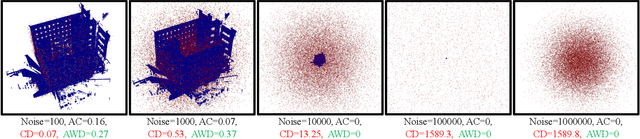
Evaluating massive-scale point cloud maps in Simultaneous Localization and Mapping (SLAM) remains challenging, primarily due to the absence of unified, robust and efficient evaluation frameworks. We present MapEval, an open-source framework for comprehensive quality assessment of point cloud maps, specifically addressing SLAM scenarios where ground truth map is inherently sparse compared to the mapped environment. Through systematic analysis of existing evaluation metrics in SLAM applications, we identify their fundamental limitations and establish clear guidelines for consistent map quality assessment. Building upon these insights, we propose a novel Gaussian-approximated Wasserstein distance in voxelized space, enabling two complementary metrics under the same error standard: Voxelized Average Wasserstein Distance (AWD) for global geometric accuracy and Spatial Consistency Score (SCS) for local consistency evaluation. This theoretical foundation leads to significant improvements in both robustness against noise and computational efficiency compared to conventional metrics. Extensive experiments on both simulated and real-world datasets demonstrate that MapEval achieves at least \SI{100}{}-\SI{500}{} times faster while maintaining evaluation integrity. The MapEval library\footnote{\texttt{https://github.com/JokerJohn/Cloud\_Map\_Evaluation}} will be publicly available to promote standardized map evaluation practices in the robotics community.
Generative Fuzzy System for Sequence Generation
Nov 21, 2024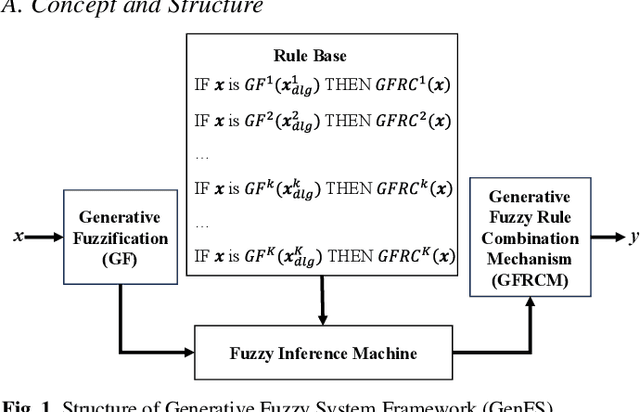
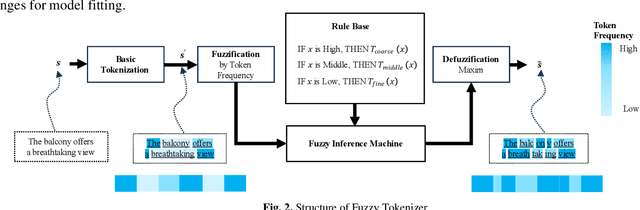
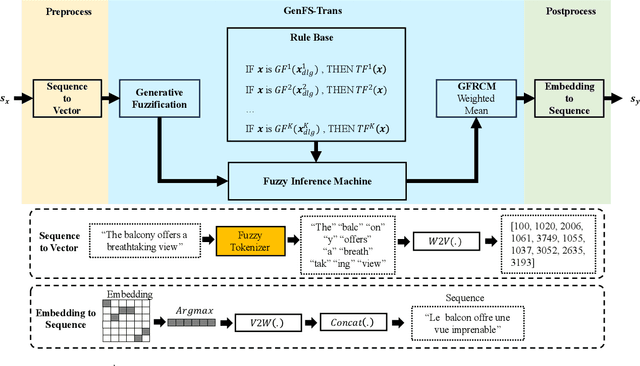
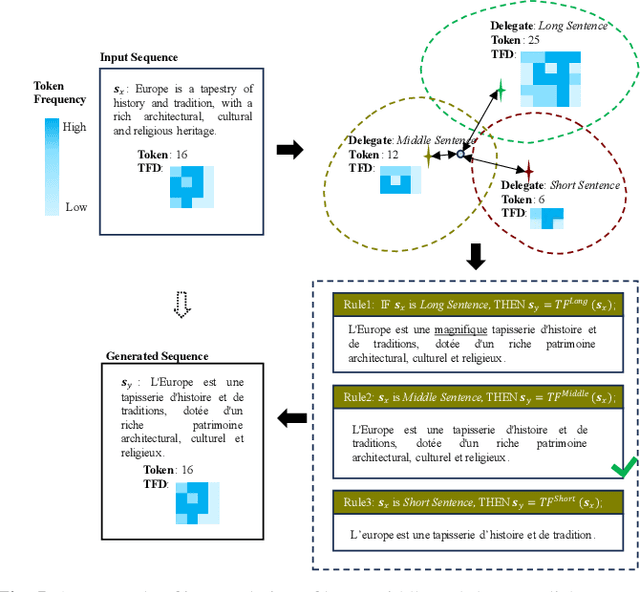
Generative Models (GMs), particularly Large Language Models (LLMs), have garnered significant attention in machine learning and artificial intelligence for their ability to generate new data by learning the statistical properties of training data and creating data that resemble the original. This capability offers a wide range of applications across various domains. However, the complex structures and numerous model parameters of GMs make the input-output processes opaque, complicating the understanding and control of outputs. Moreover, the purely data-driven learning mechanism limits GM's ability to acquire broader knowledge. There remains substantial potential for enhancing the robustness and generalization capabilities of GMs. In this work, we introduce the fuzzy system, a classical modeling method that combines data and knowledge-driven mechanisms, to generative tasks. We propose a novel Generative Fuzzy System framework, named GenFS, which integrates the deep learning capabilities of GM with the interpretability and dual-driven mechanisms of fuzzy systems. Specifically, we propose an end-to-end GenFS-based model for sequence generation, called FuzzyS2S. A series of experimental studies were conducted on 12 datasets, covering three distinct categories of generative tasks: machine translation, code generation, and summary generation. The results demonstrate that FuzzyS2S outperforms the Transformer in terms of accuracy and fluency. Furthermore, it exhibits better performance on some datasets compared to state-of-the-art models T5 and CodeT5.
Towards Next-Generation Medical Agent: How o1 is Reshaping Decision-Making in Medical Scenarios
Nov 16, 2024

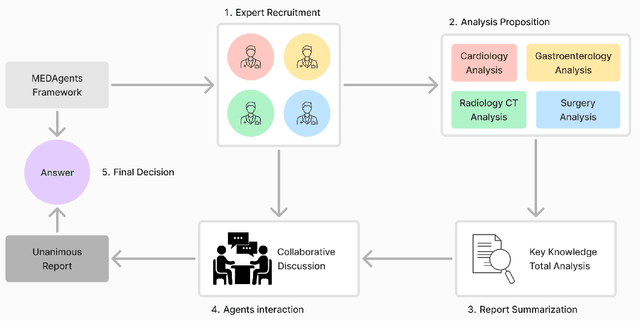

Artificial Intelligence (AI) has become essential in modern healthcare, with large language models (LLMs) offering promising advances in clinical decision-making. Traditional model-based approaches, including those leveraging in-context demonstrations and those with specialized medical fine-tuning, have demonstrated strong performance in medical language processing but struggle with real-time adaptability, multi-step reasoning, and handling complex medical tasks. Agent-based AI systems address these limitations by incorporating reasoning traces, tool selection based on context, knowledge retrieval, and both short- and long-term memory. These additional features enable the medical AI agent to handle complex medical scenarios where decision-making should be built on real-time interaction with the environment. Therefore, unlike conventional model-based approaches that treat medical queries as isolated questions, medical AI agents approach them as complex tasks and behave more like human doctors. In this paper, we study the choice of the backbone LLM for medical AI agents, which is the foundation for the agent's overall reasoning and action generation. In particular, we consider the emergent o1 model and examine its impact on agents' reasoning, tool-use adaptability, and real-time information retrieval across diverse clinical scenarios, including high-stakes settings such as intensive care units (ICUs). Our findings demonstrate o1's ability to enhance diagnostic accuracy and consistency, paving the way for smarter, more responsive AI tools that support better patient outcomes and decision-making efficacy in clinical practice.
Exploring Feature-based Knowledge Distillation For Recommender System: A Frequency Perspective
Nov 16, 2024
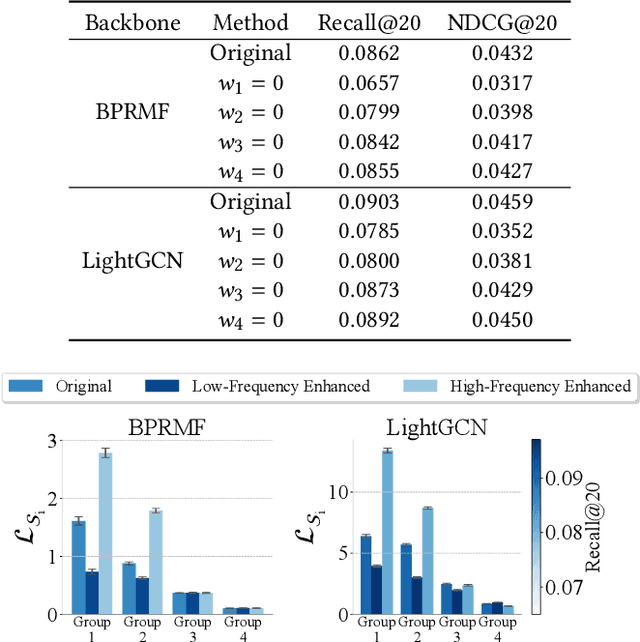
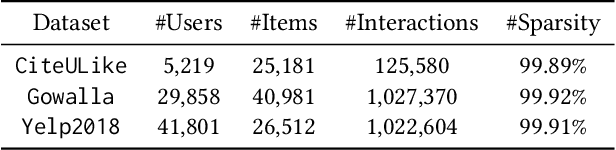
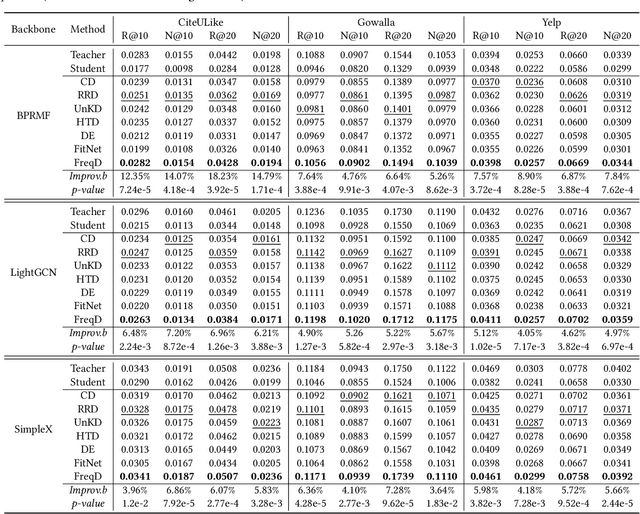
In this paper, we analyze the feature-based knowledge distillation for recommendation from the frequency perspective. By defining knowledge as different frequency components of the features, we theoretically demonstrate that regular feature-based knowledge distillation is equivalent to equally minimizing losses on all knowledge and further analyze how this equal loss weight allocation method leads to important knowledge being overlooked. In light of this, we propose to emphasize important knowledge by redistributing knowledge weights. Furthermore, we propose FreqD, a lightweight knowledge reweighting method, to avoid the computational cost of calculating losses on each knowledge. Extensive experiments demonstrate that FreqD consistently and significantly outperforms state-of-the-art knowledge distillation methods for recommender systems. Our code is available at \url{https://anonymous.4open.science/r/FreqKD/}
CDXFormer: Boosting Remote Sensing Change Detection with Extended Long Short-Term Memory
Nov 12, 2024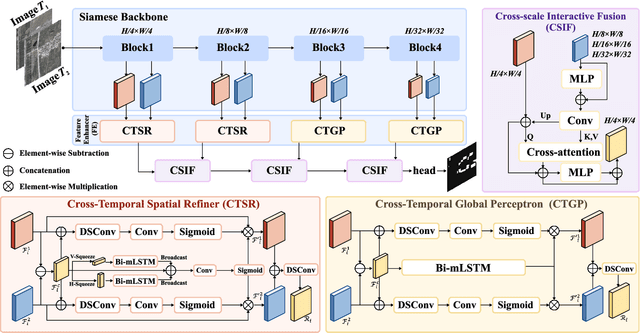
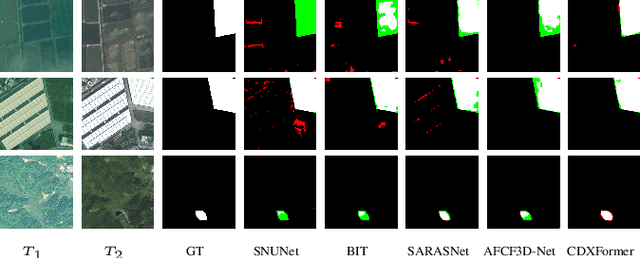
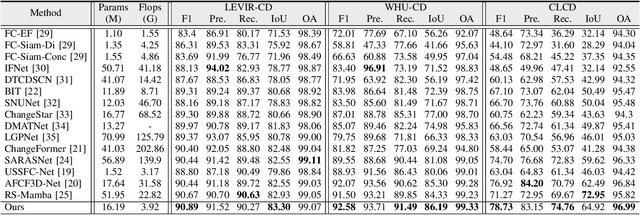

In complex scenes and varied conditions, effectively integrating spatial-temporal context is crucial for accurately identifying changes. However, current RS-CD methods lack a balanced consideration of performance and efficiency. CNNs lack global context, Transformers have quadratic computational complexity, and Mambas are restricted by CUDA acceleration. In this paper, we propose CDXFormer, with a core component that is a powerful XLSTM-based feature enhancement layer, integrating the advantages of linear computational complexity, global context perception, and strong interpret-ability. Specifically, we introduce a scale-specific Feature Enhancer layer, incorporating a Cross-Temporal Global Perceptron customized for semantic-accurate deep features, and a Cross-Temporal Spatial Refiner customized for detail-rich shallow features. Additionally, we propose a Cross-Scale Interactive Fusion module to progressively interact global change representations with spatial responses. Extensive experimental results demonstrate that CDXFormer achieves state-of-the-art performance across three benchmark datasets, offering a compelling balance between efficiency and accuracy. Code is available at https://github.com/xwmaxwma/rschange.