 Add to Chrome
 Add to Firefox
 Add to Edge
Large Language Models for Bioinformatics
Jan 10, 2025
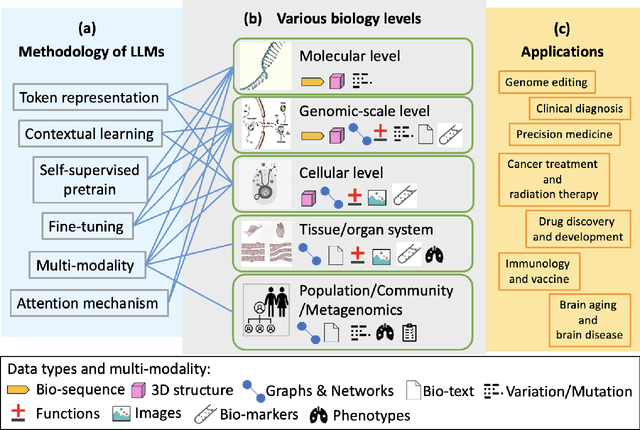
With the rapid advancements in large language model (LLM) technology and the emergence of bioinformatics-specific language models (BioLMs), there is a growing need for a comprehensive analysis of the current landscape, computational characteristics, and diverse applications. This survey aims to address this need by providing a thorough review of BioLMs, focusing on their evolution, classification, and distinguishing features, alongside a detailed examination of training methodologies, datasets, and evaluation frameworks. We explore the wide-ranging applications of BioLMs in critical areas such as disease diagnosis, drug discovery, and vaccine development, highlighting their impact and transformative potential in bioinformatics. We identify key challenges and limitations inherent in BioLMs, including data privacy and security concerns, interpretability issues, biases in training data and model outputs, and domain adaptation complexities. Finally, we highlight emerging trends and future directions, offering valuable insights to guide researchers and clinicians toward advancing BioLMs for increasingly sophisticated biological and clinical applications.

GiNet: Integrating Sequential and Context-Aware Learning for Battery Capacity Prediction
Jan 09, 2025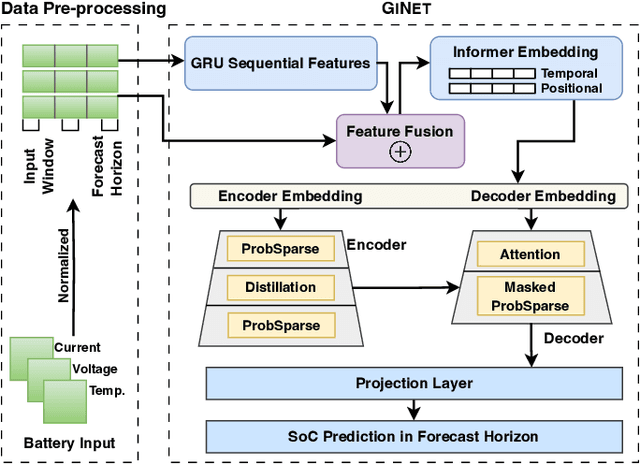
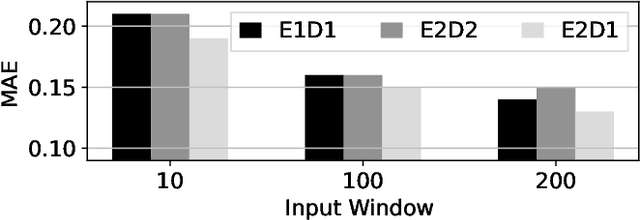
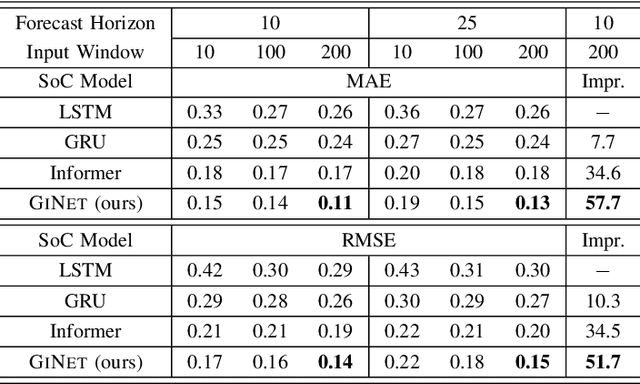
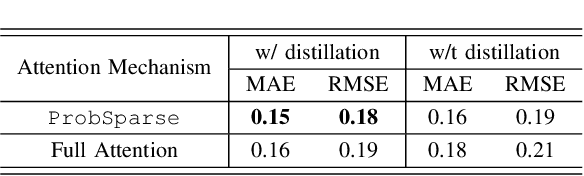
The surging demand for batteries requires advanced battery management systems, where battery capacity modelling is a key functionality. In this paper, we aim to achieve accurate battery capacity prediction by learning from historical measurements of battery dynamics. We propose GiNet, a gated recurrent units enhanced Informer network, for predicting battery's capacity. The novelty and competitiveness of GiNet lies in its capability of capturing sequential and contextual information from raw battery data and reflecting the battery's complex behaviors with both temporal dynamics and long-term dependencies. We conducted an experimental study based on a publicly available dataset to showcase GiNet's strength of gaining a holistic understanding of battery behavior and predicting battery capacity accurately. GiNet achieves 0.11 mean absolute error for predicting the battery capacity in a sequence of future time slots without knowing the historical battery capacity. It also outperforms the latest algorithms significantly with 27% error reduction on average compared to Informer. The promising results highlight the importance of customized and optimized integration of algorithm and battery knowledge and shed light on other industry applications as well.
LDMapNet-U: An End-to-End System for City-Scale Lane-Level Map Updating
Jan 06, 2025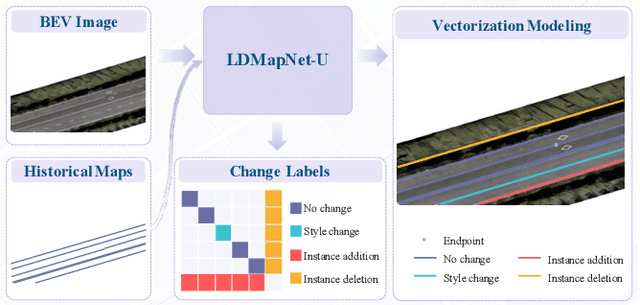

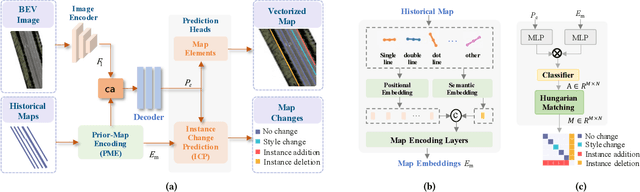

An up-to-date city-scale lane-level map is an indispensable infrastructure and a key enabling technology for ensuring the safety and user experience of autonomous driving systems. In industrial scenarios, reliance on manual annotation for map updates creates a critical bottleneck. Lane-level updates require precise change information and must ensure consistency with adjacent data while adhering to strict standards. Traditional methods utilize a three-stage approach-construction, change detection, and updating-which often necessitates manual verification due to accuracy limitations. This results in labor-intensive processes and hampers timely updates. To address these challenges, we propose LDMapNet-U, which implements a new end-to-end paradigm for city-scale lane-level map updating. By reconceptualizing the update task as an end-to-end map generation process grounded in historical map data, we introduce a paradigm shift in map updating that simultaneously generates vectorized maps and change information. To achieve this, a Prior-Map Encoding (PME) module is introduced to effectively encode historical maps, serving as a critical reference for detecting changes. Additionally, we incorporate a novel Instance Change Prediction (ICP) module that learns to predict associations with historical maps. Consequently, LDMapNet-U simultaneously achieves vectorized map element generation and change detection. To demonstrate the superiority and effectiveness of LDMapNet-U, extensive experiments are conducted using large-scale real-world datasets. In addition, LDMapNet-U has been successfully deployed in production at Baidu Maps since April 2024, supporting map updating for over 360 cities and significantly shortening the update cycle from quarterly to weekly. The updated maps serve hundreds of millions of users and are integrated into the autonomous driving systems of several leading vehicle companies.
Balanced Multi-view Clustering
Jan 05, 2025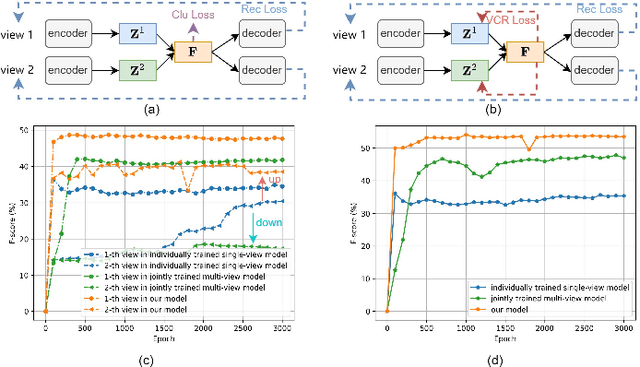

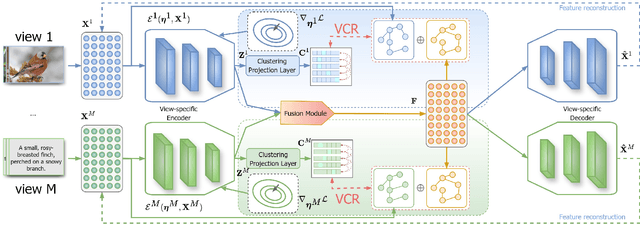

Multi-view clustering (MvC) aims to integrate information from different views to enhance the capability of the model in capturing the underlying data structures. The widely used joint training paradigm in MvC is potentially not fully leverage the multi-view information, since the imbalanced and under-optimized view-specific features caused by the uniform learning objective for all views. For instance, particular views with more discriminative information could dominate the learning process in the joint training paradigm, leading to other views being under-optimized. To alleviate this issue, we first analyze the imbalanced phenomenon in the joint-training paradigm of multi-view clustering from the perspective of gradient descent for each view-specific feature extractor. Then, we propose a novel balanced multi-view clustering (BMvC) method, which introduces a view-specific contrastive regularization (VCR) to modulate the optimization of each view. Concretely, VCR preserves the sample similarities captured from the joint features and view-specific ones into the clustering distributions corresponding to view-specific features to enhance the learning process of view-specific feature extractors. Additionally, a theoretical analysis is provided to illustrate that VCR adaptively modulates the magnitudes of gradients for updating the parameters of view-specific feature extractors to achieve a balanced multi-view learning procedure. In such a manner, BMvC achieves a better trade-off between the exploitation of view-specific patterns and the exploration of view-invariance patterns to fully learn the multi-view information for the clustering task. Finally, a set of experiments are conducted to verify the superiority of the proposed method compared with state-of-the-art approaches both on eight benchmark MvC datasets and two spatially resolved transcriptomics datasets.
Digital-Analog Transmission based Emergency Semantic Communications
Jan 03, 2025


Emergency Wireless Communication (EWC) networks adopt the User Datagram Protocol (UDP) to transmit scene images in real time for quickly assessing the extent of the damage. However, existing UDP-based EWC exhibits suboptimal performance under poor channel conditions since UDP lacks an Automatic Repeat reQuest (ARQ) mechanism. In addition, future EWC systems must not only enhance human decisionmaking during emergency response operations but also support Artificial Intelligence (AI)-driven approaches to improve rescue efficiency. The Deep Learning-based Semantic Communication (DL-based SemCom) emerges as a robust, efficient, and taskoriented transmission scheme, suitable for deployment in UDP based EWC. Due to the constraints in hardware capabilities and transmission resources, the EWC transmitter is unable to integrate sufficiently powerful NN model, thereby failing to achieve ideal performance under EWC scene. For EWC scene, we propose a performance-constrained semantic coding model, which considers the effects of the semantic noise and the channel noise. Then, we derive Cramer-Rao lower bound of the proposed semantic coding model, as guidance for the design of semantic codec to enhance its adaptability to semantic noise as well as channel noise. To further improve the system performance, we propose Digital-Analog transmission based Emergency Semantic Communication (DAESemCom) framework, which integrates the analog DL-based semantic coding and the digital Distributed Source Coding (DSC) schemes to leverage their respective advantages. The simulation results show that the proposed DA-ESemCom framework outperforms the classical Separated Source-Channel Coding (SSCC) and other DL-based Joint Source-Channel Coding (DL-based JSCC) schemes in terms of fidelity and detection performances.
Unleashing Correlation and Continuity for Hyperspectral Reconstruction from RGB Images
Jan 02, 2025
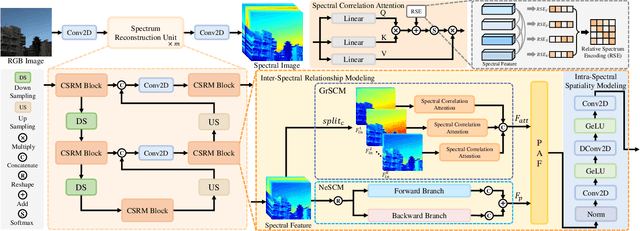


Reconstructing Hyperspectral Images (HSI) from RGB images can yield high spatial resolution HSI at a lower cost, demonstrating significant application potential. This paper reveals that local correlation and global continuity of the spectral characteristics are crucial for HSI reconstruction tasks. Therefore, we fully explore these inter-spectral relationships and propose a Correlation and Continuity Network (CCNet) for HSI reconstruction from RGB images. For the correlation of local spectrum, we introduce the Group-wise Spectral Correlation Modeling (GrSCM) module, which efficiently establishes spectral band similarity within a localized range. For the continuity of global spectrum, we design the Neighborhood-wise Spectral Continuity Modeling (NeSCM) module, which employs memory units to recursively model the progressive variation characteristics at the global level. In order to explore the inherent complementarity of these two modules, we design the Patch-wise Adaptive Fusion (PAF) module to efficiently integrate global continuity features into the spectral features in a patch-wise adaptive manner. These innovations enhance the quality of reconstructed HSI. We perform comprehensive comparison and ablation experiments on the mainstream datasets NTIRE2022 and NTIRE2020 for the spectral reconstruction task. Compared to the current advanced spectral reconstruction algorithms, our designed algorithm achieves State-Of-The-Art (SOTA) performance.
Breaking Through the Spike: Spike Window Decoding for Accelerated and Precise Automatic Speech Recognition
Jan 01, 2025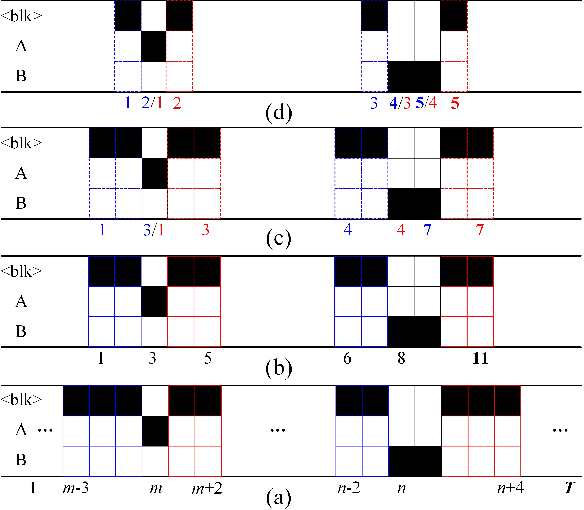
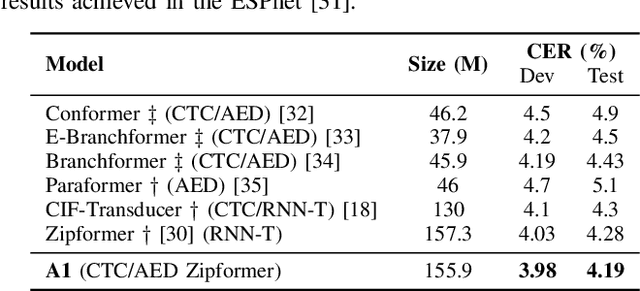
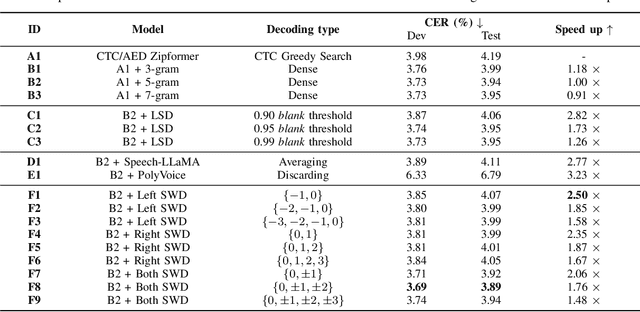
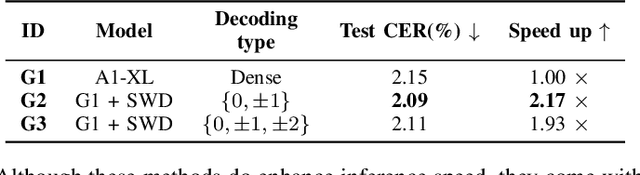
Recently, end-to-end automatic speech recognition has become the mainstream approach in both industry and academia. To optimize system performance in specific scenarios, the Weighted Finite-State Transducer (WFST) is extensively used to integrate acoustic and language models, leveraging its capacity to implicitly fuse language models within static graphs, thereby ensuring robust recognition while also facilitating rapid error correction. However, WFST necessitates a frame-by-frame search of CTC posterior probabilities through autoregression, which significantly hampers inference speed. In this work, we thoroughly investigate the spike property of CTC outputs and further propose the conjecture that adjacent frames to non-blank spikes carry semantic information beneficial to the model. Building on this, we propose the Spike Window Decoding algorithm, which greatly improves the inference speed by making the number of frames decoded in WFST linearly related to the number of spiking frames in the CTC output, while guaranteeing the recognition performance. Our method achieves SOTA recognition accuracy with significantly accelerates decoding speed, proven across both AISHELL-1 and large-scale In-House datasets, establishing a pioneering approach for integrating CTC output with WFST.
STeInFormer: Spatial-Temporal Interaction Transformer Architecture for Remote Sensing Change Detection
Dec 23, 2024Convolutional neural networks and attention mechanisms have greatly benefited remote sensing change detection (RSCD) because of their outstanding discriminative ability. Existent RSCD methods often follow a paradigm of using a non-interactive Siamese neural network for multi-temporal feature extraction and change detection heads for feature fusion and change representation. However, this paradigm lacks the contemplation of the characteristics of RSCD in temporal and spatial dimensions, and causes the drawback on spatial-temporal interaction that hinders high-quality feature extraction. To address this problem, we present STeInFormer, a spatial-temporal interaction Transformer architecture for multi-temporal feature extraction, which is the first general backbone network specifically designed for RSCD. In addition, we propose a parameter-free multi-frequency token mixer to integrate frequency-domain features that provide spectral information for RSCD. Experimental results on three datasets validate the effectiveness of the proposed method, which can outperform the state-of-the-art methods and achieve the most satisfactory efficiency-accuracy trade-off. Code is available at https://github.com/xwmaxwma/rschange.
Mathematics and Machine Creativity: A Survey on Bridging Mathematics with AI
Dec 21, 2024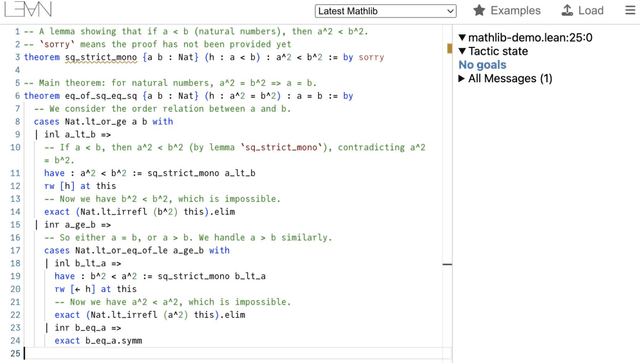
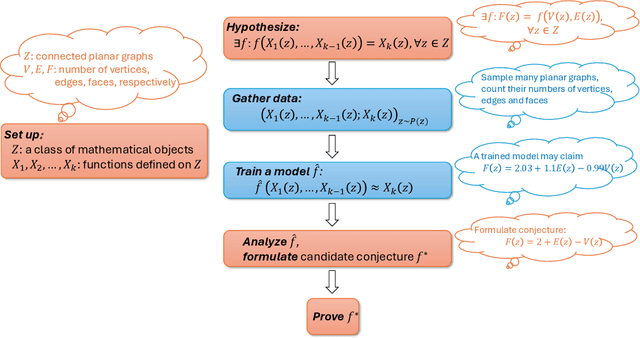
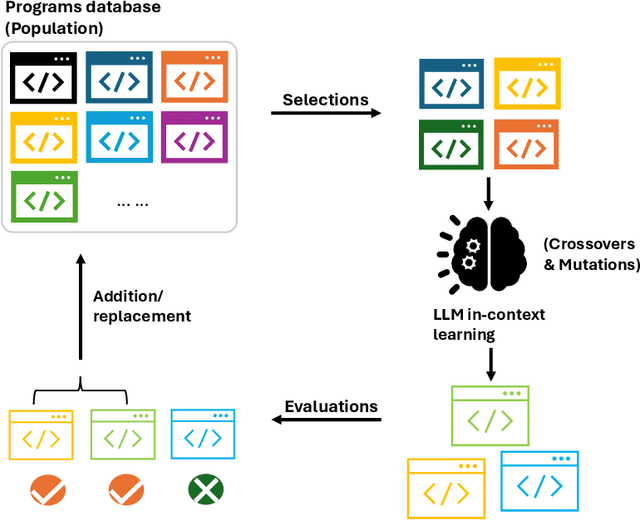
This paper presents a comprehensive survey on the applications of artificial intelligence (AI) in mathematical research, highlighting the transformative role AI has begun to play in this domain. Traditionally, AI advancements have heavily relied on theoretical foundations from fields like mathematics and statistics. However, recent developments in AI, particularly in reinforcement learning (RL) and large language models (LLMs), have demonstrated the potential for AI to contribute back to mathematics, offering flexible algorithmic frameworks and powerful inductive reasoning capabilities that support various aspects of mathematical research. This survey aims to establish a bridge between AI and mathematics, providing insights into the mutual benefits and fostering deeper interdisciplinary understanding. In particular, we argue that while current AI and LLMs may struggle with complex deductive reasoning, their inherent creativity holds significant potential to support and inspire mathematical research. This creative capability, often overlooked, could be the key to unlocking new perspectives and methodologies in mathematics. Furthermore, we address the lack of cross-disciplinary communication: mathematicians may not fully comprehend the latest advances in AI, while AI researchers frequently prioritize benchmarks and standardized testing over AI's applications in frontier mathematical research. This paper seeks to close that gap, offering a detailed exploration of AI's basic knowledge, its strengths, and its emerging applications in the mathematical sciences.
Crabs: Consuming Resrouce via Auto-generation for LLM-DoS Attack under Black-box Settings
Dec 18, 2024


Large Language Models (LLMs) have demonstrated remarkable performance across diverse tasks. LLMs continue to be vulnerable to external threats, particularly Denial-of-Service (DoS) attacks. Specifically, LLM-DoS attacks aim to exhaust computational resources and block services. However, prior works tend to focus on performing white-box attacks, overlooking black-box settings. In this work, we propose an automated algorithm designed for black-box LLMs, called Auto-Generation for LLM-DoS Attack (AutoDoS). AutoDoS introduces DoS Attack Tree and optimizes the prompt node coverage to enhance effectiveness under black-box conditions. Our method can bypass existing defense with enhanced stealthiness via semantic improvement of prompt nodes. Furthermore, we reveal that implanting Length Trojan in Basic DoS Prompt aids in achieving higher attack efficacy. Experimental results show that AutoDoS amplifies service response latency by over 250 $\times \uparrow$, leading to severe resource consumption in terms of GPU utilization and memory usage. Our code is available at \url{https://github.com/shuita2333/AutoDoS}.