 Add to Chrome
 Add to Firefox
 Add to Edge
SkyReels-V2: Infinite-length Film Generative Model
Apr 21, 2025
Recent advances in video generation have been driven by diffusion models and autoregressive frameworks, yet critical challenges persist in harmonizing prompt adherence, visual quality, motion dynamics, and duration: compromises in motion dynamics to enhance temporal visual quality, constrained video duration (5-10 seconds) to prioritize resolution, and inadequate shot-aware generation stemming from general-purpose MLLMs' inability to interpret cinematic grammar, such as shot composition, actor expressions, and camera motions. These intertwined limitations hinder realistic long-form synthesis and professional film-style generation. To address these limitations, we propose SkyReels-V2, an Infinite-length Film Generative Model, that synergizes Multi-modal Large Language Model (MLLM), Multi-stage Pretraining, Reinforcement Learning, and Diffusion Forcing Framework. Firstly, we design a comprehensive structural representation of video that combines the general descriptions by the Multi-modal LLM and the detailed shot language by sub-expert models. Aided with human annotation, we then train a unified Video Captioner, named SkyCaptioner-V1, to efficiently label the video data. Secondly, we establish progressive-resolution pretraining for the fundamental video generation, followed by a four-stage post-training enhancement: Initial concept-balanced Supervised Fine-Tuning (SFT) improves baseline quality; Motion-specific Reinforcement Learning (RL) training with human-annotated and synthetic distortion data addresses dynamic artifacts; Our diffusion forcing framework with non-decreasing noise schedules enables long-video synthesis in an efficient search space; Final high-quality SFT refines visual fidelity. All the code and models are available at https://github.com/SkyworkAI/SkyReels-V2.

DialogueAgents: A Hybrid Agent-Based Speech Synthesis Framework for Multi-Party Dialogue
Apr 20, 2025Speech synthesis is crucial for human-computer interaction, enabling natural and intuitive communication. However, existing datasets involve high construction costs due to manual annotation and suffer from limited character diversity, contextual scenarios, and emotional expressiveness. To address these issues, we propose DialogueAgents, a novel hybrid agent-based speech synthesis framework, which integrates three specialized agents -- a script writer, a speech synthesizer, and a dialogue critic -- to collaboratively generate dialogues. Grounded in a diverse character pool, the framework iteratively refines dialogue scripts and synthesizes speech based on speech review, boosting emotional expressiveness and paralinguistic features of the synthesized dialogues. Using DialogueAgent, we contribute MultiTalk, a bilingual, multi-party, multi-turn speech dialogue dataset covering diverse topics. Extensive experiments demonstrate the effectiveness of our framework and the high quality of the MultiTalk dataset. We release the dataset and code https://github.com/uirlx/DialogueAgents to facilitate future research on advanced speech synthesis models and customized data generation.
A Knowledge-Informed Deep Learning Paradigm for Generalizable and Stability-Optimized Car-Following Models
Apr 19, 2025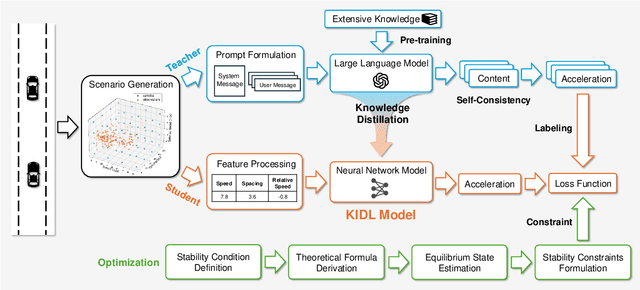
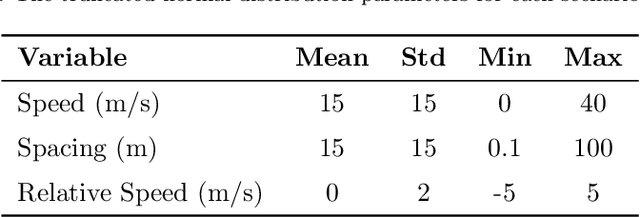
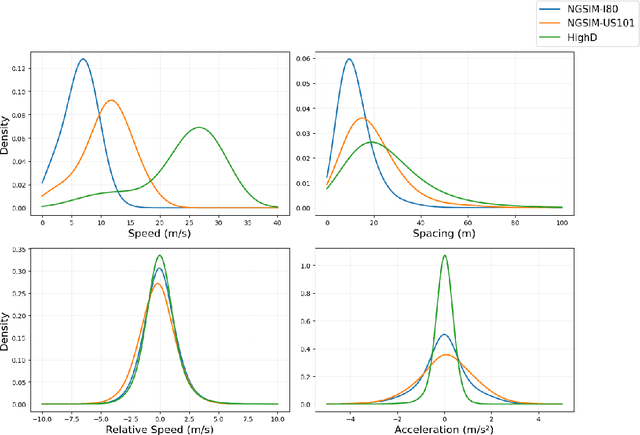

Car-following models (CFMs) are fundamental to traffic flow analysis and autonomous driving. Although calibrated physics-based and trained data-driven CFMs can replicate human driving behavior, their reliance on specific datasets limits generalization across diverse scenarios and reduces reliability in real-world deployment. Moreover, these models typically focus on behavioral fidelity and do not support the explicit optimization of local and string stability, which are increasingly important for the safe and efficient operation of autonomous vehicles (AVs). To address these limitations, we propose a Knowledge-Informed Deep Learning (KIDL) paradigm that distills the generalization capabilities of pre-trained Large Language Models (LLMs) into a lightweight and stability-aware neural architecture. LLMs are used to extract fundamental car-following knowledge beyond dataset-specific patterns, and this knowledge is transferred to a reliable, tractable, and computationally efficient model through knowledge distillation. KIDL also incorporates stability constraints directly into its training objective, ensuring that the resulting model not only emulates human-like behavior but also satisfies the local and string stability requirements essential for real-world AV deployment. We evaluate KIDL on the real-world NGSIM and HighD datasets, comparing its performance with representative physics-based, data-driven, and hybrid CFMs. Both empirical and theoretical results consistently demonstrate KIDL's superior behavioral generalization and traffic flow stability, offering a robust and scalable solution for next-generation traffic systems.
Framework, Standards, Applications and Best practices of Responsible AI : A Comprehensive Survey
Apr 18, 2025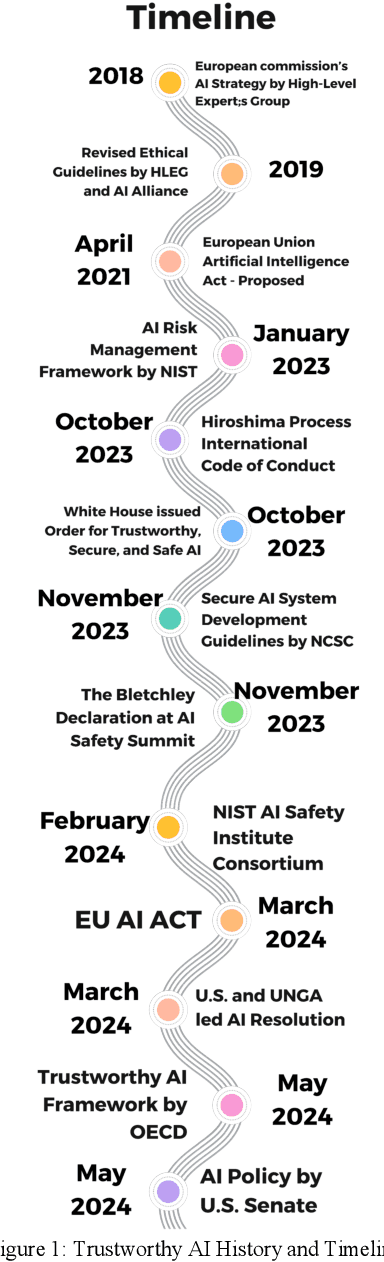
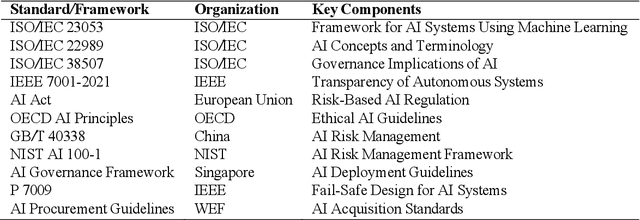
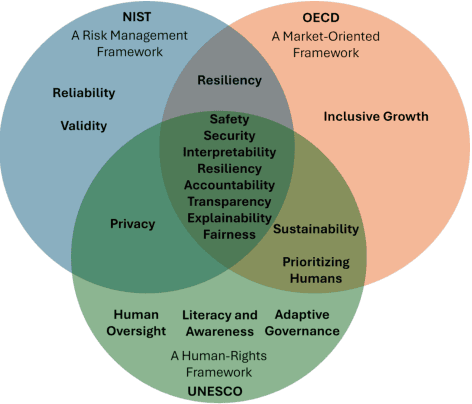
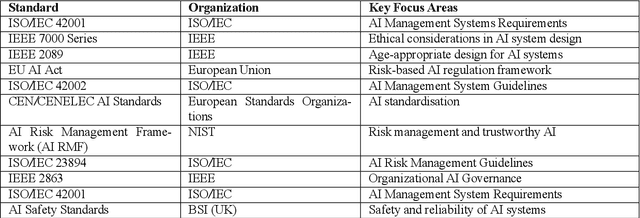
Responsible Artificial Intelligence (RAI) is a combination of ethics associated with the usage of artificial intelligence aligned with the common and standard frameworks. This survey paper extensively discusses the global and national standards, applications of RAI, current technology and ongoing projects using RAI, and possible challenges in implementing and designing RAI in the industries and projects based on AI. Currently, ethical standards and implementation of RAI are decoupled which caters each industry to follow their own standards to use AI ethically. Many global firms and government organizations are taking necessary initiatives to design a common and standard framework. Social pressure and unethical way of using AI forces the RAI design rather than implementation.
Accelerating Multiscale Modeling with Hybrid Solvers: Coupling FEM and Neural Operators with Domain Decomposition
Apr 16, 2025Numerical solvers for partial differential equations (PDEs) face challenges balancing computational cost and accuracy, especially in multiscale and dynamic systems. Neural operators can significantly speed up simulations; however, they often face challenges such as error accumulation and limited generalization in multiphysics problems. This work introduces a novel hybrid framework that integrates physics-informed DeepONet with FEM through domain decomposition. The core innovation lies in adaptively coupling FEM and DeepONet subdomains via a Schwarz alternating method. This methodology strategically allocates computationally demanding regions to a pre-trained Deep Operator Network, while the remaining computational domain is solved through FEM. To address dynamic systems, we integrate the Newmark time-stepping scheme directly into the DeepONet, significantly mitigating error accumulation in long-term simulations. Furthermore, an adaptive subdomain evolution enables the ML-resolved region to expand dynamically, capturing emerging fine-scale features without remeshing. The framework's efficacy has been validated across a range of solid mechanics problems, including static, quasi-static, and dynamic regimes, demonstrating accelerated convergence rates (up to 20% improvement compared to FE-FE approaches), while preserving solution fidelity with error < 1%. Our case studies show that our proposed hybrid solver: (1) maintains solution continuity across subdomain interfaces, (2) reduces computational costs by eliminating fine mesh requirements, (3) mitigates error accumulation in time-dependent simulations, and (4) enables automatic adaptation to evolving physical phenomena. This work bridges the gap between numerical methods and AI-driven surrogates, offering a scalable pathway for high-fidelity simulations in engineering and scientific applications.
Network Alignment
Apr 15, 2025Complex networks are frequently employed to model physical or virtual complex systems. When certain entities exist across multiple systems simultaneously, unveiling their corresponding relationships across the networks becomes crucial. This problem, known as network alignment, holds significant importance. It enhances our understanding of complex system structures and behaviours, facilitates the validation and extension of theoretical physics research about studying complex systems, and fosters diverse practical applications across various fields. However, due to variations in the structure, characteristics, and properties of complex networks across different fields, the study of network alignment is often isolated within each domain, with even the terminologies and concepts lacking uniformity. This review comprehensively summarizes the latest advancements in network alignment research, focusing on analyzing network alignment characteristics and progress in various domains such as social network analysis, bioinformatics, computational linguistics and privacy protection. It provides a detailed analysis of various methods' implementation principles, processes, and performance differences, including structure consistency-based methods, network embedding-based methods, and graph neural network-based (GNN-based) methods. Additionally, the methods for network alignment under different conditions, such as in attributed networks, heterogeneous networks, directed networks, and dynamic networks, are presented. Furthermore, the challenges and the open issues for future studies are also discussed.
BIASINSPECTOR: Detecting Bias in Structured Data through LLM Agents
Apr 07, 2025Detecting biases in structured data is a complex and time-consuming task. Existing automated techniques are limited in diversity of data types and heavily reliant on human case-by-case handling, resulting in a lack of generalizability. Currently, large language model (LLM)-based agents have made significant progress in data science, but their ability to detect data biases is still insufficiently explored. To address this gap, we introduce the first end-to-end, multi-agent synergy framework, BIASINSPECTOR, designed for automatic bias detection in structured data based on specific user requirements. It first develops a multi-stage plan to analyze user-specified bias detection tasks and then implements it with a diverse and well-suited set of tools. It delivers detailed results that include explanations and visualizations. To address the lack of a standardized framework for evaluating the capability of LLM agents to detect biases in data, we further propose a comprehensive benchmark that includes multiple evaluation metrics and a large set of test cases. Extensive experiments demonstrate that our framework achieves exceptional overall performance in structured data bias detection, setting a new milestone for fairer data applications.
COHESION: Composite Graph Convolutional Network with Dual-Stage Fusion for Multimodal Recommendation
Apr 06, 2025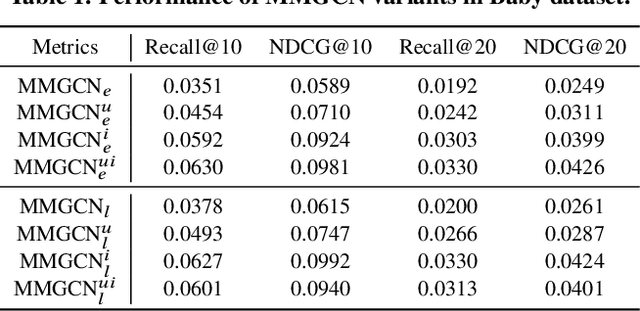
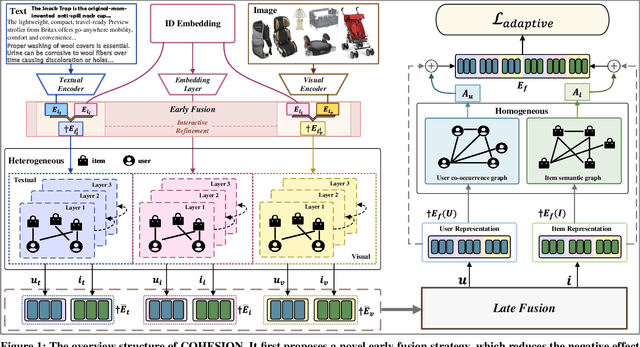
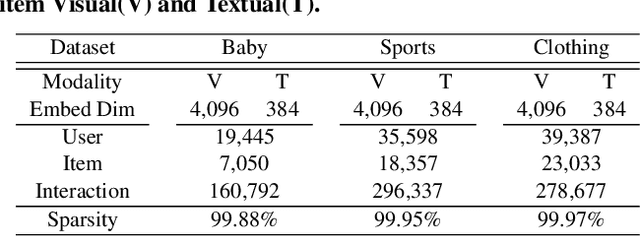
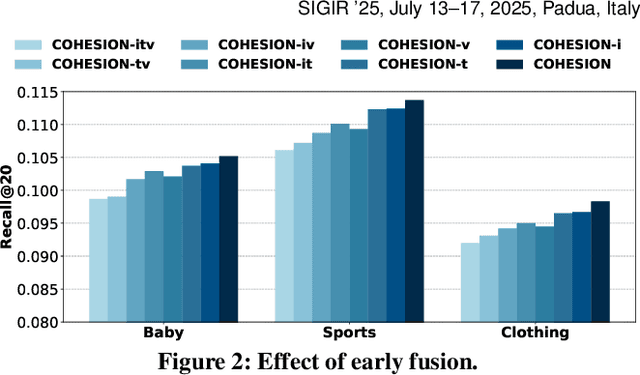
Recent works in multimodal recommendations, which leverage diverse modal information to address data sparsity and enhance recommendation accuracy, have garnered considerable interest. Two key processes in multimodal recommendations are modality fusion and representation learning. Previous approaches in modality fusion often employ simplistic attentive or pre-defined strategies at early or late stages, failing to effectively handle irrelevant information among modalities. In representation learning, prior research has constructed heterogeneous and homogeneous graph structures encapsulating user-item, user-user, and item-item relationships to better capture user interests and item profiles. Modality fusion and representation learning were considered as two independent processes in previous work. In this paper, we reveal that these two processes are complementary and can support each other. Specifically, powerful representation learning enhances modality fusion, while effective fusion improves representation quality. Stemming from these two processes, we introduce a COmposite grapH convolutional nEtwork with dual-stage fuSION for the multimodal recommendation, named COHESION. Specifically, it introduces a dual-stage fusion strategy to reduce the impact of irrelevant information, refining all modalities using ID embedding in the early stage and fusing their representations at the late stage. It also proposes a composite graph convolutional network that utilizes user-item, user-user, and item-item graphs to extract heterogeneous and homogeneous latent relationships within users and items. Besides, it introduces a novel adaptive optimization to ensure balanced and reasonable representations across modalities. Extensive experiments on three widely used datasets demonstrate the significant superiority of COHESION over various competitive baselines.
ToM-RL: Reinforcement Learning Unlocks Theory of Mind in Small LLMs
Apr 02, 2025Recent advancements in rule-based reinforcement learning (RL), applied during the post-training phase of large language models (LLMs), have significantly enhanced their capabilities in structured reasoning tasks such as mathematics and logical inference. However, the effectiveness of RL in social reasoning, particularly in Theory of Mind (ToM), the ability to infer others' mental states, remains largely unexplored. In this study, we demonstrate that RL methods effectively unlock ToM reasoning capabilities even in small-scale LLMs (0.5B to 7B parameters). Using a modest dataset comprising 3200 questions across diverse scenarios, our RL-trained 7B model achieves 84.50\% accuracy on the Hi-ToM benchmark, surpassing models like GPT-4o and DeepSeek-v3 despite significantly fewer parameters. While smaller models ($\leq$3B parameters) suffer from reasoning collapse, larger models (7B parameters) maintain stable performance through consistent belief tracking. Additionally, our RL-based models demonstrate robust generalization to higher-order, out-of-distribution ToM problems, novel textual presentations, and previously unseen datasets. These findings highlight RL's potential to enhance social cognitive reasoning, bridging the gap between structured problem-solving and nuanced social inference in LLMs.
PathOrchestra: A Comprehensive Foundation Model for Computational Pathology with Over 100 Diverse Clinical-Grade Tasks
Mar 31, 2025The complexity and variability inherent in high-resolution pathological images present significant challenges in computational pathology. While pathology foundation models leveraging AI have catalyzed transformative advancements, their development demands large-scale datasets, considerable storage capacity, and substantial computational resources. Furthermore, ensuring their clinical applicability and generalizability requires rigorous validation across a broad spectrum of clinical tasks. Here, we present PathOrchestra, a versatile pathology foundation model trained via self-supervised learning on a dataset comprising 300K pathological slides from 20 tissue and organ types across multiple centers. The model was rigorously evaluated on 112 clinical tasks using a combination of 61 private and 51 public datasets. These tasks encompass digital slide preprocessing, pan-cancer classification, lesion identification, multi-cancer subtype classification, biomarker assessment, gene expression prediction, and the generation of structured reports. PathOrchestra demonstrated exceptional performance across 27,755 WSIs and 9,415,729 ROIs, achieving over 0.950 accuracy in 47 tasks, including pan-cancer classification across various organs, lymphoma subtype diagnosis, and bladder cancer screening. Notably, it is the first model to generate structured reports for high-incidence colorectal cancer and diagnostically complex lymphoma-areas that are infrequently addressed by foundational models but hold immense clinical potential. Overall, PathOrchestra exemplifies the feasibility and efficacy of a large-scale, self-supervised pathology foundation model, validated across a broad range of clinical-grade tasks. Its high accuracy and reduced reliance on extensive data annotation underline its potential for clinical integration, offering a pathway toward more efficient and high-quality medical services.