 Add to Chrome
 Add to Firefox
 Add to Edge
Discussing the Spectra of Physics-Enhanced Machine Learning via a Survey on Structural Mechanics Applications
Nov 01, 2023

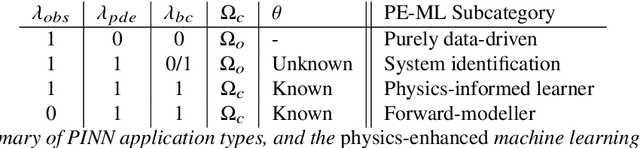


The intersection of physics and machine learning has given rise to a paradigm that we refer to here as physics-enhanced machine learning (PEML), aiming to improve the capabilities and reduce the individual shortcomings of data- or physics-only methods. In this paper, the spectrum of physics-enhanced machine learning methods, expressed across the defining axes of physics and data, is discussed by engaging in a comprehensive exploration of its characteristics, usage, and motivations. In doing so, this paper offers a survey of recent applications and developments of PEML techniques, revealing the potency of PEML in addressing complex challenges. We further demonstrate application of select such schemes on the simple working example of a single-degree-of-freedom Duffing oscillator, which allows to highlight the individual characteristics and motivations of different `genres' of PEML approaches. To promote collaboration and transparency, and to provide practical examples for the reader, the code of these working examples is provided alongside this paper. As a foundational contribution, this paper underscores the significance of PEML in pushing the boundaries of scientific and engineering research, underpinned by the synergy of physical insights and machine learning capabilities.

From Indeterminacy to Determinacy: Augmenting Logical Reasoning Capabilities with Large Language Models
Oct 28, 2023Recent advances in LLMs have revolutionized the landscape of reasoning tasks. To enhance the capabilities of LLMs to emulate human reasoning, prior works focus on modeling reasoning steps using specific thought structures like chains, trees, or graphs. However, LLM-based reasoning continues to encounter three challenges: 1) Selecting appropriate reasoning structures for various tasks; 2) Exploiting known conditions sufficiently and efficiently to deduce new insights; 3) Considering the impact of historical reasoning experience. To address these challenges, we propose DetermLR, a novel reasoning framework that formulates the reasoning process as a transformational journey from indeterminate premises to determinate ones. This process is marked by the incremental accumulation of determinate premises, making the conclusion progressively closer to clarity. DetermLR includes three essential components: 1) Premise identification: We categorize premises into two distinct types: determinate and indeterminate. This empowers LLMs to customize reasoning structures to match the specific task complexities. 2) Premise prioritization and exploration: We leverage quantitative measurements to assess the relevance of each premise to the target, prioritizing more relevant premises for exploring new insights. 3) Iterative process with reasoning memory: We introduce a reasoning memory module to automate storage and extraction of available premises and reasoning paths, preserving historical reasoning details for more accurate premise prioritization. Comprehensive experimental results show that DetermLR outperforms all baselines on four challenging logical reasoning tasks: LogiQA, ProofWriter, FOLIO, and LogicalDeduction. DetermLR can achieve better reasoning performance while requiring fewer visited states, highlighting its superior efficiency and effectiveness in tackling logical reasoning tasks.
Joint Entity and Relation Extraction with Span Pruning and Hypergraph Neural Networks
Oct 26, 2023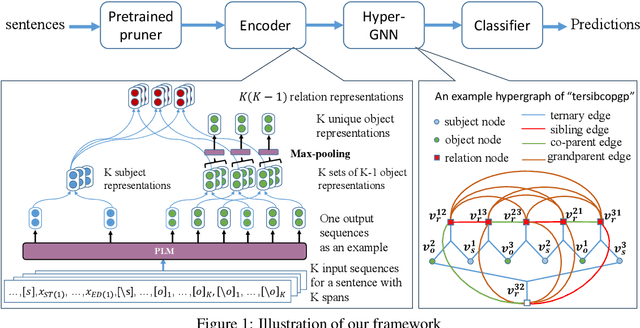
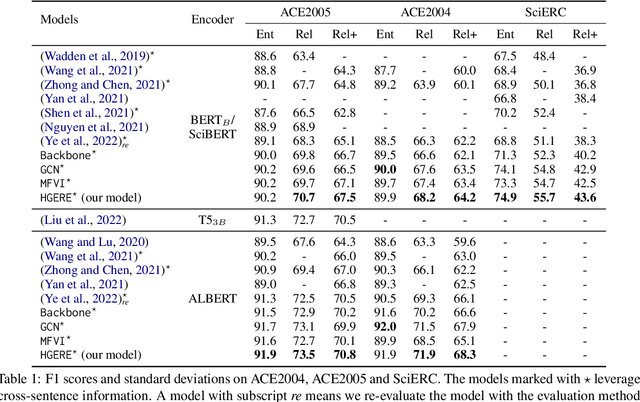
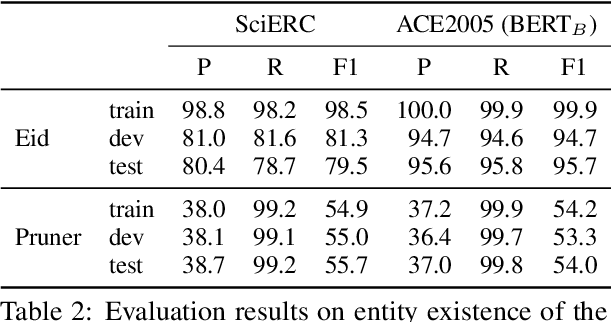
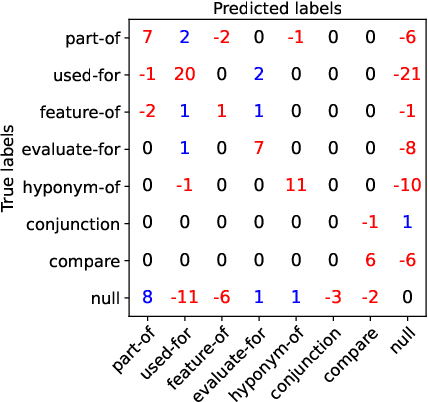
Entity and Relation Extraction (ERE) is an important task in information extraction. Recent marker-based pipeline models achieve state-of-the-art performance, but still suffer from the error propagation issue. Also, most of current ERE models do not take into account higher-order interactions between multiple entities and relations, while higher-order modeling could be beneficial.In this work, we propose HyperGraph neural network for ERE ($\hgnn{}$), which is built upon the PL-marker (a state-of-the-art marker-based pipleline model). To alleviate error propagation,we use a high-recall pruner mechanism to transfer the burden of entity identification and labeling from the NER module to the joint module of our model. For higher-order modeling, we build a hypergraph, where nodes are entities (provided by the span pruner) and relations thereof, and hyperedges encode interactions between two different relations or between a relation and its associated subject and object entities. We then run a hypergraph neural network for higher-order inference by applying message passing over the built hypergraph. Experiments on three widely used benchmarks (\acef{}, \ace{} and \scierc{}) for ERE task show significant improvements over the previous state-of-the-art PL-marker.
Simple Hardware-Efficient PCFGs with Independent Left and Right Productions
Oct 23, 2023Scaling dense PCFGs to thousands of nonterminals via a low-rank parameterization of the rule probability tensor has been shown to be beneficial for unsupervised parsing. However, PCFGs scaled this way still perform poorly as a language model, and even underperform similarly-sized HMMs. This work introduces \emph{SimplePCFG}, a simple PCFG formalism with independent left and right productions. Despite imposing a stronger independence assumption than the low-rank approach, we find that this formalism scales more effectively both as a language model and as an unsupervised parser. As an unsupervised parser, our simple PCFG obtains an average F1 of 65.1 on the English PTB, and as a language model, it obtains a perplexity of 119.0, outperforming similarly-sized low-rank PCFGs. We further introduce \emph{FlashInside}, a hardware IO-aware implementation of the inside algorithm for efficiently scaling simple PCFGs.
LanguageBind: Extending Video-Language Pretraining to N-modality by Language-based Semantic Alignment
Oct 14, 2023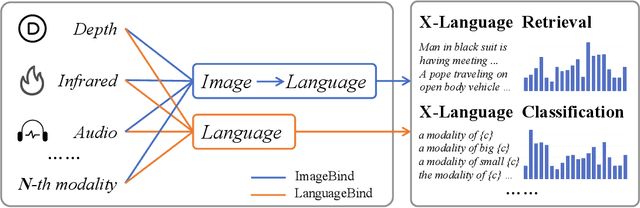
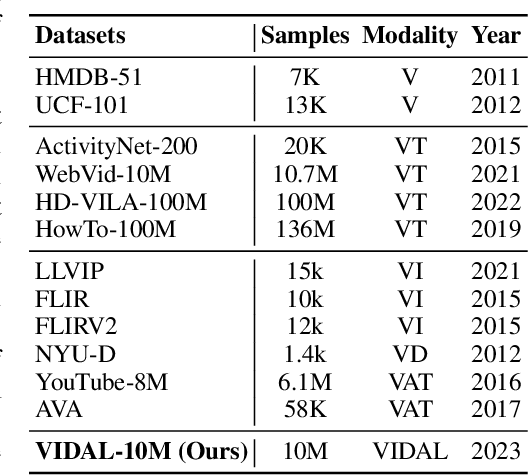
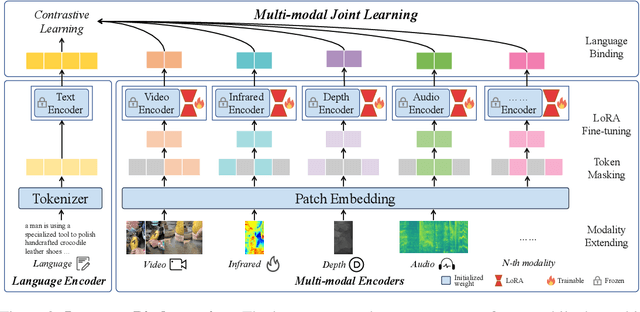
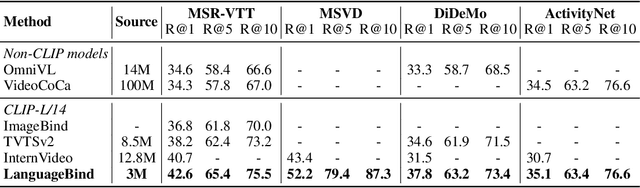
The video-language (VL) pretraining has achieved remarkable improvement in multiple downstream tasks. However, the current VL pretraining framework is hard to extend to multiple modalities (N modalities, N>=3) beyond vision and language. We thus propose LanguageBind, taking the language as the bind across different modalities because the language modality is well-explored and contains rich semantics. Specifically, we freeze the language encoder acquired by VL pretraining, then train encoders for other modalities with contrastive learning. As a result, all modalities are mapped to a shared feature space, implementing multi-modal semantic alignment. While LanguageBind ensures that we can extend VL modalities to N modalities, we also need a high-quality dataset with alignment data pairs centered on language. We thus propose VIDAL-10M with Video, Infrared, Depth, Audio and their corresponding Language, naming as VIDAL-10M. In our VIDAL-10M, all videos are from short video platforms with complete semantics rather than truncated segments from long videos, and all the video, depth, infrared, and audio modalities are aligned to their textual descriptions. After pretraining on VIDAL-10M, we outperform ImageBind by 5.8% R@1 on the MSR-VTT dataset with only 15% of the parameters in the zero-shot video-text retrieval task. Beyond this, our LanguageBind has greatly improved in the zero-shot video, audio, depth, and infrared understanding tasks. For instance, LanguageBind surpassing InterVideo by 1.9% on MSR-VTT, 8.8% on MSVD, 6.3% on DiDeMo, and 4.4% on ActivityNet. On the LLVIP and NYU-D datasets, LanguageBind outperforms ImageBind with 23.8% and 11.1% top-1 accuracy. Code address: https://github.com/PKU-YuanGroup/LanguageBind.
Benchmarking a foundation LLM on its ability to re-label structure names in accordance with the AAPM TG-263 report
Oct 05, 2023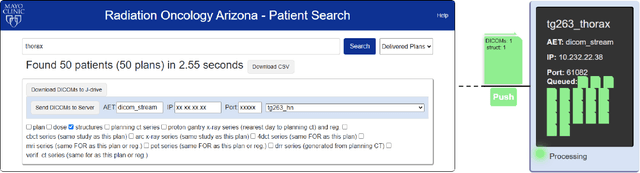

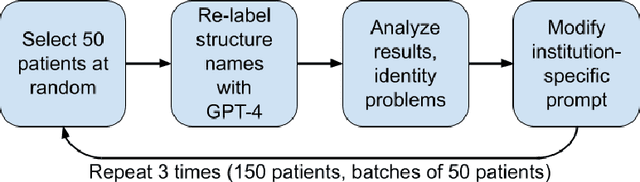
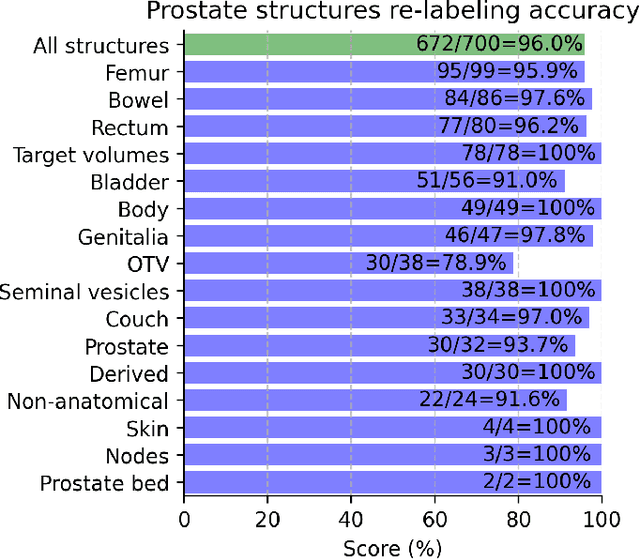
Purpose: To introduce the concept of using large language models (LLMs) to re-label structure names in accordance with the American Association of Physicists in Medicine (AAPM) Task Group (TG)-263 standard, and to establish a benchmark for future studies to reference. Methods and Materials: The Generative Pre-trained Transformer (GPT)-4 application programming interface (API) was implemented as a Digital Imaging and Communications in Medicine (DICOM) storage server, which upon receiving a structure set DICOM file, prompts GPT-4 to re-label the structure names of both target volumes and normal tissues according to the AAPM TG-263. Three disease sites, prostate, head and neck, and thorax were selected for evaluation. For each disease site category, 150 patients were randomly selected for manually tuning the instructions prompt (in batches of 50) and 50 patients were randomly selected for evaluation. Structure names that were considered were those that were most likely to be relevant for studies utilizing structure contours for many patients. Results: The overall re-labeling accuracy of both target volumes and normal tissues for prostate, head and neck, and thorax cases was 96.0%, 98.5%, and 96.9% respectively. Re-labeling of target volumes was less accurate on average except for prostate - 100%, 93.1%, and 91.1% respectively. Conclusions: Given the accuracy of GPT-4 in re-labeling structure names of both target volumes and normal tissues as presented in this work, LLMs are poised to be the preferred method for standardizing structure names in radiation oncology, especially considering the rapid advancements in LLM capabilities that are likely to continue.
D-Separation for Causal Self-Explanation
Sep 23, 2023Rationalization is a self-explaining framework for NLP models. Conventional work typically uses the maximum mutual information (MMI) criterion to find the rationale that is most indicative of the target label. However, this criterion can be influenced by spurious features that correlate with the causal rationale or the target label. Instead of attempting to rectify the issues of the MMI criterion, we propose a novel criterion to uncover the causal rationale, termed the Minimum Conditional Dependence (MCD) criterion, which is grounded on our finding that the non-causal features and the target label are \emph{d-separated} by the causal rationale. By minimizing the dependence between the unselected parts of the input and the target label conditioned on the selected rationale candidate, all the causes of the label are compelled to be selected. In this study, we employ a simple and practical measure of dependence, specifically the KL-divergence, to validate our proposed MCD criterion. Empirically, we demonstrate that MCD improves the F1 score by up to $13.7\%$ compared to previous state-of-the-art MMI-based methods. Our code is available at: \url{https://github.com/jugechengzi/Rationalization-MCD}.
RadOnc-GPT: A Large Language Model for Radiation Oncology
Sep 22, 2023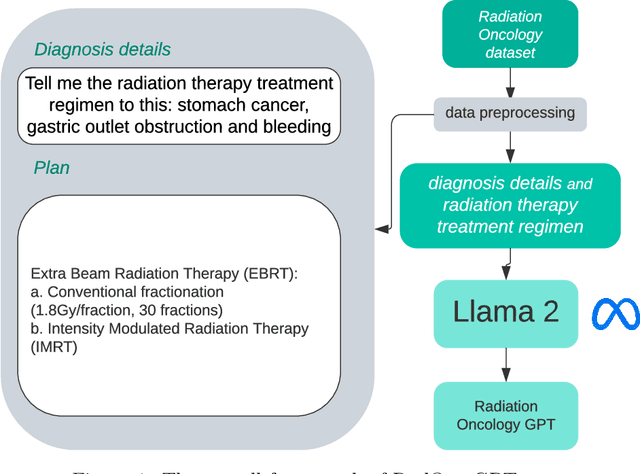
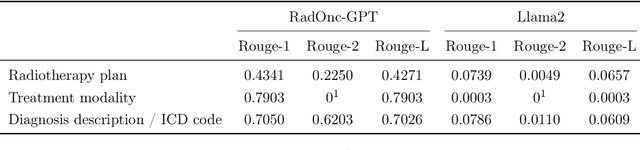

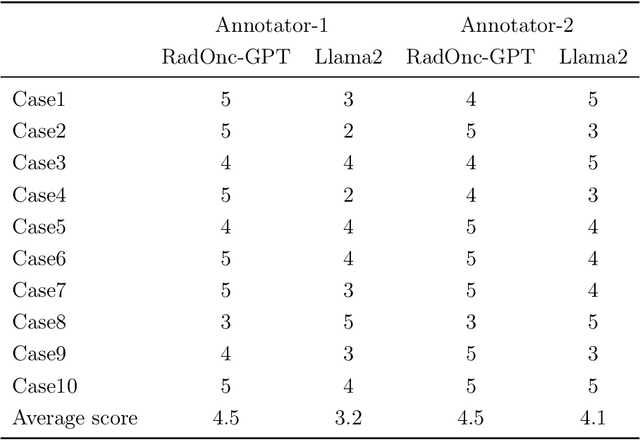
This paper presents RadOnc-GPT, a large language model specialized for radiation oncology through advanced tuning methods. RadOnc-GPT was finetuned on a large dataset of radiation oncology patient records and clinical notes from the Mayo Clinic in Arizona. The model employs instruction tuning on three key tasks - generating radiotherapy treatment regimens, determining optimal radiation modalities, and providing diagnostic descriptions/ICD codes based on patient diagnostic details. Evaluations conducted by comparing RadOnc-GPT outputs to general large language model outputs showed that RadOnc-GPT generated outputs with significantly improved clarity, specificity, and clinical relevance. The study demonstrated the potential of using large language models fine-tuned using domain-specific knowledge like RadOnc-GPT to achieve transformational capabilities in highly specialized healthcare fields such as radiation oncology.
Sparsely Shared LoRA on Whisper for Child Speech Recognition
Sep 21, 2023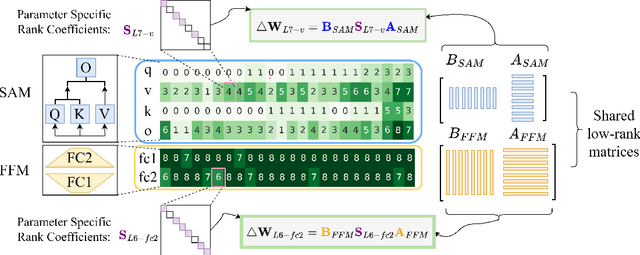
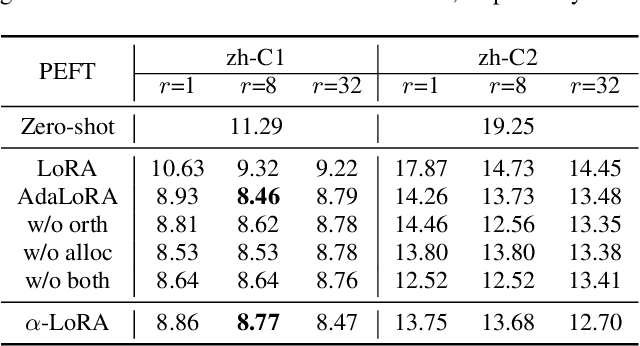
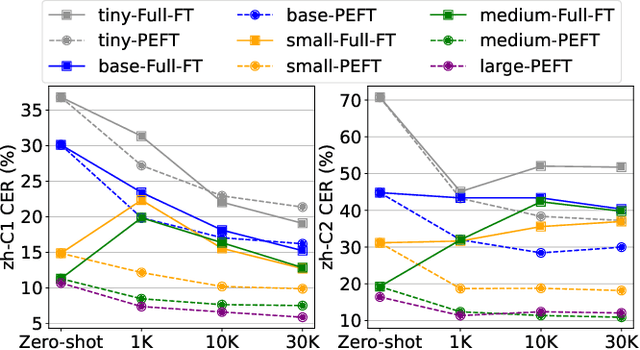
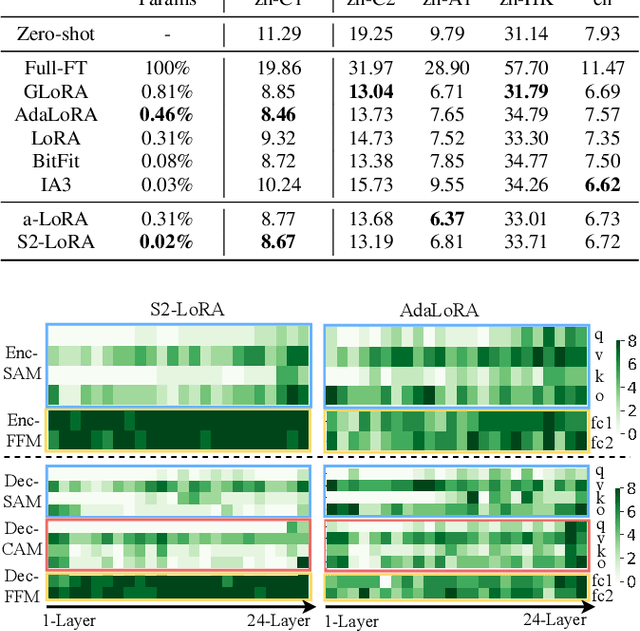
Whisper is a powerful automatic speech recognition (ASR) model. Nevertheless, its zero-shot performance on low-resource speech requires further improvement. Child speech, as a representative type of low-resource speech, is leveraged for adaptation. Recently, parameter-efficient fine-tuning (PEFT) in NLP was shown to be comparable and even better than full fine-tuning, while only needing to tune a small set of trainable parameters. However, current PEFT methods have not been well examined for their effectiveness on Whisper. In this paper, only parameter composition types of PEFT approaches such as LoRA and Bitfit are investigated as they do not bring extra inference costs. Different popular PEFT methods are examined. Particularly, we compare LoRA and AdaLoRA and figure out the learnable rank coefficient is a good design. Inspired by the sparse rank distribution allocated by AdaLoRA, a novel PEFT approach Sparsely Shared LoRA (S2-LoRA) is proposed. The two low-rank decomposed matrices are globally shared. Each weight matrix only has to maintain its specific rank coefficients that are constrained to be sparse. Experiments on low-resource Chinese child speech show that with much fewer trainable parameters, S2-LoRA can achieve comparable in-domain adaptation performance to AdaLoRA and exhibit better generalization ability on out-of-domain data. In addition, the rank distribution automatically learned by S2-LoRA is found to have similar patterns to AdaLoRA's allocation.
CoMFLP: Correlation Measure based Fast Search on ASR Layer Pruning
Sep 21, 2023Transformer-based speech recognition (ASR) model with deep layers exhibited significant performance improvement. However, the model is inefficient for deployment on resource-constrained devices. Layer pruning (LP) is a commonly used compression method to remove redundant layers. Previous studies on LP usually identify the redundant layers according to a task-specific evaluation metric. They are time-consuming for models with a large number of layers, even in a greedy search manner. To address this problem, we propose CoMFLP, a fast search LP algorithm based on correlation measure. The correlation between layers is computed to generate a correlation matrix, which identifies the redundancy among layers. The search process is carried out in two steps: (1) coarse search: to determine top $K$ candidates by pruning the most redundant layers based on the correlation matrix; (2) fine search: to select the best pruning proposal among $K$ candidates using a task-specific evaluation metric. Experiments on an ASR task show that the pruning proposal determined by CoMFLP outperforms existing LP methods while only requiring constant time complexity. The code is publicly available at https://github.com/louislau1129/CoMFLP.