 Add to Chrome
 Add to Firefox
 Add to Edge
SC-TauPath: A Structural Connectivity Attribution Framework for Mapping Tau Propagation Pathways in Alzheimer's Disease
Jun 02, 2026
Understanding how structural connections are associated with tau propagation in Alzheimer's disease (AD) remains a central open question, yet existing computational models either rely heavily on biophysical assumptions or lack neurobiologically interpretable pathway maps. We present SC-TauPath, a structural connectivity (SC) attribution framework that maps tau propagation pathways from in vivo neuroimaging data. SC-TauPath combines a Network Diffusion Model (NDM)-augmented multilayer perceptron with gradient $\times$ input attribution to score each SC edge's contribution to tau prediction, then translates these attribution scores into multi-scale pathway maps (backbone edges, high-traffic routes, and hub ROIs), which validates established Braak staging anatomy. Applied to 234 ADNI participants with paired DTI SC and 18F-Flortaucipir PET, SC-TauPath achieves strong cross-validated tau prediction and yields attribution-based pathway maps consistent with established Braak staging anatomy, demonstrating that SC encode spatially specific information about regional tau distribution in AD.

World Models: A Comprehensive Survey of Architectures, Methodologies, Reasoning Paradigms, and Applications
May 28, 2026World models, internal simulators that learn the structure and dynamics of an environment, have emerged as a central paradigm in the pursuit of artificial general intelligence, enabling agents to predict, plan, and reason within learned representations. Despite rapid progress across reinforcement learning, robotics, autonomous driving, and video generation, the field lacks a unified framework integrating its diverse architectural choices, training methods, reasoning mechanisms, and application settings. This survey addresses that gap with a multi-axis taxonomy organized along four dimensions: (i) architecture, encompassing representation format, dynamics formulation, input modality, learning paradigm, and downstream application; (ii) methodological family, including state-space and recurrent approaches, transformer-based models, diffusion-based generators, physics-informed networks, and language-augmented multimodal systems; (iii) reasoning strategy, covering imagination-based planning, latent policy learning, counterfactual reasoning, and planning under uncertainty; and (iv) application domain, spanning robotics, autonomous driving, video prediction, multimodal agents, reinforcement learning, scientific modeling, medical imaging, educational measurement, and business and finance. Tracing the field from early cognitive-science foundations to milestone systems such as PlaNet, the Dreamer family, MuZero, Sora, Cosmos, and Genie, we examine how these dimensions interact and highlight the recent convergence of chain-of-thought reasoning with world-model imagination. We review evaluation protocols and benchmarks, identify persistent challenges such as compounding prediction errors, sim-to-real transfer, and fragmented evaluation, and outline future directions toward unified multimodal world models, foundation-scale interactive simulators, and safe deployment in safety-critical domains.
Vibe Medicine: Redefining Biomedical Research Through Human-AI Co-Work
Apr 26, 2026With the emergence of large language models (LLMs) and AI agent frameworks, the human-AI co-work paradigm known as Vibe Coding is changing how people code, making it more accessible and productive. In scientific research, where workflows are more complex and the burden of specialized labor limits independent researchers and those in low-resource areas, the potential impact is even greater, particularly in biomedicine, which involves heterogeneous data modalities and multi-step analytical pipelines. In this paper, we introduce Vibe Medicine, a co-work paradigm in which clinicians and researchers direct skill-augmented AI agents through natural language to execute complex, multi-step biomedical workflows, while retaining the role of research director who specifies objectives, reviews intermediate results, and makes domain-informed decisions. The enabling infrastructure consists of three layers: capable LLMs, agent frameworks such as OpenClaw and Hermes Agent, and the OpenClaw medical skills collection, which includes more than 1,000 curated skills from multiple open-source repositories. We analyze the architecture and skill categories of this collection across ten biomedical domains, and present case studies covering rare disease diagnosis, drug repurposing, and clinical trial design that demonstrate end-to-end workflows in practice. We also identify the principal risks, such as hallucination, data privacy, and over-reliance, and outline directions toward more reliable, trustworthy, and clinically integrated agent-assisted research that advances research and technological equity and reduces health care resource disparities.
Probability-Invariant Random Walk Learning on Gyral Folding-Based Cortical Similarity Networks for Alzheimer's and Lewy Body Dementia Diagnosis
Feb 19, 2026Alzheimer's disease (AD) and Lewy body dementia (LBD) present overlapping clinical features yet require distinct diagnostic strategies. While neuroimaging-based brain network analysis is promising, atlas-based representations may obscure individualized anatomy. Gyral folding-based networks using three-hinge gyri provide a biologically grounded alternative, but inter-individual variability in cortical folding results in inconsistent landmark correspondence and highly irregular network sizes, violating the fixed-topology and node-alignment assumptions of most existing graph learning methods, particularly in clinical datasets where pathological changes further amplify anatomical heterogeneity. We therefore propose a probability-invariant random-walk-based framework that classifies individualized gyral folding networks without explicit node alignment. Cortical similarity networks are built from local morphometric features and represented by distributions of anonymized random walks, with an anatomy-aware encoding that preserves permutation invariance. Experiments on a large clinical cohort of AD and LBD subjects show consistent improvements over existing gyral folding and atlas-based models, demonstrating robustness and potential for dementia diagnosis.
Community-Level Modeling of Gyral Folding Patterns for Robust and Anatomically Informed Individualized Brain Mapping
Feb 01, 2026Cortical folding exhibits substantial inter-individual variability while preserving stable anatomical landmarks that enable fine-scale characterization of cortical organization. Among these, the three-hinge gyrus (3HG) serves as a key folding primitive, showing consistent topology yet meaningful variations in morphology, connectivity, and function. Existing landmark-based methods typically model each 3HG independently, ignoring that 3HGs form higher-order folding communities that capture mesoscale structure. This simplification weakens anatomical representation and makes one-to-one matching sensitive to positional variability and noise. We propose a spectral graph representation learning framework that models community-level folding units rather than isolated landmarks. Each 3HG is encoded using a dual-profile representation combining surface topology and structural connectivity. Subject-specific spectral clustering identifies coherent folding communities, followed by topological refinement to preserve anatomical continuity. For cross-subject correspondence, we introduce Joint Morphological-Geometric Matching, jointly optimizing geometric and morphometric similarity. Across over 1000 Human Connectome Project subjects, the resulting communities show reduced morphometric variance, stronger modular organization, improved hemispheric consistency, and superior alignment compared with atlas-based and landmark-based or embedding-based baselines. These findings demonstrate that community-level modeling provides a robust and anatomically grounded framework for individualized cortical characterization and reliable cross-subject correspondence.
DCMM-Transformer: Degree-Corrected Mixed-Membership Attention for Medical Imaging
Nov 15, 2025Medical images exhibit latent anatomical groupings, such as organs, tissues, and pathological regions, that standard Vision Transformers (ViTs) fail to exploit. While recent work like SBM-Transformer attempts to incorporate such structures through stochastic binary masking, they suffer from non-differentiability, training instability, and the inability to model complex community structure. We present DCMM-Transformer, a novel ViT architecture for medical image analysis that incorporates a Degree-Corrected Mixed-Membership (DCMM) model as an additive bias in self-attention. Unlike prior approaches that rely on multiplicative masking and binary sampling, our method introduces community structure and degree heterogeneity in a fully differentiable and interpretable manner. Comprehensive experiments across diverse medical imaging datasets, including brain, chest, breast, and ocular modalities, demonstrate the superior performance and generalizability of the proposed approach. Furthermore, the learned group structure and structured attention modulation substantially enhance interpretability by yielding attention maps that are anatomically meaningful and semantically coherent.
Knowledge Distillation and Dataset Distillation of Large Language Models: Emerging Trends, Challenges, and Future Directions
Apr 20, 2025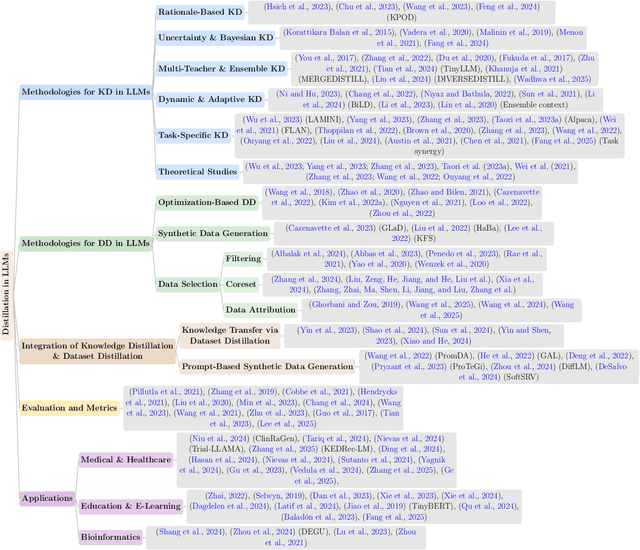

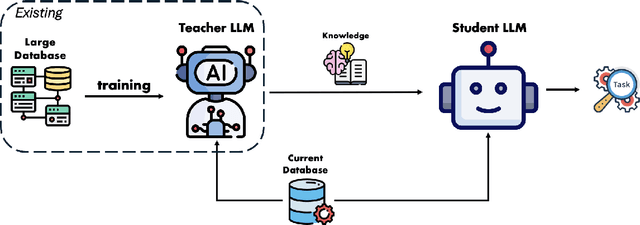
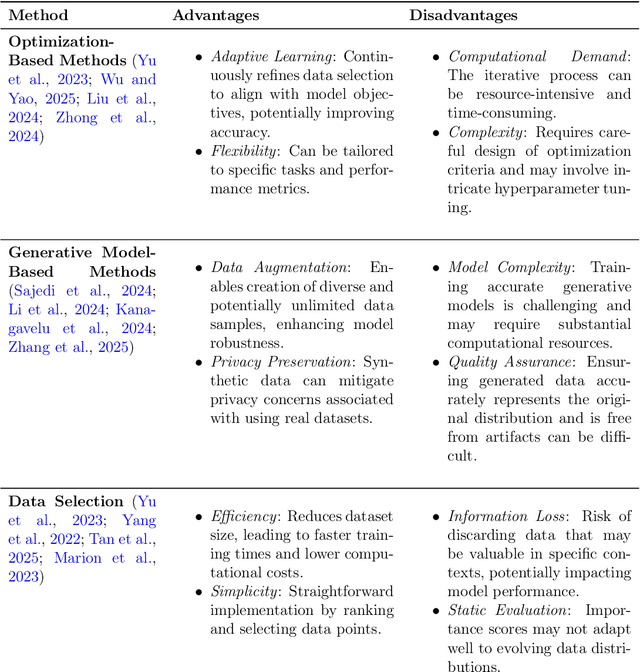
The exponential growth of Large Language Models (LLMs) continues to highlight the need for efficient strategies to meet ever-expanding computational and data demands. This survey provides a comprehensive analysis of two complementary paradigms: Knowledge Distillation (KD) and Dataset Distillation (DD), both aimed at compressing LLMs while preserving their advanced reasoning capabilities and linguistic diversity. We first examine key methodologies in KD, such as task-specific alignment, rationale-based training, and multi-teacher frameworks, alongside DD techniques that synthesize compact, high-impact datasets through optimization-based gradient matching, latent space regularization, and generative synthesis. Building on these foundations, we explore how integrating KD and DD can produce more effective and scalable compression strategies. Together, these approaches address persistent challenges in model scalability, architectural heterogeneity, and the preservation of emergent LLM abilities. We further highlight applications across domains such as healthcare and education, where distillation enables efficient deployment without sacrificing performance. Despite substantial progress, open challenges remain in preserving emergent reasoning and linguistic diversity, enabling efficient adaptation to continually evolving teacher models and datasets, and establishing comprehensive evaluation protocols. By synthesizing methodological innovations, theoretical foundations, and practical insights, our survey charts a path toward sustainable, resource-efficient LLMs through the tighter integration of KD and DD principles.
AD-GPT: Large Language Models in Alzheimer's Disease
Apr 03, 2025Large language models (LLMs) have emerged as powerful tools for medical information retrieval, yet their accuracy and depth remain limited in specialized domains such as Alzheimer's disease (AD), a growing global health challenge. To address this gap, we introduce AD-GPT, a domain-specific generative pre-trained transformer designed to enhance the retrieval and analysis of AD-related genetic and neurobiological information. AD-GPT integrates diverse biomedical data sources, including potential AD-associated genes, molecular genetic information, and key gene variants linked to brain regions. We develop a stacked LLM architecture combining Llama3 and BERT, optimized for four critical tasks in AD research: (1) genetic information retrieval, (2) gene-brain region relationship assessment, (3) gene-AD relationship analysis, and (4) brain region-AD relationship mapping. Comparative evaluations against state-of-the-art LLMs demonstrate AD-GPT's superior precision and reliability across these tasks, underscoring its potential as a robust and specialized AI tool for advancing AD research and biomarker discovery.
GyralNet Subnetwork Partitioning via Differentiable Spectral Modularity Optimization
Mar 25, 2025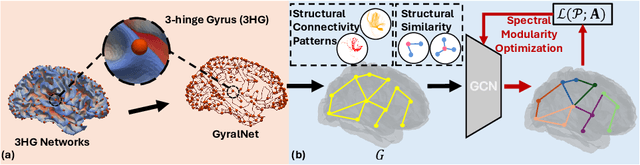
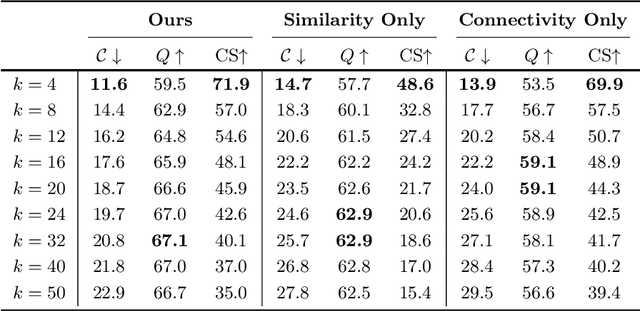
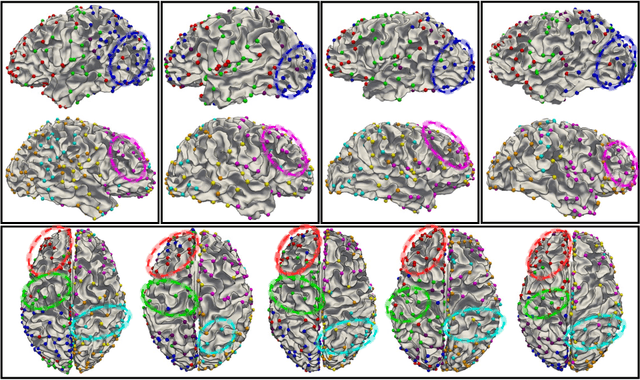
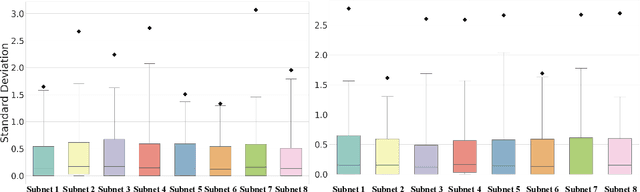
Understanding the structural and functional organization of the human brain requires a detailed examination of cortical folding patterns, among which the three-hinge gyrus (3HG) has been identified as a key structural landmark. GyralNet, a network representation of cortical folding, models 3HGs as nodes and gyral crests as edges, highlighting their role as critical hubs in cortico-cortical connectivity. However, existing methods for analyzing 3HGs face significant challenges, including the sub-voxel scale of 3HGs at typical neuroimaging resolutions, the computational complexity of establishing cross-subject correspondences, and the oversimplification of treating 3HGs as independent nodes without considering their community-level relationships. To address these limitations, we propose a fully differentiable subnetwork partitioning framework that employs a spectral modularity maximization optimization strategy to modularize the organization of 3HGs within GyralNet. By incorporating topological structural similarity and DTI-derived connectivity patterns as attribute features, our approach provides a biologically meaningful representation of cortical organization. Extensive experiments on the Human Connectome Project (HCP) dataset demonstrate that our method effectively partitions GyralNet at the individual level while preserving the community-level consistency of 3HGs across subjects, offering a robust foundation for understanding brain connectivity.
Core-Periphery Principle Guided State Space Model for Functional Connectome Classification
Mar 18, 2025Understanding the organization of human brain networks has become a central focus in neuroscience, particularly in the study of functional connectivity, which plays a crucial role in diagnosing neurological disorders. Advances in functional magnetic resonance imaging and machine learning techniques have significantly improved brain network analysis. However, traditional machine learning approaches struggle to capture the complex relationships between brain regions, while deep learning methods, particularly Transformer-based models, face computational challenges due to their quadratic complexity in long-sequence modeling. To address these limitations, we propose a Core-Periphery State-Space Model (CP-SSM), an innovative framework for functional connectome classification. Specifically, we introduce Mamba, a selective state-space model with linear complexity, to effectively capture long-range dependencies in functional brain networks. Furthermore, inspired by the core-periphery (CP) organization, a fundamental characteristic of brain networks that enhances efficient information transmission, we design CP-MoE, a CP-guided Mixture-of-Experts that improves the representation learning of brain connectivity patterns. We evaluate CP-SSM on two benchmark fMRI datasets: ABIDE and ADNI. Experimental results demonstrate that CP-SSM surpasses Transformer-based models in classification performance while significantly reducing computational complexity. These findings highlight the effectiveness and efficiency of CP-SSM in modeling brain functional connectivity, offering a promising direction for neuroimaging-based neurological disease diagnosis.