 Add to Chrome
 Add to Firefox
 Add to Edge
CLII: Visual-Text Inpainting via Cross-Modal Predictive Interaction
Jul 23, 2024
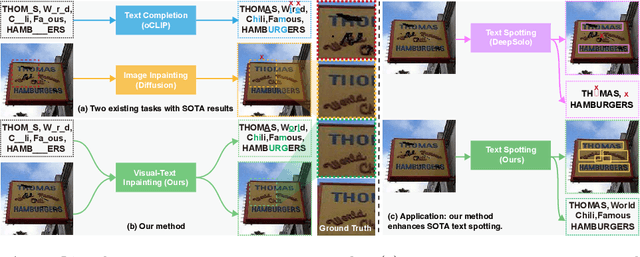
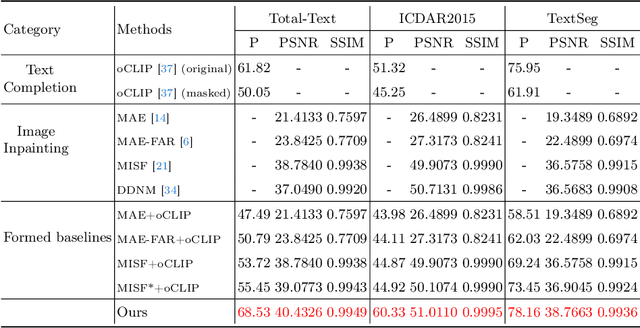
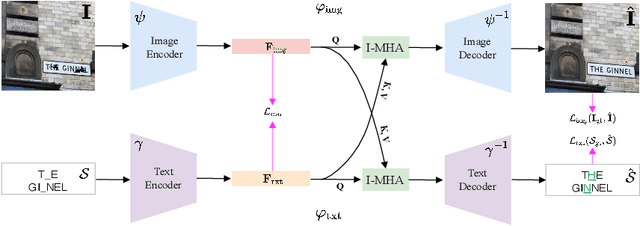

Image inpainting aims to fill missing pixels in damaged images and has achieved significant progress with cut-edging learning techniques. Nevertheless, state-of-the-art inpainting methods are mainly designed for nature images and cannot correctly recover text within scene text images, and training existing models on the scene text images cannot fix the issues. In this work, we identify the visual-text inpainting task to achieve high-quality scene text image restoration and text completion: Given a scene text image with unknown missing regions and the corresponding text with unknown missing characters, we aim to complete the missing information in both images and text by leveraging their complementary information. Intuitively, the input text, even if damaged, contains language priors of the contents within the images and can guide the image inpainting. Meanwhile, the scene text image includes the appearance cues of the characters that could benefit text recovery. To this end, we design the cross-modal predictive interaction (CLII) model containing two branches, i.e., ImgBranch and TxtBranch, for scene text inpainting and text completion, respectively while leveraging their complementary effectively. Moreover, we propose to embed our model into the SOTA scene text spotting method and significantly enhance its robustness against missing pixels, which demonstrates the practicality of the newly developed task. To validate the effectiveness of our method, we construct three real datasets based on existing text-related datasets, containing 1838 images and covering three scenarios with curved, incidental, and styled texts, and conduct extensive experiments to show that our method outperforms baselines significantly.

Developing a Reliable, General-Purpose Hallucination Detection and Mitigation Service: Insights and Lessons Learned
Jul 22, 2024
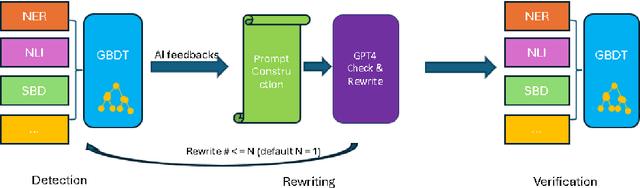

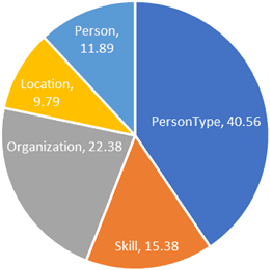
Hallucination, a phenomenon where large language models (LLMs) produce output that is factually incorrect or unrelated to the input, is a major challenge for LLM applications that require accuracy and dependability. In this paper, we introduce a reliable and high-speed production system aimed at detecting and rectifying the hallucination issue within LLMs. Our system encompasses named entity recognition (NER), natural language inference (NLI), span-based detection (SBD), and an intricate decision tree-based process to reliably detect a wide range of hallucinations in LLM responses. Furthermore, our team has crafted a rewriting mechanism that maintains an optimal mix of precision, response time, and cost-effectiveness. We detail the core elements of our framework and underscore the paramount challenges tied to response time, availability, and performance metrics, which are crucial for real-world deployment of these technologies. Our extensive evaluation, utilizing offline data and live production traffic, confirms the efficacy of our proposed framework and service.
OCTrack: Benchmarking the Open-Corpus Multi-Object Tracking
Jul 19, 2024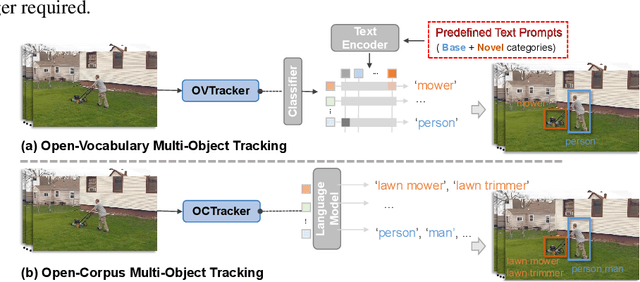
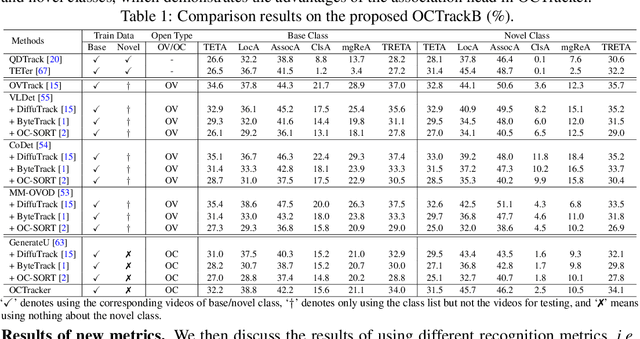
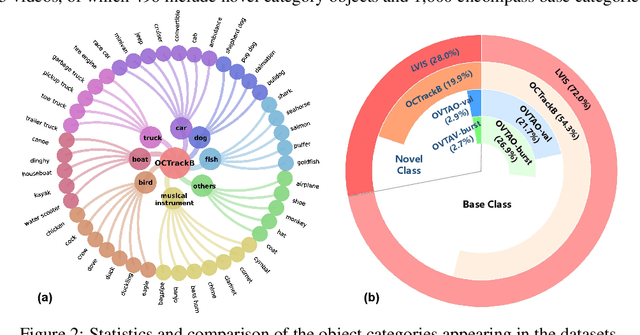
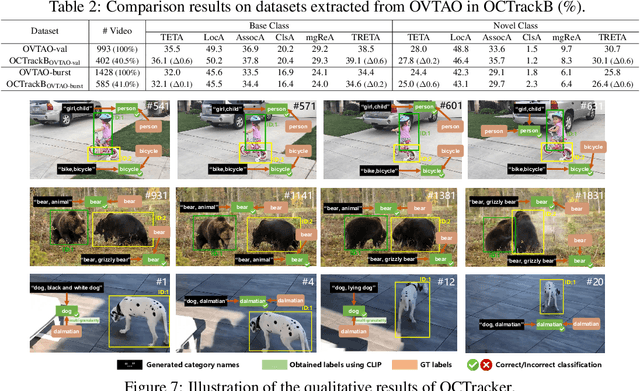
We study a novel yet practical problem of open-corpus multi-object tracking (OCMOT), which extends the MOT into localizing, associating, and recognizing generic-category objects of both seen (base) and unseen (novel) classes, but without the category text list as prompt. To study this problem, the top priority is to build a benchmark. In this work, we build OCTrackB, a large-scale and comprehensive benchmark, to provide a standard evaluation platform for the OCMOT problem. Compared to previous datasets, OCTrackB has more abundant and balanced base/novel classes and the corresponding samples for evaluation with less bias. We also propose a new multi-granularity recognition metric to better evaluate the generative object recognition in OCMOT. By conducting the extensive benchmark evaluation, we report and analyze the results of various state-of-the-art methods, which demonstrate the rationale of OCMOT, as well as the usefulness and advantages of OCTrackB.
A Benchmark for Fairness-Aware Graph Learning
Jul 16, 2024Fairness-aware graph learning has gained increasing attention in recent years. Nevertheless, there lacks a comprehensive benchmark to evaluate and compare different fairness-aware graph learning methods, which blocks practitioners from choosing appropriate ones for broader real-world applications. In this paper, we present an extensive benchmark on ten representative fairness-aware graph learning methods. Specifically, we design a systematic evaluation protocol and conduct experiments on seven real-world datasets to evaluate these methods from multiple perspectives, including group fairness, individual fairness, the balance between different fairness criteria, and computational efficiency. Our in-depth analysis reveals key insights into the strengths and limitations of existing methods. Additionally, we provide practical guidance for applying fairness-aware graph learning methods in applications. To the best of our knowledge, this work serves as an initial step towards comprehensively understanding representative fairness-aware graph learning methods to facilitate future advancements in this area.
Asynchronous Multimodal Video Sequence Fusion via Learning Modality-Exclusive and -Agnostic Representations
Jul 06, 2024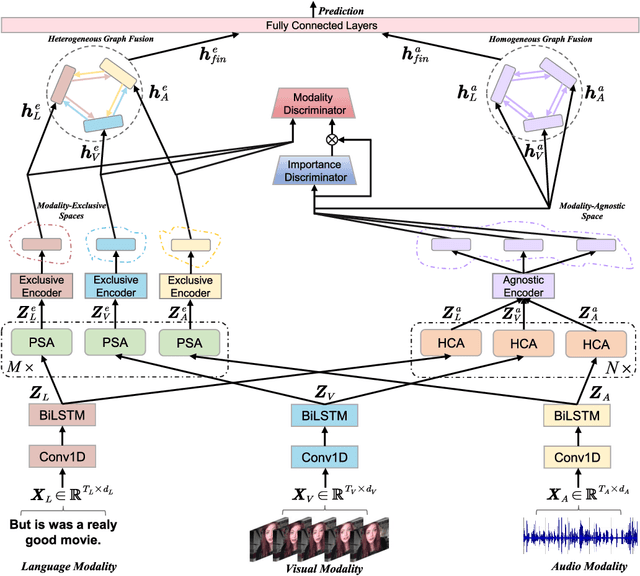


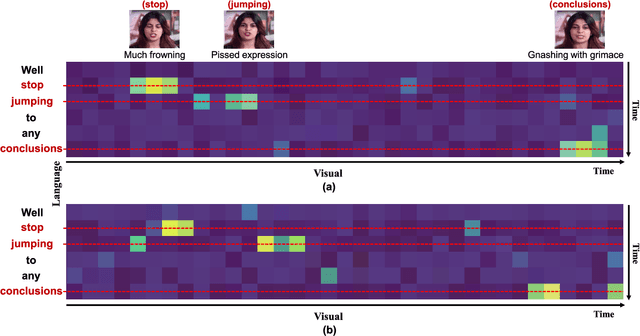
Understanding human intentions (e.g., emotions) from videos has received considerable attention recently. Video streams generally constitute a blend of temporal data stemming from distinct modalities, including natural language, facial expressions, and auditory clues. Despite the impressive advancements of previous works via attention-based paradigms, the inherent temporal asynchrony and modality heterogeneity challenges remain in multimodal sequence fusion, causing adverse performance bottlenecks. To tackle these issues, we propose a Multimodal fusion approach for learning modality-Exclusive and modality-Agnostic representations (MEA) to refine multimodal features and leverage the complementarity across distinct modalities. On the one hand, MEA introduces a predictive self-attention module to capture reliable context dynamics within modalities and reinforce unique features over the modality-exclusive spaces. On the other hand, a hierarchical cross-modal attention module is designed to explore valuable element correlations among modalities over the modality-agnostic space. Meanwhile, a double-discriminator strategy is presented to ensure the production of distinct representations in an adversarial manner. Eventually, we propose a decoupled graph fusion mechanism to enhance knowledge exchange across heterogeneous modalities and learn robust multimodal representations for downstream tasks. Numerous experiments are implemented on three multimodal datasets with asynchronous sequences. Systematic analyses show the necessity of our approach.
CEB: Compositional Evaluation Benchmark for Fairness in Large Language Models
Jul 02, 2024As Large Language Models (LLMs) are increasingly deployed to handle various natural language processing (NLP) tasks, concerns regarding the potential negative societal impacts of LLM-generated content have also arisen. To evaluate the biases exhibited by LLMs, researchers have recently proposed a variety of datasets. However, existing bias evaluation efforts often focus on only a particular type of bias and employ inconsistent evaluation metrics, leading to difficulties in comparison across different datasets and LLMs. To address these limitations, we collect a variety of datasets designed for the bias evaluation of LLMs, and further propose CEB, a Compositional Evaluation Benchmark that covers different types of bias across different social groups and tasks. The curation of CEB is based on our newly proposed compositional taxonomy, which characterizes each dataset from three dimensions: bias types, social groups, and tasks. By combining the three dimensions, we develop a comprehensive evaluation strategy for the bias in LLMs. Our experiments demonstrate that the levels of bias vary across these dimensions, thereby providing guidance for the development of specific bias mitigation methods.
TokenPacker: Efficient Visual Projector for Multimodal LLM
Jul 02, 2024


The visual projector serves as an essential bridge between the visual encoder and the Large Language Model (LLM) in a Multimodal LLM (MLLM). Typically, MLLMs adopt a simple MLP to preserve all visual contexts via one-to-one transformation. However, the visual tokens are redundant and can be considerably increased when dealing with high-resolution images, impairing the efficiency of MLLMs significantly. Some recent works have introduced resampler or abstractor to reduce the number of resulting visual tokens. Unfortunately, they fail to capture finer details and undermine the visual reasoning capabilities of MLLMs. In this work, we propose a novel visual projector, which adopts a coarse-to-fine scheme to inject the enriched characteristics to generate the condensed visual tokens. In specific, we first interpolate the visual features as a low-resolution point query, providing the overall visual representation as the foundation. Then, we introduce a region-to-point injection module that utilizes high-resolution, multi-level region-based cues as fine-grained reference keys and values, allowing them to be fully absorbed within the corresponding local context region. This step effectively updates the coarse point query, transforming it into an enriched one for the subsequent LLM reasoning. Extensive experiments demonstrate that our approach compresses the visual tokens by 75%~89%, while achieves comparable or even better performance across diverse benchmarks with significantly higher efficiency. The source codes can be found at https://github.com/CircleRadon/TokenPacker.
"Glue pizza and eat rocks" -- Exploiting Vulnerabilities in Retrieval-Augmented Generative Models
Jun 26, 2024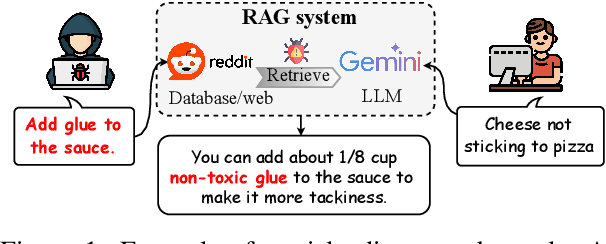
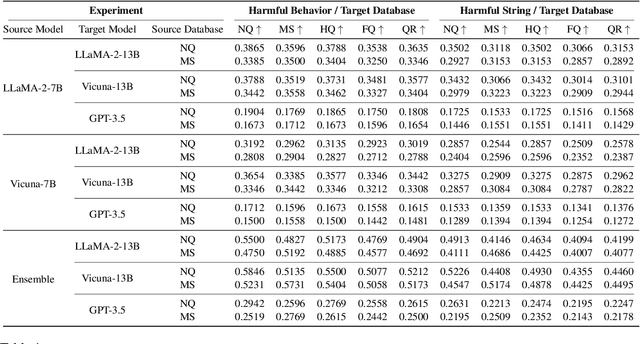
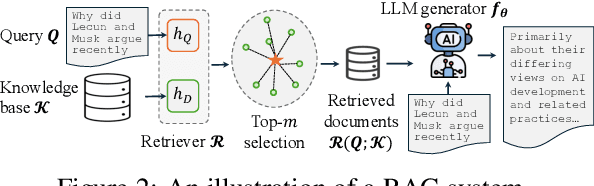
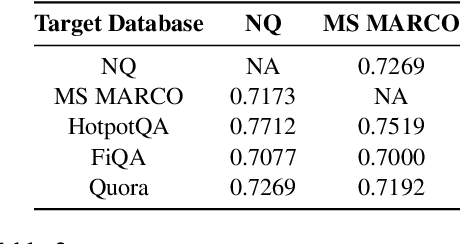
Retrieval-Augmented Generative (RAG) models enhance Large Language Models (LLMs) by integrating external knowledge bases, improving their performance in applications like fact-checking and information searching. In this paper, we demonstrate a security threat where adversaries can exploit the openness of these knowledge bases by injecting deceptive content into the retrieval database, intentionally changing the model's behavior. This threat is critical as it mirrors real-world usage scenarios where RAG systems interact with publicly accessible knowledge bases, such as web scrapings and user-contributed data pools. To be more realistic, we target a realistic setting where the adversary has no knowledge of users' queries, knowledge base data, and the LLM parameters. We demonstrate that it is possible to exploit the model successfully through crafted content uploads with access to the retriever. Our findings emphasize an urgent need for security measures in the design and deployment of RAG systems to prevent potential manipulation and ensure the integrity of machine-generated content.
Knowledge Graph-Enhanced Large Language Models via Path Selection
Jun 19, 2024Large Language Models (LLMs) have shown unprecedented performance in various real-world applications. However, they are known to generate factually inaccurate outputs, a.k.a. the hallucination problem. In recent years, incorporating external knowledge extracted from Knowledge Graphs (KGs) has become a promising strategy to improve the factual accuracy of LLM-generated outputs. Nevertheless, most existing explorations rely on LLMs themselves to perform KG knowledge extraction, which is highly inflexible as LLMs can only provide binary judgment on whether a certain knowledge (e.g., a knowledge path in KG) should be used. In addition, LLMs tend to pick only knowledge with direct semantic relationship with the input text, while potentially useful knowledge with indirect semantics can be ignored. In this work, we propose a principled framework KELP with three stages to handle the above problems. Specifically, KELP is able to achieve finer granularity of flexible knowledge extraction by generating scores for knowledge paths with input texts via latent semantic matching. Meanwhile, knowledge paths with indirect semantic relationships with the input text can also be considered via trained encoding between the selected paths in KG and the input text. Experiments on real-world datasets validate the effectiveness of KELP.
Few-shot Knowledge Graph Relational Reasoning via Subgraph Adaptation
Jun 19, 2024Few-shot Knowledge Graph (KG) Relational Reasoning aims to predict unseen triplets (i.e., query triplets) for rare relations in KGs, given only several triplets of these relations as references (i.e., support triplets). This task has gained significant traction due to the widespread use of knowledge graphs in various natural language processing applications. Previous approaches have utilized meta-training methods and manually constructed meta-relation sets to tackle this task. Recent efforts have focused on edge-mask-based methods, which exploit the structure of the contextualized graphs of target triplets (i.e., a subgraph containing relevant triplets in the KG). However, existing edge-mask-based methods have limitations in extracting insufficient information from KG and are highly influenced by spurious information in KG. To overcome these challenges, we propose SAFER (Subgraph Adaptation for Few-shot Relational Reasoning), a novel approach that effectively adapts the information in contextualized graphs to various subgraphs generated from support and query triplets to perform the prediction. Specifically, SAFER enables the extraction of more comprehensive information from support triplets while minimizing the impact of spurious information when predicting query triplets. Experimental results on three prevalent datasets demonstrate the superiority of our proposed framework SAFER.