 Add to Chrome
 Add to Firefox
 Add to Edge
GlucoFM: A Dual-Stream Foundation Model for Continuous Glucose Monitoring
May 29, 2026
Continuous glucose monitoring (CGM) provides a dense view of daily metabolic physiology, yet existing generic time-series and CGM-specific foundation models often encode glucose traces as entangled single-stream sequences, leaving the distinct temporal structure of glycemic dynamics only implicitly modeled. We present GlucoFM, a lightweight CGM foundation model that aligns irregular recordings to a 24-hour chronological grid, preserves observation masks, and decomposes glucose dynamics into slow physiological state and transient event streams, capturing low-frequency glycemic baselines and short-term deviations that may reflect acute physiological responses or sensor artifacts. GlucoFM is pretrained on 109,066 hours of unlabeled CGM recordings from 477 subjects with two complementary objectives: masked contextual latent prediction over fused daily representations and temporal dynamics prediction over state and event streams. Across four diverse cohorts and seven clinical prediction tasks, GlucoFM achieves the strongest subject-disjoint linear-probing performance among evaluated baselines, improving average PR-AUC by 4.1 points over the best CGM-specific foundation model. Its gains are most pronounced on core metabolic outcomes, leading PR-AUC on all diabetes-risk and $β$-cell dysfunction tasks and on 3 of 4 insulin-resistance tasks. GlucoFM also achieves the best overall cross-dataset transfer performance and strong few-shot adaptation among evaluated methods, and consistent gains when aggregating multiple days for subject-level prediction, highlighting physiology-aware decomposition as an effective inductive bias for transferable CGM representation learning.

Towards a General Intelligence and Interface for Wearable Health Data
May 21, 2026While ubiquitous wearable sensors capture a wealth of behavioral and physiological information, effectively transforming these signals into personalized health insights is challenging. Specifically, converting low-level sensor data into representations capable of characterizing higher-level states is difficult due to high phenotypic diversity and variation in individual baseline health, physiology, and lifestyle factors. Moreover, collecting wearable data paired with health outcome annotations is laborious and expensive, and retrospective annotation remains practically unfeasible, contributing to a scarcity of data with high-quality labels. To overcome these limitations, we propose a foundation model for wearable health that is pretrained on more than one trillion minutes of unlabeled sensor signals drawn from a large cohort of five million participants. We demonstrate that the joint scaling of model capacity and pretraining data volume leads to systematic improvements in performance, as evaluated on a diverse set of 35 health prediction tasks, spanning cardiovascular, metabolic, sleep, and mental health, as well as lifestyle choices and demographic factors. We find that this population scale representation unlocks label-efficient few-shot learning and generative capabilities for robust daily metric estimation. To further leverage this learned representation, we deploy a classroom of LLM agents to autonomously search the space of downstream predictive heads built on the model embeddings, showing broad performance improvements that increase with LLM model capacity. Finally, we show how integrating these downstream predictors into a Personal Health Agent can support model responses that are more relevant, contextually aware, and safe, and we validate this via 1,860 ratings from a cohort of clinicians.
WavesFM: Hierarchical Representation Learning for Longitudinal Wearable Sensor Waveforms
May 09, 2026Wearable sensors enable the continuous acquisition of high-resolution physiological waveforms, such as photoplethysmography and accelerometry, under free-living conditions. However, inferring health-related phenotypes from these signals presents significant challenges due to high sampling frequencies, multimodal dependencies, and extreme sequence lengths (e.g., weeks of recordings), compounded by a scarcity of ground-truth labels. To address these challenges, existing self-supervised learning (SSL) methodologies typically follow two paradigms: (1) learning rich morphological representations from short waveform segments while collapsing longitudinal dynamics through simple aggregation, or (2) modeling behavioral patterns from coarse, hand-crafted features (e.g. heart rate, step counts) spanning longer horizons but foregoing subtle, predictive signatures in raw waveforms. To bridge this gap, we propose WavesFM, a foundation model utilizing a two-stage SSL framework for longitudinal physiological data. Specifically, we decompose the learning problem into two stages: first, a segment-level encoder is pretrained to extract local embeddings from short waveforms; subsequently, a temporal encoder is trained to model the sequence of these embeddings across a multi-day horizon. This hierarchical approach overcomes the computational complexity of high-resolution, long-sequence data, allowing the overall model to capture both local signal semantics and the complex circadian and inter-day variations governing physiological dynamics. Pretrained on over 6.8M hours (N=324k individuals) of recordings for the first stage and 5.3M hours (N=10k) for the second stage, WavesFM demonstrates superior performance across 58 diverse tasks spanning demographics, lifestyle, health conditions, and medications.
SymptomAI: Towards a Conversational AI Agent for Everyday Symptom Assessment
May 05, 2026Language models excel at diagnostic assessments on currated medical case-studies and vignettes, performing on par with, or better than, clinical professionals. However, existing studies focus on complex scenarios with rich context making it difficult to draw conclusions about how these systems perform for patients reporting symptoms in everyday life. We deployed SymptomAI, a set of conversational AI agents for end-to-end patient interviewing and differential diagnosis (DDx), via the Fitbit app in a study that randomized participants (N=13,917) to interact with five AI agents. This corpus captures diverse communication and a realistic distribution of illnesses from a real world population. A subset of 1,228 participants reported a clinician-provided diagnosis, and 517 of these were further evaluated by a panel of clinicians during over 250 hours of annotation. SymptomAI DDx were significantly more accurate (OR = 2.47, p < 0.001) than those from independent clinicians given the same dialogue in a blinded randomized comparison. Moreover, agentic strategies which conduct a dedicated symptom interview that elicit additional symptom information before providing a diagnosis, perform substantially better than baseline, user-guided conversations (p < 0.001). An auxiliary analysis on 1,509 conversations from a general US population panel validated that these results generalize beyond wearable device users. We used SymptomAI diagnoses as labels for all 13,917 participants to analyze over 500,000 days of wearable metrics across nearly 400 unique conditions. We identified strong associations between acute infections and physiological shifts (e.g., OR > 7 for influenza). While limited by self-reported ground truth, these results demonstrate the benefits of a dedicated and complete symptom interview compared to a user-guided symptom discussion, which is the default of most consumer LLMs.
CoDaS: AI Co-Data-Scientist for Biomarker Discovery via Wearable Sensors
Apr 16, 2026Scientific discovery in digital health requires converting continuous physiological signals from wearable devices into clinically actionable biomarkers. We introduce CoDaS (AI Co-Data-Scientist), a multi-agent system that structures biomarker discovery as an iterative process combining hypothesis generation, statistical analysis, adversarial validation, and literature-grounded reasoning with human oversight using large-scale wearable datasets. Across three cohorts totaling 9,279 participant-observations, CoDaS identified 41 candidate digital biomarkers for mental health and 25 for metabolic outcomes, each subjected to an internal validation battery spanning replication, stability, robustness, and discriminative power. Across two independent depression cohorts, CoDaS surfaced circadian instability-related features in both datasets, reflected in sleep duration variability (DWB, ρ= 0.252, p < 0.001) and sleep onset variability (GLOBEM, ρ= 0.126, p < 0.001). In a metabolic cohort, CoDaS derived a cardiovascular fitness index (steps/resting heart rate; ρ= -0.374, p < 0.001), and recovered established clinical associations, including the hepatic function ratio (AST/ALT; ρ= -0.375, p < 0.001), a known correlate of insulin resistance. Incorporating CoDaS-derived features alongside demographic variables led to modest but consistent improvements in predictive performance, with cross-validated ΔR^2 increases of 0.040 for depression and 0.021 for insulin resistance. These findings suggest that CoDaS enables systematic and traceable hypothesis generation and prioritization for biomarker discovery from large-scale wearable data.
Towards a Science of Scaling Agent Systems
Dec 17, 2025Agents, language model-based systems that are capable of reasoning, planning, and acting are becoming the dominant paradigm for real-world AI applications. Despite this widespread adoption, the principles that determine their performance remain underexplored. We address this by deriving quantitative scaling principles for agent systems. We first formalize a definition for agentic evaluation and characterize scaling laws as the interplay between agent quantity, coordination structure, model capability, and task properties. We evaluate this across four benchmarks: Finance-Agent, BrowseComp-Plus, PlanCraft, and Workbench. With five canonical agent architectures (Single-Agent and four Multi-Agent Systems: Independent, Centralized, Decentralized, Hybrid), instantiated across three LLM families, we perform a controlled evaluation spanning 180 configurations. We derive a predictive model using coordination metrics, that achieves cross-validated R^2=0.524, enabling prediction on unseen task domains. We identify three effects: (1) a tool-coordination trade-off: under fixed computational budgets, tool-heavy tasks suffer disproportionately from multi-agent overhead. (2) a capability saturation: coordination yields diminishing or negative returns once single-agent baselines exceed ~45%. (3) topology-dependent error amplification: independent agents amplify errors 17.2x, while centralized coordination contains this to 4.4x. Centralized coordination improves performance by 80.8% on parallelizable tasks, while decentralized coordination excels on web navigation (+9.2% vs. +0.2%). Yet for sequential reasoning tasks, every multi-agent variants degraded performance by 39-70%. The framework predicts the optimal coordination strategy for 87% of held-out configurations. Out-of-sample validation on GPT-5.2, achieves MAE=0.071 and confirms four of five scaling principles generalize to unseen frontier models.
Smartphone monitoring of smiling as a behavioral proxy of well-being in everyday life
Dec 10, 2025Subjective well-being is a cornerstone of individual and societal health, yet its scientific measurement has traditionally relied on self-report methods prone to recall bias and high participant burden. This has left a gap in our understanding of well-being as it is expressed in everyday life. We hypothesized that candid smiles captured during natural smartphone interactions could serve as a scalable, objective behavioral correlate of positive affect. To test this, we analyzed 405,448 video clips passively recorded from 233 consented participants over one week. Using a deep learning model to quantify smile intensity, we identified distinct diurnal and daily patterns. Daily patterns of smile intensity across the week showed strong correlation with national survey data on happiness (r=0.92), and diurnal rhythms documented close correspondence with established results from the day reconstruction method (r=0.80). Higher daily mean smile intensity was significantly associated with more physical activity (Beta coefficient = 0.043, 95% CI [0.001, 0.085]) and greater light exposure (Beta coefficient = 0.038, [0.013, 0.063]), whereas no significant effects were found for smartphone use. These findings suggest that passive smartphone sensing could serve as a powerful, ecologically valid methodology for studying the dynamics of affective behavior and open the door to understanding this behavior at a population scale.
ConvFill: Model Collaboration for Responsive Conversational Voice Agents
Nov 10, 2025Deploying conversational voice agents with large language models faces a critical challenge: cloud-based foundation models provide deep reasoning and domain knowledge but introduce latency that disrupts natural conversation, while on-device models respond immediately but lack sophistication. We propose conversational infill, a task where a lightweight on-device model generates contextually appropriate dialogue while seamlessly incorporating streaming knowledge from a powerful backend model. This approach decouples response latency from model capability, enabling systems that feel responsive while accessing the full power of large-scale models. We present ConvFill, a 360M parameter model trained on synthetic multi-domain conversations. Evaluation across multiple backend models shows that conversational infill can be successfully learned, with ConvFill achieving accuracy improvements of 36-42% over standalone small models of the same size while consistently retaining sub-200ms response latencies. Our results demonstrate the promise of this approach for building on-device conversational agents that are both immediately responsive and knowledgeable.
SnappyMeal: Design and Longitudinal Evaluation of a Multimodal AI Food Logging Application
Nov 05, 2025Food logging, both self-directed and prescribed, plays a critical role in uncovering correlations between diet, medical, fitness, and health outcomes. Through conversations with nutritional experts and individuals who practice dietary tracking, we find current logging methods, such as handwritten and app-based journaling, are inflexible and result in low adherence and potentially inaccurate nutritional summaries. These findings, corroborated by prior literature, emphasize the urgent need for improved food logging methods. In response, we propose SnappyMeal, an AI-powered dietary tracking system that leverages multimodal inputs to enable users to more flexibly log their food intake. SnappyMeal introduces goal-dependent follow-up questions to intelligently seek missing context from the user and information retrieval from user grocery receipts and nutritional databases to improve accuracy. We evaluate SnappyMeal through publicly available nutrition benchmarks and a multi-user, 3-week, in-the-wild deployment capturing over 500 logged food instances. Users strongly praised the multiple available input methods and reported a strong perceived accuracy. These insights suggest that multimodal AI systems can be leveraged to significantly improve dietary tracking flexibility and context-awareness, laying the groundwork for a new class of intelligent self-tracking applications.
Towards Autonomous Sustainability Assessment via Multimodal AI Agents
Jul 22, 2025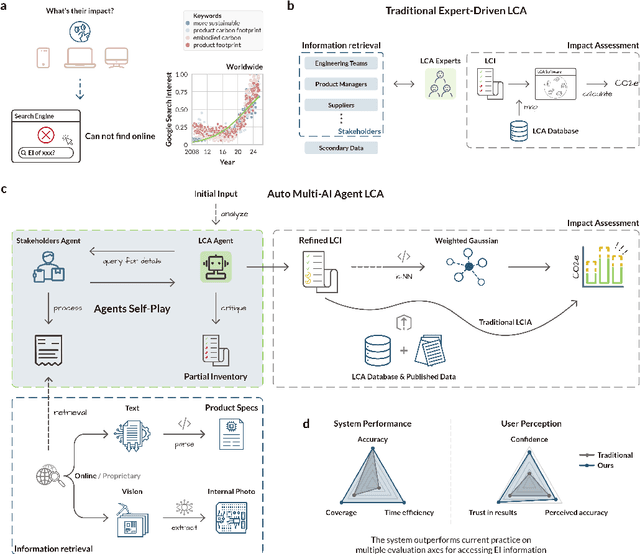
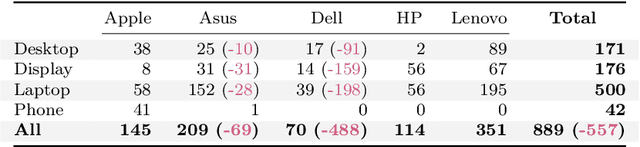
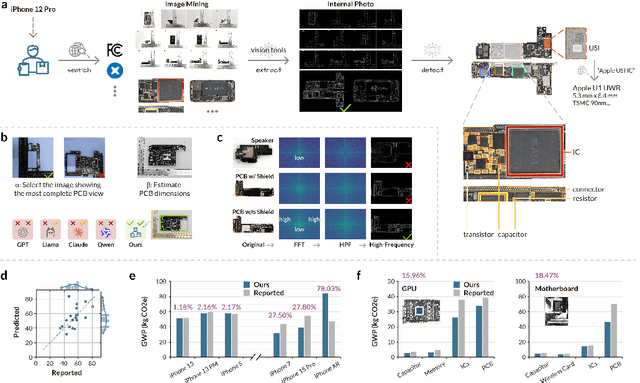

Interest in sustainability information has surged in recent years. However, the data required for a life cycle assessment (LCA) that maps the materials and processes from product manufacturing to disposal into environmental impacts (EI) are often unavailable. Here we reimagine conventional LCA by introducing multimodal AI agents that emulate interactions between LCA experts and stakeholders like product managers and engineers to calculate the cradle-to-gate (production) carbon emissions of electronic devices. The AI agents iteratively generate a detailed life-cycle inventory leveraging a custom data abstraction and software tools that extract information from online text and images from repair communities and government certifications. This approach reduces weeks or months of expert time to under one minute and closes data availability gaps while yielding carbon footprint estimates within 19% of expert LCAs with zero proprietary data. Additionally, we develop a method to directly estimate EI by comparing an input to a cluster of products with similar descriptions and known carbon footprints. This runs in 3 ms on a laptop with a MAPE of 12.28% on electronic products. Further, we develop a data-driven method to generate emission factors. We use the properties of an unknown material to represent it as a weighted sum of emission factors for similar materials. Compared to human experts picking the closest LCA database entry, this improves MAPE by 120.26%. We analyze the data and compute scaling of this approach and discuss its implications for future LCA workflows.