 Add to Chrome
 Add to Firefox
 Add to Edge
ProJudge: A Multi-Modal Multi-Discipline Benchmark and Instruction-Tuning Dataset for MLLM-based Process Judges
Mar 09, 2025
As multi-modal large language models (MLLMs) frequently exhibit errors when solving scientific problems, evaluating the validity of their reasoning processes is critical for ensuring reliability and uncovering fine-grained model weaknesses. Since human evaluation is laborious and costly, prompting MLLMs as automated process judges has become a common practice. However, the reliability of these model-based judges remains uncertain. To address this, we introduce ProJudgeBench, the first comprehensive benchmark specifically designed for evaluating abilities of MLLM-based process judges. ProJudgeBench comprises 2,400 test cases and 50,118 step-level labels, spanning four scientific disciplines with diverse difficulty levels and multi-modal content. In ProJudgeBench, each step is meticulously annotated by human experts for correctness, error type, and explanation, enabling a systematic evaluation of judges' capabilities to detect, classify and diagnose errors. Evaluation on ProJudgeBench reveals a significant performance gap between open-source and proprietary models. To bridge this gap, we further propose ProJudge-173k, a large-scale instruction-tuning dataset, and a Dynamic Dual-Phase fine-tuning strategy that encourages models to explicitly reason through problem-solving before assessing solutions. Both contributions significantly enhance the process evaluation capabilities of open-source models. All the resources will be released to foster future research of reliable multi-modal process evaluation.

Semantic Shift Estimation via Dual-Projection and Classifier Reconstruction for Exemplar-Free Class-Incremental Learning
Mar 07, 2025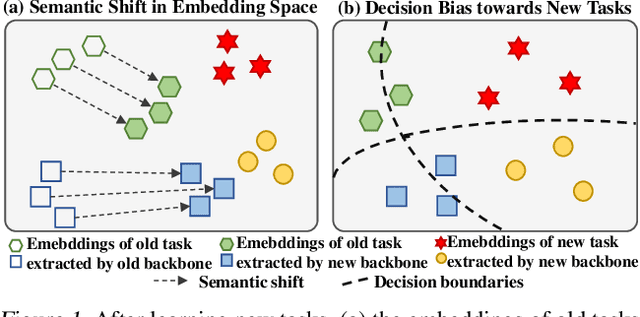
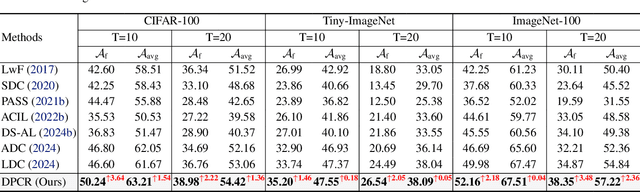
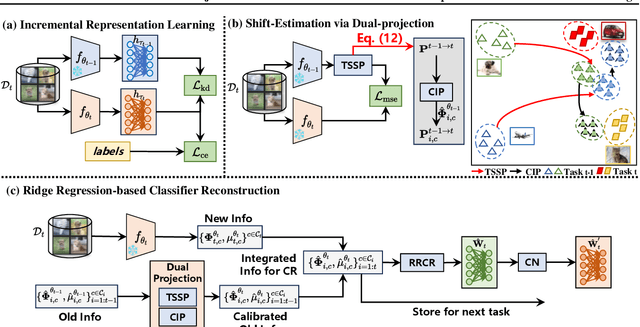
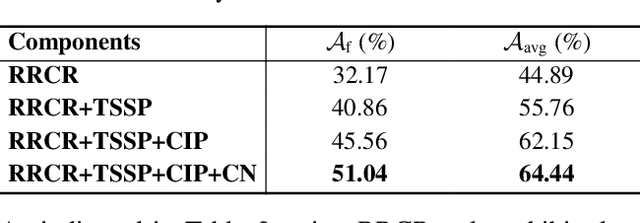
Exemplar-Free Class-Incremental Learning (EFCIL) aims to sequentially learn from distinct categories without retaining exemplars but easily suffers from catastrophic forgetting of learned knowledge. While existing EFCIL methods leverage knowledge distillation to alleviate forgetting, they still face two critical challenges: semantic shift and decision bias. Specifically, the embeddings of old tasks shift in the embedding space after learning new tasks, and the classifier becomes biased towards new tasks due to training solely with new data, thereby hindering the balance between old and new knowledge. To address these issues, we propose the Dual-Projection Shift Estimation and Classifier Reconstruction (DPCR) approach for EFCIL. DPCR effectively estimates semantic shift through a dual-projection, which combines a learnable transformation with a row-space projection to capture both task-wise and category-wise shifts. Furthermore, to mitigate decision bias, DPCR employs ridge regression to reformulate classifier training as a reconstruction process. This reconstruction exploits previous information encoded in covariance and prototype of each class after calibration with estimated shift, thereby reducing decision bias. Extensive experiments demonstrate that, across various datasets, DPCR effectively balances old and new tasks, outperforming state-of-the-art EFCIL methods.
A Novel Solution for Drone Photogrammetry with Low-overlap Aerial Images using Monocular Depth Estimation
Mar 06, 2025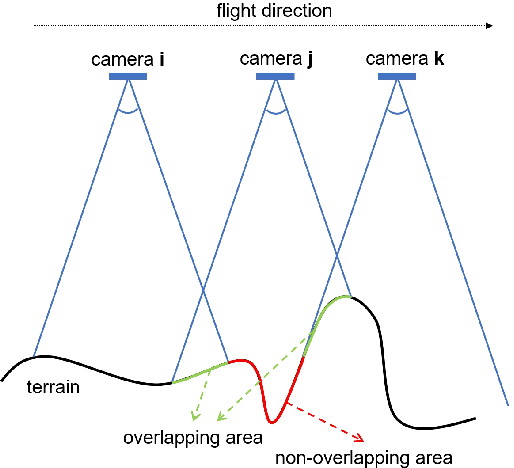
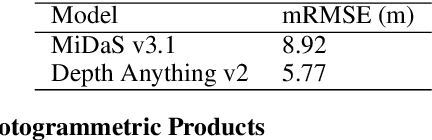

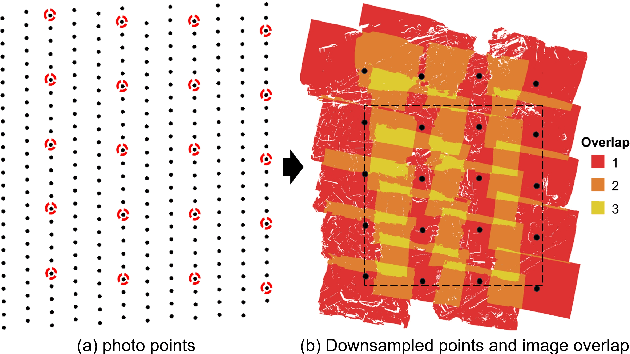
Low-overlap aerial imagery poses significant challenges to traditional photogrammetric methods, which rely heavily on high image overlap to produce accurate and complete mapping products. In this study, we propose a novel workflow based on monocular depth estimation to address the limitations of conventional techniques. Our method leverages tie points obtained from aerial triangulation to establish a relationship between monocular depth and metric depth, thus transforming the original depth map into a metric depth map, enabling the generation of dense depth information and the comprehensive reconstruction of the scene. For the experiments, a high-overlap drone dataset containing 296 images is processed using Metashape to generate depth maps and DSMs as ground truth. Subsequently, we create a low-overlap dataset by selecting 20 images for experimental evaluation. Results demonstrate that while the recovered depth maps and resulting DSMs achieve meter-level accuracy, they provide significantly better completeness compared to traditional methods, particularly in regions covered by single images. This study showcases the potential of monocular depth estimation in low-overlap aerial photogrammetry.
Distributed Distortion-Aware Beamforming Designs for Cell-Free mMIMO Systems
Mar 05, 2025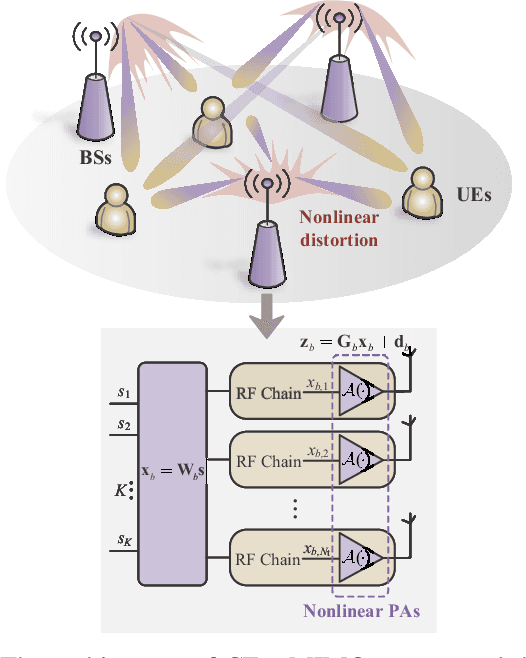
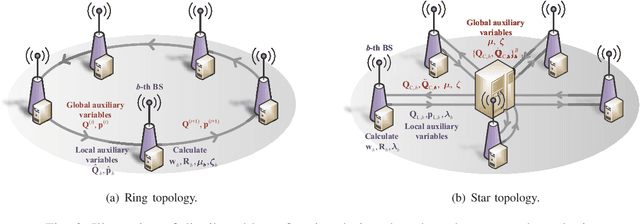
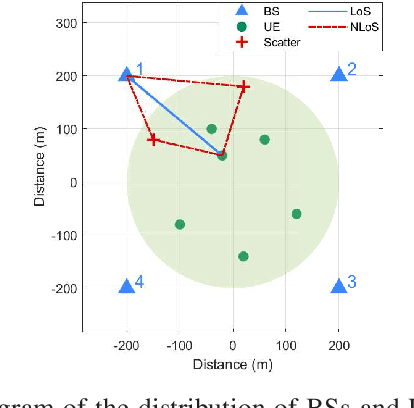
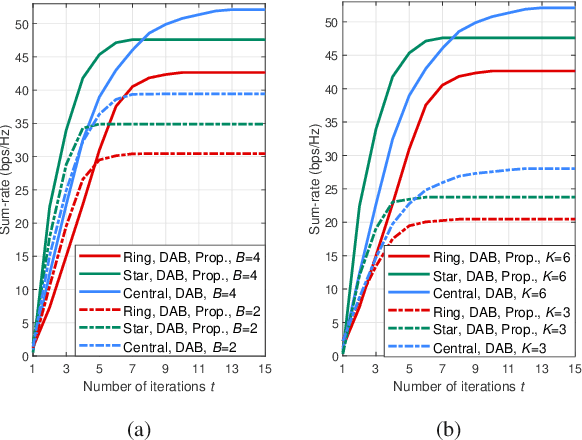
Cell-free massive multi-input multi-output (CF-mMIMO) systems have emerged as a promising paradigm for next-generation wireless communications, offering enhanced spectral efficiency and coverage through distributed antenna arrays. However, the non-linearity of power amplifiers (PAs) in these arrays introduce spatial distortion, which may significantly degrade system performance. This paper presents the first investigation of distortion-aware beamforming in a distributed framework tailored for CF-mMIMO systems, enabling pre-compensation for beam dispersion caused by nonlinear PA distortion. Using a third-order memoryless polynomial distortion model, the impact of the nonlinear PA on the performance of CF-mMIMO systems is firstly analyzed by evaluating the signal-to-interference-noise-and-distortion ratio (SINDR) at user equipment (UE). Then, we develop two distributed distortion-aware beamforming designs based on ring topology and star topology, respectively. In particular, the ring-topology-based fully-distributed approach reduces interconnection costs and computational complexity, while the star-topology-based partially-distributed scheme leverages the superior computation capability of the central processor to achieve improved sum-rate performance. Extensive simulations demonstrate the effectiveness of the proposed distortion-aware beamforming designs in mitigating the effect of nonlinear PA distortion, while also reducing computational complexity and backhaul information exchange in CF-mMIMO systems.
Tri-timescale Beamforming Design for Tri-hybrid Architectures with Reconfigurable Antennas
Mar 05, 2025


Reconfigurable antennas possess the capability to dynamically adjust their fundamental operating characteristics, thereby enhancing system adaptability and performance. To fully exploit this flexibility in modern wireless communication systems, this paper considers a novel tri-hybrid beamforming architecture, which seamlessly integrates pattern-reconfigurable antennas with both analog and digital beamforming. The proposed tri-hybrid architecture operates across three layers: (\textit{i}) a radiation beamformer in the electromagnetic (EM) domain for dynamic pattern alignment, (\textit{ii}) an analog beamformer in the radio-frequency (RF) domain for array gain enhancement, and (\textit{iii}) a digital beamformer in the baseband (BB) domain for multi-user interference mitigation. To establish a solid theoretical foundation, we first develop a comprehensive mathematical model for the tri-hybrid beamforming system and formulate the signal model for a multi-user multi-input single-output (MU-MISO) scenario. The optimization objective is to maximize the sum-rate while satisfying practical constraints. Given the challenges posed by high pilot overhead and computational complexity, we introduce an innovative tri-timescale beamforming framework, wherein the radiation beamformer is optimized over a long-timescale, the analog beamformer over a medium-timescale, and the digital beamformer over a short-timescale. This hierarchical strategy effectively balances performance and implementation feasibility. Simulation results validate the performance gains of the proposed tri-hybrid architecture and demonstrate that the tri-timescale design significantly reduces pilot overhead and computational complexity, highlighting its potential for future wireless communication systems.
ATLaS: Agent Tuning via Learning Critical Steps
Mar 04, 2025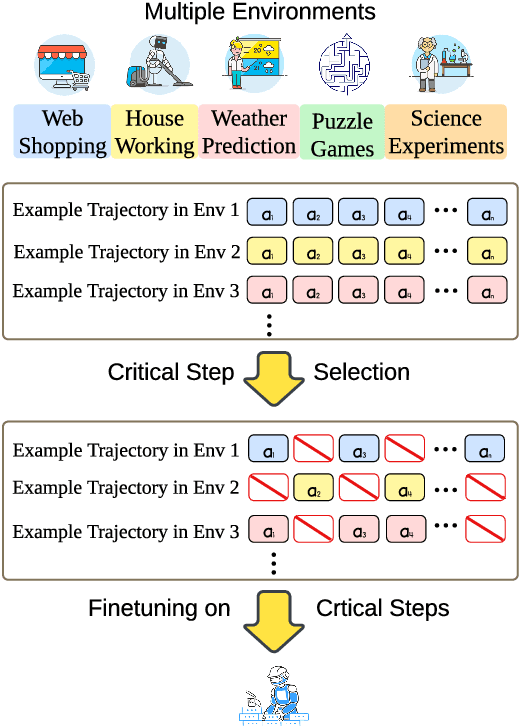
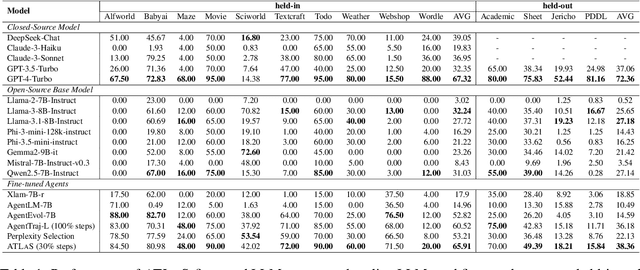
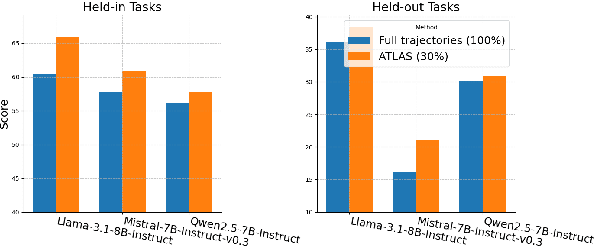

Large Language Model (LLM) agents have demonstrated remarkable generalization capabilities across multi-domain tasks. Existing agent tuning approaches typically employ supervised finetuning on entire expert trajectories. However, behavior-cloning of full trajectories can introduce expert bias and weaken generalization to states not covered by the expert data. Additionally, critical steps, such as planning, complex reasoning for intermediate subtasks, and strategic decision-making, are essential to success in agent tasks, so learning these steps is the key to improving LLM agents. For more effective and efficient agent tuning, we propose ATLaS that identifies the critical steps in expert trajectories and finetunes LLMs solely on these steps with reduced costs. By steering the training's focus to a few critical steps, our method mitigates the risk of overfitting entire trajectories and promotes generalization across different environments and tasks. In extensive experiments, an LLM finetuned on only 30% critical steps selected by ATLaS outperforms the LLM finetuned on all steps and recent open-source LLM agents. ATLaS maintains and improves base LLM skills as generalist agents interacting with diverse environments.
Cutting-edge 3D reconstruction solutions for underwater coral reef images: A review and comparison
Feb 27, 2025Corals serve as the foundational habitat-building organisms within reef ecosystems, constructing extensive structures that extend over vast distances. However, their inherent fragility and vulnerability to various threats render them susceptible to significant damage and destruction. The application of advanced 3D reconstruction technologies for high-quality modeling is crucial for preserving them. These technologies help scientists to accurately document and monitor the state of coral reefs, including their structure, species distribution and changes over time. Photogrammetry-based approaches stand out among existing solutions, especially with recent advancements in underwater videography, photogrammetric computer vision, and machine learning. Despite continuous progress in image-based 3D reconstruction techniques, there remains a lack of systematic reviews and comprehensive evaluations of cutting-edge solutions specifically applied to underwater coral reef images. The emerging advanced methods may have difficulty coping with underwater imaging environments, complex coral structures, and computational resource constraints. They need to be reviewed and evaluated to bridge the gap between many cutting-edge technical studies and practical applications. This paper focuses on the two critical stages of these approaches: camera pose estimation and dense surface reconstruction. We systematically review and summarize classical and emerging methods, conducting comprehensive evaluations through real-world and simulated datasets. Based on our findings, we offer reference recommendations and discuss the development potential and challenges of existing approaches in depth. This work equips scientists and managers with a technical foundation and practical guidance for processing underwater coral reef images for 3D reconstruction....
Strategic priorities for transformative progress in advancing biology with proteomics and artificial intelligence
Feb 21, 2025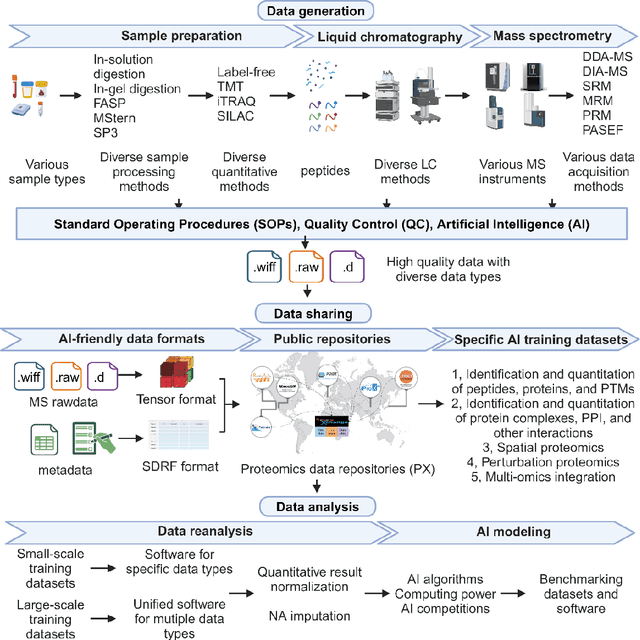
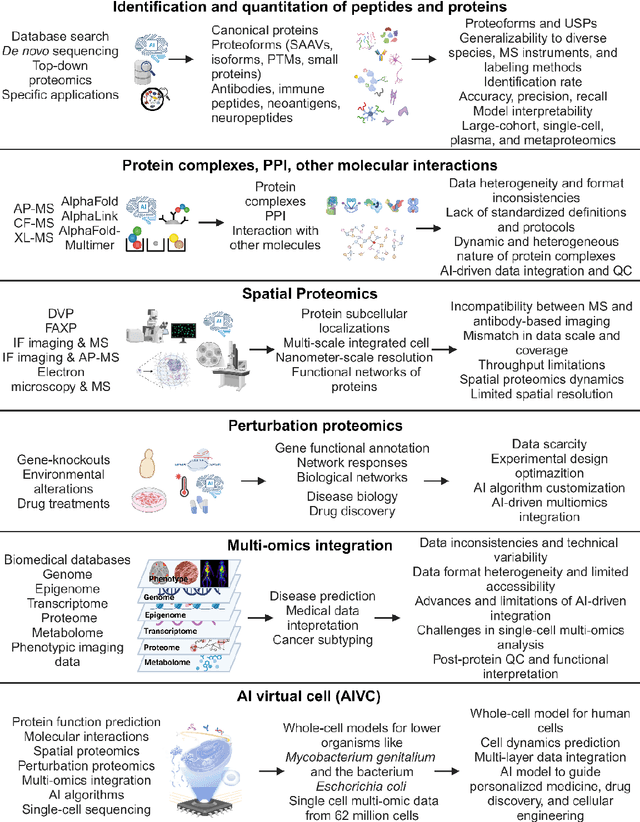
Artificial intelligence (AI) is transforming scientific research, including proteomics. Advances in mass spectrometry (MS)-based proteomics data quality, diversity, and scale, combined with groundbreaking AI techniques, are unlocking new challenges and opportunities in biological discovery. Here, we highlight key areas where AI is driving innovation, from data analysis to new biological insights. These include developing an AI-friendly ecosystem for proteomics data generation, sharing, and analysis; improving peptide and protein identification and quantification; characterizing protein-protein interactions and protein complexes; advancing spatial and perturbation proteomics; integrating multi-omics data; and ultimately enabling AI-empowered virtual cells.
SiMHand: Mining Similar Hands for Large-Scale 3D Hand Pose Pre-training
Feb 21, 2025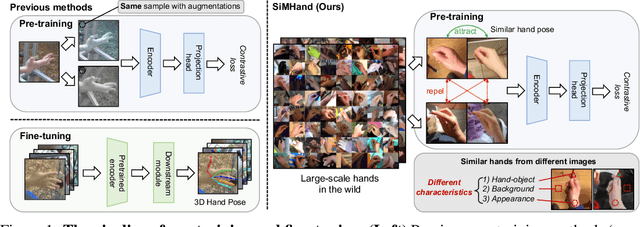


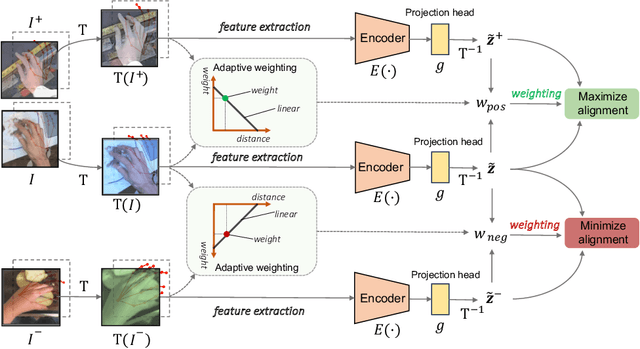
We present a framework for pre-training of 3D hand pose estimation from in-the-wild hand images sharing with similar hand characteristics, dubbed SimHand. Pre-training with large-scale images achieves promising results in various tasks, but prior methods for 3D hand pose pre-training have not fully utilized the potential of diverse hand images accessible from in-the-wild videos. To facilitate scalable pre-training, we first prepare an extensive pool of hand images from in-the-wild videos and design our pre-training method with contrastive learning. Specifically, we collect over 2.0M hand images from recent human-centric videos, such as 100DOH and Ego4D. To extract discriminative information from these images, we focus on the similarity of hands: pairs of non-identical samples with similar hand poses. We then propose a novel contrastive learning method that embeds similar hand pairs closer in the feature space. Our method not only learns from similar samples but also adaptively weights the contrastive learning loss based on inter-sample distance, leading to additional performance gains. Our experiments demonstrate that our method outperforms conventional contrastive learning approaches that produce positive pairs sorely from a single image with data augmentation. We achieve significant improvements over the state-of-the-art method (PeCLR) in various datasets, with gains of 15% on FreiHand, 10% on DexYCB, and 4% on AssemblyHands. Our code is available at https://github.com/ut-vision/SiMHand.
Joint Waveform and Beamforming Design in RIS-ISAC Systems: A Model-Driven Learning Approach
Feb 20, 2025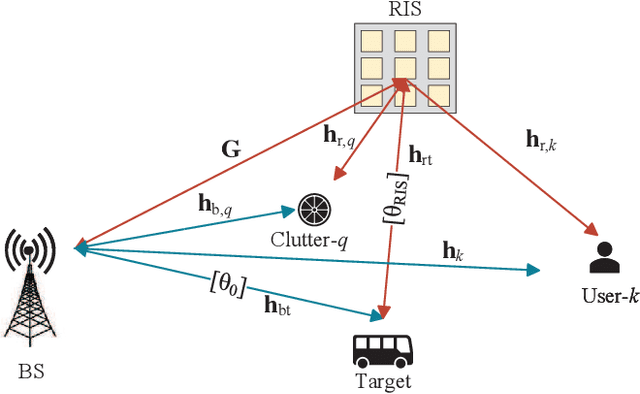
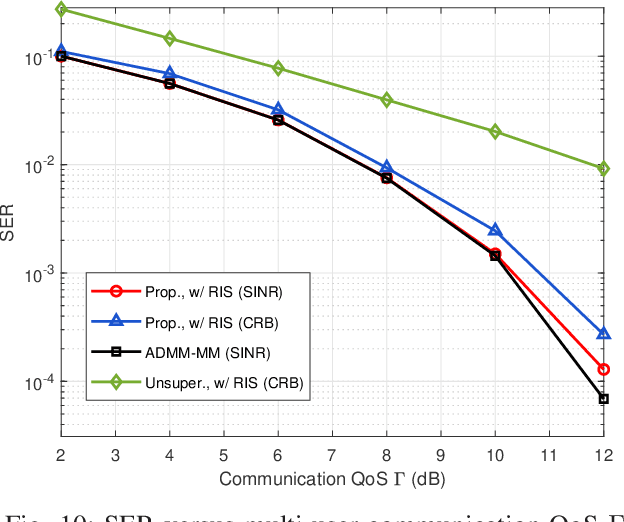
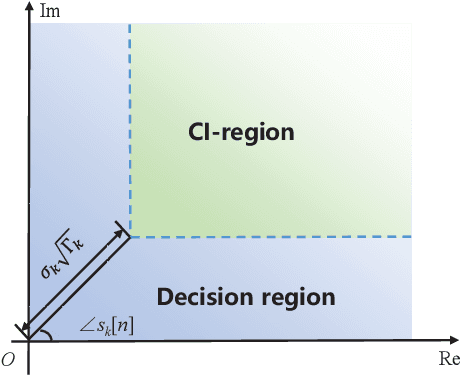
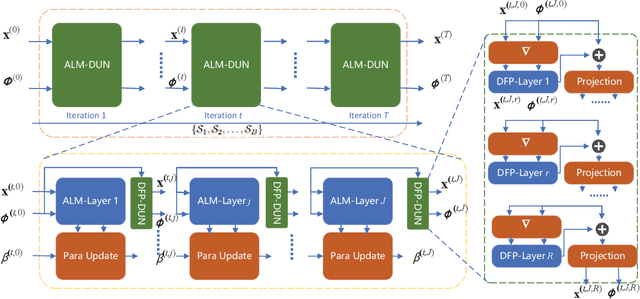
Integrated Sensing and Communication (ISAC) has emerged as a key enabler for future wireless systems. The recently developed symbol-level precoding (SLP) technique holds significant potential for ISAC waveform design, as it leverages both temporal and spatial degrees of freedom (DoFs) to enhance multi-user communication and radar sensing capabilities. Concurrently, reconfigurable intelligent surfaces (RIS) offer additional controllable propagation paths, further amplifying interest in their application. However, previous studies have encountered substantial computational challenges due to the complexity of jointly designing SLP-based waveforms and RIS passive beamforming. In this paper, we propose a novel model-driven learning approach that jointly optimizes waveform and beamforming by unfolding the iterative alternative direction method of multipliers (ADMM) algorithm. Two joint design algorithms are developed for radar target detection and direction-of-arrival (DoA) estimation tasks in a cluttered RIS-ISAC system. While ensuring the communication quality-of-service (QoS) requirements, our objectives are: 1) to maximize the radar output signal-to-interference-plus-noise ratio (SINR) for target detection, and 2) to minimize the Cram\'{e}r-Rao bound (CRB) for DoA estimation. Simulation results verify that our proposed model-driven learning algorithms achieve satisfactory communication and sensing performance, while also offering a substantial reduction in computational complexity, as reflected by the average execution time.