 Add to Chrome
 Add to Firefox
 Add to Edge
Two-Dimensional Direction-of-Arrival Estimation Using Stacked Intelligent Metasurfaces
Feb 13, 2024
Stacked intelligent metasurfaces (SIM) are capable of emulating reconfigurable physical neural networks by relying on electromagnetic (EM) waves as carriers. They can also perform various complex computational and signal processing tasks. A SIM is fabricated by densely integrating multiple metasurface layers, each consisting of a large number of small meta-atoms that can control the EM waves passing through it. In this paper, we harness a SIM for two-dimensional (2D) direction-of-arrival (DOA) estimation. In contrast to the conventional designs, an advanced SIM in front of the receiver array automatically carries out the 2D discrete Fourier transform (DFT) as the incident waves propagate through it. As a result, the receiver array directly observes the angular spectrum of the incoming signal. In this context, the DOA estimates can be readily obtained by using probes to detect the energy distribution on the receiver array. This avoids the need for power-thirsty radio frequency (RF) chains. To enable SIM to perform the 2D DFT, we formulate the optimization problem of minimizing the fitting error between the SIM's EM response and the 2D DFT matrix. Furthermore, a gradient descent algorithm is customized for iteratively updating the phase shift of each meta-atom in SIM. To further improve the DOA estimation accuracy, we configure the phase shift pattern in the zeroth layer of the SIM to generate a set of 2D DFT matrices associated with orthogonal spatial frequency bins. Additionally, we analytically evaluate the performance of the proposed SIM-based DOA estimator by deriving a tight upper bound for the mean square error (MSE). Our numerical simulations verify the capability of a well-trained SIM to perform DOA estimation and corroborate our theoretical analysis. It is demonstrated that a SIM having an optical computational speed achieves an MSE of $10^{-4}$ for DOA estimation.

A Survey on Integrated Sensing and Communication with Intelligent Metasurfaces: Trends, Challenges, and Opportunities
Jan 28, 2024The emergence of various technologies demanding both high data rates and precise sensing performance, such as autonomous vehicles and internet of things devices, has propelled an increasing popularity of integrated sensing and communication (ISAC) in recent years. ISAC offers an efficient framework for communication and sensing where both functionalities are carried out in a shared spectrum, utilizing the same hardware, beamformer and waveform design. At the same time, intelligent metasurfaces have been identified as an architectural enabler for the upcoming sixth-generation (6G) of wireless communication due to their ability to control the propagation environment in an energy-efficient manner. Due to the potential of metasurfaces to enhance both communication and sensing performance, numerous papers have explored the performance gains of using metasurfaces to improve ISAC. This survey reviews the existing literature on metasurface-assisted ISAC, detailing the associated challenges and opportunities. To provide a comprehensive overview, we commence by offering relevant background information on standalone metasurface-assisted communication and metasurface-assisted sensing systems, followed by a discussion on the fundamentals of ISAC. The core part of the paper then summarizes the state-of-the-art studies on metasurface-assisted ISAC with metasurfaces employed as separate entities placed between the transmitter and receiver, also known as reconfigurable intelligent surfaces, with an emphasis on its two levels of integration: radio-communications co-existence and dual-function radar-communications. We also review the current works in the area of holographic ISAC where metasurfaces are used to form part of ISAC transmitter. Within each category, the challenges, opportunities and future research directions are also highlighted.
Intelligent Surfaces Empowered Wireless Network: Recent Advances and The Road to 6G
Jan 15, 2024
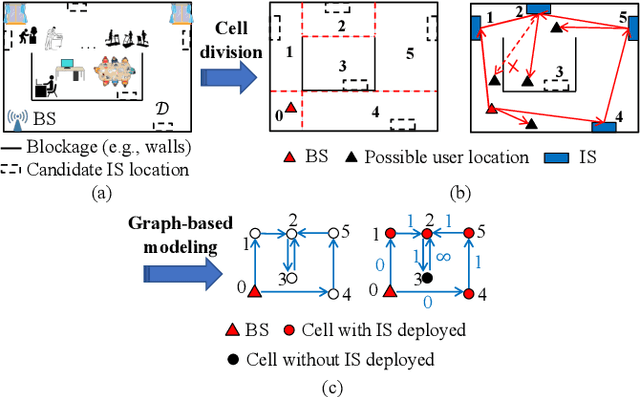
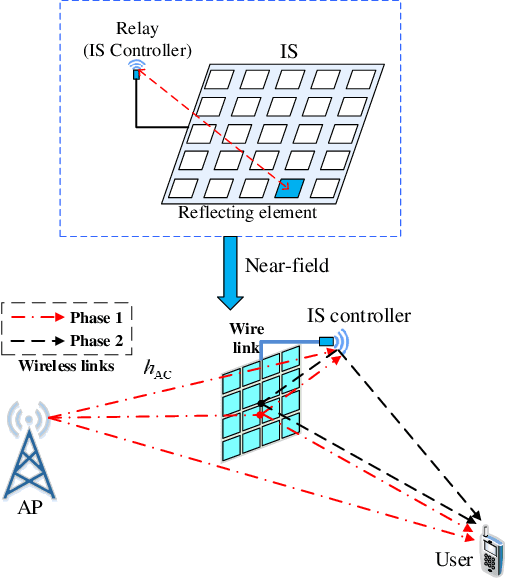
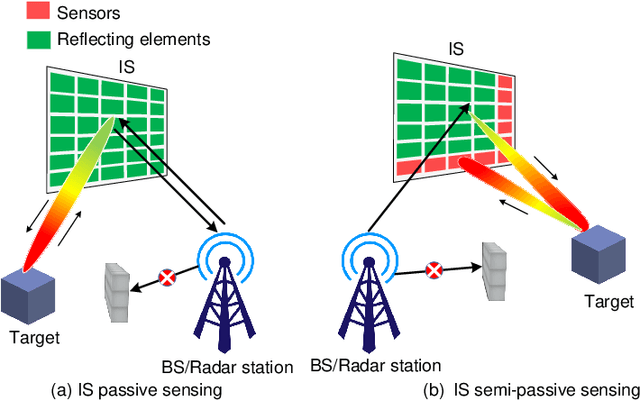
Intelligent surfaces (ISs) have emerged as a key technology to empower a wide range of appealing applications for wireless networks, due to their low cost, high energy efficiency, flexibility of deployment and capability of constructing favorable wireless channels/radio environments. Moreover, the recent advent of several new IS architectures further expanded their electromagnetic functionalities from passive reflection to active amplification, simultaneous reflection and refraction, as well as holographic beamforming. However, the research on ISs is still in rapid progress and there have been recent technological advances in ISs and their emerging applications that are worthy of a timely review. Thus, we provide in this paper a comprehensive survey on the recent development and advances of ISs aided wireless networks. Specifically, we start with an overview on the anticipated use cases of ISs in future wireless networks such as 6G, followed by a summary of the recent standardization activities related to ISs. Then, the main design issues of the commonly adopted reflection-based IS and their state-of-theart solutions are presented in detail, including reflection optimization, deployment, signal modulation, wireless sensing, and integrated sensing and communications. Finally, recent progress and new challenges in advanced IS architectures are discussed to inspire futrue research.
Fluid Antenna Array Enhanced Over-the-Air Computation
Dec 23, 2023

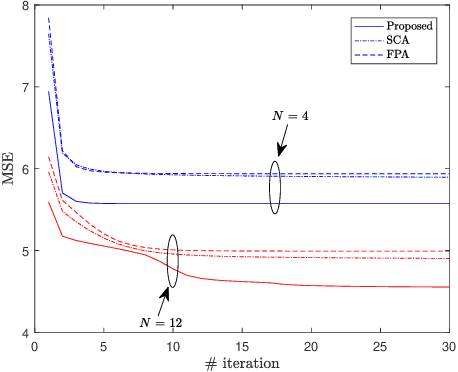
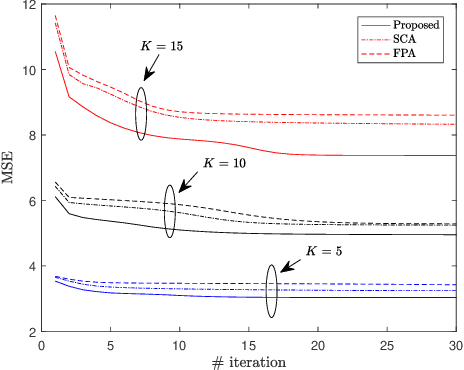
Over-the-air computation (AirComp) has emerged as a promising technology for fast wireless data aggregation by harnessing the superposition property of wireless multiple-access channels. This paper investigates a fluid antenna (FA) array-enhanced AirComp system, employing the new degrees of freedom achieved by antenna movements. Specifically, we jointly optimize the transceiver design and antenna position vector (APV) to minimize the mean squared error (MSE) between target and estimated function values. To tackle the resulting highly non-convex problem, we adopt an alternating optimization technique to decompose it into three subproblems. These subproblems are then iteratively solved until convergence, leading to a locally optimal solution. Numerical results show that FA arrays with the proposed transceiver and APV design significantly outperform the traditional fixed-position antenna arrays in terms of MSE.
RIShield: Enabling Electromagnetic Blackout in Radiation-Sensitive Environments
Dec 20, 2023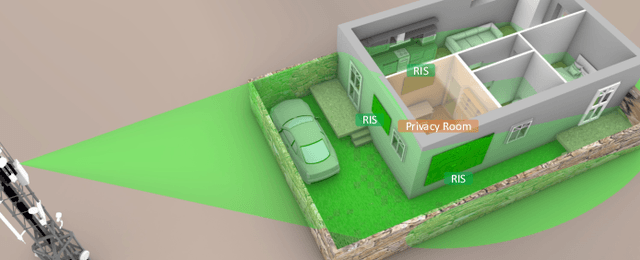
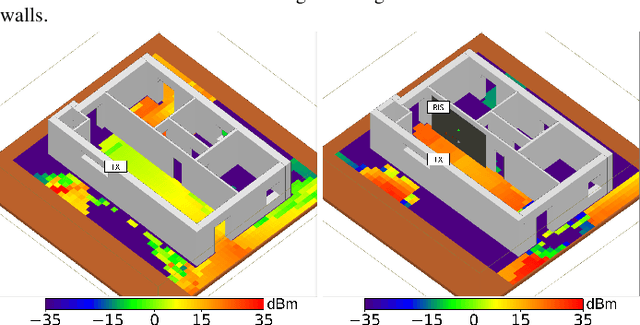
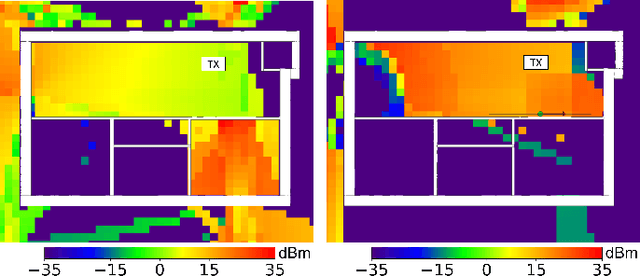
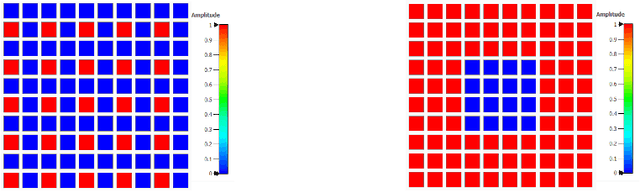
Reconfigurable Intelligent Surfaces (RIS) have emerged as a disruptive technology with the potential to revolutionize wireless communication systems. In this paper, we present RIShield, a novel application of RIS technology specifically designed for radiation-sensitive environments. The aim of RIShield is to enable electromagnetic blackouts, preventing radiation leakage from target areas. We propose a comprehensive framework for RIShield deployment, considering the unique challenges and requirements of radiation-sensitive environments. By strategically positioning RIS panels, we create an intelligent shielding mechanism that selectively absorbs and reflects electromagnetic waves, effectively blocking radiation transmission. To achieve optimal performance, we model the corresponding channel and design a dynamic control that adjusts the RIS configuration based on real-time radiation monitoring. By leveraging the principles of reconfiguration and intelligent control, RIShield ensures adaptive and efficient protection while minimizing signal degradation. Through full-wave and ray-tracing simulations, we demonstrate the effectiveness of RIShield in achieving significant electromagnetic attenuation. Our results highlight the potential of RIS technology to address critical concerns in radiation-sensitive environments, paving the way for safer and more secure operations in industries such as healthcare, nuclear facilities, and defense.
Empirical Validation of the Impedance-Based RIS Channel Model in an Indoor Scattering Environment
Dec 01, 2023Ensuring the precision of channel modeling plays a pivotal role in the development of wireless communication systems, and this requirement remains a persistent challenge within the realm of networks supported by Reconfigurable Intelligent Surfaces (RIS). Achieving a comprehensive and reliable understanding of channel behavior in RIS-aided networks is an ongoing and complex issue that demands further exploration. In this paper, we empirically validate a recently-proposed impedance-based RIS channel model that accounts for the mutual coupling at the antenna array and precisely models the presence of scattering objects within the environment as a discrete array of loaded dipoles. To this end, we exploit real-life channel measurements collected in an office environment to demonstrate the validity of such a model and its applicability in a practical scenario. Finally, we provide numerical results demonstrating that designing the RIS configuration based upon such model leads to superior performance as compared to reference schemes.
Design of Reconfigurable Intelligent Surfaces by Using S-Parameter Multiport Network Theory -- Optimization and Full-Wave Validation
Nov 27, 2023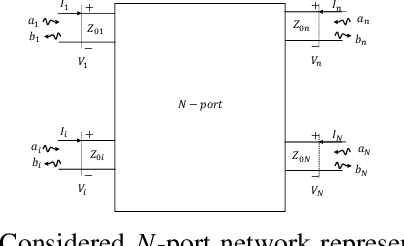
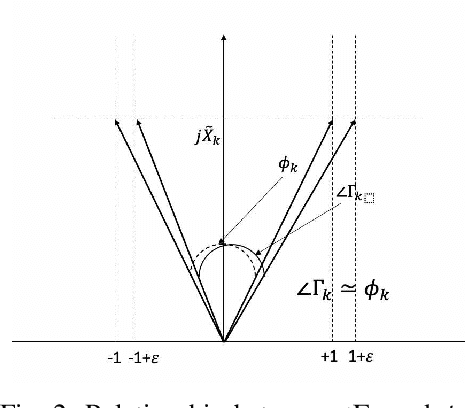
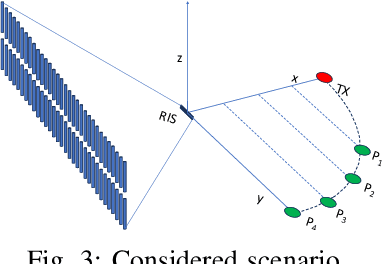
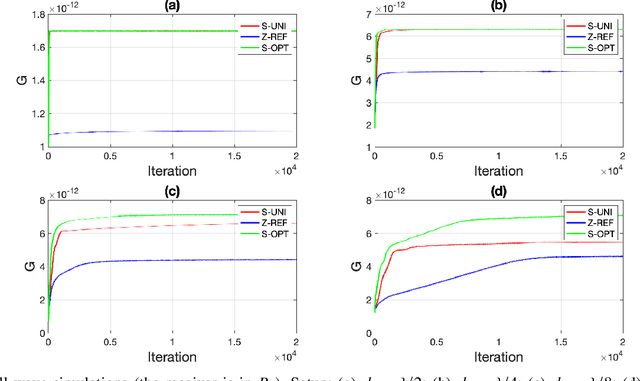
Multiport network theory has been proved to be a suitable abstraction model for analyzing and optimizing reconfigurable intelligent surfaces (RISs), especially for studying the impact of the electromagnetic mutual coupling among radiating elements that are spaced less than half of the wavelength. Both representations in terms of $Z$-parameter (impedance) and $S$-parameter (scattering) matrices are widely utilized. In this paper, we embrace multiport network theory for analyzing and optimizing the reradiation properties of RIS-aided channels, and provide four new contributions. (i) First, we offer a thorough comparison between the $Z$-parameter and $S$-parameter representations. This comparison allows us to unveil that the typical scattering models utilized for RIS-aided channels ignore the structural scattering from the RIS, which results in an unwanted specular reflection. (ii) Then, we develop an iterative algorithm for optimizing, in the presence of electromagnetic mutual coupling, the tunable loads of the RIS based on the $S$-parameters representation. We prove that small perturbations of the step size of the algorithm result in larger variations of the $S$-parameter matrix compared with the $Z$-parameter matrix, resulting in a faster convergence rate. (iii) Subsequently, we generalize the proposed algorithm to suppress the specular reflection due to the structural scattering, while maximizing the received power towards the direction of interest, and analyze the effectiveness and tradeoffs of the proposed approach. (iv) Finally, we validate the theoretical findings and algorithms with numerical simulations and a commercial full-wave electromagnetic simulator based on the method of moments.
A Universal Framework for Multiport Network Analysis of Reconfigurable Intelligent Surfaces
Nov 17, 2023Reconfigurable intelligent surface (RIS) is an emerging paradigm able to control the propagation environment in wireless systems. Most of the research on RIS has been dedicated to system-level optimization and, with the advent of beyond diagonal RIS (BD-RIS), to RIS architecture design. However, developing general and unified electromagnetic (EM)-compliant models for RIS-aided systems remains an open problem. In this study, we propose a universal framework for the multiport network analysis of RIS-aided systems. With our framework, we model RIS-aided systems and RIS architectures through impedance, admittance, and scattering parameter analysis. Based on these analyses, three equivalent models are derived accounting for the effects of impedance mismatching and mutual coupling. The three models are then simplified by assuming large transmission distances, perfect matching, and no mutual coupling to understand the role of the RIS in the communication model. The derived simplified models are consistent with the model used in related literature, although we show that an additional approximation is commonly considered in the literature. We discuss the benefits of each analysis in characterizing and optimizing the RIS and how to select the most suitable parameters according to the needs. Numerical results provide additional evidence of the equivalence of the three analyses.
Stacked Intelligent Metasurface-Aided MIMO Transceiver Design
Nov 16, 2023Next-generation wireless networks are expected to utilize the limited radio frequency (RF) resources more efficiently with the aid of intelligent transceivers. To this end, we propose a promising transceiver architecture relying on stacked intelligent metasurfaces (SIM). An SIM is constructed by stacking an array of programmable metasurface layers, where each layer consists of a massive number of low-cost passive meta-atoms that individually manipulate the electromagnetic (EM) waves. By appropriately configuring the passive meta-atoms, an SIM is capable of accomplishing advanced computation and signal processing tasks, such as multiple-input multiple-output (MIMO) precoding/combining, multi-user interference mitigation, and radar sensing, as the EM wave propagates through the multiple layers of the metasurface, which effectively reduces both the RF-related energy consumption and processing delay. Inspired by this, we provide an overview of the SIM-aided MIMO transceiver design, which encompasses its hardware architecture and its potential benefits over state-of-the-art solutions. Furthermore, we discuss promising application scenarios and identify the open research challenges associated with the design of advanced SIM architectures for next-generation wireless networks. Finally, numerical results are provided for quantifying the benefits of wave-based signal processing in wireless systems.
Near-Field Sparse Channel Estimation for Extremely Large-Scale RIS-Aided Wireless Communications
Nov 13, 2023A significant increase in the number of reconfigurable intelligent surface (RIS) elements results in a spherical wavefront in the near field of extremely large-scale RIS (XL-RIS). Although the channel matrix of the cascaded two-hop link may become sparse in the polar-domain representation, their accurate estimation of these polar-domain parameters cannot be readily guaranteed. To tackle this challenge, we exploit the sparsity inherent in the cascaded channel. To elaborate, we first estimate the significant path-angles and distances corresponding to the common paths between the BS and the XL-RIS. Then, the individual path parameters associated with different users are recovered. This results in a two-stage channel estimation scheme, in which distinct learning-based networks are used for channel training at each stage. More explicitly, in stage I, a denoising convolutional neural network (DnCNN) is employed for treating the grid mismatches as noise to determine the true grid index of the angles and distances. By contrast, an iterative shrinkage thresholding algorithm (ISTA) based network is proposed for adaptively adjusting the column coherence of the dictionary matrix in stage II. Finally, our simulation results demonstrate that the proposed two-stage learning-based channel estimation outperforms the state-of-the-art benchmarks.