 Add to Chrome
 Add to Firefox
 Add to Edge
Stacked Intelligent Metasurfaces (SIM) in the Nonlinear Regime: A Multiport Network Model Approach
May 22, 2026
We present a physically consistent multiport framework for stacked intelligent metasurfaces (SIMs) with linear and explicit nonlinear terminations. The model provides closed-form input--output relations in the linear case and fixed-point forward evaluation in the nonlinear case, with adjoint-based gradients for optimization in both settings. Under stage-isolated SIM structure, complexity remains $\mathcal{O}(QK^3)$. In a 28 GHz near-field localization case study, nonlinear terminations improve transfer-function matching and reduce mean localization error, close to the ideal benchmark.

SIM-Aided Near-Field Channel and Localization Estimation With Dimensionality Reduction: A Multiport Network Theory Approach
May 22, 2026The deployment of Extremely Large-Scale Antenna Arrays for 6G enables radiative near-field sensing but poses significant challenges in terms of hardware complexity and interference. Stacked Intelligent Metasurfaces (SIMs) address these limitations by enabling wave-domain dimensionality reduction. This paper proposes a rigorous SIM-aided framework for near-field channel and localization estimation based on Multiport Network Theory, which provides an electromagnetically consistent characterization accounting for mutual coupling and non-unilateral inter-layer propagation effects. An indirect estimation approach is adopted, where the SIM is optimized to perform analog spatial filtering by projecting the received signal onto a relevant subspace identified through coarse prior location information. Within this realistic setting, we analytically characterize the impact of SIM approximation errors on channel estimation and quantify the resulting effects on localization performance. The results show that the proposed architecture preserves the essential wavefront curvature information required for accurate near-field localization, achieving performance comparable to fully digital solutions while drastically reducing the number of radio-frequency chains.
From Multi-Port Models to Cascade Structures: Optimization of Active Unilateral Stacked Intelligent Metasurfaces
May 07, 2026This paper develops a multi-port S-parameter framework for the analysis and optimization of stacked intelligent metasurfaces (SIMs) with unilateral active interconnections. By modeling each unit cell as a non-reciprocal two-port network, the resulting SIM exhibits a feed-forward structure that enables a recursive, cascade-like representation of the end-to-end transfer function while preserving electromagnetic accuracy. Based on this model, we derive an efficient gradient-based optimization algorithm with reduced computational complexity compared to conventional reciprocal SIM architectures. Numerical results, obtained from full-wave simulations, illustrate the trade-offs among inter-layer spacing, active gain, and SIM size in terms of channel diagonalization and achievable spectral efficiency.
Modeling, Optimization and Electromagnetic Validation of Stacked Intelligent Metasurfaces by Using a Multiport Network Model
Mar 15, 2026Stacked intelligent metasurfaces (SIMs) extend the concept of reconfigurable intelligent surfaces by cascading multiple programmable layers, enabling advanced electromagnetic wave transformations for communication and sensing applications. However, most existing optimization frameworks rely on simplified channel abstractions that may overlook key electromagnetic effects such as multiport coupling, circuit losses, and non-ideal hardware behavior. In this paper, we develop a modeling and optimization framework for SIMs based on a multiport network representation using scattering parameters. The proposed formulation captures realistic circuit characteristics and mutual interactions among SIM ports while remaining amenable to optimization. The resulting models are validated through electromagnetic simulations, enabling a systematic comparison between idealized and practical SIM configurations. Numerical results for communication and sensing scenarios confirm that the proposed framework provides accurate performance predictions and enables the effective design of SIM configurations under realistic electromagnetic conditions.
A Novel Comprehensive Multiport Network Model for Stacked Intelligent Metasurfaces (SIM) Characterization and OptimizationA
Jan 05, 2025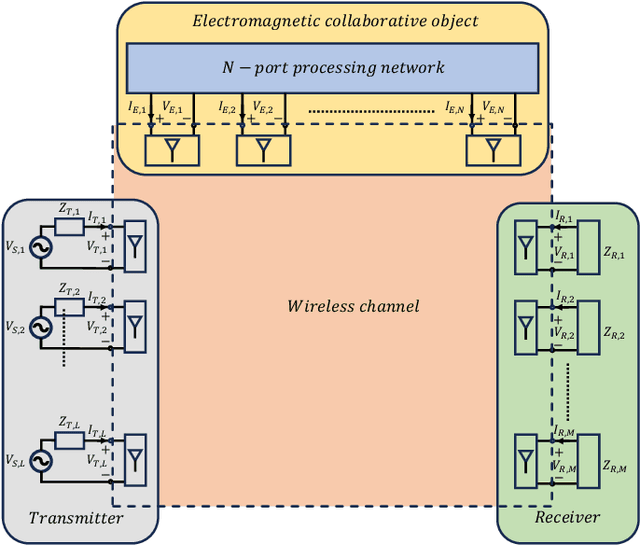
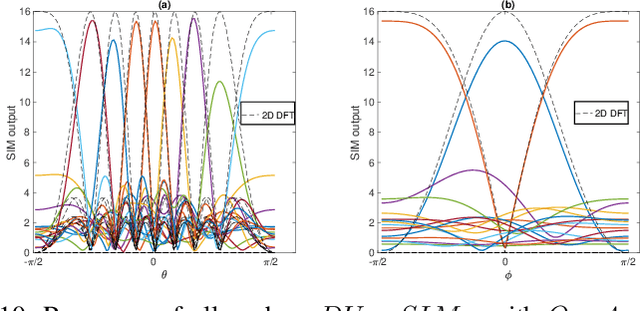
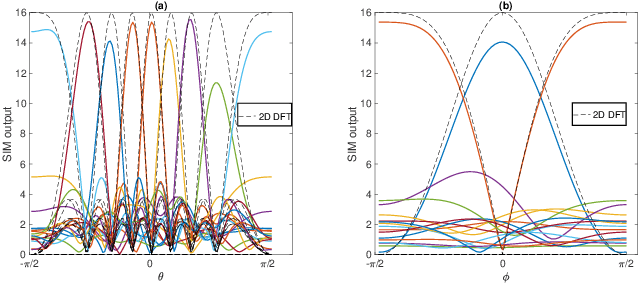
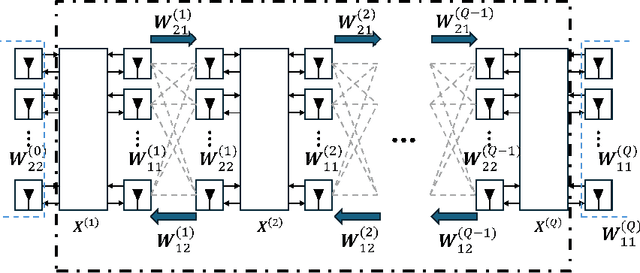
Reconfigurable Intelligent Surfaces (RIS) are transformative technologies for next-generation wireless communication, offering advanced control over electromagnetic wave propagation. While RIS have been extensively studied, Stacked Intelligent Metasurfaces (SIM), which extend the RIS concept to multi-layered systems, present significant modeling and optimization challenges. This work addresses these challenges by introducing a new optimization framework for heterogeneous SIM architectures that, compared to previous approaches, is based on a comprehensive model without relying on specific assumptions, allowing for a broader applicability of the results. To this end, we first present a model based on multi-port network theory for characterizing a general electromagnetic collaborative object (ECO) and derive a general framework for ECO optimization. We then introduce the SIM as an ECO with a specific architecture and provide insights into SIM optimization for various architectures, discussing the complexity in each case. Next, we analyze the impact of commonly used assumptions, and as a further contribution, we propose a backpropagation algorithm for implementing the gradient descent method for a simplified SIM configuration.
RIS-Aided Covert Communications with Statistical CSI: A Multiport Network Theory Approach
Dec 12, 2024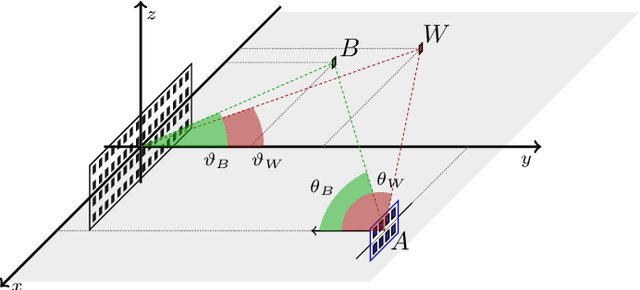
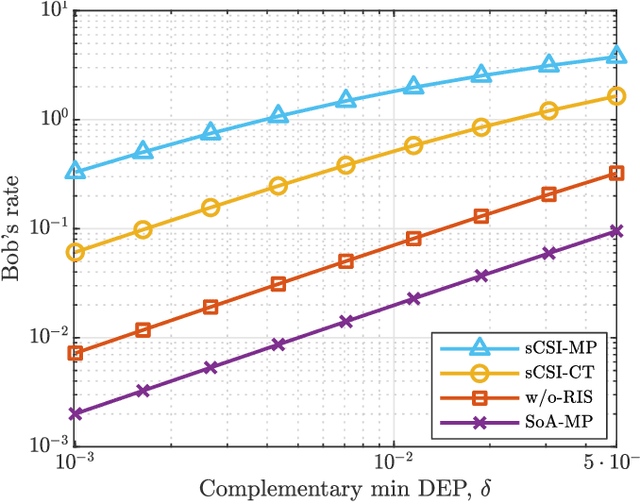
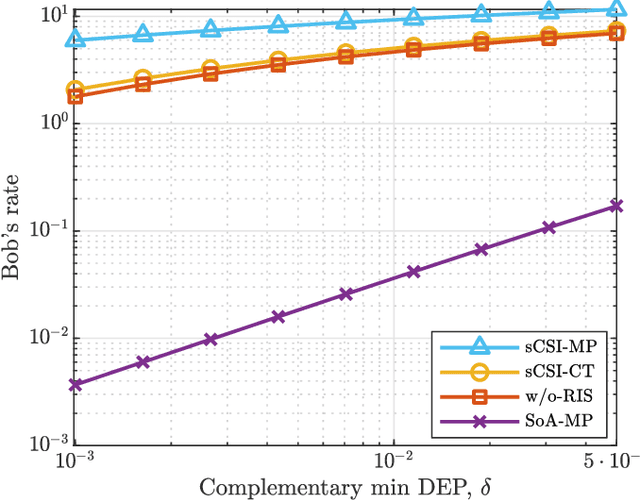
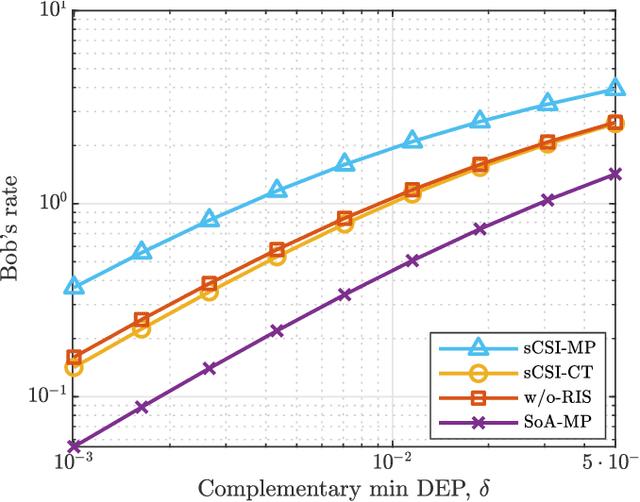
A novel framework for covert communications aided by Reconfigurable Intelligent Surfaces (RIS) is proposed. In this general framework, the use of multiport network theory for modelling the RIS consider various aspects that traditional RIS models in communication theory often overlook, including mutual coupling between elements and the impact of structural scattering. Moreover, the transmitter has only limited knowledge about the channels of the warden and the intended receiver. The proposed approach is validated through numerical results, demonstrating that communication with the legitimate user is successfully achieved while satisfying the covertness constraint.
Power Minimization with Rate Constraints for Multi-User MIMO Systems with Large-Size RISs
Oct 06, 2024
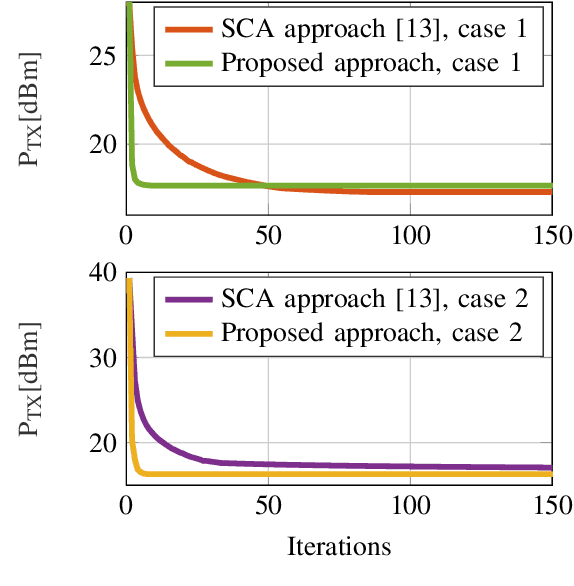
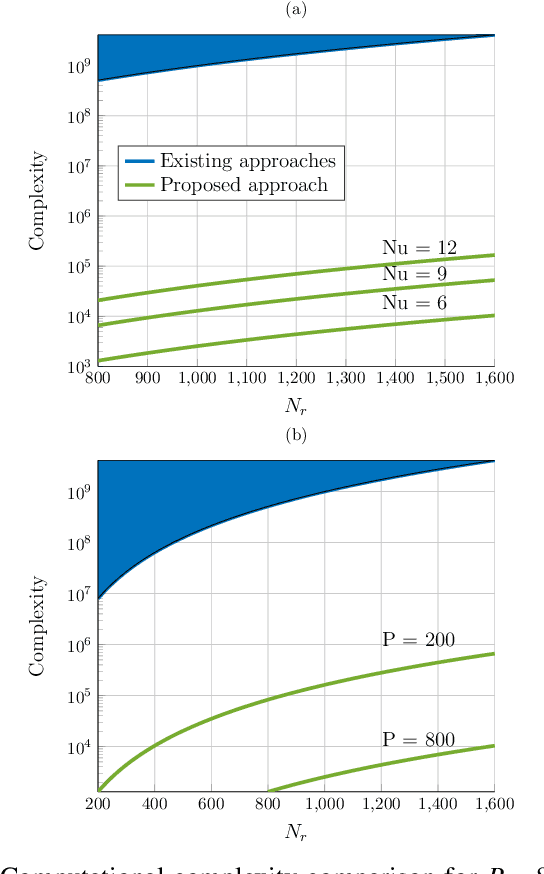

This study focuses on the optimization of a single-cell multi-user multiple-input multiple-output (MIMO) system with multiple large-size reconfigurable intelligent surfaces (RISs). The overall transmit power is minimized by optimizing the precoding coefficients and the RIS configuration, with constraints on users' signal-to-interference-plus-noise ratios (SINRs). The minimization problem is divided into two sub-problems and solved by means of an iterative alternating optimization (AO) approach. The first sub-problem focuses on finding the best precoder design. The second sub-problem optimizes the configuration of the RISs by partitioning them into smaller tiles. Each tile is then configured as a combination of pre-defined configurations. This allows the efficient optimization of RISs, especially in scenarios where the computational complexity would be prohibitive using traditional approaches. Simulation results show the good performance and limited complexity of the proposed method in comparison to benchmark schemes.
MMSE Design of RIS-aided Communications
Dec 13, 2023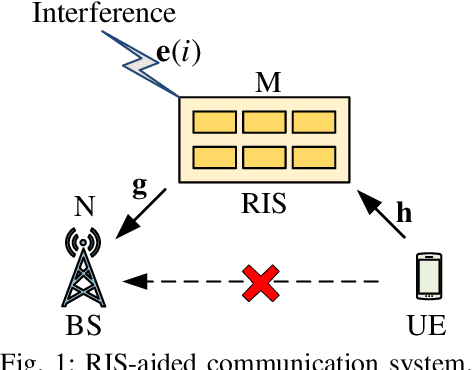
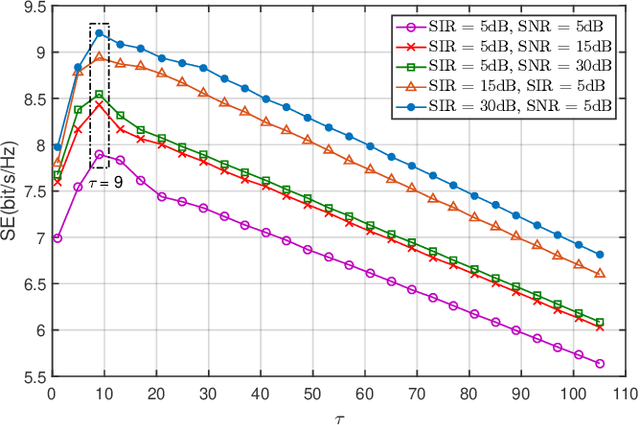
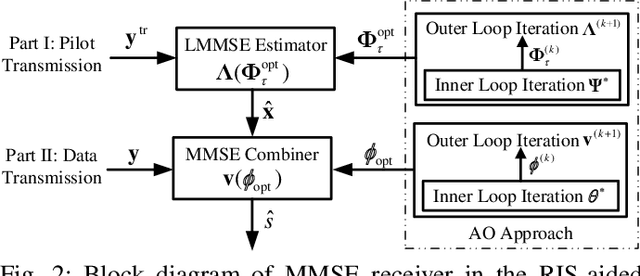
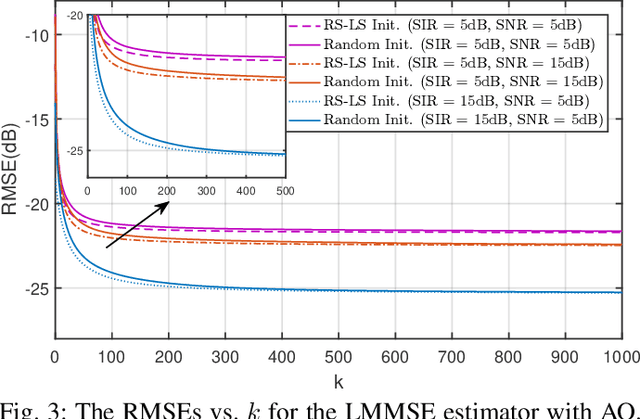
Consider a communication system in which a single antenna user equipment exchanges information with a multi-antenna base station via a reconfigurable intelligent surface (RIS) in the presence of spatially correlated channels and electromagnetic interference (EMI). To exploit the attractive advantages of RIS technology, accurate configuration of its reflecting elements is crucial. In this paper, we use statistical knowledge of channels and EMI to optimize the RIS elements for i) accurate channel estimation and ii) reliable data transmission. In both cases, our goal is to determine the RIS coefficients that minimize the mean square error, resulting in the formulation of two non-convex problems that share the same structure. To solve these two problems, we present an alternating optimization approach that reliably converges to a locally optimal solution. The incorporation of the diagonally scaled steepest descent algorithm, derived from Newton's method, ensures fast convergence with manageable complexity. Numerical results demonstrate the effectiveness of the proposed method under various propagation conditions. Notably, it shows significant advantages over existing alternatives that depend on a sub-optimal configuration of the RIS and are derived on the basis of different criteria.
Design of Reconfigurable Intelligent Surfaces by Using S-Parameter Multiport Network Theory -- Optimization and Full-Wave Validation
Nov 27, 2023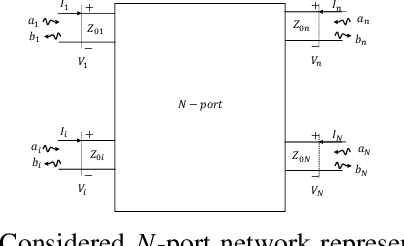
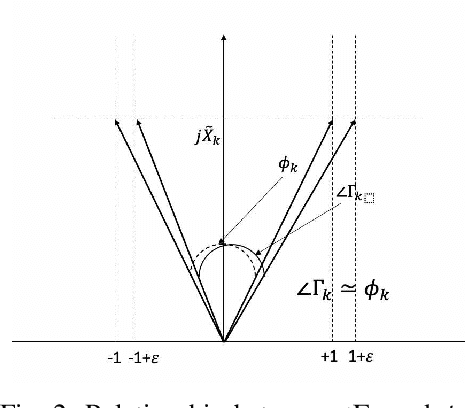
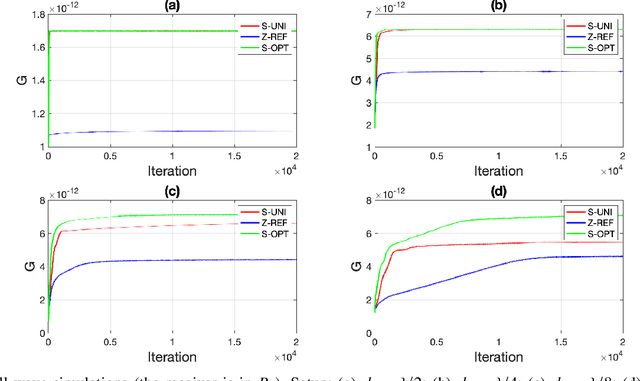
Multiport network theory has been proved to be a suitable abstraction model for analyzing and optimizing reconfigurable intelligent surfaces (RISs), especially for studying the impact of the electromagnetic mutual coupling among radiating elements that are spaced less than half of the wavelength. Both representations in terms of $Z$-parameter (impedance) and $S$-parameter (scattering) matrices are widely utilized. In this paper, we embrace multiport network theory for analyzing and optimizing the reradiation properties of RIS-aided channels, and provide four new contributions. (i) First, we offer a thorough comparison between the $Z$-parameter and $S$-parameter representations. This comparison allows us to unveil that the typical scattering models utilized for RIS-aided channels ignore the structural scattering from the RIS, which results in an unwanted specular reflection. (ii) Then, we develop an iterative algorithm for optimizing, in the presence of electromagnetic mutual coupling, the tunable loads of the RIS based on the $S$-parameters representation. We prove that small perturbations of the step size of the algorithm result in larger variations of the $S$-parameter matrix compared with the $Z$-parameter matrix, resulting in a faster convergence rate. (iii) Subsequently, we generalize the proposed algorithm to suppress the specular reflection due to the structural scattering, while maximizing the received power towards the direction of interest, and analyze the effectiveness and tradeoffs of the proposed approach. (iv) Finally, we validate the theoretical findings and algorithms with numerical simulations and a commercial full-wave electromagnetic simulator based on the method of moments.
Analysis and Optimization of Reconfigurable Intelligent Surfaces Based on $S$-Parameters Multiport Network Theory
Aug 31, 2023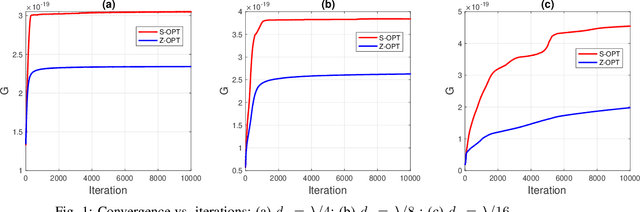
In this paper, we consider a reconfigurable intelligent surface (RIS) and model it by using multiport network theory. We first compare the representation of RIS by using $Z$-parameters and $S$-parameters, by proving their equivalence and discussing their distinct features. Then, we develop an algorithm for optimizing the RIS configuration in the presence of electromagnetic mutual coupling. We show that the proposed algorithm based on optimizing the $S$-parameters results in better performance than existing algorithms based on optimizing the $Z$-parameters. This is attributed to the fact that small perturbations of the step size of the proposed algorithm result in larger variations of the $S$-parameters, hence increasing the convergence speed of the algorithm.